
You are tired of bearing failures that stop your production line. That frustration costs you time and money.
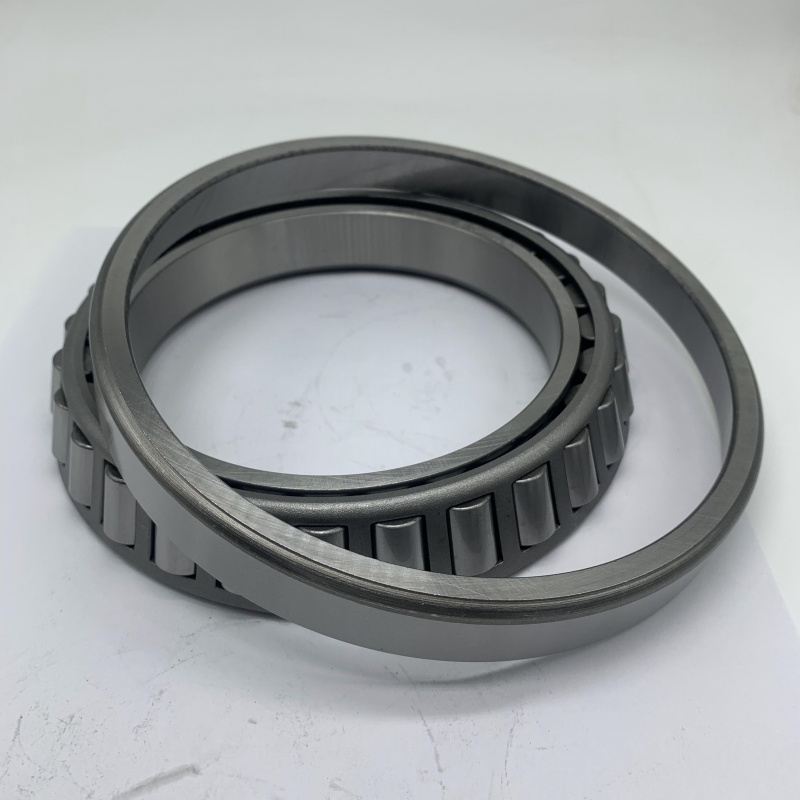
Our tapered roller bearings stand out because we make everything in-house, offer P5/P6 precision as standard, handle custom orders without delays, and inspect every single bearing before shipping. No outsourcing. No shortcuts.
You have probably dealt with suppliers who promise quality but deliver mixed batches. I have seen that too. Let me show you exactly how we do things differently.
In-House Integrated Production Lines: From Steel to Finished Bearing?
You buy from a trader. That trader buys from three different factories. One factory makes the rings. Another makes the rollers. A third does the assembly. Quality varies every time.
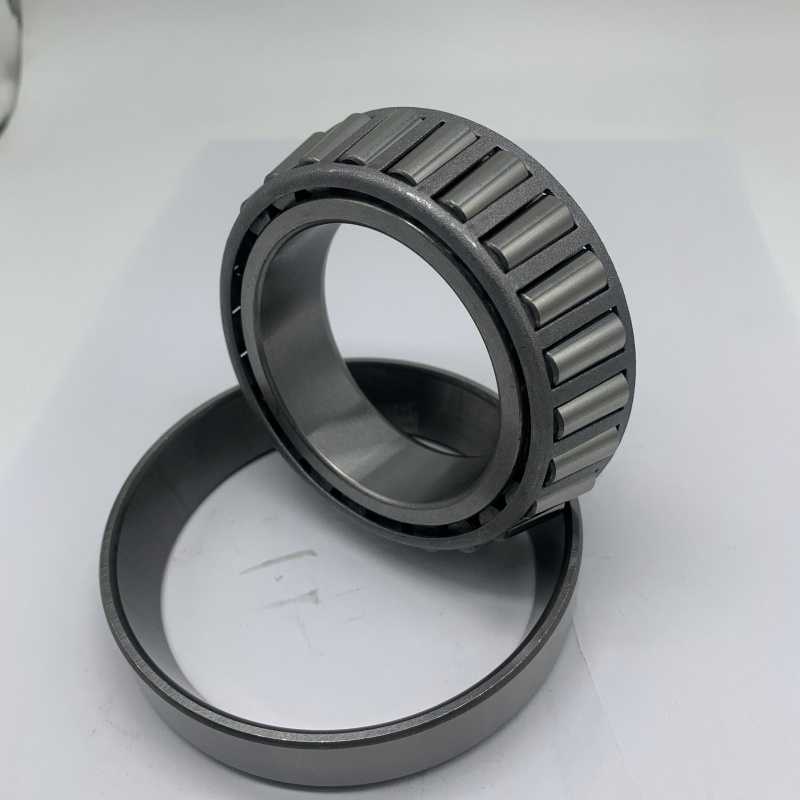
We control everything under one roof. Our production line starts with steel tubes and ends with finished bearings. No handoffs to outside shops. No quality gaps. That means consistent performance in every box.
Vertical integration ensures better quality control, reliable supply, and lower costs compared to outsourced manufacturing [web:55][web:50].
Why In-House Matters More Than You Think
Many bearing brands in China do not make their own products. They buy from small workshops. Then they put their label on the box. Quality varies widely. I cannot work that way. I need to know exactly what the customer gets.
So we built our own integrated line. Let me walk you through the flow.
Step 1 – Raw Material Control
We buy steel from certified mills. The steel comes with a test certificate. We check the chemical composition and the hardenability. If the steel is bad, the bearing will crack. We reject any batch that does not meet our standard.
Step 2 – Cold Forging and Turning
The steel tubes go into our cold forging presses. Cold forging makes the metal grains flow in the direction of the bearing shape. This gives extra strength. Then our CNC lathes turn the rough rings to precise dimensions. All of this happens in our building.
Step 3 – Heat Treatment In-House
Heat treatment is a common place where factories cut corners. They send the rings to a cheap oven outside. That oven might have hot spots and cold spots. So some bearings come out too soft. Others come out too hard and brittle [web:69].
We have our own heat treatment line. It has a controlled atmosphere. The temperature stays even within ±5°C. We quench in oil, then temper. Every batch follows the same recipe [web:68].
Step 4 – Grinding and Superfinishing
This is where precision happens. We own eight CNC grinding machines. They are all calibrated every morning. The operators record the tolerances. We also have two superfinishing lines. Those lines remove the last tiny peaks from the raceway.
Step 5 – Assembly and Greasing
Finally, we assemble the bearings. We match the rollers to the raceways by size. Then we add the right amount of grease. The cage goes in. Then the bearing is sealed or shielded.
Here is a table comparing the two approaches:
| Production Factor | Outsourced / Trader Model | FYTZ In-House Integrated Line |
|---|---|---|
| Steel source | Unknown, often secondary | Certified mills, full traceability |
| Heat treatment control | Batch to batch variation | Uniform profile, in-house furnace |
| Grinding accuracy | ±0.008 mm typical | ±0.002 mm achievable |
| Inspection frequency | Sample only (10% of bearings) | 100% of critical dimensions |
| Lead time for changes | 4-6 weeks (coordinating multiple shops) | 1-2 weeks (one decision) |
| Consistency between orders | Low – each order can be different | High – same process every time |
A Real Example from Egypt
I have a customer in Egypt. He imports bearings for agricultural machinery. Before he found us, he bought from a trader. The first container was good. The second container had bearings that failed after 200 hours. The trader said "different factory, same brand." But the quality was not the same.
Now he buys from us. He knows that every bearing comes from my line. The third container is exactly like the first. His customers trust him again.
So when you ask what sets us apart, this is the biggest answer. We do not hide behind a brand name. We own the whole process.
P5/P6 Precision Class as Standard – Not an Upgrade?
Most suppliers sell you P0 (normal) bearings. Then they ask for extra money if you want P6 or P5. That extra cost can be 30% to 50% more. And you wait longer for delivery.
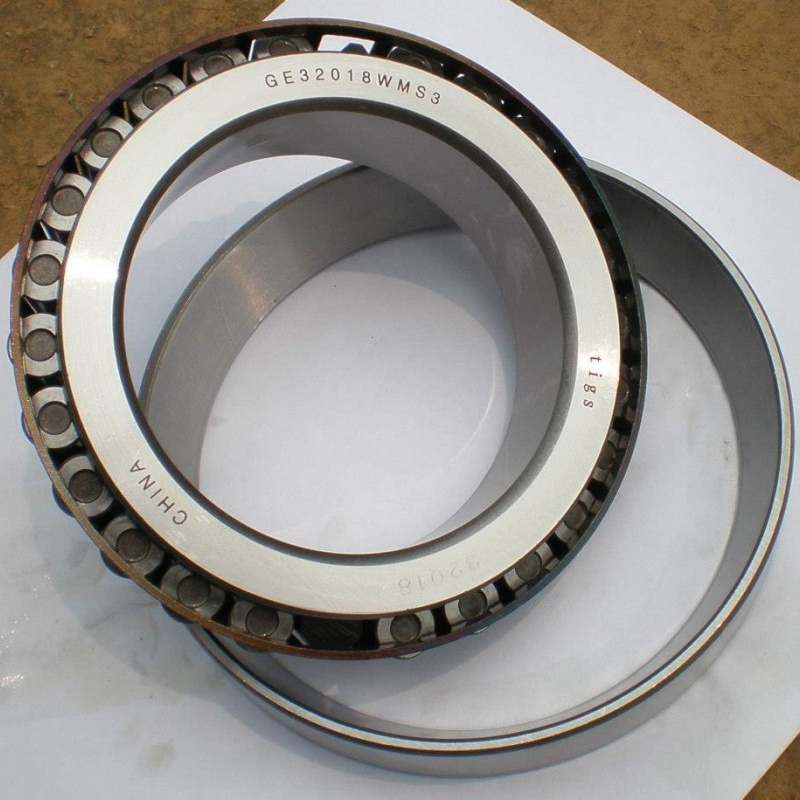
We make P5 and P6 precision our everyday standard. You get higher accuracy without paying a premium or waiting for a special order. That means better performance for the same price as normal bearings from other sellers.
Why We Can Do This While Others Cannot
Let me be honest. Making P5 bearings costs more in time and machine wear. So why do we not charge extra? Two reasons.
First, we designed our production line for P5 from the beginning. We did not buy cheap grinders that can barely hit P0. We invested in high-end machines. Those machines hold tight tolerances all day long. So the extra cost is in our equipment, not in each bearing.
Second, we want to win your long-term trust. I know that many buyers in India, Turkey, and Brazil compare prices. They see a low price from a trader. Then they get P0 bearings with big tolerances. The machines vibrate. The bearings run hot. Then they switch to us and see the difference.
What Do P5 and P6 Actually Mean?
Let me give you the numbers. The ISO standard defines bearing tolerances by class. P0 is normal. P6 is finer. P5 is even finer. P4 is ultra-precision.
Here is a simple table for tapered roller bearings (inner diameter up to 50mm):
| Tolerance Class | Inner bore deviation (μm) | Inner bore runout (μm) | Outer ring runout (μm) | Typical application |
|---|---|---|---|---|
| P0 (Normal) | 0 to -12 | 12 | 15 | Conveyors, fans, farm equipment |
| P6 | 0 to -10 | 8 | 10 | Gearboxes, pumps, medium-speed spindles |
| P5 | 0 to -8 | 5 | 6 | Machine tool spindles, precision reducers |
| P4 | 0 to -6 | 3 | 4 | High-speed CNC spindles, aerospace |
Our standard is P6 for most sizes. For smaller bearings (under 80mm OD), we often hit P5. We do not advertise P5 on every single bearing because it depends on the size. But I can tell you this: our typical runout is half of what P6 requires.
What This Means for Your Machines
Lower runout means the shaft stays centered. The bearing does not wobble. The vibration level drops. Your machine produces better parts. And the bearing runs cooler because the rollers are not fighting against misalignment.
I remember a customer in Vietnam. He makes electric motor fans. His old bearings gave a noise level of 55 dB. That was too loud for his European buyers. He tried our P6 standard bearings. The noise dropped to 48 dB. He did not pay one cent extra. That is the difference.
Customization Without Chaos: OEM/ODM Made Simple?
You sell bearings under your own brand. Or you need a special size that no catalog has. Most factories say yes to custom orders. But then they mess up the lead time. Or they change the design without telling you.
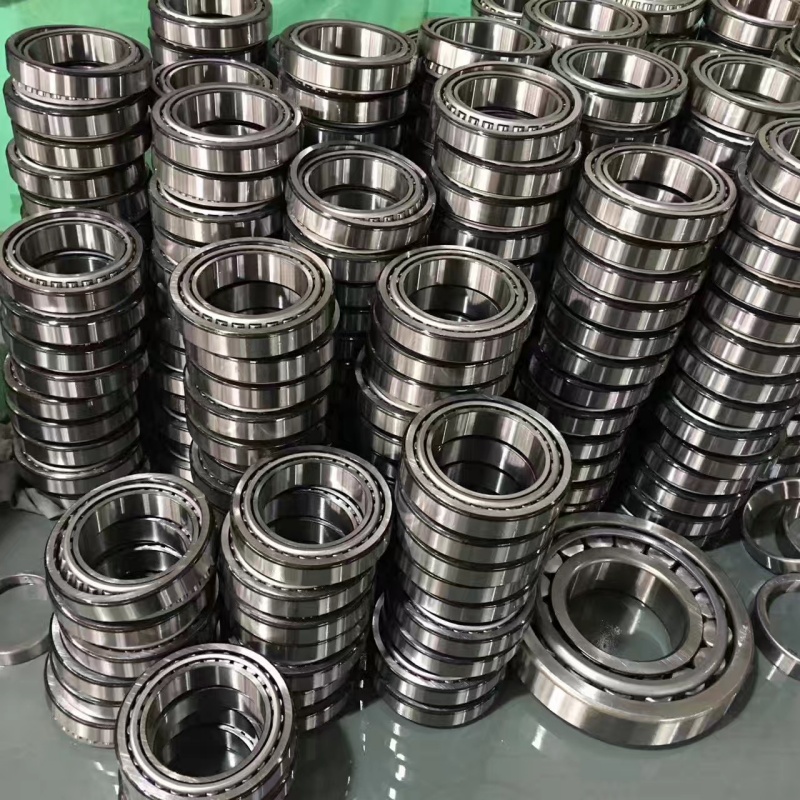
We handle OEM and ODM orders like a normal part of our business. You give us your drawings or your brand name. We make the bearings exactly to your specs. No confusion. No surprise changes. And we keep your design confidential.
The Three Levels of Customization We Offer
Not all custom orders are the same. Some are simple. Some are complex. Let me break down what we can do.
Level 1 – Branding and Packaging
This is the easiest. You send us your logo. We print it on the box and on the bearing shield or seal. We also use your part numbers. Nothing changes inside the bearing. This is perfect for distributors like Rajesh. He wants to sell under his own brand "IndoMotion." We make the same high-quality bearing. Just with his name on it.
Level 2 – Dimensional Modifications
Sometimes your machine needs a non-standard width or a different chamfer size. Or you want a special snap ring groove. We can change the drawing. Our CNC machines are easy to reprogram. The lead time adds maybe one week for setup.
Level 3 – Full OEM Design
You have a completely new bearing size. Or you want a different roller profile. You provide the engineering drawing. Our team checks it for manufacturability. Then we make samples. We test the samples. Then we run production.
How We Keep Chaos Away
Many factories take custom orders but fail. They lose the drawing. They mix up the steel. They send the wrong parts.
We have a simple system. Every custom order gets its own job number. That number is written on every production traveler. The CNC machines load the right program from that number. The inspectors check against that drawing only. The warehouse packs with that label.
Here is a table of what we can customize:
| Customization Type | Options Available | Minimum Order | Typical Lead Time |
|---|---|---|---|
| Laser marking | Your logo, part number, country of origin | 500 pieces | +3 days |
| Box printing | Color box, white box, label design | 1,000 pieces | +1 week |
| Internal clearance | C2, C3, C4, or custom value | 1,000 pieces | +1 week |
| Grease type | Any major brand (Mobil, Shell, Kyodo, etc.) | 500 pieces | +1 week (if in stock) |
| Cage material | Steel, brass, polyamide | 1,000 pieces | +2 weeks |
| Ring dimensions | Non-standard width, bore, or OD | 2,000 pieces | +3 weeks |
| Full new design | Your engineering drawing | 5,000 pieces | +6 weeks (including samples) |
A Story from Pakistan
A buyer in Pakistan called me. He had an old Italian machine that made textile rolls. The manufacturer no longer existed. He needed a special tapered roller bearing with an odd inner diameter of 47.5 mm. No catalog had that size.
Most suppliers said no. I said yes. We took his drawing. We made a small batch of 500 pieces. The machine worked perfectly. He ordered 2,000 more the next year. Now he trusts us for all his hard-to-find sizes.
So if you have a custom need, do not be shy. Tell me what you need. We will find a way.
100% Inspection Before Shipment – Every Bearing, Every Lot?
You have been burned before. The first sample was perfect. But the mass production batch had noisy bearings. Or some were tight and some were loose. The supplier said "batch variation is normal." But your customers do not accept that.
We inspect every single bearing before it leaves our factory. Not just 10% or 20%. 100%. We check bore size, outer diameter, width, runout, and noise. If a bearing fails one test, it does not go into the box.

The Difference Between Sampling and Full Inspection
Many factories use AQL sampling (Acceptable Quality Level). That means they check maybe 125 bearings out of 10,000. If 3 of those 125 are bad, the whole lot passes. That sounds good on paper. But in real life, that allows up to 1.5% defective bearings in your shipment.
For a 10,000-piece order, 1.5% is 150 bad bearings. Those 150 bearings will fail in your customers’ machines. Each failure costs you goodwill and replacement shipping.
We do not accept that. So we built an inspection line with automated gauges. Every bearing goes through a series of tests.
What We Inspect on Every Bearing
Here is the full list:
- Inner bore diameter – Measured at three heights. Must be within the tolerance band.
- Outer diameter – Measured at two points 90° apart.
- Width (height) – Both inner ring width and overall bearing width.
- Radial runout – The bearing is rotated slowly while a probe measures the inner ring wobble.
- Axial runout – The side face is checked for flatness.
- Noise level – Each bearing is spun up to a test speed. A microphone listens for clicks or irregular sounds.
- Grease quantity – We weigh the bearing before and after greasing to confirm the right fill.
Any bearing that fails any of these tests is pulled out. It goes into a red bin. We then take apart some of the failed bearings to find the root cause. That helps us stop the problem from happening again.
Real Numbers from Our Inspection Logs
Last month, we produced 45,000 tapered roller bearings across different sizes. Our inspection line rejected 312 bearings. That is 0.69%. Most rejections were for tiny scratches or slight runout over the limit. Those bearings would still work for low-speed fans. But they are not good enough for our customers’ precision machines.
We could have shipped them. Many factories do. But I would rather take a small loss than send a bad bearing to a customer.
What This Means for You
When you open a box from FYTZ, you know that every bearing inside has been checked. You will not find one good bearing and one bad bearing in the same box. You will not have to sort them yourself. You can trust the whole lot.
I had a customer in Indonesia who told me a story. His previous supplier from another country sent him a container of bearings. The first 100 he pulled out all felt good. Then he found a batch of 50 bearings that were 0.03 mm too small on the bore. They slipped on the shaft. The machine had to be taken apart. He lost two days of production.
Now he buys from us. He says our 100% inspection saves him that headache.
But Does 100% Inspection Slow Us Down?
Yes, it adds time. Each bearing takes about 15 seconds to go through the automated gauges. That is 240 bearings per hour per machine. We have three inspection machines running. So we can inspect 15,000 bearings per shift.
The time is worth it. Our customers do not wait long. Most orders ship within 2-3 weeks. And they never get a surprise.
Conclusion
We make our bearings in-house, give you P5/P6 precision as standard, handle custom orders smoothly, and inspect every single bearing. That is what sets us apart.