
When your machines lose precision, you lose money. And that hurts.
Precision-machined tapered roller bearings give you optimal accuracy because they reduce internal friction and keep shafts in exact alignment. With tighter tolerances and better load control, these bearings help your equipment run smoother and last longer.
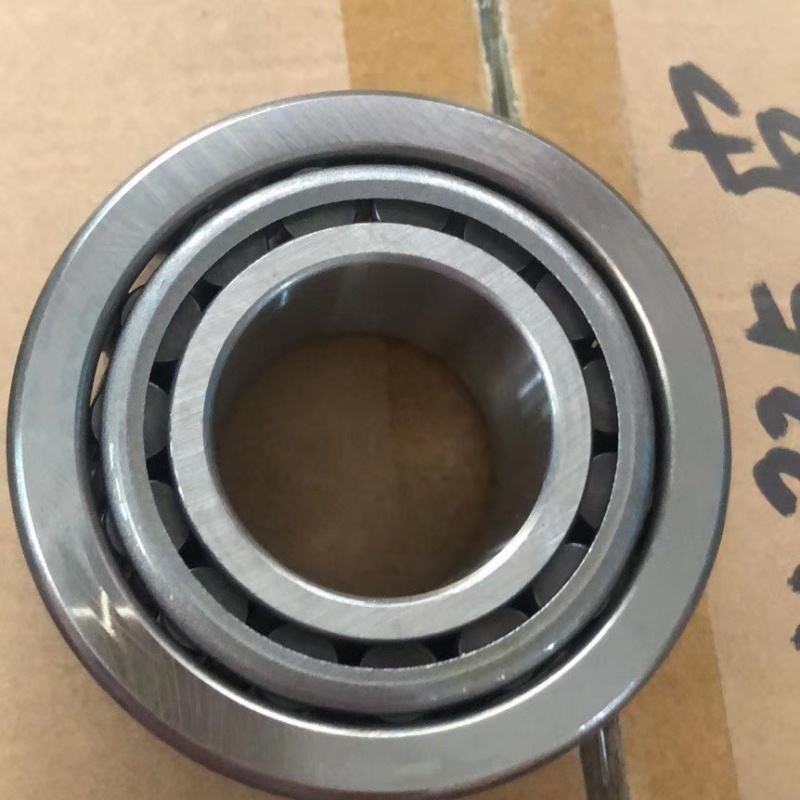
You might think all tapered roller bearings are the same. But I learned that the difference is huge. Let me walk you through what really matters.
What Are the Key Advantages of Precision-Machined Tapered Roller Bearings?
You have a production line. One bearing fails. Then your whole machine stops. That is wasted time and broken promises to your customers.
The main advantages are lower heat, less vibration, and longer life. Precision machining removes tiny surface errors. So the bearing runs cooler and handles higher speeds. You also get better mounting accuracy, which cuts down maintenance stops.
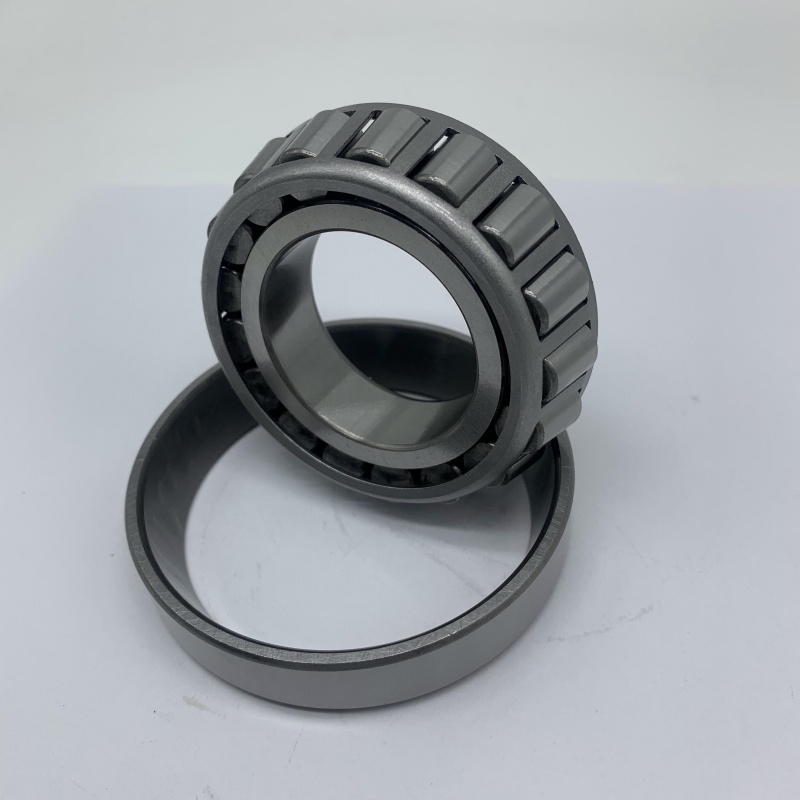
Why Precision Machining Beats Standard Grinding
Most standard bearings are ground to a basic level. That works for slow, low-load jobs. But for modern machines, you need more. Precision machining uses super-fine grit wheels and exact coolant flow. This takes off just a few microns at a time. So the final raceway is almost mirror-smooth. Learn more about precision-machined bearing raceways
I remember a customer from Turkey. He makes gearboxes for textile machines. His old bearings gave him noise and heat after only 3 months. We sent him our P5 class precision-machined tapered roller bearings. He called me two months later. "The machine runs like new," he said. "And my operators don’t complain about the noise anymore."
Clear Benefits You Can Measure
Let me put this in numbers. Here is a table that shows what precision machining improves:
| Performance Factor | Standard Ground Bearing | Precision-Machined Bearing (P5/P6) |
|---|---|---|
| Running temperature rise | +25°C to +35°C | +12°C to +18°C |
| Vibration level (μm/s) | 80–120 | 30–50 |
| Service life (hours, same load) | ~8,000 | ~15,000+ |
| Mounting repeatability | ±0.01 mm | ±0.003 mm |
| Maximum allowable speed | 60% of bearing limit | 85% of bearing limit |
So what does this mean for you? Lower electricity bills. Fewer emergency calls. And your final product comes out more accurate every time.
But Precision Costs More – Is It Worth It?
Some buyers ask me this. "Why pay extra for a higher grade?" My answer is simple. Look at your total downtime cost. If your machine stops for one hour, how much do you lose? For a medium factory in India or Brazil, that could be $500 to $2,000 per hour [web:23].
A precision bearing might cost $5 more than a standard one. But it lasts twice as long. So you save money after just the first breakdown you avoid.
We make these bearings in our own factory. I see the extra steps. More inspection, slower feed rates, and tighter quality control. That is exactly why our customers in Russia and Egypt keep coming back. They know our bearings give them accuracy without surprises. Precision bearings are designed to improve rotational accuracy, reduce drag, lower heat generation, and extend service life [web:24]. Accuracy grades such as P0, P6, P5, P4, and P2 are commonly used to distinguish bearing precision levels [web:22].
Which Critical Applications Demand High Accuracy?
You build machines for car parts or heavy equipment. If a bearing has even 0.01 mm wobble, your assembly might fail quality control. That is not acceptable.
High accuracy is a must in machine tool spindles, robotics joints, aerospace actuators, and automotive differentials. Also in printing presses, measuring devices, and any place where shaft position must stay perfect under load.
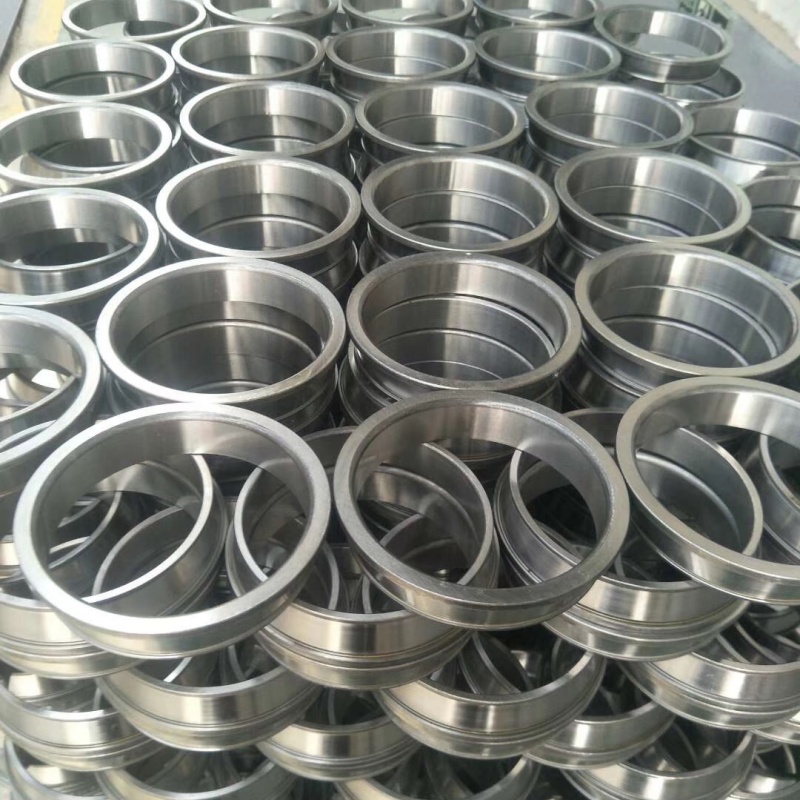
Real-World Examples from My Customers
Let me share three cases. First, a bearing distributor in Vietnam. He supplies to a local motorbike engine plant. The plant needed rear wheel bearings that run true at 8,000 rpm. Standard bearings caused vibration. The rider felt it at high speed. We gave them P5 tapered roller bearings. Problem solved.
Second, a machine tool maker in Indonesia. He builds small CNC lathes for woodworking. His spindle bearings must hold within 0.005 mm runout. With our precision bearings, his lathes now cut smooth arcs. His customers give him 5-star reviews.
Third, an automotive aftermarket dealer in Pakistan. He sells wheel hub assemblies for trucks. Road conditions there are rough. Standard bearings wear out fast. Our precision-machined tapered roller bearings have thicker raceways and better steel. The trucks run 150,000 km without a hub change.
Industries That Cannot Compromise
Here is a simple breakdown of where you need high accuracy:
| Industry | Application | Why Accuracy Matters |
|---|---|---|
| Aerospace | Flight control actuators | A 0.01 mm error can change a wing flap angle. That risks safety. |
| Robotics | Joint reducers (RV gearboxes) | Backlash must be near zero. Otherwise the robot arm shakes. |
| Automotive | Differential pinion shafts | Noise and vibration go straight to the cabin. Customers complain. |
| Medical | CT scanner rotating gantries | The bearing must run silent and smooth. Any wobble blurs the image. |
| Printing | Color registration rollers | Even a tiny misalignment causes color shift. That ruins the print run. |
What If Your Application Is Not on This List?
Many buyers think precision bearings are overkill for simple conveyors or fans. And sometimes they are right. But I always ask: what is the cost of a bearing failure?
For a grain conveyor in a Bangladesh mill, a bearing jam might stop the whole drying line. That spoils tons of rice. For that customer, P6 grade was the right choice – not too expensive, but much more reliable than standard [web:7].
How Do Advanced Manufacturing Techniques Behind Tight Tolerances Work?
You see a shiny bearing. You think it is simple steel. But getting that perfect raceway is not easy. Many factories cut corners. And then you get early failure.
Advanced manufacturing includes CNC turning, superfinishing, in-process gauging, and heat treatment with strict control. These steps create roundness within 0.002 mm and surface roughness below 0.1 μm. The result is a bearing that rolls like silk.
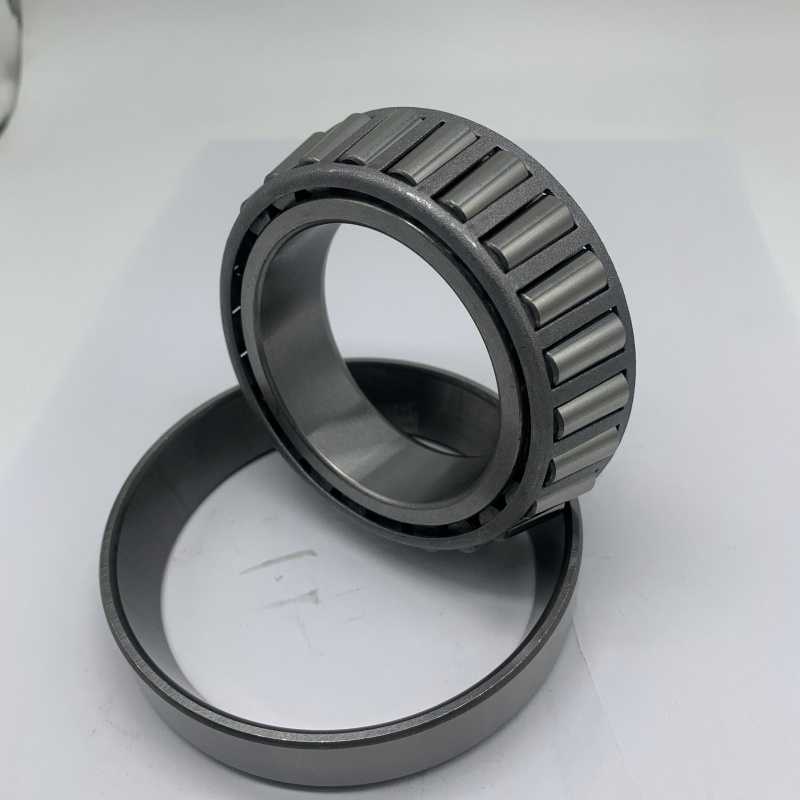
Step-by-Step: How We Make a Precision Bearing
I run a factory with an integrated production line. That means we inspect every step. Let me walk you through the key stages.
1. Tube Cutting and Cold Forging
We start with high-carbon chromium steel (GCr15 or equivalent). The steel comes from certified mills. First, we cut tubes into rings. Then we cold-forge them into rough shapes. Cold forging makes the grain flow follow the ring shape. That gives extra strength.
2. CNC Turning and Boring
Next, the rough rings go to our CNC lathes. These machines remove material fast. But they also hold a tolerance of ±0.05 mm. For most bearings, that is enough. For precision bearings, this is just the start.
3. Heat Treatment – The Hidden Secret
Many people forget heat treatment. But it is super important. We put the rings in a controlled atmosphere furnace. We heat them to 840°C, then quench in oil. After that, we temper them at 160°C for two hours. This gives a hardness of 60–64 HRC. Too hard, and the bearing cracks. Too soft, and it wears out fast. Our process is exactly tuned.
4. Precision Grinding and Superfinishing
This is where precision happens. We use grinders with hydrostatic spindles. They are very stiff and smooth. The grinding wheel removes only 0.01 mm per pass. Then we switch to a superfinishing stone. That stone vibrates at high frequency. It knocks off microscopic peaks. The final raceway looks like a mirror.
Let me show you the numbers:
| Process Step | Material Removed | Achieved Tolerance | Surface Roughness (Ra) |
|---|---|---|---|
| Turning | ~1.5 mm | ±0.05 mm | 2.0 μm |
| Hard turning | ~0.2 mm | ±0.01 mm | 0.8 μm |
| Grinding | ~0.05 mm | ±0.003 mm | 0.2 μm |
| Superfinishing | ~0.002 mm | ±0.001 mm | 0.05 μm |
5. 100% Inspection
Every precision bearing we sell gets inspected. We use air gauges and laser micrometers. We check roundness, taper, and raceway profile. Only bearings that pass all tests get packed.
Why Can’t Every Factory Do This?
Simple. Good machines cost a lot. A precision grinder is $200,000 or more. A superfinishing machine is another $150,000. Plus you need trained operators.
Many small bearing makers in China skip these steps. They grind fast and ship fast. But then their bearings fail.
At FYTZ, we decided to invest. Now we have eight CNC grinders and two superfinishing lines. That is why our customers in Brazil and South Africa trust us for their high-speed spindles.
How Does Tapered Geometry Enhance Radial and Axial Load Control?
You put a load on a bearing. It pushes in two directions – sideways (radial) and along the shaft (axial). A ball bearing can only take one direction well. But a tapered bearing? It takes both at the same time.
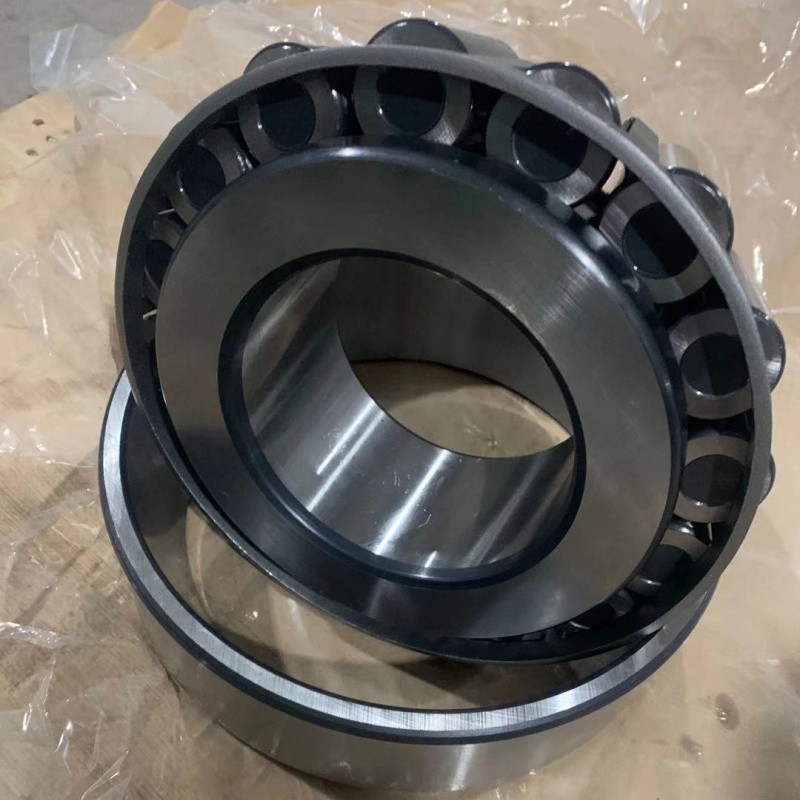
The tapered shape creates a contact angle between the roller and the raceway. That angle splits the load into two components. One pushes radially. The other pushes axially. So a single row of tapered rollers can handle combined loads better than any other rolling bearing type.
The Geometry That Makes It Special
Let me explain with a picture in words. Imagine a cone. That is the inner raceway. Now another cone, but larger, is the outer raceway. Between them sits a tapered roller. It looks like a small cone too. The roller touches both raceways along a line – not a point like a ball bearing.
This line contact spreads the force over a bigger area. So the pressure is lower. That means less wear and more load capacity.
Contact Angle – The Key Number
The contact angle is the angle between the roller axis and the bearing centerline. Typical angles are 5 to 30 degrees. A small angle (like 10°) gives higher radial capacity. A big angle (like 25°) gives higher axial capacity. Some bearings even have two rows facing opposite ways. That locks the shaft in both axial directions.
Here is a table to compare:
| Bearing Type | Radial Load Capacity | Axial Load Capacity | Combined Load | Speed Capability |
|---|---|---|---|---|
| Deep groove ball bearing | Good | Fair (only one direction) | Limited | Very high |
| Cylindrical roller bearing | Excellent | None (needs separate bearing) | Poor | High |
| Angular contact ball bearing | Good | Good (one direction) | Good | High |
| Tapered roller bearing (single row) | Very good | Very good (one direction) | Excellent | Medium-high |
| Tapered roller bearing (matched pair) | Excellent | Excellent (both directions) | Superior | Medium |
Real Behavior Under Load – A Story
A few months ago, I helped a customer in Russia. He makes axle housings for heavy trucks. His old design used two ball bearings. One took radial load. Another took axial load. That worked, but it took up a lot of space. And the housing was heavy.
I suggested a single row of precision-machined tapered roller bearings. He was worried. "Will it survive the bumpy roads?" We ran a simulation. The tapered bearing had 40% higher dynamic load rating than his two-ball setup. Plus it saved 12 mm of shaft length. Now he uses our bearings in all his new axles.
Common Mistakes Engineers Make
I often see three errors:
-
Using a single tapered bearing without a second bearing to set preload.
A tapered bearing needs a preload force to work right. Without preload, the rollers can slide instead of roll. That causes heat and wear. Always use two back-to-back bearings, or adjust the fit with a nut. -
Ignoring the mounting direction.
The wide face of the inner ring must face the applied axial load. If you install it backward, the rollers push against the retaining lip. That lip can break. -
Choosing the wrong contact angle.
For high speed, go with a small angle (like 10°). For high thrust, go with a larger angle (like 25°). A general-purpose choice is 15° to 20°.
How Precision Machining Helps the Geometry
Even with perfect geometry, a bearing will fail if the raceways are rough. That is why our superfinishing step is so important. A smooth surface lets the roller slide into the correct position under load. It also keeps an oil film between the roller and the raceway. That film is only 0.1 to 0.5 μm thick. Rough surfaces tear the film apart. Then metal touches metal. And then you get a seizure.
So precision machining is not just about accuracy. It is about making the geometry actually work in the real world.
Conclusion
Precision-machined tapered roller bearings give you accuracy, longer life, and lower total cost. Choose them for any machine where uptime matters.
