
You bought a container of bearings from a new supplier. The price was good. Three months later, your customer’s machines start failing. The bearings are fake. Now you lose money and trust. To avoid counterfeit deep groove ball bearings, check the price against market rates, inspect packaging and markings, request test certificates and traceable batch numbers, and perform simple physical tests like measuring dimensions, listening to noise, and checking hardness with a file. Only buy from verified suppliers who share full documentation.
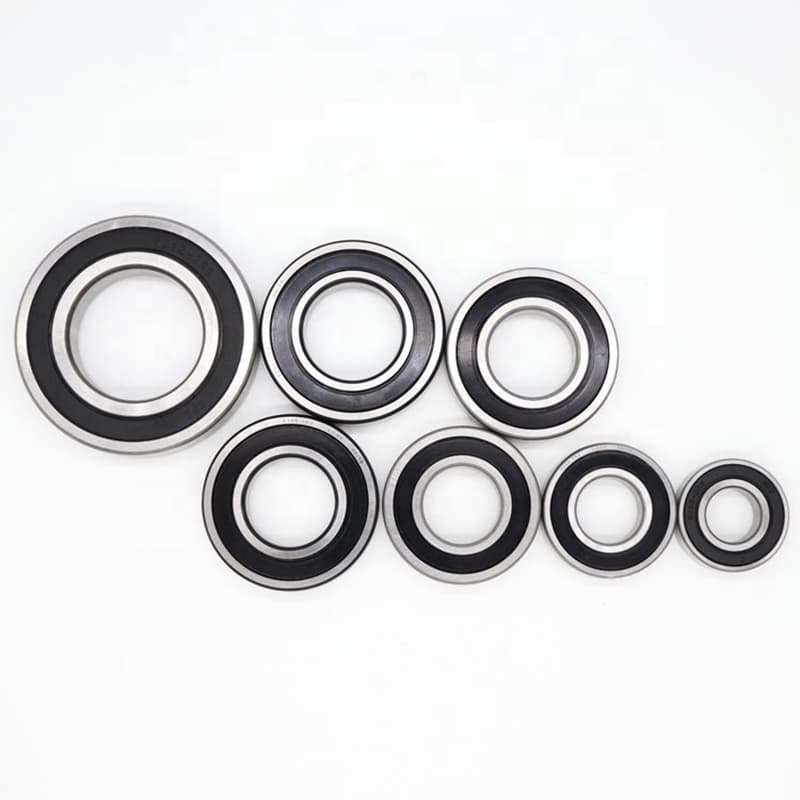
I am Leo from FYTZ Bearing. My factory in China makes real bearings. I have seen many buyers get tricked by fakes. Some come to me after losing thousands of dollars. I want to help you avoid that pain. Let me share what I learned from 15 years in this business. I will show you how to spot fakes before you pay. ## Why Are Counterfeit Bearings a Growing Problem in Global Trade? You see cheap bearings on Alibaba. The price is half of what I charge. You think it is a good deal. But then the bearings arrive. They look real. But after 200 hours, they get noisy. After 500 hours, they seize. That is the counterfeit problem. Counterfeit bearings are growing because global supply chains are long and hard to track. Fake products look like real ones. Many buyers only care about low price. Also, factories in some countries copy brands without permission. The result is that 10% to 20% of bearings in some markets are fake.
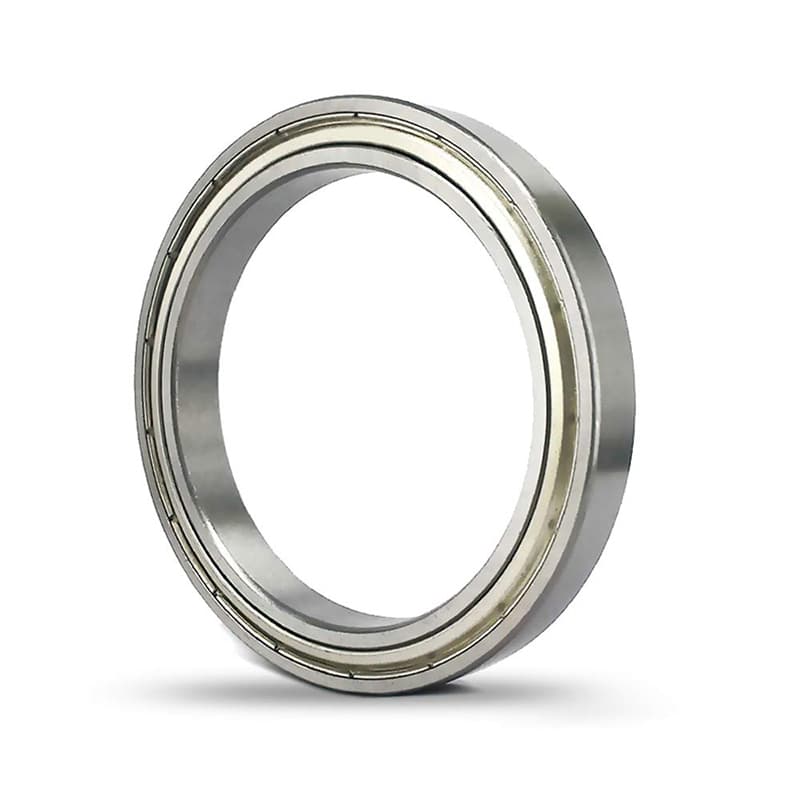
### Let me break down why fakes are everywhere now. The demand for cheap parts is high. Many buyers in India, Africa, and the Middle East want the lowest price. They do not ask questions. A fake bearing can cost $0.50 to make. A real bearing costs $2.00 to make. The fake sells for $1.50. The buyer saves $0.50. But the real bearing lasts 10,000 hours. The fake lasts 500 hours. In the long run, the buyer pays more. But many people only look at the first price. Supply chains are long. A bearing might come from a factory in China. Then it goes to a trader in Dubai. Then to a distributor in Kenya. Then to a repair shop. At each step, someone can swap real bearings for fakes. The final buyer never sees the original factory. I have seen this happen to my customers in Egypt. They ordered from me directly. But then a local trader offered a lower price. The trader bought fakes from a different source. The customer got bad bearings and thought it was my fault. That is why I now ask customers to buy only from my direct sales. Brand copying is easy. A fake factory buys a real bearing. They copy the markings. They buy boxes that look the same. A normal person cannot tell the difference. I know a factory in another Chinese city that makes fake SKF bearings. They print “SKF” on the side. They even put fake hologram stickers. The only way to know is to cut the bearing open. I have done that. Inside, the steel is rough. The balls are not round. The heat treatment is wrong. Online marketplaces make it worse. On Alibaba or TradeIndia, anyone can open a store. They post pictures of real bearings. Then they send fakes. By the time you find out, the store is gone or they blame shipping. I have a customer in Pakistan. He bought a sample from a new supplier. The sample was good. So he ordered a full container. The container was full of fakes. The supplier disappeared. He lost $15,000. Here is a table showing the scale of the problem: | Region | Estimated counterfeit bearing rate | Most copied brands | Common fake types | |——–|———————————–|——————–|——————–| | India | 15-20% | SKF, FAG, NSK | Deep groove, taper roller | | Middle East | 10-15% | SKF, Timken | Automotive bearings | | Southeast Asia | 20-30% | Koyo, NTN | Small ball bearings | | Africa | 15-25% | All major brands | Agricultural bearings | | South America | 10-15% | FAG, SKF | Industrial bearings | ## What Are the Red Flags in Pricing, Packaging, and Supplier Communication? You get a quote. The price is 40% lower than everyone else. You feel excited. But that low price is a warning. Real bearings cost money to make. Good steel is not cheap. Precision grinding takes time. If the price is too low, something is wrong. Red flags include: prices below 70% of the market average, poor quality printing on boxes, mismatched lot numbers, suppliers who avoid video calls, no test certificates, and rushed payment requests. Also watch for suppliers who cannot answer technical questions about bearings. [web:41][web:42][web:45]
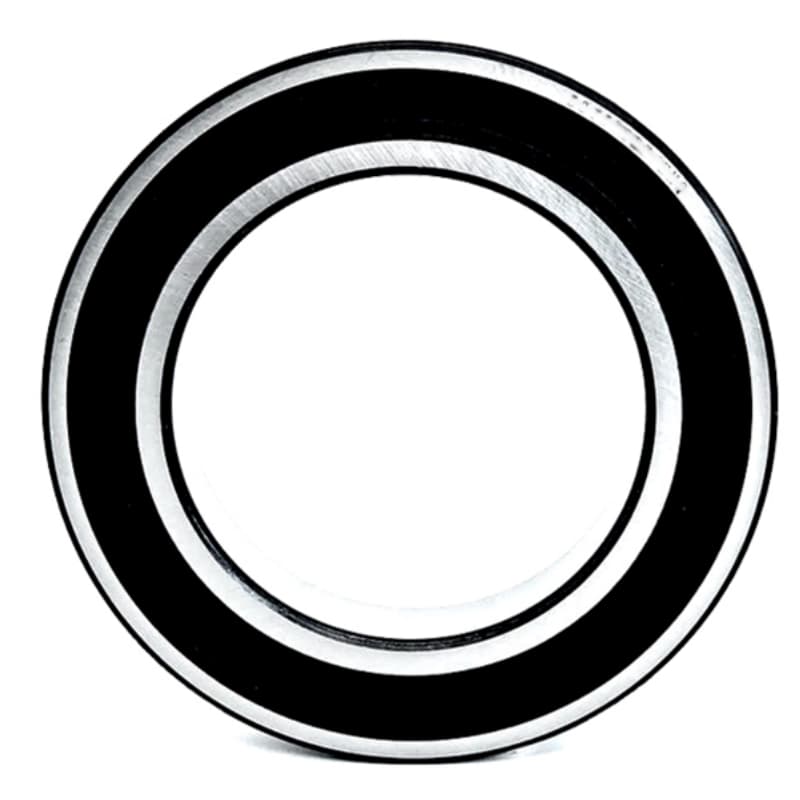
### Let me walk you through the warnings one by one. Pricing red flags. I know the cost of making a real 6202 deep groove ball bearing. The steel costs, the grinding time, the heat treatment, the grease, the packaging. My factory sells them for about $0.80 to $1.20 each in bulk. If someone offers $0.40 each, they are either losing money or selling fakes. No one loses money on purpose. So they are selling fakes. My rule is: if the price is less than 70% of the average from three trusted suppliers, do not buy. Packaging red flags. Real bearing brands have high-quality printing. The colors are exact. The fonts are sharp. Fake boxes have blurry text. The colors might be slightly off. Also look at the box construction. Real boxes have strong cardboard. Fake boxes feel thin and flaky. I once saw a fake SKF box. The “K” in SKF was a different shape. You need a real box to compare. So keep a sample of real packaging from a trusted source. Lot numbers and dates. Real bearings have batch numbers on the box and on the bearing itself. The numbers should match. Fake bearings often have no lot number. Or the number on the bearing is different from the box. Also check the manufacturing date. If the date is from last month but the bearing looks old or has rust, that is a problem. Real factories do not let new bearings rust. Supplier communication red flags. This is a big one for me. A real bearing supplier can answer questions. Ask them: “What is the dynamic load rating of a 6204?” or “What grease do you use?” A fake seller will hesitate or give wrong answers. Also, ask for a video call. Show me your factory. If they refuse, that is a warning. I always do video calls with new customers. I show them my production line. A fake supplier cannot do that. Documentation red flags. Real suppliers provide test certificates. These should show the results of dimension checks, hardness tests, and noise tests. Look for certificates that look generic. A real certificate has a unique number, a date, a signature, and a stamp. Fake certificates are often photocopies or have no details. Also ask for the mill certificate for the steel. Most fake suppliers cannot provide that. Payment pressure. If the supplier asks for 100% payment before shipping, be careful. Even 50% deposit is normal. But 100% upfront is risky. Also watch for requests to use Western Union or cryptocurrency. Real bearing factories take bank transfers. They do not need hidden payment methods. Here is a quick checklist I give to my distributor Rajesh in India: | Warning sign | What to check | Why it matters | |————–|—————|—————-| | Price too low | Compare with 3 other quotes | Fake bearings are cheap for a reason | | Box printing | Look for blurry text or wrong colors | Real brands have strict quality | | Missing lot numbers | Compare box and bearing numbers | Traceability is key for real products | | No video call | Ask for a live factory tour | Real suppliers have real factories | | Generic certificate | Check for details like date and stamp | Fakes skip the hard work of testing | | 100% upfront payment | Ask for letter of credit or 30% deposit | Protects your money | ## How Can You Verify Bearing Authenticity Using Markings, Certificates, and Traceability? You received the bearings. They look good. But you still feel unsure. How can you be sure they are real? You need three things: correct markings, real certificates, and a traceable path back to the factory. To verify authenticity, check that the bearing markings match the brand’s official format, request a batch-specific test certificate with actual measured values, and ask for a traceable lot number that the factory can confirm in writing. Also use the brand’s online verification system if available.
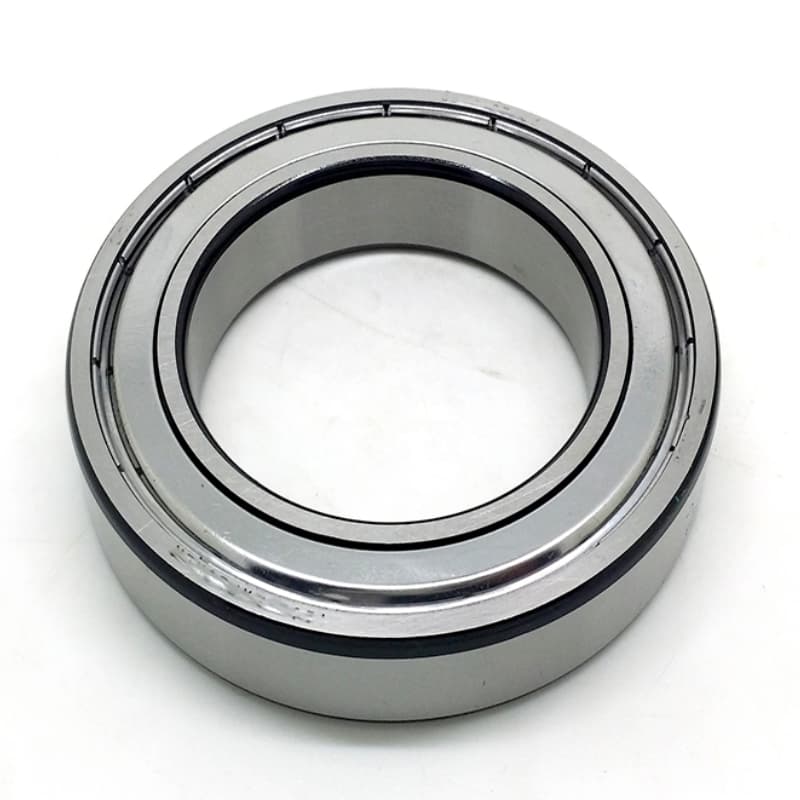
### Let me show you how to do each step like a pro. Check the markings on the bearing. Every real bearing has the brand name, the series number (like 6204), the country of origin, and sometimes a batch code. Use a magnifying glass. Look at the font. Real SKF bearings have a very specific “S” shape. Fake ones get it wrong. Also look at the engraving depth. Real bearings have clear, deep engraving. Fakes are often shallow or uneven. I also look at the inner and outer rings. Real bearings have smooth transitions. Fakes have sharp edges or tool marks. Get a known real bearing. Put it next to the suspect one. Compare side by side. If you do not have a real one, order a small sample from a trusted supplier first. Keep that sample as your master. Request the right certificates. Do not accept a generic “certificate of quality” that looks like a Word document. Ask for a dimensional test report. This report should list the actual measurements of the bearing for things like bore diameter, outer diameter, width, and radial runout. Then you can measure the bearings yourself and compare. Also ask for a material certificate. This shows the chemical composition of the steel. Real bearing steel has 1.0% carbon, 1.5% chromium, and very low sulfur and phosphorus. Fake steel often has too much sulfur. That makes it brittle. You can pay a lab to test a sample. The cost is about $100. That is cheap compared to losing a machine. Use traceability to your advantage. A real factory can tell you which production line made your bearings. They can give you the heat number of the steel. They can tell you the date of heat treatment. Ask for this information. Then email the factory directly using a contact from their official website. Do not use the email from the seller. Ask the factory: “Did you produce lot number X on date Y?” A real factory will answer yes or no. A fake supplier cannot do that. Use brand verification systems. SKF has an online verification tool. You type in the code on the box. SKF tells you if it is real. NSK and FAG have similar systems. However, fake makers sometimes copy real codes. So do not rely only on that. Also check the code once. Then check again a week later. If the same code shows up as verified twice, that is a warning. Real codes are only used once. I remember a customer in Turkey. He bought bearings with “FAG” markings. He used the FAG online verification. The code came back as real. But the bearings still failed. He sent me photos. I saw that the code on the box was real, but the bearings inside were different. The seller bought a small number of real boxes and put fake bearings inside. So do not just check the box. Check the bearing itself. Here is a verification table you can use: | Verification method | What to look for | Tools needed | Confidence level | |——————–|——————|————–|——————| | Visual marking check | Correct font, depth, and spacing | Magnifying glass, real sample | Medium | | Dimensional inspection | Match catalog values | Caliper, micrometer | High | | Hardness test | 58-64 HRC for races | Hardness tester or file | High (with tester) | | Certificate review | Specific measured values | None | Medium | | Factory traceability | Confirmed lot number | Email to factory | Very high | | Brand online portal | Single-use code | Smartphone | Medium-High | ## What Simple Physical Tests Can You Do Without Special Tools? You do not have a lab. You do not have a hardness tester. But you still want to check if a bearing is fake. There are simple tests you can do with common tools or even your hands. Simple physical tests include: measuring dimensions with a caliper, listening for grinding noise when spun, performing a file test on the inner ring, checking for rust or pitting, and comparing weight against a real bearing. These tests catch 80% of fakes without expensive equipment.
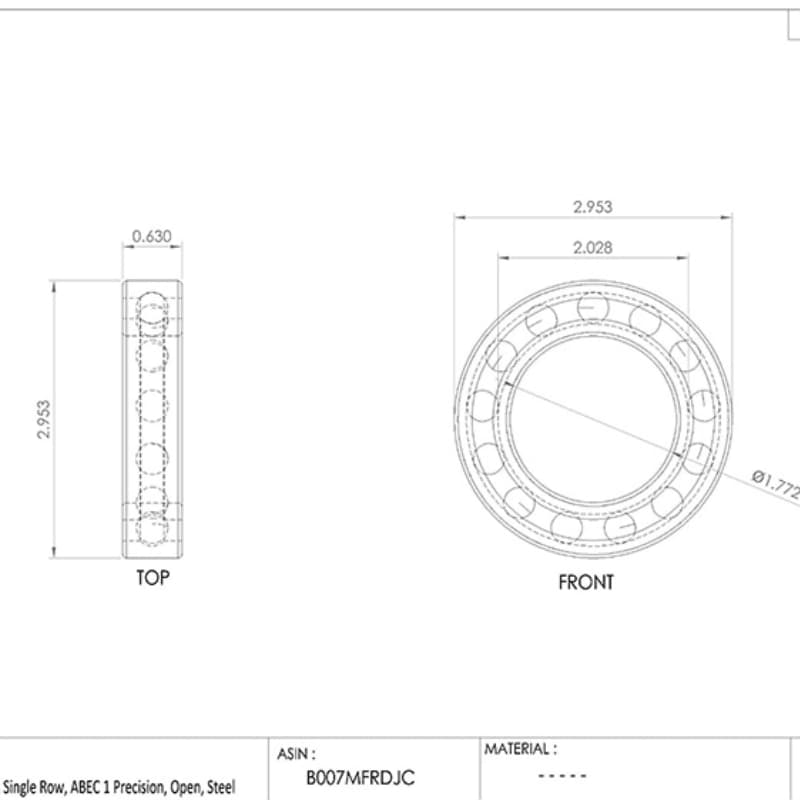
### Let me show you five easy tests. Test 1: The dimension test. Buy a digital caliper for $15. Measure the bore, the outer diameter, and the width. Compare with the catalog numbers. Real bearings are very close. For a 6204, the bore should be 20 mm, plus 0 to -0.010 mm. Fake bearings are often off by 0.03 mm or more. That does not sound like a lot. But that extra play will cause vibration. I have seen fake 6204 bearings with a bore of 19.95 mm. That is too tight. They will not fit on the shaft. Test 2: The spin and listen test. Hold the bearing in one hand. Spin the inner ring with your other hand. Listen carefully. A real bearing makes a smooth, quiet sound. A fake bearing makes a rough or scratchy sound. Sometimes you feel a grinding sensation. That means the races are not smooth. Also, spin the bearing both directions. A fake might feel smooth one way but rough the other way. That indicates bad race geometry. Test 3: The file test. Take a small metal file. Try to file the edge of the inner ring. Real bearing steel is very hard. The file will slide off. It will not cut. Fake steel is often soft. The file will bite in and leave a mark. This test works because fake makers skip the heat treatment. Heat treatment costs money. So they sell bearings that are soft. I recommend this test for every sample. It takes 10 seconds and tells you a lot. Test 4: The magnet test. Most real bearings are made of chrome steel. They are magnetic. But some fakes use low-grade steel that is less magnetic. Use a small neodymium magnet. Stick it to the inner ring. If the magnet sticks strongly, that is good. If it sticks weakly, the steel is wrong. However, note that stainless steel bearings are not magnetic. So this test only works for standard chrome steel bearings. Check your bearing type first. Test 5: The weight test. If you have a real bearing of the same size, put it on a digital scale. Then weigh the suspect bearing. Real bearings have consistent weight. A 6204 should weigh about 0.106 kg. A fake might be lighter because it has smaller balls or thinner rings. If the weight difference is more than 2%, be suspicious. I keep a sample real bearing on my desk. I use it to compare with every new shipment. Bonus test: The rust test. Put a drop of water on the bearing race. Wait 24 hours. Real bearing steel has chromium. It resists rust. Fake steel will show a brown rust spot quickly. This test takes time, but it is very reliable. I once did this with a customer in Bangladesh. The fake bearing rusted overnight. The real one stayed clean. He returned the whole container. Here is a summary table of physical tests: | Test name | What you need | Time | What fake bearing shows | |———–|—————|——|————————-| | Dimension | Caliper | 1 min | Off by more than 0.02 mm | | Spin & listen | Your ears | 10 sec | Rough or scratchy noise | | File test | Metal file | 10 sec | File cuts into metal | | Magnet test | Neodymium magnet | 10 sec | Weak magnetic attraction | | Weight test | Digital scale | 1 min | 2% lighter or heavier | | Rust test | Water, 24 hours | 24 hours | Brown rust spots | I use these tests every week. Even my own factory bearings get spot-checked. It is a good habit. You do not need a lab to catch most fakes. Just your eyes, ears, and a few cheap tools. ## Conclusion Check price and packaging, ask for real certificates, verify markings and traceability, and do simple physical tests. This stops most counterfeit bearings. —