
Your pick-and-place machine stops for the third time today. A small bearing failed again. Now your production line is waiting. That is lost money.
Deep groove ball bearings for light automation need low friction, high precision, and quiet operation. They also need the right internal clearance and grease to handle constant starts and stops. Pick the wrong bearing and your equipment will keep breaking down.
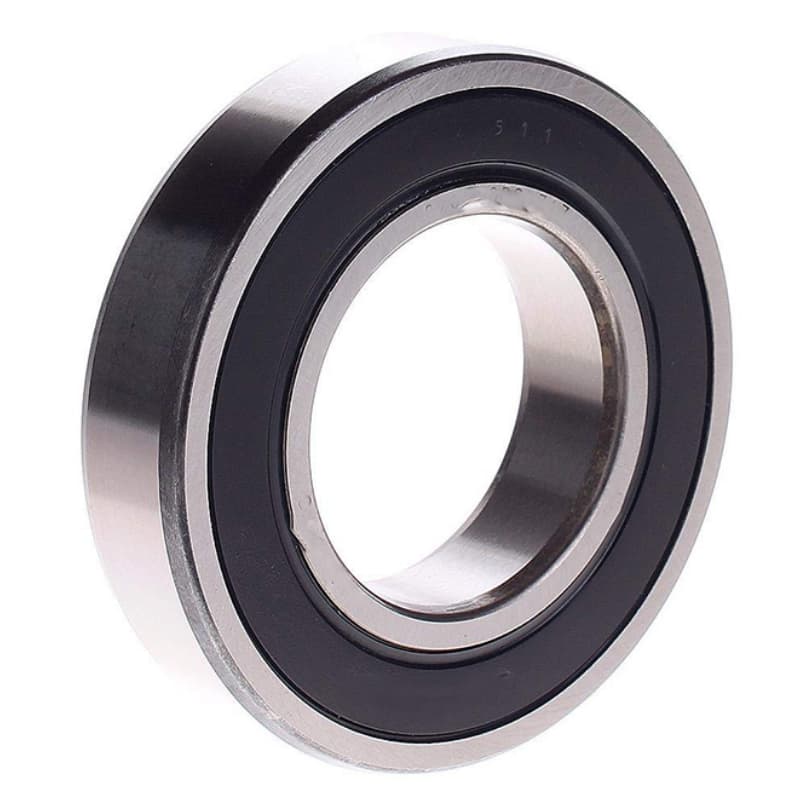
I am Leo from FYTZ Bearing. I sell bearings to machine builders in India, Turkey, and Brazil. Many of them make small automation gear like labelers, pick-and-place robots, and conveyor systems. They used to buy cheap bearings from local shops. Then their machines got noisy and hot. Now they come to me. I help them pick bearings that last. Let me share what I have learned.
Why Does Light Automation Equipment Need Special Deep Groove Ball Bearings?
You might think a small bearing is the same for any machine. That is not true. A fan bearing runs at steady speed for hours. An automation bearing starts and stops hundreds of times per day. It also changes direction. These cycles wear out a normal bearing fast.
Light automation bearings need special design features: lower torque for quick starts, tighter precision for accurate positioning, and better grease for stop-start cycles. Standard bearings from hardware stores cannot handle this job.
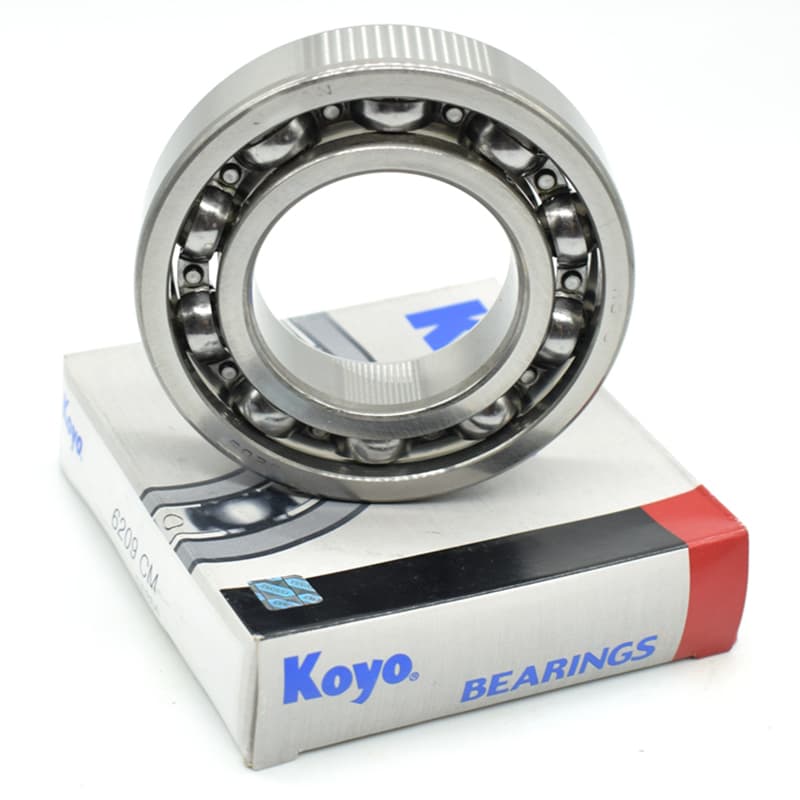
Let me explain the difference with real numbers.
Start-stop cycles kill bearings in a unique way. When a bearing starts, the oil film between the balls and the race is thin. There is a lot of metal-to-metal contact. This creates wear. A normal bearing might see 10 start-stops per day. An automation bearing can see 1,000 start-stops per day. That is 100 times more wear.
I have a customer in Indonesia. He makes small pick-and-place machines for electronics assembly. He used standard 6202 bearings from a local brand. The bearings lasted only three months. The machines got loose and lost positioning accuracy. We switched to my FYTZ bearings with special grease and a tighter internal clearance. Now the same bearings run for 18 months.
Precision is another big difference. A normal bearing has a running accuracy of P0 class. That is fine for a water pump. But an automation arm needs to stop within 0.1 mm. If the bearing has too much play, the arm drifts. So I always recommend P5 or P6 precision for automation. P5 bearings have half the runout of P0 bearings. That means your robot arm stops exactly where you tell it.
Noise is not just about comfort. A noisy bearing has vibration. Vibration shakes the whole machine. Over time, screws come loose and sensors misread. In a clean automation line, noise also tells you that the bearing is failing. I use a simple rule: if you can hear the bearing from one meter away, it is already too worn. Good automation bearings should be almost silent.
Here is a comparison table I use with my customers:
| Feature | Standard bearing | Automation bearing (FYTZ) | Why it matters |
|---|---|---|---|
| Precision class | P0 (normal) | P5 or P6 | Keeps position accurate |
| Internal clearance | C3 (normal) | C2 or CN (standard) | Reduces play for quick direction changes |
| Grease type | Mineral oil | Synthetic (PAO) | Handles stop-start cycles better |
| Noise level | Below 60 dB | Below 45 dB | Means smoother run and longer life |
| Torque | Not controlled | Low and consistent | Allows fast acceleration |
What Are the Key Selection Criteria for Automation Bearings?
You open a bearing catalog. There are so many numbers. Which ones matter for your small automation machine? Most buyers get confused. They pick a bearing that is too heavy or too loose. Then their machine does not perform well.
The four key selection criteria for automation bearings are: dynamic load rating for expected loads, limiting speed for your cycle rate, noise and vibration class for smooth operation, and precision grade for accurate positioning. Ignore any of these and your machine will give you trouble.
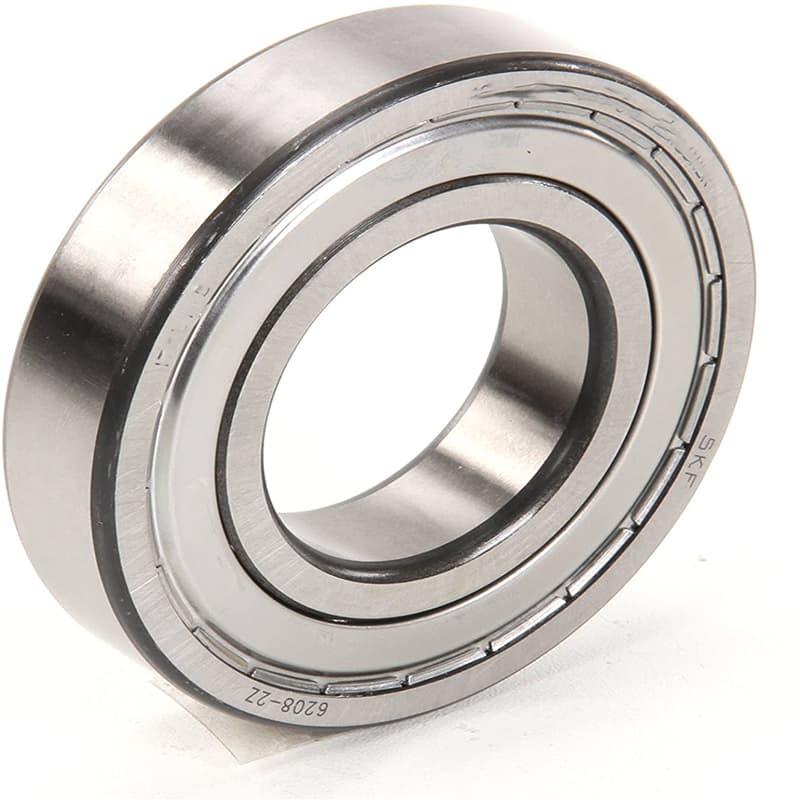
Let me walk you through each criterion step by step.
Dynamic load rating (C) tells you how much load the bearing can carry for one million revolutions. For light automation, the load is often small. But do not pick a bearing that is too small. A 6200 series bearing might be enough for a labeler. But a pick-and-place arm with a heavy gripper needs a 6300 series. I always calculate the actual load first. Then I add a safety factor of 1.5. For example, if your arm puts 200 N of radial load on the bearing, pick a bearing with C rating of at least 300 N.
Limiting speed is tricky in automation. Your machine might run at 1,000 RPM for one second, then stop. That is very different from running at 1,000 RPM steady. The problem is the grease. Every time the bearing stops, the grease gets pushed aside. Then on the next start, there is a moment of dry running. So I recommend a grease with high oil separation resistance. I also look at the speed rating in the catalog and then cut it by 30% for stop-start use. So if the catalog says 8,000 RPM, I only run it at 5,600 RPM for automation.
Noise and vibration class is often forgotten. In the catalog, you see letters like V3, V2, V1. V1 is the quietest. For automation, I recommend V2 or better. Why? Because vibration creates heat. Heat breaks down the grease. And noisy bearings are usually rough bearings. Rough bearings wear out faster. I once had a customer from Vietnam. He built conveyor belt rollers. He used V3 bearings. The rollers made a loud rumbling sound after two months. He thought the bearing failed. But the bearing was still fine. The noise was just annoying his workers. He switched to V2 bearings and the noise went away.
Precision grade (P5/P6) is the most important for positioning. A P0 bearing can have up to 13 microns of runout for a 6202 size. That is 0.013 mm. That might not sound like much. But in a pick-and-place machine, that error adds up. If you have three bearings on a single axis, the total error can be 0.04 mm. Your robot can miss the part. So I always tell my customers: for any machine that needs to put a part in a hole, use P5 or better. The cost is only 20% to 30% higher. But the accuracy improvement is huge.
Here is a quick guide I give to my distributor in India, Rajesh:
| Automation type | Load rating requirement | Speed need | Noise class | Precision class |
|---|---|---|---|---|
| Simple conveyor | Low (C < 5 kN) | Medium (3,000 RPM) | V3 | P0 |
| Labeling machine | Low to medium | Medium to high | V2 | P5 |
| Pick-and-place robot arm | Medium | High (stop-start) | V1 or V2 | P5 or P6 |
| Small CNC tool changer | Medium to high | High | V1 | P6 |
How Do You Match Bearing Internal Clearance and Lubrication with Automation Cycles?
You bought a high-precision bearing. But you still get failures. The bearing gets hot or feels rough. The problem is often internal clearance or grease. Most buyers pick the wrong combination for stop-start cycles.
For automation with frequent starts and stops, use normal (CN) or C2 internal clearance to reduce play. Use synthetic grease with a low viscosity base oil (ISO VG 68 to 100) for quick oil film formation at start. Do not use C3 clearance unless your machine runs hot continuously.
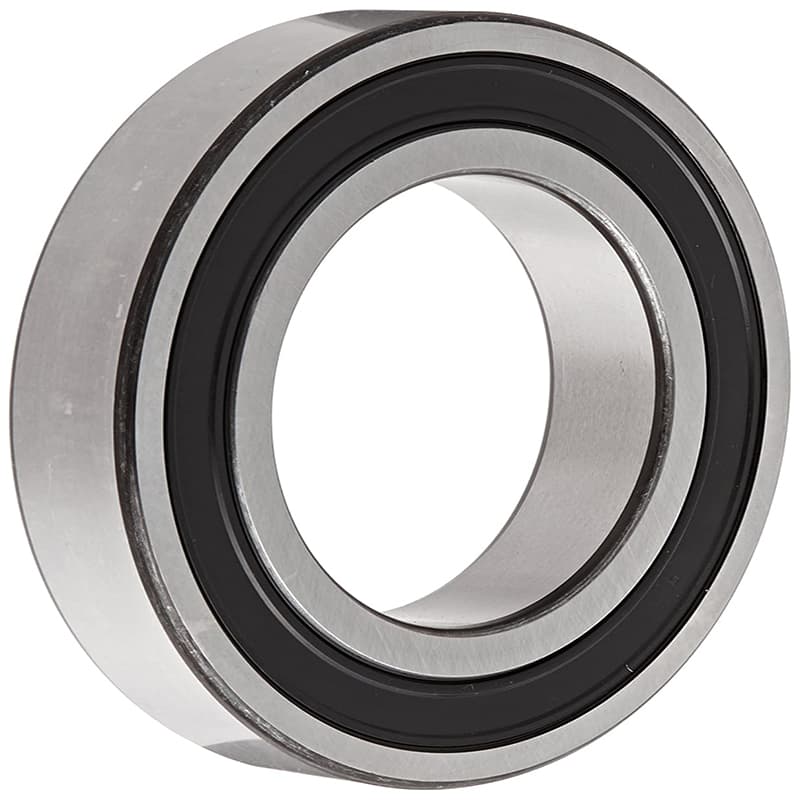
Let me show you why this choice matters so much.
Internal clearance is the space between the balls and the race when the bearing is not loaded. Most catalogs offer C2 (smaller clearance), CN (normal), and C3 (larger clearance). For continuous 24/7 lines, I often recommend C3 because the bearing heats up and expands. But for automation, the bearing does not run long enough to get very hot. So a C3 bearing has too much play. That play causes the balls to slide instead of roll when the machine starts and stops. Sliding creates wear and heat.
I made this mistake once. A customer in Pakistan built small CNC routers for wood cutting. The spindle bearings were C3 by my suggestion. But the router only ran for 30 seconds at a time. The bearings got noisy after 200 hours. I changed to C2 clearance. The noise went away. The bearings ran for 2,000 hours. So my rule now is: for stop-start cycles with no continuous heat, use CN or C2. C2 is even better for very precise positioning.
Lubrication for stop-start cycles is different. When a bearing stops, the grease gets squeezed out. When it starts again, the grease takes a few seconds to flow back. In those few seconds, the bearing runs almost dry. So you need a grease that flows quickly at room temperature. That means low base oil viscosity. I recommend ISO VG 68 or 100 for automation. For continuous running, I use VG 150 or 220. But those are too thick for quick starts.
Also, the thickener matters. Most automation bearings use lithium complex thickener. It works fine. But for very fast start-stop (like 1,000 starts per hour), I recommend polyurea thickener. Polyurea has better shear stability. It does not break down under constant starts and stops. I learned this from a customer in South Africa. He runs a packaging line with a high-speed rotary feeder. His bearings failed every 6 weeks with lithium grease. We switched to polyurea grease. Now they last 6 months.
How much grease should you put in? Most bearing factories add 25% to 35% of the free space. That is fine for steady running. But for automation, too much grease creates churning resistance. The motor has to work harder. So I put only 15% to 20% for high-speed stop-start automation. For low-speed automation (like a turntable that moves once per minute), 30% is fine.
Here is a table to help you match clearance and grease to your automation cycle:
| Automation cycle type | Recommended clearance | Grease base oil viscosity | Grease fill % | Example machine |
|---|---|---|---|---|
| Very frequent start-stop (1000+ cycles/day) | C2 | VG 68 (synthetic) | 15% | Pick-and-place robot |
| Moderate start-stop (200-500 cycles/day) | CN | VG 100 (synthetic) | 20% | Labeling machine |
| Continuous slow rotation (but many stops for loading) | CN | VG 150 (synthetic) | 25% | Indexing table |
| High speed continuous (few stops) | C3 | VG 220 (mineral) | 30% | Conveyor roller |
Why Are Compact Design and Low Torque Must-Have Features for Pick-and-Place Robots?
Pick-and-place robots have tight spaces. The arms are thin. The motors are small. A big or draggy bearing does not fit. It also wastes energy. So you need bearings that are small but strong. You also need bearings that turn with almost no resistance.
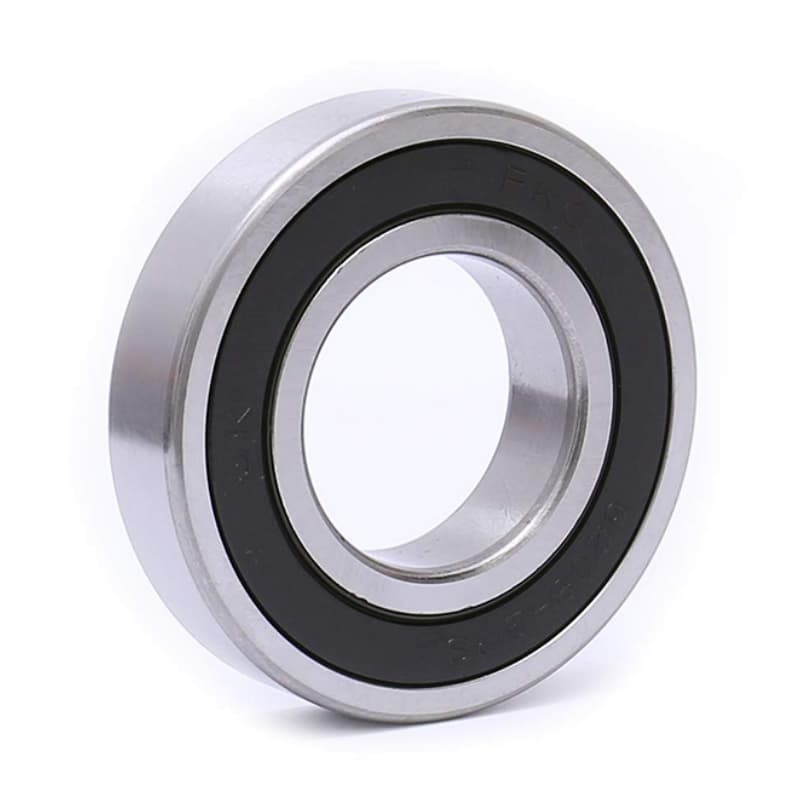
Pick-and-place robots need compact bearings with a thin cross section and low starting torque. Deep groove ball bearings in the 68xx and 69xx series are good choices. Also look for bearings with low torque grease and non-contact shields (ZZ) instead of rubber seals.
Let me explain how to get these features without breaking the bank.
Compact design means small outside diameter but a large enough bore. Standard 62xx bearings have a thick cross section. For example, a 6202 bearing has a 15 mm bore, 35 mm OD, and 11 mm width. That is too fat for a small robot arm. Instead, use a 6802 bearing. It has the same 15 mm bore but only 24 mm OD and 5 mm width. The cross section is half as thick. That saves space inside the robot arm.
However, a thinner bearing has lower load capacity. A 6202 has a dynamic load rating of about 7.65 kN. A 6802 has only 2.07 kN. So you need to check your loads. For a robot that picks up light parts (under 1 kg), a 68xx series is fine. For a heavier payload (2-3 kg), use a 69xx series. A 6902 has 15 mm bore, 28 mm OD, 7 mm width, and a load rating of 4.3 kN. That is a good middle choice.
Low starting torque is critical. Torque is the force needed to start the bearing turning. A high torque bearing makes the motor work harder. It also makes the robot move slower. For a pick-and-place robot, you want starting torque below 1 N·cm for small bearings. Standard bearings can be 2-3 N·cm. That difference adds up over thousands of cycles.
What creates torque? Two things: internal grease and seal drag. For low torque, use a low-viscosity grease (VG 68) and fill only 15% of the free space. Also, use non-contact shields (ZZ code) instead of rubber seals (RS code). Rubber seals rub on the inner ring. That creates drag. ZZ shields have a small gap. They let the bearing turn freely but still keep out large dust. Of course, if your robot works in a dusty place (like a wood shop), then you need contact seals. But in a clean electronics assembly line, ZZ is the better choice.
I remember a customer in Brazil. He built small delta robots for packing candy. He used bearings with rubber seals (2RS). The robots were slow and the motors got hot. He measured the starting torque at 2.8 N·cm. I sent him samples of the same bearing with ZZ shields and low-torque grease. The torque dropped to 0.9 N·cm. His robots became 20% faster. He now buys all his automation bearings from me.
Material and coating choices can also help. For very compact designs, you might use stainless steel bearings (440C or 304). They are more expensive but resist corrosion. In food automation lines, washdown happens every day. A standard chrome steel bearing will rust. I recommend stainless with PTFE-coated shields for food robots. The cost is double. But the bearing life is five times longer.
Here is a summary table for pick-and-place robot bearings:
| Robot type | Recommended series | Torque target | Seal/Shield | Grease type |
|---|---|---|---|---|
| Light pick (under 0.5 kg) | 68xx (e.g., 688) | < 0.8 N·cm | ZZ (shields) | Low viscosity synthetic |
| Medium pick (0.5-1.5 kg) | 69xx (e.g., 698) | < 1.2 N·cm | ZZ or 2RS (if dusty) | Medium viscosity |
| Heavy pick (1.5-3 kg) | 60xx (thin section) | < 1.8 N·cm | 2RS (contact seal) | Medium viscosity with EP |
| Corrosive environment (food/washdown) | 68xx stainless | < 1.5 N·cm | 2RS with PTFE | Food-grade grease |
Conclusion
Choose low torque, high precision, and the right clearance and grease for start-stop cycles. That keeps your automation machines running fast and accurate.