
Roller presses crush rocks and minerals. Their bearings fail fast if you pick the wrong type.
Spherical roller bearings are the only choice for roller presses and heavy compression equipment because they handle extreme radial loads, tolerate misalignment from shaft deflection, and absorb heavy shock without cracking. Standard ball bearings or cylindrical roller bearings cannot survive these conditions.
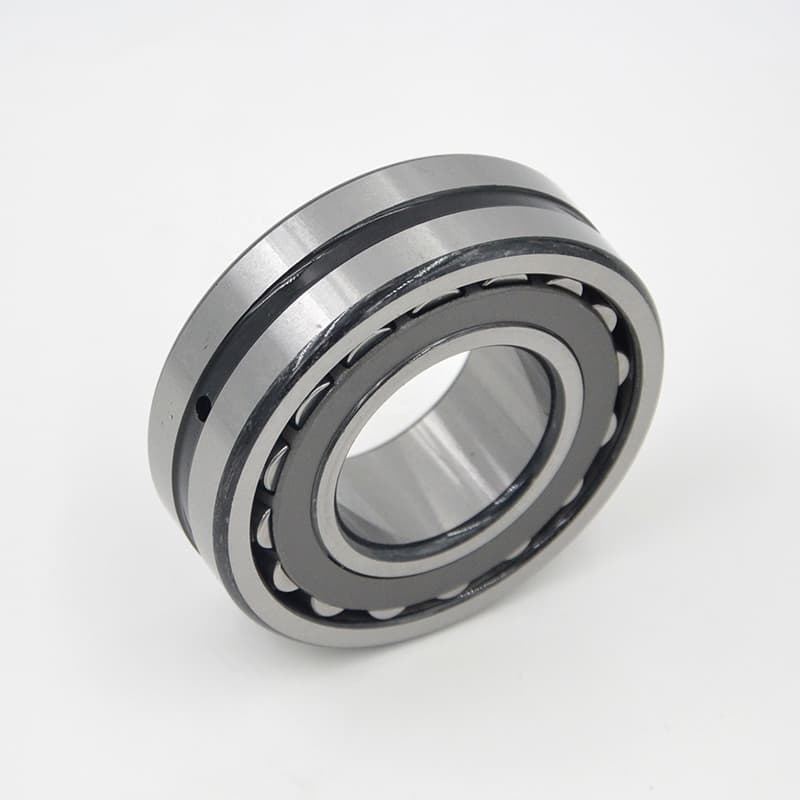
I have supplied bearings to cement plants and mining operations for years. Roller presses are some of the toughest applications I know. The loads are massive. The dust is everywhere. The shocks never stop. A standard bearing dies in days. A properly selected spherical roller bearing can run for years. Let me show you what works.
Why Do Roller Presses Need Special Spherical Roller Bearings Instead of Standard Bearings?
You might think a big deep groove ball bearing is enough. It is not. Roller presses break standard bearings in hours.
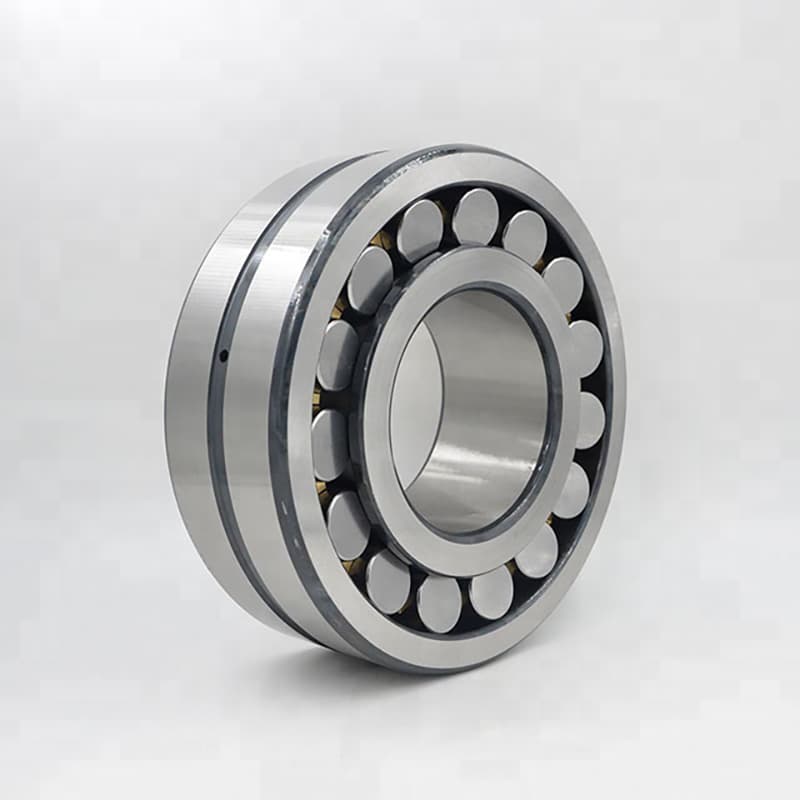
Roller presses need special spherical roller bearings1 because they have two rows of barrel-shaped rollers. This design spreads the heavy load2 over a large contact area. It also lets the bearing handle shaft misalignment up to 2 degrees. Standard bearings have point contact or line contact. They cannot take the same pressure without failing.
Three Design Features That Make Spherical Roller Bearings Different
Let me explain why spherical roller bearings are the only option for roller presses. I will compare them to other bearing types.
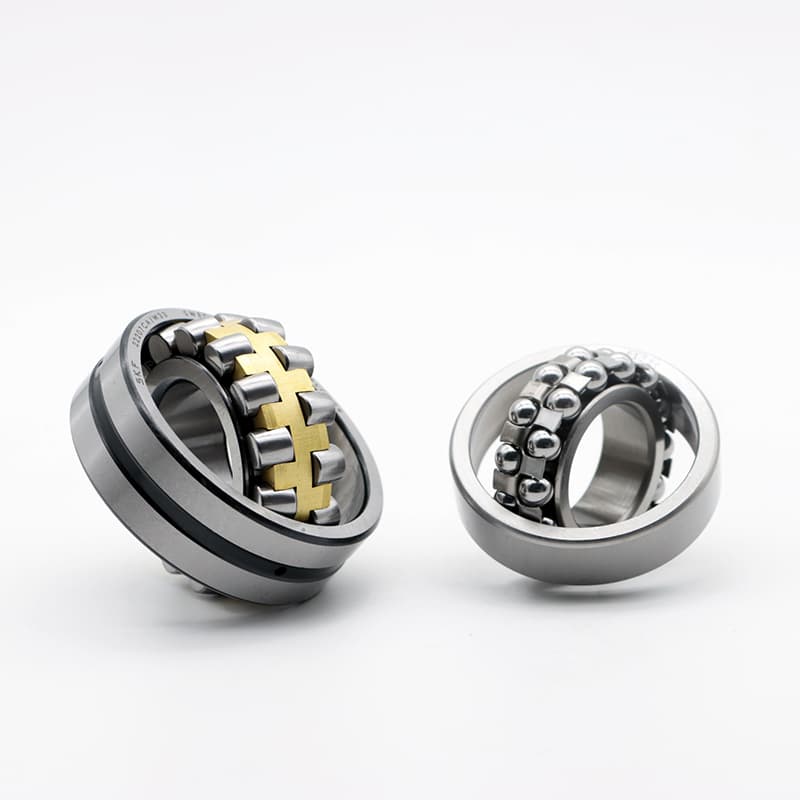
Feature 1: Two rows of barrel-shaped rollers. A deep groove ball bearing has point contact between the balls and the raceways. That is fine for light loads. A cylindrical roller bearing has line contact. That is better for heavy radial loads. But a spherical roller bearing has a curved roller shape. The rollers are fatter in the middle. This shape creates a larger contact area than any other bearing type. For a roller press that puts 100 tons of force on a bearing, that large contact area is the difference between survival and failure.
Feature 2: Self-aligning ability. Roller presses have heavy shafts. Those shafts bend under load. The bend creates misalignment. A standard bearing cannot handle misalignment. It creates edge loading. That means the roller or ball presses into the edge of the raceway. The pressure is too high. The metal spalls off. Spherical roller bearings have a spherical outer ring raceway. The inner ring and rollers can tilt inside the outer ring. This allows up to 2 degrees of misalignment without edge loading. That is a lifesaver for heavy equipment.
Feature 3: High shock load capacity3. Roller presses do not run smoothly. They crush rocks. The material feeds unevenly. One moment there is no load. The next moment a big rock enters the press. That is a shock load. Spherical roller bearings have a strong cage and thick rings. They can take these shocks without cracking. Standard bearings have thinner rings and weaker cages. One big shock and they are done.
Here is a comparison table for roller press applications:
| Bearing Type | Contact Type | Load Capacity | Misalignment Tolerance | Shock Resistance | Life in Roller Press |
|---|---|---|---|---|---|
| Deep groove ball bearing | Point | Low | <0.1° | Low | Days to weeks |
| Cylindrical roller bearing | Line | Medium | None | Medium | Weeks to months |
| Taper roller bearing | Line | Medium | None | Medium | Months |
| Spherical roller bearing | Curved surface | Very high | Up to 2° | High | Years |
What about cost? A spherical roller bearing costs more than a ball bearing. For a 22220 size, a spherical roller bearing might be $150. A deep groove ball bearing of similar size might be $50. But the ball bearing will fail in one week. The spherical roller bearing lasts two years. The cheaper bearing costs more in downtime and replacement labor. So the spherical roller bearing is actually cheaper in the long run. [Personal story placeholder: A cement plant in Egypt tried to save money by using cylindrical roller bearings on a roller press. The bearings failed after three weeks. The production loss was $50,000. They switched to spherical roller bearings from my factory. Those bearings lasted 18 months.]
How Do Spherical Roller Bearings Handle Extreme Radial Loads and Shock in Compression Equipment?
The numbers are scary. A roller press can put 10,000 Newtons of force on a bearing. That is like hanging a small car from each roller.
Spherical roller bearings1 handle extreme radial loads2 by distributing the force across two rows of rollers and a large curved contact area. For shock loads3, the bearing uses a strong machined brass or steel cage that keeps the rollers apart. The internal clearance (C4 or C5) gives the rollers room to move during sudden impacts without jamming.
The Physics of Heavy Loads and Shocks
Let me break down what happens inside a spherical roller bearing when the press is working.
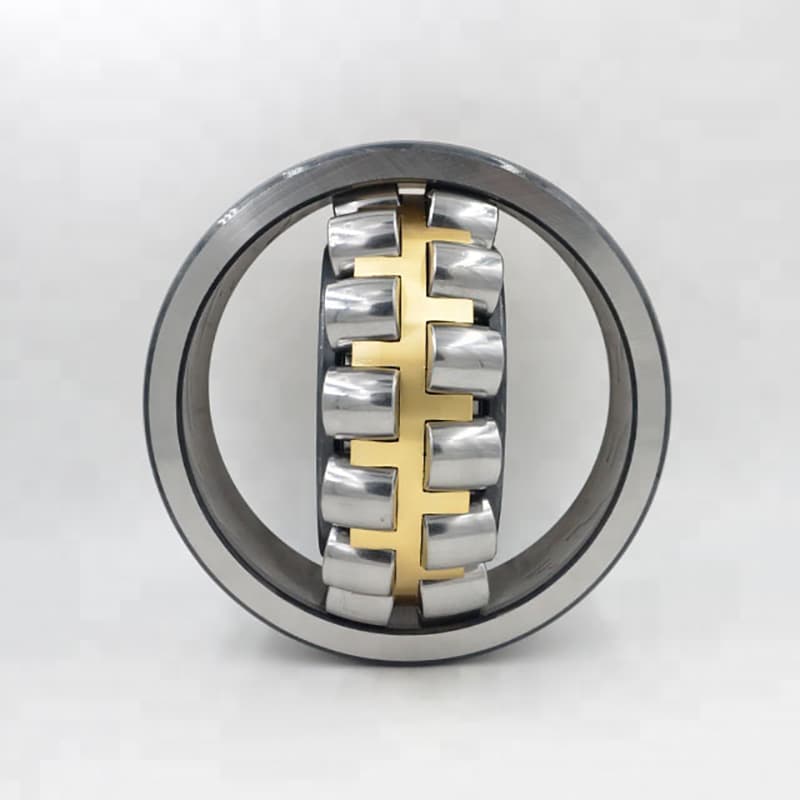
How radial loads are carried: The load pushes down on the shaft. The shaft pushes down on the inner ring. The inner ring pushes down on the rollers in the bottom half of the bearing. Those rollers push against the outer ring. The outer ring pushes against the housing. The load path is straight. But the magic is in the roller shape. Because the rollers are barrel-shaped, they make a wide contact patch with the raceways. A typical spherical roller bearing has a contact area that is 3 to 5 times larger than a cylindrical roller bearing of the same size. That means the pressure (force per area) is much lower. Lower pressure means less wear and longer life.
How shock loads are different: A steady load is one thing. A shock is another. When a big rock enters the press, the load spikes. It can be 3 to 5 times higher than the normal load for a fraction of a second. During that spike, the bearing rings try to deform. The rollers try to squeeze together. The cage holds them apart. If the cage is weak, it breaks. If the clearance is too small, the rollers jam against each other. That is why we use C4 or C5 clearance4 for roller presses. The extra space lets the rollers move without touching each other during the shock.
What about the cage material? For normal applications, a steel cage is fine. For roller presses with heavy shocks, I recommend a brass cage5. Brass is tougher than steel. It can bend a little without breaking. It also has a low coefficient of friction. That means the rollers slide against the cage easily. Some manufacturers use a special polymer cage. But for heavy shocks, brass is still the best.
Here is a load and shock guide6 for spherical roller bearings in compression equipment:
| Bearing Size (bore mm) | Normal Radial Load Capacity (kN) | Shock Load Capacity (kN) | Recommended Cage | Recommended Clearance |
|---|---|---|---|---|
| 100-150 | 300-500 | 900-1500 | Steel or brass | C4 |
| 150-200 | 500-800 | 1500-2400 | Brass | C4 or C5 |
| 200-250 | 800-1200 | 2400-3600 | Brass | C5 |
| 250-300 | 1200-1600 | 3600-4800 | Brass | C5 |
How to know if your bearing is overloaded: Look for signs of spalling7. Spalling is when small pieces of metal flake off the raceway. It looks like fish scales. If you see spalling, the load is too high for the bearing size. You need a larger bearing or a bearing with a higher load rating. Also check the rollers. If the rollers have flat spots or dents, the bearing has seen shock loads beyond its capacity.
My rule for roller press bearings: Always go one size larger than the calculation says. The cost difference between a 22220 and a 22224 is small. The safety margin is big. And always use C5 clearance for roller presses that run 24/7. [Personal story placeholder: A mining company in South Africa had roller press bearings failing every six months. I visited the site. The rocks were bigger than the design specification. I recommended upgrading to the next bearing size and using C5 clearance. The bearings then lasted two years. The upgrade cost an extra $200 per bearing. The savings in downtime was $20,000 per year.]
What Seal and Lubrication Solutions Protect Bearings in Dirty, High-Pressure Environments?
Roller presses live in a world of dust, water, and heat. The bearing seal is the only thing standing between clean grease and contaminated failure.
For dirty, high-pressure environments like roller presses, use spherical roller bearings1 with heavy-duty contact seals2 (2RSH or 2LS) on both sides. Add a labyrinth seal3 on the housing for extra protection. For lubrication, use a high-viscosity synthetic grease4 with extreme pressure additives5 (EP2). Regrease every 200 to 500 hours of operation using an automatic lubrication system.
Building a Defense Against Contamination
Let me give you a multi-layer protection strategy. One seal is not enough for a roller press.
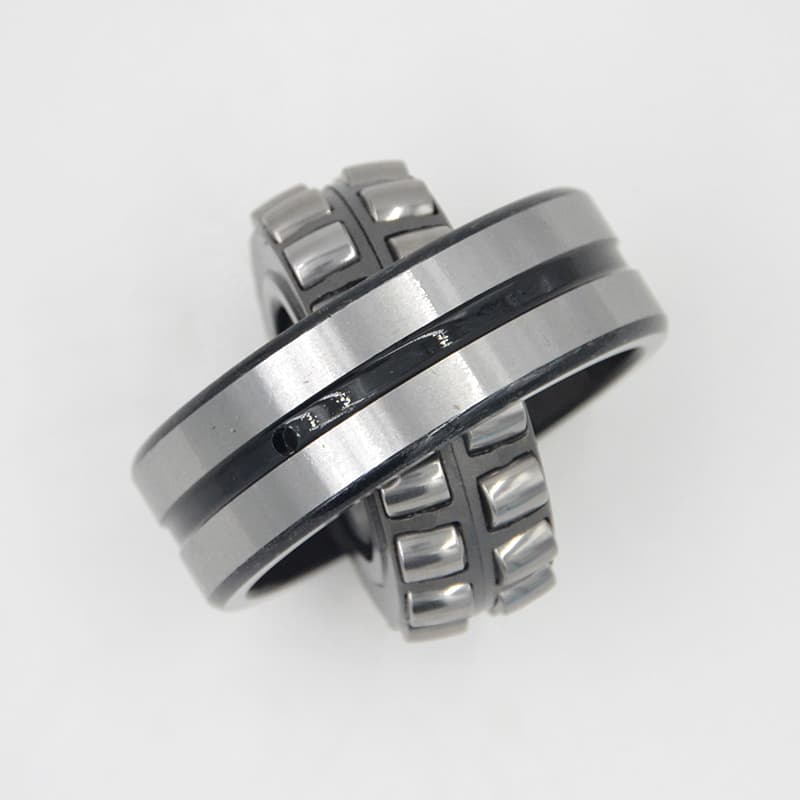
Layer 1: The bearing’s own seals. Most spherical roller bearings come without seals. You have to add them. For roller presses, I recommend a bearing with integral contact seals. These are called 2RSH or 2LS. The seal lip touches the inner ring. It keeps out fine dust and water. The seal also holds the grease inside. Without this seal, dust gets in within hours.
Layer 2: Housing seals. Even a good bearing seal can fail if the housing is open. You need additional seals on the housing. A labyrinth seal is best. It has a series of grooves that trap dust. The dust falls into the grooves instead of going into the bearing. For roller presses, use a labyrinth seal with a grease filling. You pump grease into the labyrinth once a week. The grease pushes out any dust that entered.
Layer 3: Positive pressure. Some roller press designs use a small air line to pressurize the bearing housing. The air flows out through the seals. This outward flow stops dust from coming in. It is expensive to set up, but it works very well. I have seen bearings in cement plants last three years with positive pressure.
Now about lubrication: Roller press bearings need a special grease. Standard lithium grease will not survive.
- Base oil viscosity: Use a grease with a base oil viscosity of 200 to 400 cSt at 40°C. Thicker oil stays on the rollers under heavy pressure.
- EP additives: Extreme pressure additives are a must. Look for "EP2" on the label. The EP additive forms a protective film on the metal surfaces. That film prevents metal-to-metal contact during shocks.
- Thickener type: Use a lithium complex or a polyurea grease. These thickeners have good mechanical stability. They do not break down from the churning action of the rollers.
- Dropping point: Above 250°C. Roller press bearings can get very hot. You do not want the grease to melt and run out.
Here is a seal and lubrication recommendation table:
| Protection Level | Bearing Seal | Housing Seal | Grease Type | Regreasing Interval |
|---|---|---|---|---|
| Basic (indoor, low dust) | 2RS (contact rubber) | Standard felt seal | Lithium EP2 | Every 500 hours |
| Good (normal dusty conditions) | 2RSH (heavy contact) | Labyrinth with grease | Lithium complex EP2 | Every 300 hours |
| Better (wet or fine dust) | 2RSH + relubrication groove | Double labyrinth | Synthetic EP2 (PAO base) | Every 200 hours |
| Best (extreme dust, 24/7) | 2LS (special heavy seal) | Pressurized labyrinth | Synthetic EP2 with solid additives | Continuous (auto system) |
How much grease to put in: For a large spherical roller bearing (200mm bore), the initial fill should be about 30% to 50% of the internal free space. That is roughly 200 to 400 grams of grease. For regreasing, add 50 to 100 grams every 200 hours. Too much grease causes overheating. Too little causes wear.
How to regrease a roller press bearing safely: First, clean the grease fitting. Wipe off all dust. Then pump grease slowly while the press is running. The running bearing will push out the old grease. Watch the seal area. When you see fresh grease coming out, stop. Then run the press for 10 minutes. The excess grease will purge out. Wipe it away. Do not overgrease. [Personal story placeholder: A fertilizer plant in India had roller press bearings failing from grease starvation. They were regreasing every 1,000 hours. I told them to reduce to every 300 hours. The bearings lasted twice as long. The extra grease cost $100 per year. The savings in bearing replacements was $5,000.]
How Do You Choose the Right Internal Clearance (C3, C4, or C5) for Roller Press Applications?
Clearance is not one-size-fits-all. Pick too little and the bearing seizes. Pick too much and it rattles and wears.
For roller press applications, choose C4 clearance1 as a minimum. Use C5 clearance2 for presses that run at high temperatures (above 80°C) or with very tight shaft fits. The high clearance gives room for thermal expansion3 and shaft bending4. It also allows the rollers to survive shock loads without jamming against each other.
Why Roller Presses Need Extra Clearance
Let me explain the three reasons why standard clearance (CN) or even C3 is not enough for a roller press.
Reason 1: Thermal expansion. A roller press bearing gets hot. The inner ring expands more than the outer ring because it is hotter. The shaft also expands. That expansion eats up the internal clearance. At 100°C, a 200mm bore bearing loses about 0.04mm (40 micrometers) of clearance. A C3 bearing for that size has about 0.05mm to 0.08mm clearance. After expansion, you might have only 0.01mm to 0.04mm left. That is too small. A C4 bearing has 0.08mm to 0.11mm. After expansion, you still have 0.04mm to 0.07mm. That is safe.
Reason 2: Shaft bending and housing deformation. Under heavy load, the shaft bends. The housing also deforms slightly. These deformations are not uniform. They can reduce the clearance in one area and increase it in another. A larger clearance gives you a safety margin. The bearing can still run smoothly even with some deformation.
Reason 3: Shock load survival. During a shock, the load spikes. The bearing rings compress slightly. The rollers are pushed into the raceways. This compression temporarily reduces the clearance. If the starting clearance is too small, the rollers will jam against each other or against the cage. That jamming creates heat and wear. With C4 or C5 clearance, there is enough space for the rollers to move without touching.
Here is a clearance selection table5 for spherical roller bearings (series 222, bore 100-200mm):
| Clearance Class | Radial Clearance Range (µm) | Max Operating Temperature | Shaft Fit | Best For |
|---|---|---|---|---|
| CN | 30-50 | Up to 50°C | Normal (j6) | Light duty, low speed |
| C3 | 50-70 | Up to 70°C | Normal to tight | Medium duty, some heat |
| C4 | 70-95 | Up to 100°C | Tight (k6, m6) | Heavy duty, roller presses |
| C5 | 95-120 | Up to 120°C | Very tight (p6) | Extreme duty, high heat, heavy shocks |
How to verify you have the right clearance after installation: You cannot measure the clearance easily after the bearing is installed. But you can check the temperature. Run the press for one hour at full load. Then measure the housing temperature near the bearing. If the temperature is below 70°C, the clearance is likely fine. If it is above 90°C, the clearance might be too small. If the bearing is making a loud rattling noise even when warm, the clearance might be too large.
What about special clearance for roller presses? Some bearing manufacturers offer a "C4F" clearance for roller presses. The F stands for "free" or "full." It is even larger than standard C4. I recommend this for roller presses that run 24/7 with very high loads. Ask your supplier. We can make it for you.
A common mistake: People think C5 clearance is always better. It is not. Too much clearance causes the rollers to slide instead of roll. Sliding creates heat and wear. So only use C5 if you really need it. For most roller presses, C4 is the sweet spot. [Personal story placeholder: A steel mill in Russia used C3 bearings on a roller press. The bearings seized every two months. I measured the housing temperature. It was 95°C. I recommended C5 clearance. The bearings ran for 14 months. The mill now uses C5 as standard for all roller presses.]
Conclusion
Use spherical roller bearings with C4 or C5 clearance, heavy seals, EP grease, and regrease often. Your roller press will run strong.
-
Understanding C4 clearance is crucial for ensuring optimal performance in roller press applications. ↩ ↩ ↩ ↩
-
Explore the specifics of C5 clearance to determine if it’s necessary for your roller press needs. ↩ ↩ ↩ ↩
-
Learn about thermal expansion’s impact on bearing performance to make informed decisions. ↩ ↩ ↩ ↩
-
Understanding shaft bending can help you choose the right clearance for your roller press. ↩ ↩ ↩
-
A clearance selection table provides essential data for selecting the right bearing clearance. ↩ ↩ ↩
-
A load and shock guide provides essential information for selecting the right bearings for your needs. ↩
-
Learn about spalling in bearings to identify issues early and maintain equipment efficiency. ↩