
Shafts bend. Housings shift. Bearings get crushed on one edge. That is misalignment.
For high-misalignment applications, choose spherical roller bearings with a wider internal design or special C4 clearance. Standard spherical roller bearings handle up to 1.5 degrees of misalignment. High-misalignment versions can handle 2 to 3 degrees. Also look for bearings without cages or with special guide rings.
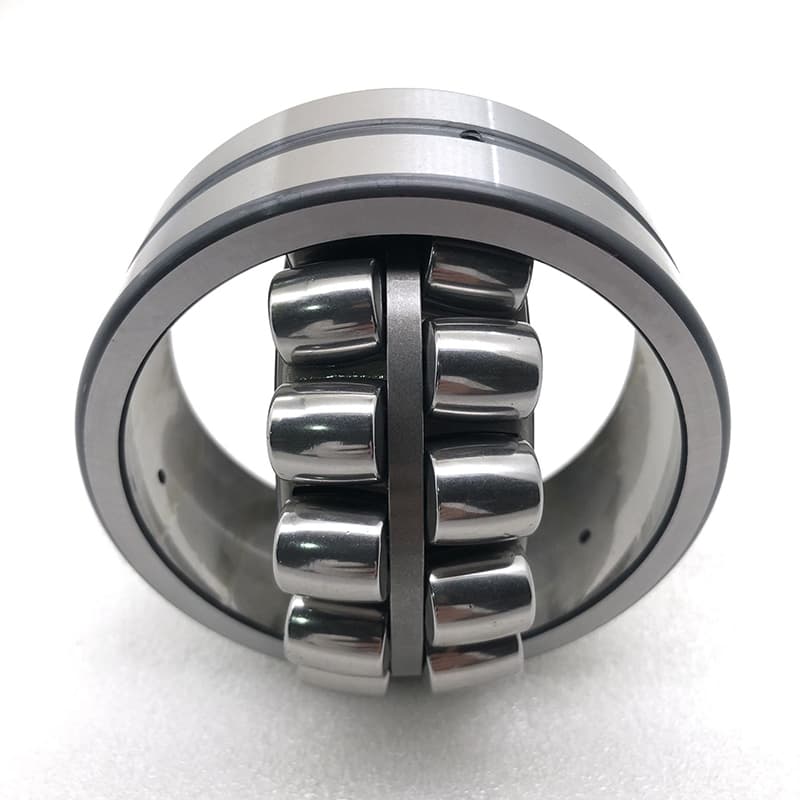
I have sold bearings to many industries where misalignment is a daily problem. Paper mills, conveyor systems, and vibrating screens all have shafts that move. A normal bearing would fail in weeks. A properly chosen spherical roller bearing can run for years. Let me walk you through what you need to know.
What Is Considered High Misalignment in Spherical Roller Bearings?
You cannot fix misalignment with a hammer. You need a bearing that accepts it. But first, you need to know what "high" really means.
High misalignment for spherical roller bearings1 is any angle above 1.5 degrees between the inner and outer rings. Standard bearings handle 0.5 to 1.5 degrees. High-misalignment versions handle 2 to 3 degrees. Anything above 3 degrees requires special designs like spherical roller bearings with floating guide rings or even completely different bearing types.
[^2] for spherical roller bearings](https://sdycbearing.com/wp-content/uploads/2025/12/Spherical-Roller-Bearings-45-1.jpg)
How Misalignment Is Measured and Why It Matters
Let me explain misalignment in simple terms. A bearing has an inner ring and an outer ring. When the shaft bends or the housing tilts, the inner ring is no longer parallel to the outer ring. The angle between them is the misalignment.
Why does misalignment kill bearings? In a normal bearing, the load is spread evenly across the rollers. When the bearing is misaligned, the load concentrates on one edge of the rollers. That edge sees very high pressure. The pressure can be 5 to 10 times higher than the design limit. The roller digs into the raceway. The metal spalls off. The bearing fails fast.
What angles are safe? For a deep groove ball bearing, the safe misalignment is less than 0.1 degrees. That is almost nothing. For a cylindrical roller bearing, it is zero. They cannot take any misalignment. For a standard spherical roller bearing, the manufacturer says 0.5 to 1.5 degrees. But that is under light load. Under heavy load, the safe angle is much smaller.
When do we call it "high" misalignment? In my experience, once you go above 1.5 degrees, you need to pay special attention. That is high misalignment. Many standard spherical roller bearings can technically handle 2 degrees, but the bearing life2 drops by 50% or more. So for long life, 1.5 degrees is the practical limit for standard bearings. Above that, you need a bearing specifically designed for high misalignment.
Here is a misalignment tolerance table3 for different bearing types:
| Bearing Type | Safe Misalignment (Light Load) | Safe Misalignment (Heavy Load) | Life Reduction at 1.5° |
|---|---|---|---|
| Deep groove ball bearing | 0.05° – 0.1° | 0.02° – 0.05° | 90% |
| Cylindrical roller bearing | 0° | 0° | 100% (immediate failure) |
| Standard spherical roller bearing | 1.0° – 1.5° | 0.5° – 0.7° | 60% |
| High-misalignment spherical roller bearing | 2.0° – 3.0° | 1.0° – 1.5° | 30% |
How to measure misalignment in your machine: You need a dial indicator and a straight edge. Mount the dial indicator on the housing. Measure the runout on the shaft at two points. The difference in height divided by the distance between the points gives you the angle. Or use a laser alignment tool. That is more accurate.
My advice: If your measured misalignment is above 1 degree, do not use a standard spherical roller bearing. Go for a high-misalignment version. The extra cost is small compared to the cost of a bearing failure. [Personal story placeholder: A paper mill in Indonesia had a dryer cylinder with misalignment of 1.8 degrees. They used standard spherical roller bearings. The bearings failed every four months. I sold them high-misalignment bearings with special internal geometry. The bearings lasted two years.]
How Much Angular Misalignment Can Different Spherical Roller Bearings Handle?
Not all spherical roller bearings1 are the same. Some can tilt more than others. You need to know the limits.
Standard spherical roller bearings from most manufacturers handle 1 to 1.5 degrees of angular misalignment4 under normal loads. High-misalignment series (often called "E" or "CA" designs) handle 2 to 2.5 degrees. Some special bearings with modified internal geometry can handle 3 degrees. For anything above 3 degrees, you need a different solution like a self-aligning bearing block or a cardan joint.
[^3] of different spherical roller bearings](https://sdycbearing.com/wp-content/uploads/2025/12/Spherical-Roller-Bearings-44-1.jpg)
Breaking Down the Numbers by Bearing Series
Let me give you real numbers from bearing catalogs. I have tested many of these in my factory.
Standard 223 series (barrel rollers): This is the most common spherical roller bearing. The misalignment capacity is 1.5 degrees. But that is the absolute maximum. At 1.5 degrees, the bearing life is reduced. For continuous operation, I recommend staying below 1 degree for the 223 series.
222 series (shorter rollers): The 222 series has a shorter roller length. That gives more room for tilting. The misalignment capacity is 2 degrees. This series is better for high-misalignment applications. Many customers switch from 223 to 222 when they have alignment problems.
213 series (smaller bearings): These are for lighter loads. The misalignment capacity is 2.5 degrees. But the load rating3 is lower. So you can only use them if the load is light.
High-misalignment special designs: Some manufacturers offer bearings with a modified internal shape. The outer ring raceway has a larger radius. The rollers are shorter. These can handle 2.5 to 3 degrees. They cost more. But they work.
What about bearings without cages? Full complement spherical roller bearings have no cage. They have more rollers. But the misalignment capacity is lower, usually less than 1 degree. The rollers rub against each other when tilted. So avoid full complement for high misalignment.
Here is a comparison table of common spherical roller bearing series5:
| Bearing Series | Standard Misalignment Capacity | High-Misalignment Version | Load Rating | Best Application |
|---|---|---|---|---|
| 223 | 1.5° | 2° | Very high | Heavy loads, moderate misalignment |
| 222 | 2° | 2.5° | High | Medium to heavy loads, high misalignment |
| 213 | 2.5° | 3° | Medium | Light to medium loads, very high misalignment |
| 230 | 1.5° | 2° | Medium | Wide bearings, moderate misalignment |
| 231 | 1.5° | 2° | Very high | Very heavy loads, large shafts |
How load affects misalignment capacity: The numbers above are for light loads (P < 0.05C, where C is the dynamic load rating). When the load is heavy, the misalignment capacity drops. At full load (P = 0.2C), the capacity is about half of the light load value. So if you have a heavy load and 2 degrees of misalignment, you need a high-misalignment bearing or you need to reduce the load.
One trick to increase misalignment capacity: Use a bearing with C4 or C5 internal clearance6. The extra clearance gives the rollers more room to tilt. It does not change the design limit, but it helps the bearing survive at higher angles. I have seen C5 bearings run at 2.5 degrees of misalignment where a CN clearance bearing would have failed.
My rule for choosing: Measure your misalignment. Add 0.5 degrees for safety. Then pick a bearing with a misalignment capacity higher than that number. Do not run a bearing at its absolute limit. Give yourself a margin. [Personal story placeholder: A vibrating screen manufacturer in Turkey had misalignment of 2.2 degrees. He tried standard 223 bearings. They lasted two weeks. He switched to 222 series bearings with C4 clearance. The bearings lasted eight months. Then he found a high-misalignment version of the 222 series. Those lasted two years.]
Which Bearing Series and Design Features Give the Best Misalignment Tolerance?
You want the bearing to tilt. But you also want it to carry load. Some designs are better than others.
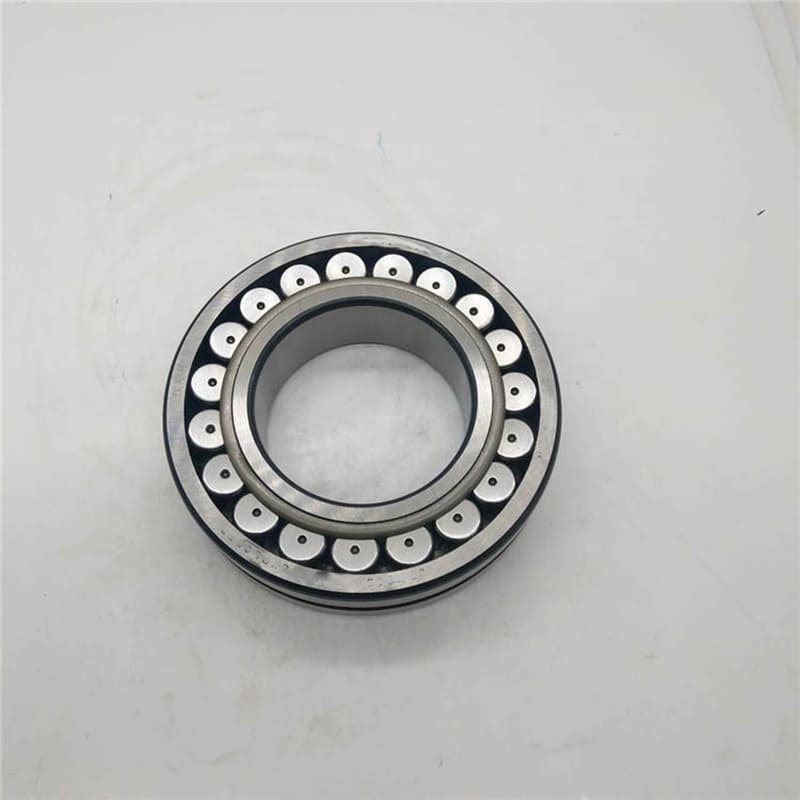
The bearing series with the best misalignment tolerance is the 213 series1, followed by the 222 series4. For design features, look for bearings with shorter rollers2, a larger outer ring raceway radius3, and a brass cage5. Also choose a bearing with C4 or C5 internal clearance6. Avoid bearings with heavy-duty cages or full complement designs.
What to Look for on the Specification Sheet
Let me teach you how to read a bearing catalog. I will tell you which numbers and words matter.
Feature 1: Roller length. Shorter rollers tilt more easily. In the same bore size, a 222 bearing has shorter rollers than a 223 bearing. That is why 222 handles more misalignment. If you see a bearing with "short roller" in the description, that is good for misalignment.
Feature 2: Outer ring raceway radius. The radius is called "Ro" in engineering drawings. A larger radius means the inner ring can tilt more before the rollers hit the edge of the raceway. High-misalignment bearings have a larger Ro. Standard bearings have a smaller Ro. You cannot see this without cutting the bearing open. But the catalog will sometimes mention "increased misalignment capability."
Feature 3: Cage type. For high misalignment, a brass cage is better than a steel cage. Brass is more ductile. It can bend a little without breaking. The rollers push against the cage when the bearing tilts. A brass cage survives that pushing. A steel cage may crack. A polyamide (plastic) cage is also good, but it has temperature limits. For hot environments, use brass.
Feature 4: Internal clearance. As I mentioned, C4 or C5 clearance helps. The extra space gives the rollers room to move. When the bearing tilts, the rollers shift slightly. With CN clearance, they may jam. With C4, they slide.
Feature 5: Guide ring or floating guide. Some spherical roller bearings have a guide ring that keeps the rollers centered. For high misalignment, a floating guide design is better. It allows the rollers to move axially. Fixed guides restrict movement.
Here is a feature recommendation table:
| Feature | Best for High Misalignment | Why | Avoid |
|---|---|---|---|
| Bearing series | 213, 222 | Shorter rollers, larger raceway radius | 223, 230 |
| Roller length | Short | Less contact length, more tilt room | Long |
| Cage material | Brass or polyamide | Ductile, resists cracking | Steel (for high angles) |
| Internal clearance | C4 or C5 | Extra space for roller movement | CN, C3 |
| Guide ring | Floating | Allows axial roller movement | Fixed |
| Seal type | No seal or non-contact | Seals can rub when tilted | Contact seals (2RS) |
What about sealed spherical roller bearings? Most sealed spherical roller bearings have contact seals. When the bearing tilts, the seal rubs unevenly. It may leak or wear out fast. For high-misalignment applications, I recommend using open bearings with external housing seals. The housing seal can be designed to handle misalignment. The bearing seal cannot.
A special case: bearings without inner ring. Some high-misalignment applications use a bearing with a tapered bore and an adapter sleeve. The inner ring is split or has a different design. These bearings can handle more misalignment because the inner ring is not as stiff. But they are harder to mount. Only use them if you have experience.
My go-to choice: For most high-misalignment applications, I recommend the 222 series with a brass cage, C4 clearance, and open design. This combination gives you 2 degrees of misalignment capacity with good load rating. It is available from many manufacturers. It is not too expensive. [Personal story placeholder: A cement plant in Brazil had a bucket elevator with a long shaft. The shaft bent under load. The misalignment was 1.9 degrees. They tried 223 bearings with steel cages. The cages broke. I recommended 222 bearings with brass cages and C4 clearance. The new bearings ran for 18 months without failure.]
How Do Seals and Lubrication Change When Misalignment Is High?
Seals are designed for perfect alignment. When the bearing tilts, the seal gap changes. Lubrication also behaves differently.
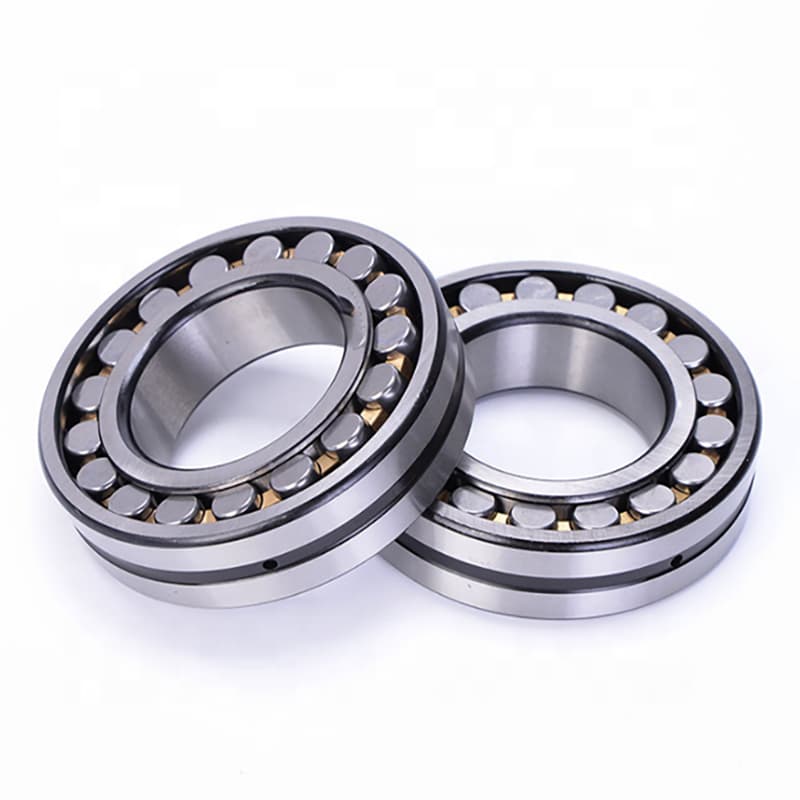
When misalignment is high, contact seals (2RS)1 can fail because the lip lifts away from the inner ring on one side and presses too hard on the other. Use non-contact seals (2RZ)4 or open bearings with external labyrinth seal2s instead. For lubrication, use a thicker grease (NLGI 2 or 3) to prevent leakage from the uneven seal gap. Increase regreasing frequency3 by 50%.
How Misalignment Breaks Seals
Let me show you what happens to a seal when the bearing tilts. It is simple physics.
The problem with contact seals. A contact seal has a rubber lip that touches the inner ring. The lip presses evenly all around when the bearing is straight. When the bearing tilts by 2 degrees, the inner ring is no longer parallel to the seal. On one side, the gap becomes smaller. The lip presses too hard. It wears out fast. On the opposite side, the gap becomes larger. The lip does not touch at all. That creates a path for dust and water. So a 2RS seal on a misaligned bearing will both wear out quickly and leak.
The solution: non-contact seals (2RZ)4. A 2RZ seal has a small gap. It does not touch the inner ring. When the bearing tilts, the gap changes, but the seal is not damaged. It still blocks most dust. For high misalignment, 2RZ is much better than 2RS.
The better solution: open bearing plus external housing seal5. Remove the bearing seals entirely. Put the seals on the housing instead. A labyrinth seal or a felt seal on the housing can be designed to handle misalignment. The housing seal can have a larger gap or a flexible lip. This is the most reliable solution for high misalignment.
Lubrication challenges: When the bearing tilts, the grease inside moves to one side. The side with the smaller seal gap may leak grease. The side with the larger gap may lose grease. So you need a thicker grease that stays in place. NLGI grade 2 is standard. For high misalignment, I recommend NLGI grade 2 or 36. Grade 3 is thicker. It is like soft wax. It does not flow as easily.
Regreasing frequency: Because the seal is not perfect, the bearing may lose grease faster. Also, the uneven grease distribution means some rollers get less lubrication. So regrease more often. If a normal bearing needs grease every 500 hours, a high-misalignment bearing needs it every 300 hours.
Here is a seal and lubrication guide for high misalignment:
| Misalignment Angle | Recommended Bearing Seal | Recommended Housing Seal | Grease NLGI Grade | Regreasing Interval (compared to normal) |
|---|---|---|---|---|
| 0° – 0.5° | 2RS or 2RZ | Standard | 2 | 100% (normal) |
| 0.5° – 1.0° | 2RZ (non-contact) | Standard felt | 2 | 100% |
| 1.0° – 1.5° | Open bearing | Labyrinth or flexible lip | 2 or 3 | 75% (more often) |
| 1.5° – 2.0° | Open bearing | Wide-gap labyrinth | 3 | 50% |
| 2.0° – 3.0° | Open bearing | Special high-misalignment seal | 3 or grease+oil mix | 30% |
What about oil lubrication? Oil is thinner than grease. It leaks more easily from misaligned seals. For high misalignment, grease is usually better. Only use oil if the speed is very high and you have a closed circulating system with good sealing.
How to check if your seal is failing due to misalignment: Look for grease leaks. If you see grease coming out from only one side of the bearing, that is a sign of misalignment. Also check for contamination. If you open the bearing and find dirt inside, the seal on one side failed. Listen for noise. A dry bearing makes a high-pitched squealing sound.
My recommendation for high-misalignment applications7: Use open bearings. Install high-quality labyrinth seals on the housing. Fill the labyrinth with thick grease. This creates a multi-barrier system. The bearing itself has no seals to fail. The housing seals can handle the misalignment because they have larger clearances. And regrease frequently. [Personal story placeholder: A mining conveyor in Russia had bearings with 2RS seals. The conveyor shaft had 1.5 degrees of misalignment. The seals leaked grease everywhere. Dust got in. The bearings failed in three months. I replaced them with open bearings and added external labyrinth seals with a grease filling. The regreasing interval was set to every 200 hours. The bearings lasted 14 months.]
Conclusion
For high misalignment, pick 222 series bearings with C4 clearance, brass cages, and open designs. Use external seals and thicker grease.
-
Explore the benefits of contact seals (2RS) to understand their role in bearing performance and maintenance. ↩ ↩ ↩ ↩
-
Explore the advantages of labyrinth seals and how they can protect bearings from contamination and misalignment. ↩ ↩ ↩
-
Find out the recommended regreasing intervals for bearings under high misalignment to ensure optimal performance. ↩ ↩ ↩ ↩
-
Learn how non-contact seals (2RZ) can enhance the longevity and reliability of bearings under misalignment. ↩ ↩ ↩ ↩
-
Discover the optimal setup for open bearings and external housing seals to maximize performance in challenging conditions. ↩ ↩ ↩
-
Understand the differences between NLGI grades to choose the right grease for your lubrication needs. ↩ ↩ ↩
-
Discover best practices for handling high-misalignment applications to enhance bearing reliability and lifespan. ↩