
Dust collectors fail without warning. The bearings inside them die from contamination and heat.
Deep groove ball bearings for dust collectors and industrial ventilation units need special seals like 2RS or 2RSH, high-temperature grease, and C3 or C4 clearance to survive fine dust, high speeds, and heat. The right bearing can run for years without failure.
I have sold bearings to fan manufacturers for over ten years. Dust collectors are some of the toughest applications. The air is full of fine particles. The fans spin fast. The temperature goes up. And nobody wants to shut down a dust collection system for a bearing change. So let me walk you through what actually works in the field.
Why Do Dust Collectors and Ventilation Fans Need Special Bearing Seals?
Standard bearings die fast in dusty air. The dust gets inside. Then the grease turns into a grinding paste.
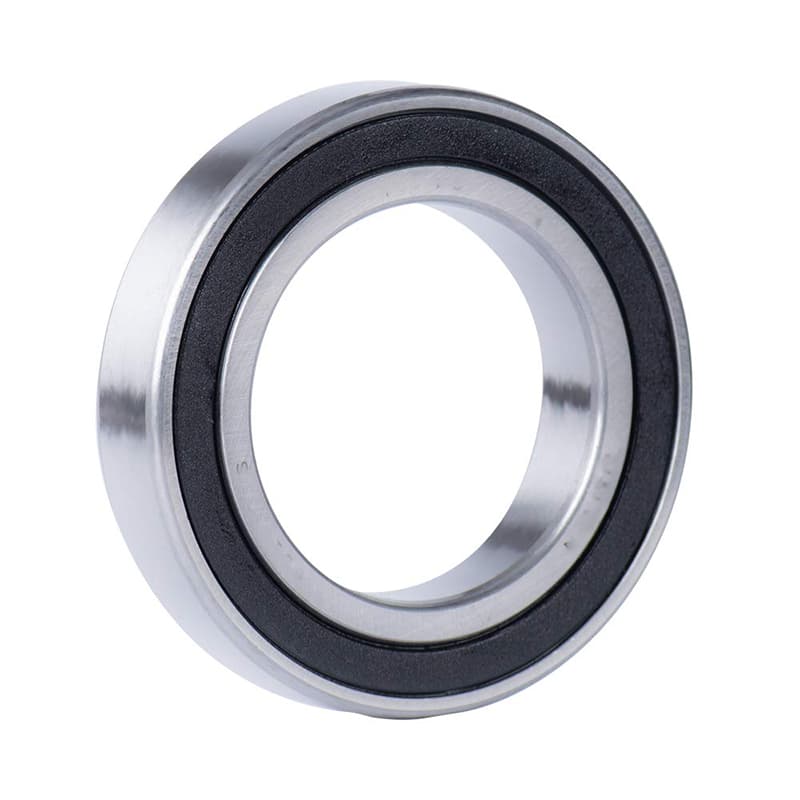
Dust collectors and ventilation fans need special bearing seals1 because the air stream carries fine particles. These particles are smaller than a human hair. They can slip past standard metal shields. A contact rubber seal (2RS) or a heavy-duty seal (2RSH) stops the dust and keeps the grease inside.
[^2] and industrial fans](https://sdycbearing.com/wp-content/uploads/2025/12/Deep-Groove-Ball-Bearing-27.jpg)
Why Normal Seals Fail in Dusty Conditions
Let me explain what happens inside a dust collector fan. The fan pulls air through a filter. That air contains dust, wood chips, metal particles, or cement powder. The bearing sits near the fan wheel. It is right in the path of that dirty air.
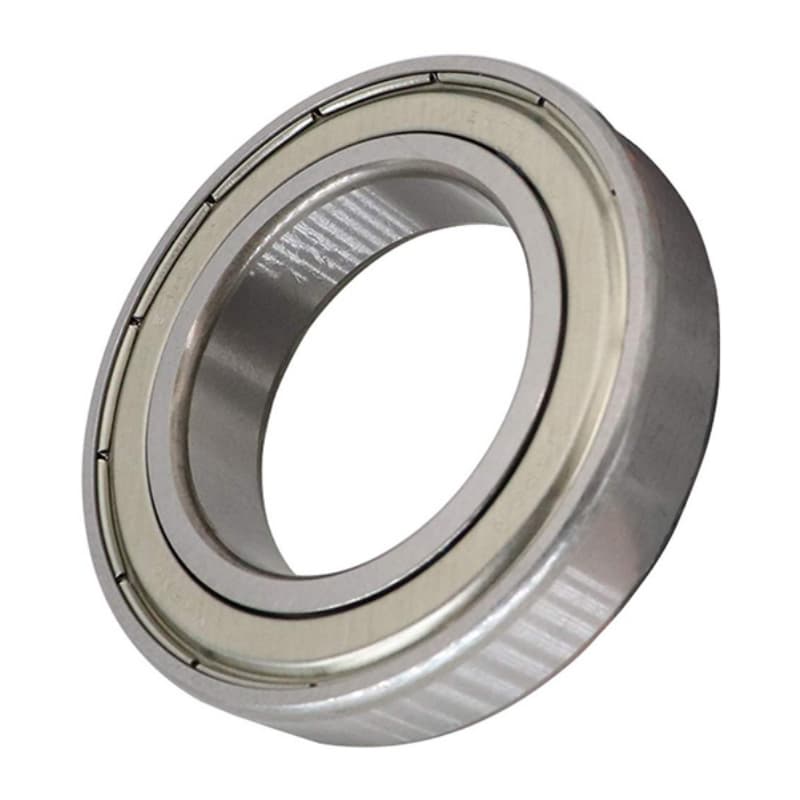
The problem with metal shields (ZZ)2. Many people think metal shields are enough. They are not. Metal shields have a gap between the shield and the inner ring. That gap is about 0.1mm to 0.3mm. Fine dust can easily pass through that gap. Once inside, the dust mixes with the grease. The grease becomes a grinding compound. The balls and raceways wear down fast. I have seen ZZ bearings fail in three months in a cement plant.
The problem with open bearings. Some fan designs use open bearings with an external grease fitting. That is even worse. The open bearing has no protection at all. Dust goes straight in. The only way this works is if the bearing housing has a perfect seal. Most housings do not.
The solution: contact rubber seals (2RS)3. A 2RS seal has a rubber lip that touches the inner ring. There is no gap. The dust cannot get in. For most dust collectors4, a standard 2RS seal is enough. But for very fine dust like carbon black or silica powder, you need a better seal.
The upgrade: 2RSH or 2RS1 seals5. These are heavy-duty contact seals. They have a thicker rubber lip and a stronger steel insert. They also have a double lip design in some cases. I recommend 2RSH for fans in mines, cement plants, and woodworking shops. The extra cost is small compared to the cost of downtime.
Here is a seal comparison table for dusty environments:
| Seal Type | Gap | Dust Protection | Best For | Expected Life in Heavy Dust |
|---|---|---|---|---|
| ZZ (metal shield) | Yes (0.1-0.3mm) | Low | Clean air only | 3-6 months |
| 2RZ (non-contact rubber) | Very small (0.05mm) | Medium | Light dust | 6-12 months |
| 2RS (contact rubber) | No | High | General dust | 1-2 years |
| 2RSH (heavy contact) | No | Very high | Fine dust, abrasive | 2-3 years |
| 2RS1 (double lip) | No | Highest | Extreme dust | 3-5 years |
One more tip: For dust collectors that run 24/7, consider using a bearing with a relubrication feature6. Even a good seal will eventually let some dust in. If you can pump fresh grease into the bearing once a month, you push out the contaminated grease. That extends the life a lot. [Personal story placeholder: A woodworking factory in Vietnam had dust collectors failing every eight months. They used ZZ bearings. I sold them 2RSH bearings instead. The bearings lasted three years. The factory owner told me he saved $5,000 in downtime costs.]
How Does High-Speed Operation Affect Bearing Life in Industrial Fans?
Industrial fans spin fast. Some run at 3,000 RPM. Others run at 10,000 RPM or more. High speed creates heat and wear.
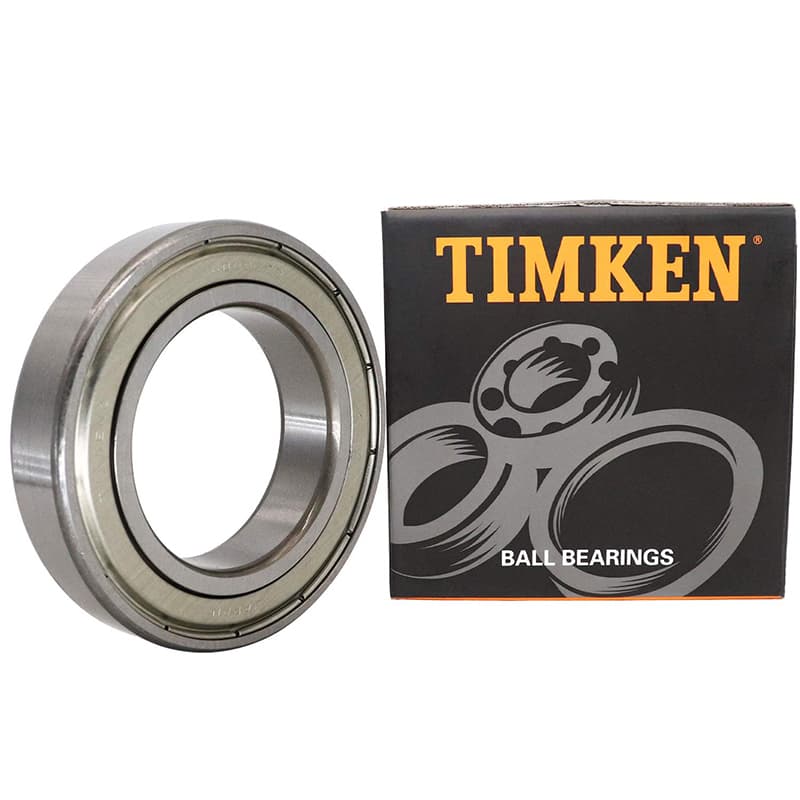
High-speed operation reduces bearing life1 because it increases the temperature inside the bearing. Heat makes the grease break down faster. It also makes the bearing rings expand. That expansion eats up the internal clearance. For fans above 5,000 RPM, you need C3 clearance4 and high-speed grease2.
How Speed Changes Everything
Let me give you the real numbers. Speed is not just about RPM. It is about the bearing size too.
The speed factor formula3. Engineers use a number called the speed factor. You calculate it by multiplying the bearing bore in millimeters by the RPM. For example, a 6204 bearing has a 20mm bore. At 6,000 RPM, the speed factor is 120,000. At 10,000 RPM, it is 200,000.
What happens below 150,000 speed factor? This is low to medium speed. A standard CN clearance bearing works fine. The heat is moderate. The grease lasts a long time. Most dust collectors run in this range.
What happens between 150,000 and 300,000 speed factor? This is high speed. The bearing gets hot. The grease can reach 80°C to 100°C. At these temperatures, standard lithium grease starts to break down. The oil separates from the thickener. The bearing runs dry. Also, the inner ring expands. CN clearance becomes too small. You need C3 clearance and a high-temperature grease.
What happens above 300,000 speed factor? This is very high speed. Only small bearings can reach this. For example, a 6200 bearing (10mm bore) at 30,000 RPM gives 300,000. At these speeds, centrifugal force pushes the balls outward. That changes the contact angle. The bearing can skid instead of roll. You need C4 clearance, special cages (like phenolic or brass), and oil lubrication instead of grease.
Here is a speed guide for dust collector fans:
| Fan Speed (RPM) | Bearing Bore (mm) | Speed Factor | Recommended Clearance | Recommended Grease |
|---|---|---|---|---|
| 1,500 | 30 | 45,000 | CN | Standard lithium |
| 3,000 | 25 | 75,000 | CN | Standard lithium |
| 4,500 | 20 | 90,000 | CN | Standard lithium |
| 6,000 | 20 | 120,000 | CN or C3 | Lithium or polyurea |
| 8,000 | 20 | 160,000 | C3 | Polyurea or synthetic |
| 10,000 | 20 | 200,000 | C3 | Synthetic |
| 12,000 | 15 | 180,000 | C3 | Synthetic |
| 15,000 | 10 | 150,000 | C3 | Synthetic or oil |
The real killer: unbalanced fans5. Dust collectors often get unbalanced. Dust sticks to the fan blades. That creates an imbalance. The imbalance creates vibration. Vibration creates heat and wear. A balanced fan with a C3 bearing will last much longer than an unbalanced fan with a C4 bearing. So clean your fan blades regularly. That is free maintenance.
My rule for fan bearings: Always use C3 clearance for any fan that runs faster than 3,000 RPM. The cost difference is tiny. The safety margin is big. [Personal story placeholder: A ventilation fan manufacturer in Brazil used CN bearings on fans that ran at 7,000 RPM. The fans failed after six months. I asked him to measure the bearing temperature. It was 95°C. He switched to C3 bearings and synthetic grease6. The fans then ran for three years without failure.]
What Happens When Fine Dust Gets Inside a Deep Groove Ball Bearing?
Fine dust is not like sand. Sand is big. You can see it. Fine dust is invisible. But it is more dangerous.
When fine dust gets inside a deep groove ball bearing1, it mixes with the grease and turns into a lapping compound. The dust particles are harder than steel. They roll between the balls and raceways. They create tiny scratches. Those scratches grow into pits. Then the bearing gets noisy and fails. The whole process can take just a few weeks.
The Microscopic Damage Process
Let me walk you through what happens step by step. I have cut open many failed bearings from dust collectors. The damage pattern is always the same.
Step 1: Dust gets past the seal. No seal is perfect. Over time, a tiny amount of dust enters. For a 2RS seal, this takes months. For a ZZ seal, it takes days. The dust particles are typically 1 to 10 micrometers in size. That is 10 times smaller than a human hair.
Step 2: Dust mixes with grease. The grease holds the dust in suspension. Now the grease is no longer a lubricant. It is an abrasive paste. Each time the balls roll, they push the dust particles against the raceways.
Step 3: Abrasive wear begins. The dust particles are often hard materials. Silica dust (from sand or concrete) has a hardness of 7 on the Mohs scale. Bearing steel has a hardness of about 8. So the dust is almost as hard as the steel. It scratches the raceway. These scratches are called "three-body abrasion4." The three bodies are the ball, the raceway, and the dust particle.
Step 4: The scratches create more debris. As the raceway wears, tiny steel particles break off. Now you have two types of abrasives: dust and steel debris. The wear accelerates.
Step 5: The bearing clearance2 increases. As material is removed, the internal clearance gets bigger. The bearing becomes loose. The balls no longer roll smoothly. They slide and skid. This creates even more heat and wear.
Step 6: Final failure. The bearing becomes noisy. The temperature rises. The cage may break. The bearing seizes or the fan stops.
Here is a timeline of contamination damage for different seal types (typical for a cement plant):
| Time | ZZ Shield | 2RZ Seal | 2RS Seal | 2RSH Seal |
|---|---|---|---|---|
| Week 1 | Dust enters | Clean | Clean | Clean |
| Week 4 | Noise starts | Dust enters | Clean | Clean |
| Month 2 | Failure | Noise starts | Clean | Clean |
| Month 4 | – | Failure | Dust enters | Clean |
| Month 6 | – | – | Noise starts | Dust enters |
| Month 8 | – | – | Failure | Noise starts |
| Month 12 | – | – | – | Failure |
How to check for dust contamination without taking the bearing apart. Listen to the fan with a stethoscope or a screwdriver. A healthy bearing sounds like a smooth rumble. A contaminated bearing sounds like grinding or crackling. Also check the temperature. A contaminated bearing runs hotter than normal. If the housing is too hot to touch, you have a problem.
Can you save a bearing after dust gets in? Sometimes. If you catch it early, you can flush the bearing with new grease. Pump fresh grease in until the old grease comes out. The fresh grease pushes out some of the contaminated grease. This works for bearings with a relubrication fitting3. For sealed bearings, you cannot flush them. You just replace them. [Personal story placeholder: A grain elevator in Kansas had dust collectors running 24/7. The bearings failed every four months. I recommended upgrading from 2RS to 2RSH seals. The next set of bearings lasted 14 months. The maintenance manager told me the extra cost was worth it because downtime during harvest is too expensive.]
Which Grease and Lubrication Work Best for Dusty, High-Temperature Environments?
Grease is not all the same. Pick the wrong grease and your bearing will fail from heat or contamination. Pick the right grease and it will run for years.
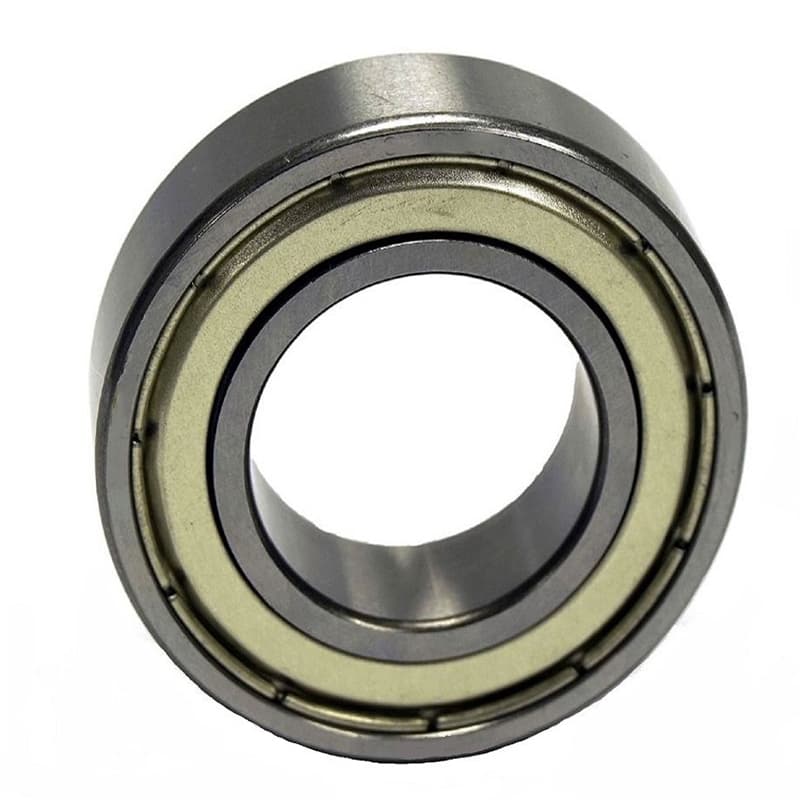
For dusty, high-temperature environments like dust collectors, use a polyurea or synthetic lithium grease1 with NLGI grade 2 consistency4. The grease must have good shear stability and high dropping point2 above 180°C. Also use a bearing with a relubrication fitting so you can flush out contaminated grease every 3 to 6 months.
Matching Grease to Your Fan Conditions
Let me break down the grease options. I have tested many types in my factory. The results are clear.
Grease property 1: Base oil viscosity. The oil in the grease does the actual lubricating. For fan bearings that run at 3,000 to 10,000 RPM, you need a base oil viscosity3 of about 100 to 150 cSt at 40°C. Too thin and the oil film breaks. Too thick and the bearing overheats from drag.
Grease property 2: Thickener type. This is the most important choice.
- Lithium grease is the standard. It works well up to 120°C. It is cheap. For light-duty dust collectors in normal temperatures, lithium grease is fine.
- Polyurea grease is better for high temperatures. It works up to 150°C. It also lasts longer. Many electric motor manufacturers use polyurea grease. I recommend this for most industrial fans.
- Synthetic lithium grease uses synthetic base oil. It works from -40°C to 180°C. It does not break down as fast. Use this for fans that run 24/7 or in very hot environments.
- Calcium sulfonate grease5 is the best for wet and dusty conditions. It has excellent water resistance and extreme pressure properties. Use this for dust collectors that handle wet dust or outdoor fans.
Grease property 3: Consistency (NLGI grade). For fan bearings, use NLGI grade 2. It is a grease that feels like peanut butter. It stays in the bearing but still flows enough to lubricate. Grade 3 is too hard. Grade 1 is too soft and may leak.
Grease property 4: Dropping point. This is the temperature at which the grease turns to liquid. For fan bearings, pick a grease with a dropping point2 above 180°C. That gives you a safety margin.
Here is a grease selection table for dust collector fans:
| Condition | Recommended Grease Type | Base Oil | Dropping Point | Relubrication Interval |
|---|---|---|---|---|
| Normal dust, indoor, <70°C | Lithium (standard) | Mineral | 180°C | Every 6 months |
| High dust, <90°C | Polyurea | Mineral or synthetic | 250°C | Every 4 months |
| High heat (90-120°C) | Synthetic lithium | Synthetic | 200°C | Every 3 months |
| Wet dust or outdoors | Calcium sulfonate | Mineral | 260°C | Every 3 months |
| 24/7 operation, >120°C | Perfluorinated (PFPE) | Synthetic | >300°C | Every 12 months (expensive) |
How much grease to put in. Too much grease is almost as bad as too little. Overgreasing causes the bearing to churn the grease. That creates heat. For a new bearing, fill the bearing 30% to 50% of the internal free space. For relubrication, add only 1 to 2 pumps from a grease gun. You just want to refresh the grease, not flood the bearing.
How to relubricate a fan bearing safely. First, clean the grease fitting. Wipe off any dust. Then add grease slowly while the fan is running. The running bearing will push out the old grease. Watch for the old grease coming out of the seal. Stop adding grease when you see fresh grease appear. Do not overdo it.
One big mistake to avoid: Never mix different grease types. Lithium and polyurea greases are not compatible. They can react and turn into a hard paste. That paste will lock up the bearing. If you do not know what grease is in the bearing, clean it out completely before adding new grease. [Personal story placeholder: A fan repair shop in Russia mixed lithium grease with polyurea grease on a dust collector fan. The grease turned into a hard wax in two weeks. The bearing seized. The fan motor burned out. The repair cost $3,000. All from a $10 tube of the wrong grease.]
Conclusion
Use contact rubber seals, C3 clearance, and high-temperature grease. Relubricate regularly. Your dust collector fan bearings will last.
-
Explore the benefits of polyurea and synthetic lithium grease for high-temperature applications. ↩ ↩ ↩ ↩
-
Find out how the dropping point impacts grease performance in high-temperature environments. ↩ ↩ ↩ ↩ ↩
-
Understand the importance of base oil viscosity for effective lubrication in high RPM applications. ↩ ↩ ↩ ↩
-
Learn why NLGI grade 2 is ideal for fan bearings and how it affects lubrication. ↩ ↩ ↩ ↩
-
Discover why Calcium sulfonate grease is recommended for wet and dusty conditions. ↩ ↩ ↩
-
Synthetic grease offers superior performance at high temperatures, ensuring better lubrication and longer bearing life. ↩ ↩