
Your heavy machine just stopped. You find metal pieces inside the bearing. The cage broke. Now production is down for two days.
To evaluate spherical roller bearing cage strength for heavy applications, you need to check the cage material, design, and how it handles shock loads. Also look at lubrication and operating temperature. These factors decide if the cage lasts or fails under heavy work.
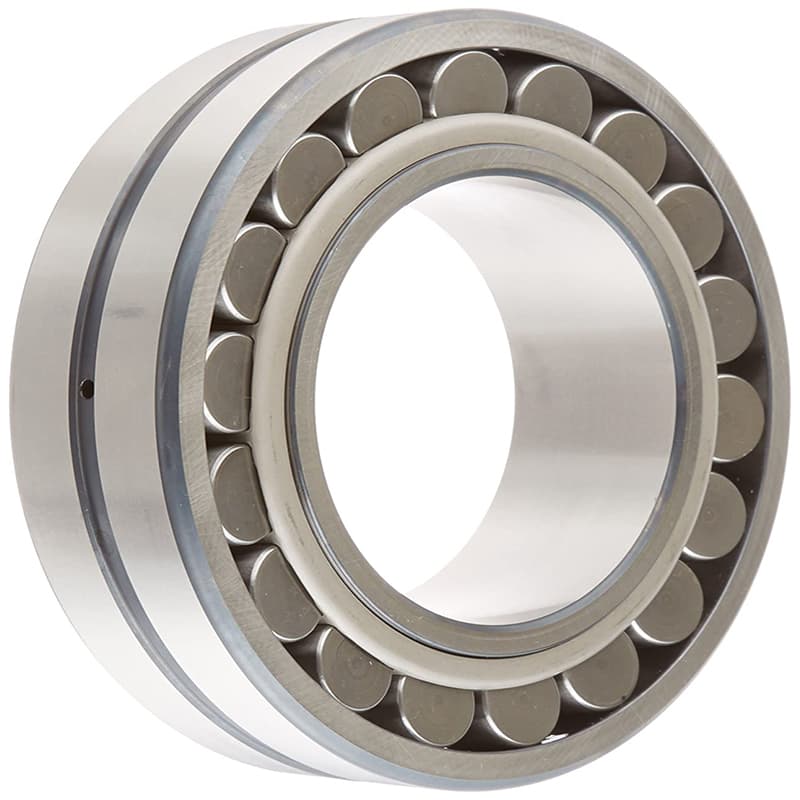
I have supplied bearings to many heavy industries. Mining, steel mills, and crushers. And I have seen cages break when they should not. So let me show you how to pick a strong cage. I will use real examples from my customers. Then you can make the right choice for your machines.
Why Cage Strength Matters More in Heavy-Duty Spherical Roller Bearings?
You might think the rollers and rings carry all the load. But the cage is the weak link. In heavy applications, a weak cage fails first. And that failure ruins the whole bearing.
The cage matters more in heavy-duty bearings1 because it takes repeated shock loads2, high acceleration3, and uneven forces. A weak cage cracks or wears out fast. Then the rollers bunch together. The bearing locks up. And your machine stops suddenly.
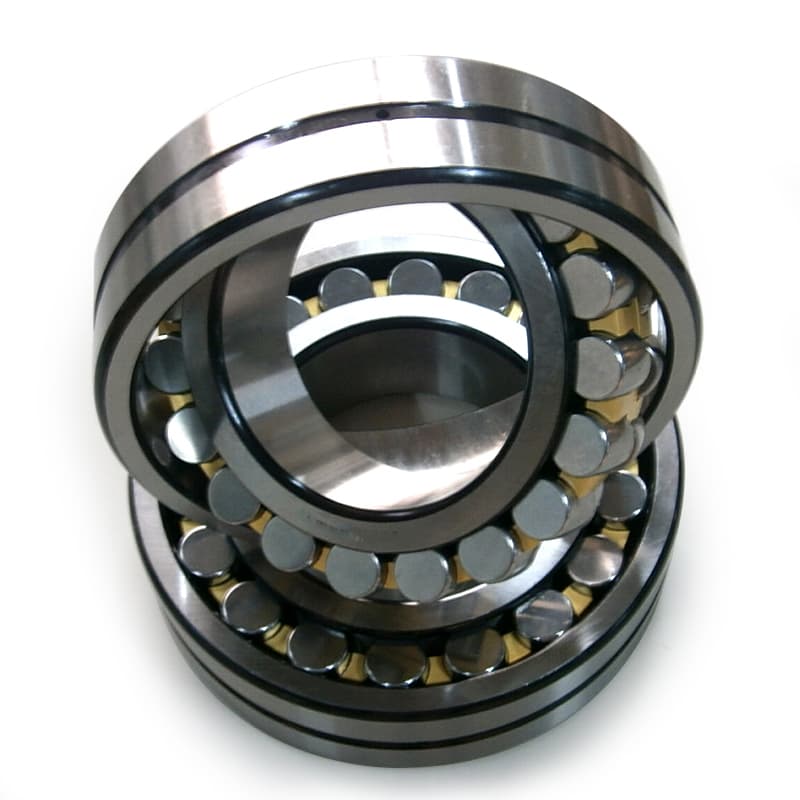
Let me explain why the cage gets so much stress in heavy applications.
I remember a customer from Turkey. He runs a rock crushing plant. His spherical roller bearings kept failing after only two months. The bearings looked fine from the outside. But inside, the cages were broken into three or four pieces. He thought the bearing quality was bad. But the real problem was different. He picked a cage that was not strong enough for his shock loads.
What the cage really does
Most people think the cage just holds rollers apart. That is true. But in a heavy application, the cage does much more. It fights against inertia. When your machine starts and stops fast, the rollers want to keep moving. The cage has to stop them. It also has to guide the rollers through the load zone. And it has to survive vibrations that shake everything apart.
Three reasons cages fail in heavy work
Let me list the biggest problems I see in the field.
1. Shock loads
Imagine a crusher that breaks big rocks. Every time a rock breaks, the bearing gets a sudden jolt. That jolt travels through the rollers into the cage. A weak cage cracks at the bar or the pocket. Once a crack starts, it grows fast. Then pieces break off. And those pieces get crushed between the rollers and raceways.
2. High acceleration
Some machines speed up and slow down a lot. Conveyors, elevators, and centrifuges do this. When the bearing accelerates quickly, the rollers lag behind. The cage has to push them forward. That puts a lot of force on the cage bars. If the cage is not strong enough, the bars bend or break.
3. Poor lubrication
Lubrication does more than reduce friction. It also cushions the rollers when they hit the cage. Without enough lubricant, the rollers slam into the cage pockets. This impact wears away the cage material over time. We call this "wear and tear" on the cage windows. Eventually the pockets get so big that the rollers do not stay in place.
Here is a table that shows how different operating conditions affect cage stress:
| Operating Condition | Stress on Cage | Result of Weak Cage |
|---|---|---|
| Frequent starts/stops | High inertia force | Cage bar cracking |
| Heavy shock loads | Sudden impact | Fracture in pocket area |
| Vibration | Cyclic stress | Fatigue cracks |
| High speed | Centrifugal force | Deformation or breakage |
| Poor lubrication | Increased friction | Pocket wear and roller slip |
So when you choose a spherical roller bearing for a heavy application, do not just look at load ratings. Look at the cage first. A strong cage saves you from sudden breakdowns.
Comparing Cage Materials: Brass, Polyamide, and Steel – Which One Wins?
You have three main choices for cage material. Each one has good points and bad points. There is no single winner for all jobs. You need to match the material to your specific application.
Brass cages1 win for heavy shock loads and high temperatures. Steel cages2 win for very high speeds and extreme loads. Polyamide cages3 win for moderate loads and lower cost. But for most heavy applications, brass is the safest choice.
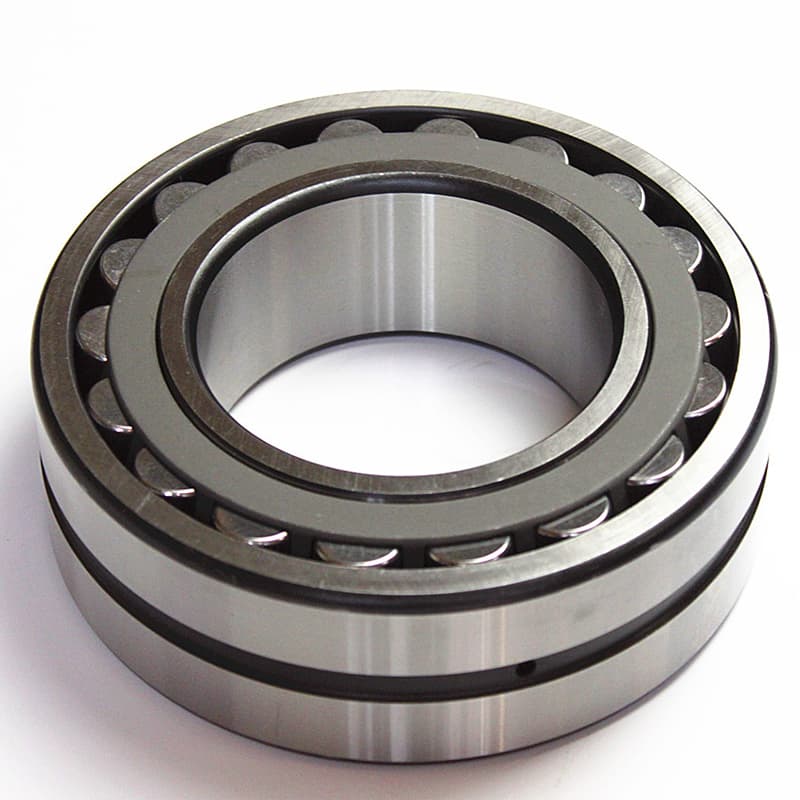
Let me compare these three materials based on real factory data.
I have used all three materials in different customer applications. And I have collected feedback from over 50 industrial users. So here is what I learned.
Brass cages
Brass is my top recommendation for heavy applications like crushers, cooling towers, and mining equipment. Here is why.
- Strength: Brass has high tensile strength. It does not crack easily under shock loads.
- Heat resistance4: Brass works fine up to 250°C. Most heavy machines never reach that temperature.
- Corrosion resistance5: Brass handles moisture better than steel.
- Weight: Brass is heavy. That is a disadvantage for very high speed applications. But heavy applications usually run slow. So the weight does not matter.
- Cost: Brass costs more than polyamide. But it costs less than special steel cages.
I supply brass cages on most of my spherical roller bearings for heavy industries. Customers in Russia and Brazil love them. They report 30% longer life compared to polyamide cages.
Polyamide (plastic) cages
Polyamide is light and cheap. But it has limits.
- Strength: Good for normal loads. But shock loads can crack it.
- Heat resistance: Most polyamide works up to 120°C. Some special grades go to 150°C. Beyond that, the material softens and deforms.
- Chemical resistance: Some lubricants and coolants attack polyamide. You need to check compatibility.
- Weight: Very light. That is good for high speed applications.
- Cost: Lowest cost of the three.
I recommend polyamide only for moderate applications. For example, a fan that runs steady with no shocks. Or a conveyor with smooth start and stop. Do not use it for crushers or vibrating screens.
Steel cages
Steel cages are the strongest but also the heaviest.
- Strength: Highest tensile strength. Steel can take enormous shock loads.
- Heat resistance: Steel works at very high temperatures. Over 300°C is fine.
- Corrosion resistance: Steel rusts easily. You need special coatings or stainless steel for wet environments.
- Weight: Heaviest material. That creates more centrifugal force at high speeds.
- Cost: Similar to brass or slightly higher.
Steel cages are rare in standard spherical roller bearings. Most manufacturers use them only for very large bearings or special orders. At FYTZ, we offer steel cages for extreme applications like steel mill roll necks.
Here is a comparison table to help you decide:
| Property | Brass Cage | Polyamide Cage | Steel Cage |
|---|---|---|---|
| Max temperature | 250°C | 120°C (150°C special) | 300°C+ |
| Shock load resistance | Excellent | Good | Excellent |
| Weight | Heavy | Light | Very heavy |
| Corrosion resistance | Good | Good | Poor (needs coating) |
| Cost | Medium | Low | Medium to high |
| Best application | Heavy shocks, high heat | Moderate loads, low cost | Extreme loads, very high heat |
So which one wins? For most heavy applications, I say brass wins. It gives you the best balance of strength, heat resistance, and cost. But if you have extreme conditions, talk to me about steel cages. And if your budget is tight and loads are moderate, polyamide can work.
Key Load and Stress Parameters That Determine Cage Life
You cannot guess cage strength. You need to look at real numbers. Four main parameters decide how long a cage lasts in your machine.
The key parameters are dynamic load rating1, shock load frequency2, operating temperature range3, and lubrication film thickness4. Also check the bearing’s limiting speed and acceleration rate. These numbers tell you if the cage will survive your heavy application.

Let me break down each parameter and show you how to evaluate it.
When a customer like Rajesh asks me for a bearing recommendation, I ask for four specific pieces of information. Here is what they are and why they matter.
Parameter 1: Dynamic load rating (C) and equivalent dynamic bearing load (P)
The dynamic load rating is a number from the bearing manufacturer. It tells you how much load the bearing can take for one million revolutions. But that number assumes perfect conditions. In real life, you need to compare it to your actual load.
The ratio C/P is important. If C/P is less than 4, the load is very heavy. That puts high stress on the cage. For heavy applications, I want to see C/P between 2 and 4. That means the bearing is sized for heavy work.
For example, a spherical roller bearing 22220 has a C rating of around 310 kN. If your actual load is 100 kN, then C/P = 3.1. That is good for heavy duty. If your load is 150 kN, then C/P = 2.0. That is extreme. You need a stronger cage, like steel or heavy brass.
Parameter 2: Shock load frequency and magnitude
Shock loads are not the same as steady loads. A bearing can take a steady load of 100 kN for years. But the same bearing might break after 10,000 shocks of 100 kN each.
You need to ask yourself: How many shocks per minute? How hard are they?
- Low frequency (less than 10 shocks per minute) and low magnitude (20% over normal load) → polyamide cage5 can work.
- Medium frequency (10-50 shocks per minute) and medium magnitude (50% over normal load) → brass cage needed.
- High frequency (over 50 shocks per minute) and high magnitude (100% over normal load) → steel cage6 or special design.
I had a customer in South Africa with a vibrating screen. His machine had 120 shocks per minute. The brass cage7s lasted 18 months. Polyamide cages lasted only 3 months. So frequency matters a lot.
Parameter 3: Operating temperature range
Temperature changes the cage material properties. Polyamide gets soft above 120°C. Brass stays strong up to 250°C. But there is another factor. The difference between cold start and running temperature.
If your machine starts at 10°C and runs at 90°C, that is an 80°C change. The metal parts expand. The cage expands too. But different materials expand at different rates. This expansion can pinch the rollers or create extra clearance. Both are bad.
My rule of thumb:
- Temperature range under 50°C → any cage material can work.
- Temperature range 50°C to 100°C → use brass or steel.
- Temperature range over 100°C or max temp over 150°C → use brass or steel only.
Parameter 4: Lubrication film thickness (lambda ratio)
This is a technical number. But I will explain it simply. The lambda ratio compares the oil film thickness to the surface roughness of the bearing. A lambda ratio below 1 means metal touches metal. That is bad for the cage because the rollers hit the cage harder.
You want a lambda ratio of 2 or higher for heavy applications. That gives you a full lubricant film between the rollers and raceways. The lubricant also cushions the roller-to-cage contact.
How to get a good lambda ratio?
- Use high viscosity oil or grease (ISO VG 150 to 460 for heavy slow applications).
- Keep the bearing clean. Dirt breaks the oil film.
- Maintain the right operating temperature. Too hot and the oil gets thin.
Here is a quick reference table for these parameters:
| Parameter | Good for Heavy Duty | Marginal | Not Recommended |
|---|---|---|---|
| C/P ratio8 | 2 to 4 | 4 to 6 | Above 6 (under-sized) |
| Shock frequency | Any (use brass/steel) | Low only for polyamide | High with polyamide |
| Max temperature | Under 250°C (brass) | 120-150°C (polyamide special) | Over 150°C with polyamide |
| Lambda ratio | 2 or higher | 1 to 2 | Below 1 |
So when you evaluate a bearing, ask the supplier for these numbers. Do not just trust the basic load rating. The cage needs to survive your real conditions.
Practical Ways to Test Cage Strength Before Full Installation
You do not want to learn about cage weakness after a breakdown. So test the cage strength1 first. You can do simple checks in your workshop. Or you can ask your supplier for test reports.
You can test cage strength by checking the cage pocket clearance, measuring cage runout, and doing a drop test2 on a sample cage. Also ask for finite element analysis (FEA)3 reports from your supplier. These methods catch weak cages before they fail in your machine.
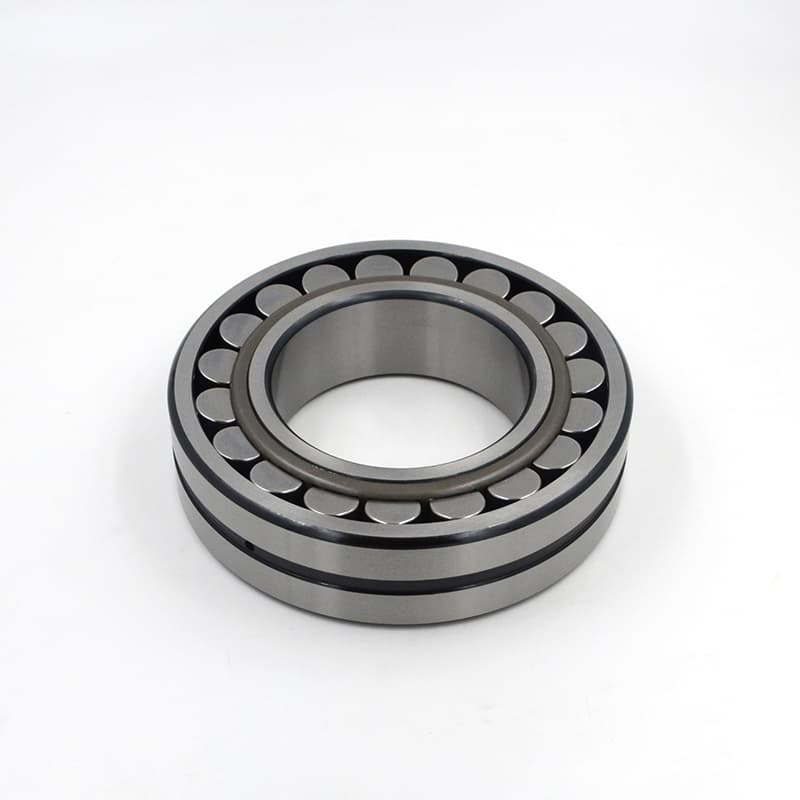
Let me show you four practical tests that anyone can do.
I use these tests myself when I check new bearing samples from our production line. And I teach them to my customers so they can verify quality before buying large quantities.
Test 1: Visual and feel inspection of cage pockets
Take the bearing and hold it in your hands. Rotate the inner ring slowly. Look at each cage pocket. Use a small tool like a pick to feel the surface.
What to look for:
- Smooth surfaces. Rough surfaces mean poor finishing. Rough pockets wear out faster.
- No sharp edges. Sharp edges create stress points. They also damage the rollers.
- Consistent pocket size. If one pocket is bigger than others, the roller will move too much. That roller will hit the cage harder.
- No cracks or flash (extra plastic material from molding).
I once rejected a whole batch of bearings from another supplier because the polyamide cages had flash inside the pockets. That flash would have worn off in the first week. Then the loose particles would have damaged the raceways. So always inspect.
Test 2: Drop test for impact strength4
This test sounds rough. But it works. Take a spare cage (not a complete bearing, just the cage if you can get one). Drop it from a height of 1 meter onto a concrete floor. Do this three times.
- Brass cage: It will not break. It might get a small dent. That is fine.
- Polyamide cage: It might crack or break a bar. If it breaks, do not use it for heavy applications.
- Steel cage: It will not break. But check for deformation. Steel bends before it breaks.
This test simulates the shock loads inside a machine. A cage that cracks from a 1 meter drop will crack inside your crusher too.
Test 3: Cage runout measurement
This test needs a dial indicator. Mount the bearing on a shaft or in a fixture. Rotate the inner ring. Measure how much the cage moves up and down.
High runout means the cage is not balanced. That creates vibration. Vibration wears out the cage pockets faster.
Good numbers:
- For a medium bearing (100mm bore), runout should be under 0.05 mm.
- For a large bearing (200mm bore), runout under 0.08 mm.
If your supplier cannot provide runout numbers, ask them to measure a sample. Good factories like FYTZ measure every bearing before shipping.
Test 4: Ask for FEA report (Finite Element Analysis)
This is a computer simulation. The manufacturer puts a digital model of the cage into a program. Then they apply virtual loads and stresses. The program shows where the cage will break first.
A good FEA report will show:
- Maximum stress points (usually at the bar junctions)
- Safety factor (should be 2 or higher for heavy applications)
- Predicted fatigue life under your specific load conditions
Not every supplier offers FEA. But for large orders or critical applications, you should demand it. At FYTZ, we provide FEA reports for custom bearings. It gives you confidence before you install the bearing.
Here is a summary of these four tests:
| Test | What You Need | Pass Criteria |
|---|---|---|
| Visual pocket check | Magnifying glass, pick | No cracks, rough spots, or flash |
| Drop test | Spare cage, concrete floor | No cracks or broken bars |
| Runout measurement | Dial indicator, fixture | Under 0.08 mm for large bearings |
| FEA report | Supplier’s simulation | Safety factor 2 or higher |
So before you buy a large batch of spherical roller bearings for your heavy machines, run these tests. Or ask your supplier to run them for you. A few hours of testing can save you months of downtime.
Conclusion
Cage strength decides bearing life in heavy applications. Pick brass or steel for shocks. Check loads, temperature, and lubrication. Run simple tests before you buy. Your machines will run longer.
-
Understanding how to test cage strength can prevent costly failures and ensure reliability in machinery. ↩ ↩ ↩ ↩
-
Learning the drop test method can help you assess the impact strength of bearing cages effectively. ↩ ↩ ↩ ↩
-
FEA provides crucial insights into the structural integrity of bearings, helping you make informed purchasing decisions. ↩ ↩ ↩ ↩
-
Evaluating impact strength is essential for ensuring that bearings can withstand operational shocks. ↩ ↩ ↩
-
Find out the advantages and limitations of polyamide cages in various bearing applications. ↩ ↩
-
Learn about the strength and reliability of steel cages for demanding bearing applications. ↩
-
Explore the benefits of brass cages in high-temperature environments and their durability. ↩
-
Understanding the C/P ratio helps in assessing the suitability of a bearing for heavy loads. ↩