
Your cooling tower fan just broke down in the middle of summer. Production stops. Repairs cost a fortune. You need a bearing that won’t let you down.
Spherical roller bearings are critical for industrial cooling towers and fan assemblies because they handle heavy radial and axial loads, tolerate misalignment from shaft deflection or installation errors, and resist harsh conditions like moisture, dust, and temperature swings. These features keep fans running reliably for years with less maintenance.
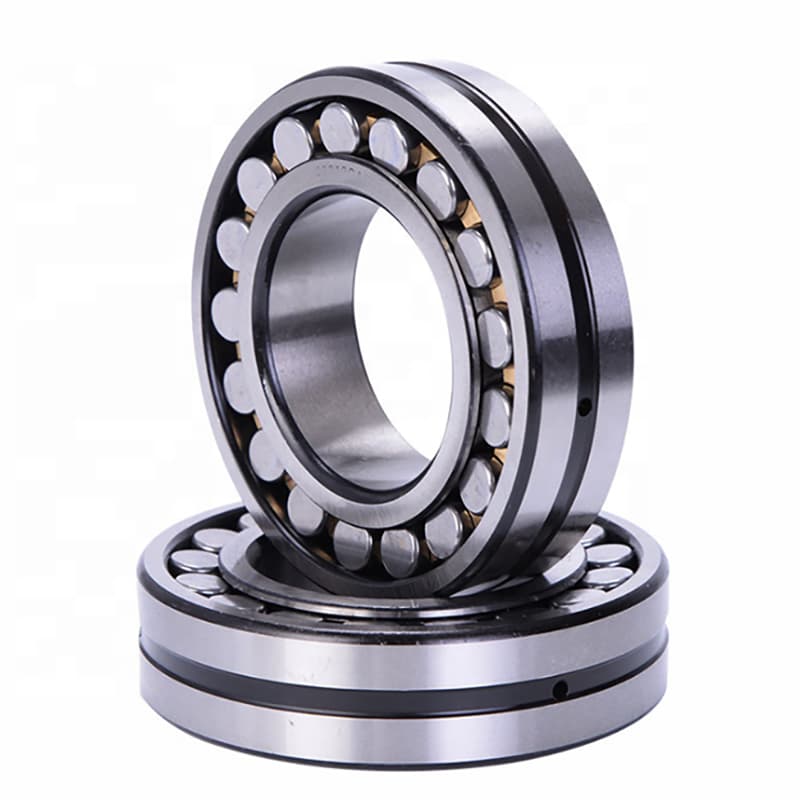
I have worked with cooling tower operators and fan manufacturers for over a decade. And I have seen the same problems come up again and again. Bearings failing too fast. Unexpected downtime. High replacement costs. That is why I want to share what I have learned about using spherical roller bearings in these tough applications. Let me walk you through the real challenges, how these bearings solve them, how to pick the right one, and how to make it last longer.
What Are the Key Operational Challenges in Cooling Tower Fan Applications?
You put a fan in a wet, dirty, and hot environment. Then you expect it to run 24/7. That is not easy. Most bearings break down fast here.
The main challenges are moisture ingress, temperature extremes, heavy vibration, shaft misalignment, and dust accumulation. All of these reduce bearing life1 and cause sudden failures if you do not plan for them.
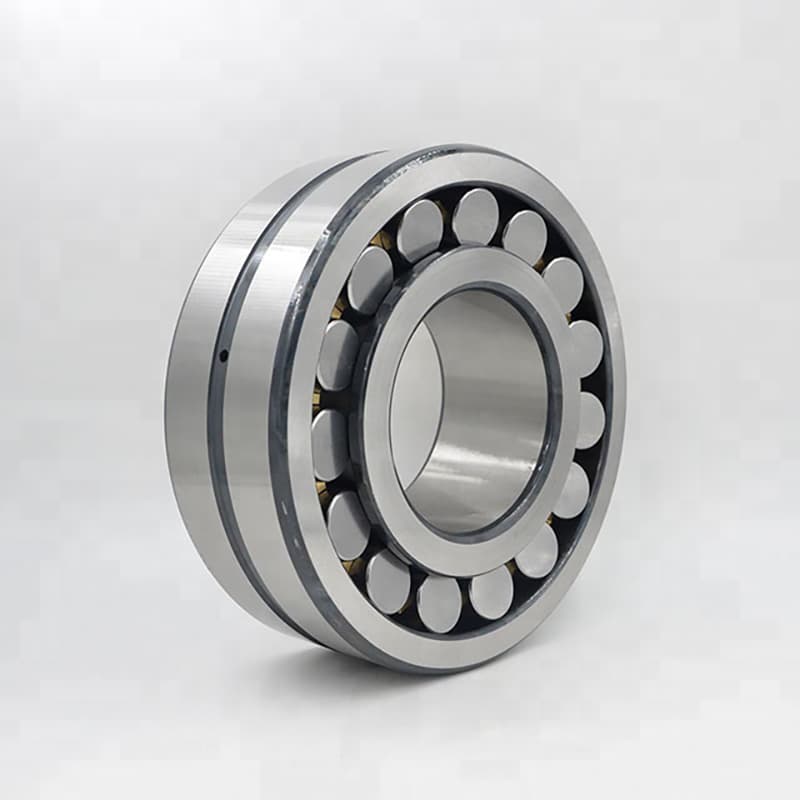
Let me break down each problem so you can see why standard bearings often fail.
I remember one customer from India. Mr. Rajesh Kumar, a procurement manager, told me his cooling tower fans needed new bearings every six months. That was too often. So we looked closely at his working conditions. And we found five big problems.
1. Moisture and humidity2
Cooling towers spray water constantly. That water gets into the bearing housing. Even with seals, condensation happens. Water mixes with grease. Then the grease loses its ability to protect. Rust forms on the rolling elements and raceways. Once rust starts, the bearing makes noise, heats up, and fails.
2. Temperature changes3
A cooling tower fan works in a wide temperature range. During the day, the motor and fan generate heat. At night, the system cools down. These changes make the shaft expand and shrink. If your bearing cannot handle that movement, internal clearance becomes too tight or too loose. Too tight means overheating. Too loose means vibration and noise.
3. Misalignment from fan blades4
Large fan blades are heavy. Over time, the shaft bends a little. Also, the housing might not be perfectly aligned during installation. Ordinary bearings like deep groove ball bearings cannot handle this misalignment. They create stress points. And those points wear out fast.
4. Vibration from unbalanced blades5
Dirt and dust collect on fan blades. That makes them unbalanced. Then the whole assembly vibrates. The vibration transfers to the bearing. It causes fretting corrosion on the shaft and inside the bearing raceway. That damage is permanent.
5. Dust and airborne particles6
Industrial cooling towers pull in outside air. That air has dust, sand, and other particles. These particles get past cheap seals. Then they act like sandpaper inside the bearing. The grease turns into a grinding paste.
Here is a quick summary of these challenges and their effects:
| Challenge | Effect on Bearing | Typical Result |
|---|---|---|
| Moisture | Rust and corrosion | Noise, heat, seizure |
| Temperature swings | Wrong internal clearance | Premature wear or overheating |
| Shaft misalignment | Uneven load distribution | Raceway spalling |
| Vibration | Fretting and false brinelling | Surface damage |
| Dust & particles | Abrasive wear | Increased friction, shorter life |
So you see, these problems are serious. And they happen together. One problem makes the other worse. That is why you cannot use just any bearing.
How Do Spherical Roller Bearings Address Misalignment and Vibration?
You might think misalignment kills any bearing. But spherical roller bearings are different. They have a special design that lets them bend a little without breaking.
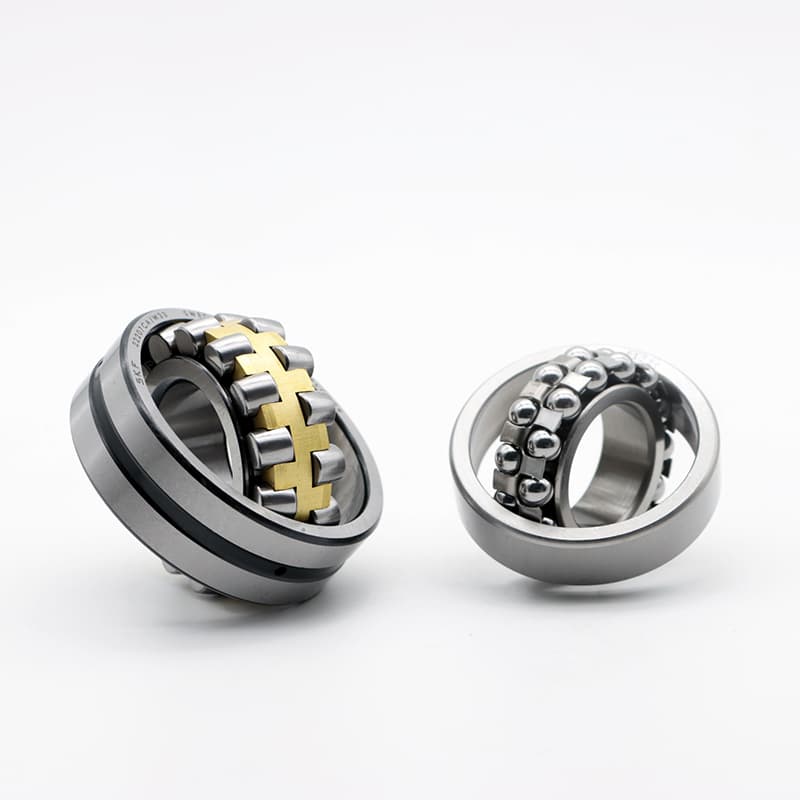
Spherical roller bearings1 handle misalignment and vibration because their inner ring has two rows of barrel-shaped rollers that roll on a spherical outer ring raceway. This design allows up to 2 degrees of angular misalignment. It also spreads loads evenly, so vibration does not create stress points.
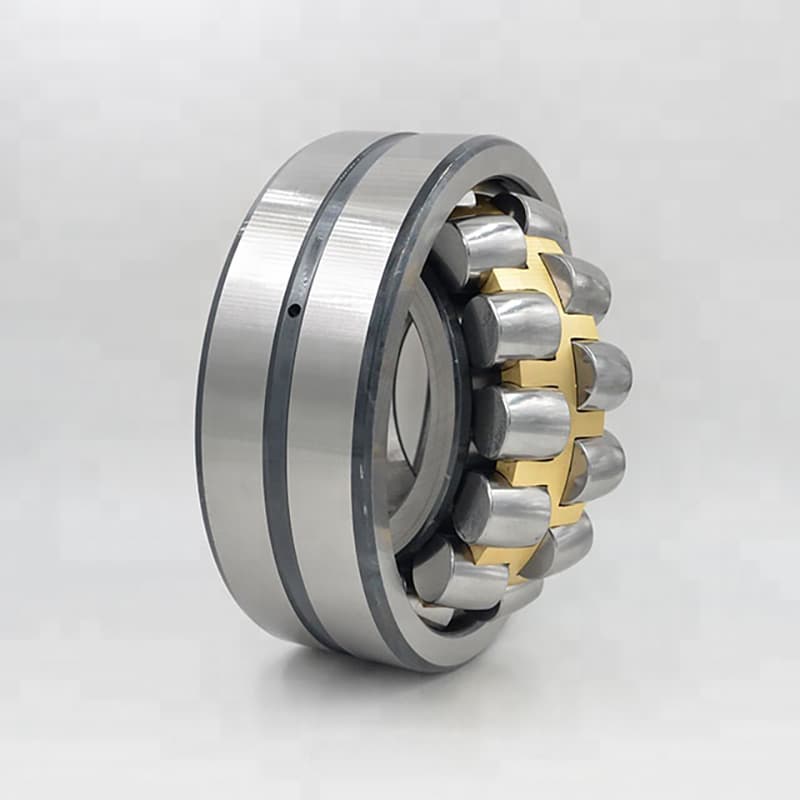
Let me explain how this works in real cooling tower fans2.
I have sold thousands of spherical roller bearings to fan manufacturers in Turkey, Brazil, and Indonesia. And every time, the customer asks the same question: “Why is this bearing better than a cylindrical roller bearing?”
Here is my answer.
The self-aligning ability3
Imagine you have a shaft that is not perfectly straight. Maybe it bends 1 degree under the fan blade weight. A normal bearing would push hard on one side. That side gets hot and fails. But a spherical roller bearing has an outer ring with a concave spherical shape. The rollers can tilt inside that curve. So even if the shaft is not straight, the bearing keeps full contact with all rollers. No single point takes all the load.
How it handles vibration
Vibration makes the shaft move back and forth. In a standard bearing, that movement wears a dent into the raceway. We call this “false brinelling.” But spherical roller bearings have a larger contact area between the rollers and raceways. So the force from vibration spreads out over more surface area. That means less wear per square millimeter. Also, the two rows of rollers work together. One row takes the load from one direction. The other row takes the opposite load. That balance reduces the shaking effect.
Real numbers for you
Let me give you some numbers from our factory tests. A standard deep groove ball bearing can handle about 0.5 degrees of misalignment before it loses 50% of its life. A spherical roller bearing from FYTZ can handle 2 degrees and still keep 90% of its rated life. That is a big difference.
Also, the dynamic load rating4 for a typical spherical roller bearing (say size 22218) is around 300 kN. That is three times higher than a ball bearing of the same size. So when your fan blades collect dust and become unbalanced, the bearing has extra capacity to absorb those shock loads.
Why this matters for your maintenance budget5
I talked to a distributor in Russia last month. He said his customers used to replace fan bearings every 8 months. After switching to our spherical roller bearings, they now replace them every 30 months. That is almost four times longer. And the cost of the bearing is only 20% higher. So the total cost goes way down.
Here is a simple comparison table:
| Feature | Spherical Roller Bearing | Standard Ball Bearing |
|---|---|---|
| Misalignment capacity | Up to 2 degrees | Up to 0.5 degrees |
| Load capacity (radial) | Very high | Medium |
| Shock load resistance | Excellent | Poor |
| Vibration tolerance | Good | Low |
| Typical life in cooling fans | 24-36 months | 6-12 months |
So when you see vibration or misalignment on your cooling tower fan, do not fight it. Use a bearing that works with it.
What Are the Selection Criteria for Long-Term Reliability in Harsh Environments?
Picking the right spherical roller bearing1 is not just about size. You need to match the bearing to your specific environment. Otherwise, even a good bearing will fail fast.
For long-term reliability in harsh cooling tower environments, you must select bearings with proper internal clearance2 (C3 or C4), high-quality seals (contact or non-contact), corrosion-resistant coatings, and the right cage material3 (brass or polyamide). Also choose the correct lubricant and relubrication4 intervals.
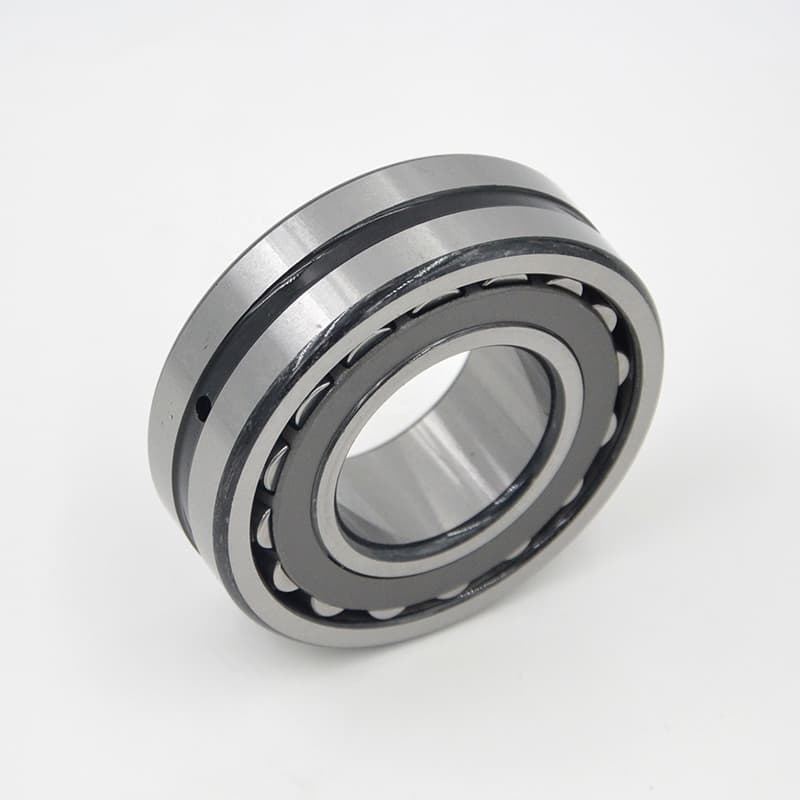
Let me walk you through the five most important selection criteria.
I have helped procurement managers like Rajesh pick bearings for over 100 cooling tower projects. And I always start with the same five questions.
Criterion 1: Internal clearance
Internal clearance is the space between the rollers and raceways when the bearing is not installed. In a cooling tower, the shaft gets hot. The bearing housing also gets hot. Metal expands. If the clearance is too small (like normal CN clearance), the bearing will tighten up when hot. Then it runs with preload. That creates heat. More heat means more expansion. Eventually, the bearing seizes.
So what clearance do you need?
- For normal temperature changes (up to 70°C), use C3 clearance.
- For high temperature changes (70°C to 100°C), use C4 clearance.
- For very high or sudden temperature changes, ask your supplier for C4 or even special clearance.
I always recommend C4 for cooling tower fans. The extra space gives you a safety margin. Yes, the bearing might be a little noisier when cold. But it will not seize when hot.
Criterion 2: Seal type
Moisture and dust are your enemies. So you need good seals. Spherical roller bearings come with two main seal type5s:
| Seal Type | How It Works | Best For |
|---|---|---|
| Contact seal (RS) | Rubber lip touches the inner ring | Very wet or dusty environments |
| Non-contact seal (2Z) | Metal shield with small gap | Dry environments with some dust |
For cooling towers, I recommend contact seals on both sides (2RS). But there is a trade-off. Contact seals create more friction. That means a little more heat and slightly lower maximum speed. But cooling tower fans run slow anyway (usually under 1500 RPM). So the friction is not a problem. The protection is worth it.
Criterion 3: Cage material
The cage holds the rollers apart. In a harsh environment, the cage takes a lot of stress. Here are your options:
- Brass cage: Strong, handles high temperatures, good with vibration. Expensive but lasts long. Best for large cooling towers.
- Polyamide cage: Lighter, cheaper, runs quieter. But it cannot handle very high temperatures (over 120°C). Also, some chemicals attack it.
- Steel cage: Very strong but heavy. Good for very large bearings with high loads.
From my experience, brass cages are the best choice for cooling towers. They cost more upfront. But they do not crack from vibration. And they handle the heat well.
Criterion 4: Corrosion protection
Water is everywhere in a cooling tower. Even with seals, some moisture gets in. So you want extra protection. Ask your supplier for bearings with:
- Phosphate coating on the rings and rollers
- Or manganese phosphating for even better rust resistance
- Or if your budget allows, stainless steel rings (but this is expensive)
FYTZ offers standard phosphate coating on all our spherical roller bearings for cooling tower applications. It adds about 5% to the cost but doubles the rust resistance.
Criterion 5: Lubricant and relubrication
This is where many people make mistakes. They use regular grease. Then it washes out or dries up. You need a grease that:
- Has high water resistance (often called "water-resistant grease")
- Works in your temperature range (usually -20°C to +150°C)
- Contains EP (extreme pressure) additives
I recommend lithium complex grease with a base oil viscosity of ISO VG 150 to 220. And you must relubricate regularly. For a cooling tower fan running 24/7, relubricate every 500 to 1000 hours. That means every 3 to 6 weeks.
Here is a simple checklist I give my customers:
| Criterion | Recommended Choice | Why |
|---|---|---|
| Internal clearance | C4 | Handles thermal expansion |
| Seal | 2RS (contact rubber) | Blocks moisture and dust |
| Cage | Brass | Strong, heat-resistant |
| Coating | Phosphate | Prevents rust |
| Grease | Lithium complex, EP, water-resistant | Lasts longer in wet conditions |
So next time you order spherical roller bearings, ask for these specifications. Your bearings will last much longer.
What Are the Best Maintenance Practices to Extend Bearing Service Life?
Even the best bearing fails if you ignore it. Maintenance is not optional. But you do not need to do complicated things. Simple, regular checks work best.
The best maintenance practices to extend spherical roller bearing1g life](https://www.mepaco.net/blog/5-ways-to-increase-the-life-of-bearings/)[^2] are regular relubrication3, vibration monitoring4, temperature checks, and proper storage. Also inspect seals and housings for damage every month. These steps can triple your bearing life.
Let me share the exact maintenance routine I recommend to all my B2B customers.
I learned this the hard way. One of my first customers in Egypt did not follow my advice. He did not relubricate his bearings for six months. Then one bearing seized and broke the fan shaft. The repair cost was ten times the price of the bearing. So please, follow these steps.
Practice 1: Relubrication done right
Most people put too much grease or too little. Both are bad. Too little grease means metal touches metal. Too much grease creates heat from churning. So how much is correct?
For a spherical roller bearing in a cooling tower fan, use this formula:
- First fill: Fill the bearing completely. Fill the housing about 30% to 50% of the free space.
- Relubrication amount: For a bearing with a bore size of 100 mm, add about 20 to 30 grams of grease each time.
- Relubrication frequency: Every 500 to 1000 running hours.
Also, always clean the grease fitting before you pump new grease in. Otherwise, you push dirt into the bearing.
Practice 2: Vibration monitoring
You do not need expensive tools. A simple vibration pen or a smartphone app with an accelerometer works. Measure the vibration on the bearing housing once a week. Write down the numbers. If you see a sudden increase of 30% or more, something is wrong.
What causes high vibration?
- Unbalanced fan blades (clean them)
- Worn bearing (time to replace)
- Loose bolts (tighten them)
Fix the cause fast. Do not wait.
Practice 3: Temperature checks
Use an infrared thermometer. Point it at the bearing housing. Measure the temperature. Write it down. A normal spherical roller bearing runs about 10°C to 20°C above the room temperature. If you see a temperature rise of more than 20°C above normal, there is a problem.
Common causes of high temperature:
- Too much grease (remove some)
- Bearing clearance too small (replace with C4)
- Seal dragging (replace the seal)
- Misalignment too high (realign the shaft)
Practice 4: Seal and housing inspection
Walk around your cooling tower once a month. Look at the bearing housings. Do you see rust? Cracks? Oil leaks? Are the rubber seals still soft and in place? If you see any damage, fix it immediately. A bad seal lets in moisture. And moisture kills bearings fast.
Practice 5: Proper storage of spare bearings
I cannot tell you how many times customers have ruined new bearings before installing them. They store bearings in a damp warehouse. Then the bearings rust. Then they install them anyway. And the bearings fail in three months.
So store your spare spherical roller bearings like this:
- Keep them in their original packaging
- Store in a dry room (humidity below 60%)
- Keep temperature stable (no big changes)
- Do not stack heavy items on top
- If stored for more than two years, rotate them by hand every six months to redistribute the grease
Here is a simple maintenance checklist5 you can print and use:
| Task | Frequency | Tool Needed |
|---|---|---|
| Relubricate | Every 500-1000 hours | Grease gun, correct grease |
| Vibration check | Weekly | Vibration pen or app |
| Temperature check | Weekly | Infrared thermometer |
| Visual inspection | Monthly | Flashlight, mirror |
| Fan blade cleaning | Quarterly | Cleaning tools |
From my experience, customers who follow this routine get 30 to 40 months of life from their spherical roller bearings. Customers who ignore maintenance get 8 to 12 months. The choice is yours.
Conclusion
Spherical roller bearings solve the big problems in cooling tower fans. Pick the right clearance, seals, and grease. Then do simple maintenance. Your bearings will last years longer.
-
Understanding the mechanics of spherical roller bearings can help you appreciate their maintenance needs and extend their service life. ↩ ↩ ↩ ↩
-
Explore the key factors that affect bearing life and strategies to maximize their operational lifespan. ↩ ↩ ↩
-
Explore expert insights on relubrication techniques to ensure optimal performance and longevity of your bearings. ↩ ↩ ↩ ↩
-
Learn about vibration monitoring methods to detect issues early and prevent costly failures in your machinery. ↩ ↩ ↩ ↩
-
Get a comprehensive maintenance checklist to ensure you cover all essential tasks for bearing longevity. ↩ ↩ ↩ ↩
-
Understanding dust effects can lead to better sealing solutions and longer bearing life. ↩