
Your hammer crusher hits a rock. The bearing takes a sudden load spike. Will it survive or crack?
To select spherical roller bearings for shock loads and impact conditions, you need a higher dynamic load rating, C3 or C4 internal clearance, a strong cage like machined brass, and a special roller profile that prevents edge stress. Standard bearings fail fast under impact. The right bearing handles sudden spikes without breaking.
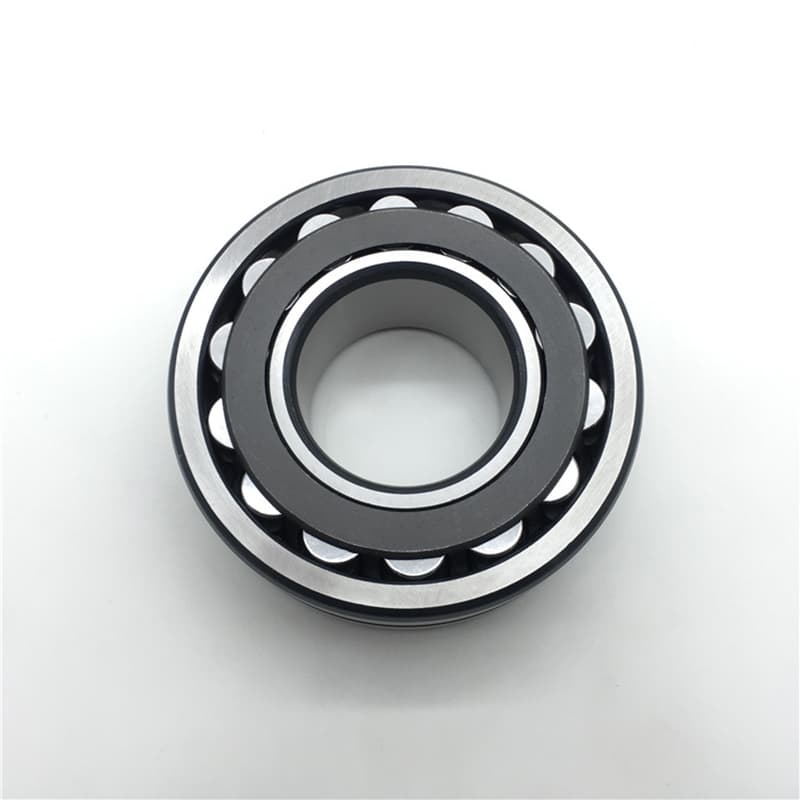
I run a bearing factory in China. My name is [Your Name]. We ship bearings to mines, crushers, and ports all over the world. One of my regular clients is Rajesh from India. He sells bearings to repair shops. He often asks me: “How do I pick a bearing that won’t crack when the machine hits something hard?” That is a great question. I will give you the answer in this article. Let me walk you through the key things you need to check. I will keep it simple and practical.
What Makes Shock Loads Different from Normal Operating Loads?
You think a heavy load is bad. But a shock load1 is worse. What is the real difference?
A normal load2 is steady and predictable. A shock load is sudden, short, and often 3 to 5 times higher than the normal load. Shock loads create a high stress wave that travels through the bearing steel. This causes plastic deformation at the contact points. The steel dents. Then the dents turn into cracks. Normal loads do not do this kind of damage.
The physics behind shock damage
Let me explain in simple terms. Imagine pressing your thumb into a piece of clay slowly. The clay pushes back. That is a normal load. Now imagine hitting the same clay with a hammer. The clay dents instantly. That is a shock load.
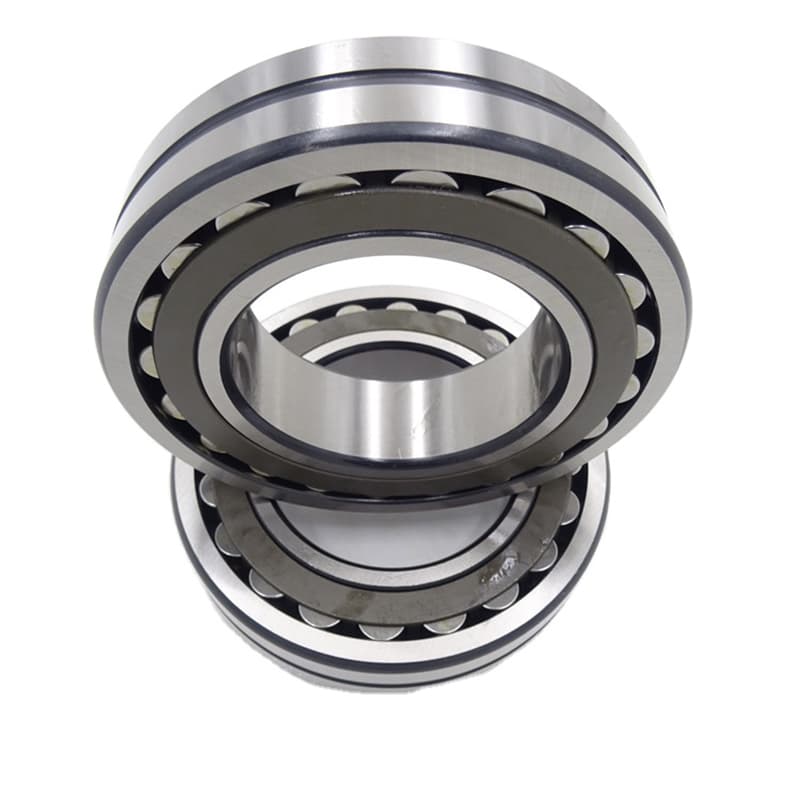
In a bearing, the roller and raceway have a tiny contact area. Under a normal load, the stress stays below the steel’s yield point. The steel bounces back. Under a shock load, the stress goes above the yield point. The steel dents permanently. That dent is called a brinell mark. Once a dent forms, every roller that passes over it creates a new impact. The dent gets bigger. Soon the surface flakes off.
Three key differences you need to know
I have seen these differences cause failures in the field. Let me put them in a table.
| Factor | Normal Load | Shock Load |
|---|---|---|
| Load duration | Long, continuous | Very short, milliseconds |
| Peak force | 1x to 1.5x average | 3x to 10x average |
| Steel response | Elastic deformation (springs back) | Plastic deformation (permanent dent) |
| Lubrication effect | Oil film works well | Oil film breaks instantly |
| Failure mode | Fatigue wear (slow) | Brinelling, cracking (fast) |
A real example from a customer
Last year, a customer in Indonesia called me. He had a rock crusher. The bearings failed every two months. He was using standard spherical roller bearings. I asked him to describe the operation. He said the crusher feeds rocks from a height of two meters. The rocks drop onto the rotor. Each drop creates a big shock. The bearings were getting hammered thousands of times per day.
I explained the difference between normal load and shock load. His calculated load was 50 kN. But the actual shock peak was over 200 kN. His bearing had a dynamic load rating3 of 180 kN. That was not enough. We upgraded to a bearing with a 320 kN rating. That set lasted over a year.
So do not just look at the average load. Look at the peak. If you do not know the peak, assume it is 5 times the average. Then pick a bearing that can handle that peak.
Key Bearing Parameters You Must Check for Impact Conditions?
You have a shock load problem. Which numbers on the bearing spec sheet matter the most?
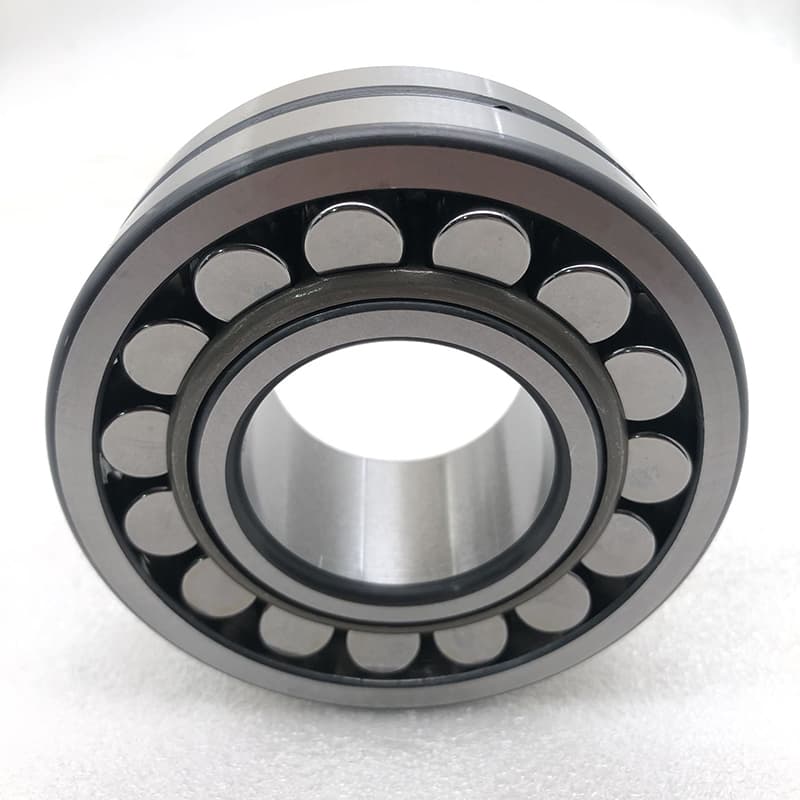
For impact conditions, you must check four key parameters: the dynamic load rating (C)1, the static load rating (C0)2, the fatigue limit load (Pu)3, and the roller profile4. The dynamic load rating tells you how long the bearing will last under normal loads. The static load rating tells you how much shock the bearing can take without denting. Pick a bearing with a C0 that is at least twice your peak shock load5.
Breaking down each parameter
I help customers pick bearings every day. Let me explain what each number means in plain language.
Dynamic load rating (C) – This is the load that gives the bearing a life of one million revolutions. A higher C means a longer life. But C is for normal, steady loads. For shock loads, C is less useful. Still, a higher C means bigger and stronger rollers. That helps with impact. I recommend a C that is at least 1.5 times your normal operating load.
Static load rating (C0) – This is the maximum load the bearing can take without permanent damage. Think of it as the denting limit. If your shock load goes above C0, you will get brinell marks6. For impact conditions, I always pick a bearing where C0 is at least 2 times the peak shock load. Even better is 3 times.
Fatigue limit load (Pu) – This is a newer rating. It tells you the load below which the bearing will never fatigue. For shock loads, you want a high Pu. That means the steel can handle repeated small impacts without cracking. I use Pu to compare bearings of similar size.
Roller profile – This is not a number. But it is critical. A good roller profile has a slight crown. The crown spreads the load evenly. A poor profile (straight cylinder) creates high stress at the roller ends. Under shock, those ends crack first.
A comparison table for different impact levels
Let me give you a guide. Use this to match your application to the right bearing parameters.
| Impact Level | Example Application | Required C0 / Peak Load Ratio | Recommended C / Normal Load Ratio | Special Features Needed |
|---|---|---|---|---|
| Light impact | Conveyor with minor bumps | 1.5x | 1.2x | Standard cage, C3 clearance |
| Medium impact | Hammer mill, shredder | 2.0x | 1.5x | Brass cage, C3 or C4 clearance |
| Heavy impact | Rock crusher, forging press | 3.0x | 2.0x | Brass or machined steel cage, C4 clearance, special roller profile |
| Extreme impact | Demolition equipment, pile driver | 4.0x+ | 2.5x+ | Custom bearing with larger rollers, hardened steel cage, oil lubrication |
What I tell my customers
I had a customer from South Africa. He bought bearings for a vibrating screen. The screen had a lot of impact from falling material. He used the standard bearing from a local supplier. The bearings failed every three weeks. He sent me the failed bearings. The raceways had clear dents. That was a static load rating problem.
I asked him for the peak load. He did not know. So I asked him to measure the motor current spike when material dropped. The current went from 20 amps to 80 amps for half a second. That was a 4x load spike. His old bearing had a C0 of 120 kN. The normal load was 30 kN. But the peak shock load was 120 kN. That was exactly at the limit. No safety margin.
I recommended a bearing with a C0 of 250 kN. That gave a 2x safety margin. The new bearings lasted over a year. The customer was happy. He now buys all his vibrating screen bearings from me.
So remember this rule: Find your peak shock load. Multiply it by 2. Then pick a bearing with a C0 that is at least that high. You will avoid brinelling.
The Role of Internal Clearance (C3, C4) in Handling Sudden Load Spikes?
You see C3 and C4 stamped on the bearing. What do those letters mean for shock loads1?
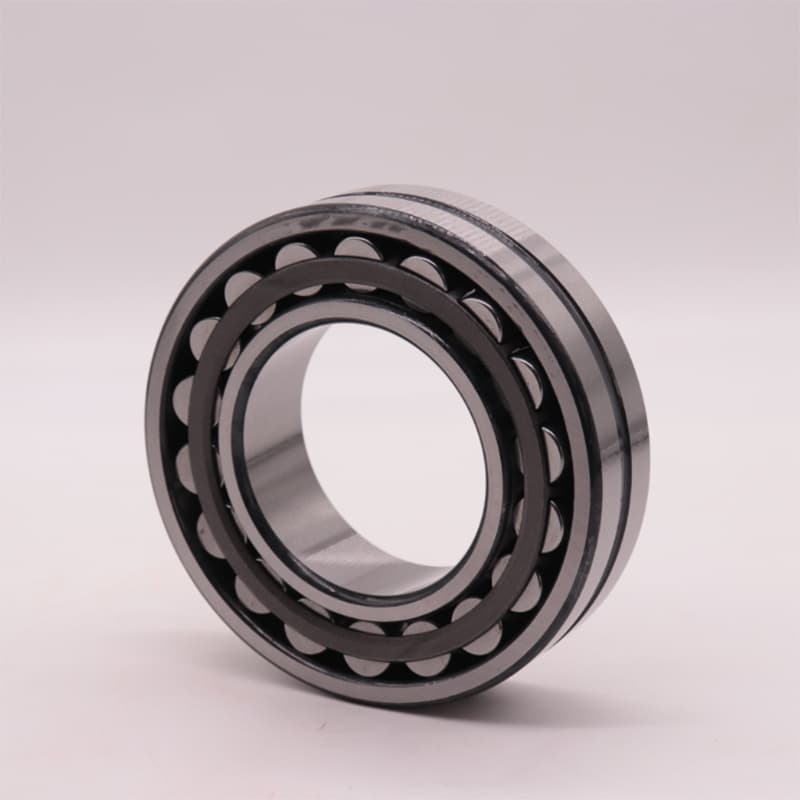
Internal clearance2 is the internal space inside the bearing. C3 means more space than normal. C4 means even more. For shock loads, you need C3 or C4 clearance3 because the impact creates heat and expands the bearing parts. If the clearance is too small, the bearing locks up under the spike. The extra space also lets the rollers adjust to sudden misalignment during impact.
Why clearance matters for impact
Let me explain with a simple picture. Put a ring on your finger. If the ring is tight, it is hard to move. If the ring is loose, it slides easily. A bearing works the same way.
When a shock load hits, two things happen. First, the bearing rings get squeezed. They change shape slightly. Second, the impact creates heat. Heat makes the steel expand. Both of these reduce the internal clearance. If you started with normal (CN) clearance, the bearing can go to zero clearance or even negative clearance. Negative clearance means the rollers are jammed between the raceways. The bearing stops rolling. It slides. It overheats. It fails.
C3 clearance4 gives you a safety margin. C4 gives you even more margin.
How to choose between CN, C3, and C4
I have a simple decision tree. I use it with all my customers.
Use CN clearance when:
- The load is steady and predictable
- The temperature stays between 20°C and 60°C
- There is no vibration or shock
- The shaft and housing are perfectly aligned
Use C3 clearance when:
- You have moderate shock loads (2x to 3x normal)
- The temperature goes up to 80°C
- The machine vibrates
- You are not sure about the conditions
Use C4 clearance when:
- You have heavy shock loads (above 3x normal)
- The temperature goes above 80°C
- The shaft is thick and expands a lot
- The bearing is on a vertical shaft
- You have high vibration (like a vibrating screen)
A real example with numbers
Let me show you a calculation. A customer in Russia used a bearing on a crusher. The shaft diameter was 100 mm. The housing was steel. The normal temperature was 20°C. But during operation, the bearing ran at 90°C.
The thermal expansion5 of the steel shaft was 0.012 mm per degree per 100 mm. For a 70°C rise, the shaft grew by 0.84 mm. The housing also expanded, but at a different rate. The net reduction in clearance was 0.15 mm. The CN clearance for that bearing size was only 0.10 mm to 0.20 mm. So the bearing lost all its clearance at operating temperature. Then a shock load hit. The bearing seized.
We switched to C4 clearance. C4 gave 0.20 mm to 0.35 mm of clearance. Even after thermal expansion, there was still 0.05 mm left. The shock load no longer caused seizure. The bearing life6 went from 1 month to 14 months.
A table to help you decide
| Operating Condition | Recommended Clearance | Why |
|---|---|---|
| Steady load, room temperature, clean environment | CN | Enough space for normal operation |
| Moderate shock, temperature up to 80°C, some vibration | C3 | Extra space for expansion and shock |
| Heavy shock, temperature above 80°C, high vibration | C4 | Maximum space for worst conditions |
| Vertical shaft with heavy rotating mass | C4 | Prevents rollers from sliding down and jamming |
| Precision application (low noise, high speed) | CN or C2 | Less space gives better guidance |
My advice: When in doubt, go with C3. It works for most shock load applications. Only use C4 if you have high heat or extreme shock. And never use CN for impact conditions. That is a recipe for failure.
Cage Materials and Designs That Survive Repeated Impacts?
The rollers take the load. But the cage holds the rollers together. Under impact, what cage keeps working?
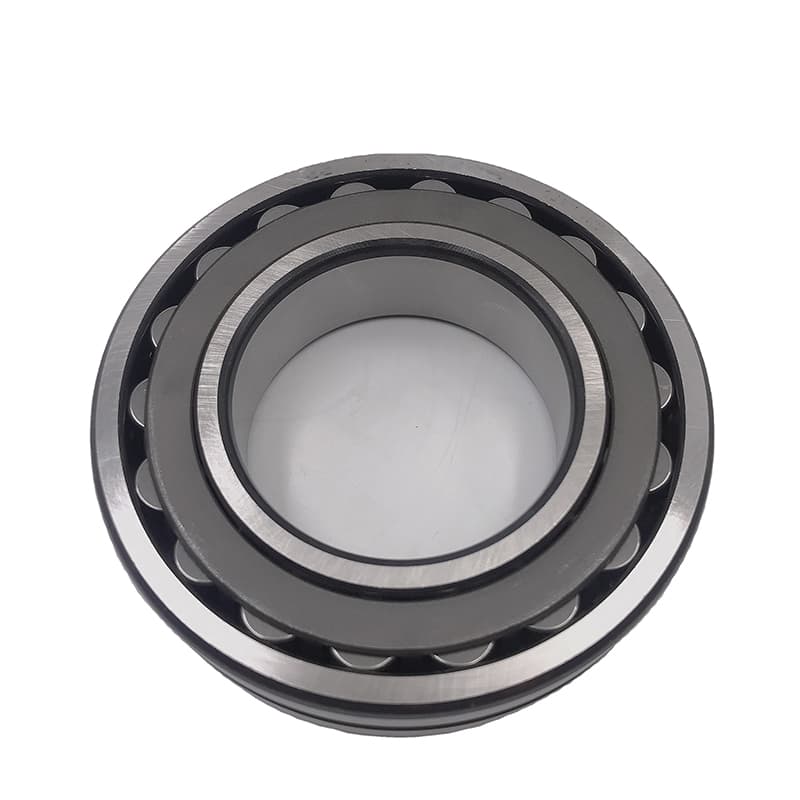
For repeated impacts, machined brass cages1 are the best choice. They absorb shock energy without cracking. Pressed steel cages are too weak. They bend and break. Polymer cages melt or crack under impact. Brass cages also have a natural lubricity. They keep working even if the grease runs low. For extreme conditions, machined steel cages2 offer even more strength but cost more.
What the cage actually does
Many people think the cage just spaces the rollers. That is true. But it does more. The cage guides the rollers into the load zone. It keeps them from touching each other. It also carries some of the inertial forces when the bearing speeds up or slows down.
Under shock loads, the rollers accelerate suddenly. They push against the cage. If the cage is weak, the pocket walls bend or break. Then the rollers bunch up. The bearing locks. The damage spreads fast.
Comparing cage materials
I have tested all three common cage materials in our factory. Let me give you the pros and cons.
Pressed steel cage – This is the cheapest. It is made from thin steel sheet. The pockets are formed by stamping. It works fine for normal loads and steady speeds. But for shock loads, it fails quickly. The thin steel bends. The rivets loosen. I have seen pressed steel cages that looked like twisted metal after just a few hundred hours of impact duty.
Machined brass cage – This is my top recommendation. The cage is cut from solid brass. The pockets are machined to a precise shape. Brass is tough. It bends before it breaks. It also has good sliding properties. If the lubrication is poor, brass does not gall against steel. Brass cages cost more than pressed steel. But they last 5 to 10 times longer under impact. Every port and mine customer I work with uses brass cages.
Machined steel cage – This is the strongest option. The cage is made from high-strength steel. It can handle extreme shock and high speeds. But steel on steel has a problem. If the lubrication fails, steel cages gall and weld to the rollers. Steel is also heavier. That creates more inertia during impacts. I only recommend machined steel cages for very large bearings or very extreme applications.
Polymer (plastic) cage – Some bearings use PA66 or PEEK cages. These are light and cheap. But they do not handle shock loads well. The polymer cracks under sudden force. High heat makes it soft. I never recommend polymer cages3 for impact applications.
A quick reference table
| Cage Material | Impact Resistance | Cost | Lubrication Sensitivity | Best Application |
|---|---|---|---|---|
| Pressed steel | Poor | Low | Medium | Light duty, no shock |
| Machined brass | Excellent | Medium | Low | Impact, vibration, poor lube |
| Machined steel | Very good | High | High (needs good lube) | Extreme shock, high speed |
| Polymer (PA66) | Poor | Low | Medium | Low load, clean conditions |
A story from a cement plant
I remember a customer in Egypt. He had a bucket elevator for cement clinker. The bearing at the bottom took heavy shocks every time a bucket dug into the pile. He used bearings with pressed steel cages. They failed every 6 weeks. The cages would crack. Then the rollers would fall out.
I asked him to try a bearing with a machined brass cage. He was worried about the higher price. I told him: “Try one set. If it fails faster, I will refund the difference.” He tried it. That bearing ran for 11 months. He replaced all the other bearings with brass cage versions. Now he buys two containers of bearings from me every year.
The lesson is simple. Do not save a few dollars on the cage. The cage is like the skeleton of the bearing. Under impact, a weak skeleton breaks. Spend the money on a brass cage. It pays back many times in longer life.
Conclusion
Pick high load ratings, use C3 or C4 clearance, choose brass cages. Your bearings will survive shock loads.
-
Explore the advantages of machined brass cages, known for their durability and shock absorption, essential for high-performance bearings. ↩ ↩ ↩ ↩
-
Discover the extreme applications where machined steel cages excel, despite their higher cost. ↩ ↩ ↩ ↩
-
Understand the drawbacks of polymer cages, especially under impact, to make informed choices for your projects. ↩ ↩ ↩ ↩
-
Explore the significance of C3 clearance to enhance your knowledge on bearing selection for moderate shock loads. ↩ ↩
-
Understanding thermal expansion is key to preventing bearing failure due to temperature changes during operation. ↩ ↩
-
Find strategies to enhance bearing life, especially in challenging environments, to improve machinery reliability. ↩ ↩