
You are designing a small gear motor. The motor needs to run smooth and quiet. You pick a bearing. But is it the right one? One wrong choice can ruin the whole project.
To select deep groove ball bearings for small gear motors, focus on load capacity, speed rating, noise level, and internal clearance. These bearings are ideal for gear motors because they handle both radial and light axial loads with low friction.
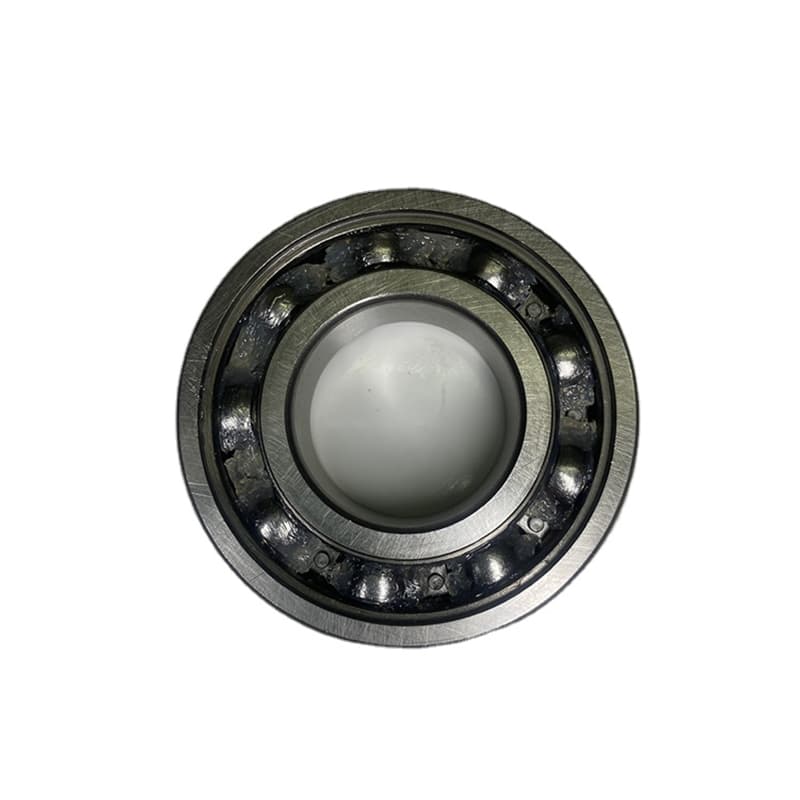
I have worked with many motor manufacturers over the years. They all ask the same questions. What bearing should I use? What size? Do I need preload? Let me walk you through the answers. I will help you make the right choice for your gear motor application.
Are deep groove bearings1 better?
A client in Vietnam asked me this. He was building small gear motors for automation equipment. He was using needle roller bearings2. But he had noise problems. He wanted to know if deep groove bearings would fix it.
Deep groove bearings are better than other bearing types for small gear motors because they offer the best balance of speed, load, and noise. They run smooth. They are easy to install. They handle misalignment well. For most gear motor applications, they are the standard choice.
Let me compare deep groove bearings with other options you might consider.
Deep Groove vs. Needle Roller Bearings
Needle roller bearings are common in gear motors. They have a small cross section. They can handle high radial loads. But they have limits.
- Noise: Needle bearings are noisier. The rollers make more contact noise.
- Axial Load: Needle bearings cannot handle axial loads well. Gear motors often have some axial load from the gear thrust.
- Installation: Needle bearings require precise alignment. They are less forgiving.
Deep groove bearings run quieter. They handle axial loads. They are easier to install. For most gear motors, they are the better choice.
Deep Groove vs. Angular Contact Bearings
Angular contact bearings are excellent for high axial loads. But they have drawbacks.
- Cost: Angular contact bearings cost more.
- Complexity: They usually need to be used in pairs. This adds cost and space.
- Speed: Deep groove bearings can run at higher speeds in small sizes.
For small gear motors, deep groove bearings are usually sufficient. You only need angular contact bearings3 if you have very high axial loads.
Deep Groove vs. Plain Bearings
Plain bearings (bushings) are cheap and quiet. But they have limits.
- Lubrication: Plain bearings need constant lubrication. Deep groove bearings are pre-lubricated and sealed.
- Speed: Plain bearings have lower speed limits.
- Life: Deep groove bearings last longer in most gear motor applications.
Comparison Table
| Feature | Deep Groove | Needle Roller | Angular Contact | Plain Bearing |
|---|---|---|---|---|
| Noise Level | Low | High | Low | Very Low |
| Axial Load | Moderate | Poor | High | Poor |
| Radial Load | High | Very High | High | Moderate |
| Speed Capability | High | Moderate | High | Low |
| Installation | Easy | Demanding | Complex | Easy |
| Cost | Moderate | Low | High | Low |
My View on This
For small gear motors, deep groove bearings are the standard for good reason. They work. They are reliable. They are cost-effective. I recommend them for most applications.
But you need to choose the right version. The next sections will help you with size, type, and preload.
What size are deep groove ball bearings1?
A distributor in Indonesia called me. He had a customer who needed bearings for a new gear motor design. The customer did not know what size to use. He asked me for help.
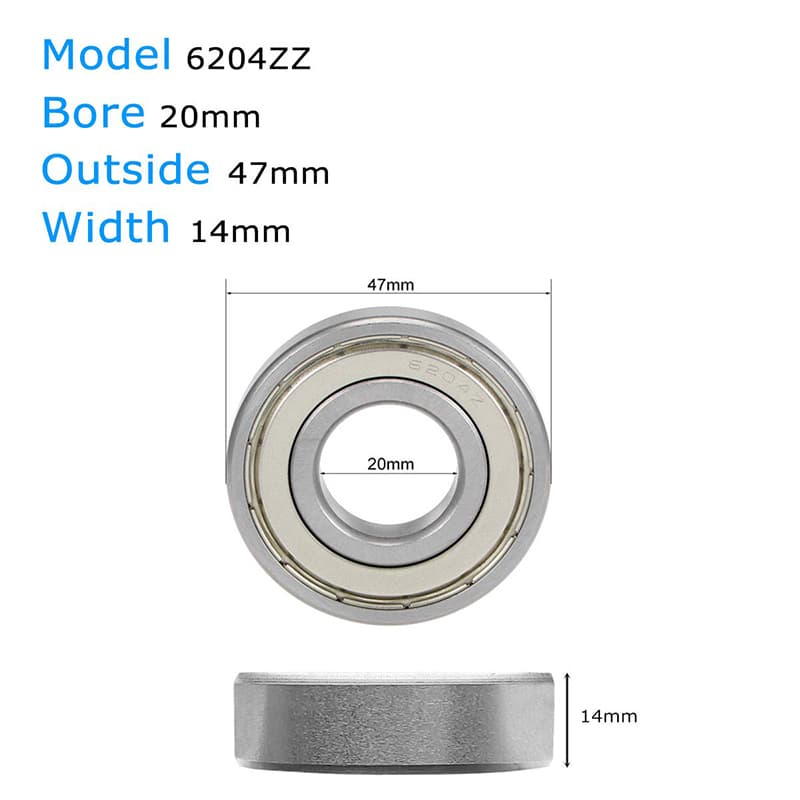
Deep groove ball bearings come in standard metric sizes defined by the ISO system. The size is expressed as a three-part code. The first digit indicates the series. The next two digits indicate the bore size. For example, bearing 6204 has a 20mm bore.
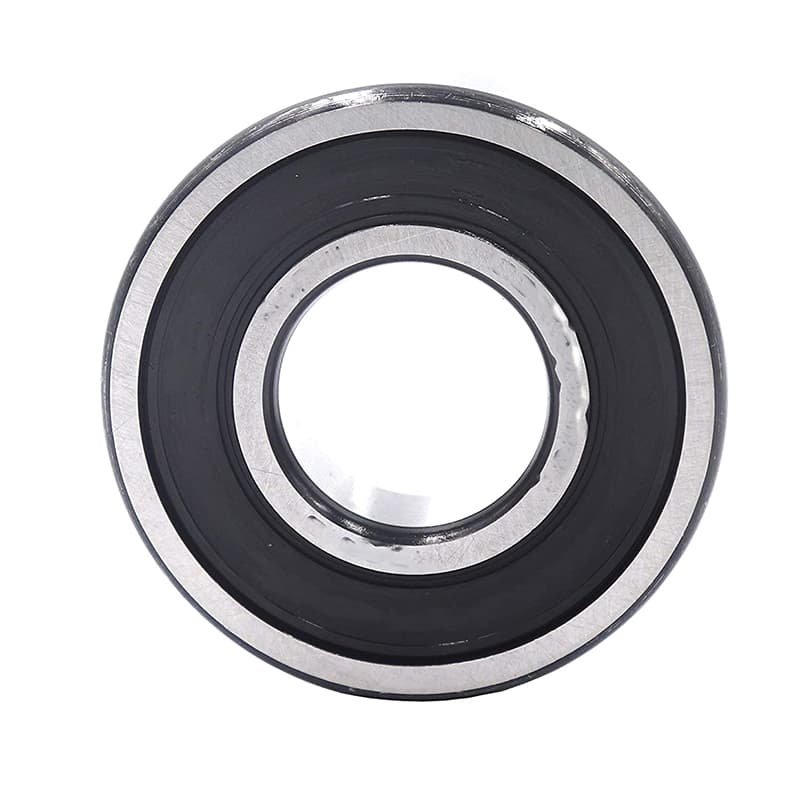
Let me explain how to read bearing sizes and how to choose the right one for your gear motor.
Understanding the Bearing Number System
Most deep groove ball bearings use a standard numbering system. The number tells you the size and series.
Take bearing 6204 as an example.
- 6: This is the bearing type. 6 means single-row deep groove ball bearing.
- 2: This is the series. It indicates the width and load capacity2. Series 2 is medium. Series 0 is light. Series 3 is heavy.
- 04: This is the bore size code3. Multiply by 5 to get the bore in millimeters. 04 x 5 = 20mm.
Here are common sizes used in small gear motors.
| Bearing Number | Bore (mm) | Outer Diameter (mm) | Width (mm) | Common Use |
|---|---|---|---|---|
| 623 | 3 | 10 | 4 | Micro motors |
| 624 | 4 | 13 | 5 | Very small motors |
| 626 | 6 | 19 | 6 | Small gearmotors |
| 608 | 8 | 22 | 7 | Hobby motors |
| 6200 | 10 | 30 | 9 | Small industrial motors |
| 6202 | 15 | 35 | 11 | Medium gear motors |
| 6204 | 20 | 47 | 14 | Standard gear motors |
| 6205 | 25 | 52 | 15 | Larger gear motors |
How to Choose the Right Size
Selecting the size is about matching the bearing to your motor shaft and housing.
- Start with the shaft diameter. The bearing bore must match your motor shaft.
- Check the housing bore. The bearing outer diameter must fit your housing.
- Consider space. The bearing width affects the overall motor length.
- Think about load. Larger bearings handle more load. But they take more space.
Series Selection
The series tells you how "heavy" the bearing is.
- 6000 Series (Light): Thinner cross section. Good for space-constrained designs. Lower load capacity.
- 6200 Series (Medium): Standard choice. Good balance of size and capacity.
- 6300 Series (Heavy): Wider and larger OD. Higher load capacity. Takes more space.
For most small gear motors, the 6200 series4 is the right choice. It offers good capacity without being too large.
Metric vs. Inch Sizes
Most bearings are metric. This is the global standard. Some older equipment uses inch-sized bearings. But for new designs, I recommend sticking with metric. They are easier to source and more available.
My Advice on Sizing
When in doubt, use a 6200 series bearing. Start with the shaft size. Use the table above to find the corresponding bearing number. Check that the outer diameter fits your housing. If you need higher load capacity, go up to the 6300 series. If space is tight, use the 6000 series.
At FYTZ Bearing, we stock all standard sizes. We also offer custom sizes for unique designs.
Is a 6312 bearing a deep groove ball bearing?
A buyer from Turkey asked me this. He was ordering bearings for a project. He saw the number 6312 on a drawing. He was not sure what type of bearing it was. He wanted to confirm before ordering.
Yes, a 6312 bearing is a deep groove ball bearing. The "6" in the bearing number indicates it is a single-row deep groove ball bearing. The "3" indicates the heavy series. The "12" indicates a 60mm bore.
[^1] on a white background](https://sdycbearing.com/wp-content/uploads/2025/12/Deep-Groove-Ball-Bearing-72.jpg)
Let me explain the bearing numbering system2 in more detail. This will help you identify any bearing you encounter.
Breaking Down the Bearing Number
The standard bearing number tells you everything you need to know.
6312
- 6: Bearing type. 6 = deep groove ball bearing.
- 3: Series. 3 = heavy series. Wider and larger outer diameter.
- 12: Bore size code. 12 x 5 = 60mm bore.
So a 6312 bearing is a deep groove ball bearing with a 60mm bore, 130mm outer diameter, and 31mm width. It is a heavy-duty bearing for larger applications.
Common Bearing Types by Number
Here is how to identify bearings by the first digit.
| First Digit | Bearing Type |
|---|---|
| 6 | Deep groove ball bearing |
| 7 | Angular contact ball bearing |
| 3 | Taper roller bearing |
| N | Cylindrical roller bearing |
| 2 | Spherical roller bearing |
What About Prefixes and Suffixes?
Sometimes you see letters before or after the number.
- Prefixes like "6" or "62" usually indicate the same type. 6204 is a deep groove bearing. 6304 is also a deep groove bearing.
- Suffixes like "ZZ" or "2RS" indicate the seal type.
- ZZ: Metal shield on both sides.
- 2RS: Rubber seal on both sides.
- C3: Increased internal clearance.
Is 6312 Suitable for Small Gear Motors?
For small gear motors, a 6312 is quite large. A 60mm bore is not "small." This bearing is used in larger industrial motors and pumps.
If you are working on a small gear motor, you will likely use bearings like 6202, 6204, or 6205. But if you see a 6312 on a drawing, now you know exactly what it is.
Quick Identification Table
| Bearing Number | Type | Bore | Series |
|---|---|---|---|
| 6204 | Deep groove | 20mm | Medium |
| 6304 | Deep groove | 20mm | Heavy |
| 6312 | Deep groove | 60mm | Heavy |
| 7204 | Angular contact | 20mm | N/A |
My Advice on Identification
If you are not sure what bearing you need, look at the number. The first digit tells you the type. The last two digits (for bearings over 20mm bore) tell you the size. If you are ever unsure, send the number to us at FYTZ Bearing. We can confirm and provide the exact bearing you need.
Do deep groove ball bearings1 need preload2?
A manufacturer in Brazil asked me this. He was building precision gear motors for robotics. He wanted the output to be very smooth with no backlash. He wondered if preload would help.
Deep groove ball bearings generally do not need preload for standard gear motor applications. They are designed to run with internal clearance. However, for precision applications where minimal shaft movement is critical, light preload can improve stiffness and reduce noise.
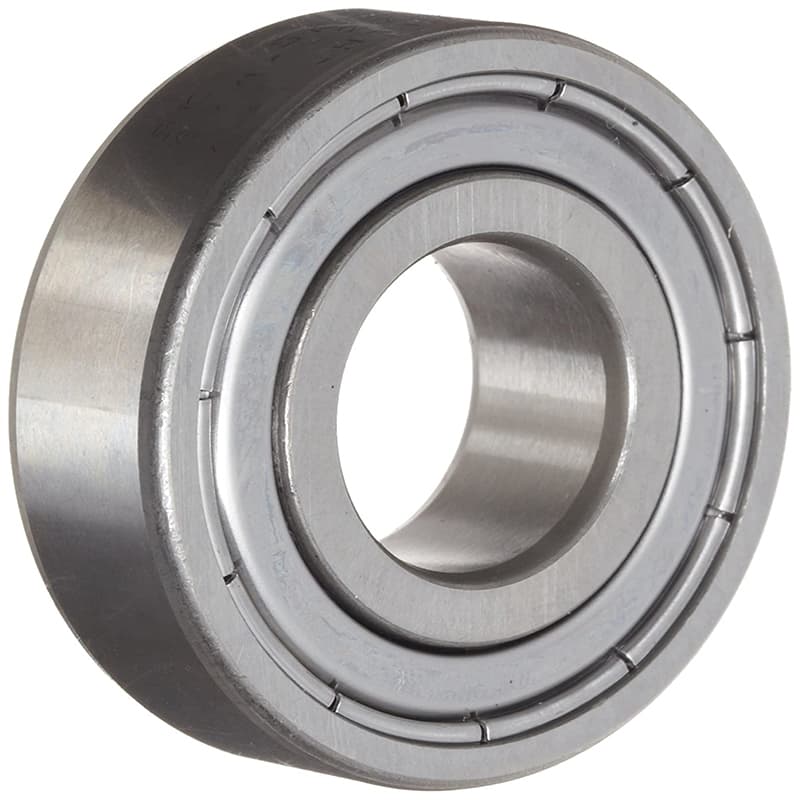
Let me explain what preload does and when it makes sense for gear motors.
What Preload Does
Preload is a constant axial force applied to the bearing. It removes the internal clearance. The balls are pressed firmly against the raceways.
- Without preload: There is a small gap inside the bearing. The shaft can move slightly.
- With preload: The gap is gone. The shaft is held in a fixed position.
When Preload Helps
In some gear motor applications, preload is beneficial.
- Reduced Backlash: Preload eliminates internal movement. This reduces backlash in the gear system.
- Lower Noise: A preloaded bearing runs quieter. There is no internal movement to create noise.
- Improved Stiffness: The shaft does not deflect under load. This is important for precision positioning.
- Better Accuracy: For applications like robotics or CNC, preload improves accuracy.
When Preload Hurts
Preload is not always a good idea.
- Increased Heat: Preload creates constant friction. This generates extra heat.
- Reduced Speed: A preloaded bearing cannot run as fast as a bearing with clearance.
- Shorter Life: Too much preload increases stress. This can lead to early fatigue failure.
- Complex Installation: Achieving the right preload requires precision assembly.
How to Apply Preload in Gear Motors
If you decide preload is needed, you have options.
-
Spring Preload: A spring applies constant force to the outer ring. This is simple and forgiving. It works well for applications with temperature changes.
-
Matched Bearings: Two bearings are mounted face-to-face or back-to-back. The manufacturer sets the preload. This is more precise but more expensive.
-
Adjustable Locknut: A nut on the shaft applies axial force. You adjust the preload during assembly. This requires skill to get right.
Preload Considerations for Gear Motors
| Application Type | Preload Needed? | Reason |
|---|---|---|
| Standard industrial gear motor | No | Standard clearance is sufficient |
| Precision robotics gear motor | Yes, light | Reduces backlash, improves accuracy |
| High-speed gear motor | No | Preload creates heat at high speeds |
| Low-noise gear motor | Possibly | Light preload reduces internal noise |
| High-temperature application | No | Heat expansion can increase preload dangerously |
My Advice on Preload
For most small gear motors, you do not need preload. Standard deep groove bearings with normal clearance (CN) work perfectly. They are designed to run with some internal clearance.
If you are building a precision application, consider light preload. Use a spring preload3 method. It is simpler and more forgiving. Start with a light preload. Monitor the temperature. If the bearing runs hot, reduce the preload.
At FYTZ Bearing, we can provide matched bearings4 for precision applications. We can also advise on the correct preload for your specific gear motor.
Conclusion
Selecting the right deep groove ball bearing for small gear motors comes down to understanding size, type, and application needs. Start with standard sizes. Use the 6200 series for most designs. Add preload only when precision demands it.
-
Explore this link to understand the design and applications of deep groove ball bearings, crucial for precision gear motors. ↩ ↩ ↩
-
Learn about preload in bearings to see how it can enhance performance in precision applications. ↩ ↩ ↩ ↩
-
Find out how spring preload works and its advantages for maintaining bearing performance. ↩ ↩ ↩
-
Explore the benefits of matched bearings for achieving precise preload in high-performance gear motors. ↩ ↩
