
I walked into a garment factory last year. The sewing machines were running non-stop. But every few weeks, one machine would start making noise. Then it would stop. The production line would wait.
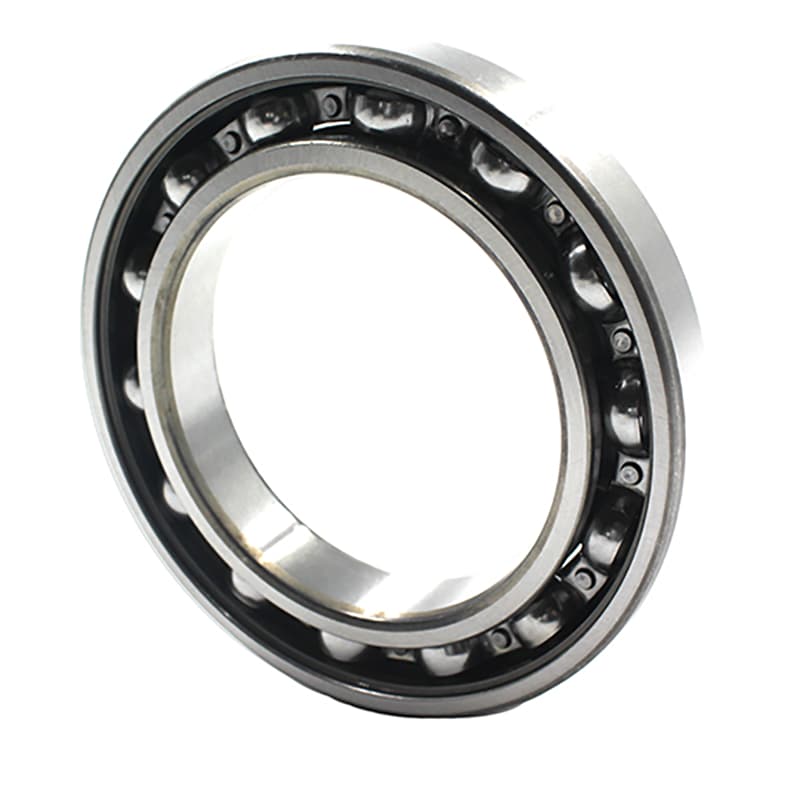
Deep groove ball bearings are the right choice for industrial sewing and embroidery machines. They provide smooth rotation, low noise, and high speed capability. These machines need bearings that can handle continuous operation at high speeds with minimal vibration.
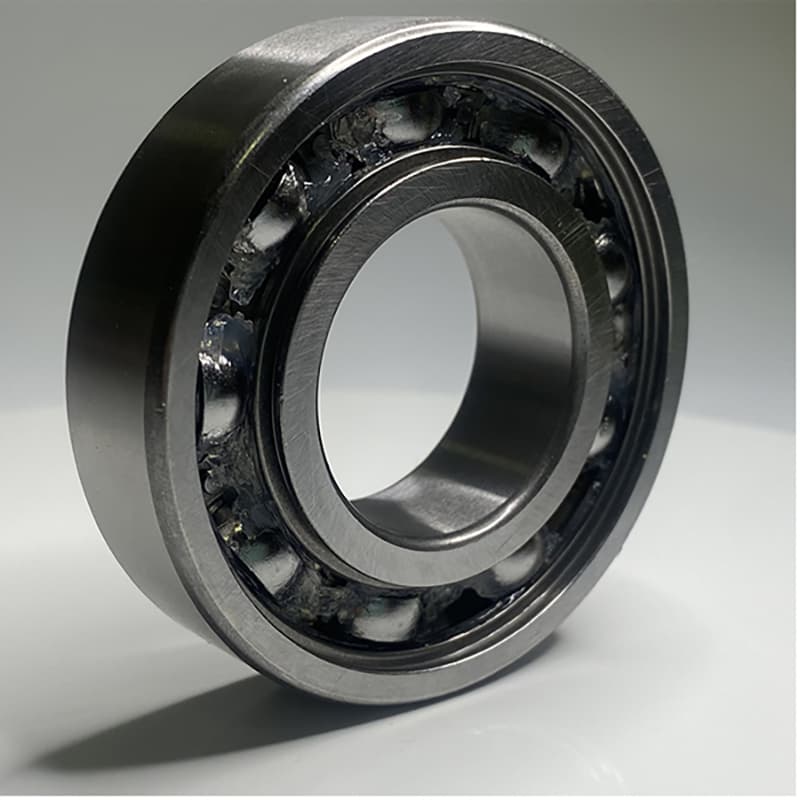
The sewing industry is demanding. Machines run for hours. Speed is high. Noise must be low. I have supplied bearings to garment factories across many countries. Let me share what I have learned about choosing the right bearings for these applications.
What is the purpose of a deep groove ball bearing1?
A customer in Bangladesh asked me this. He runs a large garment factory. He wanted to understand why his maintenance team kept ordering the same bearing over and over. He wanted to know what it actually did.
The purpose of a deep groove ball bearing is to support rotating shafts while reducing friction2. It carries both radial loads and axial loads. It keeps the shaft centered. It allows smooth, high-speed rotation with minimal energy loss.
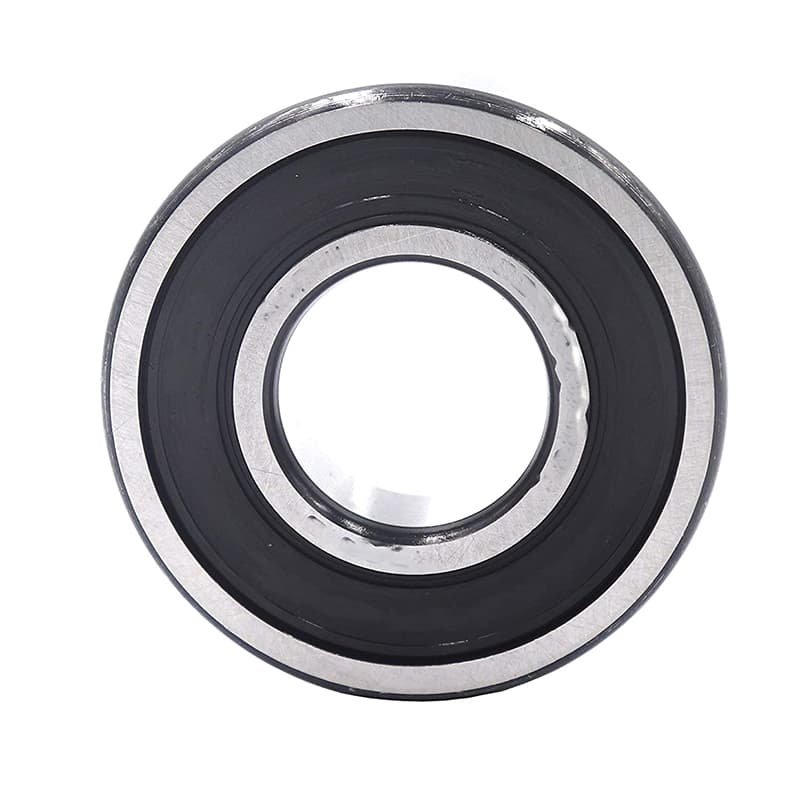
Let me break down what a deep groove ball bearing actually does inside a sewing machine.
Supporting the Shaft
Every sewing machine has rotating shafts. The main shaft, the hook shaft, and other moving parts all need support.
- Radial Support: The bearing holds the shaft in position. It stops the shaft from moving sideways.
- Axial Support: The bearing also handles thrust. In a sewing machine, the needle bar moves up and down. This creates axial forces.
Reducing Friction
Without bearings, metal would rub against metal. This creates heat and wear.
- Rolling Contact: The balls roll between the inner and outer rings. Rolling friction is much lower than sliding friction.
- Energy Efficiency: Lower friction means less power is wasted. The motor runs more efficiently.
Maintaining Precision
Sewing machines need precision. The needle must hit exactly the right spot. The thread must form a perfect stitch.
- Minimal Runout: Deep groove bearings have tight tolerances. The shaft does not wobble.
- Consistent Position: The bearing holds the shaft in a fixed position. This ensures consistent stitch quality.
Enabling High Speed
Modern industrial sewing machines run at very high speeds. Some exceed 5,000 stitches per minute.
- High-Speed Capability: Deep groove bearings are designed for high rotational speeds.
- Low Heat Generation: The bearing design minimizes heat at high speeds.
The Four Main Purposes Summarized
| Purpose | What It Does | Why It Matters |
|---|---|---|
| Support | Holds the shaft in place | Prevents misalignment |
| Reduce Friction | Balls roll instead of slide | Saves energy, reduces heat |
| Maintain Precision | Tight tolerances, minimal runout | Consistent stitch quality |
| Enable Speed | Designed for high RPM | Fast production rates |
My View on This
In a sewing machine, the bearing is the backbone of the rotating parts. It seems small. But it determines how well the machine runs. If the bearing fails, the machine stops. If the bearing is noisy, the operator is unhappy. If the bearing has runout, the stitches are bad.
At FYTZ Bearing, we supply bearings specifically for sewing machine manufacturers. We know the demands of this industry. The bearings must be smooth, quiet, and precise. That is what deep groove ball bearings deliver.
What is a 6203 bearing1 used for?
A distributor in Indonesia asked me this. He had a customer who needed 6203 bearings for sewing machines2. He wanted to know if this was the right choice. He also wanted to understand where else this bearing is used.
A 6203 bearing is a deep groove ball bearing with a 17mm bore, 40mm outer diameter, and 12mm width. In sewing and embroidery machines, it is commonly used in the main shaft, the hook shaft, and the motor. It is one of the most popular sizes for industrial sewing equipment.
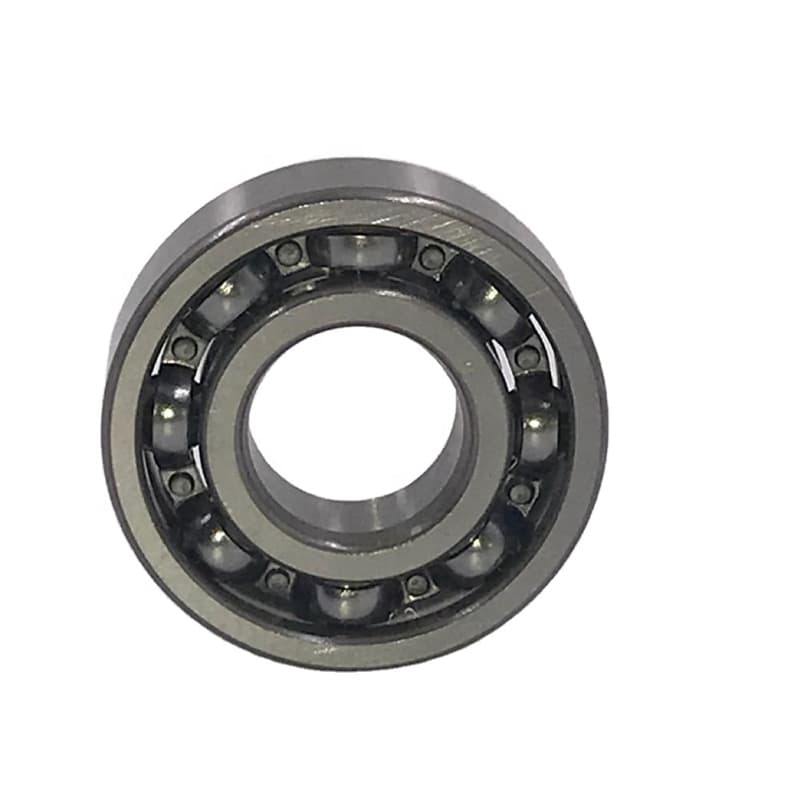
Let me give you the full picture of the 6203 bearing. This is a bearing you will see often in the sewing industry.
The Specifications of 6203
The 6203 bearing has standard dimensions.
- Bore (d): 17mm
- Outer Diameter (D): 40mm
- Width (B): 12mm
- Type: Single-row deep groove ball bearing
It is a medium-series bearing. It offers good load capacity3 without being too large.
Where 6203 Bearings Are Used in Sewing Machines
In an industrial sewing machine, you will find 6203 bearings in several locations.
- Main Shaft: The main drive shaft often uses 6203 bearings. This shaft turns at high speed and needs smooth rotation.
- Hook Shaft: The rotating hook that catches the thread uses 6203 bearings in many machines.
- Motor: The drive motor often has 6203 bearings supporting the motor shaft.
- Tension Rollers: Some thread tension mechanisms use 6203 bearings.
Why 6203 Is So Popular
This bearing size has become a standard for a reason.
- Common Size: Many machines use this size. It is easy to source.
- Good Capacity: It handles the loads found in sewing machines well.
- Compact: It fits in the limited space inside a sewing machine head.
- Available with Seals: You can get it with rubber seals4 (2RS) for protection against dust and thread lint.
Other Applications for 6203
Beyond sewing machines, the 6203 bearing is used widely.
- Electric Motors: Small motors in fans, pumps, and tools.
- Conveyor Rollers: Light-duty conveyor systems.
- Agricultural Equipment: Small machinery and implements.
- Automotive: Alternators, water pumps, and other components.
- Home Appliances: Washing machines, dryers, and vacuum cleaners.
6203 Variations for Sewing Machines
| For sewing machine applications, I recommend specific variations. | Variation | Code | Why It Matters |
|---|---|---|---|
| Rubber Sealed | 6203-2RS | Keeps thread lint and dust out | |
| High Precision | 6203 P5 | Lower runout for consistent stitches | |
| Low Noise | 6203 with noise test | Quiet operation in garment factories | |
| High Speed | 6203 with special grease | For high-speed machines |
My Advice on 6203 for Sewing Machines
If you are sourcing bearings for sewing machines, the 6203 is a reliable choice. Make sure you get the sealed version (2RS). The open version (without seals) will let thread lint get inside. That lint will mix with the grease and cause early failure.
At FYTZ Bearing, we supply 6203 bearings with high precision5 grades for sewing machine manufacturers. We can also provide low-noise versions. Noise is critical in a sewing factory. No one wants a machine that sounds like it is grinding.
What are the 4 types of ball bearings?
A new client from Egypt asked me this. He was starting a sewing machine repair1 business. He wanted to understand the different bearings he would encounter. He asked me to explain the basic types.
The four main types of ball bearings are deep groove ball bearings2, angular contact ball bearings3, thrust ball bearings4, and self-aligning ball bearings5. Each type has a specific design and purpose. For sewing machines, deep groove ball bearings are the most common.
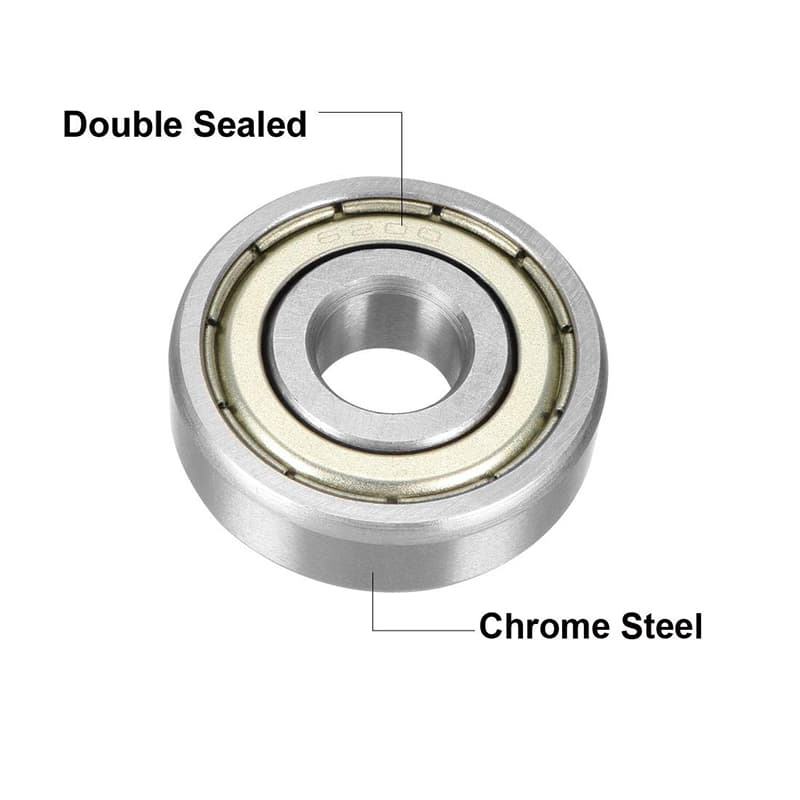
Let me walk you through each type. I will explain what they do and where you might find them.
1. Deep Groove Ball Bearings
This is the most common type. You see them everywhere.
- Design: The raceways are deep. The balls make contact at a single point. This allows the bearing to handle both radial and axial loads.
- Strengths: High speed capability, low noise, good load capacity, easy to install.
- Weaknesses: Cannot handle very high axial loads compared to angular contact bearings.
- In Sewing Machines: This is the main bearing used. Main shaft, hook shaft, motor.
2. Angular Contact Ball Bearings
These bearings are designed for high axial loads.
- Design: The raceways are angled. The balls make contact at an angle. This allows the bearing to handle high thrust loads in one direction.
- Strengths: Excellent axial load capacity, high stiffness.
- Weaknesses: Usually need to be used in pairs. More expensive. More complex to install.
- In Sewing Machines: Rare. Some high-end machines might use them in the main shaft for extra stiffness.
3. Thrust Ball Bearings
These bearings handle only axial loads. They do not support radial loads.
- Design: Flat raceways with balls between them. The load is straight along the shaft.
- Strengths: Very good at handling pure thrust loads. Simple design.
- Weaknesses: Cannot handle any radial load. Low speed capability.
- In Sewing Machines: Sometimes used in tension mechanisms or where pure axial load exists.
4. Self-Aligning Ball Bearings
These bearings can handle misalignment between the shaft and housing.
- Design: Two rows of balls with a spherical outer raceway. This allows the bearing to tilt slightly.
- Strengths: Tolerates misalignment. Good for applications where perfect alignment is hard to achieve.
- Weaknesses: Lower speed capability than deep groove bearings. Less common.
- In Sewing Machines: Rare. Usually not needed because sewing machine assemblies are precise.
Comparison Table
| Bearing Type | Load Direction | Speed | Common Use in Sewing Machines |
|---|---|---|---|
| Deep Groove | Radial + Light Axial | High | Main shaft, hook, motor |
| Angular Contact | Radial + High Axial (one direction) | High | Rare, high-end spindles |
| Thrust | Pure Axial | Low | Tension mechanisms |
| Self-Aligning | Radial + Light Axial | Moderate | Rare, not typical |
My Advice on Types
If you work on sewing machines, focus on deep groove ball bearings. They are the standard. They work. They are available.
If you encounter other types, you will know what they are. But for most sewing machine applications, the 6200 series deep groove bearings6 are what you need.
At FYTZ Bearing, we specialize in deep groove ball bearings. We supply them to sewing machine manufacturers worldwide. We know the exact specifications needed for smooth, quiet operation.
Is a 6312 bearing1 a deep groove ball bearing2?
A buyer from Turkey called me. He had a bearing number on a parts list. The number was 6312. He was not sure what type of bearing it was. He wanted to confirm before placing an order.
Yes, a 6312 bearing is a deep groove ball bearing. The "6" in the bearing number indicates it is a single-row deep groove ball bearing. The "3" indicates the heavy series. The "12" indicates a 60mm bore.
Let me explain the bearing numbering system3. This will help you identify any bearing you come across.
Breaking Down the Number 6312
The bearing number tells you everything.
- First Digit (6): This is the bearing type. 6 means single-row deep groove ball bearing.
- Second Digit (3): This is the series. 3 means heavy series. It has a larger cross section than the 6200 series.
- Last Two Digits (12): This is the bore size code. Multiply by 5 to get the bore in millimeters. 12 x 5 = 60mm.
So a 6312 bearing has a 60mm bore, 130mm outer diameter, and 31mm width. It is a heavy-duty bearing4.
Is 6312 Used in Sewing Machines?
For sewing machines, a 6312 is quite large. Most industrial sewing machines5 use bearings in the 6200 series. Common sizes are 6202, 6203, 6204, and 6205.
A 6312 is more common in larger industrial equipment.
- Large electric motors
- Pumps
- Gearboxes
- Heavy machinery
If you see a 6312 in a sewing machine context, it might be for a very large industrial embroidery machine or a motor. But for standard sewing machines, the smaller sizes are more common.
How to Identify Any Bearing
Here is a simple way to identify a bearing by its number.
| First Digit | Bearing Type |
|---|---|
| 6 | Deep groove ball bearing |
| 7 | Angular contact ball bearing |
| 3 | Taper roller bearing |
| N | Cylindrical roller bearing |
| 5 | Spherical roller bearing |
What About Prefixes and Suffixes?
Sometimes you see additional letters.
- Prefixes like "62" or "63": Still deep groove bearings. 6204 and 6304 are both deep groove.
- Suffix "ZZ": Metal shields on both sides.
- Suffix "2RS": Rubber seals on both sides.
- Suffix "C3": Increased internal clearance.
- Suffix "P5" or "P6": Precision grade.
Quick Reference Table
| Bearing Number | Type | Bore | Use in Sewing Machines |
|---|---|---|---|
| 6203 | Deep groove | 17mm | Common |
| 6303 | Deep groove | 17mm | Less common, heavier |
| 6312 | Deep groove | 60mm | Not typical, too large |
| 7203 | Angular contact | 17mm | Rare |
My Advice on Identification
If you have a bearing number, look at the first digit. That tells you the type. For sewing machines, you will almost always see a "6" at the beginning.
If you are not sure, send the number to us at FYTZ Bearing. We can confirm the type and provide the exact bearing you need. We stock all standard deep groove sizes. We also carry precision grades for sewing machine applications.
Conclusion
Deep groove ball bearings are the heart of industrial sewing and embroidery machines. They provide smooth, quiet, high-speed operation. Choose sealed versions. Use standard sizes like 6203. Precision matters for stitch quality.
-
Explore this link to understand the specifications and applications of the 6312 bearing. ↩ ↩ ↩ ↩
-
Learn about deep groove ball bearings and their advantages in various applications. ↩ ↩ ↩ ↩
-
This resource will clarify the bearing numbering system, helping you identify different types. ↩ ↩ ↩
-
Find out what defines a heavy-duty bearing and its applications in various industries. ↩ ↩ ↩
-
Discover the types of bearings commonly used in industrial sewing machines and their specifications. ↩ ↩ ↩
-
Get detailed specifications for the 6200 series, the standard for most sewing machine applications. ↩
