
Your machines shake. Bearings fail in months. Downtime eats your profit. I will show you how to pick bearings that survive.
To choose spherical roller bearings for severe vibration, you must focus on internal clearance, cage design, material quality, and lubrication. Proper selection reduces wear and extends bearing life. I have learned this from years of helping customers like you.
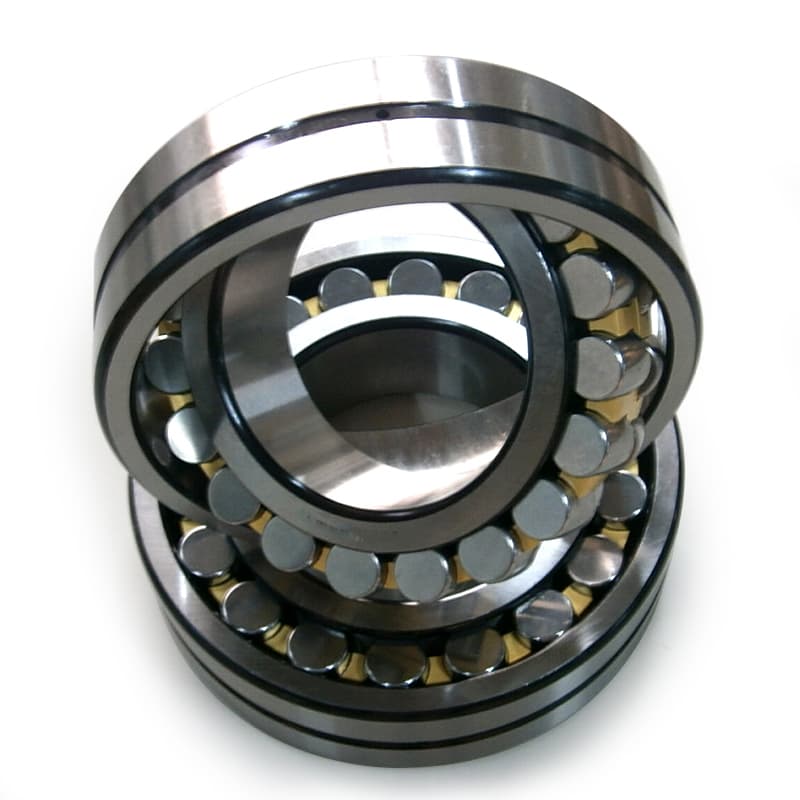
I have worked with bearings for over 15 years. I have seen bearings crack, overheat, and crumble under vibration. My team at FYTZ Bearing has tested many solutions. Now I want to share what really works. This is not theory. This is what we use every day in our factory and what our customers confirm in the field.
What Are the Main Challenges of Shock and Vibration in Bearing Applications?
Shock loads can crack bearing rings. Constant vibration can cause false brinelling1. These problems lead to early failure and unplanned stops.
Shock and vibration cause wear, fatigue, and misalignment in bearings. They can lead to brinelling, fretting corrosion2, and cage fracture3. Understanding these challenges helps you choose better bearings.
[^4]](https://sdycbearing.com/wp-content/uploads/2025/12/Spherical-Roller-Bearings-61-1.jpg)
How Vibration Attacks Bearings
When a machine vibrates, the rolling elements do not roll smoothly. They slide and skid. This destroys the oil film. Metal touches metal. Small particles break off. These particles then grind the surfaces like sandpaper.
There are three common types of damage I see in the field:
| Damage Type | What Happens | Where It Shows Up |
|---|---|---|
| False brinelling | Wear marks that look like dents. Happens when the machine is off but vibration is present. | On raceways at roller spacing. |
| Fretting corrosion | Reddish dust around the bearing. Happens from micro-movements. | On the outer ring outside surface or inner ring bore. |
| Cage fracture | Cage breaks into pieces. Happens from sudden shock or high acceleration. | Separator or cage windows. |
I remember a case from a customer in Egypt. They ran a big cement crusher. Bearings lasted only three months. When we inspected the failed bearings, we saw clear false brinelling marks. The machine sat idle on weekends, but nearby equipment vibrated. That vibration, without rotation, created dents. Once the machine started, the dents grew into spalls. So we recommended a different internal clearance and a better lubricant. The next set lasted over a year.
Another example comes from a hammer mill in Indonesia. The bearings kept losing their cages. The shocks from crushing were too strong for the standard pressed steel cage. We switched to a machined brass cage. That solved the problem.
So the challenges are real. But they are not impossible to beat. You just need to know what to look for.
What Key Selection Criteria Should You Consider – Internal Clearance, Cage Design1, and Precision Classes2?
Many buyers ignore internal clearance3. That is a big mistake. It can make or break your bearing life. Let me explain why.
For severe vibration4, choose larger internal clearance (C3 or C4), robust cage designs like machined brass, and adequate precision classes (P0 to P5) based on speed and load. These three factors work together to absorb shock and prevent heat buildup.
Breaking Down the Three Criteria
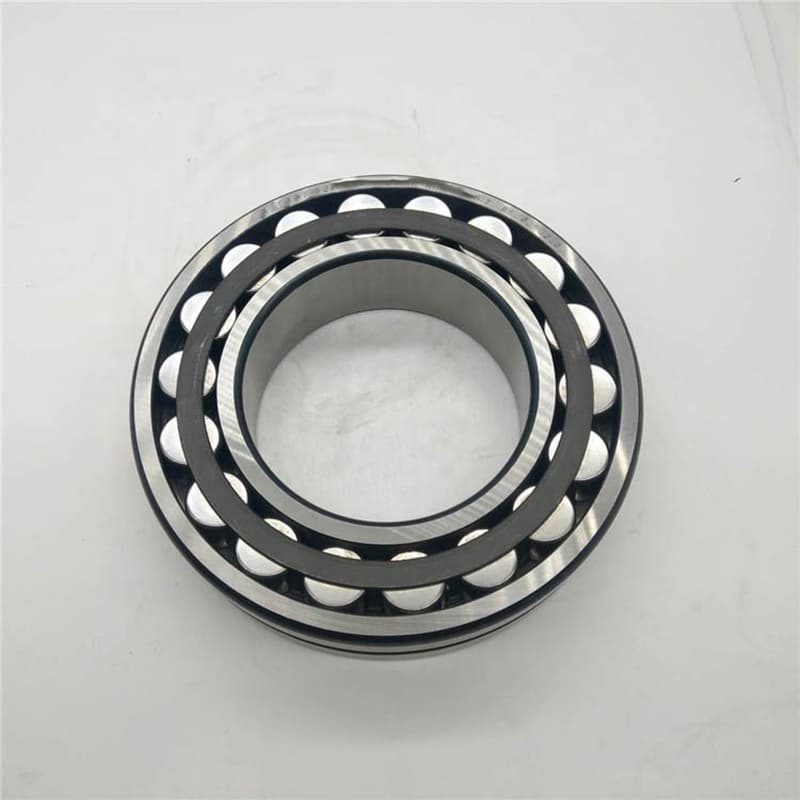
Internal Clearance is the space between the rollers and the raceways before mounting. Under vibration, parts expand from heat and load. If the clearance is too small, the bearing binds. It gets hot and fails fast. If the clearance is too big, the rollers skid and cause damage.
We use this table to help customers decide:
| Application Vibration Level | Recommended Clearance | Reason |
|---|---|---|
| Light vibration (fans, pumps) | Normal (C0) or C3 | Enough room for thermal expansion. |
| Moderate vibration (gearboxes, compressors) | C3 | Handles shock without binding. |
| Severe vibration (crushers, vibrating screens) | C4 | Allows for misalignment and heavy shock. |
One time a customer from Brazil ordered bearings for a vibrating screen. They used C3 clearance. The bearings ran hot. We recalculated and found the screen had more vibration than they told us. We sent C4 bearings. The temperature dropped, and life increased.
Cage Design holds the rollers in place. Under vibration, the cage takes a beating. Pressed steel cages are cheap but they flex and break. Machined brass cages are strong. They resist shock and guide the rollers better. For extreme cases, we also use polyamide cages, but only if temperature allows.
Here is a simple comparison:
| Cage Type | Strength | Cost | Best For |
|---|---|---|---|
| Pressed steel | Medium | Low | Normal conditions, low vibration. |
| Machined brass | High | High | Heavy shock, high speed, vibration. |
| Polyamide | Medium | Medium | Clean, moderate temperature, light vibration. |
Precision Classes (P0, P6, P5) control dimensional accuracy. For vibration, you might think higher precision is better. But that is not always true. Higher precision means tighter tolerances. Under shock, a tighter bearing can overheat. So for most vibrating applications, P0 or P6 is enough. Only use P5 if you also have high speed or need very low runout.
I once had a customer in Russia who wanted P5 bearings for a rock crusher. I asked why. He said "better quality." But I explained that P5 might actually fail faster because the internal clearances are tighter. We tested both P0 and P5 in his crusher. The P0 lasted longer. So do not over-specify.
How Do Special Materials and Heat Treatment Enhance Durability?
Standard steel may not survive constant pounding. Special materials can double bearing life. But they cost more. Is it worth it? In most severe cases, yes.
Special materials like case-hardened steel1 or through-hardened steel with optimized heat treatment improve resistance to shock and wear. They prevent cracking and extend service life. We use them often for mining and construction equipment.
The Science Behind Stronger Steel
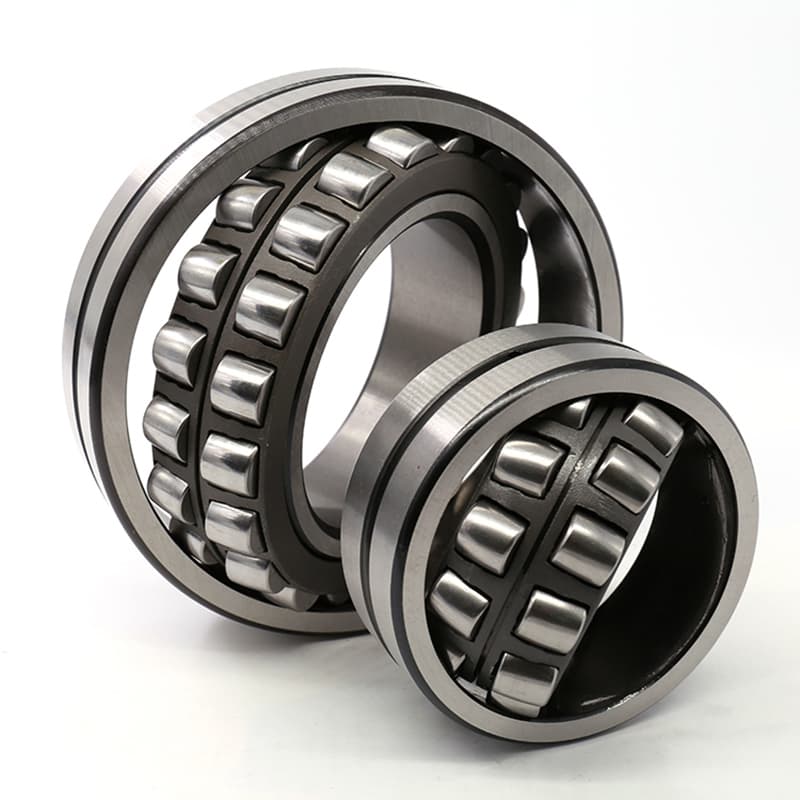
Most spherical roller bearings use 52100 chromium steel. It is through-hardened. That means it is hard all the way through. It works well for normal loads. But under severe shock, it can crack because it is brittle.
For heavy shock, we recommend case-hardened steels like 20MnCr5 or 4320. These steels have a hard outer layer but a tough inner core. The outer layer resists wear. The inner core absorbs shock without cracking. The heat treatment process is also different. We use carburizing3 to add carbon to the surface, then quench and temper.
Here is a quick look at material options:
| Material | Type | Hardness | Toughness | Best Application |
|---|---|---|---|---|
| 52100 | Through-hardened | High | Medium | General use, moderate vibration. |
| 4320 | Case-hardened | High surface, tough core | High | Heavy shock, mining, crushers. |
| 440C | Stainless | High | Low | Corrosive + light vibration. |
Heat treatment also matters. Standard heat treatment gives a hardness of 58-62 HRC. For vibration, we sometimes adjust the tempering to get a slightly lower hardness but higher toughness. This is called "shock-resistant" treatment.
I remember a customer in South Africa. They ran a ball mill. Bearings failed from cracks in the inner ring. We suggested switching from 52100 to 4320 with carburizing. The first batch lasted four times longer. The customer was happy, even though the bearings cost a bit more. The downtime savings were huge.
Another example: In India, a steel plant used bearings in a vibrating feeder. They kept breaking at the raceway edges. We analyzed and found the heat treatment was too aggressive. We modified the process to give a more uniform case depth. The problem stopped.
So materials and heat treatment are not just marketing words. They are real factors that decide if your bearing survives or fails.
What Lubrication Strategies Help Mitigate Fretting Corrosion and Wear?
Grease is not just grease. Wrong lubricant under vibration can cause fretting. Right one protects. I have seen many failures that were really lubrication failures.
Use lubricants with high viscosity, anti-wear additives, and good base oil. Regular relubrication and proper fill volume are critical to prevent fretting corrosion1 and wear.
Lubrication Deep Dive
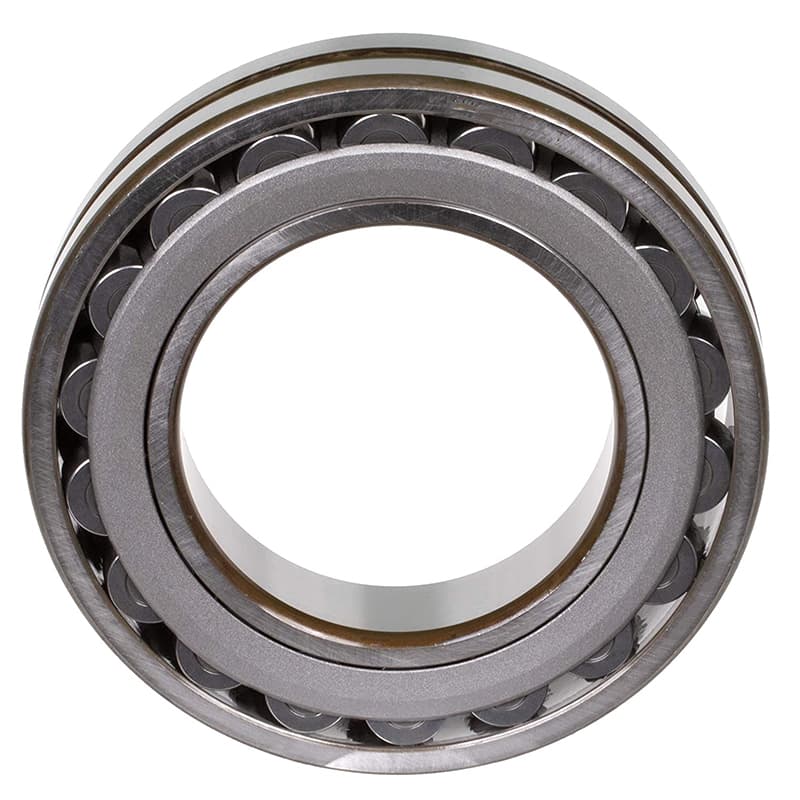
Fretting corrosion happens when there is small oscillatory movement. The bearing does not rotate fully. It just shakes. The grease gets pushed out. Metal surfaces touch and oxidize. You see red dust. This dust is iron oxide. It acts like a grinding paste.
To stop fretting, you need a grease that stays in place. That means high viscosity base oil2, usually ISO VG 150 or higher. You also need strong additives. Lithium complex or calcium sulfonate greases3 work well. They have good mechanical stability.
Another key point is the amount of grease. Under vibration, too much grease can cause churning and heat. Too little leaves surfaces dry. We follow this rule: fill 30-40% of the free space for normal speeds. For vibration, we sometimes fill up to 50% to ensure a reserve, but we watch the temperature.
Relubrication intervals also change. In normal machines, you regrease every few months. Under vibration, grease breaks down faster. So we recommend shorter intervals. For example, a vibrating screen might need regreasing every week.
Here is a simple guide:
| Condition | Grease Type | Viscosity | Relubrication Interval |
|---|---|---|---|
| Light vibration | Lithium complex | ISO VG 100-150 | Every 3 months |
| Moderate vibration | Lithium complex or polyurea | ISO VG 150-220 | Every 1-2 months |
| Severe vibration | Calcium sulfonate | ISO VG 220-460 | Every 1-4 weeks |
I recall a customer in Vietnam. They ran a stone crusher. Bearings kept failing with red dust around the seals. They used a cheap lithium grease. We switched to a calcium sulfonate grease with higher viscosity. We also set a weekly regreasing schedule. Failures dropped by 80%.
Another story: A paper mill in Brazil had bearings in a vibrating screen. They filled the bearing 100% with grease. The bearings overheated and the grease melted. We explained that 100% fill is for slow speeds only. They reduced to 40% and the temperature went down.
So lubrication is not an afterthought. It is a key part of the bearing system. Choose wisely and maintain regularly.
Conclusion
To beat severe vibration, select the right clearance, cage, material, and lubrication. These choices will save you money and downtime.
-
Understanding fretting corrosion is crucial for preventing equipment failures. Explore this link for in-depth insights. ↩ ↩ ↩ ↩
-
High viscosity base oil plays a vital role in lubrication effectiveness. Discover more about its benefits in this resource. ↩ ↩ ↩
-
Calcium sulfonate greases offer superior performance under vibration. Learn more about their advantages in this informative link. ↩ ↩ ↩ ↩
-
Discover the relationship between vibration and bearing life to optimize your machinery’s efficiency. ↩