
Are your cement grinding mills and clinker conveyors constantly breaking down? Bearing failures can halt your entire production line and cost you a lot of money. I want to help you choose the right spherical roller bearings to keep your equipment running smoothly.
Spherical roller bearings are the most common choice for heavy industrial applications like cement grinding mills and clinker conveyors because they can handle heavy loads, shock, and misalignment. In this article, I will explain the types of spherical bearings, their advantages, the popular 22220 E model, and what bearings are used in rolling mills.
Many people think all bearings are the same, but that is not true. When you work in cement production, you need bearings that can survive dust, heat, and constant pounding. I have spent years helping customers from India, Turkey, and Brazil find the right solutions. So let me guide you through the details. I will share my own experience and explain why these bearings matter for your business.
What are the types of spherical bearings?
You might be confused when you hear terms like spherical bearings, spherical roller bearings1, or spherical plain bearings2. They sound similar, but they are different products. Let me clear up the confusion.
Spherical bearings come in two main types: spherical roller bearings and spherical plain bearings. In cement plants and heavy machinery, spherical roller bearings are the ones you will see most often.
Spherical Roller Bearings
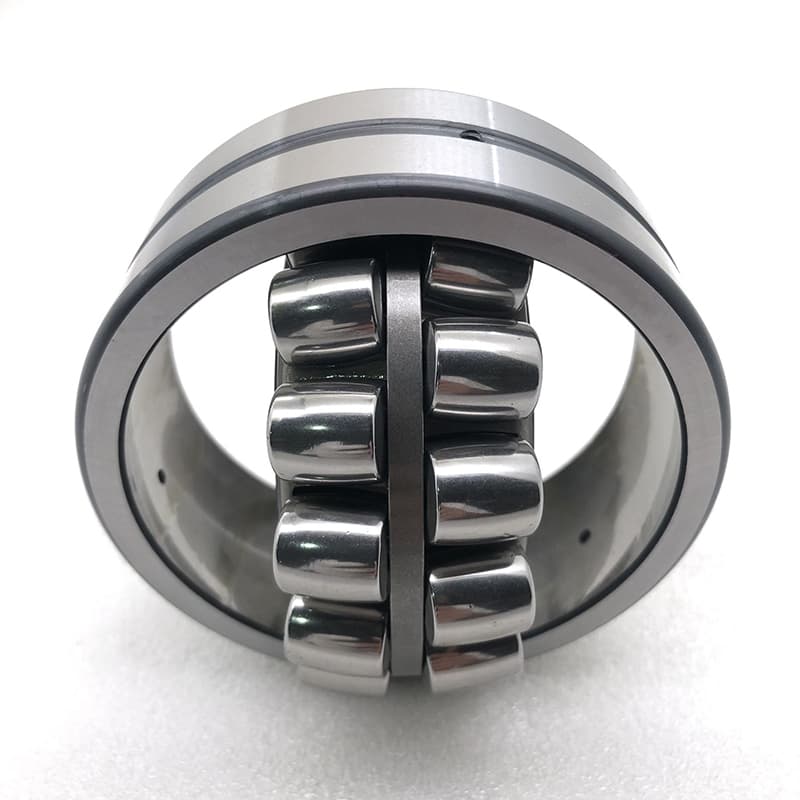
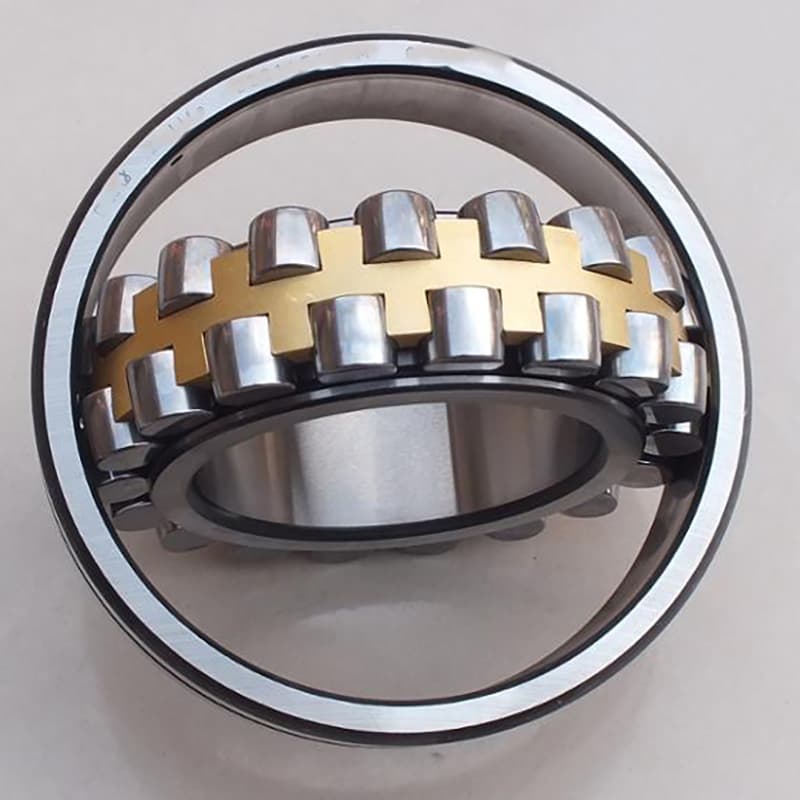
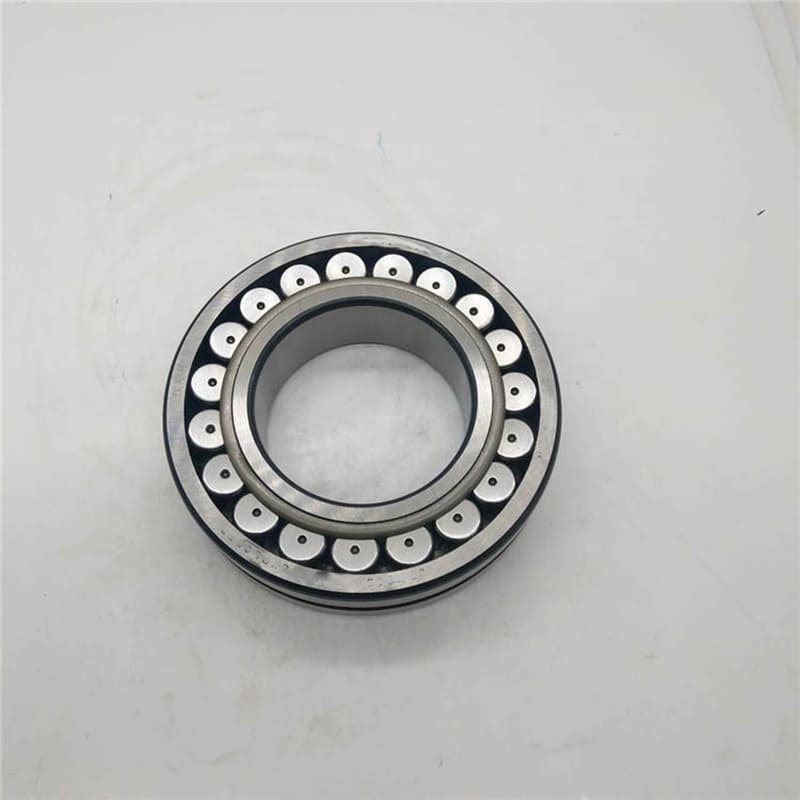
Spherical roller bearings have two rows of rollers that run on a common sphered raceway in the outer ring. This design lets the bearing handle heavy radial loads3 and some axial loads in both directions. The internal self-aligning feature4 is very important. It allows the shaft to bend or deflect slightly without damaging the bearing. This is why they work so well in grinding mills and conveyors.
Spherical Plain Bearings
Spherical plain bearings are different. They have an inner ring with a convex sphere and an outer ring with a concave sphere. They do not have rolling elements. Instead, they slide. These bearings are for oscillating movements5 and heavy loads where alignment is hard. But they are not for high-speed rotation. You will find them in hydraulic cylinders and heavy construction equipment.
Comparison Table: Spherical Roller Bearings vs. Spherical Plain Bearings
| Feature | Spherical Roller Bearings | Spherical Plain Bearings |
|---|---|---|
| Design | Two rows of rollers between inner and outer rings | Sliding contact surface, no rollers |
| Load Capacity | High radial and moderate axial loads | Very high radial and axial loads, but only for slow oscillation |
| Speed | Can handle moderate to high speeds | Low speed, oscillating motion only |
| Self-aligning | Yes, compensates for shaft deflection | Yes, compensates for misalignment |
| Lubrication | Requires grease or oil, may have seals | Requires grease, often needs relubrication |
| Common Applications | Cement mills, conveyors, fans, gearboxes | Construction machinery, hydraulic cylinders, bridge bearings |
Other Specialized Types
There are also split spherical roller bearings. These are used in places where it is hard to remove the bearing from the shaft. For example, in long conveyor systems. The split design lets you replace the bearing without taking apart the whole machine. This saves a lot of downtime.
In my factory, we produce all these types. But for cement mills and clinker conveyors, the standard spherical roller bearing is the workhorse. I often tell my customers that choosing the right type depends on your specific machine and operating conditions. If you have high speeds and heavy loads, go with spherical roller bearings. If you only have slow oscillation and extreme loads, spherical plain bearings might be better.
What are the advantages of spherical bearings1?
Why should you pick spherical bearings over other options? This is a question I get from procurement managers like Rajesh all the time. They want to know if they are paying for something they really need. Let me explain the key advantages.
Spherical bearings, especially spherical roller bearings, offer several major benefits: self-alignment2, high load capacity3, durability in harsh conditions4, and ease of maintenance5. These advantages make them the top choice for heavy industries like cement and steel.
Self-Aligning Property
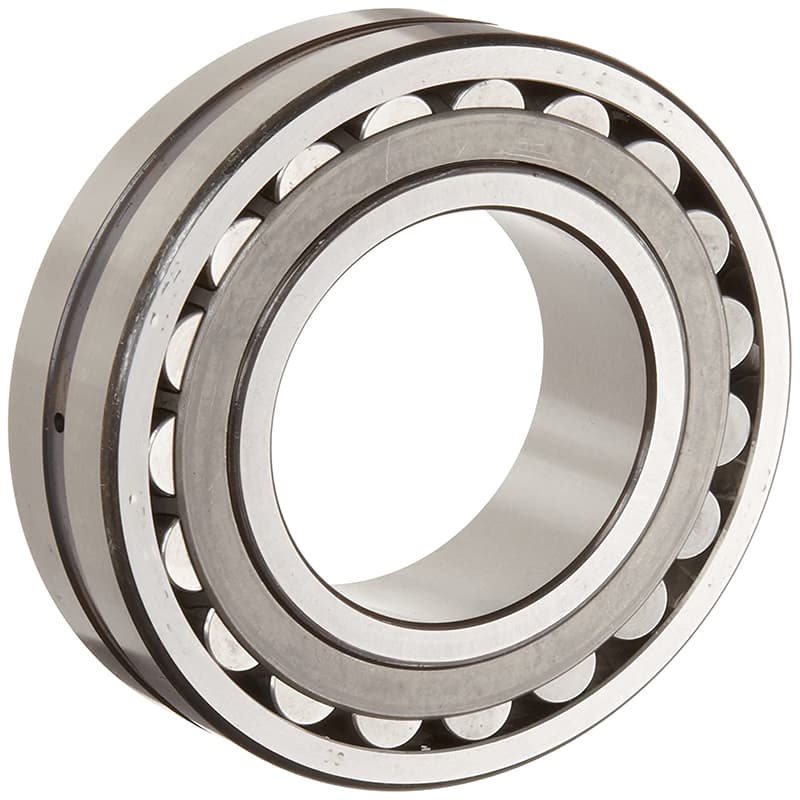
One of the biggest advantages is the self-aligning feature. In cement grinding mills, shafts can bend under heavy loads. The foundation can also settle unevenly. This causes misalignment between the bearing and the shaft. With spherical roller bearings, the outer ring raceway is spherical. This means the inner ring and rollers can tilt a little to follow the shaft. The bearing does not get jammed. This reduces stress and heat. It also makes installation easier because you do not need perfect alignment. I have seen many cases where misalignment caused other bearing types to fail in just a few weeks. Switching to spherical roller bearings solved the problem.
High Load Capacity
Spherical roller bearings are built for heavy loads. They have two rows of rollers. This gives them a larger contact area. They can handle both radial forces (like the weight of the mill) and axial forces (like thrust from the material moving). In a clinker conveyor, the bearing must support the weight of the belt and the material. It also faces shock loads when big lumps of clinker fall onto the belt. Spherical roller bearings can take these shocks because the rollers are thick and strong. In my experience, they last much longer than other bearings in such conditions.
Durability in Contaminated Environments
Cement plants are dusty. Clinker conveyors have fine particles everywhere. If these particles get into a bearing, they can cause wear and early failure. Spherical roller bearings often come with special seals or shields. They can also be designed with a larger internal clearance. This lets them tolerate some contamination without seizing up. Of course, good sealing is still important. But the bearing design itself is more forgiving. I always recommend using bearings with contact seals or labyrinth seals in cement applications. We offer these options at FYTZ.
Accommodation of Shaft Deflection
In long conveyors or large grinding mills, the shaft can bend. This is normal under heavy loads. A rigid bearing would create high edge stresses. But spherical roller bearings have a curved raceway. The rollers align themselves so that the load is spread evenly. This prevents stress concentration. It also reduces friction and heat. The result is a longer bearing life.
Ease of Mounting and Dismounting
Many spherical roller bearings are designed with a tapered bore6. This means they can be mounted on adapter sleeves or withdrawal sleeves. This makes installation and removal simple. For example, in a conveyor head pulley, you might need to replace the bearing quickly. With a tapered bore, you just tighten the nut to fix it in place. You do not need to press the bearing onto the shaft. This saves time and effort. In our factory, we produce many bearings with tapered bores for this reason.
Cost-Effectiveness in the Long Run
Some people think spherical roller bearings are expensive. Yes, they cost more than deep groove ball bearings. But if you look at the total cost of ownership, they are cheaper. They last longer, need less maintenance, and cause less downtime. In industries like cement, one hour of downtime can cost thousands of dollars. So paying a little more for a reliable bearing is a smart investment. I have seen customers switch to cheaper bearings and regret it later. They ended up replacing them every few months.
What is spherical roller bearing 22220 e?
You may have seen the number 22220 E in catalogs or on old bearings. It is a very common size in many industries. But what does it mean? I will explain the code and what makes this bearing special.
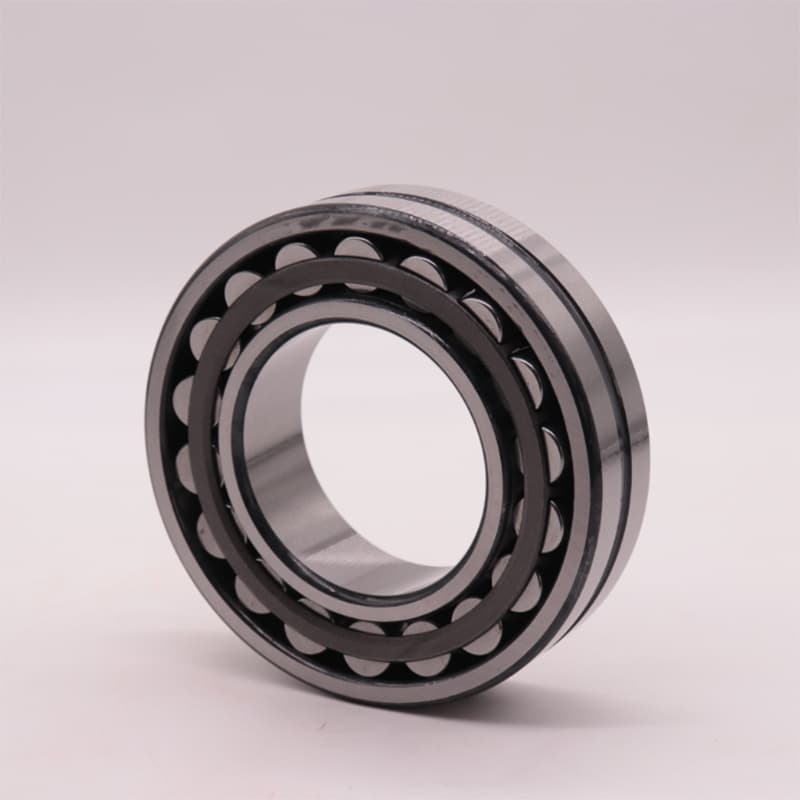
Spherical roller bearing 22220 E is a standard size bearing with a 100 mm inner diameter, 180 mm outer diameter, and 46 mm width. The "E" indicates a reinforced design1 with more and larger rollers for higher load capacity.
Breaking Down the Code
Let me decode the number for you. In bearing nomenclature, numbers and letters tell a story.
- 22: This is the series code. It tells you the width and diameter series. The 22 series is a popular one with a good balance of load capacity and space.
- 220: This is the bore size code. For bearings with an inner diameter from 20 mm to 480 mm, you multiply the last two digits by 5 to get the bore in mm. Here, 20 x 5 = 100 mm. So the bore is 100 mm.
- E: This suffix stands for "reinforced design" or "optimized internal design." It means the bearing has more rollers or larger rollers compared to the standard design. This increases the load rating. Some manufacturers use different letters, but E is common for spherical roller bearings.
Design Features of 22220 E
The 22220 E bearing usually has a pressed steel cage2. It has two rows of symmetrical rollers. The rollers are guided by the inner ring flanges. This design allows for high speed and low friction. The internal clearance is usually normal (CN), but you can order it with C3 or C4 clearance for higher temperatures.
I have seen this bearing used in many machines: fans, gearboxes, conveyors, and even some small crushers. In cement plants, you might find it in bucket elevators or belt conveyor idlers. It is a versatile size.
Applications of 22220 E in Cement Plants
In a cement plant, the 22220 E bearing can be found in several places:
- Conveyor rollers: Many conveyor systems use this size for the return rollers or snub pulleys.
- Fan shafts: Induced draft fans or cooling fans sometimes use this bearing.
- Gearboxes: Small to medium gearboxes in the plant might have this bearing on the output shaft.
I remember a customer from Egypt who was having trouble with bearings in their clinker conveyor. They were using a standard 22220 bearing, but it kept failing after six months. They contacted me. I suggested they try the 22220 E design. It has a higher dynamic load rating3, so it could handle the shock loads better. They tested it, and the bearing lasted over two years. That is the power of the reinforced design.
Why Choose 22220 E from FYTZ?
At FYTZ, we manufacture 22220 E bearings with high-quality steel4. We control the heat treatment carefully. This gives the bearing good hardness and toughness. We also offer different clearance classes and cage materials. If you need it with a tapered bore, we can do that too. Many of our customers in India and Brazil order this bearing regularly for their conveyor systems. We keep it in stock because it is so popular.
What bearings are used in rolling mills?
This question often comes up because rolling mills and cement mills share some similarities. Both involve heavy loads and tough conditions. But rolling mills have their own specific bearing requirements. Let me explain what bearings are typically used.
Rolling mills use a combination of bearings depending on the position: work rolls, backup rolls1, and drives. Common types include four-row cylindrical roller bearings2, tapered roller bearings3, and spherical roller bearings4.
Bearings for Work Rolls
Work rolls are the rolls that directly contact the steel. They rotate at high speeds and face high temperatures and coolant. The bearings here need to handle heavy radial loads but also allow for some axial movement due to thermal expansion. Four-row cylindrical roller bearings are very common for work rolls. They have a high radial load capacity and are easy to dismount. They also have a separable design, so you can remove the rolls without disturbing the bearing.
Bearings for Backup Rolls
Backup rolls support the work rolls. They carry even heavier loads. Here, you often see four-row tapered roller bearings or spherical roller bearings. Tapered roller bearings can handle combined radial and axial loads well. But spherical roller bearings are also used because they can tolerate misalignment. In older mills, you might find plain bearings, but modern mills use rolling bearings for efficiency.
Bearings for Drives and Pinion Stands
The drive system of a rolling mill uses gearboxes and couplings. In these gearboxes, spherical roller bearings are common. They support the shafts and handle the heavy torques. The pinion stands that distribute power to the rolls often use spherical roller bearings as well.
Comparison with Cement Mills
Cement grinding mills are different. They rotate at slower speeds but have large heavy drums. They use large spherical roller bearings or sometimes hydrodynamic bearings. The environment in cement mills is dusty, while rolling mills have water and scale. So the sealing requirements are different. For cement, we focus on dust exclusion. For rolling mills, we focus on water and scale exclusion.
In my conversations with customers, I have seen that many bearing distributors5 serve both industries. They need to stock different types. For example, a distributor in Turkey might supply bearings to both a cement plant and a steel mill. They need to understand the differences.
Specific Bearings for Rolling Mills
Some common bearing numbers in rolling mills include:
- Four-row cylindrical roller bearings: like FC series or specific custom sizes.
- Four-row tapered roller bearings: like TQO series.
- Spherical roller bearings: often large sizes like 230/500 or 231/600.
At FYTZ, we produce these bearings too. We have customers in Russia and Brazil who order large spherical roller bearings for their rolling mill applications. We work closely with them to ensure the bearings have the right clearance and cage design.
Conclusion
Choosing the right spherical roller bearing for cement mills and clinker conveyors can save you time and money. I hope my explanations about types, advantages, the 22220 E model, and rolling mill bearings help you make better decisions. If you need high-quality bearings for your machinery, feel free to contact me.
-
Find out how backup rolls support work rolls and their importance in the rolling process. ↩ ↩ ↩ ↩
-
Explore this link to understand the advantages and applications of four-row cylindrical roller bearings in rolling mills. ↩ ↩ ↩ ↩
-
Learn about the unique features of tapered roller bearings and their role in handling loads in rolling mills. ↩ ↩ ↩ ↩
-
Discover why spherical roller bearings are preferred in rolling mills for their load tolerance and misalignment capabilities. ↩ ↩ ↩ ↩
-
Explore the role of bearing distributors in supplying the right bearings for different industrial applications. ↩ ↩ ↩
-
Discover the benefits of tapered bore designs in spherical roller bearings for easier installation and removal. ↩