
I still remember the first time a customer from Mumbai called me about pillow block bearings. He said, “We replace them every two months. The housing cracks. The seals fail. And the production line stops too often.” That call changed how I look at our factory’s work. We make bearings every day. But making them is not enough. We must make them for the real world. And the real world for recycling conveyors is dirty, wet, and rough.
Snippet paragraph:
Standard pillow block bearings fail in recycling and waste sorting because they are not designed for high contamination, moisture, and shock loads. The housings corrode, seals let in dust, and the locking mechanism loosens under vibration. For harsh environments, you need special materials, upgraded seals, and proper mounting styles to get a reasonable service life.
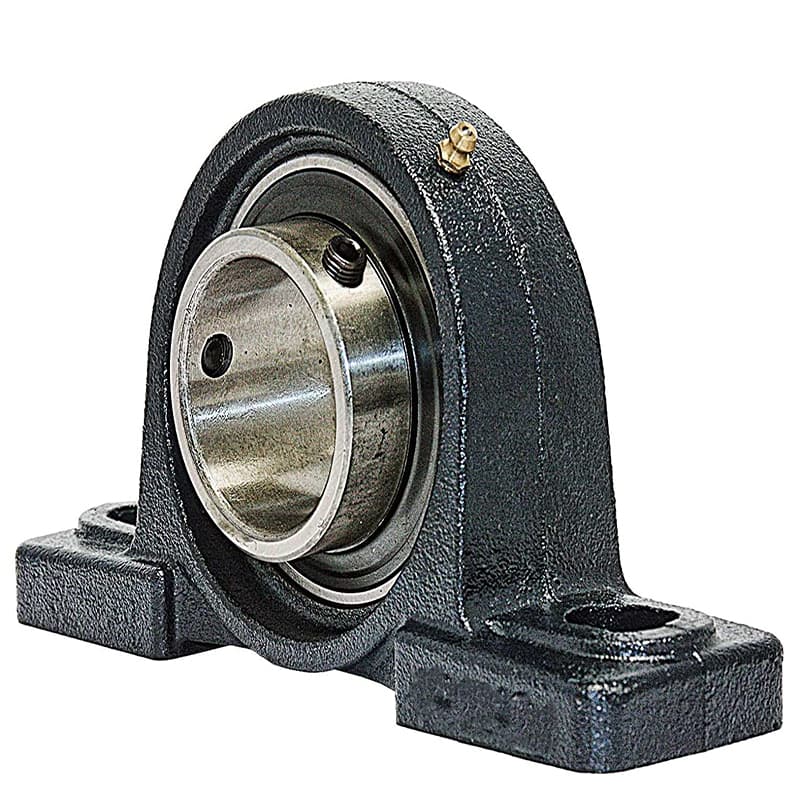
Let me be honest with you. I have seen too many buyers pick bearings based only on price. They look at the bore size and the housing type, and they click “add to cart.” That works for a clean factory. But a recycling plant is not clean. You have glass dust, sand, plastic film, and sometimes even liquid from organic waste. These things get inside the bearing. Once inside, they grind the raceways like sandpaper. Then the bearing overheats. Then it locks up. And your conveyor belt stops moving. That costs you money, not just in parts, but in lost production time.
So in this article, I want to walk you through three big reasons why standard bearings fail. Then I will show you what to look for when you buy pillow block bearings for your recycling or waste sorting equipment. I will also share some lessons from our own factory floor and from the feedback we get from distributors like you.
Why Standard Bearings Fail in Recycling and Waste Sorting Environments
Have you ever opened a bearing housing after three months of work on a sorting line? I have. The grease was black. The balls had pitting. The housing had rust spots. It was not a pretty sight.
The short answer is that standard bearings are made for general purpose use. They assume a clean, dry, and temperature-controlled environment. But a recycling conveyor works outside, or in a dusty hall, with water spray for dust control, and with heavy impact from falling scrap metal. That is a completely different world.
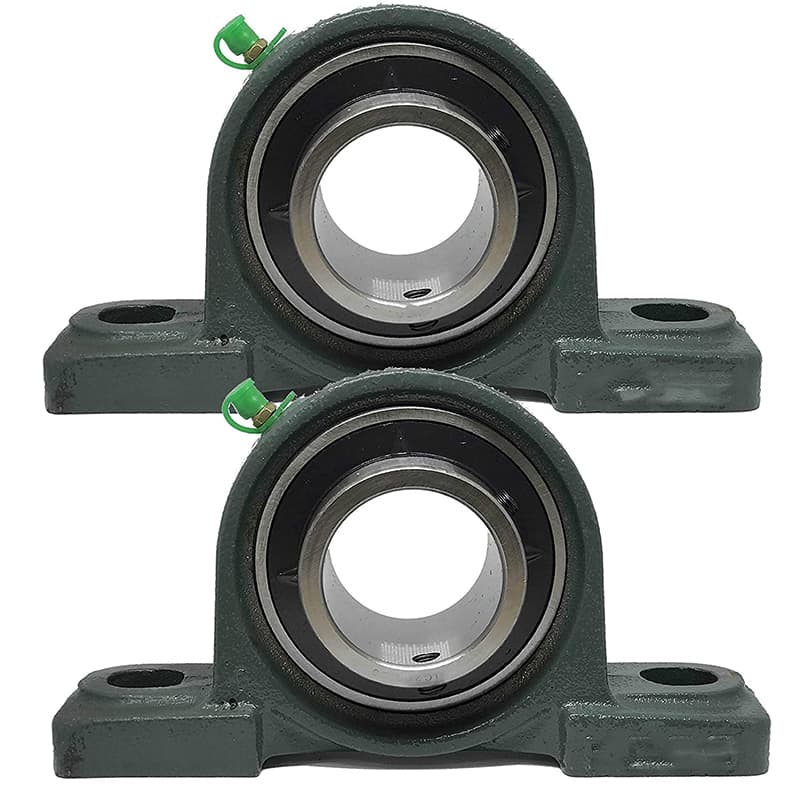
Let me break down the main failure modes for you. I have seen these again and again with our clients in India and Brazil.
First: Contamination ingress.
Most standard pillow block bearings come with single-lip or simple metal shields. These work fine for a fan or a light conveyor. But in waste sorting, you have fine particles that are smaller than 0.1 mm. Those particles pass through a single lip seal like water through a sieve. Once inside, they mix with the grease. The grease becomes a grinding paste. The balls and raceways wear down fast. I have measured bearing clearance after three months. It doubled from the original spec. That means the bearing is already loose and noisy.
Second: Corrosion from moisture.
Recycling lines often use water to separate materials. Or they wash the waste before sorting. That creates a humid atmosphere. Some lines even have acid or alkaline liquids from batteries or chemicals. Standard cast iron housings have a basic paint coating. That coating chips off when you hit the housing with a hammer during installation. Once the iron is exposed, rust forms. Rust expands. It pushes the housing outward. The housing cracks. And the bearing drops out of alignment.
Third: Shock loading.
Think about a conveyor that drops heavy metal scrap from a height of two meters. The impact force transfers directly to the bearing. Standard bearings have standard cage designs. They are not built for repeated shock. The cage deforms. The balls lose their spacing. Then the bearing runs rough. And eventually, it seizes.
I will give you a quick comparison table to make this clear.
| Failure Cause | Standard Bearing | Harsh-Environment Bearing |
|---|---|---|
| Seal type | Single-lip or metal shield | Triple-lip or labyrinth with grease purge |
| Housing material | Grey cast iron with thin paint | Ductile iron or stainless steel, with epoxy coating |
| Locking method | Set screw only | Taper lock sleeve or eccentric lock with extra retention |
| Cage material | Standard steel stamping | Machined brass or reinforced polymer |
| Grease | General-purpose lithium | High-viscosity with anti-washout additives |
So when you see a bearing fail too soon, do not blame the bearing alone. Blame the mismatch between the bearing spec and the real working condition. That is why we at FYTZ always ask our clients to send us photos of their equipment. We want to see the environment. Only then do we recommend a specific model.
Key Selection Criteria: Materials, Seals, and Mounting Styles for Harsh Conditions
Now you know why standard bearings fail. The next question is obvious. What should you look for instead? I will share our internal checklist that we use at our factory when we design bearings for recycling customers.
The first thing I check is the housing material. Most buyers ask for cast iron because it is cheap. But not all cast iron is the same. We use ductile iron (GGG40) for recycling applications. It has higher impact resistance. It bends a little instead of cracking. We also offer stainless steel housings if the customer deals with acidic waste. Stainless costs more, but it lasts three times longer in wet conditions. I have a client in Indonesia who switched to stainless housings for their seafood waste sorting line. They went from changing bearings every two months to once a year. That is a real saving.
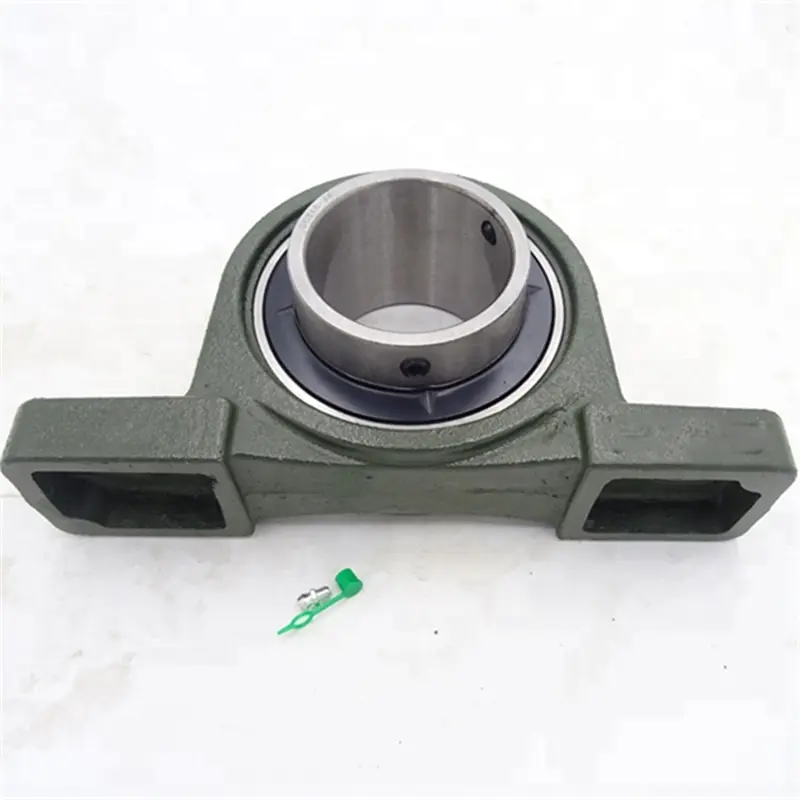
The second factor is the seal. This is where most cheap bearings cut corners. A good seal for a recycling conveyor must have at least two lips. Better yet, three lips with a labyrinth seal path. The labyrinth does not touch the shaft. It creates a long, twisting path that dust cannot easily travel through. Some of our customers also ask for a felt seal in addition to the rubber lip. The felt traps the fine dust before it reaches the rubber lip. We also offer a grease nipple on the housing. The operator can pump fresh grease in. That pushes old, contaminated grease out through the seal gap. We call that a “grease purge” system. It works wonders.
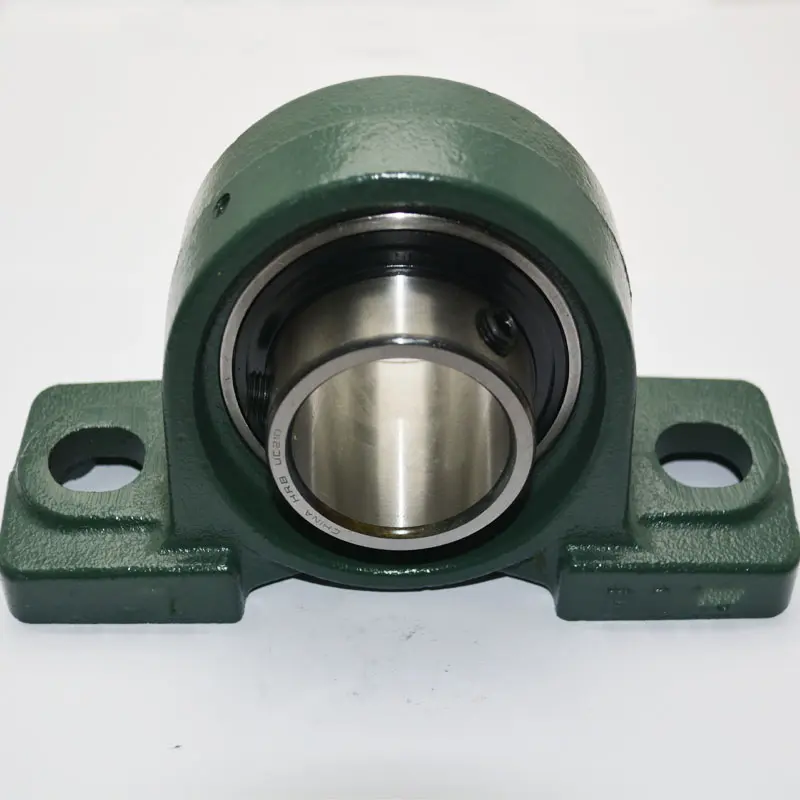
The third criterion is the mounting style. This is often overlooked. Standard set-screw locking is fine for low-vibration applications. But on a recycling conveyor, vibration loosens the set screws. The shaft spins inside the inner ring. That wears down the shaft and the bearing. We recommend a taper lock adapter sleeve for most recycling lines. The sleeve expands evenly around the shaft. It does not loosen easily. It also makes removal easier after years of service. Another option is the eccentric locking collar. It is better than set screws but not as strong as the taper sleeve. For heavy-duty shredder conveyors, we always go with the taper lock.
Let me give you a practical example. A customer in Turkey runs a construction waste recycling plant. They crush concrete and separate rebar. The conveyor vibrates heavily. They used standard UCP bearings with set screws. The screws came loose every two weeks. They tightened them again. That damaged the shaft. We supplied them with the same housing size but with a taper sleeve and a triple-lip seal. They have not touched those bearings for eight months now. That is the power of correct selection.
So my advice to you is simple. Do not just match the bore size. Match the seal type to the dust level. Match the locking style to the vibration level. Match the housing material to the moisture and chemical exposure. If you are not sure, send me an email at sales@fytzbearing.com. I can help you go through the selection step by step.
The Role of Self-Aligning Bearings in Preventing Conveyor Belt Misalignment Issues
Let me share a story that still makes me smile. A procurement manager from Egypt called me. He was frustrated. His conveyor belt kept running to one side. The belt edge was wearing out. The tracking roller did not help. He thought the belt was faulty. But I asked him to check the bearing alignment on the driven roller. He measured it. The two pillow block housings were not on the same centerline. The shaft was bent by 2 millimeters. That is a small number. But it is enough to ruin a belt.
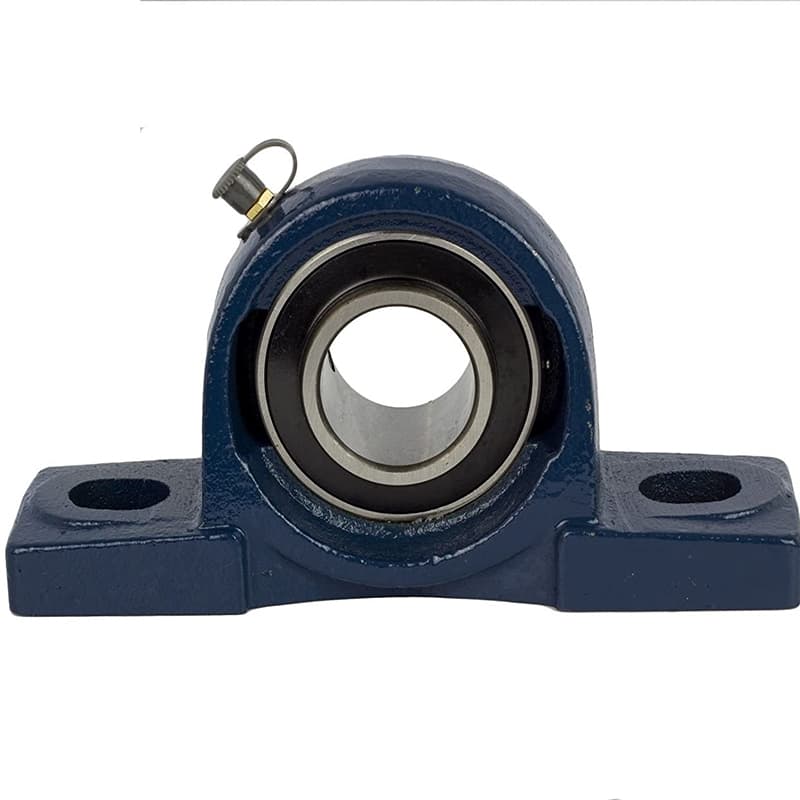
Self-aligning bearings have a spherical outer ring. The housing has a matching spherical seat. This allows the inner ring and balls to tilt up to a few degrees relative to the housing. That tilt compensates for shaft deflection, mounting errors, or settling of the conveyor frame over time. In a recycling plant, the ground is not always perfectly flat. The conveyor legs may sink into soft soil. The frame may twist under heavy loads. Without self-alignment, the bearing takes all that stress on one edge. That edge overloads. The raceway spalls. The bearing fails early.
But there is another benefit that people do not talk about. Self-alignment also helps with thermal expansion. A conveyor can be long. The shaft heats up from friction and sunlight. It expands. That expansion changes the distance between the two bearings. If you use fixed bearings on both ends, one of them will push against its housing. That creates axial load. Axial load shortens bearing life. Self-aligning bearings with a floating design allow the shaft to slide axially inside the housing. We usually pair one fixed bearing and one floating bearing on the same shaft. That is a standard practice in our engineering recommendations.
Now, here is my critical thought. Self-alignment is not a cure-all. If you have extreme misalignment—say more than 3 degrees—even a self-aligning bearing will struggle. The balls will skid. The cage will wear. So you must still do proper installation. Use a laser alignment tool. Or at least a straight edge and a feeler gauge. I always tell my clients: “Self-alignment gives you a safety margin. It does not replace good workmanship.”
Let me give you a quick comparison. For a short, rigid conveyor with a solid frame, a standard non-self-aligning bearing may work fine. But for a long conveyor, or one that handles heavy impact, or one that is mounted on uneven ground, I strongly recommend the self-aligning series. Our SA-series pillow blocks are designed exactly for these conditions. We use a reinforced cage that can handle the tilting motion without breaking.
I have also seen another problem. Some operators install the bearing too tight against the shoulder of the shaft. That restricts the necessary axial movement. Then the self-aligning feature is useless. So when you install, leave a small axial clearance—about 1 to 2 millimeters—for thermal expansion. Check the manufacturer’s manual. We always include that in our installation sheets.
To summarize, self-aligning bearings are your best friend for recycling conveyors. They forgive small installation errors. They tolerate frame deflection. They extend belt life because they keep the roller parallel to the belt. And they reduce the number of emergency calls to your maintenance team. That is a win for everyone.
Extending Service Life: Proven Maintenance Practices for Wet and Abrasive Applications
You have chosen the right bearing. You have installed it correctly. Now, how do you keep it running for years? This is the part that most buyers ignore. They think a bearing is a “fit and forget” component. But in wet and abrasive environments, maintenance is everything.
I will share what we teach our distributors in Vietnam and Pakistan. These are simple habits that cost little time but save a lot of money.
First: Set a regular greasing schedule.
Do not wait until the bearing makes noise. By then, the damage is done. For a recycling conveyor that runs 8 hours a day, we recommend greasing every 200 operating hours. That is about once a week. Use a high-quality grease with high viscosity and anti-wear additives. We test our bearings with a lithium complex grease that has EP (extreme pressure) additives. It resists water washout better than standard grease. And here is a tip: when you pump new grease in, run the conveyor for a few minutes. Then wipe off the excess that comes out of the seals. That excess carries away the contaminants that have collected near the seal lips.
Second: Inspect the seals visually.
Walk along the conveyor once a day. Look at the bearing seals. Do you see grease leaking out? That might mean the seal lip is worn or cut. Do you see dust accumulating around the seal gap? That means the seal is not tight enough. In that case, you might need to upgrade to a more aggressive seal design. We offer a V-ring seal as an additional accessory for extreme dust. It mounts on the shaft and spins with it. It flings away dust like a centrifugal fan. That extra layer adds a lot of protection.
Third: Check the housing temperature.
Use a simple infrared thermometer. Point it at the housing. The normal temperature is about 10–20°C above ambient. If you see a spike above 80°C, something is wrong. It could be over-greasing (too much grease causes churning and heat). It could be under-greasing (metal-to-metal contact). Or it could be misalignment. Keep a log of temperature readings. That log tells you when a bearing is trending toward failure. You can then plan a replacement during a scheduled downtime, not in the middle of a rush order.
Fourth: Tighten the mounting bolts.
Vibration loosens everything. Check the base bolts of the pillow block every month. Use a torque wrench. Set it to the value recommended in our catalog. Do not overtighten. That can distort the housing and reduce the internal clearance. Do not undertighten either. That allows movement and fretting corrosion.
Now, I want to add a personal observation from our factory. We produce bearings with P5 and P6 precision. That means the internal geometry is very accurate. But accuracy does not matter if the shaft is worn or out of round. So before you install a new bearing, inspect the shaft. Measure the diameter at three points. If the shaft has grooves or scoring, replace it or use a shaft repair sleeve. A bad shaft kills a good bearing faster than anything else.
I also encourage my customers to keep a spare set of bearings on the shelf. We understand that shipping from China to Brazil or Turkey takes time. Waiting for a bearing while the conveyor is down is expensive. Our lead time is 30 days for production. But we can ship faster for standard sizes if we have stock. So plan ahead. Order an extra set with your annual container. That is what Rajesh from India does. He stocks two extra sets of our most popular UCP series. His customers appreciate the quick service.
To wrap up this section, maintenance is not complicated. It is about being consistent. Grease weekly. Inspect daily. Log temperatures. Tighten bolts. These four actions can double or triple your bearing life. I have seen it happen with our clients in South Africa. They used to change bearings every four months. Now they go past one year. That is the difference between reactive and proactive care.
Conclusion
Choosing the right pillow block bearing for recycling conveyors is not about price. It is about matching materials, seals, and mounting to your real working conditions. Then you maintain it with simple, regular habits. Do that, and your downtime will drop significantly.