
I remember a customer in Egypt who called me with a serious problem. His dryer bearings kept failing every two weeks. The heat was eating them alive. He was losing production and money.
Standard pillow block bearings fail in high-heat dryers because the heat destroys the grease and changes the internal clearances. The seals harden and crack. The balls and raceways lose their hardness. You need specially designed bearings with heat-stabilized steel, C4 clearance, high-temperature grease, and proper thermal expansion management to survive these conditions.
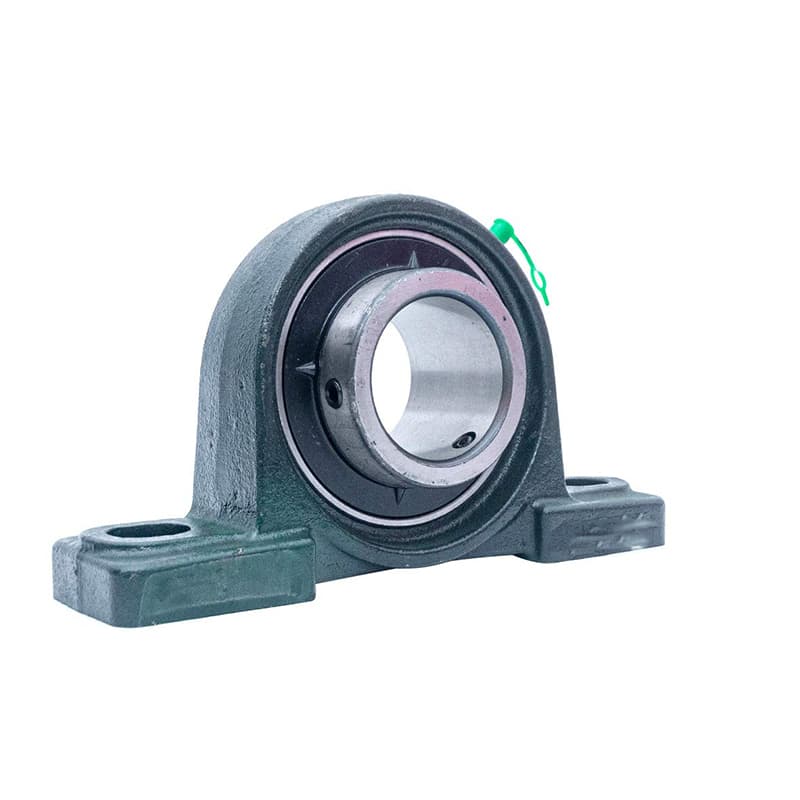
I run a bearing factory in China called FYTZ Bearing. We export to India, Brazil, Turkey, and many other countries. I talk to procurement managers like Rajesh from Mumbai almost every day. He supplies bearings to food processing plants and textile mills. His clients use a lot of dryers. They constantly ask him for bearings that last longer in the heat. In this article, I will break down why standard bearings fail, what materials can handle the heat, how to adjust internal clearance, and what lubrication strategy works best. I will share what I have learned from shipping thousands of high-temperature bearing units to customers around the world.
Why Do Standard Pillow Block Bearings Fail So Quickly in High-Heat Dryer Applications?
The first time I saw a failed bearing from a dryer, I was shocked. The grease was black and hard like coal. The seals were brittle and cracked. The balls had deep wear marks. The heat did all of this.
Standard bearings fail quickly in dryers because of three main reasons: grease degradation, seal hardening, and loss of internal hardness. The operating temperature in these dryers often exceeds 100°C. Standard grease starts to break down at 80°C. The seals become brittle and lose their sealing ability. And the bearing steel loses its hardness above 150°C, which leads to rapid wear.
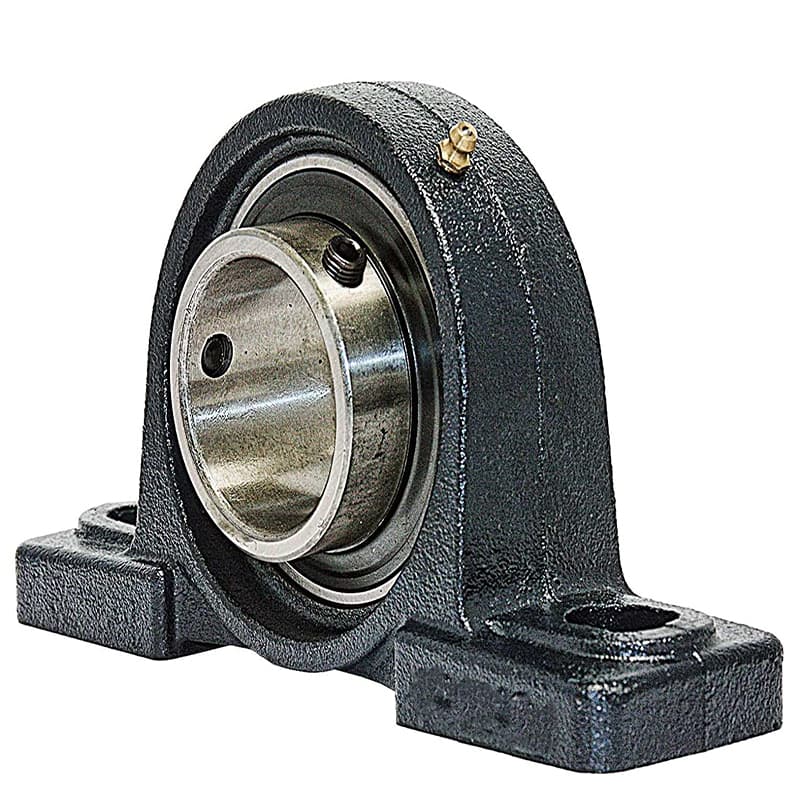
The grease problem
This is the first thing to fail. Most standard bearings come filled with general-purpose lithium grease. This grease works fine at room temperature. But when the temperature climbs above 80°C, the oil separates from the thickener. The grease turns into a hard, crusty substance. It no longer lubricates. Instead, it acts like an abrasive.
I have opened bearings from dryers and found the grease completely carbonized. The balls were running dry. Metal was rubbing against metal. That creates heat, friction, and rapid wear. Once the grease fails, the bearing dies within hours.
The seal problem
Heat does not just damage the grease. It also damages the seals. Most standard pillow block bearings use nitrile rubber seals. This material has a maximum continuous temperature of about 100°C. Beyond that, the rubber starts to harden and lose its elasticity.
When a seal hardens, it cannot conform to the shaft. Gaps open up. Hot air and contaminants enter the bearing. The grease escapes. This creates a cycle of failure. Heat makes the seal fail, and seal failure allows more heat to enter the bearing.
The steel problem
This is the most serious issue. Bearing steel is heat-treated to achieve a specific hardness. Standard bearing steel (GCr15) maintains its hardness up to about 150°C. Above that, the steel starts to soften.
Softening leads to surface deformation. The balls start to flatten. The raceways develop indentations. The bearing loses its precision. Noise increases, vibration starts, and the bearing finally fails.
I saw this in a textile drying line in Turkey. The dryers ran at 180°C. The customer used standard bearings with standard steel. They failed every 10 days. After we switched to heat-stabilized steel, the bearings lasted 6 months. That is a huge difference.
A summary of the failure mechanisms
| Failure Mode | Cause | Result |
|---|---|---|
| Grease degradation | Heat above 80°C | Loss of lubrication, increased friction, seizure |
| Seal hardening | Heat above 100°C | Contamination ingress, grease leakage |
| Steel softening | Heat above 150°C | Surface deformation, loss of precision, rapid wear |
| Internal clearance loss | Uneven thermal expansion | Binding, excessive heat generation, seizure |
What Type of Bearing Insert and Cage Material Can Withstand Continuous Radiant Heat?
After seeing so many failed bearings, I started asking a simple question. What material can actually survive inside a dryer? The answer is not straightforward. You need to think about the insert and the cage separately.
For high-heat dryers, you need a bearing insert made from heat-stabilized steel (often called SUJ2 with special heat treatment) that keeps its hardness up to 200°C. The cage should be made from brass, polyamide with high thermal stability, or a full steel cage with special surface treatment. Do not use standard cages made from ordinary polyamide or stamped steel without heat treatment.
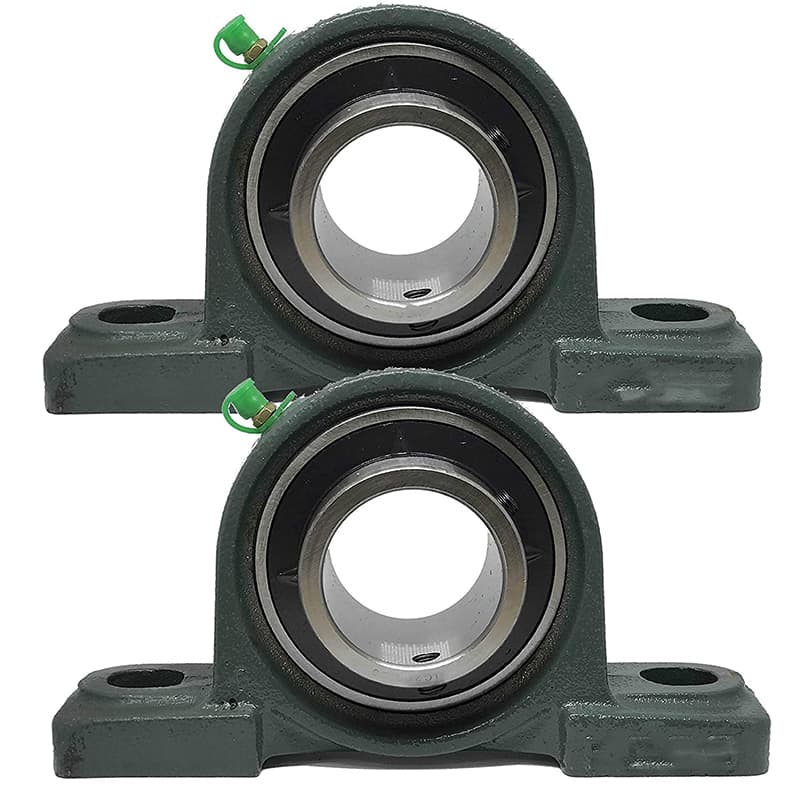
The insert material
The insert is the actual ball bearing inside the housing. This is where the load meets the steel. You need steel that holds its hardness at high temperatures.
Standard bearing steel is GCr15. It is good up to about 150°C. For dryer applications, we recommend heat-stabilized GCr15. This steel goes through a special tempering process at higher temperatures. The final hardness is a little lower than standard, but it stays stable at 180°C to 200°C. It will not soften under continuous heat.
I have worked with customers who tried cheaper alternatives. Some use carbon steel inserts. Those fail within days. They do not have the right alloy composition. Only chromoly bearing steel with heat stabilization works.
For extreme conditions (above 200°C), we sometimes use stainless steel. It has a higher resistance to heat and also resists corrosion from moisture. But it costs more. Most dryer applications do not need stainless unless there is also a moisture problem.
The cage material
The cage holds the balls in place. It separates them. It has to survive the heat while handling impact loads.
Standard stamped steel cages work at moderate temperatures. But they can deform under high heat and heavy loads. Brass cages are much better. Brass has good thermal conductivity. It dissipates heat better than steel. It also has a lower coefficient of friction against the balls. This reduces heat generation.
I recommend brass cages for most dryer applications. They cost more than stamped steel cages, but they last much longer. For a distributor like Rajesh, this means fewer warranty claims and happier customers.
Some manufacturers offer polyamide cages for high heat. These are plastic cages made from special engineering plastics. They work up to 150°C. But at higher temperatures, I do not trust them. Plastic can creep and lose its dimensional stability. I prefer brass or heat-treated steel cages for safety.
Housing material considerations
The housing also matters. Most pillow block housings are cast iron. Standard cast iron works well in dryers. But you need to make sure the paint or coating on the housing is heat-resistant. Standard paint will peel and blister at high temperatures.
I always recommend powder coating or a specialized high-temperature paint. This keeps the housing looking good and protects against rust from condensation.
A comparison of cage materials for dryers
| Cage Material | Max Continuous Temperature | Advantages | Disadvantages |
|---|---|---|---|
| Stamped Steel | 150°C | Cheap, strong | Poor heat dissipation, can deform under heavy loads |
| Brass | 200°C | Good heat dissipation, low friction, stable | More expensive |
| Polyamide (PA66) | 130°C | Lightweight, quiet | Not suitable for above 150°C, can creep |
| Heat-Treated Steel | 200°C | Very strong, stable | Slightly more expensive than standard steel |
How Should You Adjust Internal Clearance for Thermal Expansion in Dryers?
This is where many engineers make a mistake. They buy bearings with standard clearance (CN). They install them at room temperature. Then the dryer heats up to 180°C. The inner ring expands more than the outer ring. The clearance disappears. The bearing locks up.
You must select bearings with C3 or C4 internal clearance for dryer applications. The rule is simple: for operating temperatures between 100°C and 150°C, use C3 clearance. For temperatures above 150°C, use C4 clearance. This extra clearance compensates for thermal expansion and prevents the bearing from seizing.
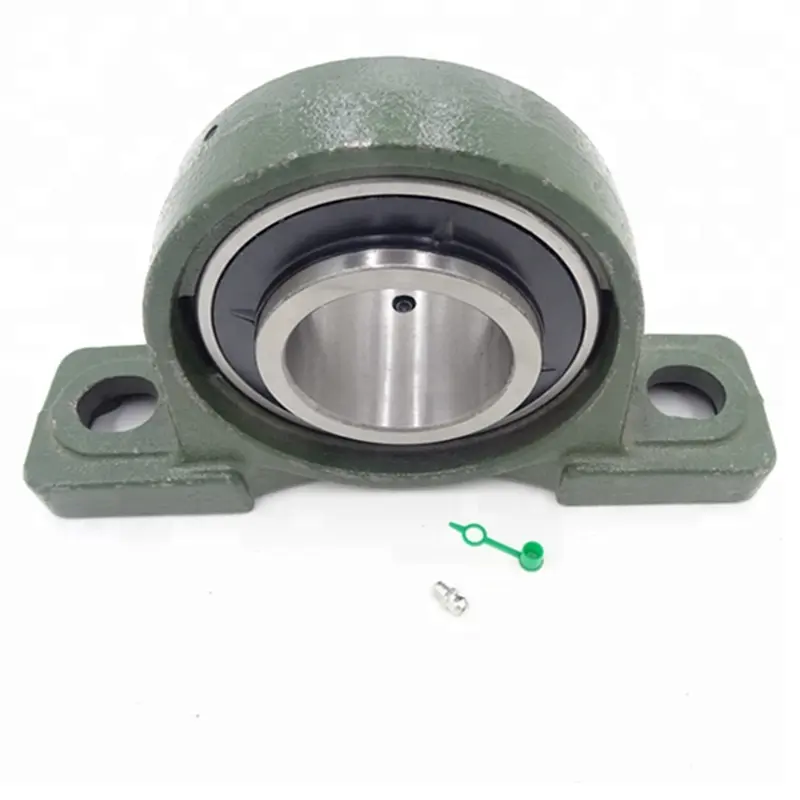
Understanding thermal expansion
When a bearing heats up, the inner ring gets hotter than the outer ring. The shaft also gets hot and expands. The shaft pushes the inner ring outward. The balls get trapped between the expanding inner ring and the stationary outer ring. If there is no extra clearance, the bearing locks up.
The amount of expansion depends on several factors. The temperature difference between inner and outer rings is one factor. The shaft material is another. Steel expands about 0.012 mm per meter of length for every 100°C of temperature rise. This does not sound like much, but bearing clearances are measured in microns. A few hundredths of a millimeter of expansion is enough to eliminate the internal clearance.
C3, C4, and C5 clearances
Bearing clearance is measured in microns. It is the space between the balls and the raceways when the bearing is at room temperature. CN (normal) clearance is fine for most applications. But for high heat, you need more room.
C3 clearance is larger than CN. It gives you extra room for thermal expansion. C4 clearance is even larger. C5 is the largest.
For dryers running at 100°C to 150°C, I recommend C3. For dryers above 150°C, use C4. I have seen customers use C5 for very high heat above 200°C.
The shaft fit
The internal clearance is only half of the story. You also need to think about the shaft fit. A tight interference fit on the shaft will reduce the internal clearance. This effect is magnified at high temperatures. The shaft expands and makes the fit even tighter.
For dryer applications, I recommend a looser shaft fit. Instead of an interference fit, use a slight clearance fit. This allows the shaft to expand without compressing the bearing inner ring. The outer ring should have a tight fit in the housing. This keeps the bearing stable.
A practical example
I worked with a distillery in Brazil. They used a steam dryer for corn. The bearings ran at 160°C. They had standard CN clearance bearings. These bearings seized every 3 weeks. We switched to C4 clearance bearings with a looser shaft fit. The bearings now run for 9 months. The internal clearance was the game-changer.
Clearance selection guide
| Operating Temperature | Recommended Clearance | Shaft Fit Recommendation |
|---|---|---|
| Below 80°C | CN (Normal) | Standard interference fit |
| 80°C – 130°C | C3 | Slightly looser fit or standard fit |
| 130°C – 180°C | C4 | Clearance fit on shaft, tight in housing |
| Above 180°C | C4 or C5 | Clearance fit, special housing design |
What Is the Best Lubrication Strategy for High-Temperature Air Circulation Fans?
I have seen many companies spend money on expensive high-temperature bearings. Then they put cheap grease inside them. The bearings fail anyway. The grease is just as important as the bearing itself.
The best lubrication strategy for dryer fans is to use synthetic high-temperature grease with a dropping point above 250°C. Lithium complex or polyurea grease is not enough. You need a grease based on synthetic oil like ester or PAO. Also, you must re-grease on a strict schedule. Do not wait until the bearing makes noise. That is too late.
Understanding grease properties
Grease has three components: base oil, thickener, and additives. The base oil does the actual lubrication. The thickener holds the oil in place. The additives protect the metal surfaces.
In high heat, the base oil can evaporate. The thickener can break down. The additives can get used up quickly. So you need a grease that is designed for exactly these conditions.
Synthetic base oils
Standard mineral oil starts to oxidize above 80°C. At 120°C, it breaks down very fast. Synthetic oils are much better. PAO (polyalphaolefin) oils work up to 180°C. Esters work up to 200°C. For extreme heat, PFPE (perfluoropolyether) oils work up to 300°C.
I recommend a synthetic grease with PAO or ester base oil. This gives you a good balance of performance and price. PFPE is the best, but it is also very expensive. Most dryer applications do not need that level of performance.
The thickener choice
Lithium soap thickeners are the most common. They work up to about 150°C. Beyond that, they break down. Complex lithium or polyurea thickeners work up to 180°C. For higher temperatures, I recommend calcium sulfonate complex thickeners. These can handle up to 250°C and also have good anti-wear properties.
Re-greasing schedule
This is where many people go wrong. They grease the bearing once at installation. Then they never touch it again. In a hot environment, the grease degrades faster. You need to add fresh grease regularly.
For a dryer running at 150°C, I recommend re-greasing every 1000 hours of operation. This is about once a month for 24/7 operation. You should pump new grease into the bearing until you see fresh grease coming out of the relief valve. This purges the old, degraded grease out.
Grease volume
Do not over-grease. Too much grease causes churning. Churning generates more heat. This starts a vicious cycle. The heat breaks down the grease, and the broken-down grease creates more heat.
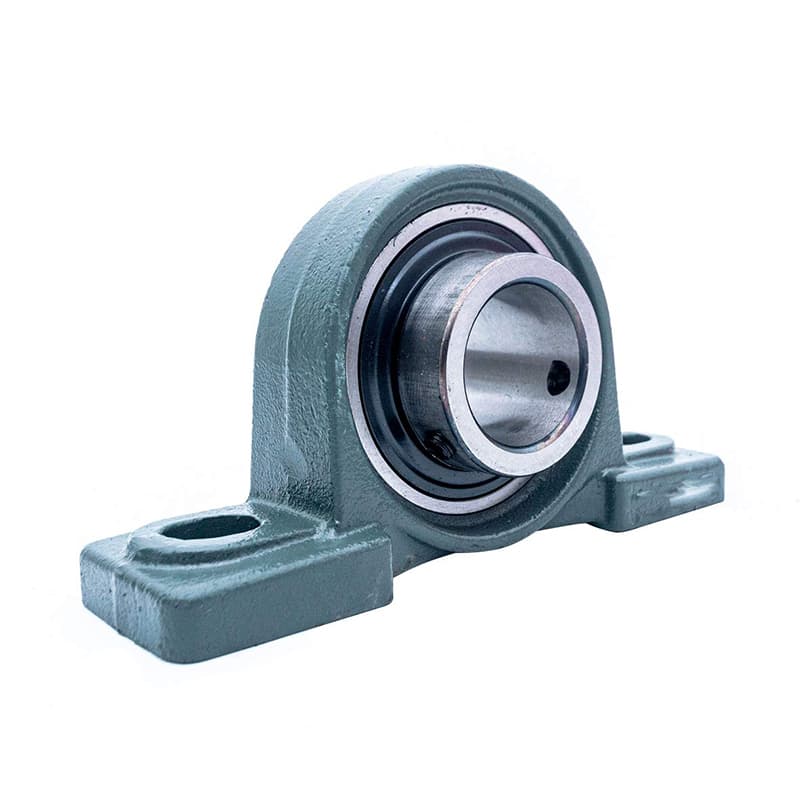
For a standard UCP206 pillow block, one or two pumps from a grease gun is usually enough. If you over-grease, the grease will push out the seals. That ruins the seal integrity.
Comparing greases for dryers
| Grease Type | Base Oil | Max Temperature | Good For |
|---|---|---|---|
| Standard Lithium | Mineral | 120°C | Low heat only |
| Lithium Complex | Mineral/Synthetic | 150°C | Moderate heat |
| Polyurea | Synthetic | 180°C | Good for higher heat |
| Calcium Sulfonate Complex | Synthetic | 250°C | Excellent heat and anti-wear |
| PFPE | PFPE | 300°C | Extreme heat, expensive |
Practical tips from the factory
I always recommend my customers to keep a log. Write down when each bearing is greased. Keep it simple. Use a whiteboard in the maintenance room. Check the log every week. This prevents missed greasing.
Also, use the same grease every time. Mixing different greases can cause chemical reactions. The grease can harden or separate. I have seen bearings fail because someone used a different grease brand on the same bearing.
Finally, consider automatic lubrication systems. These are common in modern dryers. They have a pump that feeds a small amount of grease at regular intervals. This eliminates human error. It is a good investment if you have many bearings on one machine.
Conclusion
For industrial dryers, you need bearings that are specially made for high heat. Choose heat-stabilized steel, C4 clearance, brass cages, and synthetic grease. Your bearings will last months instead of days.
