
A few years ago, a procurement manager from Turkey called me with a problem. He had just received a 20-foot container full of pillow block bearings. He paid for 2,000 pieces. But when he opened the boxes, he found that 200 bearings had the wrong locking type. He ordered set screw locking. He received eccentric collar locking. The factory in China had mixed up the production line. And now his customers were waiting for their orders.
A practical buying checklist for pillow block bearings in large-volume orders must include four core areas: technical specifications verification, supplier factory audit, quality inspection standards, and packaging and shipping details. Missing any of these can cost you time, money, and customer trust.
Let me be direct with you. I have been on the other side of this conversation many times. Buyers like Rajesh from India call me and ask, "How do I make sure I do not make a mistake with my next big order?" And I understand the pressure. A large-volume order is a big investment. It ties up your cash. It fills up your warehouse. And if something goes wrong, your customers suffer. That is why I want to share a practical checklist with you. This is the same checklist we recommend to our own clients before they place a bulk order. It comes from real experience, not just theory.
What Technical Specifications Must You Verify Before Placing a Bulk Order?
I learned this lesson the hard way. A customer from Egypt ordered 1,500 units of UCP210 pillow block bearings. He thought all UCP210 bearings were the same. But his machine had a special shaft size. He needed the inner bore to be exactly 50.00mm. The standard UCP210 has a bore tolerance of 0 to -0.015mm. His machine design required a bore of 50.05mm to fit a worn shaft. He did not tell us. We shipped the standard size. The bearings did not fit. He had to machine every single housing. That cost him time and money.
The short answer is that you must verify not just the model number but also the detailed dimensions, tolerances, seal type, locking method, and material grade before you confirm a bulk order.
Let me break down what you need to check.
The bearing series and model number
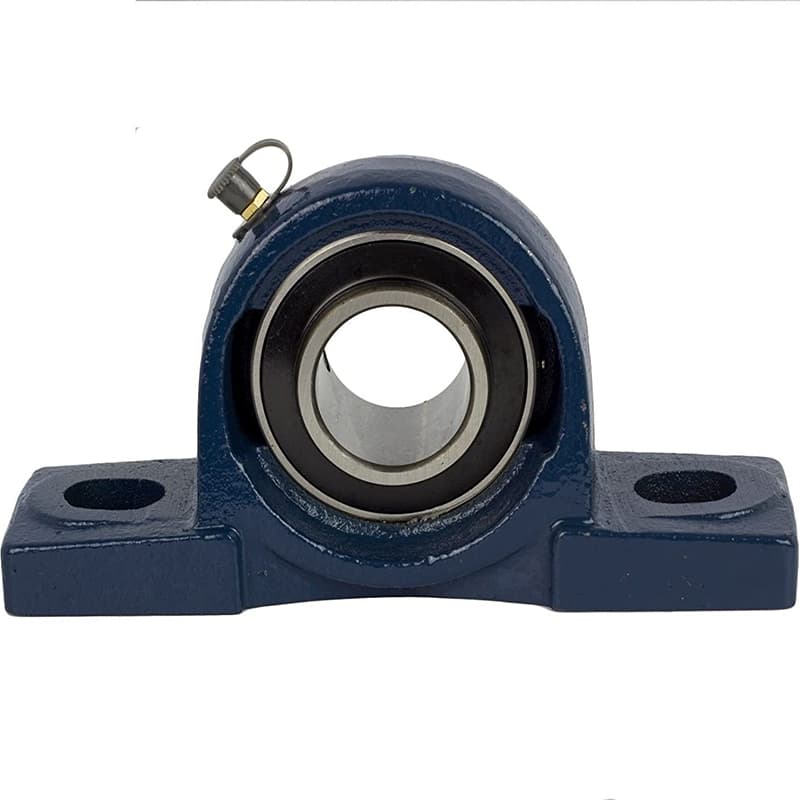
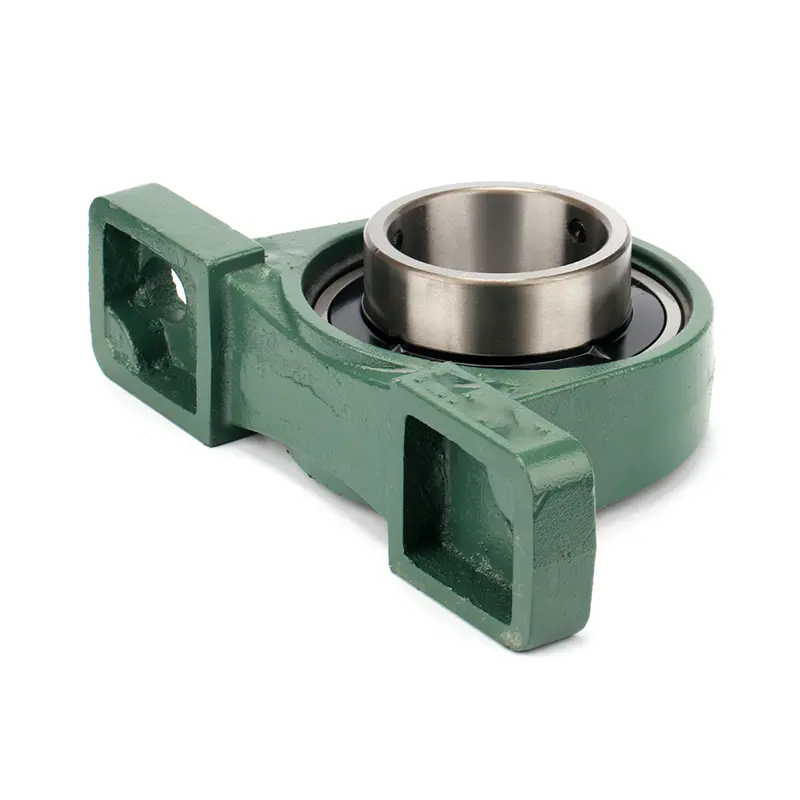
The model number tells you the series and size. For example, UCP210 means a pillow block housing (UCP) with a 210 series insert bearing. The "10" means the bore is 50mm. But here is the thing. Different brands use different numbering systems. A UCP210 from one factory might have slightly different dimensions from another factory. The center height, bolt spacing, and housing thickness can vary.
So do not just rely on the model. Ask for the dimensional drawing. Compare the drawing to your machine’s requirements. Check the center height (H). Check the bolt spacing (J). Check the total length (L). These numbers matter for installation.
The bore size and tolerance
The bore is where the shaft goes. If the bore is too small, the bearing will not slide onto the shaft. If it is too large, the bearing will spin on the shaft. Both are bad.
We offer standard bore tolerances of 0 to -0.015mm for most sizes. But we can also make custom bores. If you need a specific fit class like j6 or k6, tell us. We will machine the bore to match.
The seal type
This is a big one. Seals come in many styles. Single-lip is basic. Double-lip is better. Triple-lip is best for dusty environments. Labyrinth seals are for high-speed applications.
We must confirm the seal type before production. Changing seals after manufacturing is not possible. So tell us about your operating environment. Do you have dust? Do you have water spray? Do you run at high speeds? The answer determines the seal.
The locking method
We offer set screw locking, eccentric collar locking, and taper sleeve locking. Each has its use.
Set screw locking is the most common. It is cheap and easy. But it can loosen under vibration.
Eccentric collar locking is faster to install. But it is not as strong as taper sleeve.
Taper sleeve locking is the most secure. It grips the shaft tightly. It does not loosen. It is the best for vibrating machines.
The housing material
Most pillow block housings are made of grey cast iron. This works for most applications. But if you need corrosion resistance, you can choose ductile iron or stainless steel. Ductile iron is stronger. Stainless steel resists rust. We also offer coated housings with epoxy paint for extra protection.
Here is a checklist table
| Specification | What to Check | Questions to Ask |
|---|---|---|
| Model number | Does it match your drawing? | What is the exact series and size? |
| Bore diameter | What is the size and tolerance? | Do you need a standard or custom bore? |
| Center height | Does it match your machine frame? | What is the H dimension? |
| Bolt spacing | Will your mounting holes align? | What is the J dimension? |
| Seal type | Is it suitable for your environment? | Single, double, triple, or labyrinth? |
| Locking method | Will it handle your vibration? | Set screw, eccentric, or taper sleeve? |
| Housing material | Will it resist corrosion? | Cast iron, ductile iron, or stainless? |
So my advice is to fill out this table with your supplier before you sign the contract. Do not assume they know your needs. Tell them clearly. Write it down. Confirm it in writing.
How Do You Evaluate a Supplier’s Factory Capabilities and Quality Control System?
I have visited many bearing factories in China. Some are clean and organized. Others are dusty and chaotic. The difference shows in the product quality. You cannot judge a factory just by its website. You need to dig deeper.
The short answer is that you should evaluate a supplier’s ISO 9001 certification, production equipment, inspection facilities, raw material sourcing, and their willingness to share test reports. A good factory has nothing to hide.
Let me walk you through what I look for when I evaluate a bearing factory.
ISO certification and standards
Check if the factory has ISO 9001 certification. This is the basic quality management standard. It tells you that the factory has documented processes. It does not guarantee good bearings. But it is a good starting point.
Some factories also have ISO 14001 for environmental management. Or IATF 16949 for automotive quality. These are higher standards.
But here is a warning. Some factories buy the certificate and put it on their website. They do not actually follow the processes. So you need to verify.
Production equipment and capacity
Ask the supplier what machines they use. A modern bearing factory uses CNC grinders, automatic assembly lines, and heat treatment furnaces. Old machines produce inconsistent quality.
We use precision grinding machines from Taiwan and Japan. We have heat treatment furnaces that control the temperature to +/- 5 degrees. This ensures consistent hardness across every bearing.
Ask about production capacity. Can they handle your order volume? If you need 5,000 bearings per month, can they produce that consistently? A factory that struggles to meet capacity will cut corners.
Inspection facilities
Good factories have their own inspection lab. They test for size, hardness, roundness, noise, and vibration. They do not rely on the customer to catch defects.
Ask to see their inspection equipment. Do they have a CMM (coordinate measuring machine)? Do they have a roughness tester? Do they have a vibration meter?
We have a full laboratory at our factory. We test each bearing before it leaves our floor. We keep the test records for five years.
Raw material sourcing
The bearing steel quality determines the bearing life. The best bearings use GCr15 steel (equivalent to 52100). This steel has high purity and good wear resistance.
Ask the supplier where they buy their steel. Do they use a trusted steel mill? Do they test the steel before production?
We use steel from major mills. Each batch is tested for chemical composition. We reject batches that do not meet our standard.
Willingness to share information
This is a simple test. Ask the supplier for a factory audit. Ask to see their production records. Ask to see their inspection reports. A good supplier will say yes. A bad supplier will make excuses.
We welcome factory visits. We have hosted buyers from Turkey, Brazil, and India. They walk through our production line. They see the testing process. They leave with confidence.
A comparison of factory types
| Factor | Good Factory | Bad Factory |
|---|---|---|
| ISO certification | Yes, current | Yes but expired or none |
| Production equipment | Modern CNC machines | Old manual machines |
| Inspection lab | Full lab with testing equipment | No lab, only visual check |
| Raw material | Premium steel from mills | Cheap steel from scrap |
| Information sharing | Open and willing to show | Secretive and defensive |
| Test reports | Provided for every batch | Provided only on request |
So my advice is to take the time to evaluate your supplier. If you cannot visit the factory, ask for a video call walkthrough. Ask for photos of their equipment. Ask for test reports from previous orders. A factory that is proud of its capabilities will be happy to show you.
Which Quality Inspection Standards Should You Apply to Sample and Batch Shipments?
A customer from Brazil told me something interesting. He said, "The sample was perfect. But the container shipment was terrible. The quality dropped." This happens because some factories produce good samples and then switch to lower quality for bulk production.
The short answer is that you should use AQL sampling standards for batch inspection. The most common is ISO 2859. It allows you to accept or reject a batch based on a random sample. You should also check dimensions, clearance, noise, and appearance.
Let me explain how quality inspection works for bulk orders.
The AQL sampling method
AQL stands for Acceptable Quality Level. It is a statistical method. You randomly select a sample from the batch. You inspect that sample. Based on the results, you decide to accept or reject the whole batch.
For example, for a batch of 2,000 bearings, you might inspect 125 pieces (level II inspection). If you find 0 or 1 defective piece, you accept the batch. If you find 2 or more defective pieces, you reject the batch.
This method is efficient. You do not need to check every bearing. But you still get a high confidence level.
What to check in the inspection
1. Dimensions. Check the bore diameter, outer diameter, and housing dimensions. Use calibrated measuring instruments. Compare to the drawing. The bore tolerance should be within 0.015mm.
2. Internal clearance. This is the gap between the balls and the raceways. We offer standard clearance groups like C0, C3, and C4. Check the clearance with a feeler gauge or a special clearance tester. The wrong clearance causes overheating or noise.
3. Noise and vibration. Run the bearing on a test spindle. Listen for abnormal noise. Use a vibration meter. The vibration should be within the limits specified in the product standard. We use a S0910 vibration tester for this.
4. Appearance. Look at the bearing visually. The surface should be smooth. There should be no rust, scratches, or dents. The seals should be intact. The grease should be clean.
5. Hardness. Hardness is an indicator of material quality. Use a Rockwell tester. The surface hardness should be around 58 to 62 HRC for standard bearings.
How to handle defects
If you find defects in the sample, do not panic. Ask the supplier for an explanation. They might have had a production issue. They might offer to rework the defective pieces or ship replacements.
But if the defect rate is high, you may need to reject the whole batch. This is why you agree on the acceptance criteria before you place the order. Put the AQL level and the inspection criteria in the contract.
Pre-shipment inspection
We recommend a pre-shipment inspection. This is done at the factory before the goods are packed. Your inspector or a third-party company checks the bearings.
We welcome pre-shipment inspections. We even prepare the sample batch for inspection. We provide the test reports. The inspector can verify our claims. This saves time and avoids surprises at your warehouse.
A simple inspection checklist
| Inspection Item | Tool | Acceptance Criteria |
|---|---|---|
| Bore diameter | Inside micrometer | Tolerance +/- 0.015mm |
| Housing dimensions | Caliper | Within +/- 0.5mm |
| Internal clearance | Feeler gauge | Within specified C-group |
| Noise | Vibration meter | Below specified dBa |
| Appearance | Visual | No rust, no scratches |
| Hardness | Rockwell tester | 58-62 HRC |
So my advice is to specify the inspection standard in your purchase order. Write down the AQL level. Write down the acceptance criteria. This protects both you and the supplier. There is no confusion.
What Export Packaging and Shipping Details Need to Be Confirmed Before Payment?
I have seen many buyers focus only on the bearing quality. They forget about packaging. Then the container arrives. And they find rusted or damaged bearings. The packaging failed during the long sea journey.
The short answer is that you must confirm packaging type, anti-rust protection, marking, container loading method, and shipping documents before you make the final payment.
Let me walk you through the packaging details.
Outer packaging
The outer packaging protects the bearings during shipping. For large orders, we use three options.
Cartons. This is the cheapest option. We put 4 to 6 bearings in a strong carton. We tape it securely. The carton can be stacked on a pallet. This works for relatively clean shipping conditions.
Plywood cases. These are stronger. The plywood does not crush easily. They protect against impact and compression. We recommend plywood for orders over 1 ton.
Wooden crates. These are the strongest. They protect against heavy compression and forklift damage. They are suitable for heavy or high-value orders.
Anti-rust protection
The sea journey is humid. Salt water can find its way into the container. So we must protect the bearings.
We use VCI (Volatile Corrosion Inhibitor) paper. This paper releases a vapor. The vapor forms a protective layer on the metal. We wrap each bearing in VCI paper.
We also add desiccant packs. These packs absorb moisture. We put two or three packs inside each carton.
We then shrink-wrap the bearing. The film seals the VCI paper and desiccant inside. This creates a moisture barrier.
Marking and labeling
The shipping marks on the package tell the receiver what is inside. It also helps with customs clearance.
The marking should include the buyer’s name, the product code, the quantity, the destination port, and the order number. Some countries require the original country of origin to be marked. We put "MADE IN CHINA" on each box.
Container loading
How we load the container matters. The bearings must be stable. They should not shift during transport.
We load the bearings on pallets. We stack the pallets neatly. We fill the gaps with dunnage bags. These inflatable bags prevent movement. We also shrink-wrap the whole pallet.
We distribute the weight evenly in the container. We do not put heavy pallets on the top. We keep the center of gravity low.
Shipping documents
Before you make the final payment, confirm the shipping documents. You need the bill of lading, packing list, commercial invoice, and certificate of origin. Some countries require a health or phytosanitary certificate for wooden packaging (ISPM-15).
We provide all these documents with each shipment. We send them by email and also attach them physically to the container.
A packaging confirmation table
| Item | What to Confirm | Why It Matters |
|---|---|---|
| Outer packaging | Carton, plywood, or wood crate | Protects against impact |
| Anti-rust | VCI paper and desiccant | Prevents rust during sea voyage |
| Shrink wrap | Yes or No | Blocks moisture and dust |
| Marking | Buyer name, product code, port | Helps with identification and customs |
| Loading | Palletized with dunnage bags | Prevents shifting |
| Documents | Bill of lading, packing list, invoice | Required for customs clearance |
One more thing about payment terms
We normally request 30% deposit and 70% balance before shipment. This is standard in our industry. We ask for the balance payment after we send you the packing photos and the draft bill of lading. This gives you confidence that your goods are ready and correctly packed.
So my advice is to confirm all packaging details before you pay the balance. Ask for photos of the packed container. Ask to see the shipping marks. This gives you peace of mind.
Conclusion
Use this four-step checklist for your next large-volume pillow block bearing order. Verify technical specs. Check the factory. Inspect the quality. Confirm the packaging. Each step protects your investment.