
I get this question a lot from buyers. They have been burned by bad suppliers before. They want to trust me. But they need proof.
We are the best choice because we are a real factory with full production and inspection lines. We control every step from raw steel to finished bearing. That means better quality, better customization, and better service for B2B partners like you.
I want to be honest with you. There are many bearing suppliers out there. Some are traders who do not make anything. Some are factories that cut corners. I built FYTZ to be different. I wanted a factory that I would trust to buy from myself.
In this article, I will walk you through exactly what makes us different. I will show you our production capabilities, our material quality, our customization options, and our inspection systems. By the end, you will see why we are the right partner for your business.
What Makes Our Factory and Production Capabilities Different from Other Suppliers?
A distributor from Pakistan visited our factory last year. He had been buying from traders in three different countries. He told me something that stuck with me. He said, "I have never seen where my bearings come from. I just order and hope."
That is the problem with many bearing suppliers. They are trading companies. They buy from whoever has the lowest price that week. They do not control the quality. And they cannot guarantee consistency.
We are different. We are a real factory. We have our own production lines. We do everything in-house. The steel comes in as raw tubes and bars. We cut them. We forge them. We anneal them. We machine them. We heat treat them. We grind them. We assemble them. We inspect them. Every step happens under one roof.
That integration gives us control. It means we know exactly what goes into every bearing. We know the material source. We know the processing history. We know the inspection results. There is no gap in the chain. There is no unknown step where quality could be lost.
Our production facility has some numbers I want to share. We run over 200 pieces of equipment. We have automatic turning lines. We have continuous carburizing furnaces. We have CNC grinding machines from top brands. We have a full assembly workshop. Our annual capacity is over 2 million bearings. That is enough to serve large-volume B2B customers without delays.
The grinding section is one of our strengths. Grinding is the step that gives the bearing its final dimensions. Our machines hold tolerances of plus or minus 2 microns. That is very tight. Many smaller factories cannot do that. They use older machines. They accept wider tolerances. That creates variation in the final product.
We also have a dedicated workshop for custom orders. That is where we make bearings that do not fit the standard catalog. We have separate CNC lathes for that work. We have specialized tooling. We can run small batches for prototypes or large batches for production orders. That flexibility is rare.
Let me give you a comparison of our approach versus a typical trader.
| Factor | FYTZ Factory | Typical Trader |
|---|---|---|
| Production control | Full in-house | Outsourced to multiple suppliers |
| Quality consistency | High, batch-to-batch | Varies by supplier |
| Lead time | Predictable | Depends on supplier availability |
| Customization | Available | Limited or not offered |
| Traceability | Complete record for each batch | Difficult or impossible |
| Communication | Direct with factory team | Through intermediaries |
I remember a customer from Egypt who used to buy from traders. He had a shipment that was delayed by three months. The trader kept giving excuses. When the bearings finally arrived, half of them were the wrong size. He switched to us after that. Now he gets his orders on time and exactly as specified.
That is the advantage of a real factory. We do not have to wait for another supplier. We do not have to guess about quality. We make the bearings ourselves. And we ship them directly to you.
How Do Our Material Selection and Heat Treatment Ensure Superior Bearing Quality?
I once had a customer in Russia who sent us a failed bearing. It had a deep spalling mark on the raceway. He asked us to analyze it. We found that the case depth was only 0.8 mm. That is too shallow for heavy loads. The bearing came from a low-cost supplier who skipped steps.
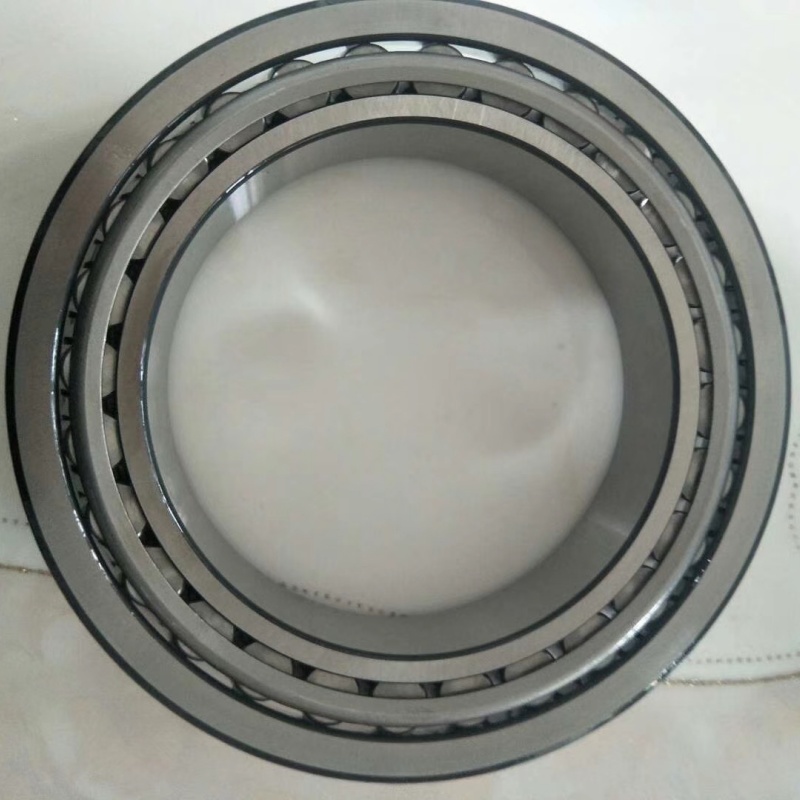
Material selection is the starting point. We use only premium steel. Our standard steel is GCr15 for through-hardened bearings. For heavy-duty tapered roller bearings, we use carburizing steel like G20CrMo. That steel gives us the hard surface and tough core that heavy loads demand.
We source our steel from top mills. We do not buy from brokers. We buy direct. We inspect every coil when it arrives. We check the chemical composition. We check the inclusion rating. We check the grain size. If any batch does not meet our standards, we reject it. It goes back to the mill.
The inclusion rating is a number that tells us how clean the steel is. We require JIS 2.0 or better. That means very few non-metallic inclusions. Those inclusions are tiny particles. They act as stress risers. They start cracks. Fewer inclusions mean longer bearing life.
Now let me talk about our heat treatment process. This is where the steel gets its hardness. We use continuous carburizing furnaces. The bearings move through the furnace on a belt. The atmosphere is carefully controlled. The carbon potential is measured constantly. The temperature is kept within plus or minus 5 degrees Celsius.
The carburizing step takes time. For a case depth of 1.5 mm, the parts stay in the furnace for several hours. The carbon diffuses into the surface. The surface becomes high in carbon. The core stays low in carbon. That is what gives us the hard case and tough core.
After carburizing, we quench the parts. Quenching cools them rapidly. It transforms the steel into martensite. Martensite is hard. But it is also brittle. So we temper it. Tempering heats the parts to a lower temperature. It relieves internal stress. It reduces brittleness. It also adjusts the hardness to the target range.
Our target surface hardness is HRC 60 to 64. The core stays around HRC 30 to 40. That combination resists indentation and shock. It is perfect for heavy-duty applications.
We inspect every batch. We take samples from each furnace load. We test the hardness. We check the case depth under a microscope. We look at the microstructure. We check for retained austenite. Too much retained austenite can cause dimensional change over time. We keep it below 5%.
Let me show you our quality parameters in a table.
| Parameter | Our Standard | Why It Matters |
|---|---|---|
| Steel type | GCr15 or G20CrMo | Provides the right base properties |
| Inclusion rating | JIS 2.0 or better | Reduces crack initiation points |
| Surface hardness | HRC 60-64 | Resists indentation from rollers |
| Core hardness | HRC 30-40 | Absorbs shock without cracking |
| Effective case depth | 1.5 mm minimum | Prevents core deformation |
| Retained austenite | < 5% | Prevents dimensional change |
| Microstructure | Fine martensite | Gives strength and toughness |
I also want to mention our control of the grinding heat. Grinding generates heat. Too much heat can burn the surface. It can soften the hard case. We use coolant during grinding. We control the feed rate. We monitor the grinding temperature. That protects the hardness we worked so hard to create.
A customer in Brazil told me he tested our bearings against three other brands. He put them on the same test rig. Our bearings lasted longer in every test. He said the difference was clear. It is the material and treatment. That is what sets us apart.
What Customization Options Do We Offer for Your Specific Application Needs?
A machine manufacturer from Turkey contacted me last year. He had a special gearbox design. The standard bearings did not fit. He needed a different contact angle and a modified outer ring. Other suppliers told him to redesign his gearbox. I told him we could make the bearing he needed.
Customization is not an extra service for us. It is a core part of what we do. We know that many machines use standard bearings. But many do not. Some need a different size. Some need a different load rating. Some need special coatings. We can handle all of that.
Our customization starts with the design. We have a team of engineers. They use CAD software to model the bearing. They use FEA to simulate the stresses. They calculate the expected life. They optimize the geometry for your specific load and speed conditions.
The first level of customization is dimensions. We can make bearings with non-standard bore sizes. We can adjust the outer diameter. We can change the width. We can modify the cage design. If your housing or shaft has a special size, we can match it.
The second level is geometry. We can change the contact angle. A steeper angle gives more axial capacity. A shallower angle gives more radial capacity. We can adjust the roller profile. We can change the number of rollers. We can modify the internal clearance. These changes tune the bearing to your exact loading.
The third level is material. We can use different steel grades. We can specify a different case depth. We can apply surface coatings. We offer phosphate coating for break-in protection. We offer black oxide for corrosion resistance. We offer DLC coating for reduced friction. Each coating has a specific purpose.
The fourth level is precision. Our standard is P0. But we can do P6 and P5. Those are higher precision grades. They have tighter tolerances. They are better for high-speed applications. They are also better for applications that need low vibration.
Let me give you a table of customization options.
| Customization Type | What We Can Change | Typical Applications |
|---|---|---|
| Dimensions | Bore size, OD, width, cage type | Non-standard housings and shafts |
| Contact angle | 10 to 30 degrees | Combined loads with different ratios |
| Roller profile | Crowning radius, length-to-diameter | Gearboxes, heavy machinery |
| Internal clearance | C2, C3, C4, C5 | High temperature or high load |
| Surface coating | Phosphate, black oxide, DLC | Corrosive or high-friction environments |
| Precision class | P0, P6, P5 | High speed, low vibration |
| Marking | Custom part number, logo | OEM and aftermarket branding |
I have a customer in India who makes gearboxes for trucks. He uses a special taper roller bearing with a modified cage. The standard cage would not fit his design. We made a custom cage for him. Now he buys that same custom bearing every quarter. That is how we build long-term relationships.
Another customer in Vietnam needed bearings for a steel mill. The mill had high temperature and heavy shock loads. We recommended a carburized steel with a thicker case. We also added a phosphate coating for break-in. Those bearings have been running for over two years now. The previous ones lasted only six months.
The customization process is simple. You send us your requirements. You can send a drawing. You can send a sample. You can just describe your application. Our engineers review it. We suggest a design. We make a sample. We test it. Then we move to production.
We also offer private labeling. We can print your logo on the bearing. We can print your part number. We can package the bearings in your branded boxes. That helps you build your own brand. Many of our distributors use this service.
I also want to mention our MOQ for custom orders. We understand that not every customer needs a full container. We accept smaller quantities for custom bearings. The MOQ depends on the complexity. But we work with you to find a number that makes sense for both sides.
How Do Our Quality Inspection Systems Guarantee Consistent and Reliable Products?
A distributor from Indonesia told me about a problem he had. He ordered bearings from two different suppliers. The bearings looked the same. But one batch had high vibration. The other was smooth. He could not tell which was which until he installed them. That cost him time and money.
That is why quality inspection is so important. You cannot judge a bearing by looking at it. You have to test it. You have to measure it. You have to verify it. That is what we do at every stage.
Our inspection system starts with incoming steel. Every coil is tested. We check the chemical composition. We use a spectrometer for this. It gives us the exact percentages of carbon, chromium, manganese, and other elements. We check the inclusion rating. We check the grain size. If any parameter is out of spec, we reject the coil.
During production, we inspect at every step. After forging, we check the dimensions. After turning, we check the roundness. After heat treatment, we check the hardness and case depth. After grinding, we check the finish and tolerance. After assembly, we check the clearance and torque.
We use many types of measuring equipment. We have air gauges for bore measurement. We have electronic gauges for outer diameter. We have profilometers for surface finish. We have roundness testers. We have vibration testers. Each piece of equipment is calibrated regularly.
The vibration test is one of our most important checks. We run every bearing through a vibration tester. The tester spins the bearing and measures the vibration amplitude. The amplitude tells us if the bearing is smooth. High vibration means a problem. It could be a geometry issue. It could be a material issue. It could be a contamination issue. We reject any bearing with high vibration.
We also do life testing on random samples. We put bearings on a test rig. We run them under load. We monitor the temperature and vibration over time. We run them until they fail. This tells us the actual life of the bearing. It also tells us the failure mode. We use this data to improve our process.
Let me summarize our inspection points in a table.
| Stage | Inspection Type | What We Check |
|---|---|---|
| Incoming steel | Spectrometer, microscope | Composition, inclusions, grain size |
| Forging | Visual, dimension | Shape, cracks |
| Turning | Dimension gauge | Size, roundness |
| Heat treatment | Hardness tester, metallograph | Hardness, case depth, microstructure |
| Grinding | Air gauge, profilometer | Tolerances, surface finish |
| Assembly | Torque gauge, clearance gauge | Preload, internal clearance |
| Final inspection | Vibration tester, dimensional gauge | Vibration, final dimensions |
| Life testing | Test rig | Fatigue life, failure mode |
We also have a dedicated quality team. They are independent from production. They do not report to the production manager. They report to the factory general manager. That independence means they can reject bearings without pressure. Quality is never sacrificed for speed.
I remember a customer in South Africa who ordered 1,000 bearings. We produced them and ran the vibration test. We found that a small batch had higher vibration than our standard. It was still within the ISO limit. But it was not within our internal limit. We rejected those bearings. We remade them. The customer never knew about the issue. He just got perfect bearings.
That is the philosophy I built into the company. We do not ship questionable bearings. We do not hope the customer will not notice. We inspect until we are certain. And we hold ourselves to a higher standard than the ISO requirement.
We also document everything. Every bearing has a batch number. That number traces back to the steel coil. It traces to the heat treatment furnace. It traces to the grinding machine. If there is a problem, we can find the root cause. That traceability is rare in this industry. But it is essential for B2B reliability.
I encourage every customer to visit our factory. Come see the inspection systems yourself. Watch the vibration test. Look at the gauges. Talk to the quality team. That is the best way to build trust. And trust is what this business is built on.
Conclusion
We are the best choice because we are a real factory that controls every step from material to final inspection. That control gives you consistent quality, custom options, and reliable delivery.