
Your miniature machine runs hot and noisy. The motor draws more power than it should. You have tried everything. But the problem is the bearing.
Deep groove ball bearings with low friction, correct clearance, proper precision, and right lubricant can cut power loss by 40% and extend drive life. Choose carefully for small machines.
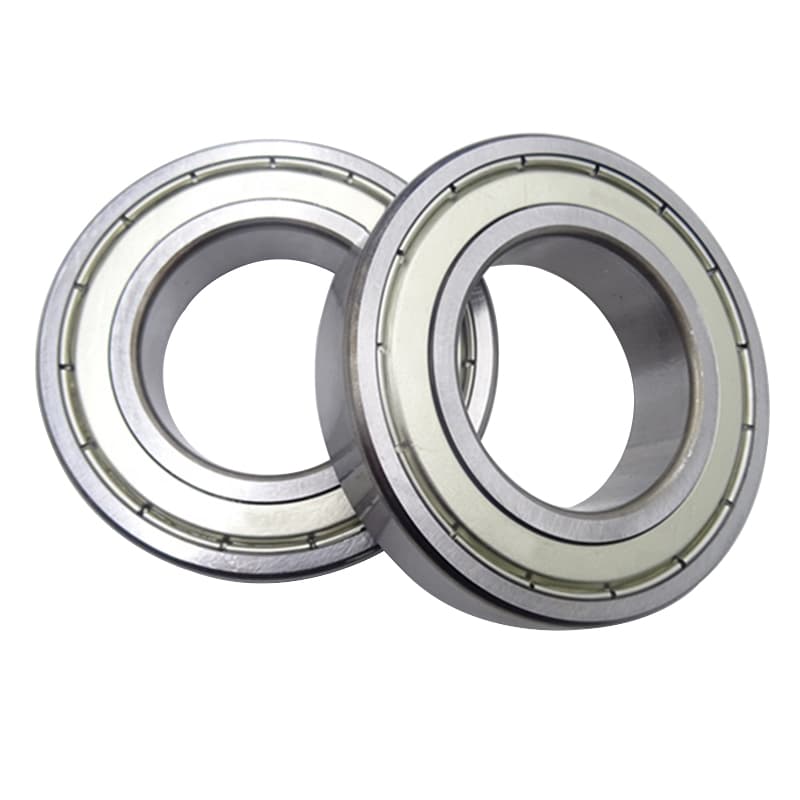
I have worked with many manufacturers of small drives, printers, and medical devices. They all want the same thing: smooth, quiet, efficient operation. The bearing seems like a small part. But it makes a big difference. In this article, I will walk you through four key choices. These choices will help you get the best performance from your low-power drive units and miniature machines. Let me start with the most important factor: friction.
Why Is Low Friction So Critical for Low-Power Drive Units?
Your motor has only so much power. Every bit of friction turns into heat instead of motion. That heat kills efficiency and shortens life.
Low friction is critical because low-power drives have no extra energy to waste. A high-friction bearing can eat 20-30% of your motor torque. That means slower speed, hotter running, and faster failure.
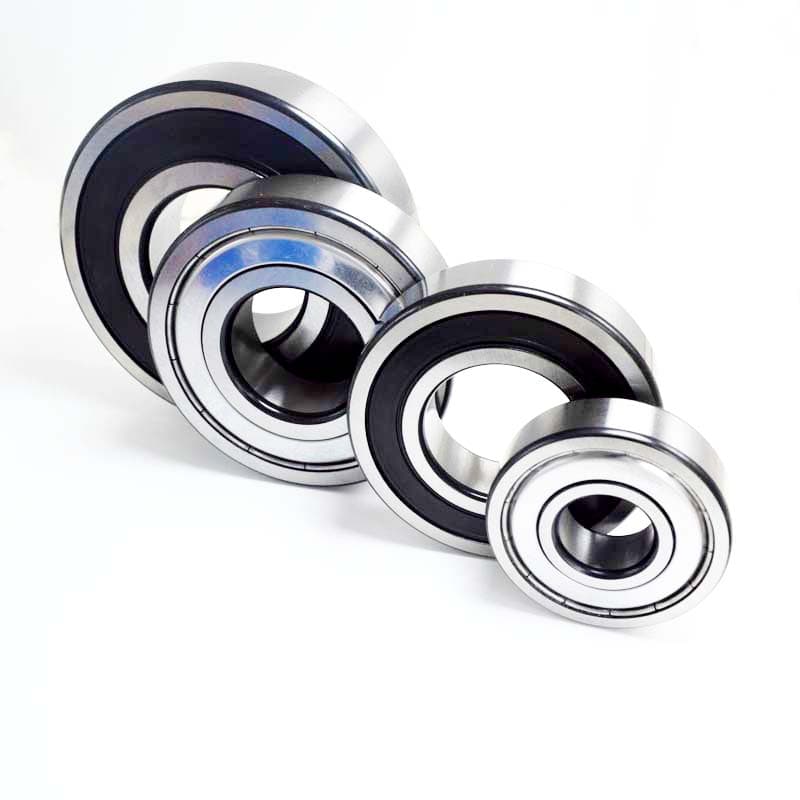
Let me explain the physics in simple terms.
Where does friction come from in a bearing? There are three sources. First, the rolling resistance between the balls and the raceways. Second, the sliding friction from the cage. Third, the drag from the grease or oil. For low-power drives, the grease drag is often the biggest problem. Too much grease acts like a brake.
How much power does a bearing really waste? Let me give you an example. A small 24V DC motor used in a medical pump has a power output of 10 watts. A typical deep groove ball bearing with standard grease has a friction torque of about 0.5 N·mm. That sounds small. But at 3,000 RPM, that bearing consumes about 0.15 watts. Two bearings consume 0.3 watts. That is 3% of your motor power. Now use a high-friction bearing or too much grease. The friction torque jumps to 1.5 N·mm. Now you lose 9% of your power. That extra heat also shortens motor life.
Why do small drives suffer more from friction than large ones? Because the percentage is higher. A large 10 kW motor loses 0.03% to bearing friction. It does not care. A small 10 watt motor loses 3-9%. That is a big deal.
How to measure bearing friction in your application. You do not need expensive tools. Just measure the motor current with no load. Then add the bearings. If the current goes up by more than 10%, your bearings have too much friction. Then try a different bearing or a different grease.
Here is a comparison table of friction levels for common deep groove ball bearing options:
| Bearing Feature | Friction Level | Power Loss for 10W Motor | Best For |
|---|---|---|---|
| Standard steel balls, standard grease | Medium | 3-5% | General small machines |
| Low-torque grease (low viscosity) | Low | 1-2% | Battery-powered devices |
| No contact seals (ZZ shield) | Low | 1-2% | Clean environments |
| Rubber contact seals (2RS) | High | 6-10% | Dusty or wet conditions |
| Ceramic balls (hybrid bearing) | Very low | 0.5-1% | High speed, long life |
| Open bearing (no seals) | Lowest | 0.5-1% | Lubricated by oil bath |
My personal story. A customer in Turkey makes electric screwdrivers for assembly lines. His tool used standard deep groove ball bearings with rubber seals. The tools overheated after 10 minutes of use. The motor current was 30% higher than design. I suggested switching to ZZ metal shields instead of rubber seals. I also changed the grease to a low-torque type. The current dropped by 25%. The tools ran cooler. The battery life increased by 20%. That small change made his product much better.
One more tip: break-in matters. New bearings have higher friction for the first few hours. Run your drive unit for 2-4 hours at low speed before measuring final performance. This lets the grease settle and the surfaces smooth out.
How to Choose the Right Internal Clearance for Miniature Machines?
You pick a bearing. You install it. The shaft heats up. The bearing locks. Or it rattles and makes noise. The clearance was wrong.
For miniature machines with small shafts and light loads, normal clearance (CN) is usually fine. But if your machine runs hot or has a press fit, go to C3. For very high speed, try C2 (reduced clearance).
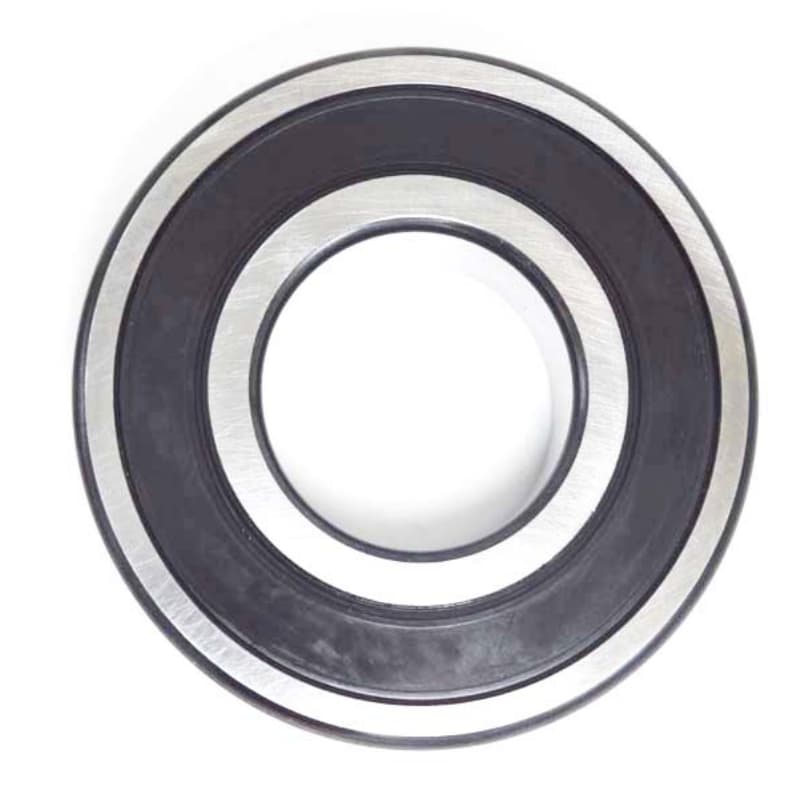
Let me explain clearance in simple words.
What is internal clearance? It is the tiny gap between the balls and the raceways. When the bearing is not installed, this gap is called “initial clearance.” When you press the bearing onto a shaft, the inner ring expands. That reduces the clearance. When the machine runs and gets hot, the inner ring expands more. That reduces the clearance even more. If the clearance goes to zero, the bearing locks up.
The three clearance grades for small bearings.
| Grade | Code | Clearance Range for 10mm bore | When to Use |
|---|---|---|---|
| Reduced | C2 | 0.002 to 0.007 mm | High speed (over 10,000 RPM), precise spindles |
| Normal | CN | 0.003 to 0.010 mm | Most small machines, room temperature |
| Increased | C3 | 0.005 to 0.013 mm | Hot running (over 70°C) or heavy press fit |
How to decide for your miniature machine.
First, check your operating temperature. If your drive unit runs below 50°C, use CN. If it runs between 50°C and 80°C, use C3. Above 80°C, use C4 (special order for small bearings).
Second, check your fit. Miniature machines often use a press fit on the inner ring. The shaft is 0.002-0.005mm larger than the bearing bore. That press fit reduces clearance by about 0.002-0.003mm. If you start with CN, the remaining clearance is small. If you also have heat, it can go to zero. So for press fits on hot machines, go to C3.
Third, check your speed. High speed causes the balls to push outward. This also reduces clearance. For speeds above 10,000 RPM, consider C2. That gives you less initial clearance. Why? Because at high speed, the balls create a centrifugal force. That force pushes the outer ring outward. The clearance actually increases a little. So C2 at low speed becomes CN at high speed.
A real example from a customer in India. He makes small fans for electronics cooling. The fan runs at 8,000 RPM. He used CN bearings. The fans made a rattling noise after a few months. I asked him to check the shaft fit. It was a loose fit, not a press fit. The problem was that CN clearance was too big. At 8,000 RPM, the balls moved around too much. They hit the raceways and made noise. He switched to C2 bearings. The noise stopped.
How to test clearance without special tools. Take a bearing and push the inner ring sideways with your finger. If it moves easily and you feel a click, the clearance is large. If it feels tight with no click, the clearance is small. This is not precise. But it gives you a rough idea. For exact measurement, you need a dial gauge.
My rule of thumb. For most miniature machines under 50°C and with a light press fit, use CN. If your machine is battery-powered and runs hot, use C3. If your machine runs very fast (over 10,000 RPM) and needs low noise, try C2.
What Precision Grades (P0, P6, P5) Match Small Drive Applications?
You buy a cheap bearing. The shaft wobbles. The motor vibrates. The customer complains. The problem is not the bearing size. It is the precision grade.
For most small drives and miniature machines, P0 (normal precision) is enough. For low-noise applications like fans or printers, choose P6. For high-speed spindles or medical devices, go to P5.
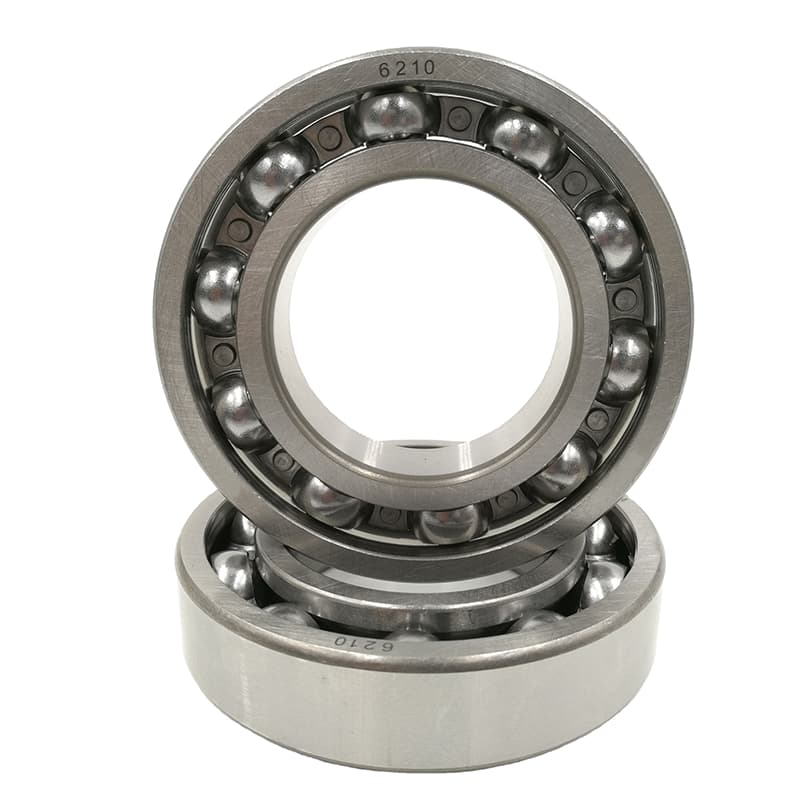
Let me explain what these grades actually mean.
What does precision grade measure? It measures three things. First, the tolerance of the bore and outer diameter. Second, the roundness of the rings. Third, the running accuracy (how much the inner ring wobbles when it spins). A higher precision grade means tighter tolerances and less wobble.
The three common grades for small bearings (6000 series, 6200 series).
| Grade | Bore Tolerance (for 10mm bore) | Runout (max) | Typical Price Increase | Best For |
|---|---|---|---|---|
| P0 (normal) | 0 to -0.008mm | 0.010mm | 0% | Conveyors, tools, toys |
| P6 | 0 to -0.007mm | 0.006mm | +20-30% | Fans, pumps, printers |
| P5 | 0 to -0.005mm | 0.004mm | +50-100% | Spindles, medical devices, drones |
Why not always use P5? Because it costs more. And for many machines, you will not see the difference. A fan or a small gearbox cannot feel the difference between 0.008mm and 0.005mm. But your wallet can. So match the grade to the need.
How to choose for your application.
- Hand tools and toys: P0 is fine. The user does not care about a little vibration.
- Fans and cooling units: P6 gives lower noise. That matters for office or home use.
- Printers and scanners: P6 or P5. The print head moves precisely. Vibration causes bad print quality.
- Medical pumps and dental tools: P5. These devices need smooth, quiet, reliable operation.
- Drone motors and RC hobby motors: P5 or even P4. High speed and low vibration are critical.
A story from a customer in Brazil. He makes small DC motors for car window lifts. He used P0 bearings. The motors worked fine. Then he got a new customer who required low noise. The P0 bearings made a slight whine at 5,000 RPM. He switched to P6 bearings. The noise dropped by 50%. The customer approved. He paid 25% more for the bearings. But he got a contract worth $500,000 per year.
How to check precision without a lab. Spin the bearing on a clean finger. Listen. A P0 bearing will feel smooth. A P6 bearing will feel smoother. A P5 bearing will feel almost glass-like. Then install the bearing on a shaft. Spin it. Watch the outer ring. If you see any wobble, the precision is low. If the outer ring stays perfectly still while spinning, the precision is high.
My advice for bulk buyers. For your standard products, use P0. For your premium products, use P6 or P5. Do not use P5 everywhere. You will waste money. And always ask your supplier for the runout test data. A good factory (like mine) measures every batch and gives you the numbers.
Which Cage Materials and Grease Types Reduce Power Loss the Most?
You have the right bearing size, clearance, and precision. But the drive still runs hot. The last two things to check are the cage and the grease.
For low-power drives, use pressed steel cages (not polyamide) and low-torque synthetic grease. Steel cages are thinner and lighter. Low-torque grease has less drag.
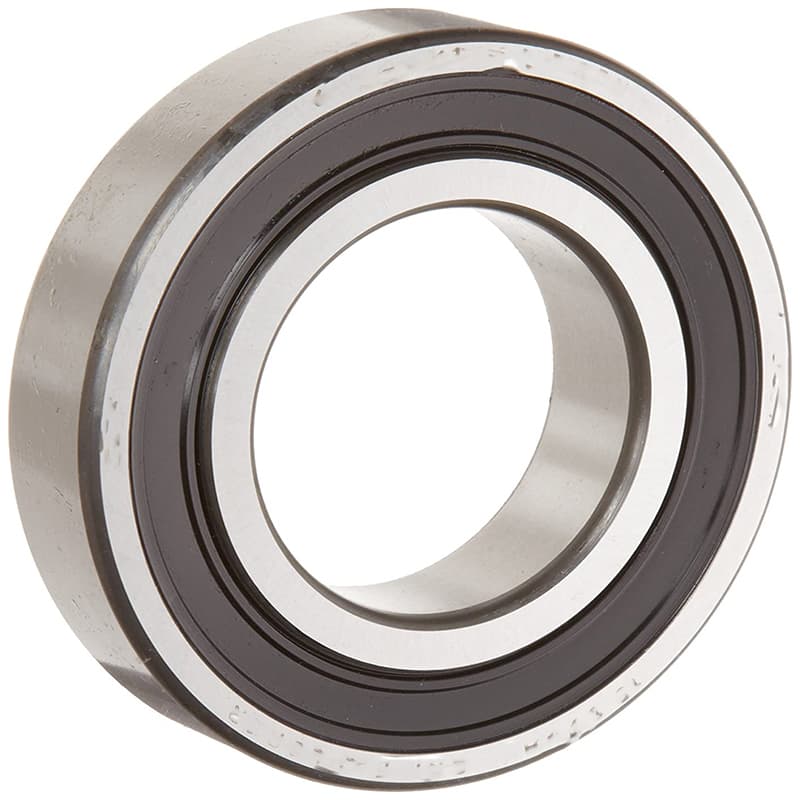
Let me break down these two often-overlooked parts.
Cage materials for small deep groove ball bearings.
| Cage Material | Thickness | Weight | Friction | Max Temp | Best For |
|---|---|---|---|---|---|
| Pressed steel | 0.3-0.5mm | Low | Low | 200°C | Most small drives |
| Polyamide (plastic) | 0.5-0.8mm | Very low | Medium | 105°C | Light duty, low cost |
| Machined brass | 0.8-1.2mm | High | Low | 250°C | High precision, high temp |
For low-power drives, pressed steel is the best choice. Why? Because it is thin and light. It does not rub much against the balls. Polyamide is also light but it is thicker. It takes up space inside the bearing`. That means less room for grease. And it can melt if your drive gets hot. [Brass](https://www.bearinghistor y.com/cage-materials-brass-vs-steel) is too heavy. It adds inertia. That wastes power during start-stop cycles.
Grease types for low friction.
Grease is the biggest source of friction in a small bearing. The thickener and the base oil matter a lot.
| Grease Type | Base Oil Viscosity | Friction Level | Temperature Range | Best For |
|---|---|---|---|---|
| Standard lithium | 100-150 cSt | Medium | -20 to 120°C | General use |
| Low-torque synthetic | 15-30 cSt | Low | -40 to 150°C | Battery-powered drives |
| High-speed grease | 10-20 cSt | Very low | -50 to 180°C | Spindles over 15,000 RPM |
| Standard grease with solid additives | 100-150 cSt | High | -20 to 120°C | Heavy load, not for low power |
How to choose grease for your low-power drive.
First, look at your speed. For speeds under 5,000 RPM, a low-torque synthetic grease is fine. For speeds over 5,000 RPM, use high-speed grease.
Second, look at your power source. Battery-powered devices need the lowest friction. Use high-speed grease even if speed is low. Every milliwatt counts.
Third, look at your temperature. If your drive runs in a hot environment (like inside a car engine bay), use synthetic grease with a high temperature rating. Do not use standard lithium grease. It will melt and run out.
The biggest mistake: over-greasing. For small bearings, too much grease is worse than too little. A 608 bearing (8mm bore) needs only 0.1 to 0.2 cubic centimeters of grease. That is about the size of a grain of rice. Fill the bearing only 20-30% full. Leave the rest empty. The grease needs space to move. If you fill it full, the grease churns. That creates heat and drag.
A real example. A customer in Egypt makes small electric blenders. His motor used standard lithium grease. The blenders ran hot and the motor current was high. I suggested a low-torque synthetic grease from a well-known brand. He also reduced the grease amount from 0.4cc to 0.15cc. The motor current dropped by 15%. The blender ran cooler. The customer was happy.
My quick checklist for cage and grease.
- Use pressed steel cages for most low-power drives.
- Use polyamide only for very low cost and low temperature (under 80°C).
- Avoid brass cages for miniature machines.
- Use low-torque synthetic grease or high-speed grease.
- Fill the bearing only 20-30% full.
- Test two or three grease types on a sample batch. Measure motor current. Pick the lowest current.
Conclusion
Choose low friction, right clearance, proper precision, and the best cage and grease. That is how you make low-power drives run efficient and quiet.