
Poor alignment, wrong material, or a tiny angle error. Any of these can make a tapered bearing fail in months instead of years.
Yes, precision‑engineered tapered bearings last much longer because they combine exact angles, smooth surfaces, and strong steel. At FYTZ Bearing, we build each tapered roller bearing to handle both radial and axial loads without early wear.
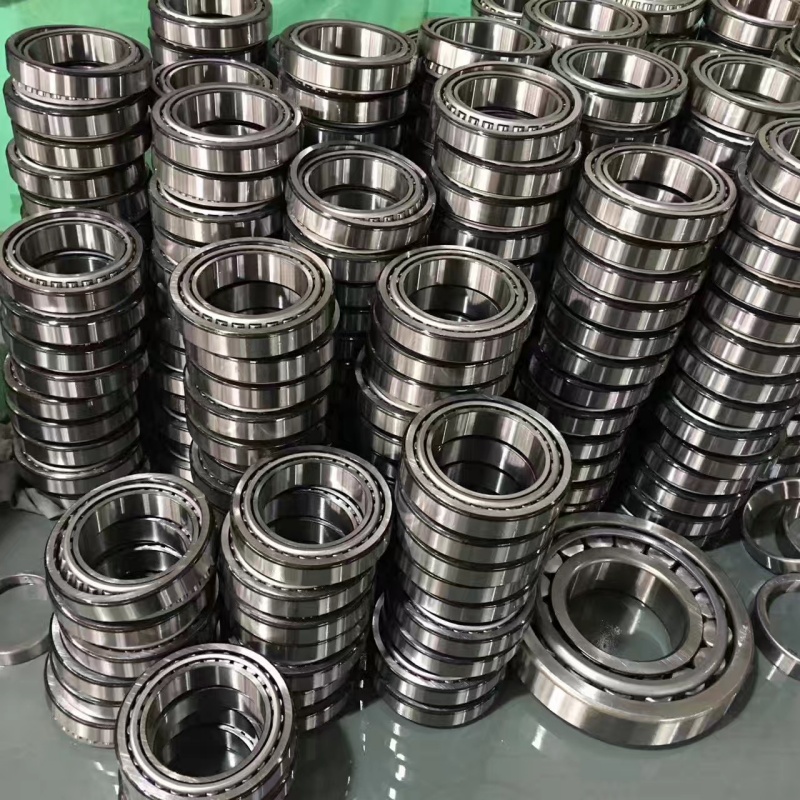
You might think all tapered bearings are the same. But I have seen cheap ones crack, overheat, or lose their internal clearance fast. So let me walk you through why precision matters, what design details count, how to pick the right one, and how we at FYTZ make sure every bearing leaves our factory right.
Why Tapered Bearings Require Precision Engineering?
A rough raceway or a wrong roller angle creates high edge stress. That stress turns into heat and wear. In a few weeks, the bearing starts noisy and loose.
Tapered bearings need precision because they carry both heavy radial loads (pushing down) and axial loads (pushing sideways) at the same time. Even a small error in the angle or the surface finish will cause uneven load distribution and early failure.
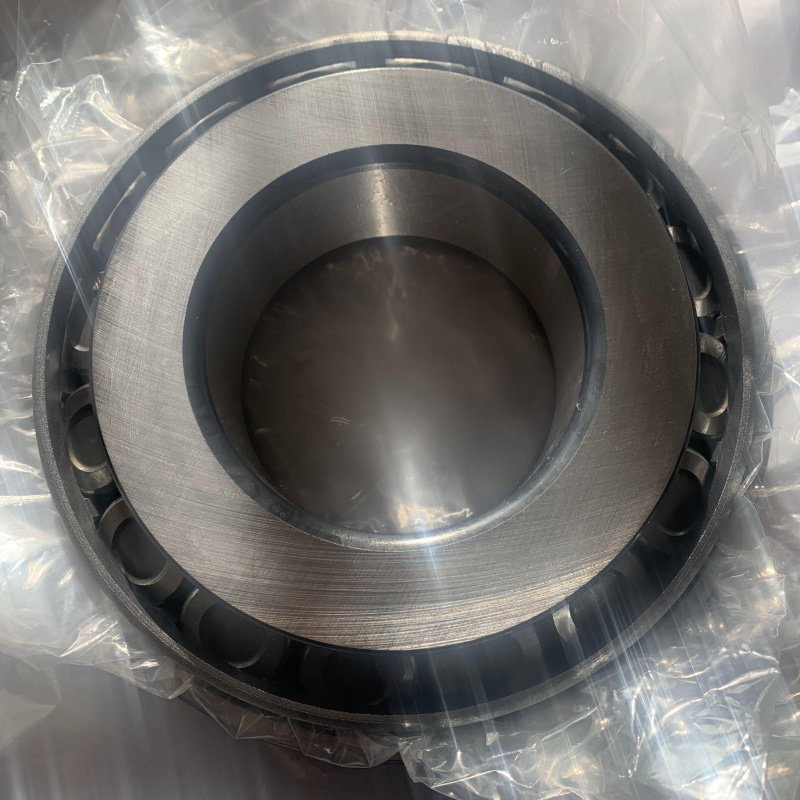
Let me break down why “close enough” is never good enough
First reason: The contact angle must be exact
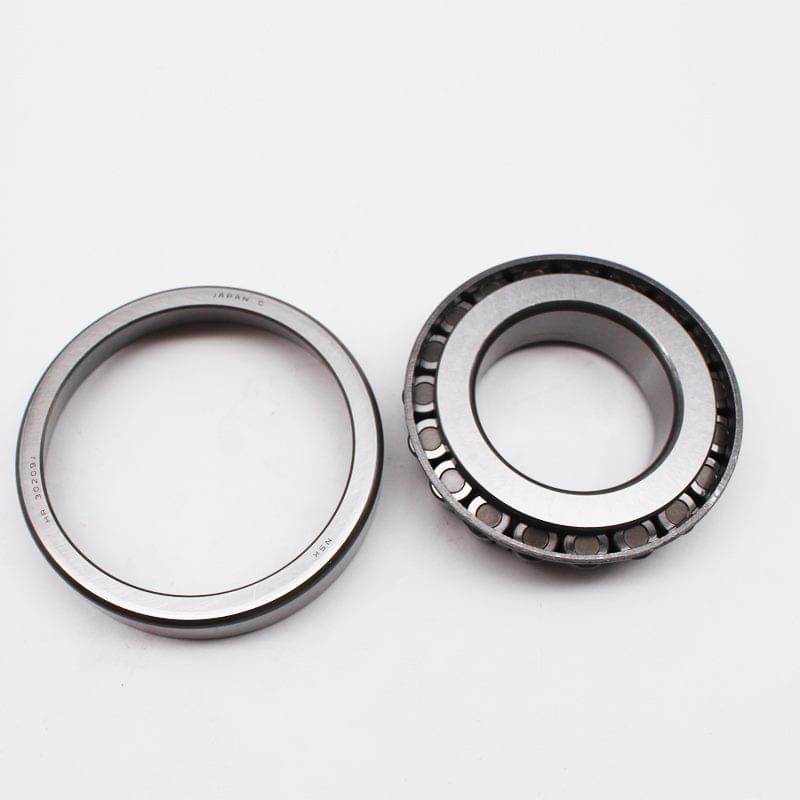
A tapered bearing has an inner ring (cone) with a tapered raceway, an outer ring (cup) with a matching taper, and tapered rollers in between. The angle between the roller and the bearing axis is called the contact angle. If that angle is off by even half a degree, the roller will not roll properly. It will skid or push into the rib at the back of the cone. That causes high heat and smearing. I have seen importers like Rajesh complain about bearings that ran hot right out of the box. Most times, the angle was not ground to print.
Second reason: Roller profile needs a special curve
A straight cylinder would dig into the raceway at its ends. That is why precision tapered bearings use a crowned roller profile. The crown is a very slight curve along the roller length. It spreads the contact pressure evenly. Without this crown, the edges get overloaded. Then you see spalling (small flakes of steel) starting at the roller ends. We measure the crown in microns, not millimeters. That is how tight the precision must be.
Third reason: Surface finish controls friction
A smooth surface holds an oil film much better than a rough one. For a tapered bearing under heavy load, the oil film is the only thing that stops metal‑to‑metal contact. At our factory, we grind and super‑finish the raceways to Ra 0.1‑0.2 microns for high‑precision classes. Compare that to a standard bearing that might be Ra 0.4 or rougher. The difference in friction is huge. And less friction means less heat and longer life.
Here is a quick table showing what happens when precision is missing:
| Precision factor | What can go wrong | Resulting failure |
|---|---|---|
| Contact angle error > ±0.5° | Roller skids against the rib | Smearing, overheating, seizure |
| Poor roller crown | Edge stress on raceway | Spalling within months |
| Rough surface finish (Ra > 0.4) | Oil film breaks down | Wear, then noise and play |
| Uneven roller diameter | Some rollers carry all the load | Fatigue cracks in one spot |
So when someone says "tapered bearings,"do not assume they are all precise. The difference between a cheap bearing and a precision‑engineered one is in these small details. And those details decide if the bearing lasts one year or ten.
Key Design Factors: From Angle Precision to Surface Finish
You now know why precision matters. But what exact design factors should you check? Without a checklist, you might miss the most important details.
The key design factors for a long‑lasting tapered bearing are: the contact angle accuracy, the roller crowning profile, the surface finish of raceways, the internal clearance (setting), and the steel heat treatment. FYTZ Bearing controls all five in every production batch.
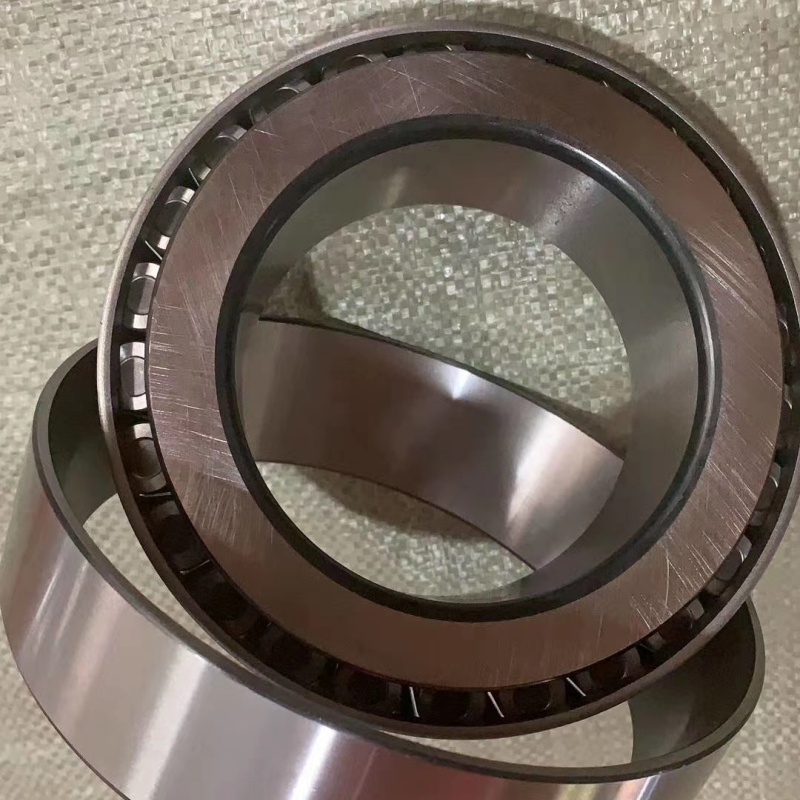
Five factors you must check before buying
Let me go through each factor one by one. I will use real numbers and examples from our shop floor.
Factor 1: Contact angle accuracy
The nominal angle is usually between 10 and 30 degrees. For example, a common tapered bearing like 30206 has an angle around 14–16 degrees. But the real angle must stay within a tight tolerance, usually ±0.3 degrees for P6 class. We use optical measuring machines to check every batch. If the angle is off, the bearing will not seat correctly in the housing. That leads to misalignment and early failure.
Factor 2: Roller crowning profile
This is a hidden feature. Many cheap bearings have a simple radius or even a straight roller. A proper crown uses a logarithmic curve – it is flatter in the middle and drops off smoothly at the ends. The crown height is often only 5‑15 microns. That is thinner than a human hair. We measure it with a profilometer. The right crown reduces edge stress by 30‑50%. We have tested this in our lab.
Factor 3: Surface finish (Ra value)
For most industrial tapered bearings, we target Ra 0.2 max for the raceways. For automotive wheel bearings (high speed), we go down to Ra 0.1. The rollers themselves also get a fine finish. A smooth surface does two things: it keeps the oil film intact, and it removes tiny stress‑raising scratches. I have seen a bearing with Ra 0.4 last 2,000 hours, while the same design with Ra 0.1 lasted 8,000 hours under the same load.
Factor 4: Internal clearance (setting)
Tapered bearings are usually mounted in pairs or adjusted with a nut. The clearance after mounting is called the setting. Too tight, and the bearing overheats. Too loose, and the shaft wobbles. We grind the raceways so that a standard "C0" clearance is within 20‑40 microns. For high‑shock applications, we offer C3 (larger) clearance. Never guess this. Use a feeler gauge or measure the starting torque.
Factor 5: Steel and heat treatment
We use vacuum‑degassed GCr15 (52100) steel for most tapered bearings. Then we through‑harden to 60‑64 HRC. Then we temper the steel to remove brittleness. The case depth for large bearings is at least 1.5mm. We also check for retained austenite – too much of it and the bearing will change size over time. Every batch comes with a heat treatment certificate.
Here is a table that compares low‑precision vs. high‑precision design factors:
| Design factor | Low‑precision bearing | Precision‑engineered (FYTZ) | Impact on life |
|---|---|---|---|
| Angle tolerance | ±1 degree or more | ±0.3 degree (P6) | Life difference: 3x |
| Roller crown | Simple radius | Logarithmic curve | Reduces edge stress by 40% |
| Surface finish (Ra) | 0.4‑0.5 microns | 0.1‑0.2 microns | Friction drops 30% |
| Clearance consistency | ±15 microns | ±5 microns | Mounting is predictable |
| Heat treatment | No certification | Full traceability | Avoids early softening |
Now you have a checklist. When you talk to a supplier, ask for these numbers. If they cannot provide them, be careful.
How to Select Tapered Bearings for Maximum Service Life
You have the checklist of design factors. But how do you actually select the right tapered bearing for your machine? Many buyers pick by size alone and hope for the best.
To select the best tapered bearing, match the load type and speed to the right series (metric or inch), the right precision class (P0, P6, P5), and the right internal clearance (C0, C3, C4). Also consider the mounting method – two bearings back‑to‑back or face‑to‑face.
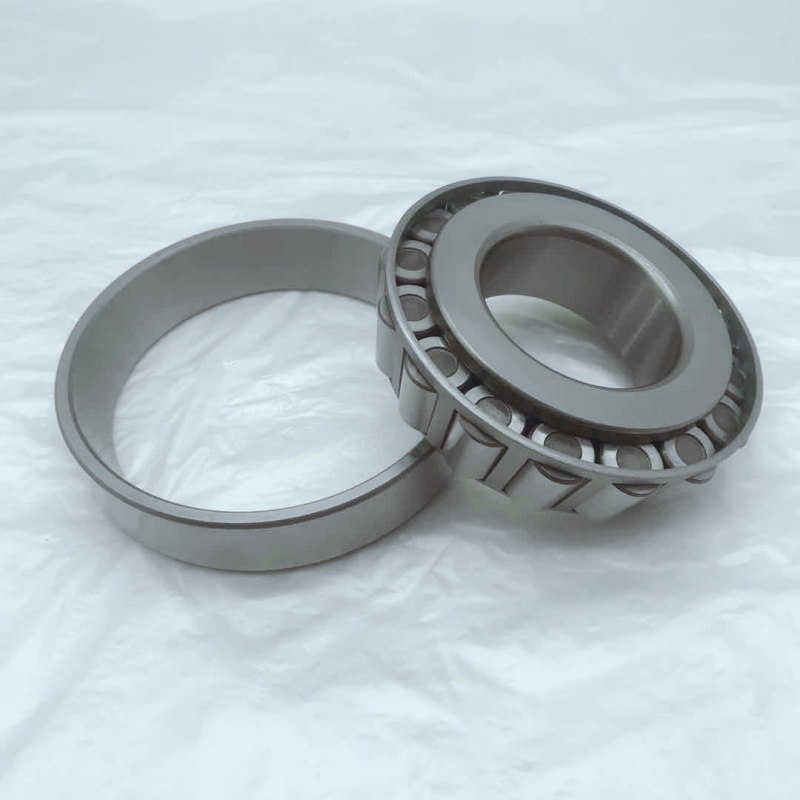
A simple four‑step selection process I use with my customers
Let me share the process I use when talking to buyers like Rajesh. He often needs to choose bearings for truck wheel ends and gearboxes.
Step 1 – Identify the load direction and magnitude
Ask yourself: is the main load radial (perpendicular to the shaft) or axial (along the shaft)? Tapered bearings handle both, but the ratio matters. If axial load is more than 50% of radial load, you need a steeper angle (like a 30000 series with 25‑30 degrees). If radial load dominates, a shallow angle (like 30200 series) works fine. Write down the actual load numbers in Newtons or kgf. Do not guess.
Step 2 – Choose the bearing series and size
Tapered bearings follow ISO 355 or inch standards (like those from Timken). For metric, the basic number (e.g. 30206) tells you the bore, outer diameter, and width. But different series have different load ratings. For heavy trucks, we often use 322 and 323 series. For industrial gearboxes, 330 series. I always tell customers: pick the largest bore that fits your shaft, then check the dynamic load rating (C). The required life (L10) should be at least 5,000 hours for most machines.
Step 3 – Pick the precision class and clearance
Most industrial applications work fine with Class P0 (normal). But for high‑speed spindles or precision machinery, go to P6 or P5. The cost goes up, but the running accuracy improves. For clearance: normal C0 for steady loads and normal temperature. C3 for higher temperature or heavier interference fits. C4 for very hot environments (like near a furnace). I once had a customer in a steel plant with bearing temperatures at 120°C. We switched from C0 to C3 clearance, and the seizure problem disappeared.
Step 4 – Plan the mounting arrangement
Tapered bearings are almost always used in pairs. You can mount them face‑to‑face (DF) or back‑to‑back (DB). Back‑to‑back gives better rigidity for moment loads. Face‑to‑face allows more misalignment but less stiffness. Also you need a way to set the axial clearance – usually a nut or shims. I recommend buying the bearings as a matched set from the factory. That way the inner and outer spacer widths are ground together. It saves you hours of trial assembly.
Here is a selection table for common applications:
| Application | Typical series | Precision class | Clearance | Mounting |
|---|---|---|---|---|
| Car wheel hub | 302, 303, 320 | P0 or P6 | C0 (or C3 for heavy trucks) | Back‑to‑back with nut |
| Truck differential | 322, 323 | P0 | C0 or C3 | Set with shims |
| Industrial gearbox | 330, 331 | P6 | C0 | Back‑to‑back with spacers |
| Machine tool spindle | 302, 303 | P5 | C0 (light preload) | Face‑to‑face with spring |
| Conveyor roller | 302, 303 | P0 | C3 | Single bearing with housing |
Do not skip Step 4. I have seen good bearings fail because the installer tightened the nut too much. The clearance went to zero, the bearing overheated, and within an hour it seized. So always follow the manufacturer’s mounting instructions. If you buy from FYTZ, we send you a mounting sheet with every order.
How FYTZ Ensures Precision and Durability in Every Tapered Bearing
You now know what to look for. But how can you be sure a supplier actually delivers that quality? Talk is cheap. I want to show you exactly what we do at FYTZ Bearing to build precision‑engineered tapered bearings.
At FYTZ Bearing, we start with premium vacuum‑degassed steel, then control every step: precision grinding, super‑finishing, 100% crack detection, and final assembly in a clean room. We test each batch for hardness, angle accuracy, and running noise.
Inside our factory: how we build bearings that last
Let me take you through our production line step by step. I work here every day, so I know what happens.
Step 1 – Steel selection and cutting
We buy steel from certified mills. The steel is vacuum‑degassed to remove oxygen and non‑metallic inclusions. Fewer inclusions mean longer fatigue life. We then cut the tubes into rings and the bars into rollers. Every incoming coil has a material certificate. I keep these on file for five years.
Step 2 – Heat treatment
We use a continuous furnace line. The rings go through hardening (840‑860°C), oil quenching, and then tempering (150‑180°C). We check hardness on every batch using a Rockwell tester. The target is 60‑64 HRC. We also check the microstructure with a microscope. No soft spots allowed.
Step 3 – Precision grinding
This is where the magic happens. We use CNC grinders for the raceways, the inner bore, and the outer diameter. The grinding wheels are dressed with diamond tools to get exact angles. After grinding, we measure the angle with an optical comparator. If the angle is off by more than 0.3 degrees, the whole batch goes back to the grinding station. For P5 class bearings, we hold ±0.1 degrees.
Step 4 – Super‑finishing
We use a stone honing process to get that mirror‑like surface. The stone vibrates against the rotating raceway. This removes the grinding marks and leaves a random cross‑hatch pattern. That pattern holds oil very well. Our target Ra is 0.15 microns for standard, and 0.08 for high‑precision. We measure it with a portable roughness tester.
Step 5 – Roller manufacturing and crowning
The rollers are cold‑headed from wire, then ground and honed. We add the logarithmic crown using a centerless grinder with a special profile wheel. Then we check the crown shape with a profilometer. The tolerance on crown height is ±2 microns. That is tight, but it is necessary.
Step 6 – 100% crack detection
Every ring goes through a magnetic particle or eddy current test. If we find a crack, the part is rejected. We also do ultrasonic testing on large bearings. No crack gets to the customer. That is a promise.
Step 7 – Assembly and noise test
We wash all parts in a cleaning line. Then we assemble the bearings in a positive‑pressure clean room. We add the right amount of grease (if sealed) or rust preventive oil (for open bearings). Then we run each bearing on a noise tester (S0910‑type). If the vibration exceeds our limit, we take it apart and inspect.
Here is a summary of our quality checks:
| Process step | Inspection method | Acceptance criteria |
|---|---|---|
| Steel material | Mill certificate + inclusion rating | ≤ 1.5% non‑metallic |
| Heat treatment | Rockwell hardness + microstructure | 60‑64 HRC, fine martensite |
| Angle grinding | Optical comparator | ±0.3° (P6), ±0.1° (P5) |
| Surface finish | Roughness tester | Ra ≤ 0.2 microns |
| Roller crown | Profilometer | Crown height tolerance ±2µ |
| Crack detection | Eddy current / MPI | Zero cracks |
| Final noise | Vibration meter | Vlow ≤ 50µm/s |
I am proud of this process. But do not take my word for it. Ask for a sample order. Test our tapered bearings in your toughest machine. Rajesh from India did that two years ago. Now he orders 3‑5 containers every year. He tells me his customers rarely complain about bearing failure anymore. That is the result of precision engineering built to last.
Conclusion
Precision‑engineered tapered bearings last longer because they have exact angles, smooth surfaces, and strong steel. Choose wisely, and your machines will run reliably for years.