
Your flour mill keeps stopping because bearings fail from dust and moisture.
That is a costly problem. The simple answer is: the right pillow block bearings.
Short answer: Pillow block bearings support rotating shafts in harsh grain environments. They protect against dust, moisture, and heavy loads. Without them, your mill stops, and you lose money every hour.
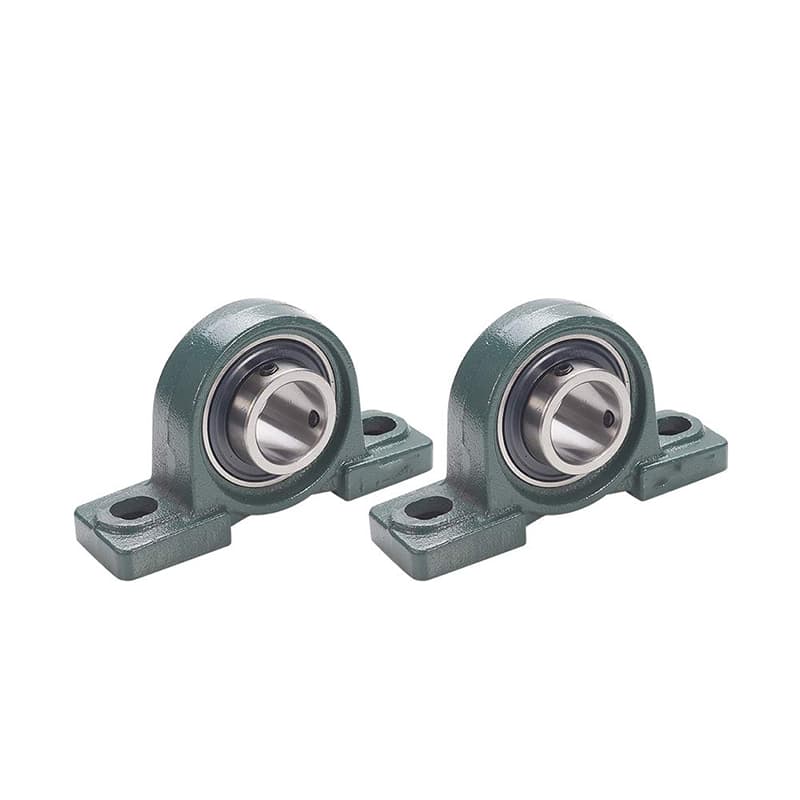
You probably think all bearings are the same. But I have learned the hard way that grain processing is different. Let me show you what really matters when you choose bearings for your mill or cleaning equipment.
Why Are Pillow Block Bearings Critical for Flour Mill Reliability?
Dust explodes. Bearings overheat. Shafts get stuck. These are real risks in every flour mill.
Short answer: Pillow block bearings seal out fine flour dust and handle high-speed rotation. They keep shafts aligned even when the mill runs 24/7. This means less downtime and safer operation.
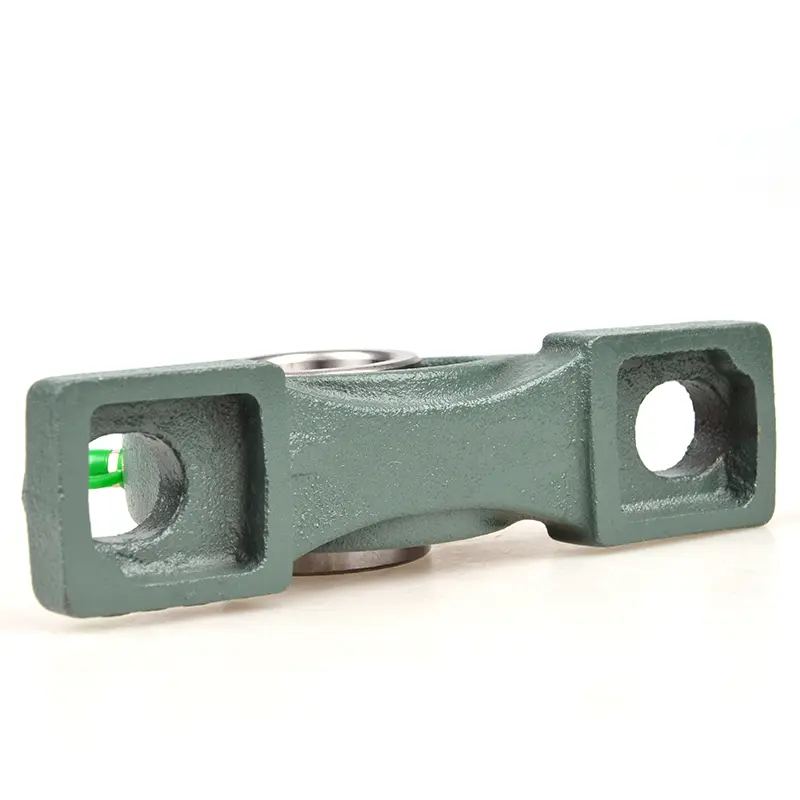
Three ways bad bearings hurt your mill
I once visited a mill in Pakistan. They changed bearings every two weeks. The reason was simple: they used standard bearings without proper seals. Let me break down why the right pillow block bearing changes everything.
| Problem in flour mill | What standard bearings do | What good pillow block bearings do |
|---|---|---|
| Fine flour dust enters bearing | Dust mixes with grease, turns into abrasive paste | Triple lip seals block 99% of dust |
| High heat from continuous running | Grease melts, bearing seizes | Heat-stabilized housing + high-temp grease |
| Shaft misalignment from heavy loads | Uneven wear, early failure | Self-aligning insert compensates up to 2° |
You need more than just a bearing. You need a system that fights dust, heat, and alignment problems. At my factory, FYTZ Bearing, we test every pillow block in dusty conditions before shipping. That is why our clients in Egypt and Indonesia trust us.
Another hidden danger is vibration. Flour mills run at high speeds, usually between 1,500 and 3,600 RPM. A small imbalance grows fast. A good pillow block housing is made of cast iron with thick walls. It absorbs vibration. The bearing inside uses hardened steel that resists wear.
So when you ask me “Why is this critical?” – I say because a mill that stops for bearing failure stops making money. One hour of downtime can cost you hundreds of dollars in lost production. Pillow block bearings are the cheap insurance that keeps your flour flowing.
Key Design Features for Grain Cleaning Equipment Bearings?
Grain cleaning equipment shakes, spins, and gets hit by rocks. Normal bearings crack or lose grease fast.
Short answer: Look for triple labyrinth seals, corrosion-resistant housing, and heavy-duty spherical inserts. These features block fine dust and withstand the constant vibration from cleaning machines.
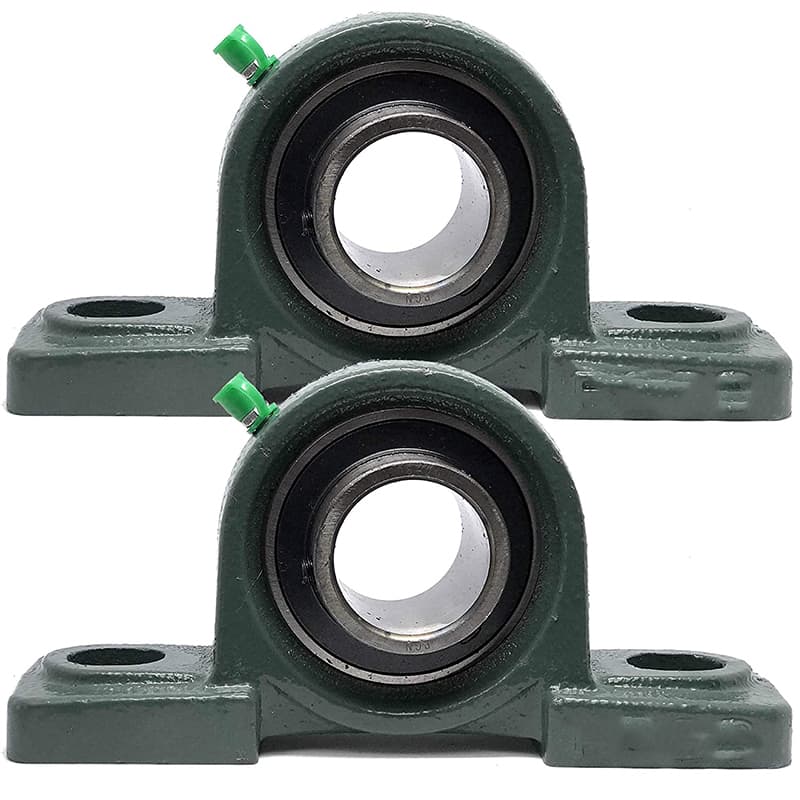
What makes a bearing survive in a grain cleaner?
I have supplied bearings to grain cleaning plants in Brazil and Vietnam. The machines there are brutal. They use air screens, disc separators, and indented cylinders. All of them shake non-stop. Here is what you must check before buying.
1. Seal design – your first line of defense
A cheap bearing has a single metal shield. That will fail in two weeks. A good pillow block uses a triple labyrinth seal. The path is long and twisted. Dust gets trapped before it reaches the rolling elements. Some models add a flinger – a rotating disc that throws dust away.
2. Housing material – cast iron vs. pressed steel
Cast iron is heavier. That sounds bad, but it is good. More mass means less vibration. Pressed steel is cheaper, but it bends under shock loads. Grain cleaners drop kernels from height. That creates impact. Cast iron housings absorb that energy. For really tough jobs, we use ductile iron. It resists cracking.
3. Bearing insert – spherical outer ring
The outer ring of the bearing is rounded like a ball. It sits inside a matching curved housing. This design lets the bearing tilt up to 2 degrees. Why does that matter? Because grain cleaning equipment never stays perfectly aligned. Mounting bases warp over time. A self-aligning bearing adjusts and keeps spinning smoothly.
4. Grease and relubrication
Grain dust pulls moisture out of the air. That can rust bearings from inside. You need a lithium complex grease with good water resistance. Also, choose bearings with a grease fitting. I recommend relubing every 200 hours of operation. Many of my customers in Russia forget this. Then they call me saying bearings failed too soon.
Here is a quick comparison table for you:
| Feature | Basic bearing | Grain-grade pillow block |
|---|---|---|
| Seal type | Single shield | Triple labyrinth + flinger |
| Housing | Pressed steel | Cast iron or ductile iron |
| Self-alignment | No | Yes, up to 2° |
| Relube port | No | Yes, with fitting |
| Typical life in grain cleaner | 2-4 weeks | 6-12 months |
If you want equipment that runs through harvest season without stopping, do not cut corners on these features. I tell all my distributor clients the same thing: spend an extra $5 now, save $500 later.
Common Types of Pillow Block Bearings Used in Grain Processing?
Walk into any mill. You will see different housings – some round, some narrow, some with two bolts. Which one is right for you?
Short answer: The most common types are UCP (standard pillow block), UCF (flange unit), and UCT (take-up unit). UCP works for most conveyors, UCF saves space on side panels, and UCT adjusts belt tension.
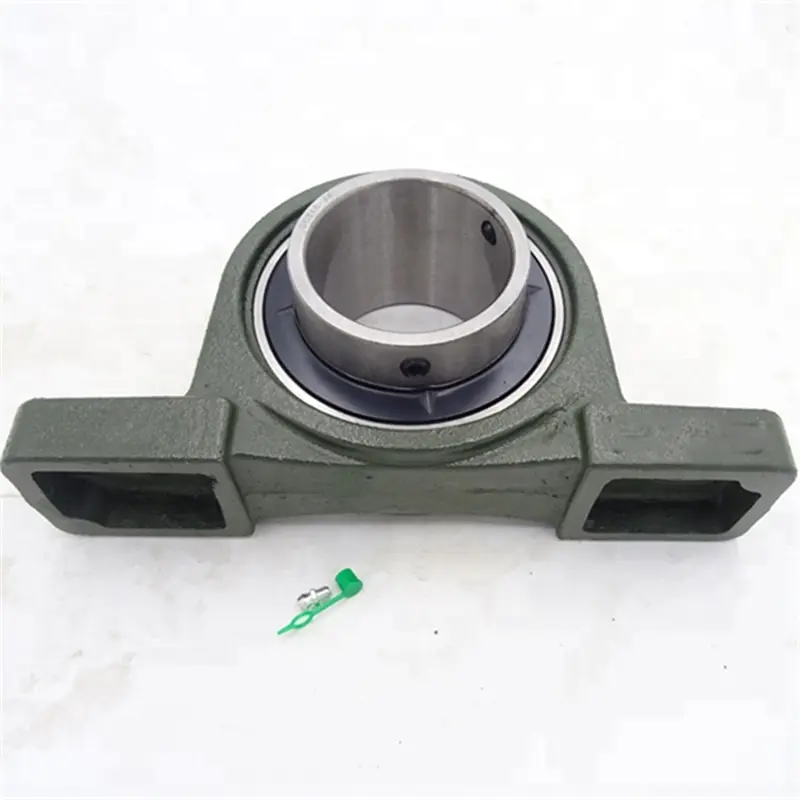
How to choose between UCP, UCF, and UCT
Let me share a story. A buyer from India, Mr. Rajesh, once ordered 500 UCP bearings for his grain elevator project. But his side panels had no flat base. He could not mount UCP there. He needed UCF flange units. We exchanged four emails and delayed shipping by two weeks. Don’t make that mistake. Learn the differences now.
UCP – The standard pillow block
This is the one with two bolt holes on a flat base. You see it on conveyor belts, bucket elevators, and screw conveyors. It is easy to install and replace. Most flour mills use UCP for horizontal shafts. The housing is usually cast iron. Inside, you get a set screw locking collar or an eccentric locking collar. For grain applications, choose eccentric locking. It grips the shaft tighter.
UCF – Flange units for tight spaces
Sometimes you have no room for a base. The bearing must mount directly to a vertical plate or a side panel. That is where UCF comes in. The housing has a square or round flange with four bolt holes. Grain cleaning machines use UCF a lot. The air screen housing has thin walls. A UCF bolts right on. No extra bracket needed.
UCT – Take-up units for tension adjustment
Conveyor belts stretch over time. You need a way to tighten them. UCT bearings slide on a guide frame. You turn a screw or a nut, and the bearing moves forward. This pulls the belt tight. Grain elevators and long belt conveyors use UCT units. I always recommend UCT for any belt longer than 10 meters.
Here is a simple guide:
| Type | Best for | Mounting | Tension adjustment |
|---|---|---|---|
| UCP | Horizontal shafts, conveyors, elevators | Flat base, 2 bolts | No |
| UCF | Side panels, vertical plates, tight spaces | Flange, 4 bolts | No |
| UCT | Long belts, chain drives | Slide frame | Yes (screw type) |
Remember one thing: the housing shape does not change the bearing inside. All three types can use the same insert bearing (usually UC series). What changes is how you attach it to your machine. And for grain processing, always ask for the "heavy duty" version. It has thicker housing walls and bigger bolts.
How to Select the Right Bearing Material for Dusty and Humid Environments?
I see many buyers choose chrome steel for everything. That is a mistake in a wet or dusty mill.
Short answer: Use bearing quality chrome steel (GCr15) with a special heat treatment and anti-corrosion coating. For very humid areas like rice mills, choose stainless steel or a bearing with a black oxide surface.

Steel types, coatings, and when to use each
My factory is in China. We ship to tropical countries like Indonesia and also to dry places like Egypt. The material choice is totally different. I learned this from customer returns. A bearing that lasts two years in Cairo might fail in two months in Jakarta. So let me break down what works where.
Standard chrome steel (GCr15)
This is the most common material. It is hard and wear-resistant. You need it for high-speed applications like flour mill rollers. But it rusts easily. That is fine if the bearing stays dry. In a flour mill, the air is dry because flour absorbs moisture. So GCr15 works well. But you must add a good seal. Dust is the main enemy here, not water.
Stainless steel (AISI 440C or SUS440C)
Stainless steel resists rust. It is also slightly softer than chrome steel. Use it when you wash equipment with water. For example, rice mills often spray water to condition the grain before husking. That creates steam and humidity. Standard bearings rust in three days. Stainless lasts for years. The downside is cost – about three times higher. But for wet areas, it pays off.
Coatings that extend life
You do not always need full stainless steel. Sometimes a coating is enough. Here are three common options:
- Black oxide (manganese phosphate) – This dark coating holds oil on the surface. It prevents rust and improves lubrication. I use this for bearings sent to Russia. It handles cold and moisture well.
- Zinc plating – Cheap and effective for light moisture. But it wears off in abrasive dust. Not my first choice for grain.
- Trivalent chromium – Hard and very rust-resistant. Costs more but lasts longer. Good for grain cleaning equipment that sees both dust and humidity.
What about the housing?
The bearing insert is only half the story. The housing also needs the right material. Cast iron is fine for dry mills. For wet conditions, use ductile iron or stainless steel housing. And always choose a housing with an epoxy paint finish. That extra paint layer stops rust from starting where the housing meets the mounting base.
I made a table to help you decide:
| Environment | Bearing steel | Coating | Housing material |
|---|---|---|---|
| Dry flour mill | GCr15 | Black oxide | Cast iron + paint |
| Humid grain cleaner | GCr15 | Trivalent chromium | Ductile iron |
| Wet rice mill | SUS440C stainless | None or passivation | Stainless steel |
| Outdoor grain elevator | GCr15 | Zinc + heavy grease | Cast iron with thick paint |
My advice: When in doubt, ask your supplier for a sample with black oxide. It works for 80% of grain applications. And if you need bearings for a very tough spot, call me. I can recommend a custom heat treatment that balances hardness and corrosion resistance.
Conclusion
Pick the right pillow block bearing – good seals, strong housing, proper steel – and your flour mill runs non-stop.
