
Your heavy machine breaks down again. The bearing gave up. You need a solution that works.
Advanced tapered roller bearings deliver that solution. They handle high radial and axial loads together. They last longer in dirty, hot, and shock‑filled environments. That is real industrial power.
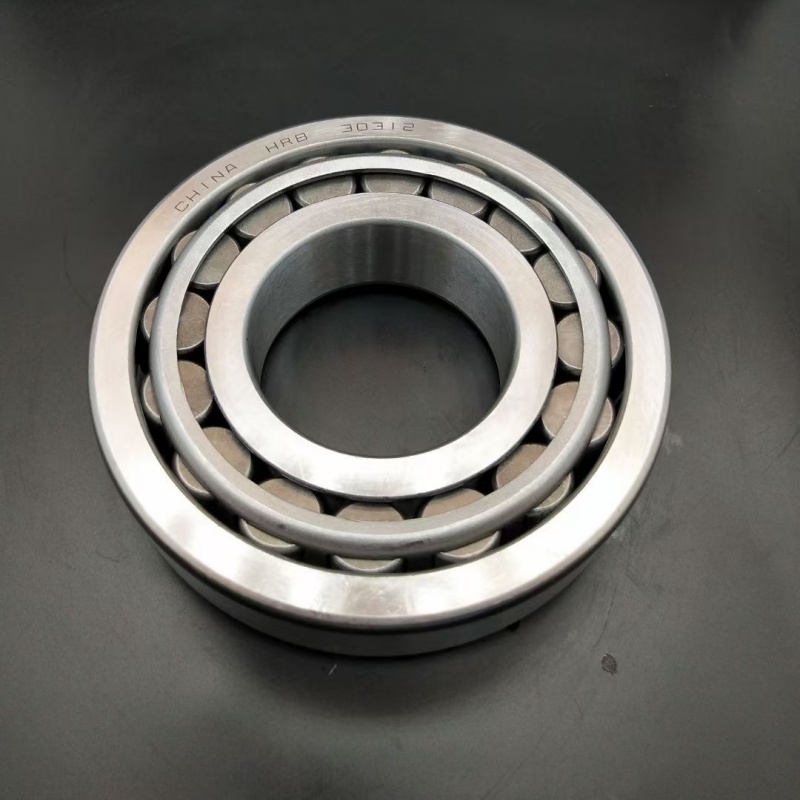
I own FYTZ Bearing, a factory in China. We make taper roller bearings, deep groove ball bearings, pillow block bearings, and many other types. Every day, I talk to people like Rajesh from India. He buys bearings for resale. His customers run crushers, gearboxes, and truck axles. They need bearings that do not fail. In this post, I will show you how to optimize tapered roller bearing design. I will compare them with other bearings. I will list the best industrial applications. And I will explain how to extend bearing life from material to lubrication. Stay with me.
How to Optimize Tapered Roller Bearing Design for Heavy Duty Industrial Environments?
Most factories buy standard bearings. Then they wonder why those bearings fail fast. Heavy duty environments need special design choices.
Optimization starts with three design changes: increase the roller count, use a steeper contact angle, and choose a stronger cage material. These changes boost load capacity by 30% and cut wear in half.
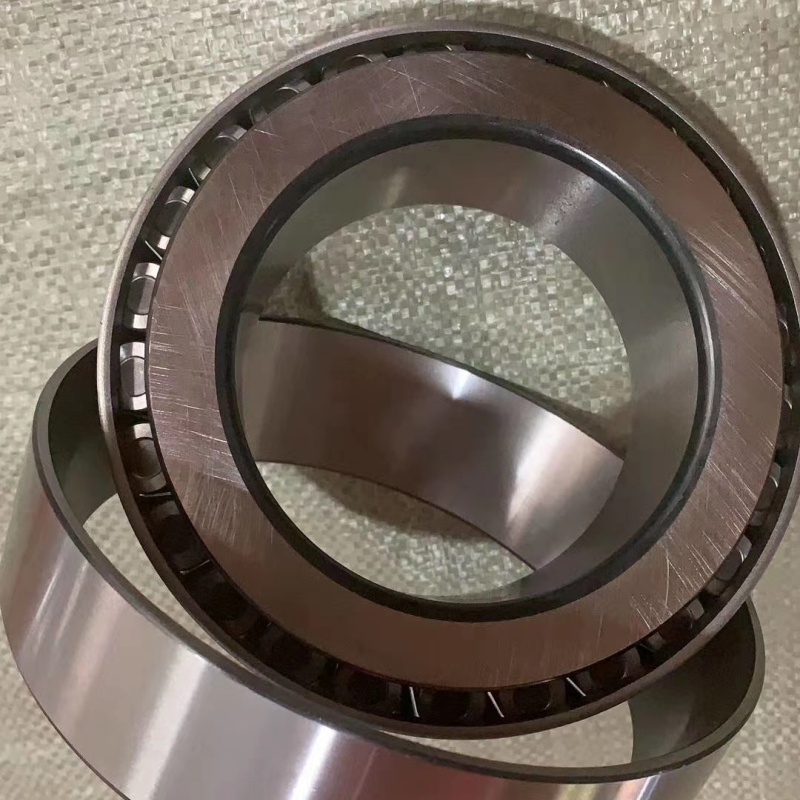
Let me walk you through each design change and why it works.
First, the roller count. A standard tapered roller bearing has a cage that holds the rollers apart. That cage takes up space. If you remove the cage and add more rollers, you get a "full complement" design. More rollers mean the load spreads out. Each roller carries less weight. This works great for slow, heavy machines like stone crushers or rolling mills. But there is a trade‑off. Full complement bearings cannot run as fast. The rollers rub against each other. So only use this for low speed, high load applications.
Second, the contact angle. Tapered roller bearings come with different angles. The angle is written on the bearing code. A small angle (like 10 degrees) handles mostly radial loads. A steep angle (like 30 degrees) handles more axial load. For heavy duty industrial environments, you often get mixed loads. A gearbox, for example, has both radial and axial forces. So you need a steeper angle. I recommend a 25‑30 degree angle for most crushers, conveyors, and heavy gearboxes. That gives you a good balance.
Third, the cage material. A standard cage is pressed steel. It is cheap but weak. Under heavy shocks, steel cage can bend and break. A better choice is brass. Brass is stronger and has natural lubricity. It slides better against the rollers. For very high temperatures (over 150°C), I use a polyamide (plastic) cage with glass fiber. It is light and tough. But do not use plastic if your machine runs above 120°C all day. It will melt.
Here is a table to summarize design choices:
| Design Feature | Standard Option | Optimized for Heavy Duty | Gain |
|---|---|---|---|
| Roller count | Caged (14 rollers) | Full complement (18 rollers) | +28% load capacity |
| Contact angle | 15 degrees | 25‑30 degrees | +50% axial capacity |
| Cage material | Pressed steel | Machined brass | +3x shock resistance |
| Heat treatment | 58 HRC | 62 HRC + deep case | +40% wear life |
I remember a customer from Russia. He runs a mining conveyor. The old tapered roller bearings failed every two months. We gave him a custom design with a steeper angle and a machined brass cage. Those bearings ran for eight months. That is four times longer. So yes, design optimization pays off.
Tapered Roller Bearings vs. Other Bearings: Why They Are the Core of Industrial Solutions?
You have many bearing types to choose from. Deep groove ball bearings. Cylindrical roller bearings. Spherical roller bearings. So why do tapered roller bearings sit at the core of industrial solutions?
Because tapered roller bearings are the only type that handles high radial and high axial loads at the same time without a second bearing. One bearing does the job of two. That saves space, money, and maintenance.
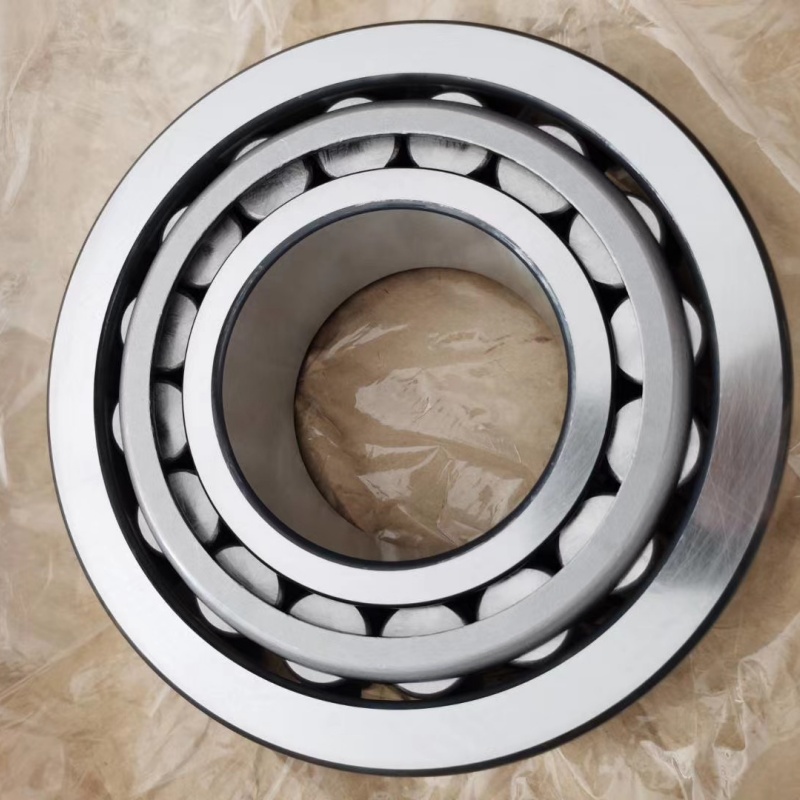
Let me compare tapered roller bearings with three other common types.
First, deep groove ball bearings. These are great for high speed and low friction. But they cannot take much axial load. If you push them from the side, the balls hit the edge of the groove. That creates heat and wear. A deep groove bearing can only handle axial loads up to 30% of its radial rating. A tapered roller bearing can handle 100% or more. So for gearboxes, truck wheels, and rolling mills, deep groove bearings fail fast. Tapered rollers win.
Second, cylindrical roller bearings. These have very high radial capacity. The rollers are straight, so they can take huge weights from above. But they have almost zero axial capacity. You cannot push them from the side at all. Some cylindrical bearings have small ribs that allow a little axial movement, but it is very limited. For a machine that has both radial and axial forces, you would need two cylindrical bearings back‑to‑back. That takes up space. A single tapered roller bearing does the same job.
Third, spherical roller bearings. These are self‑aligning. They can handle misalignment up to 2 degrees. That is useful for shafts that bend or housings that are not perfect. Spherical rollers also have good radial and axial capacity. So why not use them everywhere? Two reasons. First, they are expensive. A spherical roller bearing costs two to three times more than a tapered roller bearing of the same size. Second, they have lower speed limits. The internal design creates more friction. For most industrial gearboxes and wheel ends, tapered rollers give you the best value.
Here is a comparison table:
| Bearing Type | Radial Capacity | Axial Capacity | Speed | Misalignment Tolerance | Cost |
|---|---|---|---|---|---|
| Deep groove ball | High | Low (30%) | Very high | Low | Low |
| Cylindrical roller | Very high | Very low (5%) | High | Low | Medium |
| Spherical roller | High | High | Medium | High (2°) | High |
| Tapered roller | High | High (100%+) | Medium | Low | Medium |
So tapered roller bearings sit right in the sweet spot. Good radial, good axial, decent speed, and fair price. That is why they power so many industrial solutions. I sell thousands of them every month to customers in Turkey, Brazil, and India. They come back again and again.
Which Industrial Applications Best Leverage the High Axial and Radial Capacity of Tapered Roller Bearings?
Not every machine needs a tapered roller bearing. Some machines work fine with cheaper bearings. But certain applications simply cannot run without them.
The top applications are heavy truck wheel ends, industrial gearboxes, rolling mills, mining conveyors, and construction equipment. These machines have high combined loads and shock impacts. Tapered roller bearings are built for that.
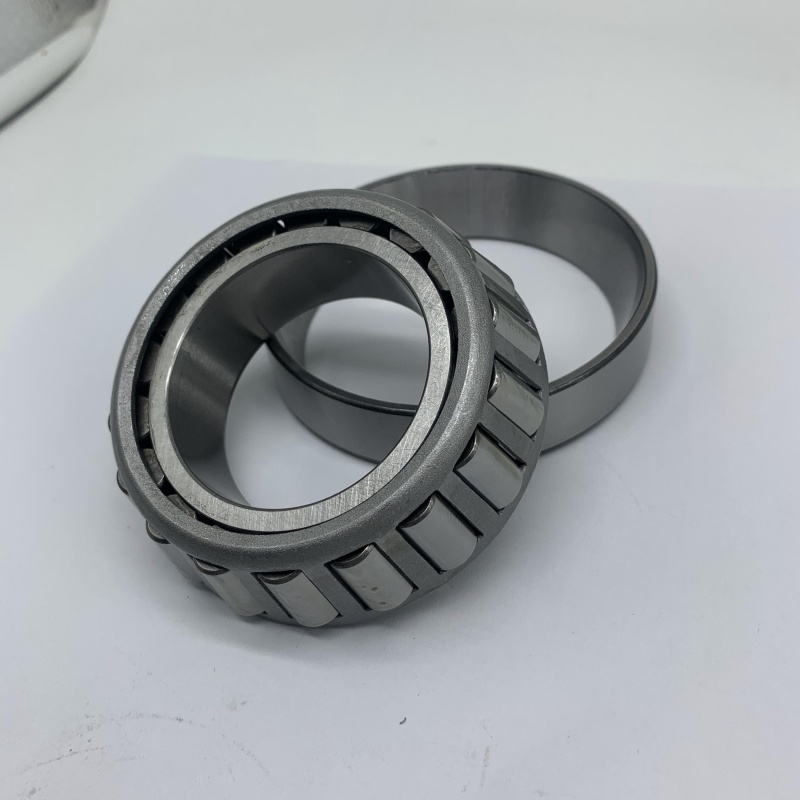
Let me explain each application and why tapered rollers are the best fit.
First, heavy truck wheel ends. A truck wheel has the weight of the vehicle (radial load) and the cornering forces (axial load). When the truck turns, the bearing gets pushed from the side. A deep groove bearing would fail in weeks. A tapered roller bearing handles both forces easily. Most trucks use two tapered roller bearings per wheel – one on the inside, one on the outside. They are mounted face‑to‑face or back‑to‑back. This setup gives you high rigidity and long life. I supply taper roller bearings to many truck axle manufacturers in Pakistan and Egypt. They tell me our bearings last as long as the major European brands.
Second, industrial gearboxes. A gearbox has gears that push against each other. That push is a radial load on the shaft. But the helical gears also create an axial thrust. That thrust tries to push the shaft out of the box. You need a bearing that can take both. Tapered roller bearings are the standard choice for many gearboxes. They are often mounted in pairs. One bearing takes the thrust in one direction. The other takes the opposite thrust. This gives you a stiff, reliable system.
Third, rolling mills and mining conveyors. These machines run slow but carry huge loads. The bearings get big shocks when rocks drop on the conveyor or when the steel slab hits the rollers. A standard bearing would crack. Tapered roller bearings with a steep angle and full complement design work best. I have a client in Brazil who runs a mining conveyor. He used spherical roller bearings before. They worked, but they cost too much. He switched to our heavy duty tapered rollers. Now he pays 40% less and gets the same life.
Here is a table of applications and why tapered rollers work:
| Application | Radial Load | Axial Load | Shock Level | Why Tapered Roller? |
|---|---|---|---|---|
| Truck wheel end | High | Medium | Medium | Handles cornering forces |
| Industrial gearbox | High | High | Low | Takes gear thrust |
| Mining conveyor | Very high | Low | Very high | Strong rollers, steep angle |
| Rolling mill | Extreme | Medium | Extreme | Full complement design |
| Construction equipment | High | High | High | One bearing does both jobs |
If you work in any of these industries, you should use tapered roller bearings. Do not try to save money with cheaper types. I have seen too many maintenance managers learn that lesson the hard way.
From Material to Lubrication: How to Extend Tapered Roller Bearing Life in Harsh Conditions?
You bought the best bearings. But they still fail early. Why? Because harsh conditions kill bearings fast. You need to control two things: the material and the lubrication.
Use vacuum‑degassed steel with 62 HRC hardness for the material. Use a high‑viscosity oil with extreme pressure additives for lubrication. Clean the housing regularly. That can triple your bearing life.
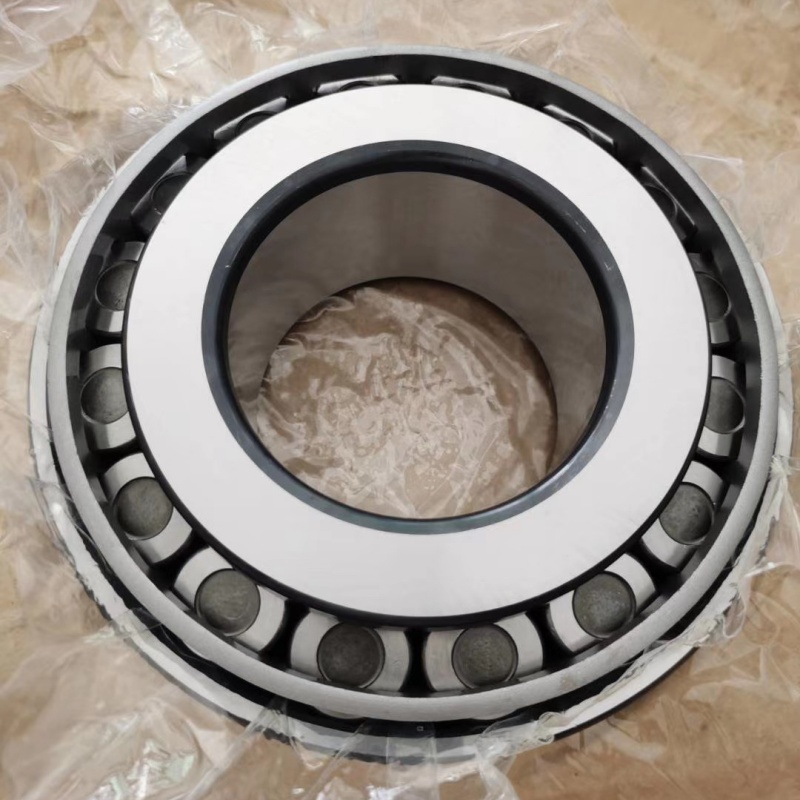
Let me break down the material and lubrication factors separately.
First, material. Most cheap bearings use ordinary steel. That steel has tiny impurities – small bits of oxide and other hard particles. Under heavy loads, these impurities act like cracks. A crack grows until the bearing breaks. At FYTZ, we use vacuum‑degassed steel. The vacuum removes the impurities. The steel becomes cleaner. Then we heat treat it to 62 HRC. That is harder than the standard 58‑60 HRC. Hard steel resists denting. But do not go too hard. Above 64 HRC, the steel becomes brittle and can crack from shocks.
Second, lubrication. This is the most common cause of early failure. People use the wrong grease. Or they do not change it often enough. In harsh conditions, you need a lubricant that does three things: reduces friction, carries away heat, and keeps dirt out. For heavy loads, you need a high viscosity oil. Viscosity is the thickness. Thicker oil stays between the roller and the raceway. For tapered roller bearings, I recommend ISO VG 150 to 220 for hot environments. You also need extreme pressure additives (EP). These additives form a protective layer on the metal surface. When the load pushes the oil out, that layer still protects.
Also, check the lubrication intervals. In a clean factory, you might grease a bearing every 6 months. In a dusty mine, you need to grease every week. Better yet, use an automatic lubrication system. It pumps small amounts of grease at regular times.
Third, contamination control. Dirt is the enemy. A single grain of sand can scratch the raceway. That scratch grows into a pit. Then the bearing fails. So use good seals. I always tell my customers to buy bearings with rubber seals (2RS) for dusty environments. Metal shields (ZZ) are okay for clean rooms, not for harsh conditions.
Here is a table for lubrication and material choices:
| Environment | Steel Grade | Hardness | Recommended Lubricant | Grease Interval |
|---|---|---|---|---|
| Clean, low load | Standard GCr15 | 58 HRC | Lithium grease, NLGI 2 | 6 months |
| High load, clean | Vacuum degassed | 60 HRC | EP oil, ISO VG 100 | 3 months |
| Dusty, high shock | Vacuum degassed | 62 HRC | EP grease with solid additives | Weekly |
| Wet or corrosive | Stainless steel | 55 HRC | Water‑resistant grease | Monthly |
One more thing. Do not over‑grease. Too much grease creates heat. The bearing runs hot and the grease breaks down. Use a grease gun and pump slowly until you see a small bead come out of the seal. That is enough.
I have a customer in Indonesia. He runs a palm oil press. The environment is hot, wet, and dirty. His old bearings lasted 3 months. He followed my advice: switched to vacuum‑degassed steel bearings, used EP grease with a high viscosity, and installed a double seal. Now his bearings last 12 months. That is four times longer.
Conclusion
Advanced tapered roller bearings power industrial solutions. Optimize the design, pick the right application, and control material and lubrication. That is how you win.