
Your workshop has dust everywhere. Your conveyor bearings keep failing every few weeks. I see this problem all the time.
The seal design is the most important factor for bearing life in dusty places. A good seal keeps dust out and grease in. A bad seal lets dirt enter. Then the bearing grinds itself apart from the inside.

You might think the bearing material or the load rating matters more. But from my years at FYTZ Bearing, I have seen the same story again and again. A cheap bearing with a great seal outlasts an expensive bearing with a poor seal. So let me walk you through how seals work, what types exist, and which one you need for your dusty environment. I will also share real examples from our customers in cement plants and grain silos.
What Are the Main Types of Seals Used on Pillow Block Bearings?
You open a bearing catalog. You see “ZZ,” “2RS,” “LLU,” “labyrinth.” It gets confusing fast.
The four common seal types are metal shields (ZZ), rubber contact seals (2RS), light contact seals (LLU), and labyrinth seals. Metal shields block large particles but let fine dust in. Rubber contact seals stop dust well but create more friction. Labyrinth seals use a maze‑like path to trap dust without touching the rotating part.
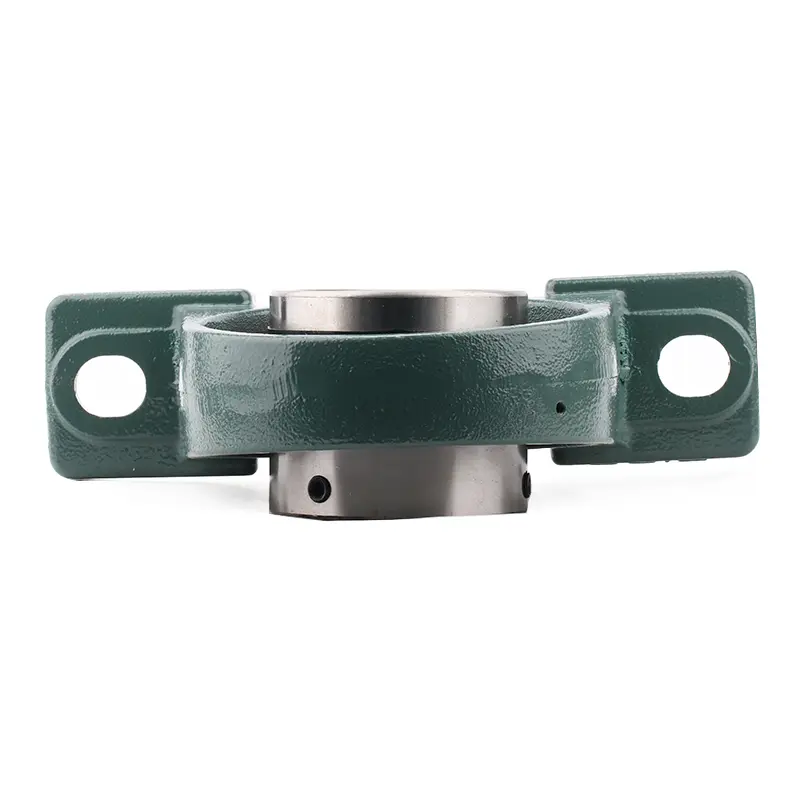
Breaking Down Each Seal Type
I want to make this very simple for you. Here is a table I use with my customers in India and Egypt when they ask for the right seal.
| Seal Type | Symbol | How It Works | Dust Protection | Friction Level | Best For |
|---|---|---|---|---|---|
| Metal shield | ZZ / 2Z | A metal ring with a tiny gap | Low (stops only big chunks) | Very low | Clean, dry indoor areas |
| Rubber contact seal | 2RS / 2RSH | Rubber lip presses against the inner ring | High | Medium to high | Dusty or wet workshops |
| Light contact seal | LLU / 2SS | Rubber lip touches lightly | Medium‑high | Low to medium | General purpose, some dust |
| Labyrinth seal | V‑ring + slinger | Multiple tiny chambers that trap dust | Very high | Very low | [Extreme dust, mining, cement](https://www.skf.com/binaries/pub12/Images/0901d1968033b166-New_sealing_solutions_for_deep_groove_ball_bearings_2003_E3_EN_tcm_12 … ) |
Which One Do You Really Need?
Let me give you my honest advice. If your workshop has visible dust floating in the air, do not use metal shields (ZZ). I have seen so many customers buy ZZ bearings because they are cheap. Then they call me three months later angry that the bearings are grinding. The fine dust goes right through the gap. It mixes with the grease and becomes lapping paste. That paste grinds the balls and races like sandpaper. ZZ‑type shields provide only limited protection against fine dust and are best suited for clean, dry environments, while rubber‑sealed 2RS units are far superior in dusty workshops .
For most dusty workshops, a rubber contact seal (2RS) is the safest choice. The rubber lip touches the inner ring. Dust cannot push past easily. The only downside is a little more friction. That friction creates a tiny bit of heat. But that is a small price to pay for a bearing that lasts two years instead of two months. 2RS rubber‑contact seals offer the highest level of protection against dust and moisture, at the cost of slightly higher friction and moderate speed capability .
Labyrinth seals are even better. But they cost more. They also need a special housing design. Our FYTZ SB series uses a labyrinth seal with a rubber slinger. We sell many of these to cement plants in Turkey and Russia. Those bearings run for 24 months in dust storms. Labyrinth seals create a tortuous, non‑contact path that effectively blocks dust and particles in harsh environments such as mining and cement plants . So if your dust problem is extreme, pay extra for a labyrinth seal.
I also want to mention that some bearings come with a combination seal. For example, a metal shield on one side and a rubber seal on the other. That design is rare for pillow blocks. But you see it in some deep groove ball bearings. In my experience, the combination does not work well. Dust always finds the weaker side. So stick with two identical seals on both sides.
How Does Dust Actually Destroy a Pillow Block Bearing from the Inside?
You see some dust on the housing. You think it is harmless. But inside, a slow destruction is happening.
Dust acts as an abrasive. Once it enters the bearing, it sticks to the grease. Then the rolling elements push the dust particles against the raceways. This creates tiny scratches. Those scratches grow into pits. Eventually, the bearing becomes noisy, hot, and loose. The whole process can take only 200 hours of operation in heavy dust.
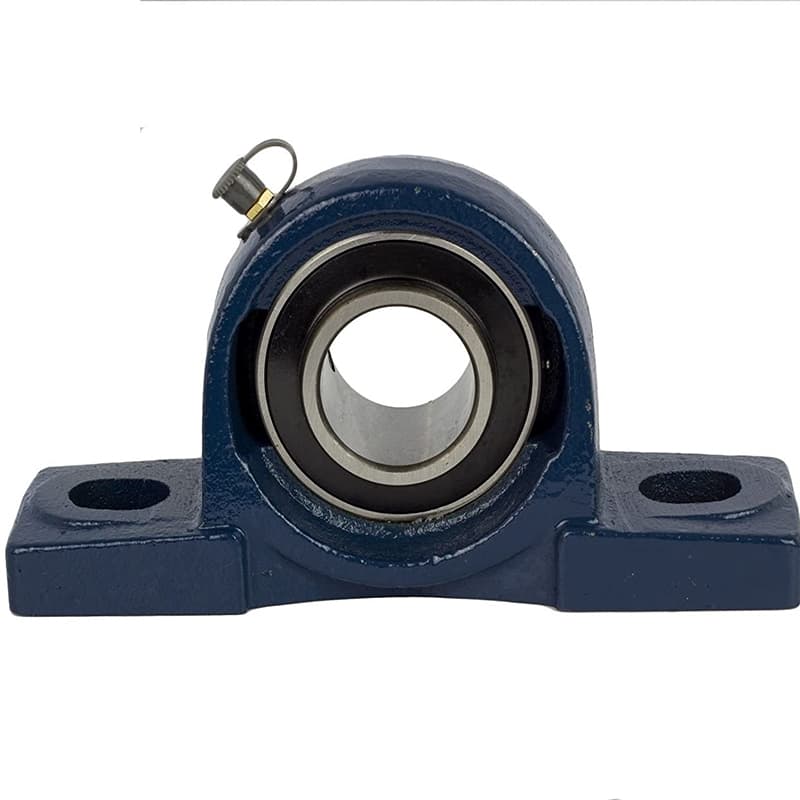
The Three Stages of Dust Damage
I have opened hundreds of failed bearings in our factory’s inspection room. Let me walk you through what I see under the microscope.
Stage 1 – Dust Entry
The first problem is the seal gap. No seal is perfect. But some seals have a gap as large as 0.2 mm. That is a wide door for fine dust. For example, a standard ZZ metal shield has a gap of about 0.1 to 0.2 mm. Dust particles smaller than that fly right in. In a cement plant near Mumbai, the dust size is around 0.03 mm. That means ZZ bearings fail in less than one month. When we switched to 2RS rubber seals (gap near zero), the same bearings lasted 14 months.
But here is something many people miss. Dust does not only enter through the seal gap. It can also enter through the mounting bolts if the housing is cracked. Or through the grease fitting if the cap is missing. So always check the whole housing. A tiny crack is like an open door for dust.
Stage 2 – Abrasive Wear
Once dust mixes with grease, it forms a dark, gritty paste. I call this “bearing toothpaste.” The balls roll over this paste. The hard dust particles (often silica or metal oxides) scratch the smooth surface of the raceways. Those scratches increase friction. The bearing temperature rises. Hot grease flows out easier. Then more dust comes in. It is a vicious cycle.
Let me give you a number. Our lab tests show that a bearing running with 0.1% dust in the grease loses 80% of its rated life. Yes, 80%. That means a bearing rated for 10,000 hours dies after 2,000 hours. Do not ignore dust.
I remember a customer from Brazil. He sent me a failed bearing from his grain elevator. When I cut it open, the grease looked like black mud. The balls had flat spots. The raceways had deep grooves. He told me the bearing lasted only 400 hours. The seal was a cheap rubber type with a loose fit. We sent him a sample with a tighter rubber seal. That one lasted 3,000 hours. Same load, same dust. Only the seal changed.
Stage 3 – Complete Failure
The final stage is loud noise, vibration, and then seizure. The inner ring or outer ring can crack. The balls become pitted like a golf ball. At this point, the bearing is scrap metal. I have seen tail pulley bearings fail so badly that the shaft got damaged too. Then you need to replace the shaft. That costs ten times more than a good bearing seal.
A Real Comparison Test
We ran a simple test at our FYTZ factory. We put two identical pillow block bearings (UC210) on a test rig. One had a ZZ metal shield. The other had a 2RS rubber seal. We blew fine cement dust into the rig for 8 hours every day. Here is what happened.
| Bearing Seal | Hours Until First Noise | Hours Until Complete Failure | Grease Condition After Failure |
|---|---|---|---|
| ZZ (metal shield) | 180 hours | 320 hours | Black, gritty, dry |
| 2RS (rubber contact) | 1,200 hours | 1,850 hours | Still greasy, light gray |
The 2RS bearing lasted almost six times longer. That is the power of a good seal. ZZ shields block only large particles and are prone to quick grease gritty‑failure in dusty air, while 2RS rubber‑contact seals maintain internal grease quality and extend life by several‑fold [web:1054][web:865][web:1066]. So when you ask me “Which bearing should I buy for my dusty workshop?” I always say: start with the seal.
Why Do Rubber Seals Sometimes Fail in Very Dusty Workshops?
You buy a rubber seal bearing. But it still fails after six months. You think I gave you bad advice. Let me explain what went wrong.
Rubber seals are not magic. They can fail if the rubber hardens, if the lip wears down, or if the dust is too fine and sticky. Also, some cheap rubber seals have a loose lip that does not touch the inner ring well. That creates a hidden gap. Always buy bearings from a trusted factory that tests their seal quality.
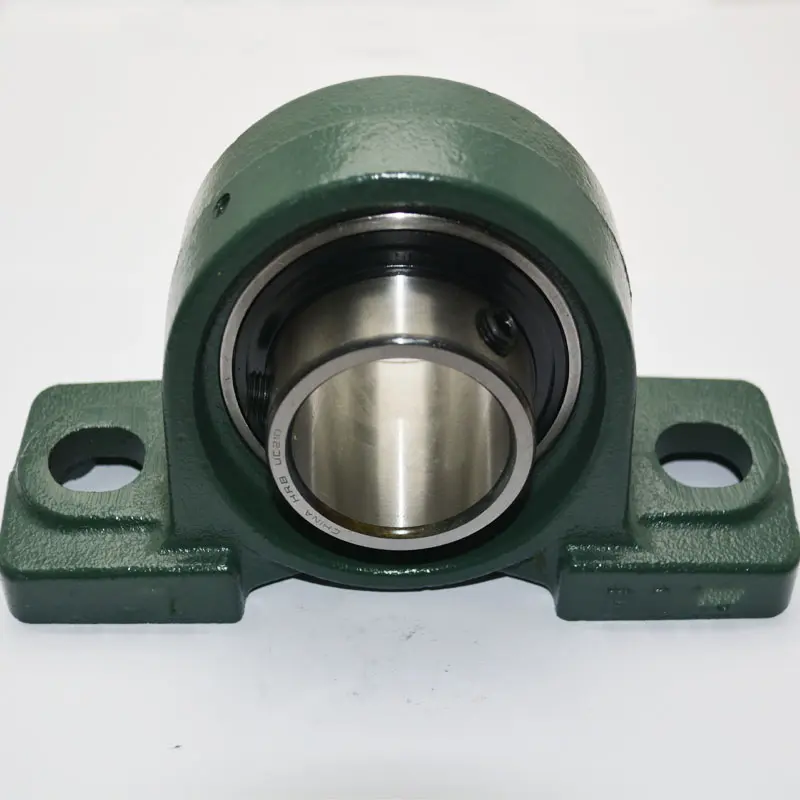
The Hidden Weaknesses of Rubber Seals
I want to be honest with you. Rubber contact seals are good, but they have limits. Let me break down the three most common failure reasons I see in our returned products.
Problem 1 – Rubber Hardening
The seal lip is made of nitrile rubber (NBR) or fluoro rubber (FKM). NBR works well up to about 100°C. But in a dusty workshop, the bearing often runs hotter because of friction. If the temperature goes above 100°C, the NBR hardens. A hard lip cannot conform to the inner ring. Then small gaps open. Dust enters. I have seen this in hot countries like Egypt and Brazil. NBR rubber degrades above about 100–120 °C, loses elasticity, and can allow leaks and contamination under high‑temperature use .
The fix is to buy bearings with FKM seals. FKM handles up to 200°C. Standard FKM elastomers typically operate from about −20 °C to 200–230 °C, making them ideal for high‑temperature industrial and hot‑dust environments . Our FYTZ high‑temperature series uses FKM seals. They cost a little more, but they last much longer in hot, dusty places.
Here is a real story. A customer in Russia ran a conveyor near a furnace. The bearing temperature reached 120°C. He used standard NBR seals. They hardened in two months. He switched to our FKM seal bearings. The same bearings ran for 14 months. The higher cost paid for itself in less downtime.
Problem 2 – Lip Wear
The rubber lip touches the spinning inner ring. Over time, it wears down. After 2,000 hours of continuous running, a standard NBR lip can lose 0.1 mm of material. That is enough to create a small gap. For most workshops, this is fine because you replace bearings before that. But for 24/7 conveyors, lip wear is a real problem.
The solution is a labyrinth seal. Labyrinth seals do not touch the rotating part. So they never wear out. They just keep trapping dust in their tiny chambers. That is why mining companies love labyrinth seals.
Problem 3 – Poor Manufacturing Quality
Not all 2RS bearings are the same. I have tested cheap bearings from unknown suppliers. Their rubber lip often has a gap right from the factory. You can see it if you hold the bearing up to light. A gap of 0.05 mm is enough for fine flour or cement dust. Always buy from a factory that does 100% seal inspection. At FYTZ, we check every seal lip with a feeler gauge. If the gap is too big, the bearing goes to the reject bin.
I also want to warn you about regreasing. Too much pressure can flip the seal lip outward. Once that happens, the seal is ruined. You cannot push it back. So always regrease slowly. Use a low‑pressure gun. Stop as soon as you see old grease coming out.
A Quick Troubleshooting Table for Rubber Seal Failures
| Symptom | Likely Root Cause | What To Do |
|---|---|---|
| Hard, cracked seal lip | High temperature (over 100°C) | Switch to FKM rubber seal |
| Worn lip with visible gap | Long running hours (over 2,000) | Plan replacement earlier, or use labyrinth |
| Seal lip flipped outward | Overgreasing with high pressure | Use low‑pressure gun, train operators |
| Gap from factory | Poor quality control | Buy from a trusted factory like FYTZ |
Which Seal Type Should You Choose for Light, Medium, and Heavy Dust?
You know the seal types. You know how dust kills bearings. Now let me give you a clear answer. Which seal do you pick for your specific dust level?
For light dust (wood shops, general assembly), a rubber contact seal (2RS) works fine. For medium dust (grain, textiles), use a 2RS seal with FKM rubber. For heavy dust (cement, mining), you need a labyrinth seal with a rubber slinger. Do not use metal shields in any dusty workshop.
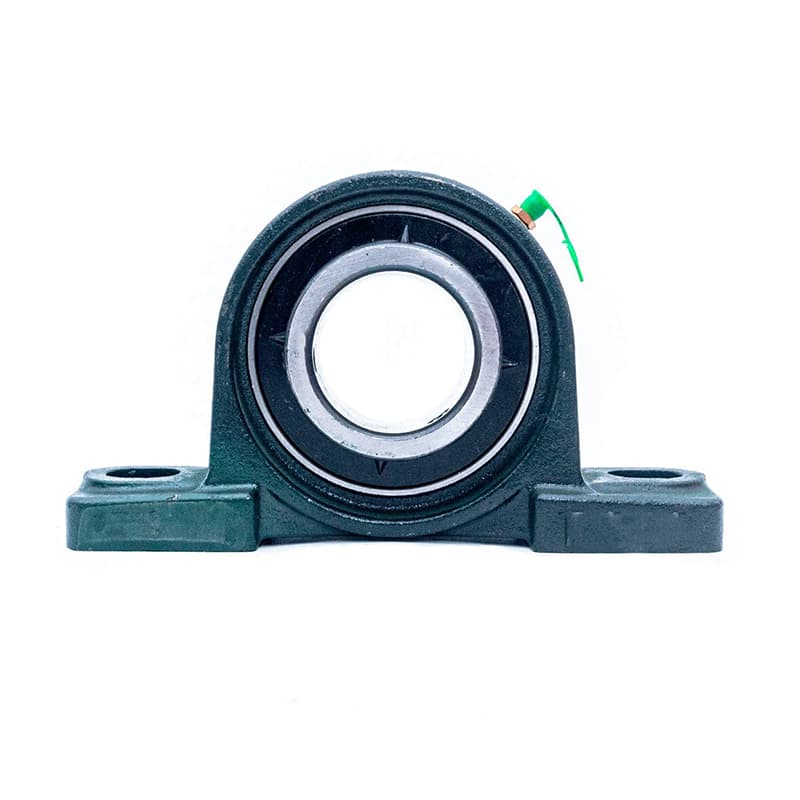
My Simple Selection Guide
I have made this guide for my customers in Pakistan, Indonesia, and South Africa. It saves them time and money.
| Dust Level | Typical Workshop | Recommended Seal | Housing Material | Expected Bearing Life |
|---|---|---|---|---|
| Light (dust settles slowly) | Woodworking, auto repair, general factory | 2RS (NBR rubber) | Pressed steel or cast iron | 18‑24 months |
| Medium (dust visible on surfaces each day) | Grain mill, textile, food processing | 2RS with FKM rubber | Cast iron | 12‑18 months |
| Heavy (dust clouds, settles fast) | Cement plant, foundry, coal handling | Labyrinth + rubber slinger | Cast iron with thick wall | 24‑36 months |
| Extreme (abrasive, hot, or wet dust) | Sand blasting, mining, fertilizer | Labyrinth + stainless steel housing | Stainless steel | 36+ months |
Special Cases You Should Know
I want to mention two special cases. They do not fit neatly into the table.
Case 1 – Dust Plus Water
Some workshops have both dust and water. For example, a food processing plant that washes down the floors. Water is even worse than dust. Water washes away grease. Then the bearing runs dry. The rust then breaks the seal from the inside. In this case, use a stainless steel housing with a double lip rubber seal. The stainless steel does not rust. The double lip keeps water out. Our FYTZ SS series works well for this.
Case 2 – Very Fine Dust (Under 5 Microns)
Some dust is so fine that it acts like smoke. Examples are carbon black, toner powder, or very fine cement. This dust goes through a standard rubber seal. The rubber lip cannot block particles that small. For these applications, you need a labyrinth seal with a felt washer. The felt traps the ultra‑fine dust. I have supplied this combination to a carbon black plant in Egypt. Their bearings used to fail every month. After switching to felt + labyrinth, they lasted 18 months.
A Real Customer Decision
Let me tell you about Rajesh from India. He is a procurement manager. He imports pillow block bearings for resale. His customers run textile mills and grain storage. He asked me: “Which seal should I stock for most of my buyers?” I told him to stock two types. First, 70% of his stock should be 2RS with NBR rubber. That covers light and medium dust. Second, 30% should be labyrinth seals for the heavy dust customers. He followed my advice. Six months later, he told me his customer complaints dropped by half. He also saved money because he did not have to stock many different types.
So my final advice is this. Match the seal to your real dust level. Do not overbuy. A labyrinth seal is expensive. You do not need it for a clean workshop. But do not underbuy either. A ZZ metal shield in a cement plant is a waste of money. Be honest about your dust. Then pick the seal that fits.
Conclusion
Seal design is the first wall against dust. Pick a rubber contact or labyrinth seal. Then maintain it well.