
You buy a pillow block bearing. The bearing itself looks fine. But the housing cracks after two months.
Housing strength is just as important as the bearing inside. A weak housing flexes under load. That flexing misaligns the bearing. It also lets dirt inside. Soon the bearing fails. Strong housings keep everything aligned and sealed. That is why you must check the housing material and design first.

I run a bearing factory in China. I sell pillow block bearings to importers like Rajesh in India. He supplies them to cement plants and conveyor repair shops. I have seen many cheap housings break on the job. The buyer saves $5 on the housing. Then he loses $500 in downtime. Let me explain why housing strength is the real hero.
What Happens When a Pillow Block Housing Is Too Weak for the Job?
A weak housing1 does not look weak. It fails slowly.
A weak housing flexes under heavy radial loads2. That flexing opens a gap between the housing halves or between the housing and the bearing. The bearing then loses support. It tilts and rubs against the housing. The seal also opens up. Dirt and water get inside. The bearing fails in weeks instead of years.
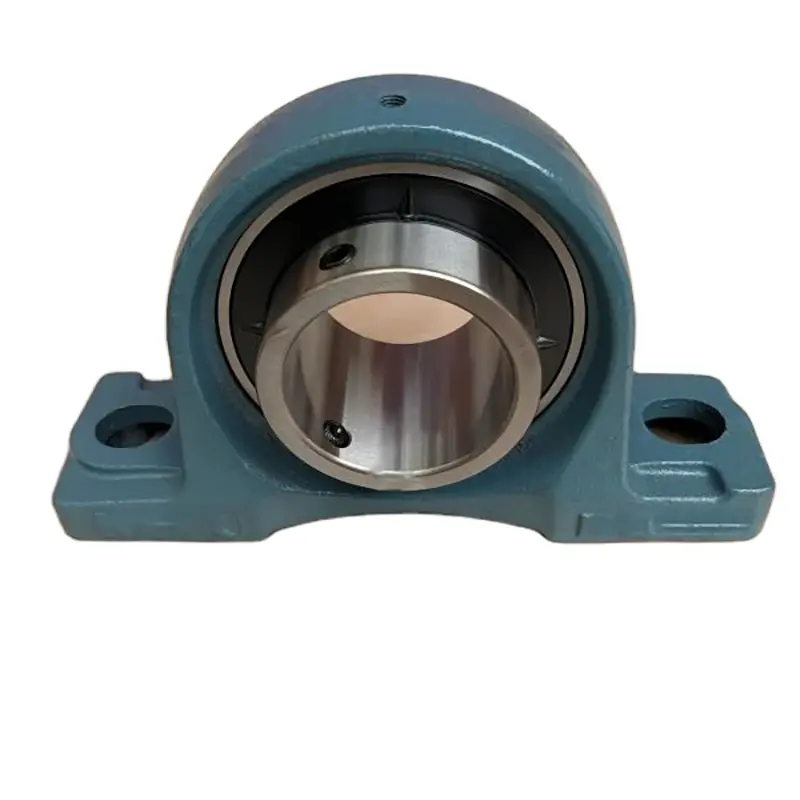
Four Ways a Weak Housing Kills Your Bearing
I have seen failed housings from Russia, Brazil, and Egypt. They all tell the same story. Let me break down the failure process into four clear steps.
1. Flexing Under Load
Every pillow block housing has two main parts: the base and the top cap. You bolt the cap down over the bearing. When you apply a heavy radial load, the load pushes the bearing down. The bearing then pushes the housing cap down. A strong cast iron housing resists that push. A weak housing bends just a little. That bending is called deflection. Even 0.1 mm of deflection is too much.
2. Bearing Misalignment
The bearing inside the housing expects to sit straight. When the housing flexes, the bearing tilts. The tilting changes the contact angle between the rollers and the raceways. Now the load is not spread evenly. Some rollers take all the weight. Those rollers dent the raceway. Then the bearing runs rough. Then it gets hot. Then it seizes.
I remember a customer from Turkey. He bought a cheap pillow block for a grain elevator. The housing was made of low-grade cast iron. After three months, the bearing was so hot you could not touch it. We opened the housing. The bearing raceway had spalling marks. The housing was bent. He replaced both housing and bearing with our FYTZ heavy-duty series. No more heat.
3. Seal Failure
Most pillow block bearings have a seal between the housing and the bearing. That seal keeps dirt out and grease in. When the housing flexes, the seal gap becomes uneven. On one side, the seal rubs too hard. It wears out quickly. On the other side, the seal pulls away from the bearing. That creates a gap. Dust and water enter through that gap. Then the bearing runs in mud. That kills it fast.
4. Cracking Under Shock Load
A weak housing does not just flex. It can crack. I see this in mining and recycling equipment. A big rock hits the conveyor. The shock load3 travels through the shaft to the bearing. The bearing pushes the housing cap with a sudden force. The cap cracks along the bolt holes. Then the whole assembly falls apart. Now you need a new housing, a new bearing, and maybe a new shaft.
Here is a simple table showing the failure progression:
| Stage | What Happens | Time to Failure |
|---|---|---|
| 1 | Housing flexes slightly | Day 1 |
| 2 | Bearing misaligns | 2-4 weeks |
| 3 | Seal gap opens, dirt enters | 4-8 weeks |
| 4 | Bearing overheats and spalls | 8-12 weeks |
| 5 | Housing cracks or bearing seizes | 12-16 weeks |
So a weak housing looks okay on day one. But the damage starts right away. By the time you hear noise, it is too late.
How Housing Material and Casting Quality Affect Load Capacity?
Not all cast iron is the same. Some is strong. Some is soft.
The best pillow block housings use high-grade gray cast iron1 like GGG40 or GGG50. These grades have high tensile strength2 and good damping. Casting quality also matters. Poor casting creates air pockets or hard spots. Those defects become crack starters. A strong housing starts with good material and a clean mold.
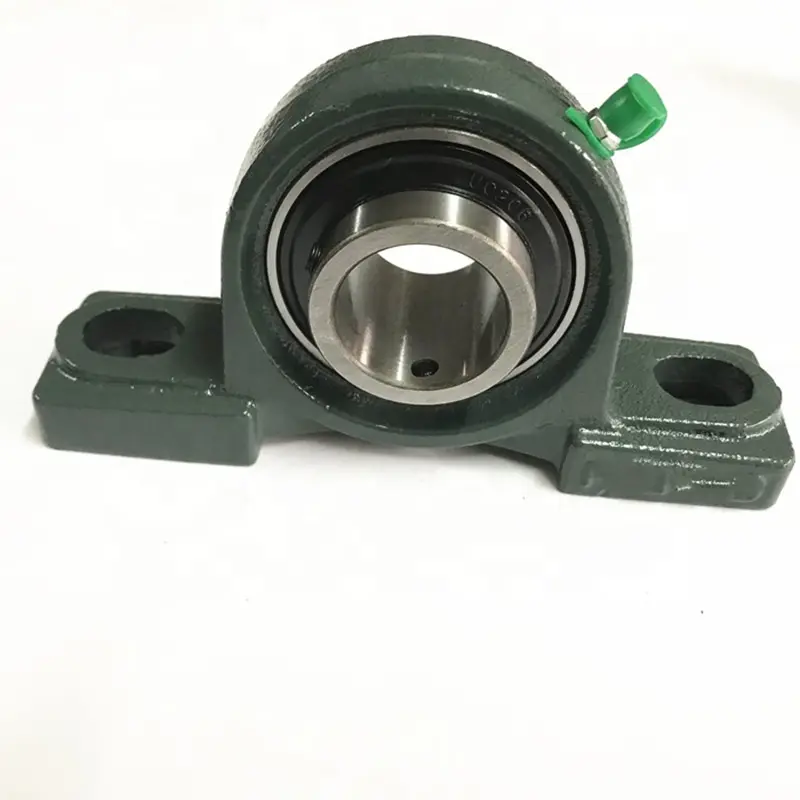
What to Look for in a Heavy-Duty Housing
I visit foundries to inspect housings before they come to my factory. I check three things. You can check them too.
1. Material Grade and Tensile Strength
Pillow block housings are usually made of gray cast iron or ductile iron3. Gray cast iron (class 30 or higher) is common. But the best housings use ductile iron (GGG40, GGG50, or 65-45-12). Ductile iron has higher tensile strength. It bends a little before breaking. Gray cast iron snaps suddenly. For heavy-duty jobs, ask your supplier for the material certificate.
Here is a quick guide:
| Material Grade | Tensile Strength (MPa) | Best For | Risk |
|---|---|---|---|
| Gray iron class 20 | 200 | Light duty | Cracks easily |
| Gray iron class 30 | 300 | Medium duty | Okay for conveyors |
| Gray iron class 40 | 400 | Heavy duty | Good for most |
| Ductile iron 65-45-12 | 450 | Very heavy | Best for shock loads |
At FYTZ, we use class 40 gray iron for standard pillow blocks. For extra heavy duty, we offer ductile iron. The price difference is small. The life difference is big.
2. Casting Quality and Wall Thickness
Look at the housing from the side. Are the walls thick and even? Cheap housings have thin walls to save metal. They also have rough surfaces. That rough surface comes from a worn mold. Turn the housing over and look at the bolt pads. They should be flat and smooth. Also check for small holes on the surface. Those are casting porosity4. Porosity makes the housing weak.
I had a customer from Vietnam. He bought a container of cheap pillow blocks. The housings looked okay from outside. But when I cut one open, I saw big air pockets inside the walls. That housing would crack under any real load. He switched to our housings. We use sand casting with controlled cooling. No porosity.
3. Machining Accuracy of the Seat
The inside of the housing must be round and smooth. That is where the bearing sits. If the housing bore is oval or rough, the bearing will not fit properly. It will pinch on one side and be loose on the other. We machine our housings on CNC lathes. The bore tolerance is H7. That means a very tight fit. Cheap housings often have H8 or H9. That is too loose. The bearing can spin inside the housing. Then the shaft wears out.
A Real-World Test
I suggest this simple test to my customers. Tap the housing with a metal wrench. A good cast iron housing makes a clear, ringing sound. A weak or cracked housing makes a dull thud. Also, weigh the housing. A heavier housing usually means thicker walls. But do not rely only on weight. Some cheap housings add weight by using poor design. Check the material and machining too.
The Hidden Costs of Soft or Cracked Housings in Heavy Machinery?
You save a little money on the housing. Then you pay much more later.
The hidden costs include unplanned downtime1, emergency labor, replacement parts2, and lost production. A cracked housing can also damage the shaft. Replacing a shaft costs ten times more than a good housing. Add in the angry customer who lost a day of work. The total hidden cost is often 20 to 50 times the price of the housing itself.
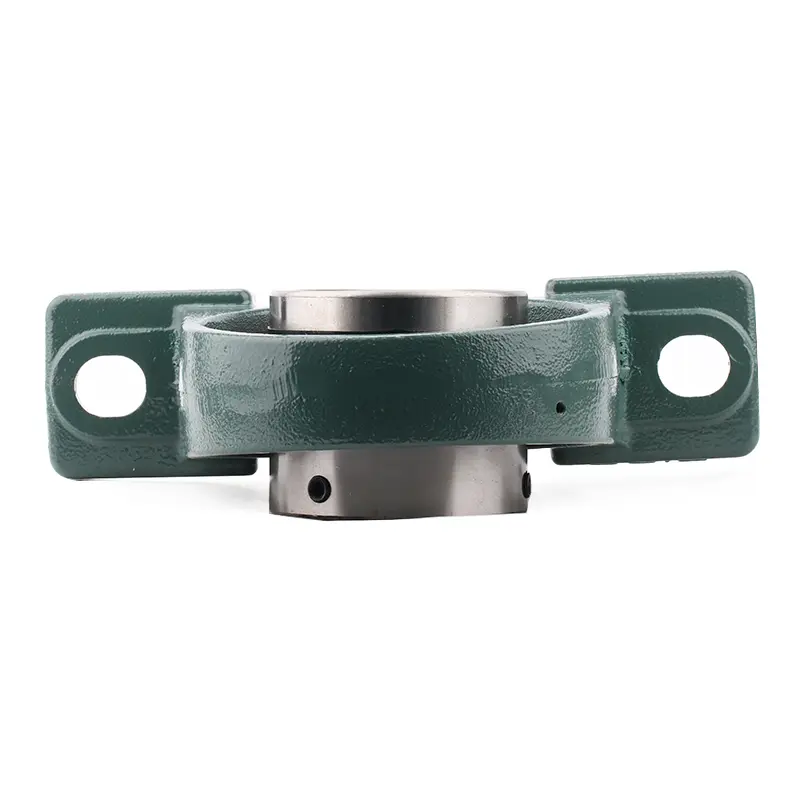
Breaking Down the Real Numbers
I have helped customers calculate the true cost of a housing failure. Let me share a real example from a cement plant in Egypt. Then you will see why cheap is expensive.
Direct Costs (What You Pay Immediately)
When a housing fails, you buy new parts. But that is just the start. Here is a typical bill:
| Cost Item | Amount (USD) |
|---|---|
| New pillow block bearing (good quality) | $50 |
| New housing (cheap) | $30 |
| New housing (good quality) | $60 |
| Replacement bearing (if also damaged) | $40 |
| Shaft repair or replacement | $200 |
| Shipping for emergency parts | $100 |
The direct cost of a cheap housing failure3 is at least $200 to $400. That is already more than the $30 you saved.
Indirect Costs (The Bigger Hit)
Now add the real pain. A conveyor stops for 4 hours. The cement plant loses production. They pay workers to stand around. A mechanic drives to the site. Here is what that looks like:
| Indirect Cost | Amount (USD) |
|---|---|
| Lost production (4 hours x $500/hour) | $2,000 |
| Emergency mechanic (travel + 4 hours) | $300 |
| Overtime for shift workers | $200 |
| Office time for purchase order and logistics | $100 |
| Customer goodwill and reputation | Priceless |
Total indirect cost: $2,600 or more. That is 87 times the $30 saved on a cheap housing.
I remember a customer from South Africa. He had a conveyor for sorting ore. A cheap pillow block housing cracked. The conveyor stopped for six hours. The mine lost $10,000 in production. He called me angry. But he was not angry at me. He was angry at himself for buying cheap. Now he only buys our heavy-duty housings. He has not had a housing failure in two years.
Long-Term Costs You Do Not See
A cracked housing also leads to other problems. The shaft can get bent. The belt can get misaligned. The motor can overwork and burn out. I have seen a $30 housing cause a $2,000 motor failure. So always add a safety factor. Buy a housing that is stronger than you need. Not weaker.
Which Mounting and Alignment Mistakes Make Weak Housings Even Worse?
Even a strong housing can fail if you mount it wrong.
The most common mistakes are not using a flat mounting surface1, overtightening or undertightening the bolts, and misaligning two housings on the same shaft. A weak housing plus bad mounting is a recipe for rapid failure. Good mounting makes a strong housing last longer. Bad mounting kills even the best housing.
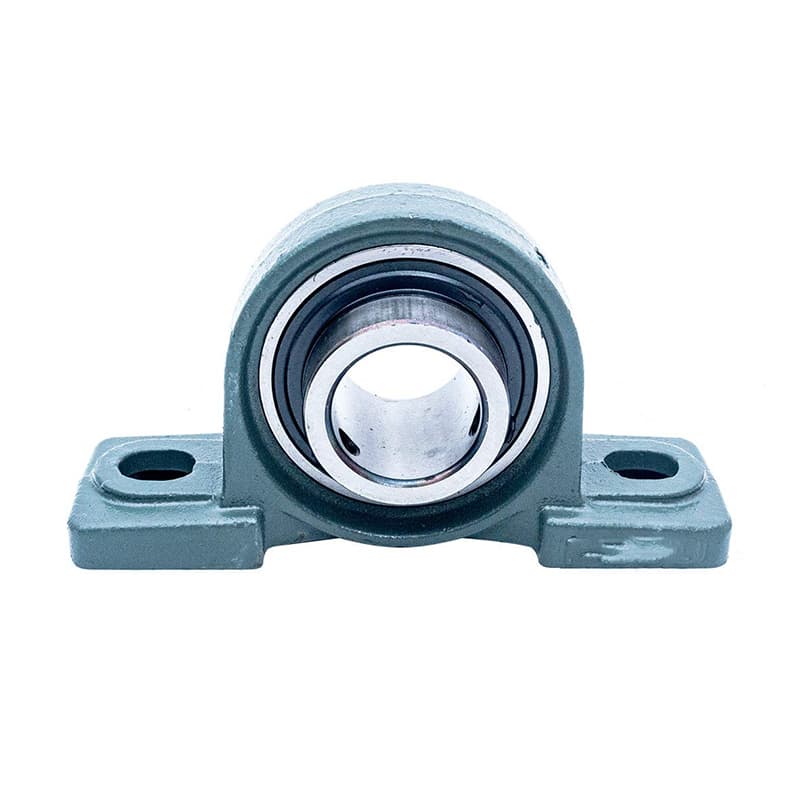
Five Mounting Mistakes to Avoid
I train my customers on installation. Many failures come from the workshop, not the factory. Let me show you what to watch for.
1. The Unflat Base
The housing sits on a steel frame or a concrete pad. That surface must be flat. Even a 1 mm gap under one corner of the housing will bend it when you tighten the bolts. That internal stress cracks the housing later. Always use a feeler gauge under the housing base. If you see a gap, use shims to fill it.
2. Wrong Bolt Torque
Each housing has a recommended bolt torque2. Too loose, the housing moves and wears the bolt holes. Too tight, you stretch the bolts or crack the housing feet. Use a torque wrench. For most pillow blocks, bolts between M12 and M20 need 50-150 Nm. Ask your supplier for the spec.
I had a customer from Brazil. His maintenance team used an impact wrench on every bolt. They cracked three housings in one month. I told him to buy a $30 torque wrench. No more cracks.
3. Misaligned Shafts
If you have two pillow blocks on the same shaft, they must be aligned. The two housings must sit on the same centerline. If they are off by even 2 mm, the shaft bends every rotation. That bending force goes into the housings. One housing gets pushed sideways. It cracks at the bolt holes. Use a laser alignment tool or a straight edge.
4. No Locking Device Check
Pillow block bearings have a locking mechanism. It might be a set screw, an eccentric collar, or a taper sleeve. If you do not lock the bearing to the shaft properly, the bearing spins on the shaft. That spinning wears the shaft and also pushes the housing sideways. Follow the supplier’s locking steps. Do not skip the locking collar tightening.
5. Ignoring Thermal Expansion
A hot machine expands. The shaft gets longer. If you lock both bearings with no room to slide, the housing gets pushed outward. That push cracks the housing feet. Always leave one housing free to slide (floating bearing arrangement). The other housing is fixed. This is basic bearing design. But many workshops forget it.
Here is a simple checklist for good mounting:
| Step | Action | Tool |
|---|---|---|
| 1 | Check base flatness | Feeler gauge |
| 2 | Align housings | Laser or straight edge |
| 3 | Torque bolts correctly | Torque wrench |
| 4 | Lock bearing to shaft | Follow manual |
| 5 | Allow thermal slide | Leave floating side |
A strong housing plus correct mounting gives you years of service. A weak housing plus bad mounting gives you weeks. Choose wisely.
Conclusion
Housing strength is the foundation of pillow block reliability. Strong material, good casting, and proper mounting prevent costly failures.
-
Understanding the significance of a flat mounting surface can prevent costly machinery failures. ↩ ↩ ↩ ↩
-
Learning about proper bolt torque can enhance the longevity and performance of your equipment. ↩ ↩ ↩ ↩
-
Exploring the risks associated with cheap housing can prevent costly mistakes and enhance operational efficiency. ↩ ↩ ↩
-
Learn about casting porosity and its detrimental effects on the strength and reliability of cast components. ↩