
Shaft misalignment costs you money, time, and repairs. Let me show you the real fix.
Choosing the right pillow block bearing unit with self-aligning features can prevent up to 80% of misalignment problems. It also saves your equipment from early failure.
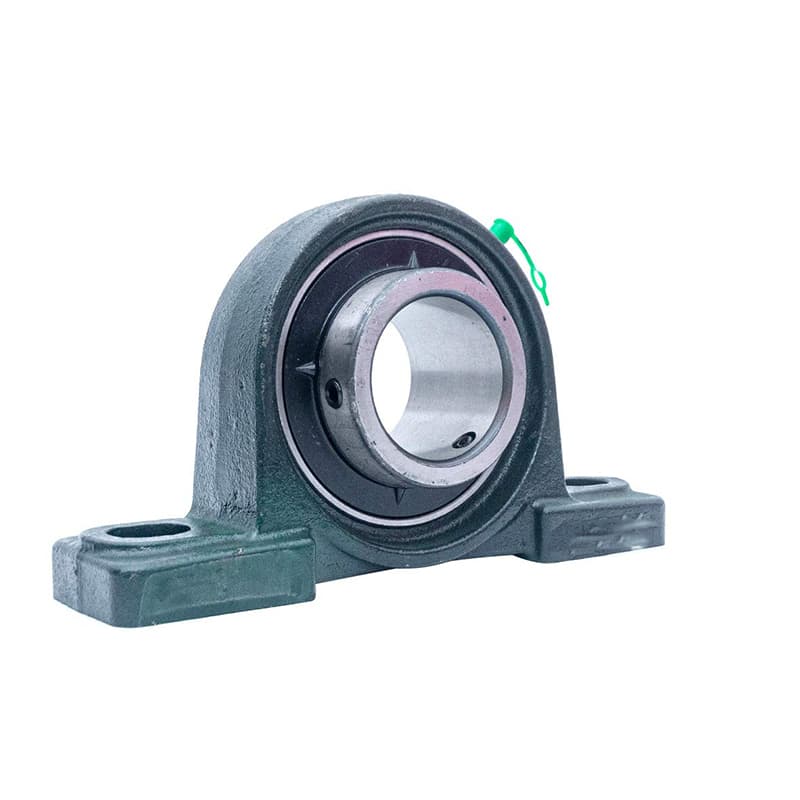
Now, before you think all bearing units are the same, I need you to stay with me. In my years of selling bearings to factories and distributors like you, I have seen too many people ignore the basics. That mistake always hits their bottom line. Let me walk you through what actually works.
What are the common causes and effects of shaft misalignment?
You see a bearing fail in just three months. You blame the bearing quality. But most of the time, the real problem is shaft misalignment.
Shaft misalignment happens when the centerlines of two connected shafts do not line up. There are two main types: angular misalignment (shafts at an angle) and parallel offset (shafts are parallel but not on the same line). Both cause uneven load on the bearing. And that leads to overheating, vibration, and finally, broken parts.
Let me break down the main causes for you
From what I see with my customers – like Rajesh in India who imports pillow block bearings for industrial repair shops – most misalignment comes from three things:
| Cause | What happens | How often I see this |
|---|---|---|
| Poor installation | Bolts are tightened unevenly. The housing gets twisted. | Very often |
| Soft or uneven foundation | The base plate bends or sinks under load | Common in older plants |
| Thermal expansion | Shafts grow when hot. They push the bearing out of line | Almost always ignored |
The real cost of ignoring alignment
Let me give you some numbers. A misaligned shaft can increase bearing temperature by 15-30°C. That heat cooks the grease. The rolling elements start to skid instead of roll. Then you get false brinelling or fracture in the raceway.
I once worked with a factory in Turkey. They replaced four bearings every month on the same conveyor line. We checked their installation. The shaft had a parallel offset of 0.5 mm. That sounds tiny, right? But for a standard bearing, that offset cut the life from 20,000 hours down to just 800 hours. After they switched to a self-aligning pillow block unit, the same bearing lasted two years.
One more cause people forget
Shaft deflection. When a shaft is long or has a heavy pulley in the middle, the shaft bends under its own weight. That bending acts just like misalignment at the bearing housing. Most standard bearing units cannot handle this. You need a unit with a spherical outer ring and a matching concave housing. That design lets the inner ring tilt up to 2-3 degrees without losing load capacity.
So the simple truth is this: misalignment is not rare. It is normal in real factory conditions. If you choose a bearing that cannot adjust, you are buying trouble.
What are the key features of self-aligning pillow block bearing units?
You might think all pillow block bearings are the same. They are not. The self-aligning type is built differently.
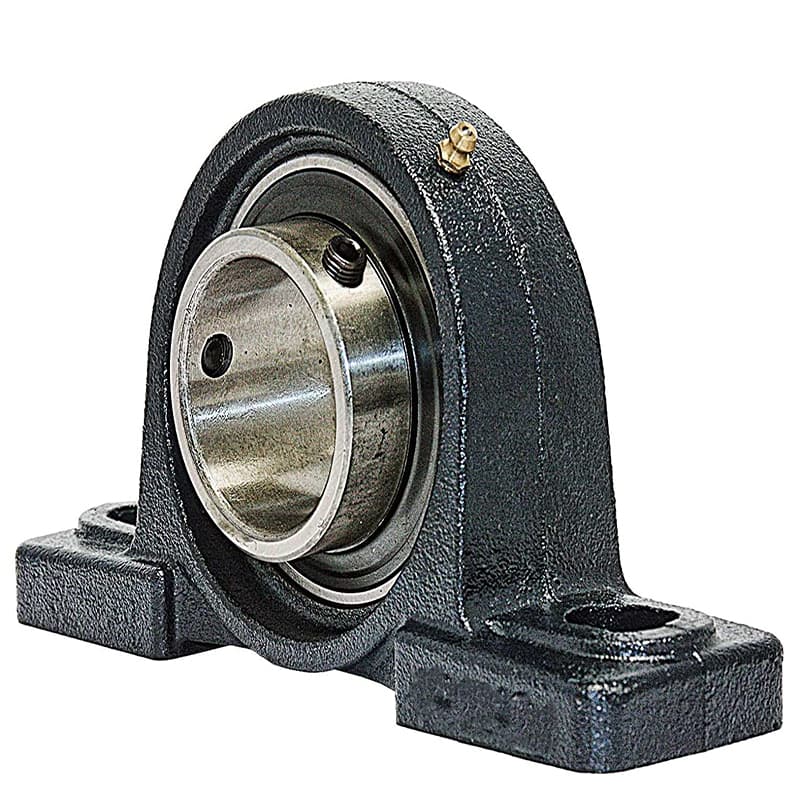
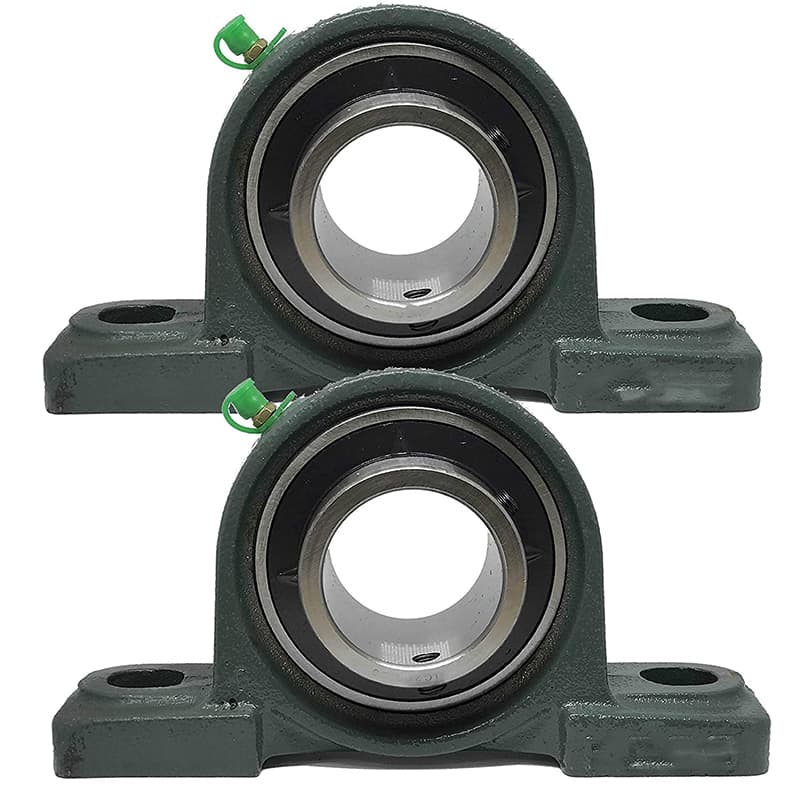
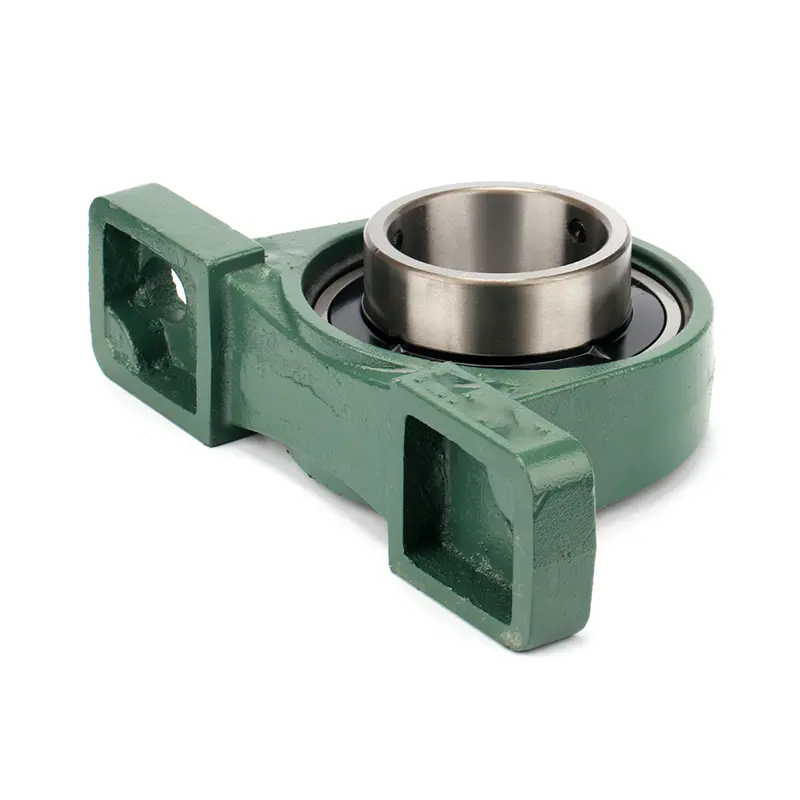
A self-aligning pillow block bearing unit has a spherical outside surface on the bearing’s outer ring. The housing has a matching concave seat. This design lets the bearing tilt freely inside the housing. So even when the shaft is slightly off, the bearing keeps full contact and rolls smoothly.
Three features you must check before buying
From my experience supplying FYTZ bearings to machinery builders in Brazil and Russia, these three features make or break the performance:
1. Locking method for the inner ring
- Set screw locking: Cheap but can loosen under vibration. Good for light loads.
- Eccentric locking collar: Better for reversing loads. Common in conveyor applications.
- Taper sleeve with adapter: The best for heavy shock loads. It grips the shaft evenly.
Most of my customers in the automotive aftermarket prefer the eccentric locking collar for its balance of cost and reliability. But for cement plants or mining equipment, I always recommend the taper sleeve.
2. Housing material and design
| Material | Best for | Weakness |
|---|---|---|
| Gray cast iron | General use, low cost | Brittle under shock |
| Ductile iron | High impact, heavy loads | More expensive |
| Stainless steel | Wet or corrosive environments | High cost |
| Thermoplastic | Light duty, chemical washdown | Low load capacity |
3. Seal type
Seals keep dirt out and grease in. A bad seal will kill your bearing faster than misalignment. Look for triple lip seals with a flinger. That combination stops water and dust even in a cement factory.
A personal story about seal failure
A distributor in Indonesia called me last year. He sold 200 pillow block units to a palm oil mill. After three months, 30 units failed. The bearings were self-aligning, but the seals were single lip. The mill used high-pressure water hoses every day. Water got inside. The grease turned into white paste. Then the bearings rusted and locked up.
We replaced the seals with triple lip + flinger design on the next order. Not a single failure in the next 12 months. That is why you need to ask your supplier about the seal type, not just the bearing grade.
One more hidden feature
The grease fitting (zerk) location. Some cheap units put the fitting on top of the housing. That sounds fine. But when the bearing tilts, the grease path gets blocked. Better designs put the fitting at an angle or use a re-lubrication groove in the housing. At FYTZ, we machine a full annular groove so grease reaches both sides of the bearing no matter the tilt angle.
So when you compare quotes, do not just look at price. Look at these small details. They decide if your bearing lasts one year or five.
How to properly align and secure the bearing housing?
You bought the best self-aligning bearing unit. But if you install it wrong, you still get failure.
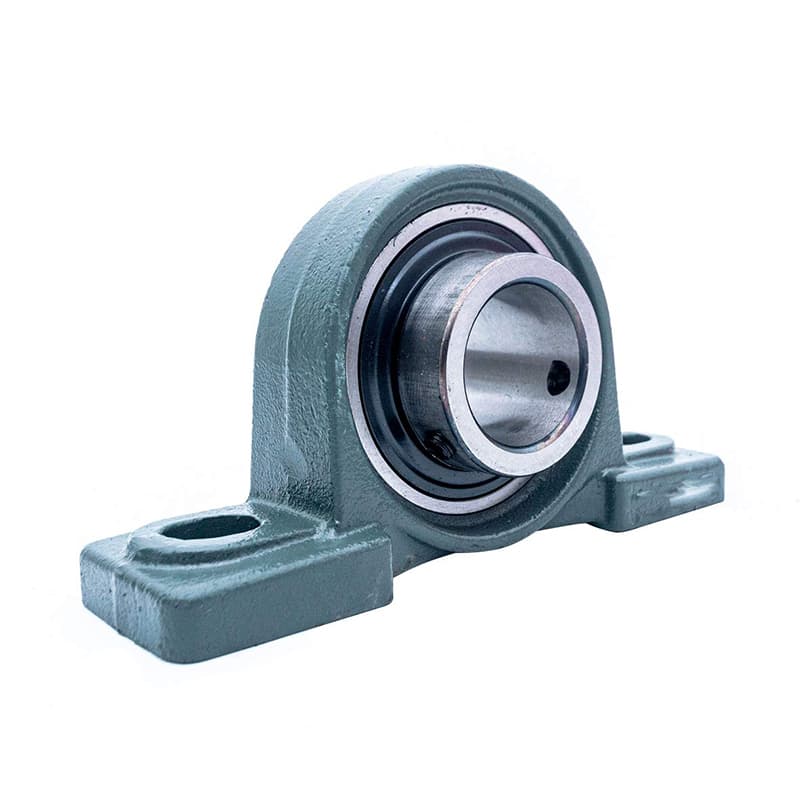
Proper alignment means the bearing housing is positioned so the shaft passes through the center of the bore without forcing it. Even a self-aligning bearing has a limit. Most units can handle 1 to 3 degrees of misalignment. Beyond that, they will not save you.
My step-by-step method for doing it right
I learned this from a maintenance manager in Egypt who ran a steel rolling mill. His team never had bearing failures. Here is what they do:
Step 1: Prepare the mounting surface
- Clean off rust, paint, and dirt.
- Use a feeler gauge under the housing feet. The gap should be less than 0.05 mm.
- If the surface is uneven, use shims. Do not tighten the bolts to bend the housing.
Step 2: Place the bearing on the shaft
- Slide the bearing unit onto the shaft loosely.
- Do not tighten the locking collar or set screws yet.
- Let the bearing sit in the middle of its adjustment range.
Step 3: Align the housings
- For two bearings on one shaft, use a laser alignment tool or a straight edge.
- Measure the distance from the shaft to a fixed reference point at both bearings. The difference should be less than 0.1 mm.
- Move the housings until both measurements match.
Step 4: Tighten in the right order
| Step | Action | Torque tip |
|---|---|---|
| A | Lightly tighten the housing bolts by hand | Just snug |
| B | Tap the housing with a rubber mallet to seat it | Do not hit the bearing |
| C | Tighten housing bolts crosswise | Use a torque wrench |
| D | Lock the bearing to the shaft | Follow the locking method |
Step 5: Final check
- Rotate the shaft by hand. It should turn freely with no binding.
- If you feel a hard spot, the alignment is still off. Loosen and repeat.
A critical mistake I see all the time
People tighten the bearing to the shaft before they align the housings. That locks the misalignment into the bearing. The self-aligning feature cannot help because the outer ring is already forced to one side.
Always do the sequence: shaft loosely in bearing → align housings → tighten housing bolts → then lock the bearing to shaft.
Also, never use a hammer directly on the bearing housing. That dent the raceway. Use a soft-faced mallet on the housing foot only.
What about vertical shafts?
Vertical shafts are harder. Gravity pulls the shaft down. The bearing has to hold the axial load. For that, use a pillow block with a locating ring or a thrust collar. And check the alignment with a dial indicator on the shaft end. The runout should be under 0.03 mm.
I supply many units for vertical mixer shafts in Vietnam. My recommendation is always the same: add a locknut on the shaft above the bearing to prevent the shaft from dropping during installation.
Why are regular checks and alignment corrections important for preventive maintenance?
You fixed the alignment today. But machines move. Foundations settle. Bolts loosen. Heat cycles change shapes.
So regular checks are not optional. They are the only way to keep misalignment from coming back.
How often should you check?
From working with food processing plants in Pakistan and auto parts distributors in South Africa, I have a simple rule:
| Machine type | Check frequency | Why |
|---|---|---|
| High-speed machines (over 3000 RPM) | Every 2 weeks | Vibration kills them fast |
| Normal industrial conveyors | Every 3 months | Wear is slow but steady |
| Heavy shock loads (crushers, hammers) | Every month | Foundations crack |
| Clean, low-speed machines | Every 6 months | Less risk, but still check |
The three signs you need to act immediately
You do not always need a laser tool. Your senses can tell you a lot. Train your team to watch for:
1. Heat – Touch the housing after running for an hour. If it is too hot to keep your hand on (over 70°C), something is wrong. Check alignment first, then grease.
2. Noise – A healthy bearing makes a smooth whirring sound. A misaligned bearing makes a knocking or squealing noise. That is the rolling elements sliding instead of rolling.
3. Rust or grease leaks – If you see rust stains around the seal, water is getting in. That usually means the seal lip wore out because of constant misalignment movement. Replace the unit and re-check alignment.
A simple correction method you can do today
You do not have to dismantle the whole machine to fix minor misalignment. Loosen the housing bolts. Use a dial indicator on the shaft near the housing. Tap the housing gently with a soft mallet until the indicator reading drops to below 0.05 mm. Then retighten bolts. Recheck the shaft rotation by hand.
For parallel offset, you often need to shim one housing up or down. Use stainless steel shims. Do not use multiple thin shims – they compress over time. One thick shim is better than five thin ones.
My own checklist for preventive maintenance
I send this checklist to every customer who buys from FYTZ Bearing. It saves them from unplanned downtime:
- Shaft runout measured at bearing location (max 0.03 mm)
- Housing bolts torqued to spec (no loose bolts)
- Grease re-lubricated every 2000 hours or 3 months
- Temperature recorded (baseline + max 15°C increase)
- Vibration levels checked (use a simple pen-type vibrometer)
- No visible movement between housing and base plate
If you mark “fail” on any item, stop the machine. Correct the alignment before running again. One hour of prevention saves a whole day of replacement.
A final note from my experience
I have sold pillow block bearings for over ten years to distributors in more than fifteen countries. The customers who make alignment checks a habit buy fewer bearings. That is good for them, and honestly, it is good for me too. Because they trust me. They come back for more. They refer their friends.
So do not treat alignment as a one-time thing. Treat it as a weekly or monthly routine. Your machines will run longer. Your maintenance cost will drop. And your boss – or your own customers – will notice the difference.
Conclusion
Choose a self-aligning pillow block unit, install it carefully, and check alignment often. That is how you stop shaft misalignment problems for good.