
Your grain elevator bearings fail every harvest season. Dust and moisture kill them fast. That stops your whole operation.
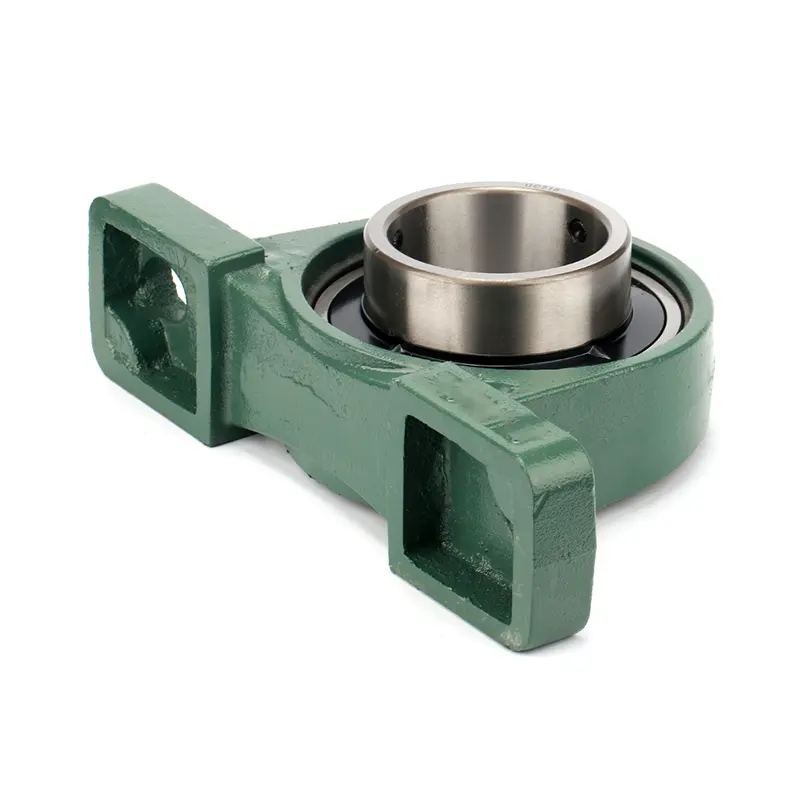
For grain handling equipment, choose pillow block bearings with triple lip seals, cast iron or stainless steel housings, and proper food-grade grease. Then follow a weekly maintenance checklist – check seals, regrease, and remove dust buildup. This doubles bearing life.
I run a bearing factory called FYTZ Bearing in China. I sell to distributors like Rajesh in India. His customers run rice mills, wheat silos, and corn dryers. They used to complain about bearings dying every two months. Now they get six months or more. The difference is not the bearing price. It is the right selection and simple maintenance. Let me show you what works.
1. What Are the Unique Challenges of Grain Handling Environments for Bearings?
You think dust is just annoying. But for a bearing, grain dust1 is a killer. It gets inside, mixes with grease, and turns into grinding paste.
The main challenges are fine dust penetration, moisture from humidity2 or drying processes, temperature swings3, and long continuous running hours4. Also, grain dust can be explosive, so you need anti-spark bearings5 in some areas.
Let me explain why grain handling is harder on bearings than most other industries. I have seen this first hand at a rice mill in Vietnam. The customer used standard pillow block bearings from a local shop. After one month, the bearings made grinding noises. When we opened them, the grease was black and full of rice dust. The shaft had scratches.
Dust penetration
Grain dust particles are very small. Wheat flour dust can be 10 to 100 microns. That is smaller than the gap on a standard rubber seal. So the dust sneaks past the seal lip. Once inside, it mixes with grease. The grease loses its ability to lubricate. Instead, it becomes a lapping compound that wears down the balls and raceways.
Moisture
Grain handling has moisture in two forms. First, wet grain from the field. Second, condensation inside silos when warm days turn into cool nights. Water in a bearing causes rust. Rust flakes off and damages the smooth surfaces. Then the bearing gets noisy and hot.
Temperature changes
A grain dryer runs hot – up to 80°C or more. Then at night, it cools down to ambient temperature. That thermal cycling makes the bearing expand and contract. Standard internal clearance (C0 or C2) can become too tight when hot. The bearing seizes.
Long running hours
During harvest season, grain elevators run 20 hours a day, seven days a week. That is a heavy duty cycle. Grease breaks down faster. Seals wear out faster. You cannot use cheap bearings for this.
Explosion risk
This one is serious. Grain dust is explosive. If a bearing overheats or sparks (from metal-to-metal contact), it can ignite the dust cloud. Some grain facilities require anti-spark bearings with brass or polymer cages and copper-plated shields.
Here is a summary table of challenges and what they cause:
| Challenge | What Happens to Bearing | Typical Failure Mode |
|---|---|---|
| Fine dust | Grease turns into abrasive paste | Wear, noise, increased play |
| Moisture / humidity | Rust on raceways and balls | Pitting, rough rotation, seizure |
| Temperature swings | Internal clearance becomes insufficient | Overheating, locking up |
| Long run hours | Grease breakdown, seal wear | Lubrication starvation |
| Explosion risk | Spark from metal contact | Fire or dust explosion |
So when you pick a bearing for grain handling, you must address each of these. Do not just grab any pillow block from a shelf. That is why I always ask my customers: “Where will this bearing run?” If they say “grain elevator,” I know we need special seals, the right clearance, and a good maintenance plan.
2. What Are the Key Selection Criteria for Seals, Housings, and Materials?
You cannot pick a grain handling bearing like a general purpose one. You need three things right: the seal, the housing, and the bearing material.
For grain applications, use a triple lip seal1 with a flinger2 to keep dust out. Choose cast iron or stainless steel housing – not polymer. And use chrome steel or stainless steel balls3 with C3 or C4 internal clearance for heat.
Let me break down each selection criterion. I will tell you what works and what does not, based on real feedback from my customers in Pakistan, Egypt, and Brazil.
Seals – the most important part
A standard rubber seal (2RS) has one lip. It touches the shaft. For clean factories, that is fine. For grain dust, it fails. The dust builds up on the seal lip, then pushes it open.
What you need is a triple lip seal. This has three rubber lips in a row. They create a maze. Dust has to get past all three. Even better, add a flinger – a metal ring that spins with the shaft and throws dust away before it reaches the rubber lips.
At FYTZ, we offer a “severe duty” seal package for grain applications. It has a flinger plus three lips. One of my customers in Russia uses this on his wheat silo conveyors. He says the bearings last three times longer than before.
Housing material – cast iron or stainless steel
Polymer housings are popular for light duty. But for grain handling, I do not recommend them. Reason: polymer can crack if a piece of rock or hard grain hits it. Also, polymer does not handle high temperatures well (grain dryers).
Cast iron is the standard. It is strong, cheap, and handles heat. But cast iron rusts in wet grain environments. So you need a good paint coating. Some customers use stainless steel housings (304 or 316). Stainless never rusts. It is perfect for wet areas like grain washing or soaking lines. The downside? Stainless costs three to five times more than cast iron.
Here is my rule: For dry grain handling (elevators, silos, conveyors), use painted cast iron. For wet grain areas (receiving pits, cleaning lines), use stainless steel.
Bearing material and internal clearance
The bearing insert (the part with balls) should be chrome steel (GCr15) for most grain applications. It is hard and wears well. For very wet areas, use stainless steel balls and rings (440C). They do not rust.
Internal clearance is critical. A standard bearing (C0) will seize when the shaft expands from heat. For grain dryers or any machine that runs hot, use C3 clearance4. For very hot (over 100°C), use C4. For cold grain storage (below freezing), use C0 or C2.
Here is a selection table:
| Environment | Seal Type | Housing Material | Bearing Steel | Clearance |
|---|---|---|---|---|
| Dry grain elevator | Triple lip + flinger | Cast iron (painted) | Chrome steel | C3 |
| Wet grain pit | Triple lip + flinger | Stainless steel | Stainless steel | C3 |
| Grain dryer (hot) | Triple lip + flinger | Cast iron | Chrome steel | C4 |
| Outdoor silo (cold) | Triple lip + flinger | Cast iron | Chrome steel | C0 or C2 |
| Explosive dust area | Non-sparking seals | Cast iron | Brass cage, copper shield | C3 |
One more tip: Always buy bearings with a relubrication hole5 and a grease fitting. You need to add fresh grease regularly. Sealed-for-life bearings will die fast in grain dust.
I had a customer in Brazil with a corn dryer. His bearings failed every three weeks. He was using standard UCP bearings with C0 clearance and single lip seals. I sent him a sample with triple lip seals and C4 clearance. He tested it for two months. No failure. He ordered 500 pieces. That is the power of picking the right features.
3. How Can Lubrication Best Practices Prevent Dust Contamination?
You cannot stop all dust from getting in. But you can push it out. The secret is frequent regreasing with the right grease and the right method.
To prevent dust contamination, use a high-quality lithium or polyurea grease1 with good water resistance. Regrease every 100 to 200 operating hours. Add fresh grease until you see old, dirty grease coming out of the seal. That purges the dust.
Let me be very practical here. I have visited grain facilities where the maintenance guy says “I grease every month.” Then I look at the bearing. There is no old grease around the seal. That means he never added enough to push the old grease out. He just put a few pumps in, and the new grease stayed near the fitting. The dust near the balls never got flushed.
The purge method2
For grain handling, you need to use the purge method. Here is how:
- Clean the grease fitting with a rag so you do not push dirt in.
- Pump fresh grease into the fitting.
- Keep pumping until you see old, dirty grease squeeze out from around the seals.
- Wipe away the old grease.
- Stop pumping. Do not overfill.
This method pushes out the contaminated grease that has mixed with dust. It also pushes out any water that got inside. I recommend doing this every 100 operating hours during harvest season. For normal season, every 200 hours.
Grease type
Not all grease works well for grain. You need a grease that:
- Resists water washout
- Has good adhesion (stays on the metal)
- Works at temperatures from 0°C to 100°C
- Is safe for incidental food contact (if the grain is for human consumption)
For food-grade applications, use NSF H1 grease3 (like FYTZ FoodPro). It is non-toxic. If a little grease touches the grain, it is still safe.
For non-food grain (animal feed or ethanol), you can use standard lithium EP2 grease or polyurea grease. Polyurea lasts longer but costs more.
Here is a simple grease selection table:
| Application | Grease Type | Base Oil Viscosity | Temperature Range | Food Safe? |
|---|---|---|---|---|
| Grain elevator (dry) | Lithium EP2 | 150 – 220 cSt | -20 to 120°C | No |
| Wet grain pit | Calcium sulfonate | 150 – 220 cSt | -20 to 150°C | No |
| Food grain handling | NSF H1 (synthetic) | 100 – 150 cSt | -30 to 150°C | Yes |
| High temperature dryer | Polyurea | 200 – 300 cSt | -20 to 180°C | No |
How much grease?
Too little grease causes metal-to-metal contact. Too much grease causes overheating because the bearing has to churn the grease. For a standard UCP207 pillow block (35mm bore), use about 10 to 15 grams per regreasing. That is roughly 10 to 15 pumps from a manual grease gun.
But the best method is still the purge method. Pump until you see old grease come out. Then stop. That works for any size bearing.
What if you cannot regrease often?
Some grain conveyors are hard to reach. They are high up or inside a silo. For those, use a centralized lubrication system4. It automatically adds a small amount of grease every few hours. Or use a long-life grease5 and a triple lip seal6 with a large grease reservoir. That can extend the regreasing interval to 500 hours.
I remember a customer in Egypt. He had a grain conveyor running 24/7 during harvest. He could not stop to grease every week. So I recommended a bearing with a grease reservoir cap – a plastic cap that holds extra grease. The cap slowly releases grease as the bearing runs. He installed it and got three months of continuous operation with no regreasing. That saved his team a lot of climbing.
So remember: for grain dust, regrease often, purge the old grease, and use the right grease for your temperature and food safety needs.
4. What Should a Maintenance Checklist for Grain Elevator Bearings Include?
A good checklist saves you from guessing. It also helps you catch problems before the bearing fails completely. I give this checklist to all my grain industry customers.
Your maintenance checklist1 should include: weekly seal inspection, temperature measurement2, vibration check3, regreasing log4, and a visual check for dust buildup5 around the housing. Do this every week during harvest. Replace any bearing that runs hot or makes noise.
Let me write out the checklist that I give to customers like Rajesh. He prints it out and gives it to his end users. It has saved them thousands of dollars in downtime.
Daily checklist (5 minutes per bearing)
- Listen for any grinding, squealing, or clicking noise. If you hear something new, note it.
- Touch the housing. Is it too hot to hold your hand on? If yes, measure temperature.
- Look for dust or grain buildup around the seal. If you see a pile, clean it off with a brush. Do not use compressed air – that blows dust into the seal.
Weekly checklist (15 minutes per bearing)
- Measure housing temperature with an infrared gun. Write it down. Normal is 60-80°C. Over 90°C is a warning. Over 100°C means stop and replace.
- Check vibration by hand or with a cheap vibration pen. If vibration feels higher than last week, investigate.
- Inspect seals for damage. If a rubber lip is torn or missing, replace the bearing soon.
- Check mounting bolts – are they tight? A loose housing vibrates and damages the shaft.
Monthly checklist (30 minutes per bearing)
- Regrease using the purge method (see previous section). Record the date and amount.
- Check shaft for wear where the seal rides. If the shaft has a groove worn into it, the seal cannot work. You may need a shaft sleeve or a new shaft.
- Inspect housing for cracks. Cast iron can crack from shock loads. If cracked, replace immediately.
Every harvest season (before and after)
- Before harvest: Replace any bearing that showed warning signs last season. Clean all grease fittings. Use fresh grease of the right type.
- After harvest: Clean off all dust and grain residue. Inspect each bearing. Note which ones will need replacement before next harvest.
Here is a printable table for your clipboard:
| Task | Frequency | Normal Range | Action If Out Of Range |
|---|---|---|---|
| Listen for noise | Daily | No unusual noise | Check grease, then replace if noise persists |
| Touch for heat | Daily | Hand can hold for 5 seconds | Measure temp; if >90°C, regrease or replace |
| Clean dust from seals | Daily | No buildup | Brush off gently |
| Measure temperature | Weekly | 60 – 80°C | >90°C: regrease and recheck; >100°C: replace |
| Check vibration | Weekly | Low, steady | High or rhythmic: check alignment or replace |
| Inspect seals | Weekly | No tears, no gap | Replace bearing if seal damaged |
| Regrease (purge) | Monthly | Old grease comes out | If no old grease, pump more |
| Check bolts | Monthly | Tight | Tighten to torque spec |
One real story. A customer in Pakistan ran a rice mill. He had no checklist. His bearings failed without warning, stopping the whole line. I sent him a one-page checklist. He put it on the wall near the conveyor. His team started doing weekly checks. They found one bearing running at 110°C. They replaced it during a planned stop, not an emergency breakdown. That saved him a full day of lost production. He now uses the checklist for all his machines.
So please, take this checklist. Print it. Use it. Your bearings will thank you.
Conclusion
Pick the right seals, housing, and grease. Use a weekly checklist. Purge old grease. That keeps grain bearings running season after season.
-
Explore this resource to understand the essential components of an effective maintenance checklist for grain elevator bearings. ↩ ↩ ↩ ↩
-
Learn the best practices for temperature measurement to ensure the longevity and efficiency of your grain elevator bearings. ↩ ↩ ↩ ↩
-
Discover why regular vibration checks are crucial for preventing bearing failures and maintaining operational efficiency. ↩ ↩ ↩ ↩
-
Find out how to maintain an effective regreasing log to track the maintenance of your grain elevator bearings. ↩ ↩ ↩ ↩
-
Understand the significance of regular visual checks to prevent dust accumulation and ensure optimal bearing performance. ↩ ↩ ↩ ↩
-
Explore how a triple lip seal enhances lubrication efficiency and protects against contamination. ↩