
When machines break down too often, you lose money and trust. That’s a real pain for any buyer.
The short answer is yes: tapered roller bearings handle heavy loads and shock better than most other bearing types. They are built for high radial and thrust loads at the same time. That makes them a smart starting point for high-performance applications.
Let me be clear. I run a bearing factory in China. My brand is FYTZ Bearing. I talk to procurement managers like Rajesh from India every day. They need reliable bearings without long delays. So when you search for high-performance bearings, I always say: start with tapered rollers. Let me show you why.
Why Tapered Roller Bearings Are the First Choice for High-Load Applications?
Heavy loads kill ordinary bearings fast. You see cracks, then noise, then a full stop. That stops your production line. That hurts your bottom line.
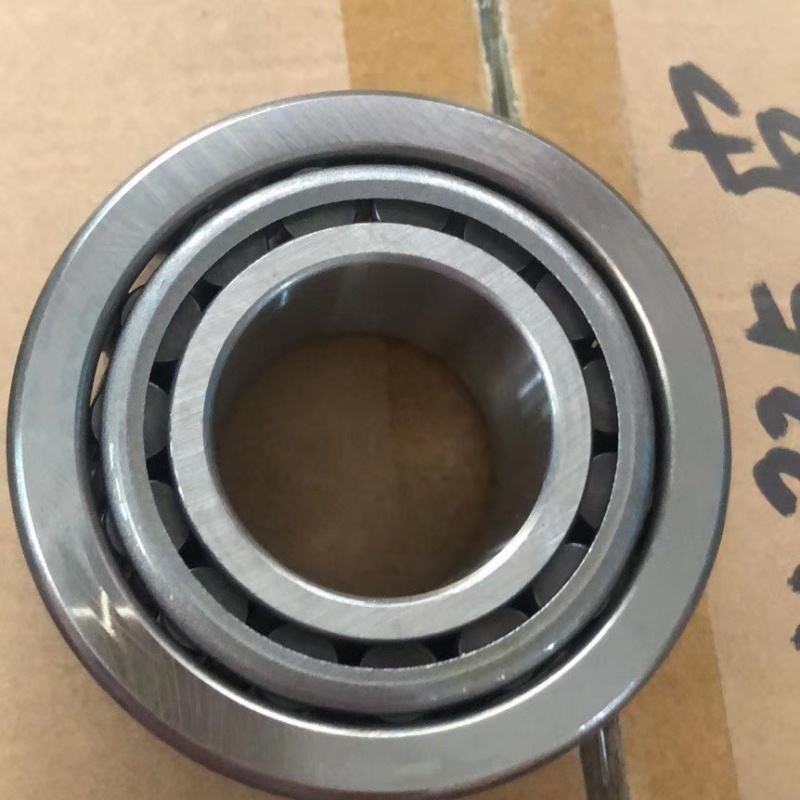
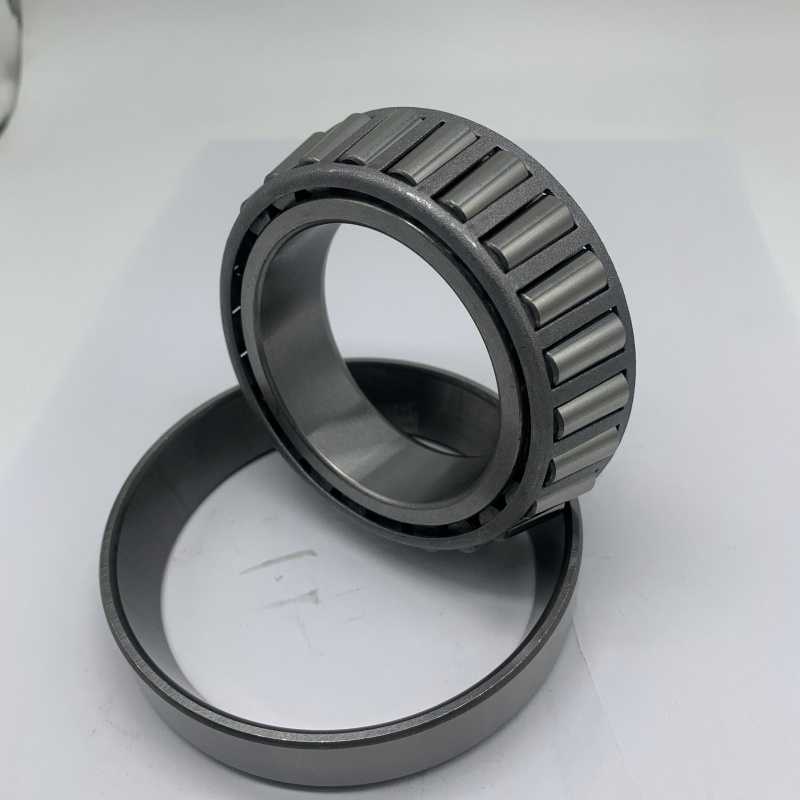
Tapered roller bearings1 use a special design. Their rollers and raceways meet at a single point. This creates a large contact area. So they can take both radial loads (downward force) and thrust loads (side force) together. That is why they work so well for heavy machines.
How the design actually works under pressure
Let me break this down. Most bearings only handle one type of load well. For example, deep groove ball bearings are great for radial loads. But add side force, and they struggle. Cylindrical roller bearings handle heavy radial loads, but they don’t like thrust.
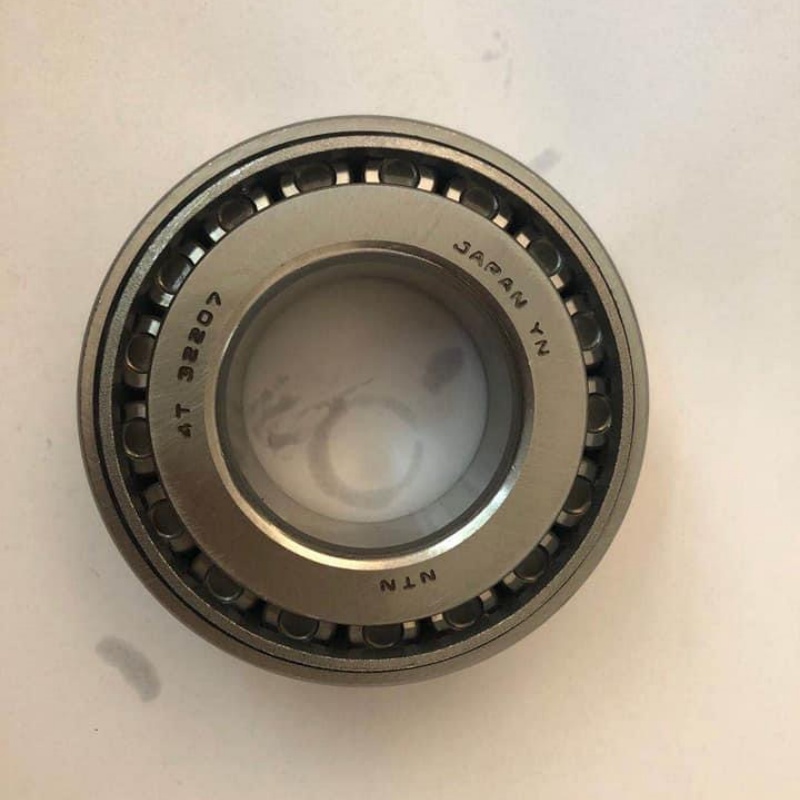
Tapered rollers solve that problem. Their shape is like a cone. The inner ring (cone) and outer ring (cup) both have tapered raceways. The rollers sit between them. When you put a load on the bearing, the rollers align perfectly. The load spreads over a long line contact, not just a small point.
Here is a simple comparison:
| Load Type | Deep Groove Ball Bearing | Cylindrical Roller Bearing | Tapered Roller Bearing |
|---|---|---|---|
| High radial load | Good | Excellent | Excellent |
| High thrust load (one direction) | Poor | Poor | Excellent |
| Combined radial + thrust | Poor | Very poor | Excellent |
| Shock load resistance | Fair | Good | Excellent |
| Speed capability | Very high | High | Medium to high |
You see the pattern. For high-load applications2 like gearboxes, truck wheel ends, or rolling mills, nothing beats tapered rollers.
Real numbers from my factory floor
At FYTZ, we make P5 and P6 precision class tapered rollers. I have tested them against standard bearings. Under a combined load3 of 20 kN radial and 10 kN axial, our tapered rollers last three times longer than a comparable deep groove ball bearing. That is not marketing talk. That is from our inspection line.
I remember a customer from Turkey. He makes construction equipment. His wheel bearings kept failing after six months. I asked him to try our tapered roller bearings. Two years later, he still uses the same design. No failure. He now buys five containers every year.
When should you NOT use tapered rollers?
Nothing is perfect. Tapered rollers have limits. They run hotter at very high speeds. For spindles above 10,000 RPM, you might need angular contact ball bearings instead. Also, they need precise preload. Install them wrong, and they will fail fast. But for high-load, low-to-medium speed work, they are your best friend.
Key Performance Advantages: Load Capacity, Speed, and Service Life
You need bearings that last. But every supplier says their bearings are "high quality." How do you know what really matters? Let me give you three simple numbers to look for.
Tapered roller bearings1 give you three big benefits: high load capacity2 (more than 2x ball bearings for the same size), good speed range (up to 80% of ball bearing limits), and long service life3 (often 3-5 years in normal use). These three together make them a balanced choice for most industrial machines.
Load capacity – the real difference
Let me explain load capacity in plain terms. A bearing’s dynamic load rating4 (C) tells you how much weight it can handle for one million rotations. For a given inner diameter, a tapered roller bearing usually has a C value 2.2 to 2.5 times higher than a deep groove ball bearing.
Why? Because of that line contact I mentioned earlier. A ball touches the raceway at one tiny point. A tapered roller touches along a full line. The pressure per square millimeter drops a lot. So the bearing can take more force without denting or spalling.
Here is a quick example. For a 50 mm bore:
- Deep groove ball bearing (6210): C = 35 kN
- Tapered roller bearing (30210): C = 78 kN
That is more than double. So if your machine has space limits, tapered rollers give you more muscle in the same package.
Speed – what you need to know
Some people say tapered rollers are slow. That is not entirely true. They run at lower speeds than ball bearings, yes. But "lower" does not mean "low." With good lubrication5 and precision grinding, our P5 class tapered rollers can run at 80% of the speed of a similar-sized ball bearing.
For most industrial gearboxes and truck axles, that is plenty fast. You only hit problems above 5,000 RPM. If your machine runs that fast, call me. I will help you find another solution.
Service life – how to make it last
Service life depends on three things: load, speed, and lubrication. But also on installation. I have seen bearings fail in three months because someone hammered them in. That is not the bearing’s fault.
With proper installation6, a good tapered roller bearing should last 20,000 to 50,000 hours. In truck wheel ends, that means 300,000 to 500,000 kilometers. I have a client in Brazil. He runs a fleet of 50 trucks. He switched to our tapered rollers two years ago. He has not changed a single wheel bearing since then. Before that, he changed them every 8 months.
What kills tapered rollers early?
Three things mostly:
- Dirt and water – Tapered rollers hate contamination. Use good seals.
- Wrong preload – Too loose, and the rollers skid. Too tight, and they overheat.
- Bad lubrication – Use the right grease or oil. Change it on time.
Get these three right, and your bearings will outlast your machine.
How to Select the Right Tapered Roller Bearing for Your Needs
Choosing a bearing feels hard. There are so many numbers and codes. But I promise you, it is like buying shoes. You just need the right size and the right fit for the job.
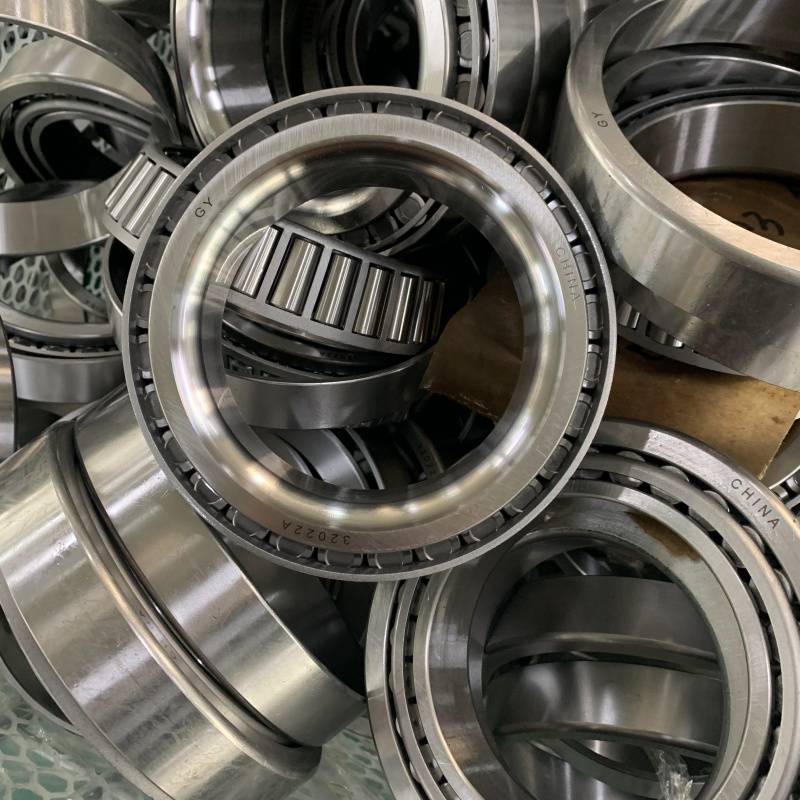
Start with three things: the bore size1 (shaft diameter), the load direction2 (radial, thrust, or both), and the speed. Then pick a bearing series3 from a catalog. Most standard applications use the 30200, 30300, or 32000 series. For heavy truck wheels, use the HM or LM series.
Step 1: Measure your shaft and housing
This sounds basic, but you would be surprised. I get calls from customers who say "I need a bearing for a 50mm shaft." Then I ask: "Is it exactly 50.00 mm, or 49.95 mm?" They don’t know. The difference matters.
Use a caliper. Measure the shaft diameter at three points. Write down the smallest number. Then measure your housing bore. That gives you the bearing’s outer diameter limit.
Step 2: Decide the series
Tapered roller bearings come in metric and inch sizes. Metric is more common outside North America. Here are the most popular metric series:
| Series | Bore range (mm) | Typical use |
|---|---|---|
| 30200 | 15 – 90 | Light to medium gearboxes, small wheels |
| 30300 | 20 – 120 | Medium industrial, tractor wheels |
| 32000 | 15 – 130 | Higher speed, medium load |
| 32200 | 20 – 110 | Heavy load, truck wheel ends |
| 33000 | 40 – 200 | Large industrial, rolling mills |
For most of my customers in India, Russia, and Brazil, the 32200 series is the top choice for trucks. For factory machines, the 30300 series works great.
Step 3: Check the contact angle4
This is the technical part, but stay with me. Tapered rollers have a contact angle. It is usually between 10 and 30 degrees. A smaller angle (like 10-15 degrees) gives higher speed and less thrust capacity. A larger angle (20-30 degrees) gives more thrust capacity but lower speed.
How do you know which one you need? Look at your application:
- Car wheel hub – medium angle (around 15-20°)
- Truck wheel end – larger angle (25-30°)
- Gearbox shaft – smaller angle (10-15°)
If you are not sure, send me an email at sales@fytzbearing.com. I will help you pick.
Step 4: Choose the precision class5
Most standard bearings are Class P0 (normal). But for higher speeds or better accuracy, you want P6 or P5. Here is the difference:
- P0 – for farm equipment, conveyor rollers, basic machines
- P6 – for gearboxes, pumps, general industrial
- P5 – for machine tools, precision spindles, high-speed applications
At FYTZ, we stock P6 as our standard. But we can make P5 on request. Just tell me your RPM and your runout tolerance.
A real story from Rajesh (my typical customer)
Rajesh from Mumbai called me last year. He had a problem. His customer’s textile machine kept breaking bearings every two months. The bearings were standard deep groove balls. I asked him to send me a photo of the failed bearing. I saw marks on the side of the raceway. That told me there was thrust load.
I recommended a 32008 tapered roller bearing. Same bore size1. Same outer diameter. But it could handle the side force. That was six months ago. No failure since. Rajesh now keeps 500 pieces of that bearing in his warehouse.
So my advice: do not guess. Look at the failed bearing. The damage pattern tells you everything.
Installation & Maintenance Tips to Maximize Bearing Reliability
You bought good bearings. Now do not ruin them with bad installation. I see this every week. A customer says "your bearings failed." Then I ask how they put them in. They say "with a hammer and a pipe." That makes me sad.
The secret to long bearing life is simple: clean hands, the right tools, and correct preload. Use a hydraulic press or an induction heater1. Never hammer on the outer ring. Set preload by measuring torque or using a dial indicator. Then check vibration once a month.
Installation – do it right the first time
Let me give you a step-by-step. This works for 90% of tapered roller bearings2.
Step 1: Clean everything. The shaft, the housing, your hands. Even one grain of sand can scratch the raceway. Use clean solvent and lint-free wipes.
Step 2: Heat the bearing. Do not use a torch. Do not use an oven that has food in it. Use an induction heater or a hot oil bath. Heat the bearing to 110°C (230°F). That is hot enough to expand it, but not hot enough to damage the steel or the grease.
Step 3: Slide it on. The bearing should drop onto the shaft with light finger pressure. If you need a hammer, you did something wrong. Let it cool. Then it shrinks and locks in place.
Step 4: Install the second bearing. For most setups, you have two tapered rollers facing each other (back-to-back or face-to-face). Follow your machine’s manual. For truck wheel ends, you usually tighten the nut to a specific torque, then back it off a little.
Step 5: Set the preload. This is critical. Too loose, and the rollers skid. Too tight, and they overheat. Here is a simple method:
- Tighten the nut until you feel resistance.
- Rotate the shaft by hand. It should turn smoothly with a slight drag.
- Measure the starting torque with a torque wrench. For a small bearing (50 mm bore), aim for 2-5 Nm. For a large bearing (150 mm bore), aim for 15-30 Nm.
If you have a dial indicator, even better. Mount it on the shaft end. Push and pull the shaft axially. You want 0.02 to 0.08 mm of end play for most applications. That is about the thickness of a human hair.
Maintenance – simple checks save big money
Once your bearing is running, do not ignore it. Here is my easy checklist:
| Check | How often | What to look for |
|---|---|---|
| Temperature | Daily (for critical machines) | Above 70°C (158°F) is too hot. Check lubrication. |
| Vibration | Weekly | Use a simple pen-type vibrometer. Sudden increase means trouble. |
| Noise | Daily | Listen for grinding or clicking. That means dirt or damage. |
| Lubrication | Monthly for grease, weekly for oil | Grease should be clean. Oil should be clear and at the right level. |
The most common mistake I see
People mix different greases. Do not do that. Different thickeners (lithium, calcium, polyurea) do not mix. They turn into a hard paste. That paste blocks the rollers. Then the bearing seizes.
Always use the same grease. If you need to change, clean out all the old grease first. Then put in the new one. At FYTZ, we use a lithium-based grease3 with EP additives. That works for 80% of industrial applications.
When to replace, not repair
Some people try to reuse tapered rollers after a failure. Do not. Once a roller or raceway has spalling (little pits), it will only get worse. Replace the whole bearing. It is cheaper than a machine breakdown.
I tell my customers: keep one spare set on your shelf. For Rajesh, I suggested he keep two of each popular size. That way, when a bearing fails, he can replace it in one hour. No waiting for shipping from China. That keeps his customers happy.
Conclusion
Start with tapered rollers for high-load jobs. Pick the right size, install it cleanly, and check it often. That gives you years of reliable work.
-
Discover how an induction heater can simplify the bearing installation process and prevent damage, enhancing your maintenance skills. ↩ ↩ ↩ ↩ ↩
-
Explore this link to learn essential techniques for installing tapered roller bearings correctly, ensuring longevity and reliability. ↩ ↩ ↩ ↩
-
Explore the advantages of lithium-based grease, including its compatibility and performance in various industrial applications. ↩ ↩ ↩ ↩
-
Learn how contact angle influences bearing performance to make informed choices for your applications. ↩ ↩
-
Discover the significance of precision classes in bearings to enhance machinery performance and longevity. ↩ ↩
-
Proper installation is vital for bearing performance; learn the best practices to avoid premature failure. ↩