
Your machine shakes. Bearings fail every few months. That costs you time and money.
Yes, tapered roller bearings are built for multi-directional loads. They handle radial force (downward) and thrust force (sideways) at the same time. Their cone-shaped design spreads the load over a wide area. That gives you reliability in tough conditions.
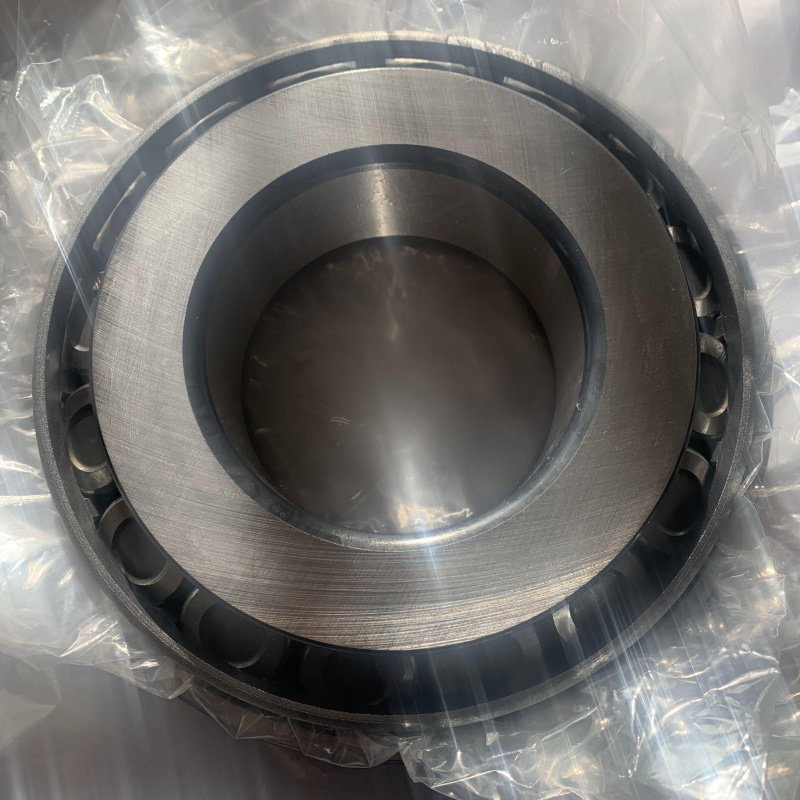
I run a bearing factory in China. My brand is FYTZ Bearing. I talk to procurement managers like Rajesh from India every day. He needs bearings that last in gearboxes and wheel ends. He hates breakdowns. So do you. Let me show you how tapered rollers solve the problem of multi-directional loads.
What Makes Tapered Roller Bearings Ideal for Multi Directional Loads?
Most bearings break when loads come from two directions at once. You see cracks on the raceway. Then noise. Then a full stop. That is a headache.
Tapered roller bearings1 have a unique design. Their rollers and raceways meet at a single line, not a point. This creates a big contact area. So the bearing can take heavy radial loads2 and high thrust loads3 together. That is why they work so well for multi-directional forces.
The geometry that makes the difference
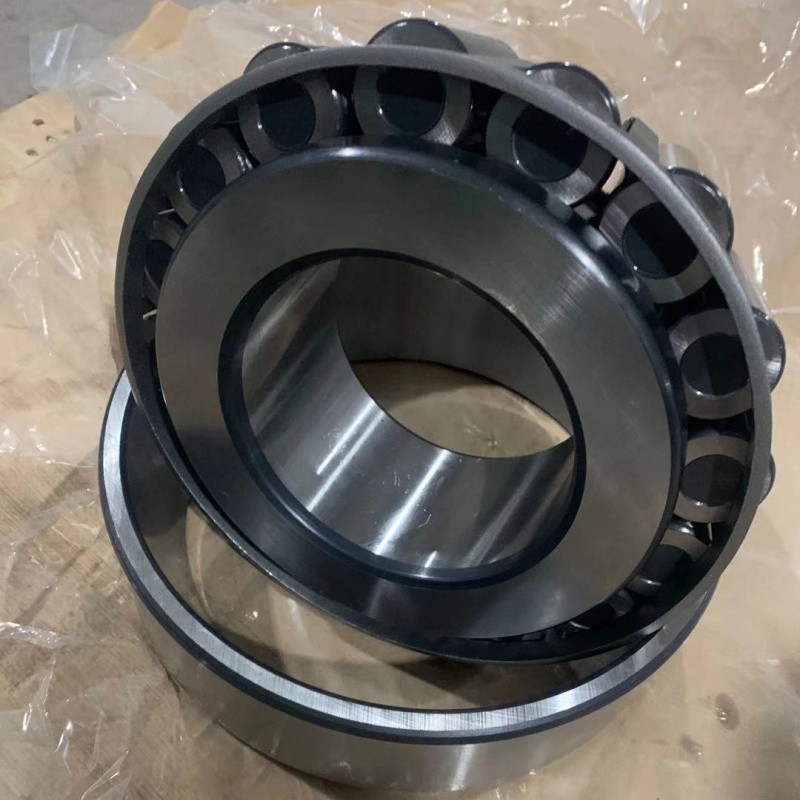
Let me explain the secret. A tapered roller bearing has four main parts: the inner ring (cone), the outer ring (cup), the rollers, and the cage. The inner and outer rings have tapered raceways. That means they are not straight. They slope inward.
The rollers are also tapered. They look like small cones. When you put them between the two rings, they make contact along a full line. Not a tiny point like a ball bearing. A line contact spreads the pressure over a much bigger area.
Now here is the important part. The angles of the inner raceway, outer raceway, and rollers all meet at a single point on the bearing’s center line. That is not an accident. That is the design. When a radial load pushes down, the rollers transfer that force to both raceways. At the same time, a thrust load pushes sideways. The rollers handle that too because of the angle.
How the contact angle4 handles both directions
The contact angle is the key number. It is usually between 10 and 30 degrees. A larger angle (like 25-30 degrees) gives you more thrust capacity. But it lowers the maximum speed a little. A smaller angle (10-15 degrees) gives you higher speed but less thrust capacity.
Here is a simple table showing what different angles do:
| Contact Angle | Radial Load Capacity | Thrust Load Capacity | Typical Speed | Best For |
|---|---|---|---|---|
| 10-12 degrees | Very high | Low | High | High-speed spindles |
| 13-16 degrees | High | Medium | Medium-high | General industrial |
| 17-22 degrees | Medium-high | High | Medium | Gearboxes, pumps |
| 23-30 degrees | Medium | Very high | Low-medium | Truck wheel ends, heavy equipment |
So you can choose the angle based on your load direction. That flexibility is rare in other bearing types.
What happens without this design?
Take a deep groove ball bearing5. Put a heavy radial load and a medium thrust load on it at the same time. The balls will push sideways against the cage. The cage can break. Or the balls will ride up the edge of the raceway. That creates high stress at one tiny point. Then you get spalling (little pits) very fast.
I have seen this many times. A customer in Russia sent me a failed 6310 deep groove ball bearing from his conveyor. The raceway had a groove on one side. That was from thrust load. I gave him a 30210 tapered roller bearing instead. Same bore size. Same outer diameter. It has been running for two years now.
So the geometry of tapered rollers6 is not a marketing trick. It is real engineering that solves a real problem.
How to Handle Radial and Thrust Loads at the Same Time
You have a shaft. It pushes down (radial load). It also pushes sideways (thrust load). A normal bearing cannot take both well. You need a bearing that splits the forces.
The trick is to use two tapered roller bearings1 together, mounted face-to-face or back-to-back. One bearing handles thrust in one direction. The other handles thrust in the opposite direction. Together, they take radial loads too. This setup is standard in truck wheels and gearboxes.
The two common mounting arrangements
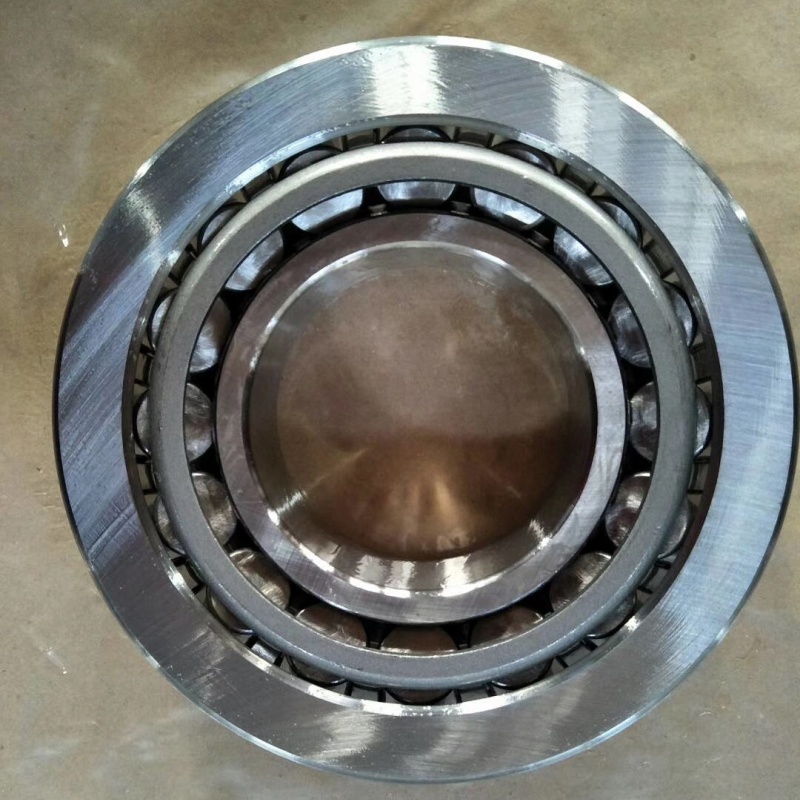
You rarely use a single tapered roller bearing alone. They almost always come in pairs. Here are the two ways to mount them:
Face-to-face (DF mounting)2 – The wide faces of the cones point toward each other. This arrangement is less stiff but handles misalignment better. It works well for shafts that get hot and expand.
Back-to-back (DB mounting)3 – The wide faces point away from each other. This gives you a stiffer setup. It handles moment loads (bending forces) better. Most machine tools and gearboxes use back-to-back mounting.
Let me show you the differences in a table:
| Feature | Face-to-Face (DF) | Back-to-Back (DB) |
|---|---|---|
| Stiffness | Lower | Higher |
| Tolerance to shaft expansion | Better | Worse |
| Moment load capacity | Lower | Higher |
| Typical applications | Automotive wheel hubs, conveyors | Machine tool spindles, precision gearboxes |
| Preload sensitivity | Less sensitive | More sensitive |
How to calculate the total load on each bearing4
This is a bit technical, but stay with me. When you have two bearings, the loads split between them. You need to know the distance between the bearings and where the load sits.
Here is a simple rule of thumb. For a shaft with two tapered roller bearings:
- The radial load splits based on how close each bearing is to the load. The closer bearing takes more radial load.
- The thrust load is different. One bearing takes all the thrust in one direction. The other bearing takes all the thrust in the opposite direction. They do not share thrust equally.
I remember a case from Egypt. A customer made farm equipment. He used two 32008 bearings face-to-face on a thresher shaft. The shaft had a big radial load from the drum and a thrust load from the crop pushing sideways. He did not know how to set the preload. So the bearings ran loose and got noisy.
I asked him to measure the distance between the bearings. It was 120 mm. The radial load was 8 kN at the center. I calculated that each bearing took about 4 kN radial. Then the thrust load was 2 kN to the left. The left bearing took all that thrust. The right bearing took zero thrust. That made sense. He then set the preload by tightening the locknut until the starting torque was 3 Nm. The noise went away.
Why preload matters so much for combined loads
When you have radial and thrust loads together, the internal clearance of the bearing5 changes. If the bearing is too loose, the rollers will skid instead of rolling. Skidding causes flat spots on the rollers. Then the bearing fails.
If the bearing is too tight, the rollers get squeezed. The lubricant film breaks down. Then you get metal-to-metal contact. That creates heat and wear.
The right preload is a small amount of negative clearance. You want the rollers to be in constant contact with the raceways, but not under heavy pressure. For most applications, a preload of 0.01 to 0.05 mm (10 to 50 microns) is enough. That is about one-tenth the thickness of a piece of paper.
At FYTZ, we can supply bearings with a factory-set preload. Just tell me your operating temperature and speed. I will give you the right internal clearance class (C2, C3, or normal).
Real World Applications: Where Multi Directional Loads Happen Every Day
You might think multi-directional loads are rare. They are not. Every time a vehicle turns a corner, every time a gearbox changes speed, every time a conveyor carries a heavy load sideways – that is multi-directional.
Tapered roller bearings1 are everywhere in heavy industry. Truck wheel ends, gearboxes, rolling mills, conveyor rollers, and even aircraft landing gear. Any machine that sees both weight and side forces needs tapered rollers.

Truck and trailer wheel ends
This is the biggest application. A truck wheel carries the weight of the vehicle (radial load). When the truck turns a corner, side forces push on the wheel (thrust load). So every truck wheel uses two tapered roller bearings – one on the inside and one on the outside.
The outer bearing handles thrust in one direction. The inner bearing handles thrust in the opposite direction. Together, they keep the wheel stable.
I supply bearings to a distributor in Brazil. He sells to truck fleets. His customers used to change wheel bearings every 100,000 km. After switching to our FYTZ tapered rollers, they now go 400,000 km. The secret? Better steel and tighter precision (P6 class).
Industrial gearboxes2
A gearbox has shafts with gears. The gears push against each other. That creates radial load. But helical gears also create thrust load because the teeth are angled. So every helical gearbox needs tapered roller bearings on the input and output shafts.
I worked with a customer in Pakistan. He makes gearboxes for textile machines. He used cylindrical roller bearings for radial load and a separate thrust bearing. That took up too much space. I showed him how to use a single pair of tapered rollers for both jobs. He saved 30% on bearing costs and made his gearbox smaller.
Conveyor rollers in mines3
Mines use long belt conveyors. The belt carries heavy ore. The rollers under the belt take the weight (radial load). But the belt also moves sideways sometimes. That creates thrust load on the roller bearings.
If a conveyor roller bearing fails, the whole belt stops. That costs thousands of dollars per hour. So mine operators need reliable bearings.
I have a customer in South Africa. He buys our 30212 tapered rollers for his conveyor rollers. He told me that our bearings last twice as long as the previous brand. The reason is our heat treatment. We use a special process that makes the steel harder on the surface but tough inside.
Construction equipment4 (excavators and loaders)
These machines see the worst conditions. Heavy loads, shock loads, dirt, water, and vibrations. The swing bearing (where the cab rotates) takes huge multi-directional loads. The wheel bearings also see radial and thrust at the same time.
I remember a customer from Turkey. He makes backhoe loaders. He had problems with his swing bearing. It failed after 6 months. I suggested a custom tapered roller bearing with a larger contact angle (28 degrees). That bearing now lasts 3 years.
What about other applications?
Here is a quick list of other places where multi-directional loads happen:
- Rolling mills5 – steel sheets push down and sideways on the rolls.
- Wind turbine gearboxes6 – the blades create bending moments and thrust.
- Railroad axles – the train’s weight and cornering forces.
- Marine propeller shafts – water thrust and shaft weight.
- Machine tool spindles – cutting forces come from different angles.
So if your machine moves heavy things or changes direction, you probably need tapered roller bearings.
Comparing Tapered Rollers to Other Bearings for Combined Loads
You have choices. Deep groove ball bearings, cylindrical roller bearings1, spherical roller bearings2, angular contact ball bearings3. Each one has strengths. But for multi-directional loads, tapered rollers often win.
Tapered roller bearings beat ball bearings for heavy combined loads. They beat cylindrical rollers because they handle thrust. They beat spherical rollers for precision4 and cost5. The only real competitor is angular contact ball bearings, but those are for higher speeds and lighter loads.
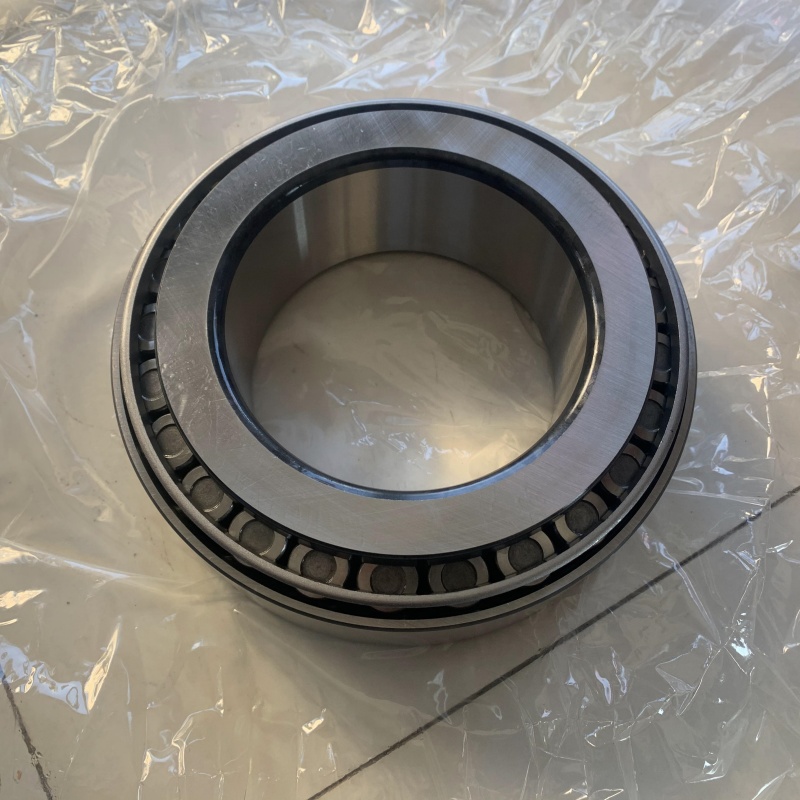
Tapered rollers vs. deep groove ball bearings6
Deep groove ball bearings are the most common type. They are cheap and run fast. But they hate heavy thrust. Here is the truth:
- Load capacity – For the same size, a tapered roller has 2-3 times higher load rating than a deep groove ball bearing.
- Speed – Ball bearings win here. They can run 30-50% faster than tapered rollers.
- Stiffness – Tapered rollers are much stiffer. That means less deflection under load.
- Cost – Ball bearings are cheaper, about 40-60% less for the same bore size.
So if you have light loads and high speed, use ball bearings. If you have heavy combined loads, use tapered rollers.
Tapered rollers vs. cylindrical roller bearings
Cylindrical roller bearings are great for heavy radial loads. They have line contact like tapered rollers. But they cannot take thrust loads at all. Zero. None.
| Feature | Tapered Roller | Cylindrical Roller |
|---|---|---|
| Radial load capacity7 | High | Very high |
| Thrust load capacity | High (one direction) | None |
| Combined load | Excellent | Poor (needs separate thrust bearing) |
| Space needed | Compact (one bearing does both) | More (need two bearings) |
| Cost | Medium | Medium |
So if you have pure radial load, use cylindrical rollers. If you have radial plus any thrust, use tapered rollers.
Tapered rollers vs. spherical roller bearings
Spherical roller bearings are tough. They handle heavy radial loads and moderate thrust loads. They also tolerate misalignment well. But they are expensive and less precise.
Here is my experience. For heavy, dirty applications like steel mills or mining, spherical rollers are good. But for most industrial gearboxes and truck wheels, they are overkill. Tapered rollers give you 90% of the load capacity at 50% of the cost.
Also, spherical rollers have more internal clearance. That means they are less precise. If you need accurate shaft positioning (like in a machine tool), tapered rollers are better.
Tapered rollers vs. angular contact ball bearings
Angular contact ball bearings are the closest competitor. They also handle combined loads. But they use balls, not rollers. So they have point contact, not line contact.
- Load capacity – Tapered rollers win for heavy loads. For the same size, a tapered roller can take 2x the load.
- Speed – Angular contact balls win. They can run much faster (up to 2-3x).
- Precision – Both can be very precise (P5, P4, even P2).
- Heat – Tapered rollers run hotter at high speeds.
So the rule is simple. Low to medium speed with heavy loads? Use tapered rollers. High speed with light to medium loads? Use angular contact ball bearings.
A real decision from my customer Rajesh
Rajesh had a problem. His customer made small gearboxes for irrigation pumps. The pump shaft turned at 3,000 RPM. The load was medium: 5 kN radial and 2 kN thrust. He was using angular contact ball bearings. They worked, but they failed every 12 months.
I asked him to try our 7206 tapered roller bearings (P6 class). The load rating was higher. The price was similar. After 18 months, the bearings were still fine. Rajesh now uses tapered rollers for all his pump gearboxes.
So my advice to you: do not guess. Look at your load, speed, and budget. Then pick the bearing type that fits. But for most multi-directional load jobs, tapered rollers are the smart choice.
Conclusion
For multi-directional loads, tapered roller bearings give you strength, reliability, and value. Mount them in pairs, set the preload right, and they will last for years.
-
Discover the features and best uses of cylindrical roller bearings for radial loads. ↩ ↩ ↩ ↩
-
Find out why spherical roller bearings are suitable for heavy and misaligned applications. ↩ ↩ ↩ ↩
-
Understand the applications and advantages of angular contact ball bearings in high-speed scenarios. ↩ ↩ ↩ ↩
-
Explore the significance of precision in bearing applications and its impact on machinery. ↩ ↩ ↩ ↩
-
Learn how bearing costs influence decision-making in industrial applications. ↩ ↩ ↩ ↩
-
Learn about the common applications and limitations of deep groove ball bearings. ↩ ↩ ↩
-
Get insights into how load capacity affects bearing selection and performance. ↩