
Your excavator is down, and the cause is a failed bearing. This common problem leads to costly downtime and delays your project.
Premature failure in construction machinery bearings is most often caused by contamination, improper mounting, and insufficient lubrication. These three factors account for over 80% of field failures in excavators and loaders.
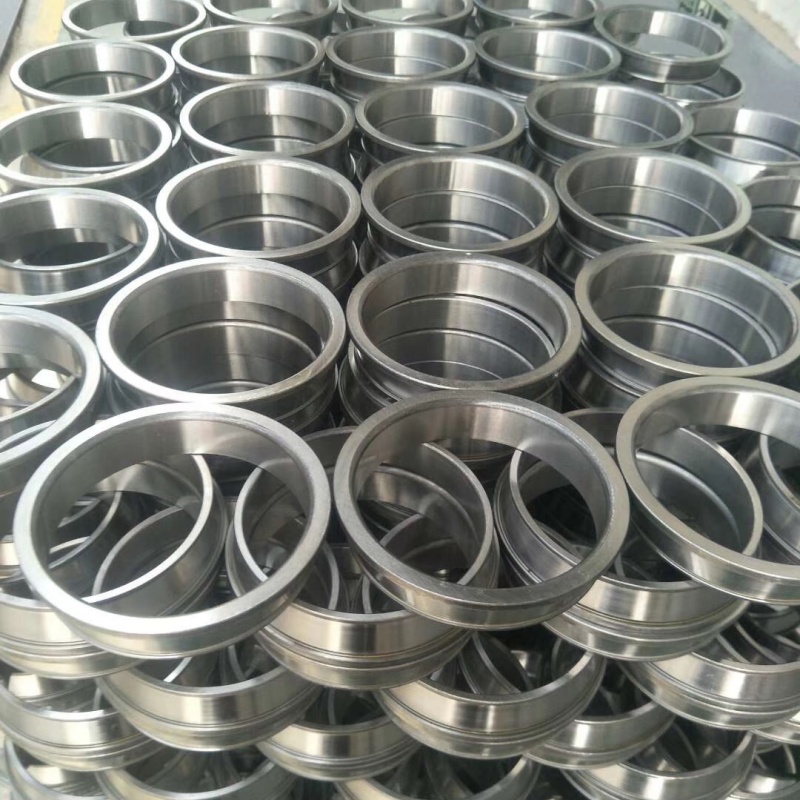
But stopping failures is not just about buying a new part. It is about understanding the root causes. As a bearing manufacturer who talks to mechanics and fleet owners every day, I want to share what I have learned about keeping your machines moving.
What causes premature failure of tapered roller bearings in excavators and loaders?
You just replaced a bearing, and now it is noisy again. It is frustrating, and you are losing money with every hour the machine sits idle.
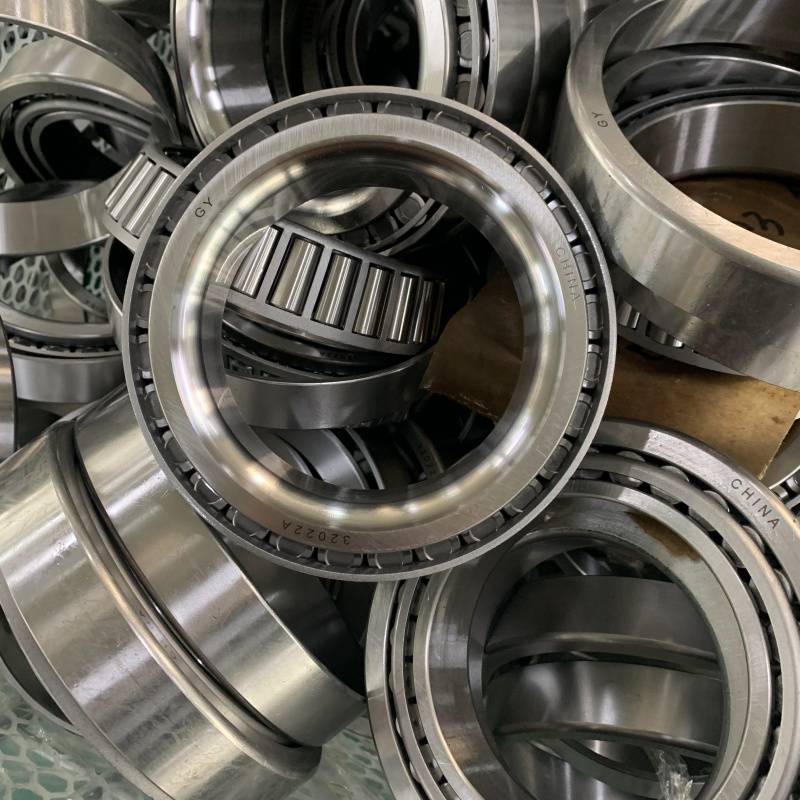
The primary causes are contamination from dust and water, incorrect mounting causing misalignment, and poor lubrication practices. These issues create stress points that lead to spalling and overheating.
Dive deeper Paragraph:
Let me break this down for you. I work with procurement managers like Rajesh, who imports bearings for the Indian market. He often tells me his clients complain about short bearing life1. When we dig into the problem, it is rarely the bearing’s fault. It is the environment and the installation.
I see three main enemies for a tapered roller bearing in heavy machinery.
1. Contamination2
Construction sites are dirty. Dust, sand, and water are everywhere. A tapered roller bearing needs clean oil or grease to work. When dirt gets in, it acts like sandpaper. It grinds the raceways and rollers. The result is pitting and premature wear. I have seen bearings fail in weeks instead of years because a seal was damaged during installation.
2. Improper Mounting3
Mounting a bearing is not a guessing game. You need the right tools. Many mechanics use a hammer to force a bearing into place. This damages the rolling elements and races. It creates dents and misalignment. Even a small dent becomes a stress concentration. Under heavy loads, that stress point grows into a crack. The bearing fails quickly. I always tell my customers to use induction heaters or press tools. It saves money in the long run.
3. Lubrication Failure4
Lubrication is the blood of the bearing. It reduces friction and carries away heat. In excavators, the bearings face high loads and shock forces. Using the wrong grease or not enough grease causes metal-to-metal contact. This leads to overheating and adhesive wear. The steel loses its hardness. Once that happens, the bearing is finished.
Here is a simple table to help you diagnose these issues:
| Failure Cause | Visible Signs | Common Fix |
|---|---|---|
| Contamination | Bruising, denting, surface wear | Improve sealing, clean housing |
| Improper Mounting | Misalignment, cracked rings | Use proper mounting tools, check fit |
| Lubrication Failure | Discoloration (blue/brown), scoring | Use correct grease, follow regrease schedule |
You need to think about these factors before the bearing ever goes into the machine. Prevention is always cheaper than repair.
How do you select the right tapered roller bearing for heavy construction equipment?
Walking into a warehouse to pick a bearing can be overwhelming. There are so many numbers and sizes. You worry about picking the wrong one.
To select the right bearing, you must match the bearing’s load rating1 and dimensions to the machine’s specific application. Always check the OEM part number and consider the radial and axial load demands.
[^2]](https://sdycbearing.com/wp-content/uploads/2025/12/Tapered-Roller-Bearings-8-1.jpg)
Dive deeper Paragraph:
Selecting a bearing is not just about matching a number on a box. I learned this from a customer in Turkey. He was selling bearings for loaders. The bearings looked right, but they kept failing. The problem was the "interchange." Just because a bearing fits does not mean it works.
When you select a bearing for heavy equipment, you need to ask three questions. I use these questions in my own factory when I talk to engineers.
Question 1: What is the load type?
Tapered roller bearings are great for combined loads. That means they handle radial load (weight) and axial load (thrust) at the same time. In an excavator’s swing gear, the bearing takes heavy radial forces from the cabin. It also takes axial forces when the machine turns. You need to know which direction the load is coming from. If you choose a bearing with a low contact angle for a high thrust application, it will fail. You must calculate the equivalent dynamic load. If you are not an engineer, you can trust the OEM specification.
Question 2: What is the fit?
The fit is how tight the bearing sits on the shaft or in the housing. In construction equipment, vibration is constant. You need an interference fit3 on the rotating ring. If the fit is too loose, the bearing will spin on the shaft. This is called fretting. It wears down the shaft. If the fit is too tight, the bearing’s internal clearance disappears. The bearing will run hot and seize.
Question 3: What is the precision class4?
Most construction bearings are P0 or P6 class. That is standard. You do not always need a high-precision bearing for a loader. But you do need consistency. The bearing must be dimensionally stable. That means the steel is treated so it does not grow or shrink when it gets hot.
Here is a checklist I share with my clients:
- Check the OEM number. Never guess. Use the manufacturer’s catalog.
- Verify the series. Is it a metric or inch series? Some machines use older inch standards.
- Confirm the internal clearance. C3 clearance is common for heavy-duty applications because it allows for thermal expansion.
What is the difference between single-row and double-row tapered roller bearings?
You see two similar bearings. One has one row of rollers, and one has two. You wonder why the price is so different and which one your machine really needs.
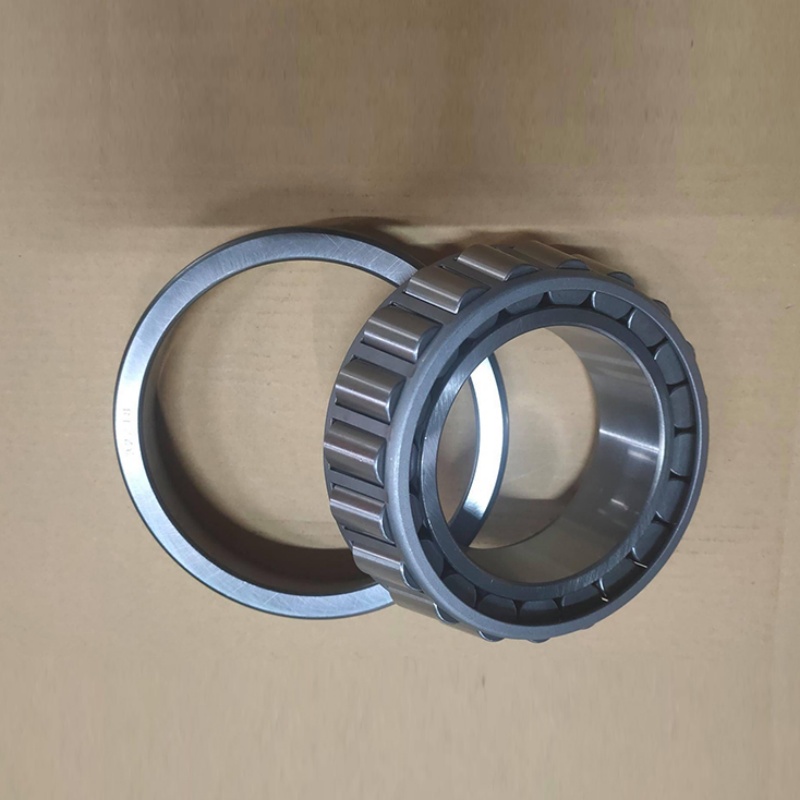
A single-row bearing handles radial and axial load in one direction, while a double-row bearing handles heavy radial load and axial load in two directions. Double-row designs are often used for fixed positions like wheel hubs.
Dive deeper Paragraph:
This is a common question from importers. I remember a distributor in Russia asked me about this for a line of agricultural equipment. He was confused about why his customers needed two different bearings for similar-looking parts. The difference is in the capacity and the application.
Single-Row Tapered Roller Bearings1
This is the standard bearing you see most often. It has one cone assembly and one cup. It is adjustable. You can set the clearance or preload by moving the cone relative to the cup. But it has a limitation. It can only take thrust load in one direction. If you have a shaft with load pushing both ways, you need two single-row bearings mounted back-to-back or face-to-face. That takes up space. It also requires precise adjustment during assembly. If you mess up the adjustment, you get endplay or preload problems.
Double-Row Tapered Roller Bearings2
A double-row bearing is like two single-row bearings put together in one unit. It has two rows of rollers in a single outer ring and one inner ring. The big advantage is that it handles radial loads and axial loads from both directions in a compact space. It is also pre-set at the factory. You do not need to adjust it. This makes assembly faster and more reliable.
For construction machinery, you find double-row bearings in wheel hubs. They handle the weight of the vehicle (radial load) and the cornering forces (axial load) in both directions. They are also common in gearboxes where space is tight.
Let me show you a simple comparison:
| Feature | Single-Row | Double-Row |
|---|---|---|
| Load Capacity3 | Moderate, one-direction thrust | High, two-direction thrust |
| Adjustment | Field-adjustable | Factory pre-set4 |
| Space | Requires more axial space | Compact design |
| Cost | Lower | Higher |
| Common Use | Differential pinions, steering pivots | Wheel hubs, final drives |
If you are a distributor, you need to stock both. But you need to know which one is original equipment. Swapping a double-row for two single-rows is rarely a direct fit.
Why does heat treatment1 and steel quality2 matter for heavy-duty performance?
You see two bearings that look identical, but one lasts twice as long. You wonder why. The answer is usually inside the steel, not just the shape.
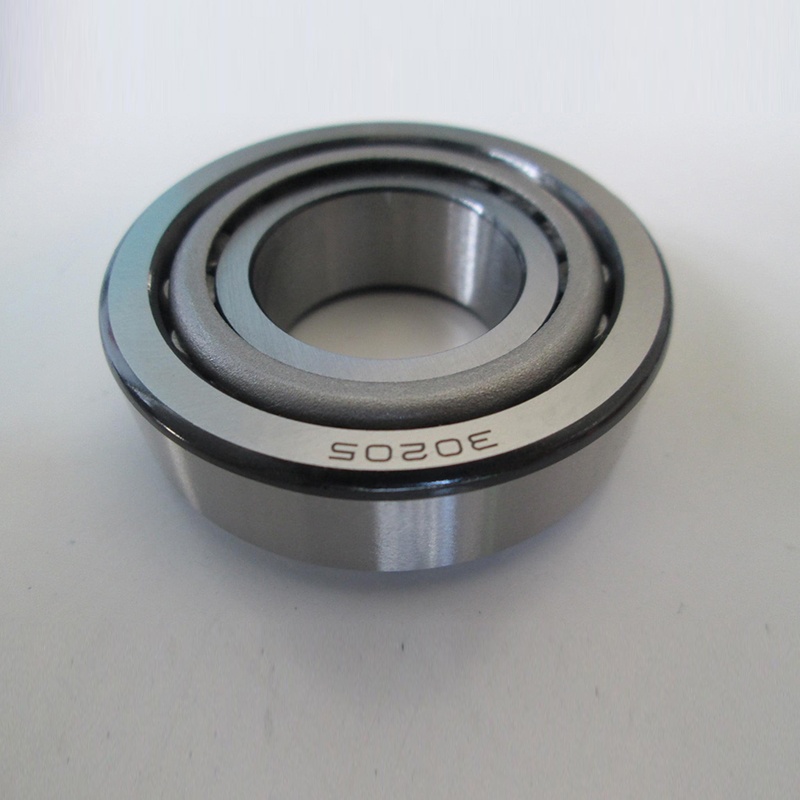
Heat treatment and steel quality determine the bearing’s hardness, fatigue resistance3, and dimensional stability4 under heavy loads. Without proper treatment, the bearing will deform or crack under the shock loads of construction work.
Dive deeper Paragraph:
I will be honest with you. This is where cheap bearings fail. At FYTZ, we are a factory. We see the steel come in. We test it. We put it through our heat treatment lines. I have seen the difference between good steel and bad steel. It is night and day.
Many people think a bearing is just a piece of hard metal. It is not that simple. A bearing needs to be hard enough to resist wear. But it also needs to be tough enough to handle impact. If a bearing is too hard, it is brittle. It cracks under shock load. If it is too soft, it deforms. The geometry changes, and the bearing fails.
The Steel Quality
Good bearing steel is clean. It has few non-metallic inclusions. Inclusions are tiny pieces of dirt trapped in the steel. When the bearing rolls, these inclusions create stress points. Eventually, a crack starts at that point. This is called rolling contact fatigue5. High-quality steel comes from mills that use vacuum degassing. This removes impurities. When I source steel for our factory, I only buy from certified mills. It costs more, but it is the only way to guarantee life.
The Heat Treatment
Heat treatment is the process of heating and cooling the steel to change its structure. For tapered roller bearings, we use a process called through-hardening or case hardening6, depending on the application.
- Through-Hardening: The entire component gets hard. This is good for small to medium bearings.
- Case Hardening: The surface gets hard, but the core stays tough. This is best for large, heavy-duty bearings. They can take a hit on the outside without breaking.
The key is consistency. The hardness must be uniform across the raceway. If there is a soft spot, the bearing will wear out in that area. In our inspection line, we check the hardness of every batch. We also do microstructure analysis. This is not just talk. It is quality control.
The Result for Your Machine
When you combine clean steel with proper heat treatment, you get a bearing that can handle the three big problems in construction: heavy load, shock load, and contamination. The steel will resist indentation from debris. It will maintain its hardness if it runs a little hot. And it will last through thousands of operating hours.
I have a customer in Brazil who runs a fleet of loaders. He switched to our bearings because he was tired of failures in the third month. After we sent him samples with our material specs, he tested them. The bearings lasted over a year. That is the power of good steel and correct heat treatment.
Conclusion
For heavy machinery, bearing life is defined by selection, installation, and the quality of the steel and heat treatment behind it.
-
Understanding heat treatment can help you appreciate its role in enhancing steel performance and longevity. ↩ ↩ ↩ ↩
-
Exploring steel quality will reveal how it impacts durability and reliability in heavy-duty applications. ↩ ↩ ↩
-
Learning about fatigue resistance can help you understand how materials withstand repeated stress over time. ↩ ↩ ↩ ↩
-
Discovering dimensional stability will show you how it affects the performance and lifespan of mechanical components. ↩ ↩ ↩ ↩
-
Understanding rolling contact fatigue can help you prevent premature bearing failures in your machinery. ↩
-
Exploring case hardening will provide insights into how surface treatment enhances bearing toughness and durability. ↩