
Is your machinery noise getting worse? Does the vibration signal a hidden failure? These problems cost you time and money every single day.
Smooth and quiet tapered roller bearings are not just a luxury; they are a sign of precision engineering. They ensure less friction, longer life, and better performance for your equipment.
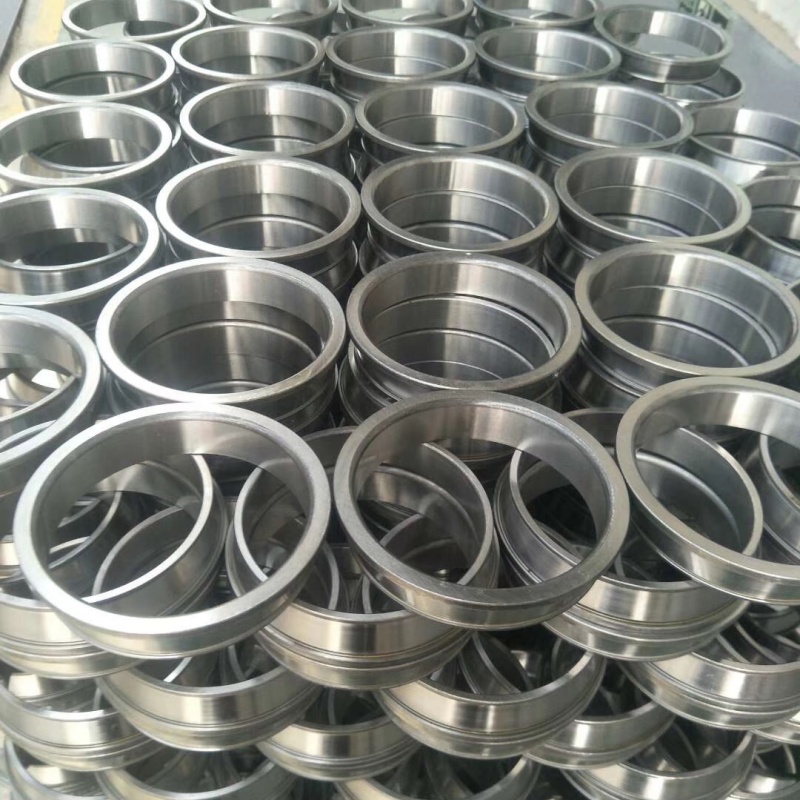
I have worked with bearing importers for over a decade. I know that when a customer asks for a "smooth bearing," they are really asking for a reliable partner. Let me break down exactly what makes a tapered roller bearing perform at its best.
What are the advantages of tapered roller bearings1?
Have you ever had a bearing fail under heavy load? It is a messy and expensive problem. You need a solution that can handle both radial and axial forces.
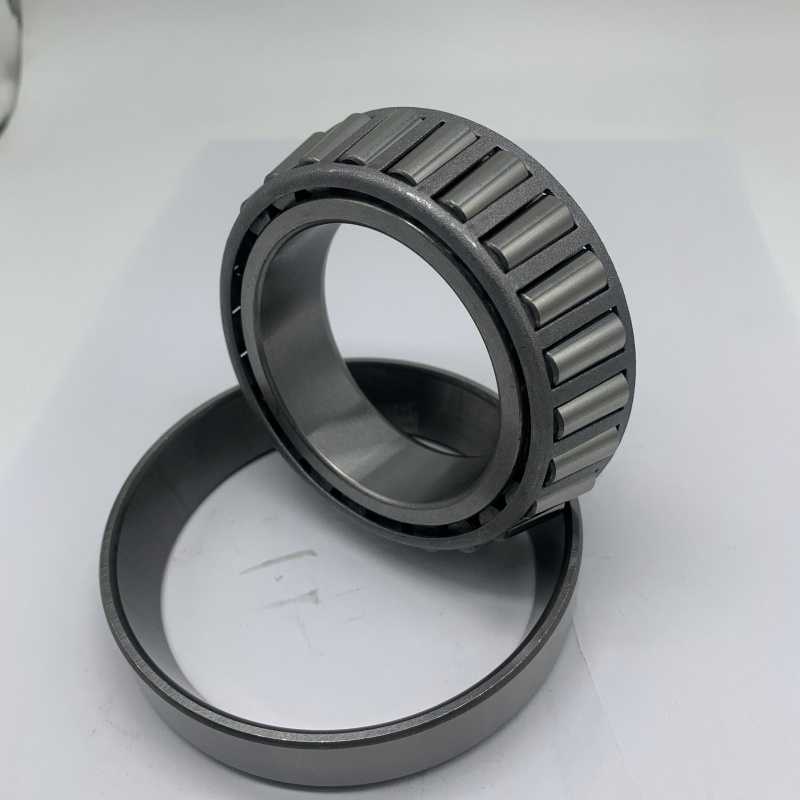
Tapered roller bearings have a unique design. Their conical shape allows them to handle high radial loads and high axial loads at the same time. This makes them perfect for demanding applications.
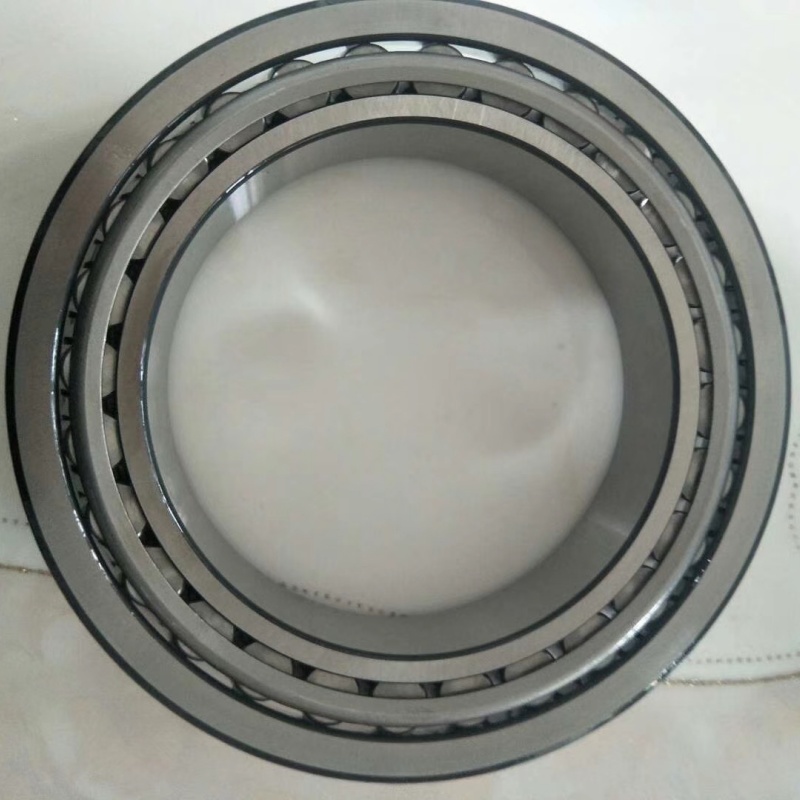
To understand the advantages, we need to look at the basic design. Unlike a ball bearing, which makes a point contact, a tapered roller bearing makes a line contact2. This line contact distributes the weight over a larger area. That is the secret to its strength.
Many people ask me, "Why can’t I just use a deep groove ball bearing for everything?" The answer is simple. A ball bearing is great for pure radial loads. But if your application has any thrust, or axial load, you need a tapered design.
Let me explain this with a table. It shows how different bearings handle different types of stress.
| Feature | Tapered Roller Bearing | Deep Groove Ball Bearing |
|---|---|---|
| Load Capacity (Radial) | High | Medium to High |
| Load Capacity (Axial) | High (One direction) | Low to Medium |
| Contact Type | Line Contact | Point Contact |
| Suitability | Gearboxes, Wheel Hubs, Heavy Machinery | Electric Motors, Conveyors, Pumps |
This design also offers a big advantage during installation. You can adjust the internal clearance3. You can set the preload to make the bearing stiffer or looser. This adjustability is crucial for applications like a car’s wheel hub. If the bearing is too loose, the wheel wobbles. If it is too tight, it overheats. Tapered roller bearings give you the control to get it just right.
For my customers in India, like Rajesh who imports for the automotive aftermarket, this is a key selling point. The trucks and buses on the road deal with rough roads and heavy cargo. They need a bearing that can take a beating from both the weight of the truck (radial load) and the forces from turning corners (axial load). Tapered roller bearings are built for that specific job.
Who makes the best tapered roller bearings1?
You see brand names everywhere. But how do you know which one is actually the best? The wrong choice can lead to unhappy customers and lost business.
The best bearing manufacturer is not always the most famous name. It is the one that offers consistent quality, strict precision control2, and the ability to customize for your specific market needs.
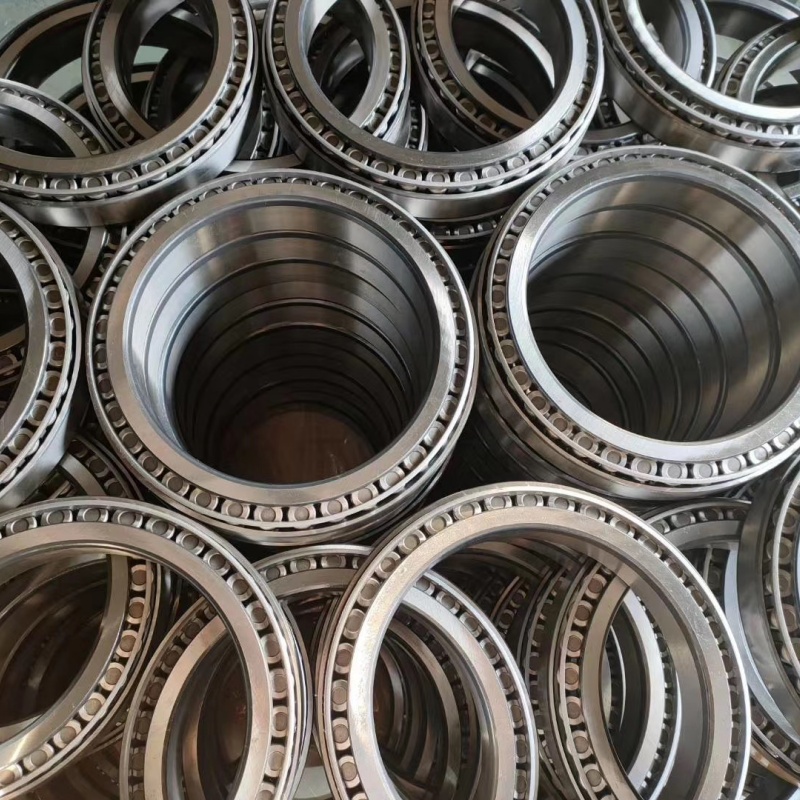
This is a question I get from my clients all the time. They want to know if they should stick to the big, global brands. The truth is, "best" is a relative term. It depends on your business model.
If you are selling to a customer who only trusts a specific brand, then that is the "best" for that sale. But if you are an importer looking to build your own brand, or if you need a reliable, cost-effective solution for a local market, the answer changes.
For many years, the market was dominated by a few big names. But things have changed. China has become a powerhouse in bearing manufacturing. The factories here have invested in top-tier German and Japanese production lines.
Take my factory, FYTZ Bearing, for example. We are not just a trading company. We are a factory with integrated production and inspection lines. This means we control the quality from the steel tube to the final packaging. We do not outsource the critical steps. We inspect every batch for noise, vibration, and dimensional accuracy.
Here is how I define the "best" manufacturer for a B2B buyer like you:
- Precision Class: Can they consistently deliver P5 or P6 precision? This is non-negotiable for high-speed applications.
- Steel Quality: Do they use high-quality bearing steel3 (like GCr15) from certified mills? The steel determines the life of the bearing.
- Heat Treatment: Is the heat treatment process controlled? This gives the bearing its hardness and wear resistance.
- Customization: Can they put your logo on the box? Can they make a specific modification for your local vehicles? Big brands often say no to this. We say yes.
I work with distributors in Turkey, Russia, and Brazil. They have all tried the big brands. They stay with me because I give them a product that is 90% of the quality for 60% of the price. Plus, I let them build their own brand identity. For them, that is the definition of "best."
What are the smoothest bearings?
Have you ever held a cheap bearing next to a premium one? You can feel the difference instantly. But what creates that feeling of smoothness?
The smoothest bearings have two key features: extremely precise surface finishing on the raceways and perfectly spherical, consistent rollers. This combination reduces friction to an absolute minimum.
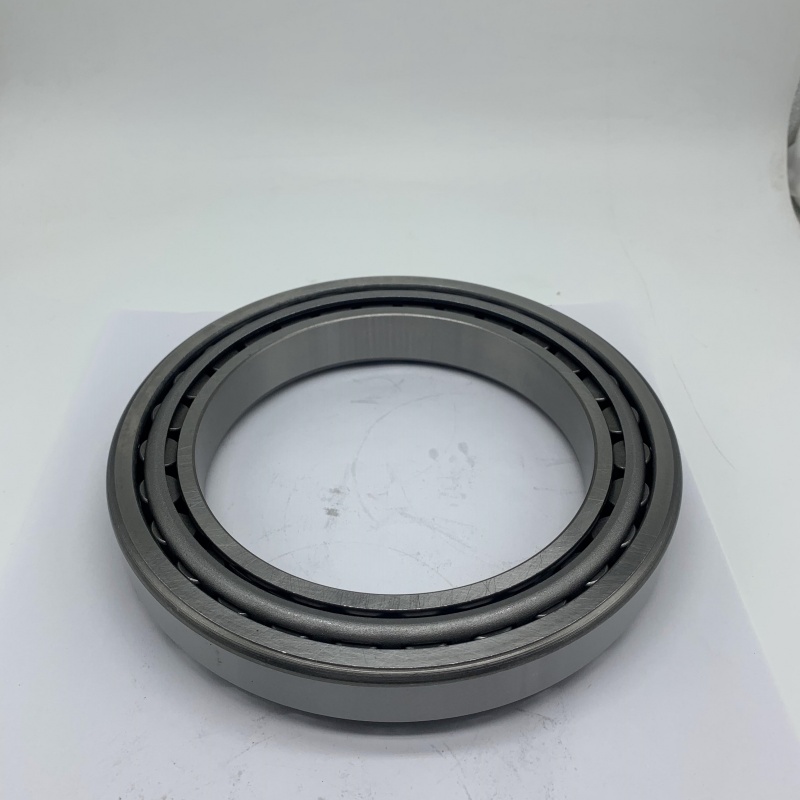
"Smooth" is a feeling, but for us engineers, it is a set of measurable data. We measure smoothness in terms of noise (decibels) and vibration (acceleration).
When a bearing is not smooth, it is usually because of one of three problems. Let me break them down for you.
1. The Surface Finish1
If you look at a raceway under a microscope, it looks like a mountain range. The peaks and valleys create friction. A standard bearing might have a rough finish. A smooth bearing has a finish that is polished almost to a mirror. The rollers glide over these tiny peaks instead of crashing into them. At FYTZ, we use super-finishing machines for this exact step. It makes the bearing feel like it is floating on oil.
2. The Roller Geometry2
A roller is not a simple cylinder. It has a specific shape, often with a slight crown or curve. If this shape is wrong, the stress concentrates at the ends of the roller. This causes heat and noise. A quality manufacturer controls this geometry to within microns. This ensures the stress is spread evenly across the entire roller.
3. The Retainer (Cage)3
The cage holds the rollers apart. A steel cage is strong, but it can be noisy. A brass cage is smoother but more expensive. For ultimate smoothness, you want a cage that is precisely formed and balanced. It keeps the rollers from touching each other, which is a major source of noise.
I remember a customer from Egypt. He was supplying bearings for textile machines. The old bearings were so noisy, the factory workers hated being near the machines. We sent him a sample of our high-precision, low-noise tapered roller bearings4. The difference was night and day. The machines ran quieter, the fabric quality improved, and the workers were happy. That is what smoothness does for a business.
How can I make my bearings smoother?
You bought good bearings, but the machine is still noisy. Is it the bearing’s fault? Often, the problem is not the bearing itself, but what you do with it.
You can make bearings smoother by focusing on three things: proper installation1 with the correct tools, using the right amount of high-quality grease2, and maintaining a clean, contaminant-free environment3.
[^4] to install a bearing onto a shaft](https://sdycbearing.com/wp-content/uploads/2025/12/Tapered-Roller-Bearings-71.jpg)
I have seen a perfect bearing ruined in two minutes because of a bad installation. It is heartbreaking to watch. As a supplier, I can control the factory quality. But the final performance is a partnership between me and my customer.
If you want to get the smoothest performance from your bearings, you need to control what happens after the bearing leaves my warehouse. Here is a simple checklist I share with all my clients, especially those like Rajesh who distribute to repair shops.
| Factor | The Wrong Way | The Right Way for Smoothness |
|---|---|---|
| Installation | Hammering the bearing directly onto the shaft. | Using a hydraulic press or induction heater. Apply force to the ring that is being press-fitted. |
| Lubrication | Over-packing with grease or using the wrong type. | Using a high-quality, lithium-based grease. Fill the bearing 30% for high-speed applications. |
| Sealing | Ignoring a damaged seal. | Always replace seals and shields. A small piece of dust can act like sandpaper on the raceway. |
| Storage | Leaving bearings in a dusty, humid warehouse. | Keep them in original packaging. Store them in a dry, clean area. |
Let me talk about installation for a moment. The biggest mistake is using a hammer. When you hit the outer ring to install an inner ring, the impact travels through the balls or rollers. It creates tiny dents in the raceways. We call this "brinelling." The bearing will feel rough from the very first spin.
You also need to think about alignment. If the shaft is bent or the housing is misaligned, the bearing is forced to work at an angle. This creates uneven load distribution. The bearing will try to correct this, but it creates noise and heat. In a perfect world, the bearing should sit square and true.
I train my distributors to teach their customers these simple steps. It builds trust. It reduces warranty returns. And it makes the end-user’s equipment run smoother for longer. A smooth bearing is not just about the factory; it is about the hands that install it.
Conclusion
High-quality tapered roller bearings give you strength, smooth operation, and long life. Proper installation and care make them even better.
-
Understanding proper installation techniques is crucial for ensuring the longevity and performance of your bearings. ↩ ↩ ↩ ↩
-
High-quality grease plays a vital role in reducing friction and wear, enhancing the performance of your bearings. ↩ ↩ ↩ ↩
-
A clean environment is essential for bearing longevity; learn how to keep your workspace free from harmful contaminants. ↩ ↩ ↩ ↩
-
Using a hydraulic press ensures even force distribution, preventing damage and ensuring smooth operation of your bearings. ↩