
Your pump skid keeps breaking down. The bearings fail too fast, and you lose money every time you stop production.
Pillow block bearings are the best choice for pump skids because they support heavy radial loads, handle misalignment, and make maintenance easy. They come as a complete housing with a bearing inside. You can mount them quickly on any flat surface. For skid-mounted equipment, they give you reliability and simple replacement.
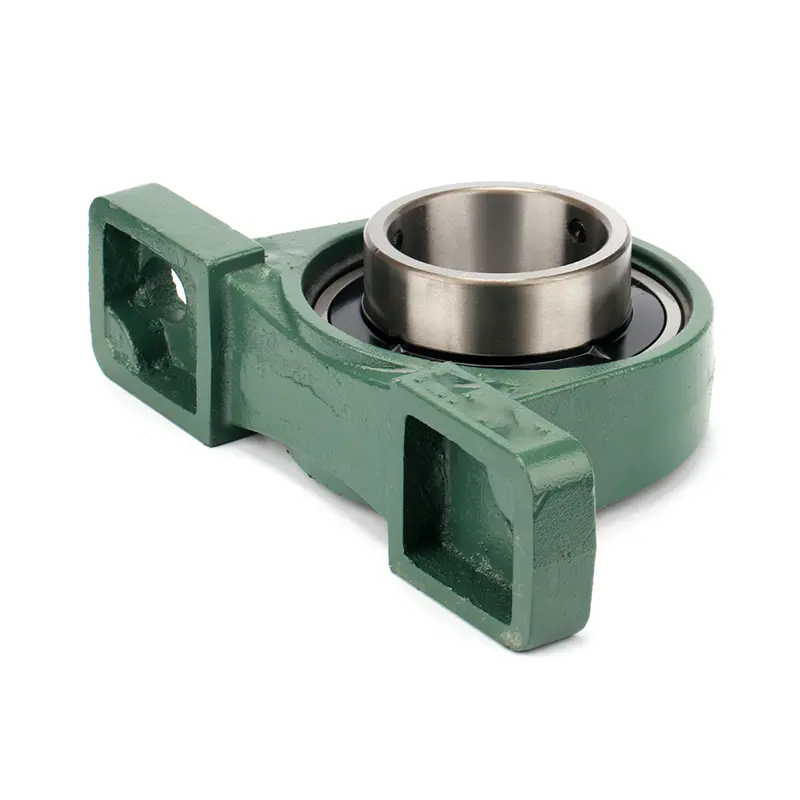
I have worked in the bearing factory for more than ten years. I see many customers who buy the wrong bearings for their pump skids. They call me and say, “My bearing lasted only three months.” Or they ask, “Why does my pump keep shaking?” The answer is often simple. They did not use pillow block bearings. Or they used the wrong type. In this article, I will share what I learned from our customers in India, Turkey, and Brazil. I will help you pick the right bearing, install it the right way, and avoid common mistakes.
What Are the Key Benefits of Pillow Block Bearings for Pump Skids?
Your pump skid is shaking. The shaft is not aligned. You are tired of fixing the same problem every week.
Pillow block bearings1 give you three big benefits. First, they handle heavy loads2 without breaking. Second, they allow up to 2 degrees of misalignment3. Third, you can change the bearing without taking apart the whole pump. This saves you time and money.
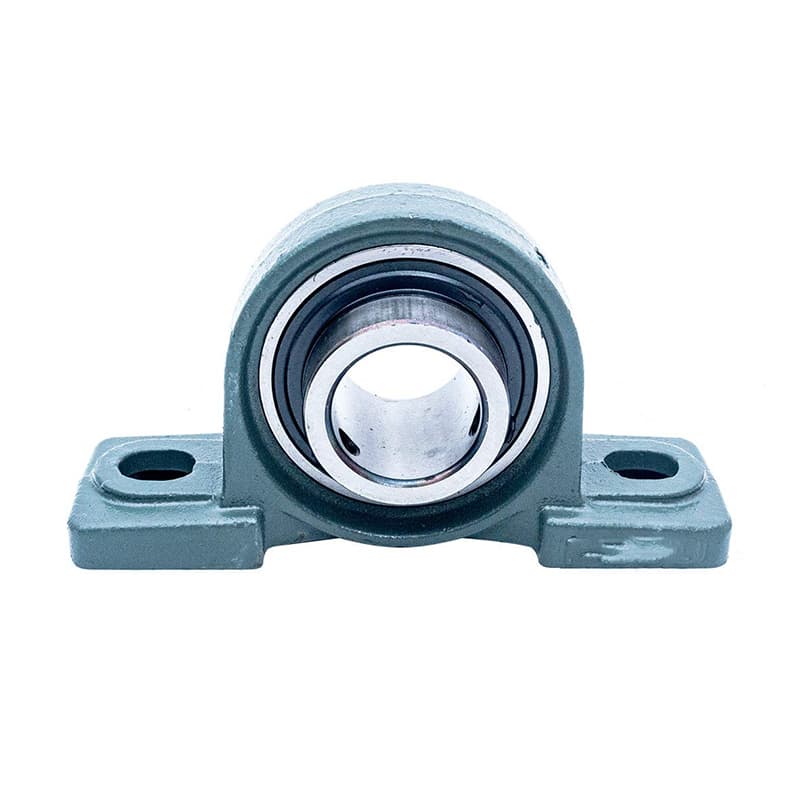
How do pillow block bearings handle heavy loads?
Pump skids are tough machines. They run all day, often with dirty water, oil, or chemicals. The bearings take both radial loads (from the weight of the shaft and pump) and axial loads (from the fluid pushing forward). A standard deep groove ball bearing might work for a small pump. But for a big industrial pump, you need a stronger bearing.
Pillow block bearings use either spherical roller bearings or tapered roller bearings inside. These designs spread the load over a larger area. For example, our FYTZ spherical roller bearings can take up to 30% more load than a normal ball bearing of the same size. I once had a customer from Russia who ran a water treatment plant. His pump skids kept failing every six months. We switched him to our pillow block bearings with spherical rollers. Now his bearings last two years.
What about misalignment?
Misalignment is the number one killer of bearings. On a pump skid, the motor shaft and the pump shaft are rarely perfectly lined up. Even a small error of 0.5 degrees can cause heat, noise, and early failure. Pillow block bearings have a self-aligning feature. The outer ring of the bearing is spherical. It sits inside a matching spherical housing. This lets the bearing tilt a little while still spinning smoothly.
Most pillow block bearings can handle 1.5 to 2 degrees of misalignment. That does not sound like a lot. But in real life, it makes a huge difference. I remember a customer in Indonesia. He was mounting a pump on a steel skid that was not perfectly flat. His old bearings failed in two months. After he switched to our pillow block units, the same skid worked for over a year. The bearing just adjusted to the bad surface.
Why is maintenance easier4?
Think about a traditional bearing mounted directly on a shaft. To replace it, you have to remove the pump, pull the shaft out, and press off the old bearing. That can take a whole day. With a pillow block bearing, you just unbolt the housing from the skid. Then you open the housing (if it is a split type) or slide the whole unit off the shaft. You put a new one on, tighten the bolts, and you are done. Most replacements take less than one hour.
For skid-mounted equipment, this is a big deal. Skids are often in tight spaces. You cannot easily move things around. Pillow block bearings let you work with limited space and simple tools. That is why many of my customers in Brazil and Egypt love them. They say, “We used to need two men and a crane. Now one man with a wrench can do it.”
| Feature | Traditional Bearing | Pillow Block Bearing |
|---|---|---|
| Load capacity | Good for light loads | Excellent for heavy loads |
| Misalignment tolerance | None or very little | Up to 2 degrees |
| Replacement time | 4-8 hours | 0.5-1 hour |
| Tools needed | Pullers, presses, heat | Basic wrenches |
| Cost of downtime | Very high | Low |
As the table shows, pillow block bearings win in every category for pump skids. If you are still using standard bearings, you are losing money. That is not an opinion. That is a fact from hundreds of my customers.
How to Select the Right Pillow Block Bearing for Skid-Mounted Equipment?
You go online and see hundreds of pillow block bearings1. Different sizes, different materials, different seals. You have no idea which one fits your pump skid.
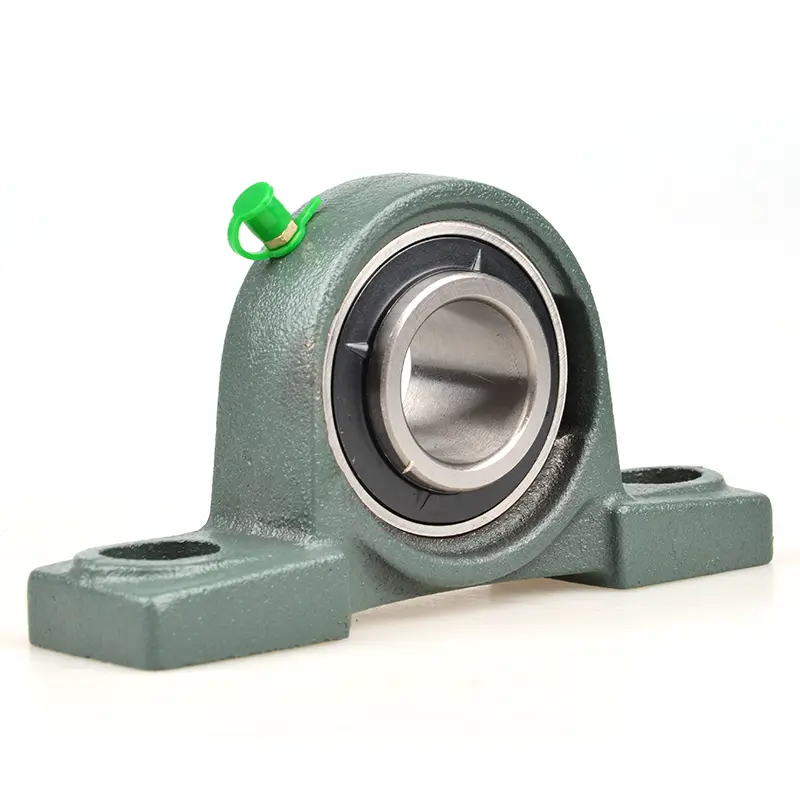
To select the right pillow block bearing, check four things: shaft diameter2, load type (radial or axial), operating temperature3, and environment (dry, wet, or dusty). Then match these to the bearing series like UCP, UCF, or UCT. For most pump skids, a UCP series4 with a set screw lock and rubber seal works well.
Step 1: Measure your shaft
This sounds obvious, but you would be surprised. I get calls from customers who say, “I need a bearing for a 50mm shaft.” Then they send a picture, and the shaft is actually 48mm because it is worn down. Always measure the shaft diameter with a caliper. Write it down. Then add a small tolerance. For a new shaft, the bearing should fit snug but not tight. For an old shaft, you might need a bearing with an adapter sleeve.
At FYTZ, we offer both set screw lock and adapter sleeve lock5. Set screw lock is simpler. You just tighten two screws on the inner ring. Adapter sleeve lock is better for worn shafts or when you need to mount the bearing in the middle of a long shaft. For pump skids, set screw lock is usually enough. But if your pump vibrates a lot, use adapter sleeve.
Step 2: Know your load direction6
Pump skids have two main loads. First is the radial load from the weight of the shaft and the impeller. Second is the axial load from the fluid pressure pushing against the impeller. Some pumps also have a thrust load when starting up. You need to know which direction is bigger.
- If radial load is high (like in a big centrifugal pump), choose a spherical roller bearing pillow block.
- If axial load is high (like in a screw pump), choose a tapered roller bearing pillow block.
- If both loads are medium, a deep groove ball bearing pillow block is fine.
I once helped a customer in Pakistan who made irrigation pumps. He used the same bearing for all his pumps. Some pumps failed fast. We looked at his design. For his high-pressure pumps, the axial load was double what his bearing could take. We switched to a tapered roller pillow block. The failure rate dropped by 80%.
Step 3: Check your temperature and environment
Pump skids can be indoors or outdoors. They can pump cold water or hot oil. The bearing seal7 and grease must match the temperature. Here is a simple guide:
| Temperature | Recommended Seal | Grease Type |
|---|---|---|
| -20°C to 60°C | Rubber seal (2RS) | Standard lithium |
| 60°C to 100°C | High-temp rubber or metal shield | High-temp lithium complex |
| Above 100°C | Metal shield only | Synthetic grease |
For dusty environments (like a construction site pump), use a bearing with a triple lip seal. For wet environments (like a sewage pump), use a bearing with a stainless steel housing or a heavy rubber seal. Our FYTZ bearings come with different seal options. I always tell customers: “Spend an extra two dollars on a better seal. It will save you fifty dollars in downtime.”
Step 4: Choose the housing shape
Pillow block bearings come in different housing shapes. The most common for pump skids is the UCP series (pillow block with two bolt holes). But you also have UCF (flange mount) and UCT (take-up unit). For a standard skid, UCP is fine. But if your space is tight, UCF lets you mount the bearing on the side of the skid frame. UCT is for when you need to adjust belt tension.
I recommend UCP for 90% of pump skids. It is simple, cheap, and easy to find. But do not buy the cheapest one on Alibaba. Cheap bearings have poor castings. The housing cracks when you tighten the bolts. The bearing races are made from low-grade steel. They wear out in weeks. At FYTZ, we use high-grade GCr15 steel8 for our bearings and ductile iron for our housings. Yes, our price is a little higher. But our bearings last three times longer. That is what Rajesh from Mumbai told me. He is a procurement manager. He used to buy cheap bearings. After one year of losses, he switched to FYTZ. Now he orders five containers every year.
What Are the Installation Best Practices for Pillow Block Bearings on Pump Skids?
You bought the right bearing. But now you are not sure how to put it on. You do not want to break it before you even start the pump.
Follow these five steps for a good installation. Clean the shaft first. Then put the bearing on by hand. Tighten the set screws1 in a cross pattern. Align both bearings on the skid. Finally, add the right amount of grease. Do not hammer the bearing. Do not overtighten the screws. And never use a dirty shaft.
[^2] on pump skids](https://sdycbearing.com/wp-content/uploads/2025/12/Pillow-Block-Bearing-8.jpg)
Step 1: Prepare the shaft
The shaft must be clean and smooth. No rust, no dirt, no burrs. Even a small piece of dirt under the bearing inner ring will make the bearing run out of round. That creates vibration and heat. Use fine sandpaper to clean the shaft3. Then wipe it with a clean cloth and some oil.
I once visited a factory in Vietnam. Their mechanics installed new bearings every month. I watched them work. They took a bearing out of the box. They put it on a shaft covered in rust. Then they hammered it into place with a steel pipe. The bearing failed in two weeks. I showed them the right way. Clean the shaft. Slide the bearing by hand. Use a brass bar and a light hammer only if needed. After that, their bearings lasted eight months.
Step 2: Mount the bearing
For a set screw lock bearing, slide the bearing onto the shaft until it is in the right position. The shaft should go through the bearing inner ring. Do not force it. If it is too tight, check the shaft diameter again. You may need to use an adapter sleeve bearing4.
Once the bearing is in place, tighten the set screws. Use a hex key. Tighten one screw, then the screw opposite it, then the next two. This is called a cross pattern. It makes sure the inner ring stays centered. Do not overtighten. Tighten until the screw feels snug, then give it a quarter turn more. Overtightening can crack the inner ring or strip the screw threads.
For adapter sleeve bearings, slide the sleeve onto the shaft. Then put the bearing over the sleeve. Tighten the lock nut until the sleeve grips the shaft. Use a spanner wrench. Do not use a hammer and punch. That is an old mechanic’s trick, but it often damages the nut and the sleeve.
Step 3: Align the bearings
A pump skid usually has two bearings. One near the motor and one near the pump. They must be aligned with each other and with the shaft. Use a straightedge or a laser alignment tool. Check both horizontal and vertical alignment.
Misalignment of more than 0.5 mm per meter will cause problems. Even if your pillow block bearing can handle 2 degrees of misalignment, it is better to keep it lower. Less misalignment means longer bearing life5. I recommend using shims under the bearing housing to adjust height. Loosen the bolts, add or remove shims, then tighten again. Take your time. Good alignment takes 15 minutes. Bad alignment costs you weeks of bearing life.
Step 4: Grease the bearing
Most new pillow block bearings2 come with grease already inside. But for pump skids that run 24/7, you need to add more grease after installation. Use a grease gun on the grease fitting (called a zerk fitting). Pump slowly. Stop when you see old grease coming out of the seal. For a new bearing, add about 10 to 20 pumps depending on bearing size.
Do not overgrease. Too much grease causes heat. The grease churns inside the bearing and the temperature goes up. For high-speed pumps, use less grease. For slow-speed pumps, use more. Check the bearing temperature after one hour of running. It should be warm but not hot. If it is too hot to touch, you have too much grease or the bearing is misaligned.
Step 5: Test and check
Run the pump at low speed first. Listen for noise. A good bearing sounds smooth. A bad bearing sounds rough or makes a clicking noise. Check the temperature with an infrared thermometer. Normal temperature is 10 to 30 degrees above room temperature. If it goes above 70°C total, stop and check.
After one hour, stop the pump and retighten the set screws. Sometimes they loosen up during the first run. Then check the grease again. If the bearing is running well, you are done. I always tell my customers to check the bearing after one day, one week, and one month. Write down the temperature and noise level. This helps you see problems before they become big failures.
Why Are Split Pillow Block Bearings Ideal for Skid Packages?
You have a big pump on a skid. The shaft is long and heavy. You cannot move it. Changing a normal pillow block bearing1 means taking everything apart. That takes two days and a crane.
Split pillow block bearings come in two halves. The housing splits horizontally. The bearing itself also splits. You can install or replace them without removing the shaft or coupling. This cuts maintenance time2 by 80%. For skid packages in tight spaces, split bearings are the only smart choice.
[^3]s](https://sdycbearing.com/wp-content/uploads/2025/12/Pillow-Block-Bearing-7.webp)
What makes split bearings different?
A normal pillow block bearing has one piece inner ring and one piece outer ring. To put it on a shaft, you must slide it from the end of the shaft. For a pump skid, the shaft may have a coupling, a fan, or an impeller on the end. You cannot slide the bearing past these parts. So you have to remove the coupling, pull the impeller, and support the shaft with jacks. That is a big job.
A split pillow block bearing has an inner ring made of two halves. The outer ring is also two halves. The housing is two halves. You open the housing, put the bottom half under the shaft, place the top half over, and bolt it together. The shaft never moves. The coupling stays in place. The impeller stays on. You can change the bearing in two hours instead of two days.
I remember a customer in South Africa. He ran a gold mine. His slurry pump skid was in a cramped room. The shaft was three meters long with a heavy impeller on one end and a motor coupling on the other. Changing a normal bearing would have required removing the ceiling panels and using a chain hoist. He switched to our FYTZ split pillow block bearings4. His maintenance team now changes bearings during a lunch break. No crane. No ceiling work. Just wrenches and a grease gun.
When should you use split bearings?
Split bearings cost more than normal ones. They are about 50% to 100% more expensive. So you should not use them for every pump. Use them in these situations:
| Situation | Normal Bearing | Split Bearing |
|---|---|---|
| Shaft with fixed parts on both ends | Very hard to replace | Easy to replace |
| Limited space around the skid | Difficult | Simple |
| Long shaft (over 1.5 meters) | Needs shaft support5 | No support needed |
| Emergency repairs | Long downtime | Short downtime |
| Normal pumps with free shaft ends | Good choice | Overkill |
If your pump skid has a simple shaft with open ends, save your money and use a normal pillow block bearing. But if your skid is packed tight with pipes, valves, and other equipment, spend the extra money on split bearings. The first time you have to do an emergency repair, you will thank yourself.
How to install a split pillow block bearing?
Installation is different from normal bearings. First, clean the shaft where the bearing will sit. Then place the bottom half of the inner ring under the shaft. Put the top half of the inner ring on top. Use the special bolts to clamp the two halves together. Tighten evenly. Then put the bottom half of the housing under the shaft. Place the bearing (now assembled as one unit) into the housing bottom. Put the top housing half on. Bolt the housing together. Finally, add grease through the fitting.
The most important step is tightening the inner ring halves. If you tighten one side more than the other, the inner ring becomes oval. That makes the bearing run rough. Use a torque wrench6 if you have one. For a typical 50mm shaft, torque to about 30 Nm. And always follow the cross pattern.
I learned this the hard way. One of my first customers in Turkey bought split bearings from us. He called me angry because the bearing got hot. I flew to his factory. His mechanic had tightened all the bolts on one side first. The inner ring was deformed. We replaced the bearing, installed it correctly, and the problem went away. Now I always send a one-page instruction sheet with every split bearing order. And I tell customers to call me if they are not sure.
Are split bearings as strong as normal ones?
Yes, if you buy from a good factory. Some people think split bearings are weaker because they have a seam. But modern split bearings are machined with high precision. The two halves fit together perfectly. The load path7 goes through the whole ring. A good split bearing can handle the same load as a solid bearing of the same size.
At FYTZ, we test every split bearing on a special rig. We run it at full load for 100 hours. We measure vibration and temperature. Only bearings that pass go to customers. I have sold split bearings to cement plants, steel mills, and shipyards. They work just as well as solid bearings. The only difference is the price and the convenience.
For skid packages, I always recommend split pillow block bearings for the hard-to-reach positions. For example, the bearing near the pump casing. The bearing near the coupling can be a normal type because you can remove the coupling easily. This mix of split and normal saves money while giving you easy maintenance.
Conclusion
Pillow block bearings make pump skids reliable. Pick the right type, install it carefully, and use split bearings for tight spots. Your pumps will run longer and break less often.
-
Understand the differences between normal and split pillow block bearings for better decision-making. ↩ ↩ ↩ ↩
-
Learn strategies to cut maintenance time significantly, enhancing operational efficiency. ↩ ↩ ↩ ↩
-
Discover the role of pump skids in various industries and their importance in fluid management. ↩ ↩ ↩
-
Explore the advantages of split pillow block bearings for efficient maintenance and reduced downtime. ↩ ↩ ↩ ↩
-
Learn about the significance of shaft support in ensuring bearing longevity and performance. ↩ ↩ ↩
-
Learn the correct usage of a torque wrench to ensure accurate and safe bearing installation. ↩ ↩
-
Understand the concept of load path and its impact on bearing strength and performance. ↩ ↩
-
Understand the significance of high-grade GCr15 steel in bearing manufacturing and how it affects durability and performance. ↩
