
I have seen too many rice mill owners replace bearings every few weeks. The dust, moisture, and heavy loads just destroy standard units. That is why I want to share what I know about choosing the right pillow block bearings for these tough environments.
The short answer is yes: you need bearings with superior sealing, corrosion-resistant housings, and high load capacity. For rice mills and grain storage, standard bearings fail quickly. You must look for cast iron housings with triple-lip seals and proper lubrication ports. These features keep out abrasive rice dust and prevent moisture damage, which extends service life by up to three times.
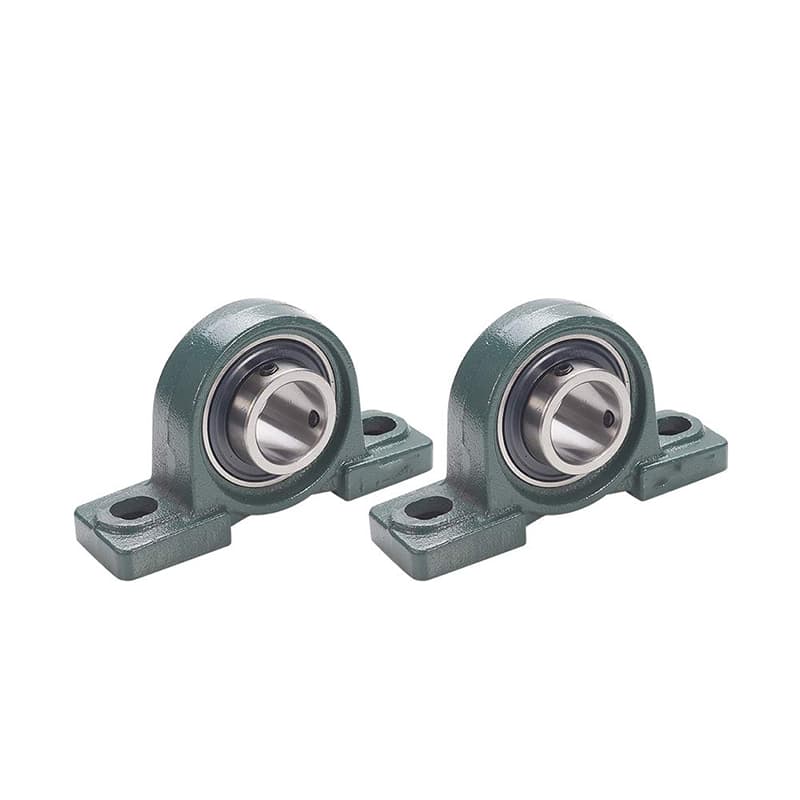
I run a bearing factory in China called FYTZ Bearing. We export to countries like India, Brazil, and Indonesia. Every day, I talk to procurement managers like Rajesh. They tell me the same story: downtime costs them money, and bearing failures are their biggest headache. In this article, I will walk you through the real challenges, the selection criteria, the best solutions for conveyors, and how to install and maintain them properly. Stick with me, and you will save both time and money.
The Severe Challenges of Rice Mill and Grain Storage Environments?
Most people think a bearing is just a bearing. They are wrong. The environment inside a rice mill is brutal. I have visited mills in Vietnam and Pakistan. The air is thick with fine rice husk dust. That dust gets into everything.
The main challenges are abrasive dust, high humidity, temperature swings, and continuous operation. These factors work together to destroy ordinary bearings. Dust acts as sandpaper on rolling elements. Moisture causes rust and lubricant breakdown. Heat speeds up fatigue. Without proper protection, your bearings will fail within weeks, not years.
Why is dust so destructive?
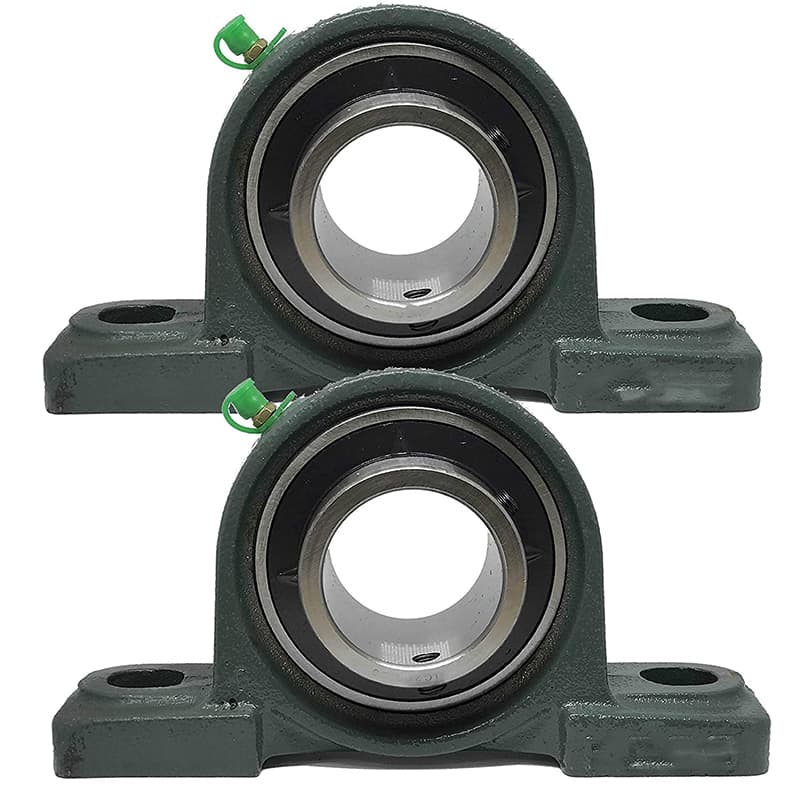
Rice dust is not like wood dust or regular dirt. It is very fine and contains silica. When it enters a bearing, it mixes with the grease. This creates a grinding paste. I have seen raceways with deep scoring after just two weeks of operation. The seals on standard bearings cannot keep this dust out. They are designed for clean factories, not for grain handling.
What about moisture?
Grain storage facilities often have high humidity. This is especially true in tropical countries like Indonesia or Bangladesh. Moisture condenses on the bearing housing during cool nights. Then the heat of the day evaporates it, but the damage is already done. Rust forms on the shaft and inside the bearing. Rust particles flake off and act as additional abrasives. Also, water breaks down most standard greases. The grease loses its viscosity and flows out, leaving the bearing dry.
Temperature and load fluctuations
Rice mills run for long shifts. Many operate 24/7 during harvest season. The bearings heat up from friction and from the ambient heat of the machinery. At night, they cool down. This thermal cycling causes expansion and contraction. That movement loosens the fit between the bearing and the shaft. Once that fit is loose, you get fretting corrosion and more wear.
I remember a customer in Egypt who used standard bearings in his rice polisher. He replaced them every month. After we switched to our heavy-duty pillow block units with special seals, he went six months without a failure. That is the difference.
Core Selection Criteria for Pillow Block Bearings?
So, what exactly should you look for when you buy pillow block bearings for rice mills? I get this question almost every day. The answer is not one single feature. It is a combination of four key factors.
You must prioritize seal type, housing material, bearing insert grade, and lubrication system. Choose triple-lip or labyrinth seals, cast iron or ductile housings, and bearings with P5 precision. Also, look for a reliable greasing port that allows easy re-lubrication without dismantling.
Seal design: your first line of defense
This is the most important factor. I always tell my clients: spend extra money on better seals. There are several options:
- Single-lip seals: Basic protection. Not suitable for rice mills.
- Double-lip seals: Better, but still can fail under heavy dust.
- Triple-lip seals: This is my recommendation. They have three contact points that create a maze for dust.
- Labyrinth seals: These have no contact, so they produce less friction. But they rely on tight clearances. In very dusty conditions, they can still allow fine dust to enter over time.
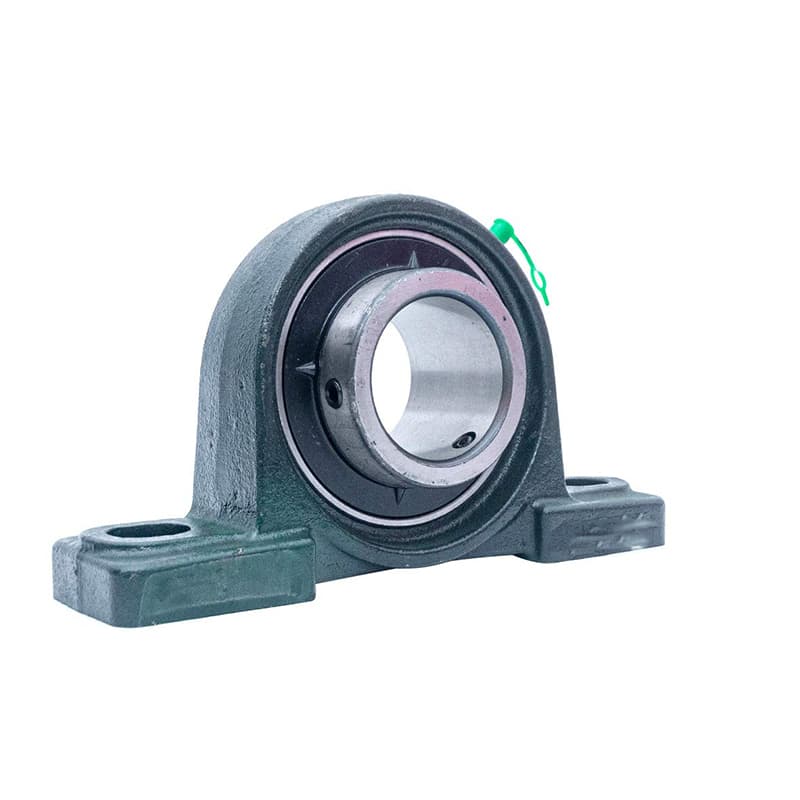
For most rice mill applications, I recommend triple-lip nitrile rubber seals with a steel excluder. The excluder acts like a scraper. It removes dust from the shaft before the dust even reaches the lip.
Housing material: cast iron vs. pressed steel
Many cheap bearings come with pressed steel housings. They are thin and flexible. Under heavy loads, they distort. That distortion changes the internal clearance of the bearing. Then the bearing runs hot and fails. Cast iron housings are much stiffer. They maintain their shape even under shock loads. For grain storage conveyors, ductile iron is even better because it can absorb impacts from heavy grain drops.
I always specify cast iron with a corrosion-resistant coating. The coating can be zinc plating or epoxy paint. Both help resist the humid environment. Do not buy painted mild steel housings. The paint will chip, and rust will start underneath.
Bearing insert grade and internal clearance
The insert is the actual ball or roller bearing inside the housing. For rice mills, I recommend deep groove ball bearings with a C3 or C4 internal clearance. Why? Because the operating temperature will be high. The inner ring expands more than the outer ring. If you use standard CN clearance, the bearing may seize when it gets hot. C3 gives extra room for thermal expansion.
Also, choose bearings with a high-quality steel grade. I use GCr15 bearing steel with vacuum degassing. This steel has fewer inclusions. Fewer inclusions mean longer fatigue life. If you can get P5 precision, that is even better. P5 gives you tighter running tolerances and lower vibration.
Lubrication and re-lubrication ports
A sealed bearing that you cannot re-grease is a death sentence in a rice mill. Even the best seals will let some dust in over time. You need to purge that old grease out. So always pick pillow blocks with a grease nipple on the housing. I also recommend a relief valve. That way, when you pump new grease in, the old grease and contaminants are pushed out through the valve.
Choose a grease that is water-resistant and has high dropping point. Lithium complex grease works well. It stays in place at high temperatures and does not wash away with moisture.
Specialized Bearing Solutions for Grain Conveying Equipment?
Different machines in a rice mill have different demands. A bucket elevator has vertical loads. A screw conveyor has axial thrust. A belt conveyor has moderate radial loads but runs at high speed. You cannot use the same bearing for all of them. I learned this the hard way when I supplied the same model to a customer for all his equipment. He had failures on the screw conveyors within a week.
For bucket elevators, choose heavy-duty pillow blocks with spherical outer surfaces to compensate for shaft misalignment. For screw conveyors, use bearings with a wide inner ring and set screws that lock firmly to the shaft to handle thrust. For belt conveyors, standard UCP bearings with good seals are usually enough, but you need to watch the speed rating.
Bucket elevators: misalignment and shock loads
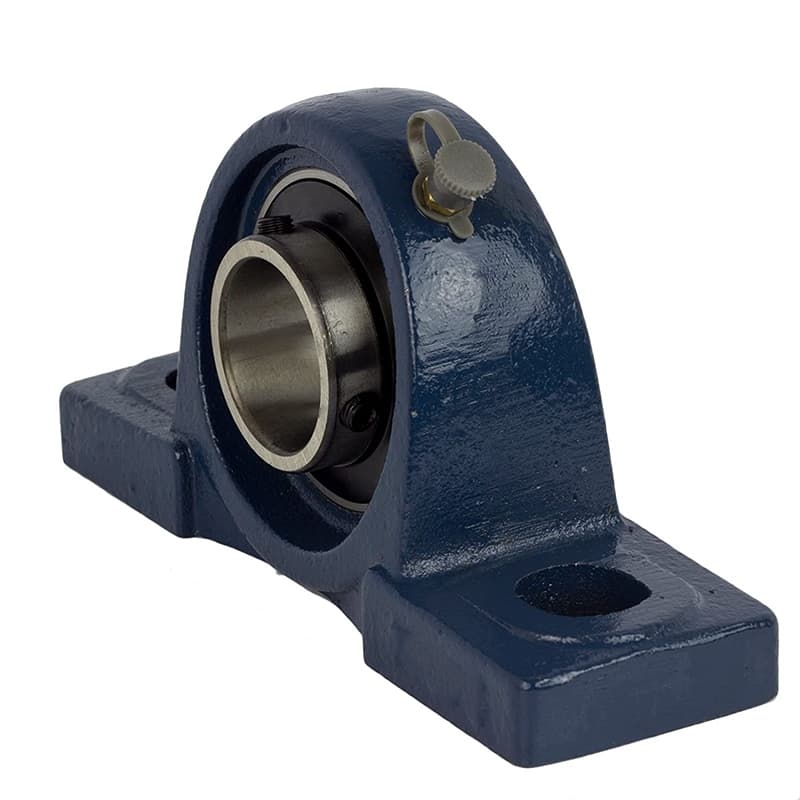
Bucket elevators lift grain vertically. The head pulley and boot pulley often have long shafts. These shafts can sag or become misaligned due to belt tension. A standard rigid bearing will bind under misalignment. That creates heat and premature wear. That is why I recommend spherical outer diameter bearings (like the UCP series with a spherical outside surface on the insert). They allow a few degrees of angular misalignment. This compensates for shaft deflection.
Also, the bearings at the boot take a lot of impact from grain falling into the buckets. Choose a bearing with a thicker inner ring and stronger locking mechanism. Set screws are common, but they can loosen under vibration. I prefer eccentric locking collars. They provide a more positive grip on the shaft. If you have very heavy loads, go for taper-lock adapters.
Screw conveyors: axial thrust and sealing
Screw conveyors push grain along a trough. The screw acts like an auger. It creates significant axial thrust. That thrust pushes the bearing along the shaft. If your bearing only has set screws, they will not hold for long. You need a bearing with a wide inner ring that has a groove for a snap ring or a shoulder to resist thrust. Some manufacturers offer bearings with a flat inner ring face that can be clamped against a shaft shoulder.
The other issue is that the tail end of a screw conveyor often sits in a dusty, abrasive environment. Grain can pack around the shaft. I have seen shafts worn down from abrasion. Use bearings with an extended inner ring that has a labyrinth seal at the front. This helps keep the abrasive material away from the seal lip.
Belt conveyors: speed and alignment
Belt conveyors are simpler. They run at higher speeds compared to screw conveyors. The main risk is heat generation from high RPM. Always check the maximum speed rating of the bearing. For standard 6200 series inserts, the speed limit is usually around 5000 RPM with grease lubrication. Many belt conveyors run at 1500-2000 RPM, which is safe. But if you run faster, you may need special high-speed grease or even oil lubrication.
Alignment is also critical. Even with self-aligning bearings, you should still align the shaft properly. Misalignment causes vibration. Vibration loosens bolts and damages the housing feet. Use a laser alignment tool if you can. If not, at least use a straight edge and feeler gauges.
Technical Guide for Installation & Daily Maintenance?
You have bought the best bearings. Now you need to install them correctly. I cannot stress this enough. Poor installation ruins more bearings than poor quality. I have seen a customer ruin an entire container of bearings because his mechanics used hammers on the bearing rings.
Installation requires clean tools, proper torque, and correct shaft fit. Use a bearing heater for mounting, never hammer. For daily maintenance, set a regular greasing schedule and monitor temperature and noise. Clean the housing exterior weekly to prevent dust buildup that can trap heat.
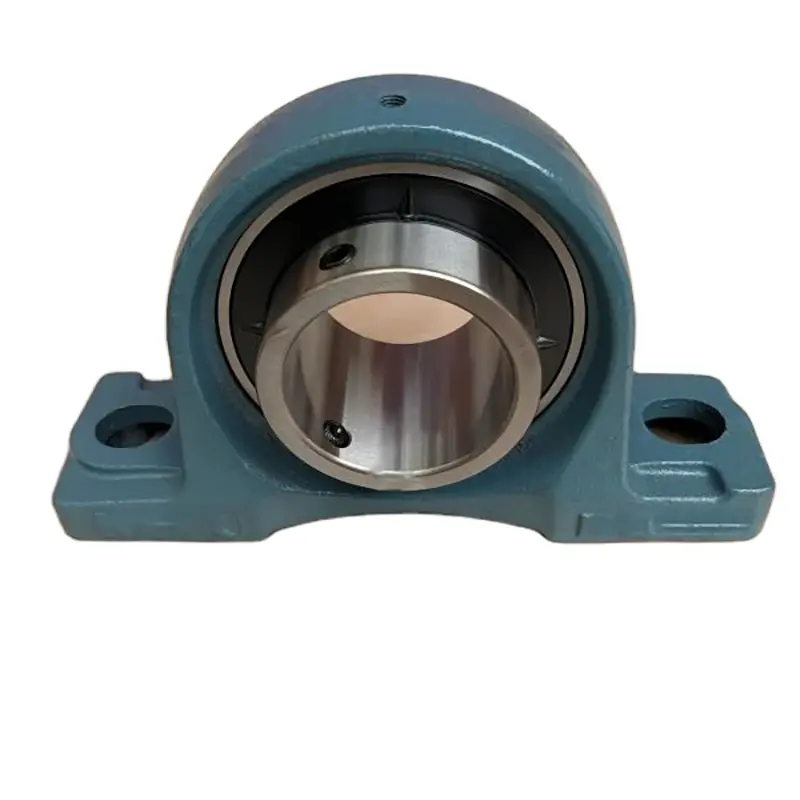
Step-by-step installation guide
First, inspect the shaft. It must be clean, free of burrs, and within the specified tolerance. For most pillow blocks, the shaft diameter tolerance is h6 or j6. If the shaft is too loose, the inner ring will spin. If it is too tight, you will reduce the internal clearance. Use a micrometer to measure the shaft in three places.
Second, prepare the housing. Clean the mounting surface on your machine. Make sure it is flat. Any dirt under the housing will cause distortion when you tighten the bolts. Use a feeler gauge to check for gaps.
Third, heat the bearing insert. Do not use an open flame. Use an induction heater or an oil bath. Heat it to about 80-100°C. This expands the inner ring so it slides onto the shaft easily. Never hammer the bearing onto the shaft. That creates brinelling marks on the raceways, which lead to early failure.
Fourth, slide the bearing onto the shaft until it reaches the shoulder. Then lock it using the set screws or eccentric collar. Tighten set screws to the recommended torque. Over-tightening can distort the inner ring. Under-tightening will let the bearing slip. I usually recommend 10-15 Nm for M8 set screws.
Fifth, mount the housing onto the base plate. Tighten the housing bolts gradually in a criss-cross pattern. Do not fully tighten one bolt and then the other. That can tilt the housing. Use a torque wrench to ensure even pressure.
Finally, check the alignment. Rotate the shaft by hand. It should turn smoothly with no binding. If it feels rough, check the alignment again.
Daily maintenance routine
I tell all my customers to assign one person to do daily walk-around checks. This person should do three things:
-
Listen: Use a stethoscope or a screwdriver against the housing. Place your ear on the handle. A healthy bearing has a smooth, humming sound. A clicking or grinding noise means trouble.
-
Feel: Touch the housing. It should be warm but not hot. A rule of thumb: if you cannot hold your hand on it for more than 5 seconds, it is too hot. That could mean lack of grease or excessive preload.
-
Look: Check the grease nipple and the relief valve. Wipe off any old grease that has purged out. That tells you the bearing is getting fresh grease. Also, inspect the seals for damage. Look for cracks or hardening.
Greasing schedule and amount
How often should you grease? It depends on the speed and temperature. For rice mills running 8-hour shifts, I recommend greasing every 2 weeks. For 24/7 operation, once a week is better. Use a grease gun and pump until you see clean grease coming out of the relief valve. That ensures you have pushed out the contaminated grease.
Do not over-grease. Too much grease causes churning and heat. The amount is about 1-2 pumps per bearing per session. If the bearing has a small housing, even one pump is enough.
Common mistakes to avoid
- Mixing greases: Different greases have different thickeners. If you mix lithium and calcium greases, they can harden or separate. Always use the same brand and type.
- Ignoring housing bolts: Vibration loosens bolts. Check the torque of the housing base bolts every month. Loose bolts allow the housing to move, which misaligns the bearing.
- Using water jets for cleaning: Some workers spray water to clean the machinery. Water gets inside the bearing through the seals. Instead, use compressed air or a dry brush to clean the outside.
Conclusion
Choosing and maintaining pillow block bearings for rice mills is not hard if you focus on seals, housing, and proper lubrication. Follow these guidelines, and you will reduce downtime significantly.