
I had a customer in Brazil who replaced his bearings every six months. He thought that was normal. Then he tried one of our sets. They lasted two years. He called me to ask what we did differently.
Extended operating life is about keeping the bearing in good shape for as long as possible. It comes from better materials, smarter geometry, proper lubrication, and strict quality control. Get all four right, and your bearings will outlast anything you have used before.
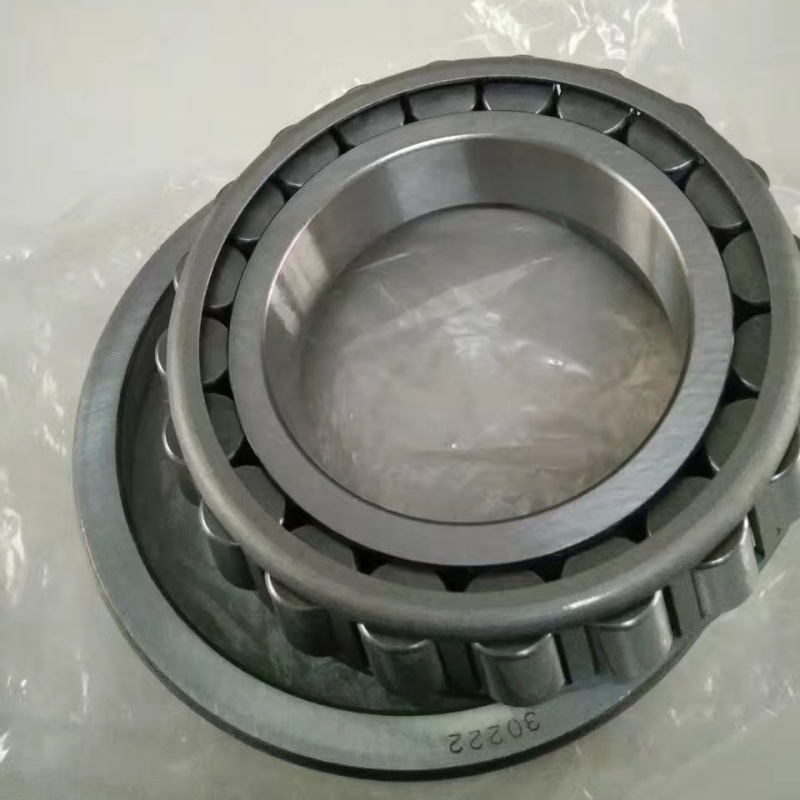
That Brazilian customer now buys all his bearings from us. He told me he saved more on downtime than he spent on the bearings. That is what extended life really means. It is not just about the bearing itself. It is about the productivity gain.
In this article, I want to walk you through the factors that determine how long a tapered roller bearing lasts. I will cover material science, geometry, lubrication, and quality testing. These are the areas where we focus our engineering effort at FYTZ.
What Factors Really Determine the Operating Life of a Tapered Roller Bearing?
A distributor from Turkey once asked me a simple question. He said, "I have two bearings. They look the same. One lasts three years. One lasts three months. Why?"
That question is harder than it sounds. Many things affect bearing life. Some are obvious. Some are hidden. I have spent years studying this. Let me share what I have found.

The first factor is load. Every bearing has a basic dynamic load rating. That rating is the load at which the bearing will last for one million revolutions. If you double the load, the life drops by about a factor of ten. That is a big drop. So operating within the load rating is critical.
But load is not just about the average. It is also about the peaks. Shock loads are worse than steady loads. A single impact can create a dent in the raceway. That dent becomes a stress riser. A crack starts there. The bearing fails early. I have seen this happen in mining equipment and in presses.
The second factor is speed. Higher speed means more revolutions per minute. Each revolution is a cycle of stress on the raceway. More cycles mean more wear. But speed also affects temperature. Higher speed creates more heat. Heat breaks down the lubricant. Without good lubrication, wear accelerates.
Speed and load together create the equivalent load. That is the combined effect of radial and axial forces. The equivalent load is what you use to calculate life. I always calculate this before recommending a bearing. Many customers skip this step. They guess. Then they wonder why their bearings do not last.
The third factor is the environment. Dirt, moisture, and chemicals all attack a bearing. Dirt creates abrasive wear. Moisture causes rust. Chemicals attack the steel. I had a customer in Egypt who operated a fertilizer plant. The ammonia in the air corroded his bearings in weeks. We had to switch to a special coating. That made the bearings last much longer.
The fourth factor is installation. I covered this in a previous article. But it is worth repeating. A bearing that is installed poorly fails early. Misalignment. Incorrect preload. A dirty shaft. All these shorten life. I have seen bearings fail in days because someone used a hammer to install them.
The fifth factor is maintenance. Regular lubrication and inspection add years to a bearing. Neglect cuts life in half. I tell my customers to schedule oil changes and vibration checks. Those small steps pay off big.
Let me put these factors in a table. This is the checklist I use when I troubleshoot a customer’s bearing failure.
| Factor | Impact on Life | What to Do |
|---|---|---|
| Load magnitude | High | Keep below rated load; use safety margin for shocks |
| Speed | Medium | Use correct viscosity lubricant; manage heat |
| Environment | Medium to High | Use seals and coatings; filter oil |
| Installation | High | Use proper tools; measure fit and alignment |
| Maintenance | High | Schedule oil changes; monitor vibration |
| Bearing quality | High | Buy from reliable suppliers with inspection data |
The interesting thing is that bearing quality sits at the bottom of this list. But it is the foundation. Without good quality, nothing else matters. Good material and good geometry are where everything starts.
How Material Science and Heat Treatment Extend Bearing Service Life?
I remember visiting a steel mill in India. The mill owner showed me his failed bearings. They had deep spalling marks. He thought the material was the problem. But when I checked the hardness, the surface was soft. That was not a material defect. That was a heat treatment defect.
Material and heat treatment are inseparable. You cannot have one without the other. The best steel is useless if it is not treated right. And the best treatment cannot fix poor steel.
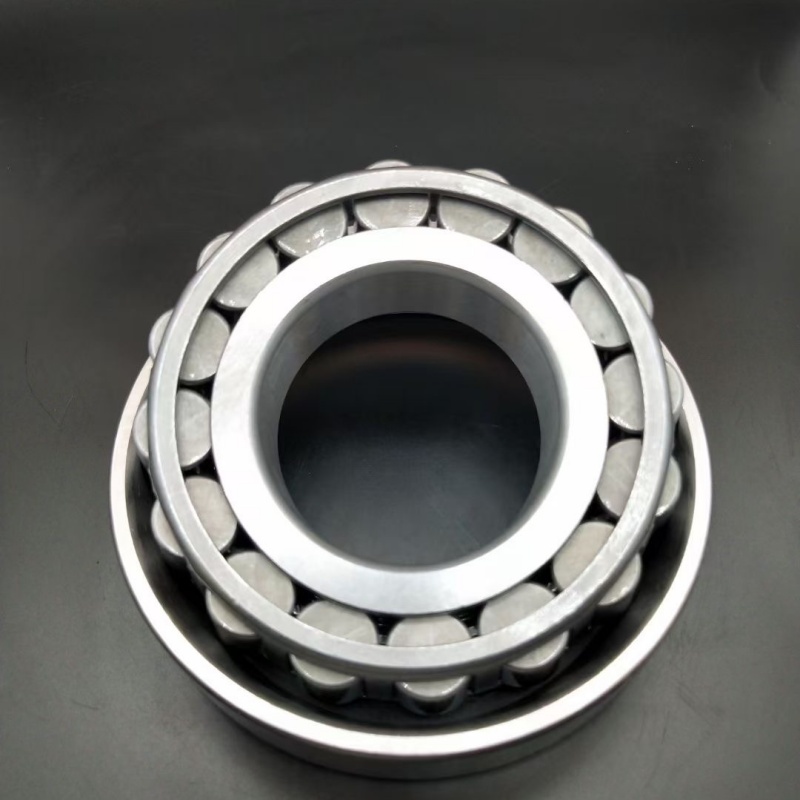
Let me start with the steel itself. For tapered roller bearings, we use high-carbon chromium steel like GCr15 for standard applications. For heavy loads, we use carburizing steel like G20CrMo. The carburizing steel has a hard surface and a tough core. That combination is better for long life because it resists both indentation and cracking.
The purity of the steel matters a lot. Non-metallic inclusions are tiny particles of oxide or sulfide. They are inside the steel from the refining process. These inclusions are hard and brittle. Under stress, they create stress concentrations. A crack can start at an inclusion and grow over time. That is the start of spalling.
We use vacuum degassed steel. That process removes oxygen and other gases. It reduces the inclusion count. We also require the steel to have a JIS inclusion rating of 2.0 or better. That means the inclusion count is very low. Fewer inclusions mean longer life.
Now let me talk about heat treatment. This is where the steel gets its properties. The bearing rings and rollers go through a process of heating and cooling. The goal is to achieve the right hardness and microstructure.
The first step is carburizing for the G20CrMo steel. The parts are placed in a furnace with a carbon-rich atmosphere. The carbon diffuses into the surface. After several hours, the surface has a high carbon content. The core stays low carbon. This creates the hard case and tough core.
The second step is quenching. The parts are heated to a high temperature and then cooled quickly. This transforms the steel into martensite. Martensite is hard and strong. But it is also brittle. So we have to temper it.
The third step is tempering. The parts are reheated to a lower temperature. This relieves some of the internal stress. It makes the steel less brittle. It also adjusts the hardness to the target level. For tapered roller bearings, we aim for HRC 60 to 64 on the surface. The core stays around HRC 30 to 40.
The case depth is another critical variable. For long life, we need a deep enough case. If the case is too shallow, the rollers will push into the soft core. That creates permanent indentations. Those indentations cause vibration and noise. We aim for a minimum effective case depth of 1.5 mm for heavy-duty applications.
The microstructure is checked with a microscope. We look for the needle-like martensite structure. We also check for retained austenite. Retained austenite is soft. It can transform over time and change the bearing dimensions. That change affects the clearance and preload. We keep retained austenite below 5%.
Let me summarize the material and heat treatment parameters in a table.
| Parameter | Standard Value | Effect on Life |
|---|---|---|
| Steel type | GCr15 or G20CrMo | Determines hardness and toughness |
| Inclusion rating | JIS 2.0 or better | Reduces crack initiation points |
| Surface hardness | HRC 60-64 | Resists indentation from rollers |
| Core hardness | HRC 30-40 | Absorbs shock without cracking |
| Effective case depth | 1.5 mm minimum | Prevents core deformation |
| Retained austenite | < 5% | Prevents dimensional change |
I always check these parameters on every production batch. We keep samples from every heat. We run the tests again if a batch shows any deviation. This is how we ensure that every bearing has the same long-life potential. Consistency in material and treatment means consistency in life.
Optimized Roller Profile and Contact Geometry for Longer Wear Life
A customer in Indonesia once complained that his bearings were wearing out on one side only. The raceway had a diagonal wear pattern. I checked his machine alignment. It was perfect. Then I looked at the bearing geometry. The crowning profile was wrong.
Geometry is not just about fitting a bearing into a housing. It is about how the load spreads across the contact area. Get the geometry right, and the bearing wears evenly. Get it wrong, and you get edge loading. Edge loading kills bearings fast.
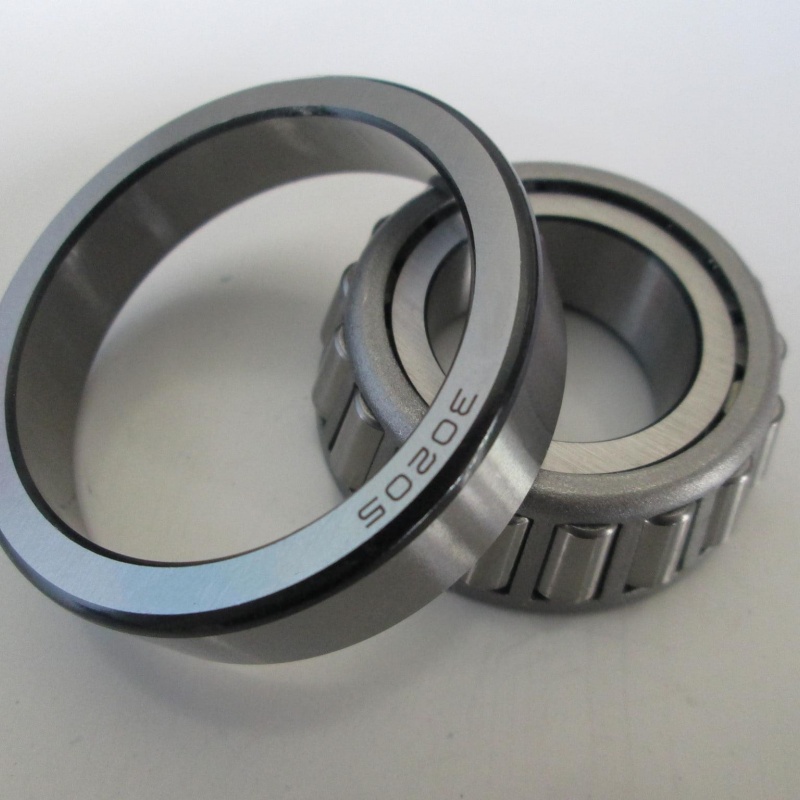
The most important geometric feature is the roller crowning. A tapered roller has a slight curve along its length. That curve is not straight. It is a logarithmic curve. That shape matches the elastic deformation of the raceway under load. It ensures that the stress is even across the whole roller.
Without crowning, the roller has edge contact. The edges dig into the raceway. The stress at the edges is much higher than in the center. That high stress creates wear faster. It also creates heat. The heat softens the surface. The wear accelerates. It is a downward spiral.
With proper crowning, the stress is uniform. The wear is uniform. The bearing lasts much longer. I have seen tests where a properly crowned bearing lasted three times longer than an uncrowned one under the same load.
The contact angle is the second key factor. The contact angle is the angle between the roller axis and the bearing radial plane. A steeper angle gives more axial load capacity. A shallower angle gives more radial load capacity. For long life, you want the angle that matches your load direction.
If the angle is too steep for your radial load, the rollers will skid. Skidding creates heat and wear. If the angle is too shallow for your axial load, the rollers will push against the roller end. That creates edge stress. Both shorten life.
The number of rollers also matters. More rollers mean more contact points. The load is spread across more elements. Each roller carries less load. Less load per roller means less stress. Less stress means longer life. But more rollers also mean more friction. So there is a trade-off. For most long-life applications, I use a high roller count with a full cage or full complement design.
The roller length-to-diameter ratio is another consideration. Long thin rollers can skew under load. Skewing creates uneven wear. Short thick rollers are more stable. But they have less surface area for load distribution. I aim for a ratio between 1.5:1 and 2.5:1 for most applications.
The raceway curvature on the outer ring is also important. It must match the roller end radius. If the curvature is too sharp, the roller end contacts the edge. If it is too flat, the roller loses guidance. The right curvature keeps the roller stable and centered.
Let me show you the geometry choices that affect life in a table.
| Geometry Feature | Optimized Value | Effect on Life |
|---|---|---|
| Roller crowning | Logarithmic profile | Eliminates edge stress |
| Contact angle | 15-25 degrees | Matches load direction |
| Number of rollers | High count | Reduces per-roller load |
| Roller L/D ratio | 1.5:1 to 2.5:1 | Prevents skewing |
| Raceway curvature | Matched to roller end | Provides stable guidance |
| Internal clearance | C3 or C4 | Allows thermal expansion |
I also want to mention the surface finish. A smoother surface has less friction. Less friction means less heat. Less heat means less wear. We use a superfinishing process on our raceways. That gives a surface finish of around 0.1 micron Ra. That is much smoother than the standard 0.3 micron. The difference in life is significant.
I had a customer in Vietnam who tested our bearings against a competitor. Both had the same material. But our bearings lasted 40% longer. The only difference was the surface finish and the crowning profile. That is the power of good geometry.
The Role of Lubrication, Sealing, and Contamination Control in Bearing Longevity
A distributor in South Africa told me about his best customer. The customer had bearings that lasted five years in a conveyor system. Other customers with the same bearings only got one year. The difference? The best customer had an automatic oil mist system and excellent sealing.
Lubrication and sealing are the two things that keep the bearing protected. Good lubrication reduces friction and wear. Good sealing keeps dirt out. Together, they are the guardians of long life.
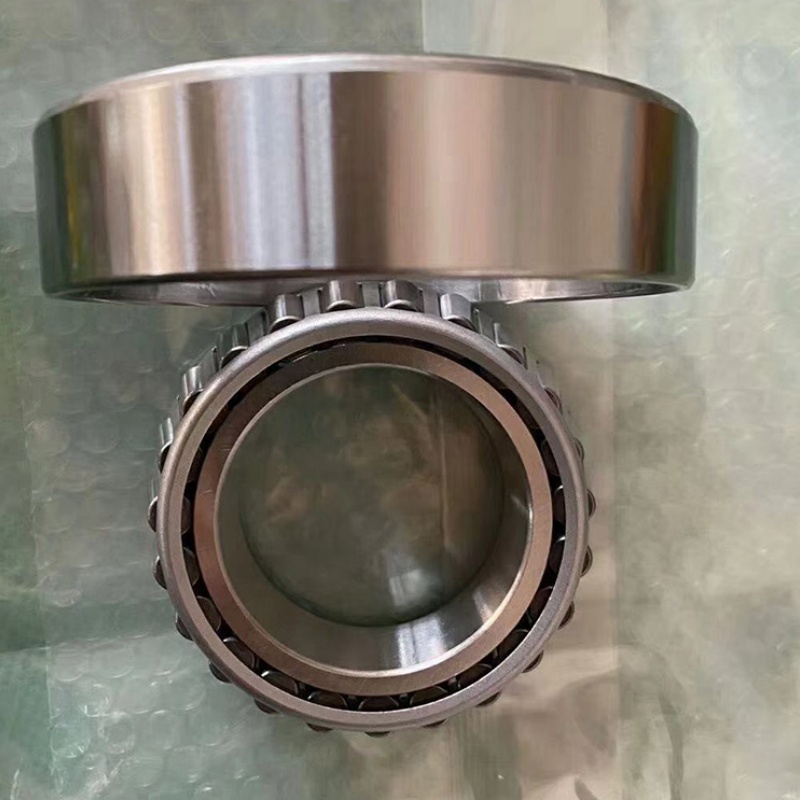
Let me start with lubrication. The lubricant does three things. It separates the rolling elements from the raceways. It carries away heat. And it removes wear particles. Without good lubrication, the bearing cannot survive.
The first choice is oil or grease. Oil is better for long life. It flows into all the contact areas. It cools the bearing. And it can be filtered to remove contaminants. Grease is better for simplicity. But it cannot cool as well. And you cannot filter it easily. For extended life applications, I recommend oil.
The viscosity is critical. You need an oil that is thick enough to form a film at operating temperature. The film thickness should be more than the surface roughness. If the film is too thin, metal touches metal. That creates wear. If the film is too thick, the bearing runs hot. That also shortens life.
I use the ISO viscosity grade chart. For most industrial applications, ISO VG 100 to 320 is good. For high-speed or high-temperature applications, I adjust up or down. I always ask about the operating temperature before recommending a viscosity.
Additives are another important factor. Extreme pressure additives protect the bearing under heavy loads. Anti-wear additives reduce friction. Anti-oxidants stop the oil from breaking down. Corrosion inhibitors protect the steel from rust. A good oil has all of these.
Now let me talk about sealing. Sealing is the first line of defense against contamination. A good seal keeps dirt, water, and chemicals out. Those contaminants are the enemies of long life.
There are different types of seals. Contact seals have a lip that touches the shaft. They are very effective. But they create friction and heat. Non-contact seals have a gap. They create less friction. But they are less effective at stopping contamination. For extended life, I use a combination. A contact seal on the outside and a labyrinth seal on the inside.
The sealing arrangement must also allow for proper lubrication. If the seal is too tight, the oil cannot flow through. That starves the bearing. If the seal is too loose, the oil leaks out. That also starves the bearing. The right balance is key.
Contamination control goes beyond seals. The oil must be filtered. The breather on the housing must have a filter. The storage area for new bearings must be clean. Every point where dirt can enter must be protected.
Let me summarize the lubrication and sealing factors in a table.
| Factor | Recommendation | Effect on Life |
|---|---|---|
| Lubricant type | Oil for long life, grease for simplicity | Controls friction and heat |
| Viscosity | ISO VG 100-320 | Maintains film thickness |
| Additives | EP, anti-wear, anti-oxidant | Protects under extreme conditions |
| Seal type | Contact + labyrinth combination | Stops contamination |
| Filtration | Beta 200 or higher | Removes abrasive particles |
| Breather | With filter | Stops dust ingress |
| Lubrication interval | Regular, scheduled | Ensures constant film |
I had a customer in Egypt who operated heavy earth-moving equipment. His bearings failed every few months. The working environment was very dusty. We added a double seal arrangement and a filtration system. He also started changing the oil on a strict schedule. Now his bearings last over two years. The difference was not in the bearing. It was in the protection around the bearing.
One more thing. The initial fill of grease or oil matters. Too much lubricant creates churning and heat. Too little creates starvation and wear. Follow the manufacturer’s recommendation for the fill quantity. And check it regularly. This simple step adds significant life to your bearings.
Conclusion
Extended bearing life comes from better materials, optimized geometry, proper lubrication, and strict sealing. Pay attention to these four areas, and your tapered roller bearings will perform reliably for years.
