
Every machine has a breaking point. I have seen it happen too many times. A bearing flattens slightly. Then vibration starts. Then the whole line shuts down.
That small deformation under load is the real thief of productivity. It steals your uptime. It steals your profits. And it usually happens when you least expect it.

So what is the real answer? Yes, you need bearings that resist deformation. But that is only half the story. You also need to know why they deform, what materials fight back, and how to measure stiffness before you buy. Let me walk you through what I have learned from supplying bearings to factories across Turkey, India, and Brazil over the past twelve years.
Understanding Bearing Deformation Under Load: Causes and Effects
I remember a customer in Egypt who called me furious. His conveyor bearings failed after just three weeks. He blamed the quality. But when I flew in to check, I found the real culprit. His shafts were misaligned by two millimeters. That tiny error created a point load that crushed the raceway.
Deformation is not a mystery. It is a simple physics problem. When you put a load on a bearing, the rolling elements press into the rings. The contact area changes from a point to a small ellipse. That area, called the Hertz contact zone, is where all the action happens.
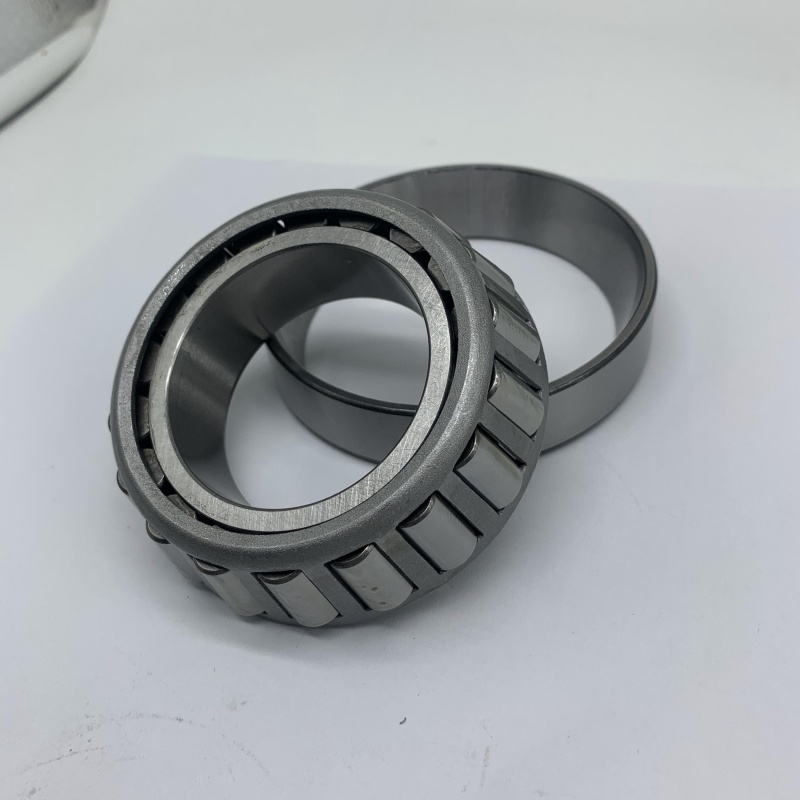
The main causes are easy to list. Overload is the first. Every bearing has a dynamic and static load rating. Exceed them, and you get permanent indentations. Misalignment is second. When the inner and outer rings do not sit parallel, the load concentrates on one side. Poor lubrication is third. Without a good oil film, metal touches metal. That friction generates heat. Heat softens the steel. Softer steel deforms faster.
The effects are just as clear. Vibration increases. Noise becomes louder. Temperature rises. And then you get premature spalling, where tiny pieces of metal flake off. That is the end of that bearing.
But here is the twist. Some deformation is elastic and harmless. The bearing springs back when the load goes away. Other deformation is plastic and permanent. That is what kills your equipment. The trick is to stay in the elastic zone for your entire operating range.
I always tell my distributors, like Rajesh in Mumbai, to check the static load rating first. That number tells you how much load the bearing can take without permanent damage. Do not ignore it. I have seen too many buyers pick bearings based only on dynamic rating. That is a mistake. Static rating is your safety net.
Critical Material Selection: The Key to Enhancing Bearing Rigidity
You cannot fight deformation with just any steel. I learned this the hard way. Early in my career, I sold standard GCr15 bearings to a heavy machinery maker in Russia. They returned half the order. The bearings were too soft for their shock loads. That is when I started digging into metallurgy.
The material decides how much a bearing can bend before it breaks. It decides the hardness. It decides the fatigue life. And it decides your customer’s trust in you.
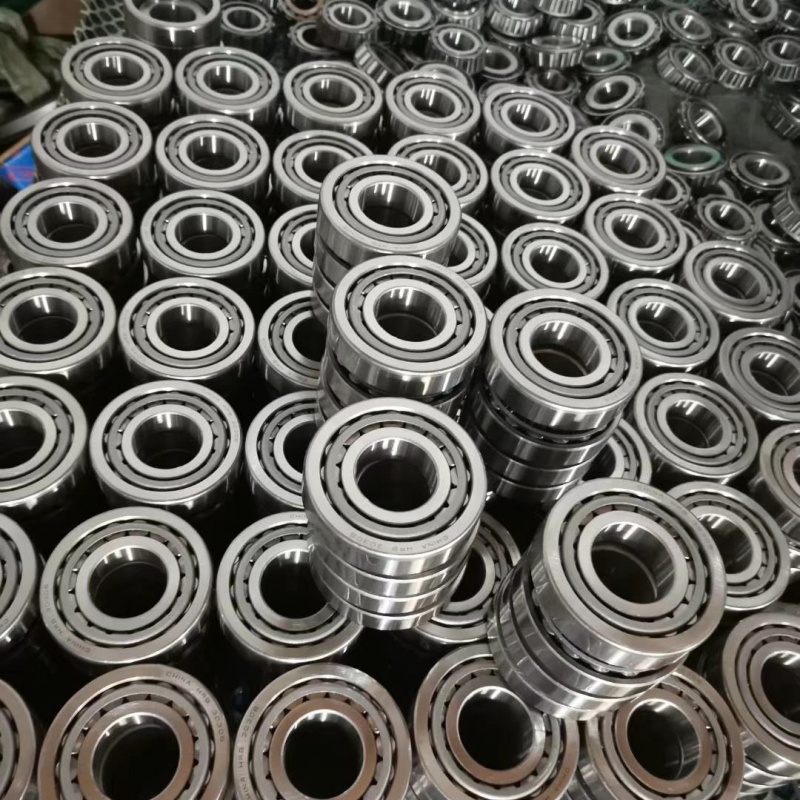
Most standard bearings use GCr15 bearing steel. It is good for general use. It has a hardness around HRC 60-62. But for heavy loads, you want something better. You want carburized steel like G20CrMo. This steel has a hard surface and a tough core. The surface resists indentation. The core absorbs shock without cracking. That combination gives you excellent deformation resistance.
Then there is the question of heat treatment. I always ask my factory team about their quenching process. Is it martensitic? Is it bainitic? Bainitic treatment gives you better toughness. It also reduces the risk of cracking under heavy loads. I have seen bearings with bainitic microstructure outlast standard ones by three times in steel mill applications.
Let me break down the key material properties in a simple table. This is what I share with every procurement manager who asks me about rigidity.
| Material Property | What It Does | Why It Matters for Deformation |
|---|---|---|
| Hardness (HRC) | Measures surface resistance to indentation | Higher hardness means less plastic deformation under load |
| Yield Strength | Stress needed to cause permanent deformation | Higher yield strength keeps you in the elastic zone longer |
| Toughness | Ability to absorb energy without fracturing | Prevents cracking when shock loads hit |
| Microstructure | Grain size and phase distribution | Fine, uniform grains give consistent stiffness |
| Cleanliness | Amount of non-metallic inclusions | Fewer inclusions mean fewer weak points for deformation to start |
I also want to mention ceramic hybrid bearings. They use silicon nitride balls and steel rings. The ceramic balls are much stiffer than steel. They deform less under the same load. But they cost more. So I only recommend them for high-speed spindles or extreme conditions. For most industrial applications, a good carburized steel with proper heat treatment is the sweet spot.
My personal rule is simple. Always ask your supplier for the material certificate. Check the hardness test results. Check the inclusion rating. If they cannot provide these, walk away. I have seen fake certificates too. So I always test random samples from each batch in our own lab. That is how we maintain our reputation.
Optimizing Bearing Design: Geometry and Load Distribution Strategies
I used to think that material was everything. Then I visited a bearing design conference in Germany. An engineer showed me two bearings with the exact same steel. One failed under 50 tons. The other survived 80 tons. The only difference was the internal geometry.
Geometry changes how the load spreads across the rolling elements. It changes the contact angle. It changes the number of balls or rollers. It even changes the curvature of the raceway. All these factors add up to a big difference in deformation.
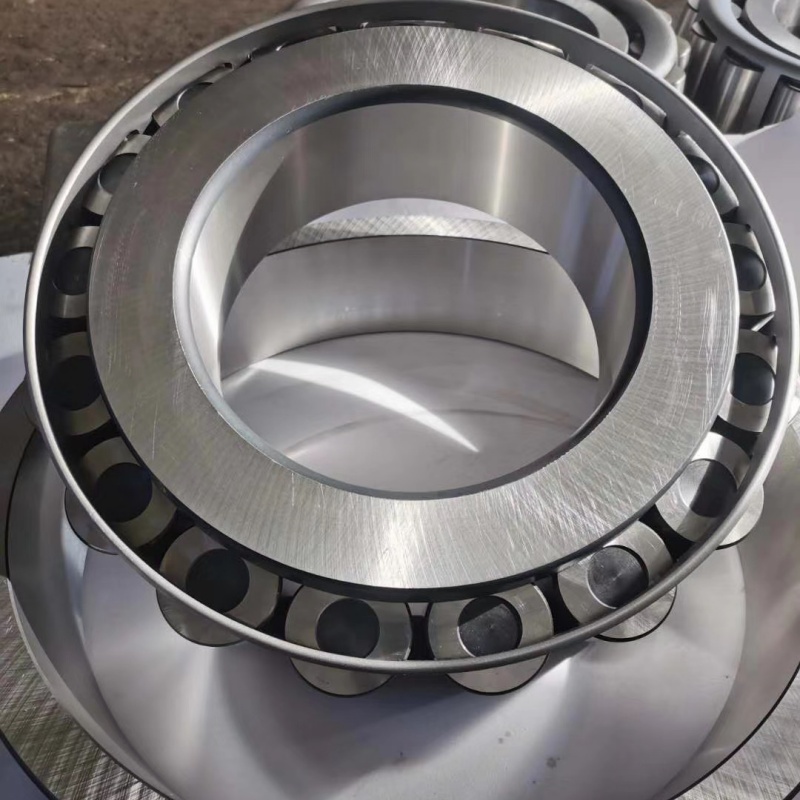
Let me give you a concrete example. Tapered roller bearings have a conical design. That shape lets them handle combined radial and axial loads very well. The rollers make line contact with the raceways. Line contact spreads the load over a larger area than point contact. So the stress per square millimeter drops. Deformation drops with it.
Cylindrical roller bearings are another good choice for heavy radial loads. They have even more contact area. But they cannot take much axial load. So you have to match the geometry to your load direction.
Then there is the crowning profile. That is a tiny curve on the roller or raceway surface. It prevents edge loading. Edge loading is when the ends of the roller dig into the raceway. That creates very high stress in a small spot. It is a common cause of premature deformation. A good crowning profile spreads the load evenly along the whole roller length. I always check the crowning radius on our production line. We use a profilometer to measure it to the micron.
Another design trick is using more rolling elements. A standard deep groove ball bearing might have eight balls. A full-complement bearing has no cage and fills every possible space with balls. That gives you more contact points. Each ball carries less load. Less load per ball means less deformation. But you lose speed capability because the balls rub against each other. So you have to balance load and speed.
I also pay attention to the internal clearance. That is the small gap between the rolling elements and the raceways. If the clearance is too small, the bearing runs hot and preloads itself. That adds extra deformation. If the clearance is too large, you get more vibration and impact. For heavy loads, I usually recommend C3 or C4 clearance. That gives room for thermal expansion while keeping the load distribution even.
In my experience, the best approach is to use simulation software. We run finite element analysis on every new design. That shows us exactly where the stress concentrates. Then we tweak the radius, the contact angle, and the number of elements until the stress evens out. That step saves us from costly field failures. I encourage every buyer to ask their supplier if they do FEA. If they do not, you are taking a gamble.
Stiffness Testing and Performance Validation: How to Measure Deformation Resistance
You cannot manage what you do not measure. That is my motto. When a customer tells me they need high rigidity, I do not just nod and ship bearings. I ask them to send me their load spectrum. Then I run a stiffness test on our test rig.
Testing is the only way to guarantee that a bearing will resist deformation in your real working conditions. Spec sheets are nice. But they are not your machine. I have seen bearings that passed every standard test but failed in the field because the test did not match the actual shock load pattern.

There are several ways to measure stiffness. The simplest is the static stiffness test. You apply a known force to a mounted bearing. Then you measure the deflection. You divide force by deflection to get stiffness. Higher stiffness means less deformation. I always do this test at several load levels. That gives me a curve. The curve tells me if the bearing stays linear or if it starts to yield.
Dynamic stiffness is harder to measure. It involves running the bearing under load at speed. You measure the vibration amplitude. You also measure the natural frequency. A stiffer bearing has a higher natural frequency. That means it resists dynamic deformation better. We use an accelerometer and a spectrum analyzer for this.
I also perform a Brinell hardness test on the raceway surface. This test presses a hard ball into the steel with a set force. The diameter of the indentation tells me the hardness. But more importantly, it tells me if the case hardening is deep enough. A shallow case means the soft core will deform under heavy loads. I have rejected entire batches because the case depth was 0.2 mm less than our specification.
Another practical test is the dimensional stability test. You heat the bearing to a high temperature, cool it, and measure any change. If the steel has retained austenite, it will transform and grow over time. That growth changes the internal clearance. It can reduce the clearance to zero under load, causing massive deformation. I always ask for a stability test report for bearings used in hot environments, like near furnaces or engines.
Let me share a quick checklist that I give to my customers. It helps them verify stiffness without a full lab.
- Ask for the stiffness value (N/µm) – Compare it to your calculated requirement.
- Check the radial internal clearance (C0, C3, C4) – Match it to your temperature and fit.
- Verify the case depth on carburized bearings – Minimum 1.5 mm for heavy duty.
- Request a vibration spectrum at operating speed – Look for peaks that indicate resonance.
- Perform a simple drop test – Drop a steel ball from a set height and listen to the ring tone. A dull thud means internal cracks or soft spots. A clear ring means good stiffness.
I remember a customer in Indonesia who ordered 500 taper roller bearings for a mining conveyor. They did not ask for any tests. I insisted on sending them a test report anyway. Three months later, their competitor’s bearings failed. Ours kept running. That report became our best sales tool.
My final advice is this. Do not trust the data sheet alone. Ask for a sample test. Run it on your own setup. Or ask the supplier to test it under your load conditions. If they hesitate, find another supplier. At FYTZ, we welcome such requests. We even send video recordings of the test for transparency.
Conclusion
Deformation is not inevitable. Pick the right material, design, and test method, and your bearings will stay true under the heaviest loads. That is how you keep your machines running and your customers happy.
