
I still remember a phone call from a customer in Turkey. His gearbox kept failing. The bearings were cracking under the load. He had tried deep groove ball bearings. He had tried cylindrical rollers. Nothing worked. He was losing money every day.
A tapered roller bearing is the answer for high-pressure tasks. Its conical shape handles heavy radial and axial loads together. It spreads the pressure over a larger contact area. That means less stress and less deformation.
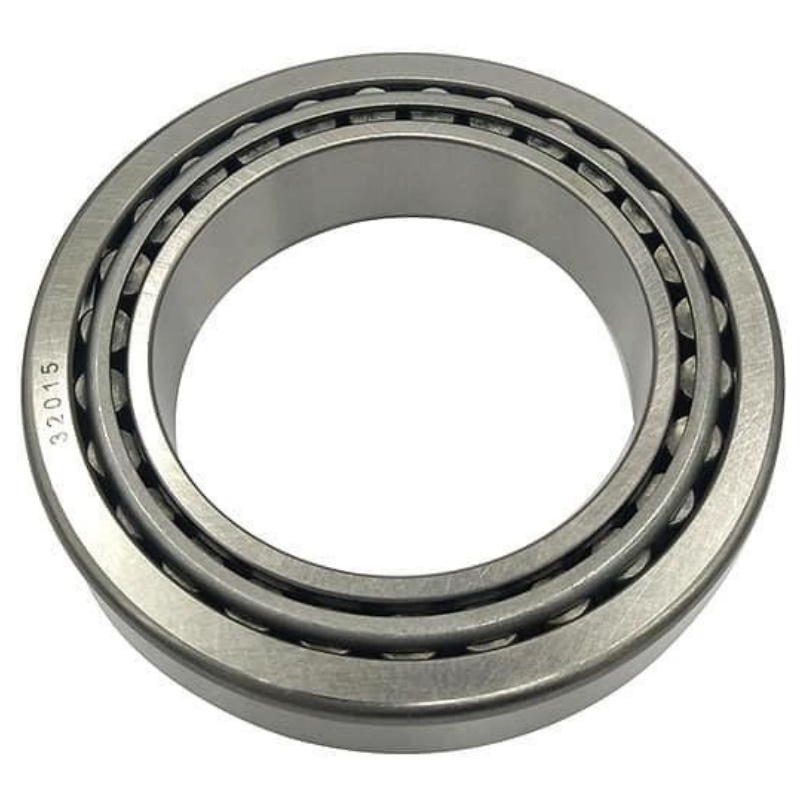
That customer in Turkey switched to our tapered roller bearings. His gearbox is still running today, two years later. That is what the right bearing can do. In this article, I want to walk you through why these bearings are so good for high-pressure work. I will cover the materials, the geometry, and how to pick the right one for your machine.
Why High-Pressure Tasks Demand Tapered Roller Bearings Over Other Types?
I once had a buyer in Brazil ask me a direct question. He said, "Why should I pay more for tapered rollers when ball bearings are cheaper?" I did not argue with him. I sent him two samples. I told him to put them on his test rig and run them at 80% of his max load. He called me back in one week. The ball bearing was already showing wear marks. The tapered roller bearing looked brand new.
The difference comes down to contact geometry. Ball bearings have point contact. That means the ball touches the raceway at a single point. Under high pressure, that point becomes a small ellipse. The stress per square millimeter is very high. So the surface yields and deforms.
Tapered roller bearings use line contact. The roller touches the raceway along a line. That line spreads the load over a much bigger area. The stress per square millimeter drops significantly. So the bearing resists deformation much better.
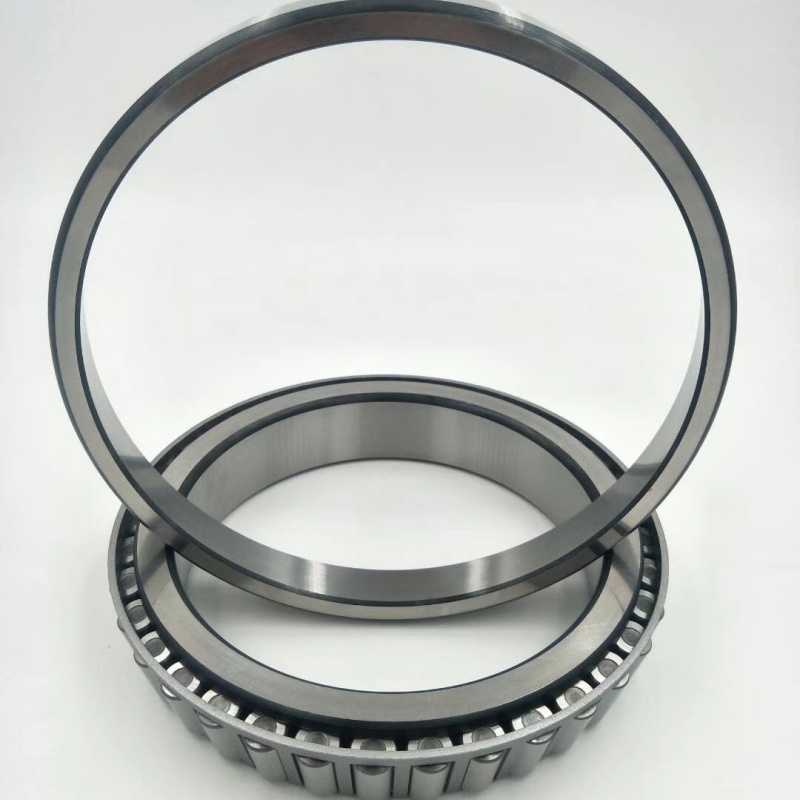
Here is another key factor. Tapered roller bearings can handle combined loads. They take radial load and axial load at the same time. Most other bearing types are good at only one direction. Deep groove ball bearings handle mostly radial load. Cylindrical roller bearings are also radial-only. But in high-pressure tasks, you almost always have both forces acting together. Think of a gearbox. The gears push sideways and radially. A tapered bearing handles both without extra components.
I have seen customers try to use two different bearings to handle each direction separately. That adds cost. It adds complexity. And it adds more failure points. A single tapered roller bearing is simpler and more reliable. That is why the truck axles and industrial gearboxes around the world use them.
The separable design is another advantage. The inner ring and roller assembly can be removed from the outer ring. That makes installation and maintenance much easier. For high-pressure applications where you inspect bearings often, this feature saves time. I have had customers in Indonesia tell me they cut maintenance time by half just by switching to tapered rollers.
Let me list the key reasons clearly. These are the points I share with every procurement manager like Rajesh.
| Feature | How It Helps Under High Pressure |
|---|---|
| Line contact geometry | Spreads load over larger area, lowers stress |
| Conical roller shape | Handles radial and axial loads together |
| Separable design | Easy inspection and replacement |
| Adjustable clearance | Allows precise preload for stiffness |
| High load capacity | Works in heavy machinery and automotive drivelines |
So when someone asks me why tapered rollers, I tell them this. It is about surface area. More area means less stress. Less stress means longer life. And longer life means lower total cost. That is not a theory. I have seen it in steel mills, mining conveyors, and truck axles across Russia and South Africa.
Critical Material Selection and Heat Treatment for High-Pressure Tapered Roller Bearings
I learned about material selection the expensive way. A customer in Pakistan ordered 200 tapered roller bearings for their sugar mill. We shipped standard GCr15 steel bearings. The mill runs only three months per year, but the load is brutal. The bearings failed halfway through the season. We lost the customer. That is when I started digging into metallurgy for real.
The material is the backbone of any high-pressure bearing. You cannot put cheap steel in a heavy load and expect good results. The steel must be clean, hard, and tough. That combination is rare. You have to engineer it.
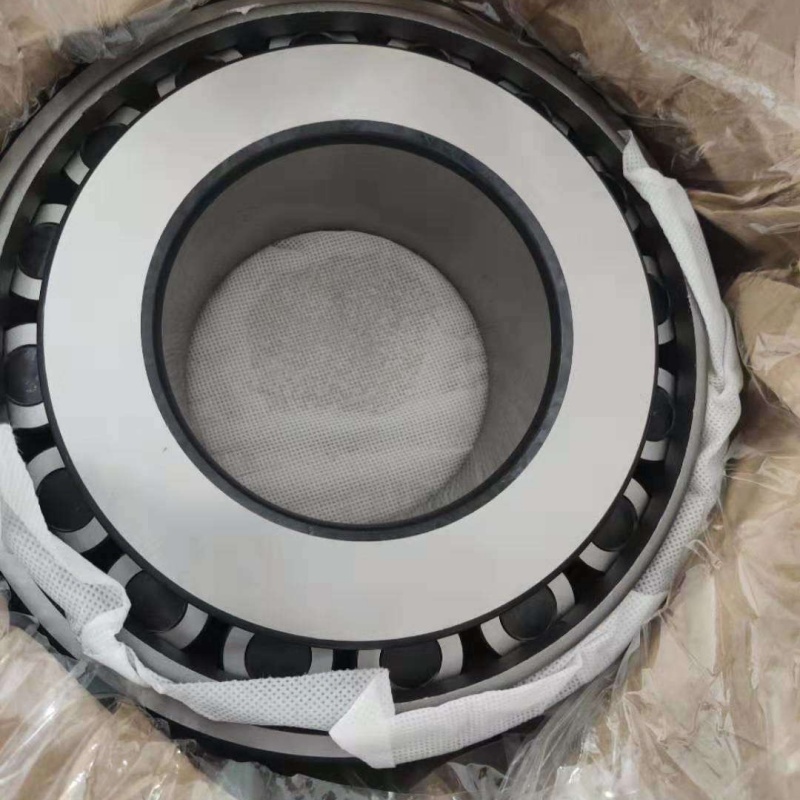
For high-pressure tapered roller bearings, I always recommend carburized steel. The most common grade is G20CrMo. This steel has a low carbon core and a high carbon surface after carburizing. The surface becomes hard and wear-resistant. The core stays tough and shock-absorbent. That dual structure is perfect for high-pressure tasks. The hard surface resists indentation from the rollers. The tough core absorbs impact loads without cracking.
Standard GCr15 is a through-hardening steel. It is hard all the way through. That works for light to medium loads. But in high-pressure tasks, through-hardened steel can be brittle. If a shock load hits, the bearing can crack. I have seen this happen in mining equipment in South Africa. The rocks drop onto the conveyor. The impact travels through the shaft. The bearing cracks. The line stops.
Heat treatment is just as important as the steel grade. I always ask my production team about the quenching process. Martensitic quenching gives you high hardness. It is the most common process. But for high-pressure work, I prefer [bainitic quenching](https://www.shte.se/wp-content/uploads/nyheter/SHTE_Vasteras_2017/Effect_of_Bainite_in_the_Case_Layer_on_Fatigue_Strength_2017.p …). Bainitic steel has a finer microstructure. It gives you better toughness and dimensional stability. Bearings with bainitic treatment last longer under shock loads. They also run cooler because the microstructure reduces friction.
The case depth matters too. For high-pressure bearings, I specify a minimum effective case depth of 1.5 mm. That means the hardened layer goes deep enough to support the rolling elements. If the case is too shallow, the soft core will deform under the rollers. That deformation shows up as false brinelling or pitting. I have rejected batches where the case depth was only 1.0 mm. It is not worth the risk.
Let me share the material properties I check for every high-pressure order.
| Property | Standard GCr15 | Carburized G20CrMo | Why It Matters |
|---|---|---|---|
| Surface hardness | HRC 60-62 | HRC 60-64 | Resists roller indentation |
| Core hardness | HRC 60-62 | HRC 30-40 | Absorbs shock without cracking |
| Case depth | N/A | 1.5-2.5 mm | Prevents core deformation under load |
| Impact toughness | Moderate | High | Handles sudden load spikes |
| Dimensional stability | Good | Excellent | Stays accurate under temperature changes |
I also pay attention to cleanliness. The steel must have low non-metallic inclusions. Inclusions are tiny particles of oxide or sulfide. They act as stress concentrators. Under high pressure, a crack can start at an inclusion. That crack grows until the bearing fails. We use vacuum degassed steel for all our high-pressure bearings. That removes most inclusions. I ask for a JIS inclusion rating of 2.0 or better on every certificate.
The heat treatment process itself must be controlled carefully. We use continuous carburizing furnaces with atmosphere control. The temperature must stay within plus or minus 5 degrees Celsius. The soak time must be exact. A deviation of even 15 minutes changes the case depth. We log every batch. We keep samples from every heat.
I tell my customers to ask their suppliers for the material test report. Do not take a verbal promise. Ask for the hardness curve. Ask for the case depth measurement. Ask for the inclusion rating. If the supplier cannot produce these, find someone who can. At FYTZ, we include all these documents with every high-pressure bearing shipment.
Optimizing Roller Geometry and Contact Angle for Extreme Load Resistance
I remember a design engineer from India who visited our factory. He was working on a new gearbox for heavy trucks. He had a problem. The standard tapered roller bearing design was failing after 500 hours. He asked if we could change the geometry. We spent three days on our simulation software. We adjusted the contact angle. We changed the roller crowning. We tested four different designs. The final version lasted over 2,000 hours.
Geometry is not just about dimensions. It is about how the load travels through the bearing. Every curve and every angle affects that load path. Get it right, and the bearing can take extreme pressure. Get it wrong, and it fails fast.

The contact angle is the most important geometric factor. It is the angle between the roller axis and the bearing radial plane. A steeper angle means more axial load capacity. A shallower angle means more radial load capacity. For high-pressure tasks with combined loads, you want a middle angle. Around 15 to 25 degrees works well. I have used 20 degrees for most industrial gearboxes. That gives a good balance.
The roller profile is another big factor. A straight roller creates edge loading. That means the ends of the roller dig into the raceway. The stress at those edges is very high. It causes premature spalling and deformation. A crowned roller has a slight curve along its length. That curve matches the elastic deflection of the raceway. The load spreads evenly across the whole roller. No edge stress. No early failure.
The number of rollers matters too. More rollers mean more contact points. The load divides among more elements. Each roller carries less stress. That reduces deformation. But more rollers also increase friction. And they reduce the space for lubricant. So there is a balance. For high-pressure but low-speed work, I use more rollers. For high-speed work, I use fewer.
Internal clearance is the next geometry choice. High-pressure applications generate heat. Heat expands the bearing components. If the clearance is too small, the bearing preloads itself. That adds stress and increases deformation. I usually recommend C3 clearance for most high-pressure tasks. For very heavy loads, C4 clearance gives more room. But check with the supplier. The right clearance depends on your housing fit and shaft fit too.
Let me summarize the geometry choices in a table. This is the guide I use when working with customers on custom designs.
| Geometry Parameter | High-Pressure Recommendation | Effect on Deformation |
|---|---|---|
| Contact angle | 15-25 degrees | Balances radial and axial stiffness |
| Roller crowning | 0.3-0.5 mm radius | Eliminates edge stress |
| Number of rollers | Full-complement or high-count | Spreads load over more points |
| Roller length-to-diameter ratio | 1.5:1 to 2.5:1 | Prevents roller skewing |
| Internal clearance | C3 or C4 | Allows thermal expansion without preload |
I also want to mention the cage design. The cage holds the rollers in place. In high-pressure tasks, the cage experiences high centrifugal force and impact. A brass cage is more durable than steel for heavy loads. It resists wear better. It also has better emergency running properties. If the lubrication fails briefly, a brass cage will not seize as fast as a steel one. I specify brass cages for mining and steel mill applications.
One more thing. The raceway curvature on the outer ring matters. If the curvature is too sharp, the roller end contacts the edge. If it is too flat, the roller loses guidance. The optimal curvature matches the roller end design. We use a logarithmic profile on both the raceway and the roller. That profile is mathematically calculated to distribute stress perfectly. It costs more to make. But it doubles the life of the bearing.
I always tell my distributors to ask about the profiler. Ask if the supplier uses logarithmic profiles. Ask if they have a profilometer to measure it. If they say no, the bearing is probably using a simpler profile. That simpler profile will not handle high pressure as well. It is that simple.
How to Select the Right Tapered Roller Bearing for Your Specific High-Pressure Application?
A customer in Egypt once asked me for a bearing recommendation. He sent me a list of specifications. But he did not tell me about the impact loads. He also did not mention the temperature. We shipped the bearings. They worked fine for a month. Then the shaft started vibrating. We had to replace them with a heavier series. That mistake cost him two weeks of downtime.
Selection is not just about matching numbers. It is about understanding the real conditions. I have learned to ask many questions before recommending any bearing.
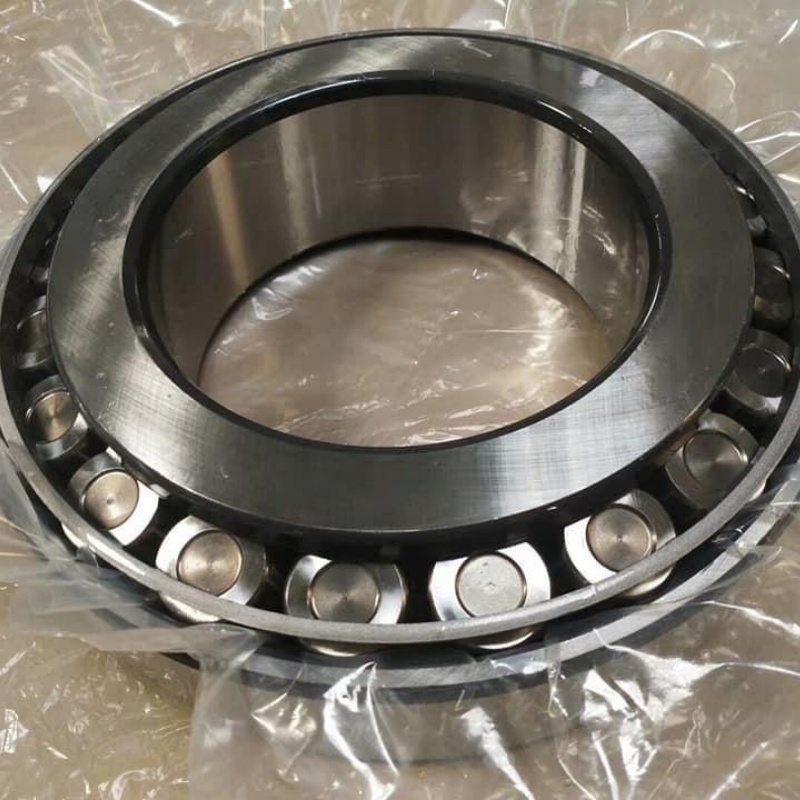
The first step is to calculate the equivalent dynamic load. That is the combined radial and axial load converted into a single number. The formula uses the radial load, the axial load, and a factor called X and Y. Those factors come from the bearing catalog. They depend on the contact angle. If you get the X and Y wrong, you under-size or over-size the bearing. Under-sizing causes deformation and failure. Over-sizing adds cost and weight.
The second step is to check the static load rating. That is the maximum load the bearing can take without permanent deformation. I always look at this number first for high-pressure tasks. It is the safety limit. Stay below 80% of the static rating for normal operation. For shock loads, stay below 50%. That gives a safety margin for unexpected spikes.
The speed rating is the third factor. High pressure often means high friction. High friction creates heat. Heat reduces the oil film thickness. Without a good oil film, the metal touches metal. That leads to wear and deformation. If your application runs at high speed, you need a bearing with a lower contact angle. A lower angle has less rolling resistance. It also runs cooler.
Lubrication is the fourth consideration. For high-pressure tasks, use an oil with high viscosity and extreme pressure additives. The EP additives form a protective film under high pressure. That film reduces metal-to-metal contact. I recommend ISO VG 320 for most heavy applications. For very slow speeds, use even higher viscosity. For high speeds, use lower viscosity but still with EP additives.
The fit between the bearing and the shaft matters too. An interference fit on the inner ring prevents creep. Creep is relative movement between the bearing and the shaft. That movement wears both surfaces. It also generates heat. For high-pressure tasks, I recommend a tight fit of P6 or even P5 precision. The outer ring can have a looser fit to allow thermal expansion.
Let me give you a selection checklist. This is what I send to every buyer who asks for help.
| Selection Factor | What to Check | Why It Matters |
|---|---|---|
| Load spectrum | Radial load, axial load, impact frequency | Determines bearing size and series |
| Static load rating | Compare to peak load | Prevents permanent deformation |
| Speed range | RPM and acceleration | Affects lubrication and temperature |
| Operating temperature | Ambient and peak | Influences clearance and material |
| Lubrication type | Oil or grease, viscosity, additives | Reduces friction and wear |
| Shaft and housing fits | Interference tolerances | Prevents creep and misalignment |
| Precision class | P0, P5, P6 | Affects running accuracy and vibration |
The precision class is often overlooked. High-pressure tasks do not always need high precision. P0 is standard for most applications. P6 and P5 are better for high speed or low vibration. But they cost more. So I only recommend higher precision when the application demands it. For a slow-moving conveyor, P0 is fine. For a turbine or a spindle, you need P5.
I also consider the mounting method. Tapered roller bearings need careful preload adjustment. Too much preload increases stress and deformation. Too little preload allows play and impact. I recommend measuring the axial play during installation. Use a dial gauge to set the right clearance. I have seen too many failures from improper preload. It is a simple step, but it saves a lot of trouble.
Finally, I always advise ordering a sample first. Test it in your specific machine. Run it under your worst-case conditions. Measure the temperature and vibration. If it passes, order the full batch. That sample test is the best insurance you can buy. I offer samples to all my new customers. It builds trust. And it prevents expensive mistakes.
Conclusion
Selecting the right tapered roller bearing for high pressure means understanding load, material, geometry, and conditions. Get these right, and your equipment runs reliably for years.
