
I once spoke to an OEM fan manufacturer in Turkey. He told me his biggest headache was not sales. It was warranty claims. His fans kept failing after six months. The motor was fine. The blades were fine. The bearing was the weak link. He was losing money on every unit he sold.
For OEM fans, blowers, and air movement assemblies, the right deep groove ball bearing must handle high speeds, temperature swings, and continuous operation without compromising noise levels. Choosing the wrong bearing leads to premature failure, excessive noise, and costly product recalls.

I run a bearing factory in China. We export to over ten countries. I have worked with many fan manufacturers over the years. Every single one of them has asked me the same questions. How do I make my fans quieter? How do I make them last longer? How do I stop my customers from complaining? In this article, I will answer those questions. I will walk you through the four most important factors for choosing bearings in fans and blowers.
What Are the Critical Performance Demands for Bearings in High-Speed Fan and Blower Applications?
A buyer from Vietnam once ordered a standard bearing for his ceiling fan production line. He did not check the speed rating. The fan ran at 3600 RPM. The bearing was rated for 3000 RPM. Within three months, the fans started making a grinding noise. He had to recall 2000 units. That was a costly lesson for him.
The critical performance demands for fan and blower bearings are high-speed capability, thermal stability, low friction torque, and extended grease life. These four factors directly determine how long your fan runs smoothly without maintenance or noise complaints.
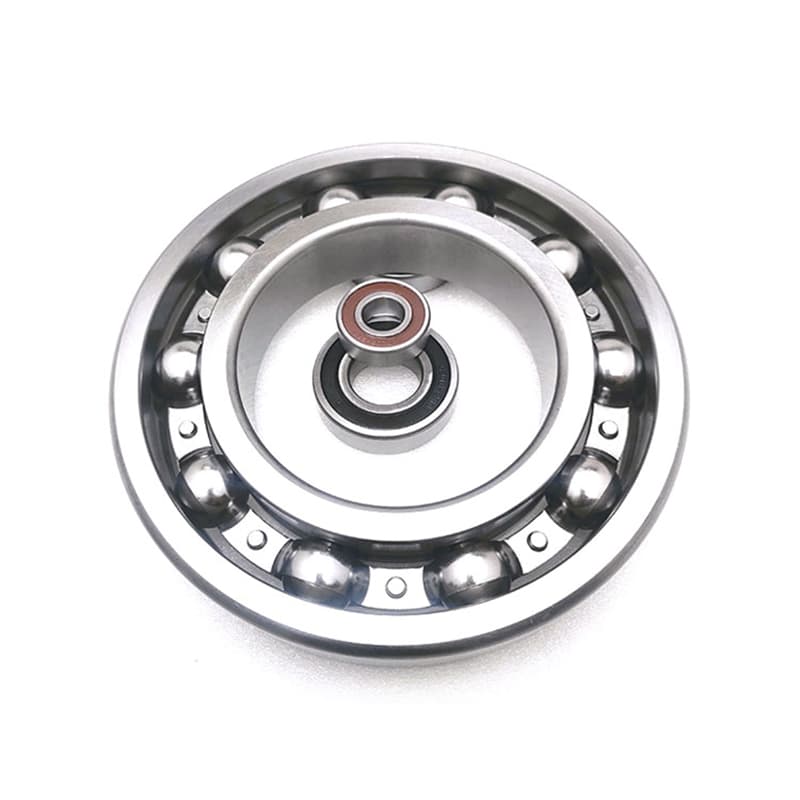
Speed Capability – More Than Just RPM
Fans and blowers run at much higher speeds than typical industrial equipment. A small cooling fan can run at 6000 RPM or more. A large industrial blower might run at 2900 RPM. The bearing must handle these speeds without generating excessive heat.
The speed limit of a bearing depends on two things. The first is the cage design. A steel cage can handle higher speeds than a brass cage. The second is the grease. Low-viscosity grease is better for high speeds. It creates less resistance. I always tell my clients to check the thermal speed rating in the catalogue. For a fan application, you should choose a bearing that has a speed rating at least 30% higher than your actual operating speed. That gives you a safety margin.
Thermal Stability – Handling Heat Buildup
Fans and blowers run for long hours. Some run 24 hours a day, seven days a week. The motor generates heat. The bearing absorbs that heat. If the bearing cannot handle the temperature, the grease breaks down. The balls lose their lubrication. The bearing seizes.
Standard bearings are designed for temperatures up to 120°C. But in a sealed fan housing, the temperature can reach 100°C easily. At that temperature, standard grease starts to oxidize. The oil separates from the thickener. The bearing runs dry. For continuous-duty fans, I recommend bearings that are heat-stabilized. This means the steel has been treated to resist dimensional changes at high temperatures. I also recommend grease with a high dropping point, above 180°C.
Low Friction Torque – Saving Energy
Fans are all about efficiency. The bearing should consume as little power as possible. High friction torque means the motor has to work harder. That wastes electricity. It also generates extra heat.
Low friction torque comes from the seal design. Contact seals (RS) have higher friction than non-contact seals (ZZ). For a fan, I usually recommend ZZ seals or light-contact seals. These seals provide enough protection against dust but do not create excessive drag. I also look at the ball surface finish. Smoother balls mean less friction. Our factory uses polished steel balls with a roughness of less than 0.01 microns. That makes a noticeable difference in energy consumption.
Here is a quick comparison of seal types for fan applications:
| Seal Type | Friction Level | Dust Protection | Best For |
|---|---|---|---|
| ZZ (non-contact) | Low | Moderate | Clean indoor fans, low dust |
| RS (contact) | High | Excellent | Harsh environments, outdoor fans |
| Low-torque contact seal | Medium | Good | Most OEM fans – best balance |
Extended Grease Life – Longer Service Intervals
Your customers do not want to grease their fans. Most fans are designed to be maintenance-free. The bearing must have a grease that lasts for the lifetime of the fan. That is typically 30,000 to 50,000 hours.
Grease life depends on the base oil viscosity, the thickener type, and the operating temperature. For fans, I prefer a lithium-based grease with a base oil viscosity of 70-100 cSt at 40°C. That gives a good balance of low friction and long life. I also suggest bearings that come pre-filled with high-quality grease from a trusted brand like Kyodo or ExxonMobil. The grease quality matters. Cheap grease will dry out in half the time.
So here is my rule for fan bearings: choose a bearing with a thermal speed rating well above your operating speed, select a heat-stabilized steel, use low-friction seals (ZZ or light-contact), and specify a high-quality grease that lasts for the fan’s design life. These choices will save you from warranty headaches.
How Do Seal Types and Grease Selection Affect Fan Bearing Reliability?
A customer from Indonesia called me one day. He was angry. His fans were failing after just four months. He blamed the bearing quality. I asked him about the environment. He said the fans were installed in a kitchen exhaust system. Grease and steam were everywhere. He had chosen ZZ shields instead of RS seals. The steam got into the bearing. The raceways rusted. The grease turned to sludge.
Seal types and grease selection are the two biggest factors that determine fan bearing reliability. The wrong seal lets in contamination. The wrong grease degrades at operating temperature. Together, they account for over 70% of premature fan bearing failures.
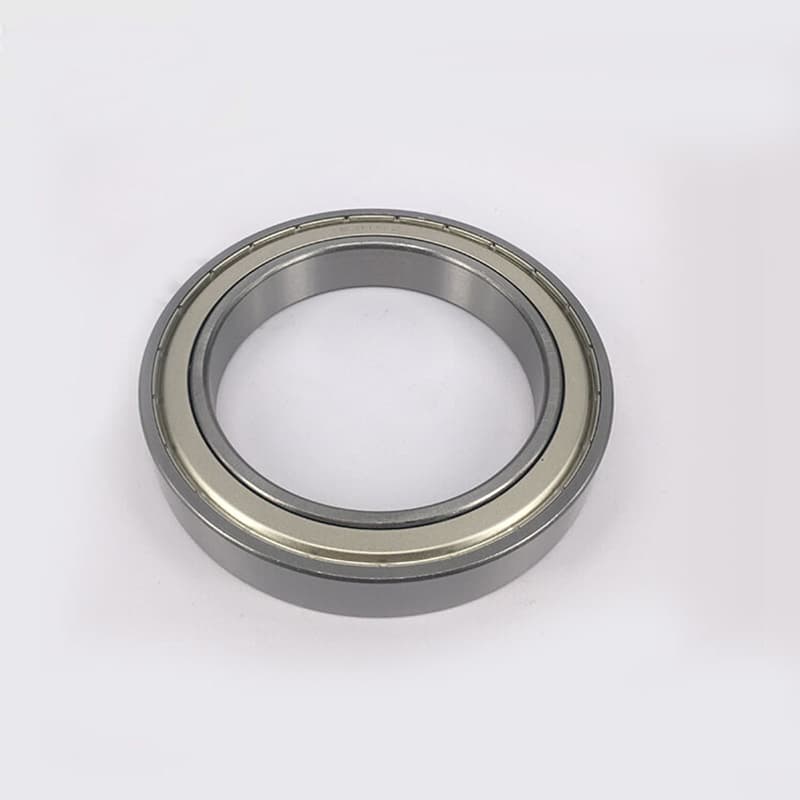
Seal Type – Protecting Against Contamination
Fans are installed in all sorts of environments. Some are clean, like office ceiling fans. Others are dirty, like factory exhaust fans or kitchen ventilation blowers. The seal is the first line of defense.
Here is a quick breakdown:
- ZZ shields (metal shields): These are non-contact. They keep out large particles but do not stop moisture or fine dust. They have low friction and are good for clean indoor applications.
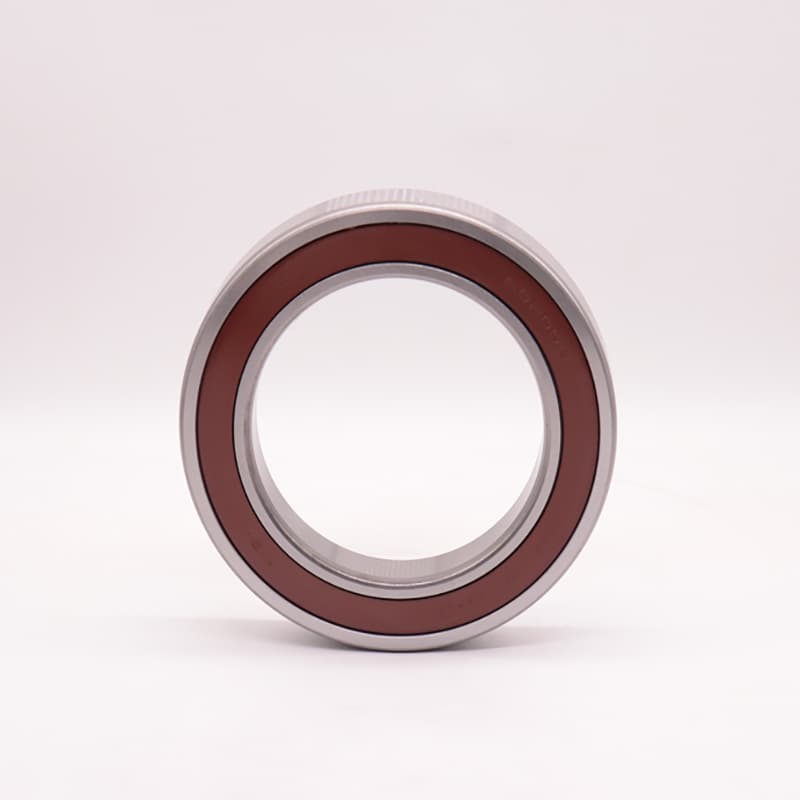
- RS seals (rubber contact seals): These touch the inner ring. They create a tight barrier against moisture, dust, and chemicals. But they have higher friction and generate more heat.
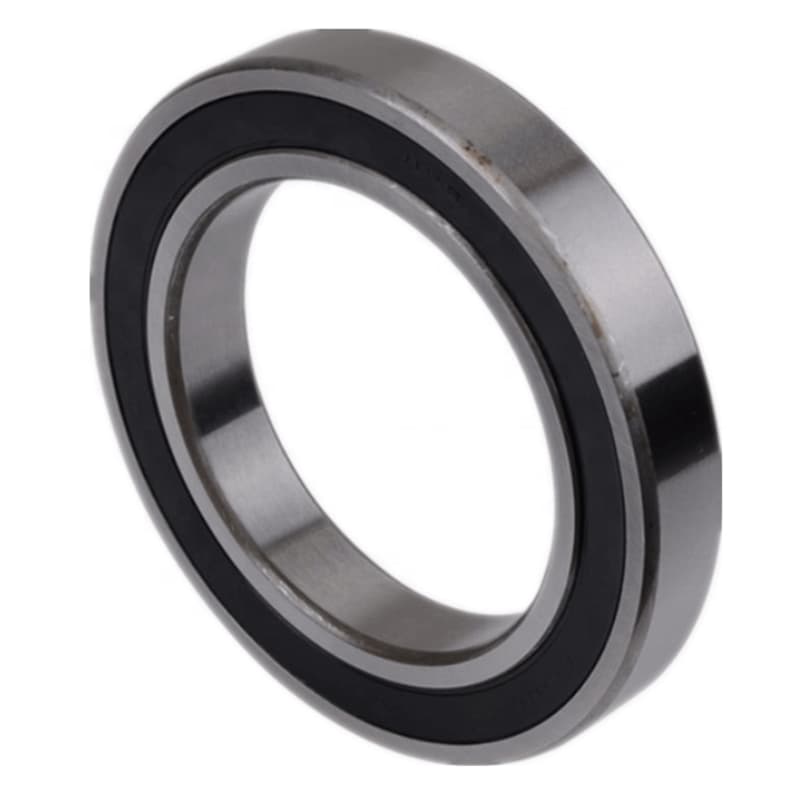
- 2RS seals: Same as RS, but on both sides. This is what I recommend for most fan applications. Yes, there is a small friction penalty. But the protection is worth it. One bearing failure costs more than the extra energy over the fan’s lifetime.
I have a simple rule. If the fan is installed indoors in a clean office or home, ZZ shields are fine. If the fan is in a kitchen, a factory, or outdoors, use 2RS seals. The extra cost is small. The extra protection is large.
Grease Selection – The Lifeblood of the Bearing
Grease is not just a lubricant. It is a structural component. It keeps the balls separated from the raceways. It carries away heat. It protects against corrosion. The wrong grease will break down quickly. The bearing will run dry. The balls will skid. The raceways will spall.
For fan bearings, I look at three things in a grease:
- Base oil viscosity: For fan speeds, a viscosity of 70-100 cSt at 40°C is ideal. Too thick and the friction goes up. Too thin and the oil film breaks down.
- Thickener type: Lithium complex is the most common and reliable. It has good water resistance and a high dropping point. Polyurea is also good but more expensive.
- Temperature range: The grease must work at the fan’s operating temperature. For most fans, that is -20°C to +120°C. I recommend a grease with a dropping point above 180°C. That gives a safety margin.
The Interaction Between Seals and Grease
The seal and the grease work together. A good seal keeps the grease inside and keeps contamination out. A good grease stays in place and does not leak past the seal. Some low-quality greases separate under heat. The oil leaks out. The thickener stays behind. That leaves a dry, hard residue that acts like sandpaper on the balls.
I always test my fan bearings for grease leakage. I run them at operating speed and temperature for 100 hours. Then I check if any oil has seeped past the seal. If I see oil on the outside of the bearing, I know the grease is not stable. I reject that batch. I recommend you do the same test with your suppliers. It will save you from greasy, noisy fans.
Here is a selection guide I use with my fan manufacturing clients:
| Environment | Recommended Seal | Recommended Grease | Expected Life |
|---|---|---|---|
| Clean indoor office | ZZ or low-torque RS | Lithium complex, 80 cSt | 40,000+ hours |
| Kitchen or wet area | 2RS (contact) | Lithium complex, water-resistant | 25,000-35,000 hours |
| Factory with dust | 2RS (contact) | Polyurea, high-load | 20,000-30,000 hours |
| High-temperature (above 100°C) | 2RS with special seal | High-temp silicone or fluorinated | 15,000-25,000 hours |
The bottom line is this: do not guess on seals and grease. Match them to your fan’s environment and operating temperature. This is the simplest way to improve your fan reliability without changing any hardware.
Which Bearing Precision and Vibration Levels Are Required for Quiet Fan Operation?
I had a client from Germany who made high-end ventilation fans for hospitals. His fans had to be extremely quiet. A nurse should not be disturbed by a humming fan in a patient’s room. He tested bearings from three suppliers. Only one met his noise requirement. The difference was not in the dimensions. It was in the precision and vibration grade.
For quiet fan operation, you need bearings with vibration grades V4 or better and precision class P6 or higher. These bearings have tighter geometric tolerances and smoother raceway surfaces. They produce less audible noise and lower overall vibration levels.
Precision Class – It Is Not Just About Fits
Most people think precision class is only about fits and tolerances. That is only part of the story. A P6 bearing has tighter runout tolerances than a P0 bearing. That means the inner ring and outer ring are more concentric. The balls follow a more consistent path.
In a fan, that consistency matters. A P0 bearing has a small eccentricity. That eccentricity creates a tiny imbalance. The fan blade assembly amplifies that imbalance. The result is a low-frequency hum. It is not loud, but it is noticeable. In a quiet room, that hum is annoying.
P6 bearings reduce that eccentricity by about half. The fan runs smoother. The hum is gone. For most commercial fans, P6 is the sweet spot. P5 is even better but costs more. I only recommend P5 for medical equipment or laboratory fans where ultra-low noise is critical.
Vibration Grades – The Real Noise Indicator
This is where most buyers miss the mark. They ask for P6 precision but forget to ask for the vibration grade. The two are related but not the same. The vibration grade measures how much the bearing vibrates when it rotates. That vibration translates directly into audible noise.
The standard vibration grades for deep groove ball bearings are V1 to V4. V1 is the quietest. V4 is the most common for standard applications. For a fan, I recommend at least V3. For a quiet fan, I recommend V4 or better.
I have a story to share. A client from Brazil ordered P6 bearings from me. He was happy with the price and delivery. But his fans were still noisy. I asked him about the vibration grade. He had not asked for one. The supplier had sent V4 bearings. That was too high for his application. He needed V3. We sent him V3 bearings. The noise dropped by 4 decibels. That does not sound like much, but to the human ear, it is a noticeable difference.
How to Verify Vibration and Noise
You cannot check vibration grades with a caliper. You need a vibration tester. Most good bearing factories have one. The bearing is spun at a standard speed. A sensor measures the vibration in three directions. The results are compared to ISO 15242 standards.
When you receive samples from a supplier, ask for the vibration test report. Do not just trust the marking on the box. Some factories mark V3 but deliver V4. That is a common problem in the industry. I have seen it many times.
I also recommend doing a simple sound test on samples. Put the bearing on a clean mandrel. Spin it with a small motor. Listen with a stethoscope or a sound meter. A good fan bearing should have a smooth, even sound. There should be no peaks or rattling. I do this test for every new customer sample. It takes 10 minutes but catches many problems.
Here is a simple guide for selecting precision and vibration grades:
| Application | Recommended Precision | Recommended Vibration Grade | Reason |
|---|---|---|---|
| Standard industrial fan | P0 or P6 | V4 | Cost-effective and acceptable |
| Commercial ventilation fan | P6 | V3 | Good balance of cost and noise |
| Quiet fan (office, hospital) | P6 | V3 or better | Low noise is a selling point |
| Ultra-quiet fan (medical, lab) | P5 | V2 or better | Minimal noise required |
| Heavy-duty blower | P0 or P6 | V4 | More concerned with durability |
The Cost of Quiet
There is no free lunch. Tighter precision and lower vibration require more careful manufacturing. The factory must use better grinding machines and more precise gauges. That costs money. You will pay about 10-20% more for P6 over P0. You will pay another 10-15% for V3 over V4.
Is that worth it? It depends on your market. If you are making cheap fans for a price-sensitive market, V4 is probably fine. If you are making premium fans for commercial buildings or hospitals, the extra cost is justified. Your customers will pay more for a quiet fan. That higher margin covers the better bearing cost many times over.
So my advice is simple: match your precision and vibration grade to your market positioning. Do not over-specify if you do not need to. But do not under-specify if your brand depends on quiet performance. Test the samples. Listen to them. Let your ears guide you.
What Material and Heat Treatment Choices Extend Bearing Life in Air Movement Equipment?
A client from South Africa once asked me why his fan bearings kept failing in the summer. The temperature in his factory reached 50°C. The bearings ran hot. The grease broke down. The steel lost its hardness. I asked him about his heat treatment. He did not know. He had just bought standard bearings without asking for heat-stabilization.
For fan and blower applications, you need bearing steel with high cleanliness (low inclusion content) and heat treatment that controls retained austenite. These two factors affect the bearing’s dimensional stability at elevated temperatures and its resistance to rolling contact fatigue.
Steel Cleanliness – The Invisible Enemy
Bearing steel is not pure. It has tiny impurities called inclusions. These are non-metallic particles that get trapped during the steel-making process. Under the microscope, they look like small dots. Under load, those dots become stress concentrators. Cracks start there. The bearing fails from the inside.
High-quality steel has fewer and smaller inclusions. This is measured by the ASTM E45 rating 1. A good bearing steel has a rating of A2, B1, or better. Cheap steel has higher ratings. The inclusions are larger and more numerous.
I always ask my steel supplier for a micro-cleanliness report. I compare it to the standard. If the rating is too high, I reject the steel. Many buyers do not ask for this report. They just accept whatever steel the bearing factory uses. That is a mistake. The quality of the steel is the foundation of the bearing.
Retained Austenite – The Hidden Problem
When steel is heat-treated, it transforms from one crystal structure to another. The goal is to get a structure called martensite. It is hard and wear-resistant. But not all of the steel transforms. Some of it stays as austenite. This is called retained austenite. It is softer and less stable.
At high temperatures, retained austenite can transform into martensite. That transformation causes the bearing to expand. The internal clearance changes. The bearing may become preloaded. That creates extra heat. The extra heat causes more expansion. This is a dangerous cycle.
For fan bearings that run continuously at elevated temperatures, I recommend a heat treatment that limits retained austenite to less than 5%. Standard bearings often have 10-15% retained austenite. They work fine at room temperature but become unstable at higher temperatures.
Stabilization – The Solution for Heat
Good bearing manufacturers offer stabilized bearings. These have been heat-treated to reduce retained austenite. They are more dimensionally stable at high temperatures. They cost a bit more, but the extra cost is small.
There are different levels of stabilization. S0 is standard. S1 is for temperatures up to 150°C. S2 is for temperatures up to 200°C. For most fan applications, S1 is enough. That gives you a safety margin for the typical operating temperature of 80-100°C.
Here is a quick guide to steel and heat treatment choices:
| Feature | Standard Bearing | Heat-Stabilized Bearing | Benefit |
|---|---|---|---|
| Retained austenite | 10-15% | <5% | Dimensional stability at temperature |
| Steel cleanliness | ASTM E45: B2 or higher | ASTM E45: B1 or better | Longer fatigue life |
| Hardness | HRC 60-62 | HRC 60-62 | Same wear resistance |
| Operating temp range | Up to 120°C | Up to 150°C (S1) | More margin |
What I Recommend for OEM Fan Manufacturers
Based on my experience working with fan makers in Turkey, India, and Brazil, here is my practical recommendation. Use steel with good cleanliness (ASTM E45 B1 or better). Use heat-stabilized bearings (S1) for any fan that runs more than 8 hours a day. Use standard bearings only for intermittent-use fans in stable ambient temperatures.
I also recommend asking your supplier for the material test certificate. This should show the steel grade, the hardness, and the retained austenite level. A transparent supplier will provide this without hesitation. If a supplier cannot or will not share these details, that is a red flag.
One more tip: if your fan has a long warranty period (more than 2 years), do not use the lowest-grade bearings. A slightly better bearing adds a small cost to your bill of materials but saves you large warranty expenses. I have seen this math work out many times. The cheap bearing fails. You pay for shipping, labor, and a replacement unit. The total cost is many times the bearing price. Good steel and proper heat treatment are cheap insurance.
Conclusion
Choosing the right deep groove ball bearing for your fan or blower is about matching speed, seals, grease, precision, material, and heat treatment to your specific application. Get these factors right and your fans will run quieter, last longer, and generate fewer warranty claims.