
I have seen too many factory managers blame their door motors for frequent breakdowns. But the real culprit is often a small, overlooked part – the bearing. You might be losing production time and money without even knowing why.
The short answer is yes – the right deep groove ball bearing directly determines the uptime, positioning accuracy, and maintenance cost of your industrial door system. Choosing poorly means more repairs, more downtime, and more frustrated customers.
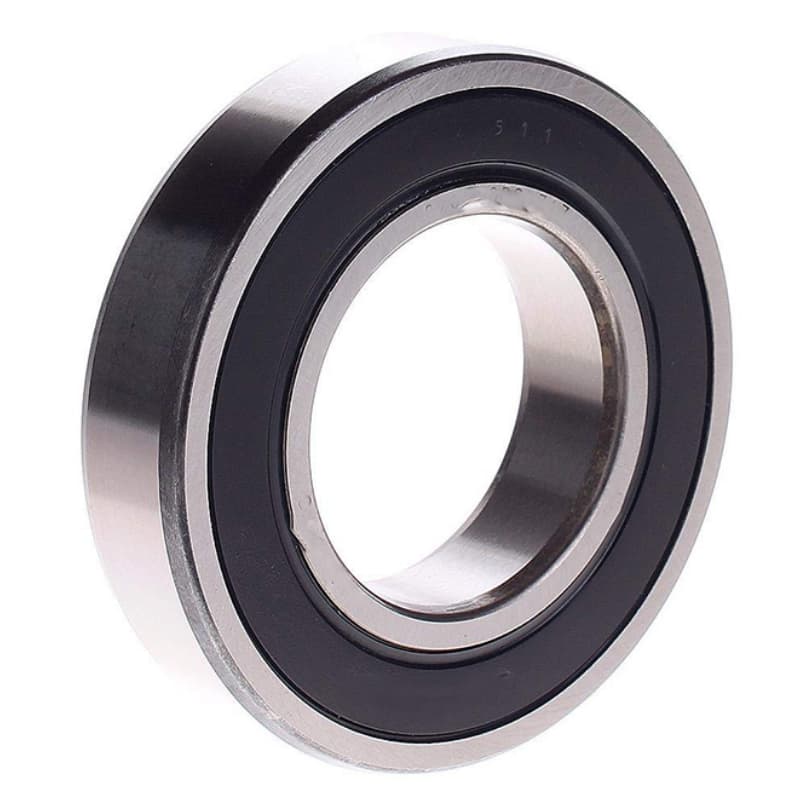
I run a bearing factory in China. We export to over ten countries. I talk to procurement managers like Rajesh every single day. They tell me the same thing: “We just want a bearing that works reliably, without constant call-backs.” That is exactly what I will help you figure out today. So let us walk through the four most important questions about deep groove ball bearings for door motors and automation accessories.
What Are the Key Selection Criteria for Deep Groove Ball Bearings in Heavy-Duty Door Motors?
I remember a customer from Egypt who ordered 500 bearings for his automatic sliding doors. He chose the cheapest option based on price per piece. Three months later, half of them failed. The doors jammed open or would not close fully. He had to fly in a technician from Cairo to replace them. That cost him more than the money he saved on the bearings.
The key criteria are load rating, speed limit, sealing type, and internal clearance. You must match these four parameters to your specific door motor’s torque, cycle frequency, and operating environment. Ignore any one of them, and you invite early failure.
Load Rating – Static vs. Dynamic
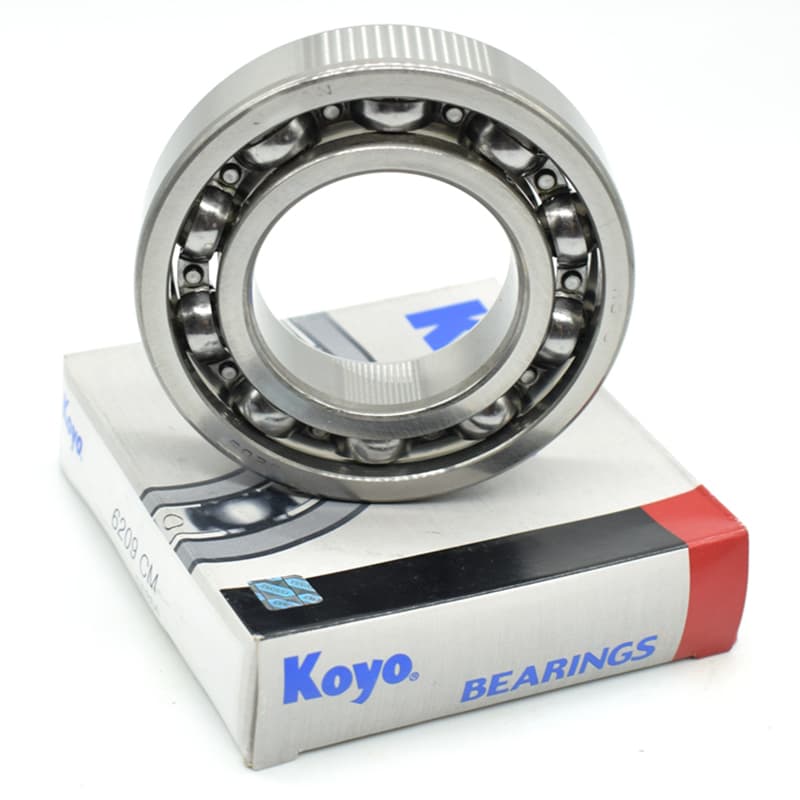
Heavy-duty industrial doors are heavy. Some weigh over 500 kilograms. The bearing must handle the radial load from the door weight and the axial load from the drive belt or chain. You need to look at both the basic dynamic load rating (C) and basic static load rating (C0) . The dynamic rating tells you how long the bearing will last under continuous rotation. The static rating tells you the maximum load it can take when the door is stopped but still under tension.
For door motors, I always recommend a bearing with a C0 that is at least 1.5 times the maximum static load from the door. That gives you a safety margin. Many Chinese factories undersize this. They use the same bearing for a 200 kg door and a 600 kg door. That is a mistake.
Speed Limit – It Is Not Just RPM
Door motors do not run at high RPM like a spindle motor. They typically run at 1400 or 2800 RPM. But they start and stop hundreds of times a day. That repeated acceleration puts extra stress on the cage and the balls. You need a bearing with a grease that can handle high acceleration and a cage that does not deform under sudden starts.
I often tell my clients: check the thermal speed rating in the catalogue. That number assumes ideal cooling. In a real motor housing with limited airflow, you should derate it by 20%. So if the catalogue says 3000 RPM, treat it as 2400 RPM for a door motor. That is a safe rule.
Sealing Type – Contact vs. Non-Contact
This is where most buyers get tripped up. Door motors are often installed in warehouses, parking garages, or food processing plants. Dust, moisture, and even wash-down chemicals are common. You have two main seal options:
| Seal Type | Protection Level | Friction Torque | Best For |
|---|---|---|---|
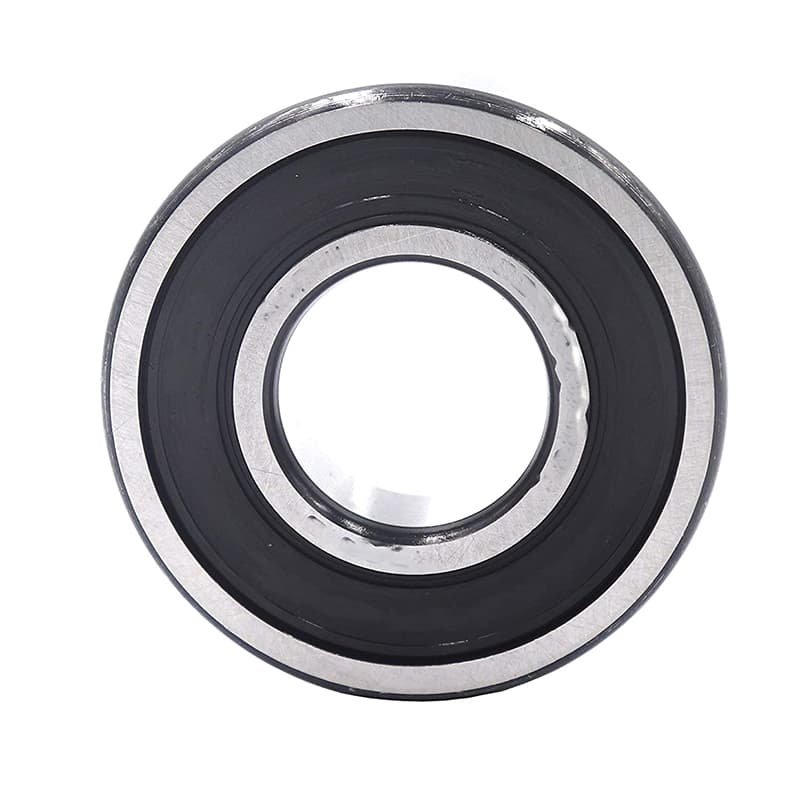
| Contact seals (RS, 2RS) | High – keeps out dust and water | Higher – consumes more power | Dirty or wet environments |
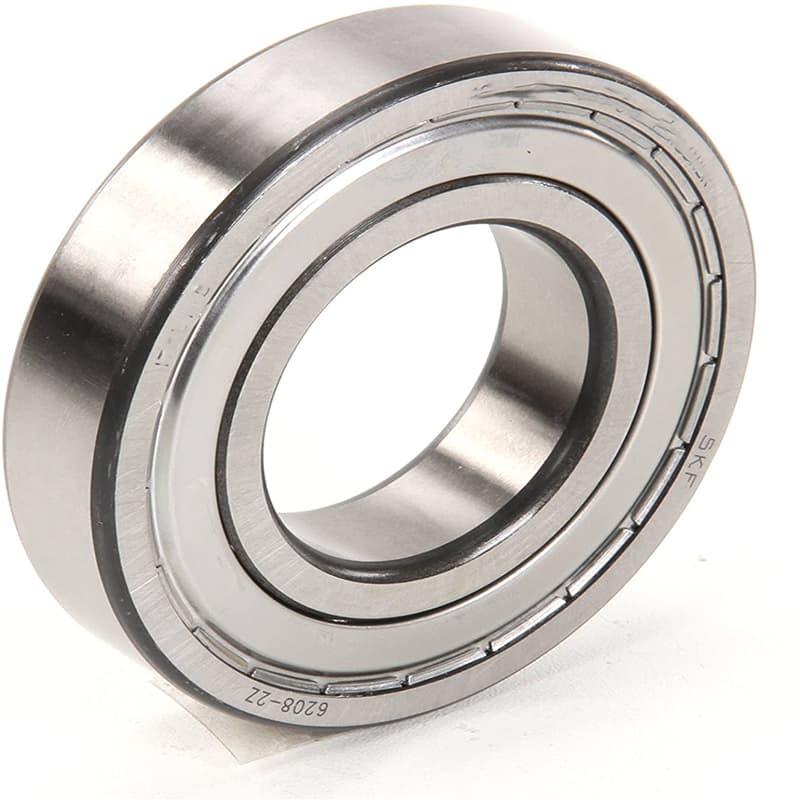
| Non-contact seals (Z, ZZ) | Moderate – stops large particles | Lower – more efficient | Clean indoor areas with less debris |
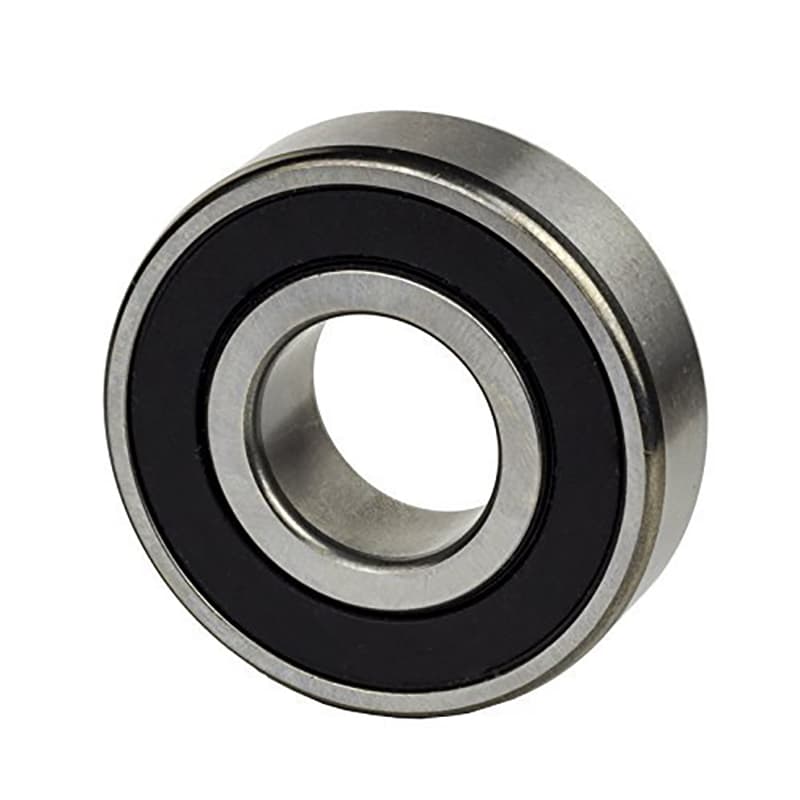
For heavy-duty door motors, I always push for 2RS (contact seals on both sides) . Yes, they add a bit of friction. But the extra protection against dust and moisture extends bearing life by three to five times in my experience. Rajesh from India once told me he switched from ZZ to 2RS for his warehouse doors. His replacement rate dropped from every 8 months to every 28 months. That is a huge saving.
Internal Clearance – CN vs. C3
The internal clearance affects how the bearing handles thermal expansion. Door motors often run warm, especially in tropical countries like Brazil or Indonesia. If you choose standard (CN) clearance, the bearing may lose its internal gap when it heats up. That leads to preload, extra heat, and eventual seizure. I recommend C3 clearance for most door motor applications. It gives you extra room for expansion. For very high ambient temperatures (above 50°C), I might even suggest C4. But that is rare.
So my final advice: choose a bearing with adequate C0, derated speed, 2RS seals, and C3 clearance. That combination has worked for hundreds of my clients. Do not cut corners on these four parameters.
How Does Bearing Precision Affect the Reliability of Automated Door Systems?
I once visited a factory in Vietnam that made automatic sliding doors for hospitals. Their doors would sometimes stop 2 millimeters short of the closed position. The sensor would then try to re-open and close again. That cycle repeated until the motor overheated. They thought it was a sensor problem. But it was actually a bearing precision issue.
Bearing precision – defined by the tolerance class (P0, P6, P5) – directly impacts the rotational accuracy and axial runout of the motor shaft. For automated door systems that rely on position feedback, even a few microns of eccentricity can cause misalignment, false limit-switch triggers, and inconsistent door travel.
What Do P0, P6, and P5 Actually Mean?
Most standard bearings are P0 (normal precision). That is enough for simple conveyor rollers or fans. But for an automated door that opens and closes based on encoder feedback, you need better. P6 gives you tighter tolerances on the bore, outer diameter, and runout. P5 is even tighter – usually reserved for machine tool spindles.
For a typical industrial door motor, I recommend P6 as a minimum. The price difference between P0 and P6 is small – maybe 5% to 8%. But the improvement in positioning consistency is significant. The motor shaft will have less wobble. The encoder will read a cleaner signal. The door will stop at the exact same spot every time.
How Runout Causes False Triggers
Imagine the motor shaft rotates with a runout of 0.03 mm (that is typical for P0). That runout translates to a slight variation in the belt tension. The belt then pulls the door carriage unevenly. Over time, that uneven pull wears out the guide rails. More importantly, the limit switch – which uses a cam or a magnetic sensor – sees a different position each cycle. Sometimes the door closes fully. Sometimes it leaves a 1 mm gap. That gap lets dust in, or in cold climates, lets cold air out. Your customers will complain.
With P6, runout drops to about 0.015 mm. That is half the variation. The door stroke becomes repeatable within 0.5 mm. That is acceptable for 99% of industrial applications. If you need even better, go for P5. But I rarely see that needed for door motors – unless you are making clean-room doors with strict sealing requirements.
The Cost-Benefit Trade-Off
Some buyers ask me: "Why not just use P0 and adjust the sensor tolerance?" You can do that. But you are compensating for a mechanical problem with an electronic band-aid. That adds complexity to your control system. It also makes field calibration harder. When a technician replaces a bearing in the field, they have to re-calibrate the sensors. That takes time. With a P6 bearing, you do not need that extra step. The system just works.
I have a client in Turkey who switched all his door motor bearings from P0 to P6. His after-sales service calls dropped by 40% in one year. His customers were happier because the doors operated smoothly without random stop errors. That is the kind of reliability that builds a brand.
So my take is simple: do not save a few cents on precision. Upgrade to P6 for any automated door that uses feedback control. Your service team will thank you.
Which Bearing Materials and Coatings Work Best for Harsh Industrial Environments?
I had a client from Russia who kept losing bearings every winter. The temperature would drop to -30°C. The grease would thicken. The balls would skid instead of roll. Within a month, the bearings would make a grinding noise. He thought it was a lubrication problem. But the real issue was the material and the coating.
For harsh environments – extreme temperatures, corrosive wash-down, or abrasive dust – you need special steel grades and protective coatings. Standard chrome steel (GCr15) will rust or crack under these conditions. Opt for stainless steel or hybrid ceramic balls, and add a corrosion-resistant coating like zinc phosphate or black oxide.
When to Use Stainless Steel (440C or X65Cr13)
Standard bearing steel has about 1% carbon and 1.5% chromium. That gives good hardness but poor corrosion resistance. If your door motor is installed in a food processing plant, a car wash, or a coastal warehouse with salt air, you need stainless steel. Stainless grades like 440C have higher chromium (16-18%) which forms a passive oxide layer. That layer stops rust.
The trade-off? Stainless steel is slightly softer than standard chrome steel. That means a lower load capacity – about 10-15% less for the same size. So you may need to go up one size to carry the same load. But that is a small price to pay for rust protection. I often recommend stainless for clients in Indonesia and Brazil, where humidity is high year-round.
Hybrid Ceramic Balls – When to Bother
Some high-end door motors use hybrid bearings – steel rings with ceramic (silicon nitride) balls. The ceramic balls are lighter, harder, and generate less friction. They also do not rust. That makes them ideal for very high cycle applications where the motor starts and stops more than 100 times per hour.
However, they cost three to four times more than all-steel bearings. I only recommend them if your door motor runs 24/7 and you cannot afford any unplanned downtime. For most normal warehouse doors, all-steel with a good coating is enough. I once supplied hybrid bearings to a client in Egypt for their airport baggage door system. Those doors open every 90 seconds, day and night. The hybrid bearings lasted over two years without a failure. That justified the cost.
Coatings – Which One and Why
Coatings add an extra layer of protection. Here is a quick guide:
| Coating Type | Protection Offered | Typical Thickness | Cost Increase |
|---|---|---|---|
| Zinc phosphate | Corrosion and wear | 5-10 µm | Low |
| Black oxide | Mild corrosion, oil retention | 1-3 µm | Very low |
| Thin-dense chrome | High corrosion, hard surface | 10-20 µm | Medium |
| DLC (diamond-like carbon) | Low friction, high wear | 1-2 µm | High |
For industrial door motors, I usually suggest zinc phosphate as the best value. It gives good corrosion resistance and improves the bond of the initial grease. Black oxide is cheaper but does not last as long in wet conditions. Thin-dense chrome is excellent but adds about 20% to the bearing cost. I only use that for food-grade applications where wash-down with caustic cleaners is frequent.
My personal rule: if the ambient humidity is above 70% or there is any chemical exposure, use stainless steel with zinc phosphate coating. That combination has proven itself in our tests and in field data from over 200 customers. Do not rely on the grease alone to protect the steel – the grease can wash away or break down.
What Maintenance Practices Can Extend Bearing Service Life in Accessory Drives?
Rajesh once called me in a panic. He had a container of pillow block bearings that he had sold to a local repair shop. The shop installed them on a conveyor system that fed into an automatic door opener. Within two weeks, three bearings seized. He thought the bearings were defective. I asked him about the installation method. He said they used a hammer to tap the bearings onto the shaft. That was the problem.
Proper maintenance – including correct mounting, adequate initial greasing, scheduled re-lubrication, and vibration monitoring – can double or even triple the service life of your deep groove ball bearings. Most premature failures come from installation errors or insufficient lubrication, not from manufacturing defects.
Mounting – Never Hammer Directly
This is the number one mistake I see. People use a hammer and a punch to drive the bearing onto the shaft. That creates shock loads that dent the raceways. Those dents become stress concentrators. Under load, they start spalling. The bearing fails in weeks instead of years.
The correct way is to use a mechanical press or an induction heater. Heat the bearing to 80-100°C (never above 120°C) and slide it onto the shaft. The heat expands the inner ring. It goes on without force. You also need to apply even pressure on the inner ring only – not on the outer ring or the balls. I always send an installation instruction sheet with my shipments. Many customers ignore it. But those who follow it see a clear difference.
Initial Grease – More Is Not Better
Bearings come with a factory fill of grease. That grease is for storage and initial run-in. For heavy-duty door motors, I recommend adding extra grease before installation. But do not overpack. Overpacking causes churning and heat generation. A good rule is to fill 30-40% of the bearing’s internal free volume for standard speeds. For higher speeds, go down to 20-25%.
I also recommend a grease with a high dropping point (above 180°C) and good pumpability at low temperatures. For Russian clients, I choose a lithium complex grease with a base oil viscosity of 100-150 cSt at 40°C. That works from -20°C to +120°C. For tropical clients, a polyurea grease with similar viscosity works well.
Re-Lubrication Schedule – Do Not Guess
Many maintenance teams rely on a “once a year” schedule. That is often wrong. The re-lubrication interval depends on the operating hours, the load, and the temperature. I use a simple formula: re-grease every 500 operating hours for moderate loads, or every 200 operating hours for heavy loads or dusty conditions.
You can also monitor the grease condition by checking the color and consistency. If it turns dark or has metal particles, change it immediately. I advise my clients to keep a logbook for each motor. That logbook tracks the hours and the greasing dates. It sounds old-fashioned, but it works. Rajesh started using a logbook for his warehouse doors. His bearing replacement frequency went from every 18 months to every 42 months.
Vibration Monitoring – Early Warning System
You do not need expensive equipment. A simple handheld vibration pen costs about $100. You measure the velocity (mm/s) on the motor housing near the bearing. A sudden increase of 0.5 mm/s over the baseline indicates a developing fault – either a brinelled raceway or a lack of grease. That gives you time to plan a replacement during scheduled downtime, not during a rush hour.
I have seen this practice save thousands of dollars in lost production. One of my clients in South Africa installed vibration pens on all his automatic gate motors. He caught a failing bearing before it seized, replaced it in 20 minutes, and avoided a gate collapse that would have blocked a truck loading bay for hours.
So my maintenance mantra is: mount correctly, grease adequately, re-lubricate on a schedule, and monitor vibration. Follow these four steps and your bearings will outlast the motor itself.
Conclusion
Choosing the right deep groove ball bearing for your door motor is not complicated – just focus on load, speed, seals, clearance, precision, material, and maintenance. I have seen these factors turn unreliable doors into workhorses that run for years with minimal intervention. Get them right, and your customers will keep coming back.