
Your machine sits idle for six months. Then you start it up. The bearings fail in one week. You thought downtime was safe. It is not.
For seasonal or intermittent equipment, you need bearings that resist rust, keep grease stable, and handle shock loads after long stops. Pick sealed bearings, high-quality rust protection, and the right clearance.
I have seen this problem many times. A farmer in Egypt buys a new harvester. He uses it for two months. Then he parks it in a shed for the rest of the year. Next season, the bearings make noise. The machine breaks down during harvest. That costs him money. The same happens with air conditioners, snow blowers, and irrigation pumps. The good news is that you can avoid this. In this article, I will show you how to pick and protect bearings for machines that sleep most of the year. Let me start with the biggest surprise.
Why Do Long Idle Periods Kill Bearings Faster Than Continuous Running?
You think a bearing lasts longer if you use it less. That is wrong. A bearing that sits still for months can die faster than one that runs every day.
Long idle periods cause three killers: static rust, grease separation, and false brinelling. All three happen without the bearing moving one turn.
Let me explain each killer.
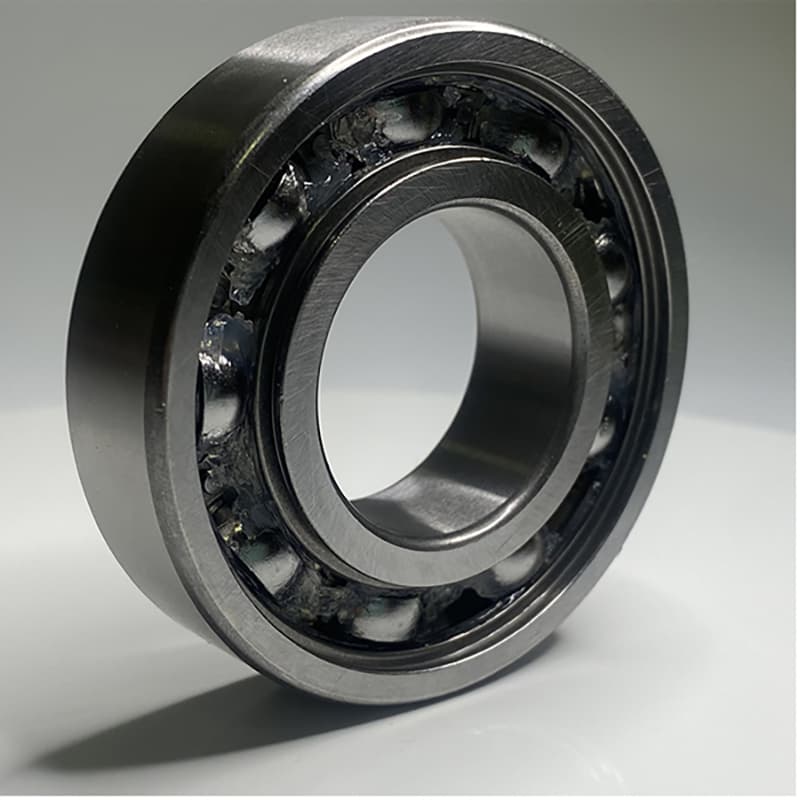
Killer 1: Static rust (moisture attack). When a machine sits, the temperature changes from day to night. Warm air holds moisture. Cool air releases it as condensation. That water gets inside the bearing. The steel starts rusting. You cannot see it because the bearing is closed. But the rust pits the raceways and the balls. When you start the machine, the rust acts like sandpaper. The bearing fails fast.
Killer 2: Grease separation. Grease is a mixture of oil, thickener, and additives. When a bearing sits still for months, the oil separates from the thickener. The oil drips down. The thickener stays in the bearing but has no lubrication left. When you start the machine, you run it on dry thickener. That creates high friction and heat. The bearing wears out in hours.
Killer 3: False brinelling. This sounds strange. How can a bearing get damaged without moving? Here is how. When the machine vibrates during transport or from nearby equipment, the balls shake in place. They rub against the same spot on the raceway. That rubbing wears small flat spots. Then when you run the bearing, you hear a thumping noise. Those flat spots cause vibration and early failure.
Comparison of bearing life: continuous vs. seasonal.
| Condition | Typical Life | Main Failure Mode |
|---|---|---|
| Continuous running, clean environment | 3-5 years | Normal fatigue |
| Continuous running, dusty environment | 1-2 years | Contamination wear |
| Seasonal use (6 months idle) with no protection | 6 months to 1 year | Rust or false brinelling |
| Seasonal use with proper protection | 3-5 years | Still normal fatigue |
A real story from a customer in Russia. He made agricultural sprayers. The sprayers worked for three months in summer. Then they sat in a cold warehouse for nine months. Every spring, he had to replace half the bearings. He thought the bearings were bad quality. He switched brands. Same problem. Then he called me. I explained that the problem was not the brand. It was the idle time. The cold warehouse caused condensation. The bearings rusted. I told him to use sealed bearings with heavy rust-prevention grease. He also started storing the machines on wooden pallets with a cover. The next year, only 5% of bearings failed. He saved thousands of dollars.
What you can learn from this. Do not assume that low running hours means long bearing life. For seasonal equipment, the enemy is not use. It is rest. So you need to choose bearings that fight rust, keep grease stable, and survive idle time. The next sections will show you how.
How to Choose the Right Rust Protection and Grease for Seasonal Storage?
You store your machine for months. You do nothing to the bearings. Then you pay the price. Rust is patient. It never sleeps.
Choose bearings with rust-prevention oil or grease that stays in place. For seasonal storage, use lithium complex grease with added rust inhibitors. Also ask the factory to use heavier oil film on the bearing surfaces.
Let me give you a practical guide.
What rust protection do bearings have from the factory? Most deep groove ball bearings come with a light coat of anti-rust oil. This oil protects for about 3 to 6 months in a dry warehouse. But in a humid shed or outdoor storage, that oil fails in 4 to 6 weeks. So you need more protection.
Three levels of rust protection for bearings.
| Level | Protection Method | Protection Time | Best For |
|---|---|---|---|
| Basic | Light anti-rust oil | 3-6 months in dry conditions | Equipment stored indoors |
| Medium | Heavy oil or thin grease | 6-12 months | Covered outdoor storage |
| High | Thick grease with rust inhibitors | 12-24 months | Open outdoor or humid areas |
How to get better rust protection for your seasonal equipment.
Option 1: Ask the bearing factory for heavy rust protection. Most factories (including mine) can apply a thicker rust-prevention oil. We call it "heavy slushing oil." It looks like honey. It stays on the bearing surfaces for 12 to 18 months. The cost is very low, about 1-2 cents per bearing. For seasonal equipment, this is a cheap insurance.
Option 2: Choose sealed bearings with high-quality grease inside. The grease inside a sealed bearing acts as rust protection. But not all greases are equal. Standard lithium grease has poor rust protection. For seasonal use, ask for calcium sulfonate grease or lithium complex with corrosion inhibitors. These greases protect the steel even when water gets inside.
Option 3: Apply your own rust spray before storage. If you already have machines with bearings, you can spray a rust inhibitor into the bearing housings. Products like LPS 3 or CRC Heavy Duty Corrosion Inhibitor leave a waxy film. They last up to one year. This works well for existing equipment.
What grease to choose for seasonal use.
| Grease Type | Rust Protection | Oil Separation | Best For |
|---|---|---|---|
| Standard lithium | Poor | Separates fast (3-6 months) | Continuous use only |
| Lithium complex | Good | Separates slower (6-12 months) | Seasonal with moderate idle |
| Calcium sulfonate | Excellent | Very slow (12-24 months) | Long idle, wet conditions |
| Polyurea | Good | Slow (8-12 months) | High temperature seasonal |
My recommendation. For most seasonal equipment (harvesters, snow blowers, AC fans), use lithium complex grease with rust inhibitors. It gives you good protection for 6-8 months of idle time. If your machine sits for more than 8 months or in a humid area, switch to calcium sulfonate grease.
A story from a customer in Brazil. He makes irrigation pumps. The pumps run for 4 months in the dry season. Then they sit for 8 months in a humid shed. He used standard lithium grease. Every year, the bearings were rusted. He asked me to help. I suggested calcium sulfonate grease inside sealed bearings. He tried 10 pumps as a test. After 8 months of storage, he opened the bearings. No rust. The grease was still soft. Now he uses that grease for all his pumps.
One more tip: do not wash bearings before storage. Some people clean bearings with solvent before storing. That removes the rust protection. Never do that. Store bearings exactly as they come from the factory. If you must clean them, re-oil them immediately.
Sealed vs. Shielded Bearings: Which One Survives Long Stops Better?
You see two types of bearings: one with a rubber seal (2RS) and one with a metal shield (ZZ). Which one keeps rust out during long idle periods?
For seasonal equipment, choose rubber sealed bearings (2RS) over metal shields (ZZ). Rubber seals keep moisture out much better. Metal shields have small gaps that let humidity enter.
Let me explain the difference.
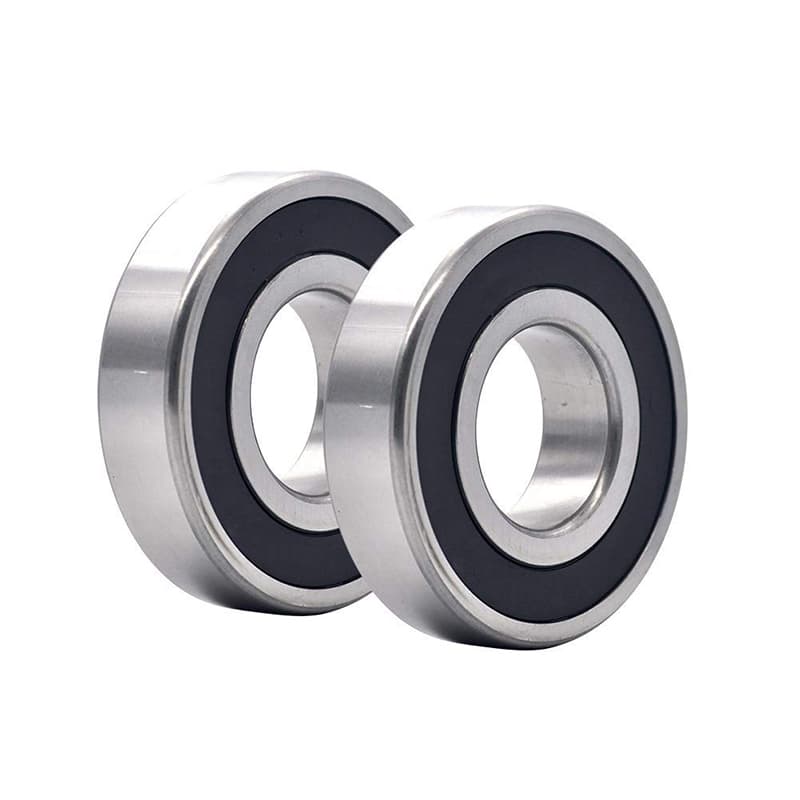
What are metal shields (ZZ)? Metal shields are thin steel discs pressed into the bearing. They have a small gap (about 0.1 to 0.3mm) between the shield and the inner ring. That gap keeps out large dirt particles. But it does not stop moisture. Humidity goes right through the gap. During long storage, water vapor enters the bearing. Then when the temperature drops, it condenses into liquid water. Rust forms.
What are rubber seals (2RS)? Rubber seals are made of synthetic rubber (usually nitrile or silicone). They have a lip that touches the inner ring. That lip creates a near-hermetic seal. Water and dust cannot get in. The grease cannot leak out. For seasonal storage, this is much better.
Comparison table.
| Feature | Metal Shield (ZZ) | Rubber Seal (2RS) |
|---|---|---|
| Gap to inner ring | 0.1-0.3mm (open) | No gap, lip contact |
| Moisture protection | Poor | Excellent |
| Dust protection | Moderate | Excellent |
| Grease retention | Poor (grease can leak) | Excellent |
| Friction | Low | Medium (higher than ZZ) |
| Temperature limit | 200°C | 120°C (nitrile) or 200°C (silicone) |
| Best for | High speed, clean, daily use | Seasonal, dusty, wet, long idle |
When should you still use shields? If your machine runs continuously at high speed (over 5,000 RPM) and is stored in a dry, indoor place, you can use ZZ shields. The lower friction saves energy. But for seasonal equipment that sits for months, the extra friction of rubber seals is a small price to pay for rust protection.
A real example. A customer in India makes air conditioner outdoor units. The units are installed on rooftops. They run for 6 months in summer. Then they sit for 6 months in rain, sun, and humidity. The factory used ZZ shielded bearings. After two years, many units made grinding noises. The bearings had rust. I suggested switching to 2RS rubber seals. The cost went up by 5 cents per bearing. But the warranty claims dropped by 70%. The customer saved money.
What about the grease inside? For sealed bearings, the factory puts grease inside at the time of manufacturing. For seasonal use, ask for a grease that does not separate. Lithium complex or calcium sulfonate are good choices. Also ask for a fill amount of 30-50% (not too full). Too much grease can still separate and leak out the seals if the seals are poor quality.
My advice for buyers. If you are buying bearings for seasonal equipment, always choose 2RS rubber seals. The small extra friction does not matter for low-speed or intermittent use. But the rust protection is critical. One more thing: check the seal material. For very cold storage (below -20°C), use silicone rubber seals. Nitrile rubber gets hard and cracks in extreme cold.
What Internal Clearance and Fit Work Best for Intermittent High Loads?
Your machine starts after months of sitting. The shaft is cold. The bearing is cold. Then you apply full load. The bearing might seize or crack.
For intermittent equipment with high starting loads, use C3 clearance (not CN). Also use a slightly looser shaft fit. This allows for thermal expansion and shock loads without binding.
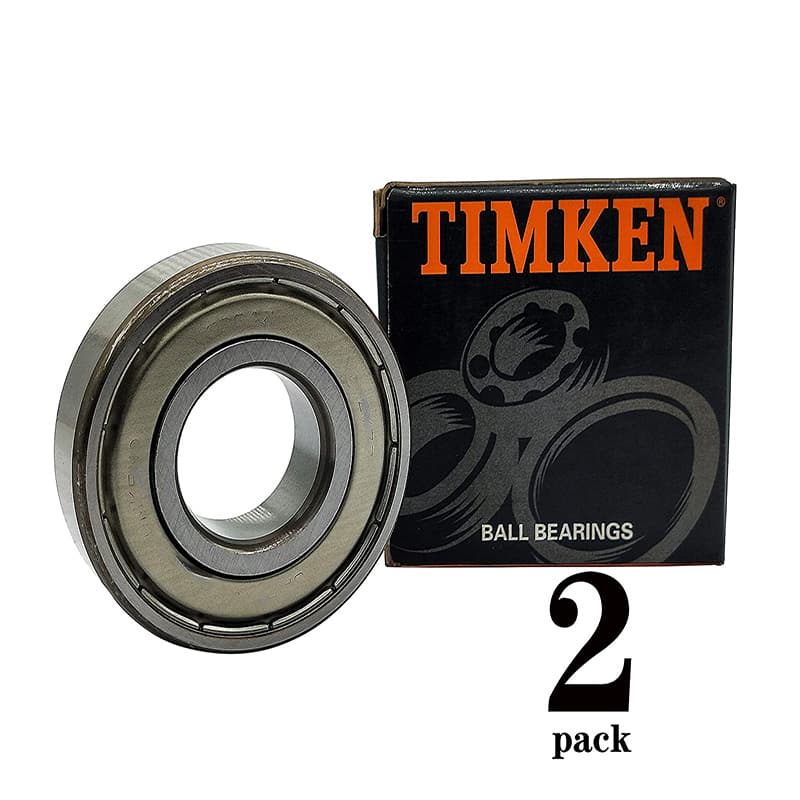
Let me explain why clearance matters more for seasonal equipment than for continuous running.
The problem of cold starts. When a machine sits for months, all the parts cool down to ambient temperature. The shaft and the bearing are the same size. Then you start the machine. But unlike continuous running, you do not have a gradual warm-up. You go from cold to full load quickly. The shaft heats up faster than the bearing housing. The shaft expands. That reduces the internal clearance. If you used normal (CN) clearance, it could become zero or negative. The bearing locks up or skids. The result is a failure in the first hour.
How clearance choices affect intermittent use.
| Clearance | Cold Start Behavior | After Warm-up | Best For |
|---|---|---|---|
| CN (normal) | May bind if fit is tight | Ok but tight | Continuous low load |
| C3 | Safe, some initial play | Good clearance | Most intermittent, medium load |
| C4 | Loose, may cause noise | Very good for high load | High load, high temperature |
Fit recommendations for intermittent equipment. For shafts, use a looser fit than you would for continuous duty. Instead of a press fit (like j5 or k5), use a transition fit (like h6 or js6). This reduces the reduction in clearance from the press fit. For housings, use a normal loose fit (H7).
Example of fit selection for a 10mm shaft in a seasonal pump.
| Fit Type | Shaft Diameter Tolerance | Interference | Resulting Clearance Reduction | Recommended for Seasonal? |
|---|---|---|---|---|
| j5 (press) | 10.000 to 10.005 mm | 0 to +0.005 mm | 0.003-0.005 mm | No (too tight) |
| js6 (transition) | 9.997 to 10.003 mm | -0.003 to +0.003 mm | 0.002 mm max | Yes |
| h6 (loose) | 9.995 to 10.000 mm | -0.005 to 0 mm | 0 mm (no reduction) | Yes, for low speed |
A story from a customer in Pakistan. He makes rice huller machines. The machines work for 3 months during harvest. Then they sit. His original bearing choice was 6205 with CN clearance and a k5 shaft fit. The bearings failed at the start of every season. The failure was always a locked bearing. I told him to switch to C3 clearance and a js6 shaft fit. The next season, no lock-ups. The bearings lasted three seasons. He asked me why. I explained that the looser fit and larger clearance gave room for the shaft to expand without binding.
One more factor: shock loads from dry or rusty components. When a machine sits, the grease thickens. The seals may stick. The first start creates a shock load. That shock load can dent the raceways if the clearance is too large. So do not go too loose. C3 is usually the sweet spot. C4 is for very high temperature (over 120°C) or very heavy shock.
My summary table for seasonal equipment bearing selection.
| Machine Type | Idle Period | Recommended Seal | Recommended Clearance | Recommended Fit |
|---|---|---|---|---|
| Agricultural harvester | 6-9 months | 2RS rubber | C3 | js6 or h6 |
| Snow blower | 8 months | 2RS rubber | C3 | js6 |
| Air conditioner fan | 6 months | 2RS rubber | CN or C3 | h6 |
| Water pump (irrigation) | 8 months | 2RS rubber | C3 | js6 |
| Seasonal conveyor | 5 months | 2RS rubber | C3 | h6 |
Final tip: rotate bearings during storage. If possible, turn the shaft by hand once a month. This moves the balls to a new position. It prevents false brinelling and re-mixes the grease. A simple monthly spin can double the life of bearings in seasonal equipment.
Conclusion
For seasonal equipment, use rubber seals, C3 clearance, lithium complex or calcium sulfonate grease, and store properly. That stops rust and early failure.
