
You receive a bearing inspection report from a supplier. It is full of numbers and terms. You have no idea what matters.
Focus on four things in a spherical roller bearing inspection report: dimensional tolerances, rotational accuracy (runout), internal clearance (C3/C4), and material hardness (HRC). These four tell you if the bearing will last in your machine.
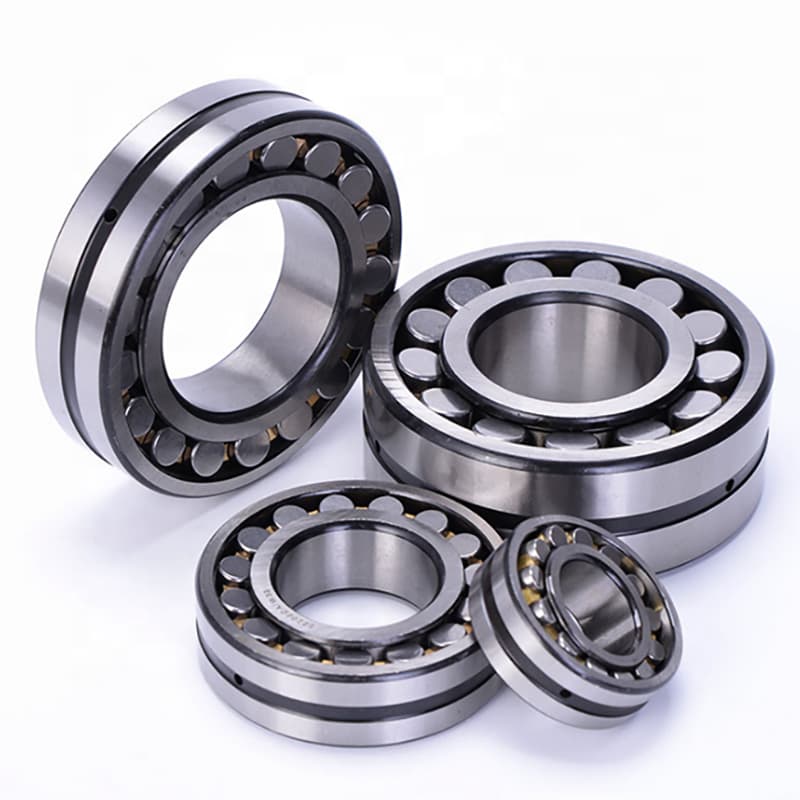
I am Leo from FYTZ Bearing. I have sold bearings to buyers in India, Turkey, and Brazil. Many of them ask me: “Leo, how do I read these reports?” Today I will show you exactly what to check. You do not need to be an engineer. Just follow my simple guide.
Why Should You Look at Dimensional Tolerances First in a Bearing Report?
You order bearings for a new machine. They arrive. But the shaft does not fit. Or the housing is too tight. Your production stops.
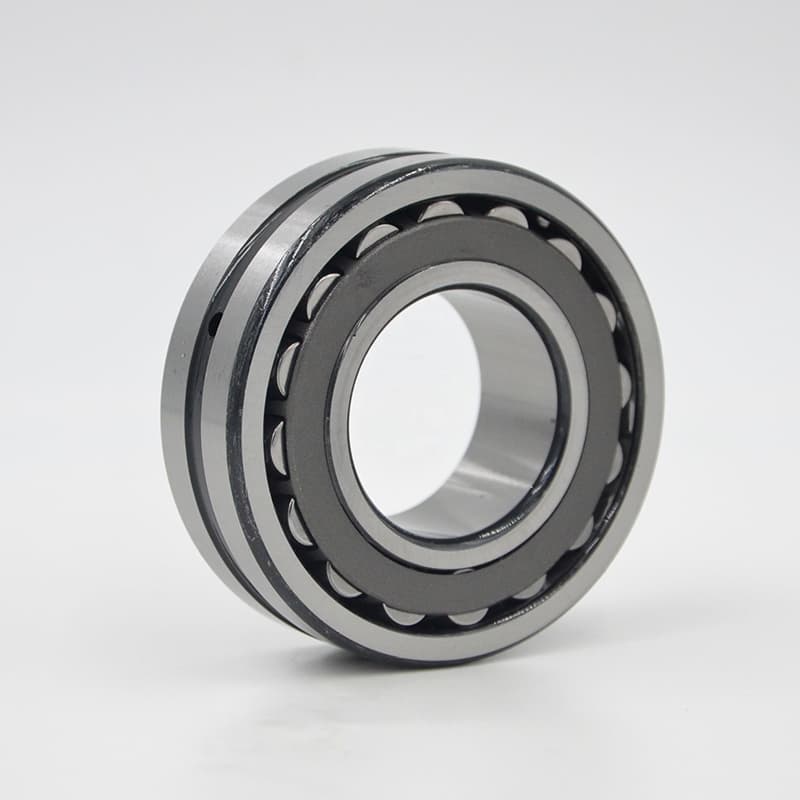
Dimensional tolerances tell you the exact bore size, outer diameter, and width of the bearing. If these are wrong, the bearing will not fit or will fail early. Always check them first against ISO class P0 or P6 standards.
Three Key Dimensions You Must Verify
Let me break down the most important measurements. Use the table to compare what the report should show.
| Dimension | What It Measures | Standard Tolerance (P0) | What Happens If Out of Tolerance |
|---|---|---|---|
| Bore diameter (d) | Inner ring hole size | +0 / -0.010 mm for 50mm bore [web:175] | Shaft too loose or too tight. Bearing spins on shaft. |
| Outer diameter (D) | Outer ring outside size | +0 / -0.011 mm for 100mm OD [web:175] | Housing fit too loose or too tight. Outer ring creeps. |
| Width (B) | Total bearing thickness | +0 / -0.12 mm for 30mm width [web:178] | Misalignment with other bearings on same shaft. |
Check the bore diameter first. This is the most critical number. The report should list the measured bore and the allowable range. For a standard P0 class bearing, the bore is slightly smaller than the nominal size. For example, a 22316 bearing has a nominal bore of 80mm. The actual bore will be between 79.990mm and 80.000mm. If the report shows 80.015mm, the bearing is too loose. It will slip on the shaft. I once had a customer in Pakistan who bought cheap bearings. The bores were 0.03mm too big. The bearings spun on the shafts and ruined the shafts. He had to replace both the bearings and the shafts.
Check the outer diameter next. The outer ring should be slightly smaller than the housing bore. That gives a light press fit. If the outer diameter is too big, you cannot get the bearing into the housing. If it is too small, the outer ring spins inside the housing. That wears out the housing. A good inspection report will show the measured outer diameter. For a P0 class bearing, it should be within 0 to -0.011mm of nominal for a 100mm OD. I recommend buyers ask for the actual measurement, not just a "pass"mark.
Check the width last. The width tolerance is wider. But it still matters. If you have two bearings on the same shaft, and one is 0.2mm wider than the other, the shaft will be pushed to one side. That creates axial preload. The bearings will overheat. So always verify that the width matches your design. For most applications, a variation of ±0.1mm is acceptable.
A practical tip for buyers. Ask your supplier to send you a copy of the actual inspection report for each batch. Do not accept a generic certificate. Look for the measured values. At FYTZ, we provide full dimensional inspection reports for every batch. You can see the exact bore, OD, and width for each bearing. That builds trust.
What Do Rotational Accuracy and Runout Numbers Really Tell You?
Your new bearings run fine for a week. Then they start vibrating. The machine makes a wobbling noise. You check the shaft and housing – they are perfect. The problem is inside the bearing.
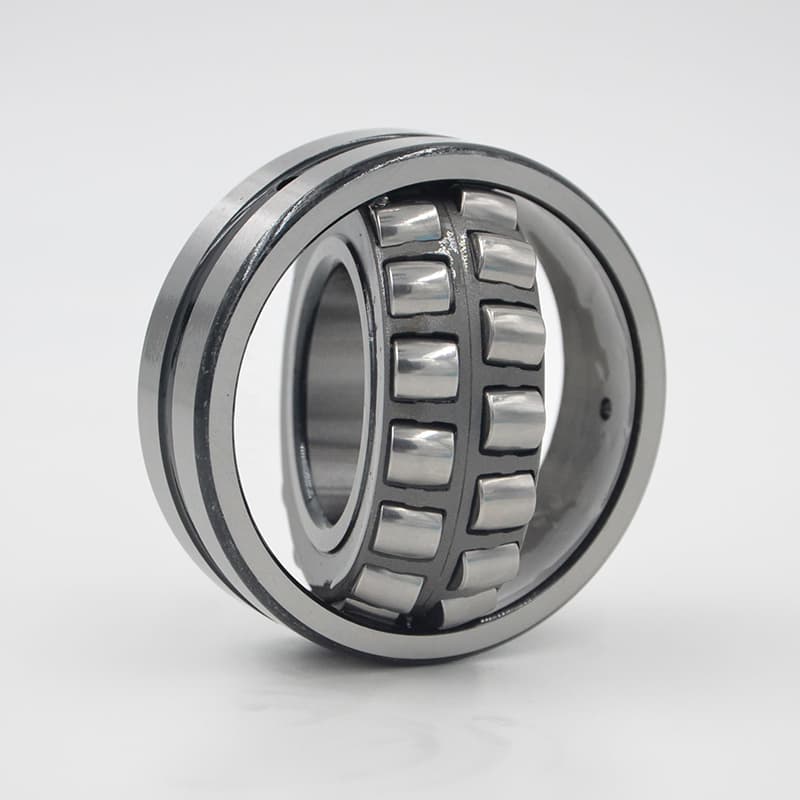
Runout numbers tell you how round the bearing raceways are. High runout means the bearing wobbles as it spins. That causes vibration, noise, and early failure. Look for runout values within ISO P6 or better for most industrial machines.
Understanding Runout in Simple Terms
Runout is a measure of how much the bearing’s rotating parts move up and down or side to side. Think of a wheel that is not perfectly round. It wobbles. Same idea. Let me use a table to explain the different runout types.
| Runout Type | What It Measures | Typical Limit (P0 class) | Why It Matters |
|---|---|---|---|
| Radial runout (Kia) | Inner ring eccentricity relative to outer ring | 0.015mm for a 80mm bore bearing | Creates radial vibration. Affects shaft stability. |
| Axial runout (Sia) | Side-to-side wobble of inner ring face | 0.020mm for same size | Creates axial vibration. Affects thrust washers. |
| Inner ring raceway runout | Roundness of the inner raceway groove | Not always reported | Directly affects roller contact. High runout reduces bearing life. |
Radial runout is the most important number for most machines. It is often called Kia in bearing reports. This number tells you how much the inner ring moves off-center as it rotates. For a standard P0 class spherical roller bearing, the radial runout limit is around 0.015mm to 0.025mm depending on size. If the report shows 0.05mm, that is double the limit. The bearing will vibrate. I saw a case in Vietnam. A cement plant bought bearings with high radial runout. Their bucket elevator vibrated so much that the bolts loosened every week. After switching to our FYTZ bearings with proper runout control, the vibration stopped.
Axial runout is the second number to check. This is often called Sia. It measures how much the inner ring face wobbles as it spins. High axial runout creates thrust loads. That can damage the cage and rollers. For most applications, axial runout should be similar to radial runout. If the report shows very high axial runout but low radial runout, the bearing might have a warped inner ring. Do not accept it.
What is a good runout value for your application? For normal industrial machines like conveyors, crushers, and fans, P0 class is fine. For higher precision machines like motors or gearboxes, ask for P6 class. P6 runout limits are about half of P0. For example, radial runout for P6 might be 0.008mm instead of 0.015mm. It costs a bit more but gives smoother operation.
How to find runout in the report. Look for a section labeled "Rotational accuracy"or"Runout."Some suppliers do not list runout at all. That is a red flag. A good factory will measure runout on every bearing. At FYTZ, we use automatic runout testers. We include the actual values in our reports. Ask your supplier to do the same.
How to Verify That Internal Clearance (C3, C4) Matches Your Application?
You bought bearings marked C3. But your machine runs hot. The shafts expand. The bearings seize. You check the report. It says clearance was tested. But was it the right range?
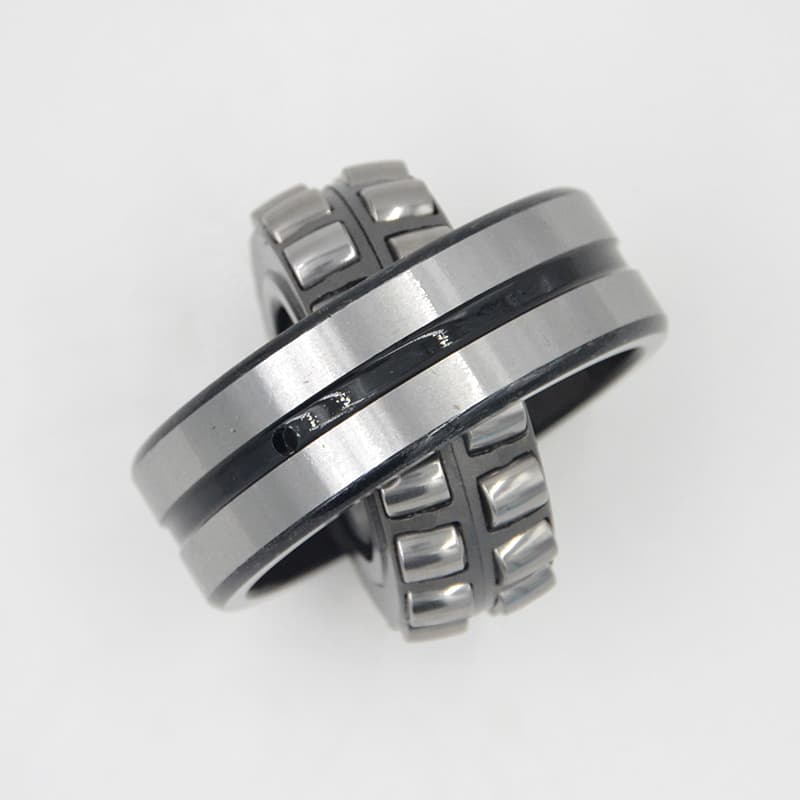
Internal clearance is the gap between rollers and raceways. The report should show the measured clearance in microns and confirm it matches C3, C4, or C0. For hot or high-speed applications, C3 or C4 is needed. For normal temperatures, C0 is fine.
Clearance Classes and When to Use Each
Let me give you a clear guide. Use the table to see the clearance ranges for a common size (22316 bearing with 80mm bore).
| Clearance Code | Min Clearance (microns) | Max Clearance (microns) | Best Operating Temperature | Typical Application |
|---|---|---|---|---|
| C0 (Normal) | 25 | 45 | 0°C to 50°C | Normal conveyors, indoor fans |
| C2 (Reduced) | 15 | 30 | Cold environments or precision spindles | Rare in spherical roller bearings |
| C3 | 45 | 70 | 50°C to 100°C | Most industrial machines, bucket elevators |
| C4 | 70 | 95 | 100°C to 150°C | Hot environments, cement dryers, steel plants |
| C5 | 95 | 120 | Over 150°C | Very high heat, rarely used |
Check the actual measured clearance, not just the code. A bearing marked C3 should have a measured clearance between 45 and 70 microns for a 80mm bore. If the report shows 42 microns, it is technically below C3. It might still work, but it is not true C3. If it shows 72 microns, it is above C3 and close to C4. That might be too loose for some applications. So always look at the actual number. A good report will list the measured clearance.
Why clearance matters for spherical roller bearings. These bearings heat up more than ball bearings because they have more rolling elements. The inner ring expands faster than the outer ring. That reduces internal clearance. If you start with C0 (small gap), the gap might become zero at high temperature. Then the bearing seizes. That is why many equipment makers specify C3 for spherical roller bearings. I had a customer in Egypt using bearings on a hot asphalt mixer. He used C0 bearings. They seized every two months. We switched him to C4. The bearings lasted over a year.
How to verify clearance on the report. Look for a line called "Radial internal clearance"or"C"value. The report should state the class (C3, C4, etc.) and the measured range. If the report only says "Pass"without numbers, ask for the numbers. At FYTZ, we give you both the class and the actual measured clearance for each bearing. That way you know exactly what you are getting.
A common mistake buyers make. Some buyers order C3 bearings for every application. That is not always right. For a slow, cool-running conveyor in a cold warehouse, C0 is better. C3 would be too loose. The bearing would have extra play. That can cause vibration. So match the clearance to your actual operating temperature and speed. If you are not sure, tell me your conditions. I will recommend the right clearance.
Which Material and Hardness Values Indicate a Quality Spherical Roller Bearing?
You see a bearing report. It lists material as “bearing steel” and hardness as “HRC 60-65.” That seems fine. But then the bearing fails early from wear or fatigue.
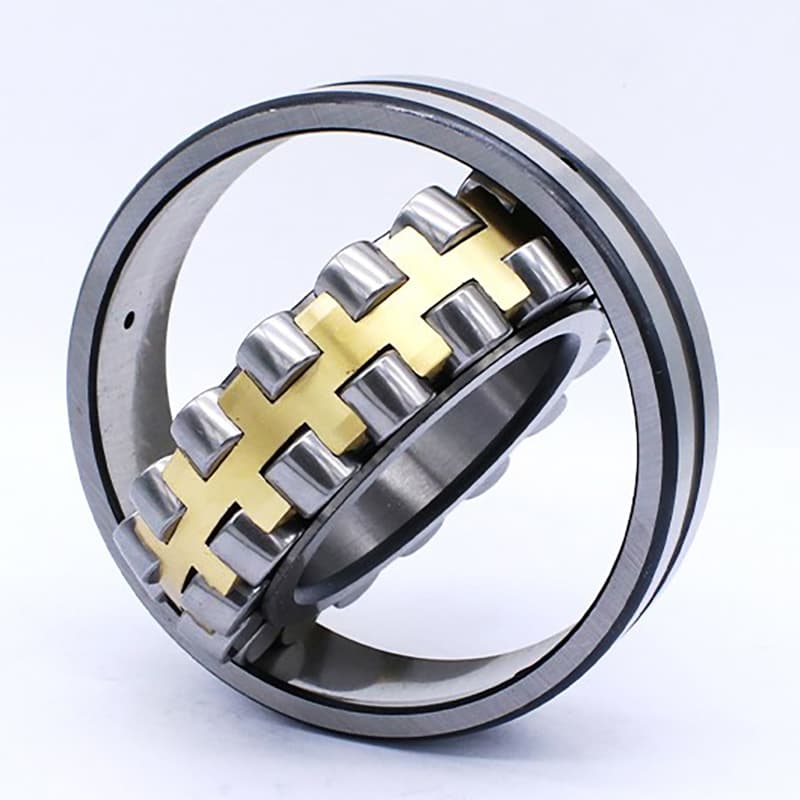
Quality spherical roller bearings use vacuum-degassed chromium steel (like GCr15 or 100Cr6). Hardness should be 58 to 65 HRC on raceways and rollers. Lower hardness means poor wear resistance. Higher hardness (over 65) means brittle rings that can crack under shock.
What to Look for in the Material Section
Let me simplify the material and heat treatment checks. Use the table to spot good versus poor quality.
| Property | Good Quality Value | Poor Quality Sign | Why It Matters |
|---|---|---|---|
| Steel grade | GCr15, 100Cr6, SUJ2 | Unknown or "carbon steel" | Carbon steel cannot take heavy loads. It dents quickly. |
| Steel process | Vacuum degassed (VD) or electric arc furnace (EAF) | Open hearth or no specification | Vacuum degassing removes impurities. Clean steel lasts longer. |
| Raceway hardness | 60-64 HRC | Below 58 HRC or above 65 HRC | Too soft causes wear. Too hard causes cracking. |
| Core hardness (after heat treatment) | 58-62 HRC (through-hardened) | 40-50 HRC (case-hardened only) | Case-hardened bearings have soft cores. They deform under heavy loads. |
| Roller hardness | 60-64 HRC (same as raceway) | Lower than raceway | Soft rollers wear faster. They become loose. |
Check the steel grade first. Most quality spherical roller bearings use GCr15 (Chinese standard), 100Cr6 (German standard), or SUJ2 (Japanese standard). These are all similar. They have 1% carbon and 1.5% chromium. This steel can be through-hardened. Avoid bearings that only say "bearing steel"without a grade. Some cheap bearings use AISI 1045 carbon steel. That is not real bearing steel. It will fail under load. I once tested a fake bearing from a low-cost supplier. The steel was soft. After 200 hours of test, the raceway had deep dents from the rollers.
Look for "vacuum degassed"or"clean steel"on the report. Vacuum degassing removes oxygen and impurities from the molten steel. That gives a cleaner, more uniform material. Bearings made from clean steel last up to 3 times longer than standard steel. A good factory will specify "VD"or"VIM+VAR"for high-end bearings. For standard industrial bearings, EAF (electric arc furnace) with ladle refining is acceptable. But do not accept open hearth steel.
Hardness is critical. The report should show hardness values for the inner ring raceway, outer ring raceway, and rollers. All should be between 58 and 65 HRC. Ideally 60-64 HRC. If the hardness is below 58 HRC, the bearing will wear out fast. I saw a report from a supplier in Turkey. Their hardness was only 52 HRC. That bearing failed in three months in a grain elevator. Our FYTZ bearings are 62-64 HRC. They last 3 to 5 times longer.
What about case-hardened bearings? Some small bearings use case hardening. The surface is hard but the core is soft. That is fine for light loads. But for spherical roller bearings which take heavy loads, you need through-hardening. The whole ring should be hard. Check the report for "through-hardened"or"martensitic"heat treatment. If it says "carburized"or"case-hardened,"ask questions.
A simple rule for buyers. Ask your supplier for three things on every inspection report: the exact steel grade, the process (vacuum degassed or not), and the hardness value for each component. If they cannot provide these, find another supplier. At FYTZ, we provide full material certificates from our steel mill. We also include heat treatment records. That is the level of transparency you should expect.
Conclusion
Check four things on every spherical roller bearing inspection report: dimensions, runout, clearance, and material hardness. These numbers separate good bearings from bad ones.