
You buy bearings. They fail. You buy again. Your machines keep stopping. That cycle costs you money.
Engineers recommend our advanced tapered bearings because they run cooler, last longer, and handle heavy loads better. Our precision grinding, heat treatment, and customized fit give you less downtime and lower total cost.
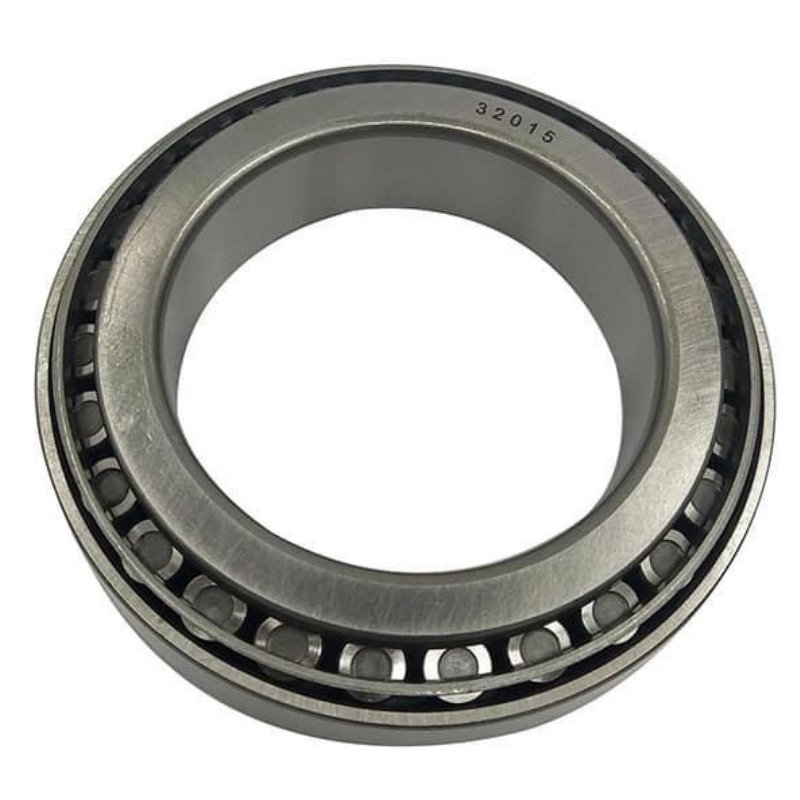
I have worked with engineers from Turkey, India, Russia, and Brazil. They all ask the same questions. How hot will it run? How long will it last? Can you make it fit my exact shaft? In this article, I will show you what engineers look for. I will also explain how our factory meets those demands.
What Do Engineers Look for Most When Selecting Tapered Roller Bearings?
You open a catalog. You see hundreds of bearings. Which one do you pick? Engineers do not guess. They check three things first.
Engineers look for high load rating, stable heat treatment, and tight precision grade. They also check the bearing’s ability to keep running under shock loads and vibration. These factors decide the bearing’s real life in the field.
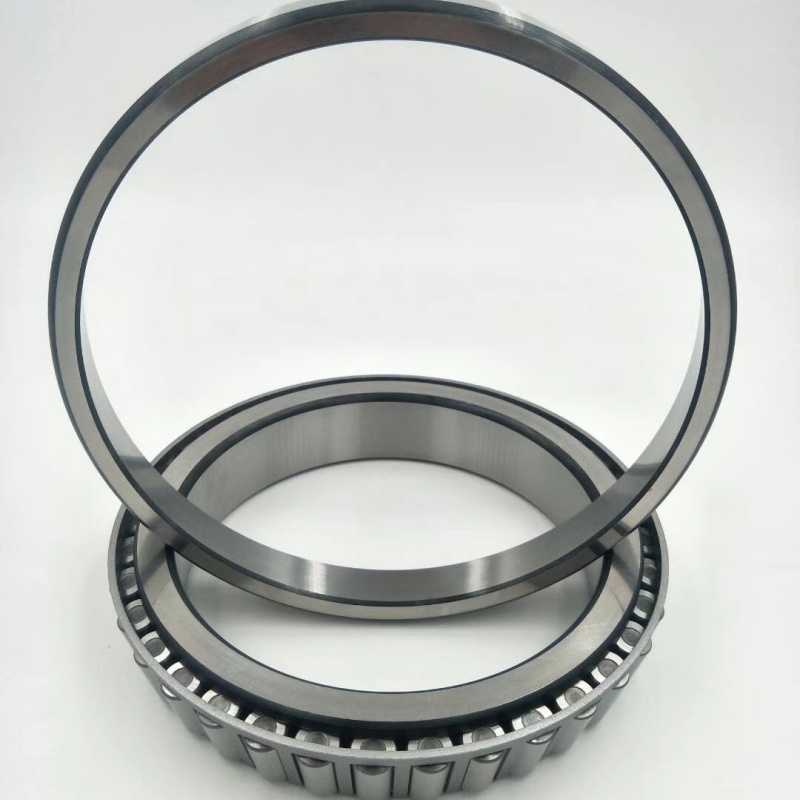
The Three Main Selection Criteria
Let me break down what engineers really care about. I talk to procurement managers like Rajesh from India. He buys bearings for his customers. He tells me his engineers always ask for the same data.
1. Dynamic Load Rating (C)
This number tells you how much weight the bearing can carry while spinning. A higher number means longer life under the same load. Engineers compare the C rating of different brands. They also check the basic rating life (L10). That is the number of hours that 90% of bearings will survive.
At FYTZ, we use vacuum degassed GCr15 steel. This steel gives us a higher C rating than cheap steel. I can show you the test reports. One time, a customer from Egypt compared our 30210 bearing with another supplier. Our dynamic load rating was 15% higher. That extra margin kept his conveyor running two extra years.
2. Hardness and Depth of Hardening
A bearing needs to be hard on the surface. But it also needs toughness inside. If the whole bearing is too hard, it cracks. If it is too soft, it dents. The standard range is 58 to 62 HRC.
But here is the trick. Cheap bearings only harden the top layer. The inside stays soft. After some wear, the hard layer breaks. Then the bearing fails fast. Our bearings get through-hardening. That means the hardness goes all the way through. We test every batch with a Rockwell tester. I keep those records for five years.
3. Internal Geometry and Contact Angle
Engineers want to know the exact contact angle. That angle decides how much axial load the bearing can take. A 15-degree angle gives more speed. A 30-degree angle gives more thrust. There is no single best angle. It depends on your machine.
I always ask engineers to tell me the ratio of axial load to radial load. Then I suggest an angle. For truck wheel hubs, we use a 28-degree angle. For gearboxes, we use a 20-degree angle. For high-speed spindles, we go down to 12 degrees. Getting this right doubles the bearing life.
Here is a quick table engineers use to match load type with bearing features:
| Load Condition | Preferred Contact Angle | Recommended Series | Special Note |
|---|---|---|---|
| Mostly radial, low axial | 10–15° | 302xx, 322xx | High speed possible |
| Mixed radial and axial | 20–25° | 303xx, 323xx | Most common choice |
| Heavy axial, shock loads | 28–35° | 331xx, 332xx | Lower max speed |
| Very high speed, low load | 10–12° | 313xx | Need P5 precision |
So when an engineer picks our bearings, he knows he gets the right geometry. We do not hide these numbers. We put them on the box and in our catalog.
How Do Our Advanced Tapered Bearings Solve Heat and Wear Problems?
You see blue color on a failed bearing. That means heat. Heat comes from friction. Friction comes from poor surface finish or bad lubrication. We fix both.
Our advanced tapered bearings use super-finished raceways and optimized roller profiles. This lowers friction by up to 30%. Less friction means less heat. Less heat means less wear. Your bearing runs cooler and lasts longer.
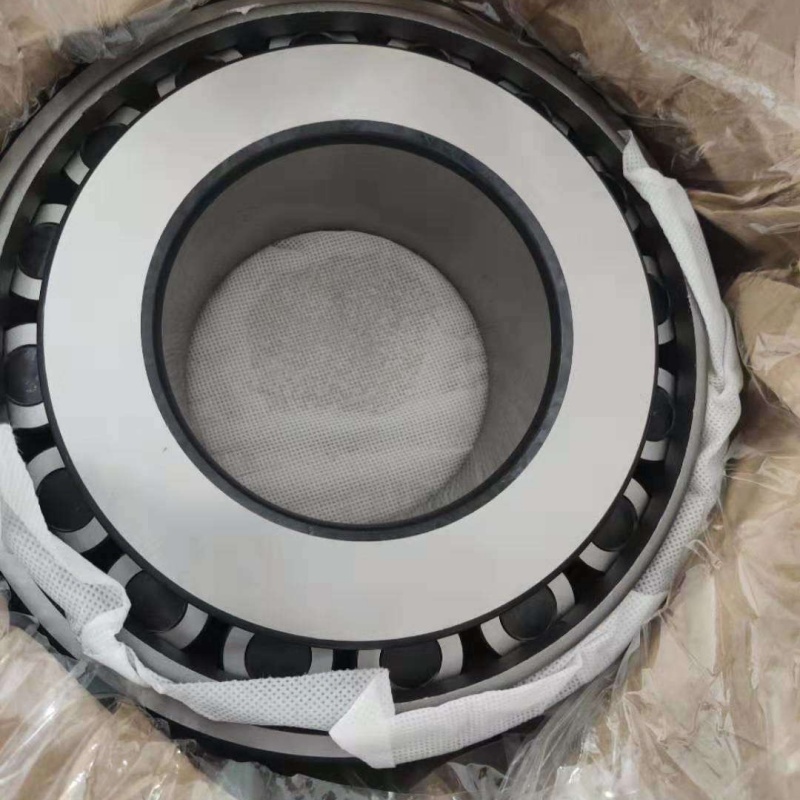
Two Technologies That Cut Heat
I want to explain how we make bearings run cooler. It is not magic. It is careful engineering.
Super-Finishing of Raceways
Most bearings have a ground raceway with small grinding marks. Those marks look like tiny scratches. Under a microscope, they look like hills and valleys. When the roller rolls over those hills, it creates micro-vibration. That micro-vibration becomes heat.
We add an extra step. After grinding, we super-finish the raceway. That means we use a fine stone to polish the surface. The final surface roughness (Ra) drops to 0.05 microns or less. For normal bearings, Ra is around 0.1 to 0.2 microns. That difference might sound small. But at 3000 rpm, the super-finished bearing creates half the heat.
I have a test from our lab. We ran two bearings side by side. Same load. Same speed. Same grease. The standard bearing reached 85°C. The super-finished bearing reached 65°C. That 20-degree difference means the grease lasts longer. The steel does not soften. The bearing runs for thousands more hours.
Optimized Roller Profile (Crowning)
A standard roller has a straight shape. When you put it under load, the ends of the roller touch the raceway harder than the middle. That is called edge loading. Edge loading creates high stress. High stress creates heat and early spalling.
We use a crowned profile. The roller is slightly curved. Under load, the contact pressure spreads evenly across the whole roller. No more hot spots. No more edge loading. This is especially important for heavy-load applications like gearboxes and truck axles.
Let me show you a comparison based on our internal tests:
| Feature | Standard Tapered Bearing | FYTZ Advanced Tapered Bearing |
|---|---|---|
| Raceway surface finish (Ra) | 0.12–0.20 μm | 0.05–0.08 μm |
| Roller profile | Straight or simple crown | Optimized logarithmic crown |
| Operating temperature at 3000 rpm | 80–90°C | 60–70°C |
| Grease life (hours before breakdown) | ~2000 hours | ~4000 hours |
| Estimated L10 life under same load | Baseline | +40% to +60% |
I remember a customer in Russia. He runs snowplow trucks. The bearings got hot and the grease melted. He switched to our advanced tapered bearings with super-finish and crowning. The bearing temperature dropped by 22°C. The trucks finished the whole winter without a single bearing failure.
So when an engineer recommends our bearings, he knows we have solved the heat problem. Not by chance. By design.
Why Do Engineers Prefer Customized Tapered Bearing Solutions?
You buy a standard bearing. It fits. But it does not fit perfectly. Your shaft is 0.1 mm smaller than standard. Your housing has a different shoulder. Standard bearings force you to adapt your machine to the bearing. That is backwards.
Engineers prefer customized tapered bearings because they can match the exact shaft size, housing tolerance, and load direction. A custom fit eliminates the need for extra spacers or shims. That means faster assembly and more reliable operation.

Three Ways Customization Adds Value
I run a factory. We make standard bearings every day. But my best customers ask for custom solutions. Here is why.
1. Non-Standard Inner Diameter or Outer Diameter
Sometimes your shaft is metric. Sometimes it is inch. Sometimes it is an old size that no one makes anymore. You cannot change the shaft. That costs too much. So you need a bearing that fits your existing shaft.
We can make any bore size from 10 mm to 300 mm. We can also make inch sizes like 0.5 inches or 1.25 inches. No problem. We keep the raw stock for both systems. One of my customers in Brazil had a European machine with a 45.2 mm shaft. Standard 45 mm bearings were too loose. Standard 45.5 mm did not exist. We made him a custom batch with exact 45.2 mm bore. He was very happy.
2. Modified Internal Clearance (C2, C3, C4, or Special)
Standard bearings come in normal clearance (CN). But your machine might run hot. Or your shaft might expand a lot. Or you might need a tight fit for precision. Normal clearance does not work for all cases.
We offer C2 (smaller clearance), C3 (larger than normal), and C4 (extra large). We can also make in-between clearances. One engineer from Turkey asked for a clearance that was between C3 and C4. He had a very hot gearbox. We made that clearance for him. His bearing life tripled.
3. Special Cage Materials and Lubrication Features
Standard cages are made of steel or brass. But for high-speed applications, we use polyamide (nylon) cages. They are lighter. They make less noise. For high-temperature applications, we use special heat-stabilized cages.
Also, we can add lubrication grooves and holes on the outer ring. This lets you pump fresh grease directly into the bearing while it is running. That is a big help for machines that run 24/7. You do not need to stop production to regrease.
Here is a table of common custom requests we get from engineers:
| Custom Feature | Why Engineers Ask for It | Typical Application |
|---|---|---|
| Non-standard bore (e.g., 45.2 mm) | Shaft is worn or non-standard | Old European or American machines |
| C4 internal clearance | Very high operating temperature | Kiln cars, furnace fans |
| Polyamide cage | Higher speed, lower noise | Electric motors, compressors |
| Lubrication holes on outer ring | Easy regreasing without disassembly | Mining conveyors, wind turbines |
| Special taper angle (non-standard) | Unique load direction | Custom gearboxes |
I tell my customers: do not settle for a standard bearing that almost fits. Send me your drawing. I will make the bearing that fits exactly. The cost difference is small. The performance difference is huge.
One more story. A customer from Pakistan made agricultural trailers. His standard bearing kept coming loose because the shaft was slightly undersized. He used loctite and shims. That cost him time and money. We made him a custom bearing with a 0.03 mm smaller bore. The bearing pressed on perfectly. He never had a loose wheel again.
So when engineers recommend our custom bearings, they trust us to make exactly what they need. No compromise.
What Manufacturing Processes Do We Use to Ensure Long-Term Reliability?
You see a bearing. It looks simple. But making a reliable bearing takes many steps. Skip one step, and the bearing fails early.
We use vacuum degassed steel, controlled heat treatment, precision grinding with CBN wheels, and 100% dimensional inspection. Every bearing gets tested for noise and vibration before packing. These processes give you consistent quality batch after batch.
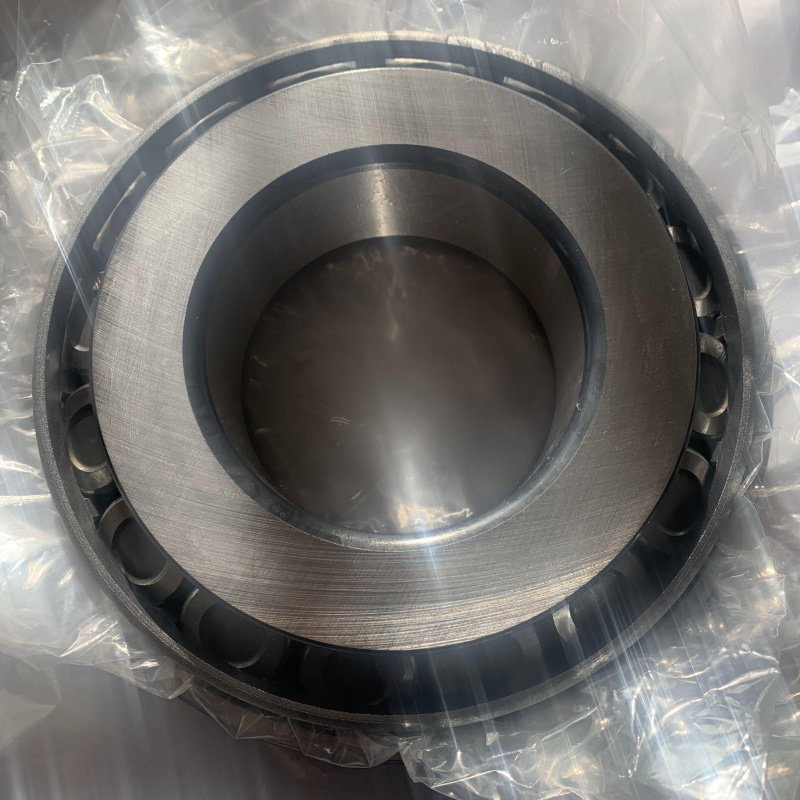
The Four Steps That Make Our Bearings Reliable
I want to walk you through our factory floor. I will show you the four most important steps.
Step 1: Steel Selection and Forging
We start with GCr15 bearing steel from certified mills. This steel has low oxygen content (under 10 ppm) and few non-metallic inclusions. Inclusions are tiny dirt particles inside the steel. They become stress points. Low inclusions mean high fatigue life.
We forge the rings on high-speed forging presses. Forging aligns the grain flow of the steel. That makes the ring stronger. Some cheap bearings use cast or cut-from-bar rings. Those have no grain flow alignment. They crack easier.
Step 2: Heat Treatment with Automated Control
We use continuous heat treatment furnaces. The temperature is controlled within ±5°C. The rings go through austenitizing, quenching, and tempering. The final hardness is 59–61 HRC for most bearings. We also check the microstructure. We want fine, evenly distributed carbides.
Every batch gets a hardness test and a microstructure check. We keep these records. If you ever have a problem, I can show you the report for that batch number.
Step 3: Precision Grinding with CBN Wheels
Old factories use regular grinding wheels. Those wheels wear out fast. The machine needs frequent adjustments. That makes the bearing dimensions inconsistent.
We use CBN (cubic boron nitride) grinding wheels. They stay sharp for a long time. The machine holds its tolerance. We can hold inner diameter tolerances within 4 microns. That is tighter than the ISO P5 standard. We also check every bearing with an air gauge after grinding.
Step 4: 100% Noise and Vibration Testing
This is the step that separates us from low-cost traders. Every single bearing goes into a vibration tester. We run it at a set speed and measure the vibration level. Bearings are graded as Z1, Z2, or Z3 (Z3 is quietest). If a bearing fails the noise test, it goes back to rework or is scrapped.
I have seen other suppliers only test one bearing per batch. That is not enough. One bad bearing in a batch can ruin your customer’s machine. We test every bearing. That is why our distributors like Rajesh trust us.
Here is a summary of our quality checks:
| Process Step | What We Control | Test Method | Acceptable Range |
|---|---|---|---|
| Steel | Oxygen content, inclusions | Spectrometer | O2 <10 ppm |
| Forging | Grain flow, no cracks | Visual, UT | No cracks |
| Heat treatment | Hardness, microstructure | Rockwell, microscope | 59–61 HRC, fine carbides |
| Grinding | Dimensions, roundness | Air gauge, roundness tester | ID ±4 μm, roundness <1.5 μm |
| Assembly | Internal clearance | Dial gauge | ±0.01 mm of target |
| Final test | Noise, vibration | S0910 tester | Z2 or higher |
I remember a customer from Vietnam. He bought bearings from a trader. The bearings looked fine. But 10% of them were noisy. His customers complained. He switched to FYTZ. We sent him a batch with 100% test reports. Not a single noise complaint after that.
So when engineers recommend our bearings, they know we do not skip steps. We make bearings the right way. Every time.
Conclusion
Engineers recommend our advanced tapered bearings because we solve real problems. Less heat. Custom fit. Reliable processes. That is the FYTZ difference.