
Your truck or conveyor runs for hours. Then the bearing gets hot. Soon after, it fails. That stops your whole operation.
Tapered roller bearings handle heavy loads and high speeds over long distances. They keep running longer than other bearing types because of their cone and cup design. That design handles both radial and axial forces at the same time.
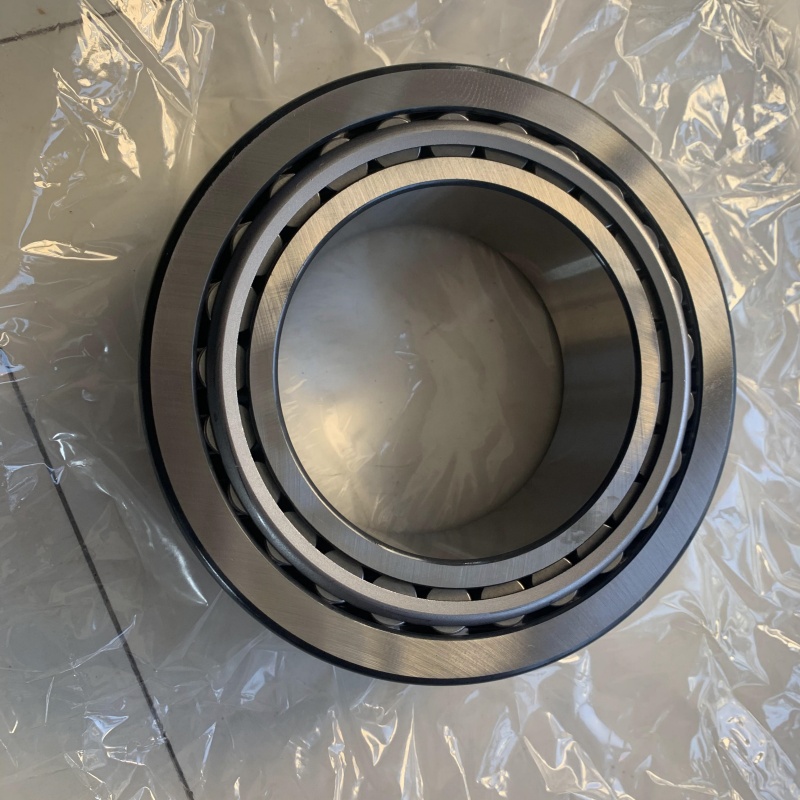
You might think all roller bearings are the same. But after fifteen years in the bearing business, I can tell you that is not true. I have seen tapered roller bearings outlast other types in trucks, conveyor systems, and farm equipment. Let me show you why. I will also share what precision grades mean and how you can make these bearings last longer.
Why Do Tapered Roller Bearings Perform Better in Long-Distance Applications?
You run a machine for eight hours straight. The bearing heats up. The load shifts. Normal bearings start to wear unevenly. Tapered ones do not.
Tapered roller bearings have angled rollers and raceways. That angle creates a larger contact area than ball bearings. The larger area spreads the load better. So the bearing runs cooler and wears slower over long distances.
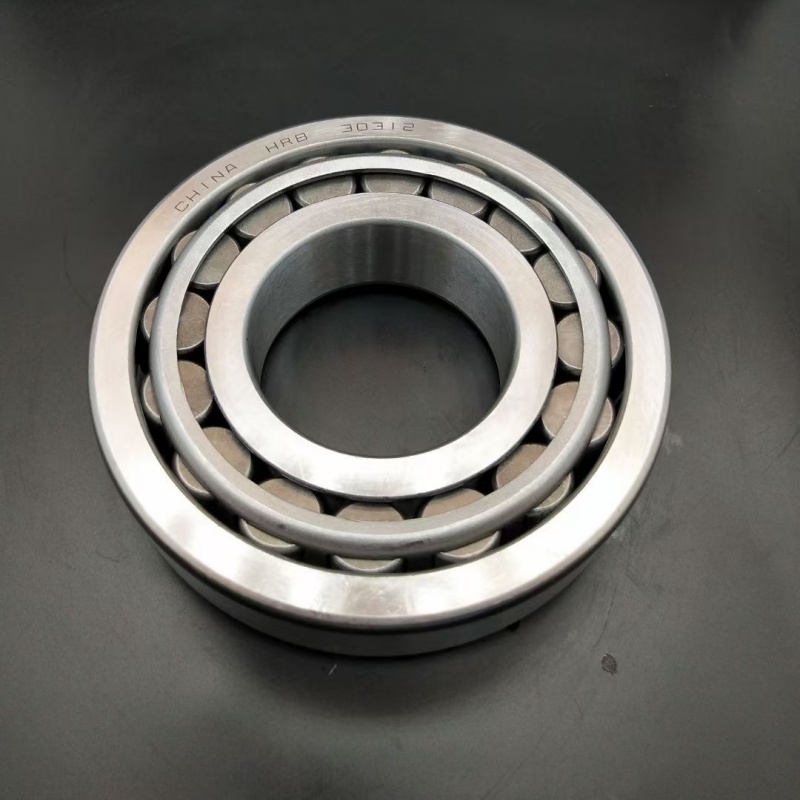
The Geometry Advantage
Let me explain why the shape makes such a big difference. A deep groove ball bearing touches the raceway at one small point. That point gets all the pressure. Over time, that point wears down. The bearing gets loose. Then noise and heat follow.
A tapered roller bearing is different. The roller has a conical shape. The inner ring (cone) and outer ring (cup) both have matching tapered raceways. When you put a load on the bearing, the roller makes a line contact, not a point contact. That line spreads the force across a much bigger surface.
Think of it like this. A point contact is like standing on one high heel. A line contact is like standing with your whole foot flat. The pressure per square millimeter drops a lot. Lower pressure means less stress on the steel. Less stress means longer life.
I have a customer in Brazil. He runs long conveyor belts in a mining site. Each belt runs for 12 hours a day. He used deep groove ball bearings first. They failed every three months. Then he switched to our tapered roller bearings. The same bearings are still running after 11 months. The only thing he changed was the bearing type.
Heat Management Over Long Runs
Long-distance running creates heat. That is a fact. When a bearing runs for hours, the temperature goes up. The steel expands. The lubricant gets thinner. In a ball bearing, expansion can close the internal clearance. Then the balls get squeezed. Friction goes up. Heat goes up more. That is a bad cycle.
In a tapered roller bearing, you can set the internal clearance exactly. You can also use a matched pair of bearings. One bearing takes the radial load. The other takes the axial thrust. This setup lets you control the running clearance better. Even when the bearing gets hot, the clearance stays in a safe range.
Here is a simple comparison table I use with my distributors:
| Feature | Deep Groove Ball Bearing | Tapered Roller Bearing |
|---|---|---|
| Contact type | Point contact | Line contact |
| Load distribution | Small area | Larger area |
| Heat generation under continuous load | Higher | Lower |
| Ability to take axial + radial together | Limited | Excellent |
| Best for long-distance continuous running | No | Yes |
So if your equipment runs for hours without stopping, tapered roller bearings are your best choice. The geometry gives you less wear. Less heat. More uptime.
How Do Tapered Roller Bearings Handle Both Radial and Axial Loads Over Time?
Most bearings handle one load type well. But real machines push from all directions. Your bearing needs to push back from all sides.
Tapered roller bearings have a built-in angle. That angle lets the rollers push against both the side load (radial) and the end load (axial) at the same time. The steeper the angle, the more axial load the bearing can take.
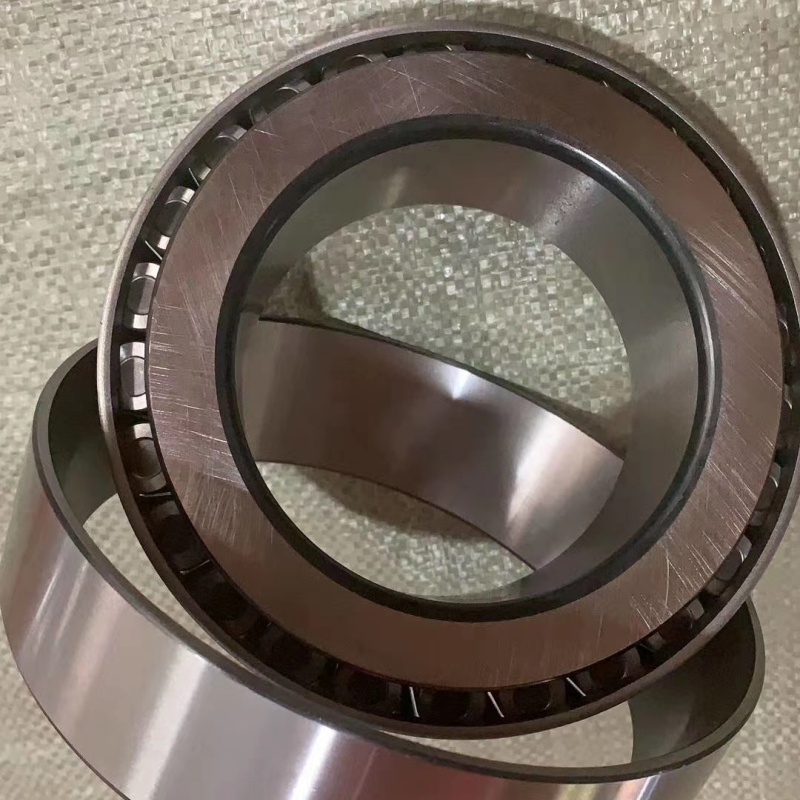
Breaking Down the Two Loads
Let me make this clear. Radial load is a force that comes from the side. For example, the weight of a truck pushes down on the wheel bearing. That is radial load. Axial load is a force that pushes along the shaft. For example, when a truck turns a corner, the wheel wants to slide sideways. The bearing has to stop that sideways movement. That is axial load.
A standard deep groove ball bearing can take some axial load. But not a lot. And when you add axial load, the ball bearing’s life drops fast. A cylindrical roller bearing is great for radial loads but almost zero for axial loads. So what do you do when you need both?
You use a tapered roller bearing. The tapered shape does two things at once. The roller touches the cone and the cup at an angle. When a radial load comes in, the roller pushes against the cup at an angle. Part of that radial force turns into an axial force inside the bearing. The bearing’s internal design balances those forces.
Now here is an important point. A single tapered roller bearing can take radial and axial load from one direction. But if your machine pushes axial load from both directions (for example, forward and backward), you need two tapered roller bearings mounted face-to-face or back-to-back. This is very common in truck wheel hubs and gearboxes.
How Load Capacity Changes Over Time
Load capacity is not a fixed number. It drops as the bearing wears. But a good tapered roller bearing wears slowly and evenly. Why? Because the line contact keeps the stress low. The raceway does not develop deep pits quickly.
I remember a customer from Turkey. He runs a gearbox factory. He tested our tapered roller bearings against a cheaper competitor. Both started the same. After 500 hours, the competitor’s bearings had visible wear on the raceway. The axial play had increased by 0.1 mm. Our bearings still looked new. The axial play had not changed. That extra control comes from the precise angle grinding we do at our factory.
Here is a quick guide to load handling based on the contact angle:
| Contact Angle (typical) | Radial Load Capacity | Axial Load Capacity | Best Application |
|---|---|---|---|
| 10–15 degrees (light angle) | Very high | Low to medium | High-speed shafts, light axial thrust |
| 20–25 degrees (standard) | High | High | General industrial, gearboxes, pumps |
| 28–35 degrees (steep angle) | Medium | Very high | Heavy axial loads, truck wheel hubs |
You can see the pattern. The steeper the angle, the more axial load the bearing can take. But steep angle bearings also generate more heat. So you have to balance your needs. I always ask my customers: tell me the exact radial and axial loads. I can then pick the right angle and the right size. Learn more about angular contact ball bearings
What Do Precision Grades (P5/P6) Mean for Your Long-Distance Equipment?
You see P5 and P6 on bearing boxes. You pay more for them. But do you really need them? Or is P0 good enough?
P5 and P6 are ISO precision grades. P0 is normal. P6 is higher. P5 is even higher. For long-distance running, P5 gives you better roundness, smoother surfaces, and tighter fit. That means less vibration and longer life for high-speed or high-precision machines.
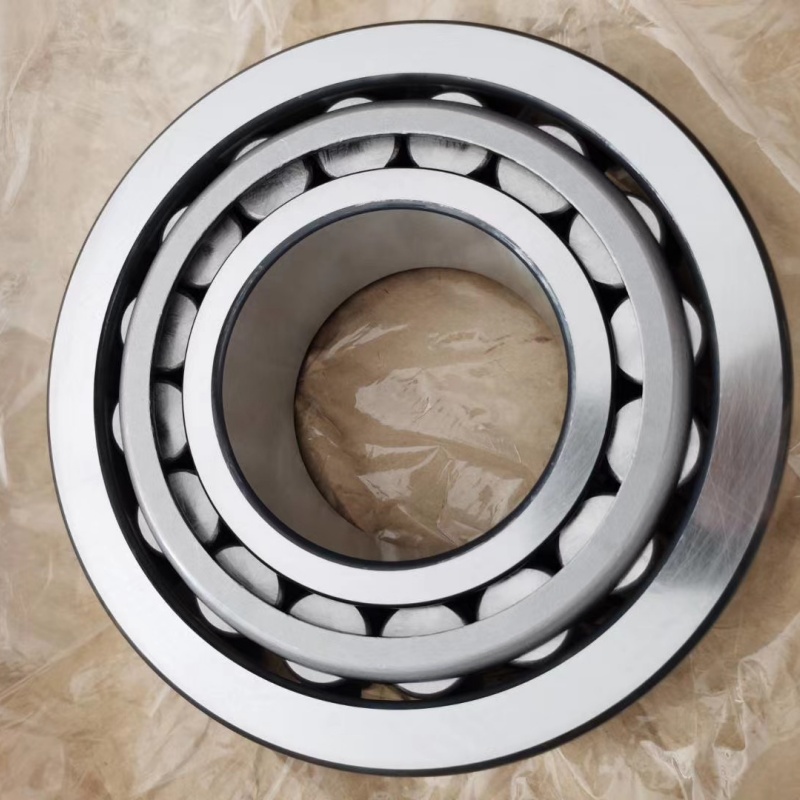
What Each Grade Changes Inside the Bearing
I want to explain this without using too many technical words. When we make a bearing, we grind the raceways and the rolling elements. The grinding needs to be very accurate. The more accurate the grinding, the higher the precision grade.
For a P0 bearing (normal class), the inner ring can have a runout of up to 10 microns. That means when the shaft spins, the inner ring wobbles a tiny bit. For a P6 bearing, the runout drops to 6 microns. For a P5 bearing, it drops to about 4 microns. That difference does not sound big. But when your shaft spins at 3000 rpm, that small wobble creates vibration. Vibration creates heat. Heat kills bearings.
Also, the surface finish changes. A P0 bearing has a rougher raceway. A P5 bearing has a smoother raceway. Smoother surfaces hold lubricant better. They also have less friction. Less friction means the bearing runs cooler. Cooler bearings last longer.
When to Pay More for Higher Precision
I do not always push customers to buy P5. Sometimes P0 is fine. Here is my rule.
If your machine runs at low speed (under 1000 rpm) and it does not need high accuracy, buy P0. For example, a farm trailer wheel. P0 works for years. No problem. Learn more about bearing accuracy classes
If your machine runs at medium speed (1000–3000 rpm) or it is a standard electric motor, buy P6. The price increase is small. The benefit is real. Your motor will run quieter. The bearing will last longer. Learn more about P0, P6, and P5 tolerances
If your machine runs at high speed (over 3000 rpm) or it needs high positioning accuracy, buy P5. For example, machine tool spindles, high-speed compressors, or precision gearboxes. The extra cost for P5 pays back quickly through less downtime. Learn more about P5 precision bearings
I have a customer in Russia. He makes industrial fans. The fans run at 4500 rpm. He used P0 bearings first. The fans vibrated. The noise level was high. He switched to our P5 grade tapered roller bearings. The vibration dropped by 40%. His customers stopped complaining about noise. And the bearing life doubled.
Here is a simple table for you to decide:
| Application | Recommended Grade | Why |
|---|---|---|
| Agricultural machinery, slow conveyors | P0 | Low speed, low precision needed |
| Standard pumps, fans (under 3000 rpm) | P6 | Good balance of cost and performance |
| High-speed motors, compressors (over 3000 rpm) | P5 | Low vibration, low noise, long life |
| Machine tools, printing presses | P5 or better | High precision needed |
At FYTZ Bearing, we make all three grades. We also label every box clearly. So you know exactly what you are buying. Do not guess. Match the grade to your speed and precision needs. Learn more about bearing accuracy classes
This link is a good fit because it directly covers bearing accuracy classes and how to choose them based on application requirements. skf
How Can You Extend the Service Life of Tapered Roller Bearings in Heavy-Duty Use?
You bought good bearings. But they still fail too fast. Why? Because installation and maintenance matter as much as quality.
You can extend tapered roller bearing life by setting the right internal clearance, using clean grease, and checking preload regularly. Also protect the bearing from dirt and water. These steps can double or triple the service life.
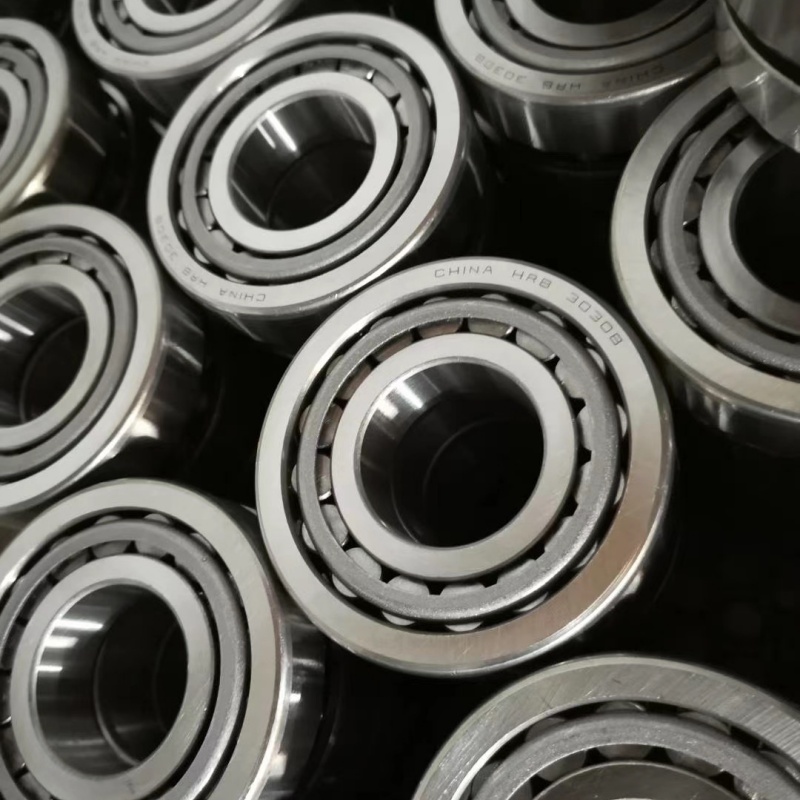
Four Practical Tips from My Factory Floor
I have seen bearings fail in the first week. And I have seen the same bearing type run for five years. The difference is not the bearing itself. The difference is how people treat it.
Let me give you four simple tips. I share these with all my wholesale customers.
Tip 1: Set the Right Clearance (Not Too Tight, Not Too Loose)
Tapered roller bearings need a small amount of internal clearance when they are cold. Why? Because they get hot when they run. Heat makes the steel expand. If you set the bearing too tight when cold, it will bind when hot. Binding creates heat and wear.
How do you set clearance? For most applications, you tighten the locknut until you feel a slight drag. Then you back off a little. Then you check the end play with a dial gauge. For small bearings, aim for 0.02–0.05 mm of end play. For large bearings, go for 0.05–0.10 mm. If you are not sure, ask the machine manual or call me.
Tip 2: Use Clean Grease and the Right Amount
I cannot tell you how many bearings I have seen packed with dirty grease. Or too much grease. Too much grease is as bad as too little. The bearing churns the extra grease. That churning creates heat. The heat melts the grease. Then the bearing runs dry.
What is the right amount? For a bearing housing, fill about 30% to 50% of the free space with grease. Not the whole housing. Also use a good lithium or polyurea grease. Avoid mixing two different greases. Different thickeners do not mix well.
Tip 3: Keep Dirt and Water Out
Dirt is the number one killer of tapered roller bearings. One grain of sand inside the raceway acts like a grinding wheel. It cuts a groove. That groove becomes a stress point. Then the bearing flakes apart.
Use good seals. Rubber seals (2RS) are better than metal shields for dirty environments. Also check your housing for cracks or gaps. If your machine works outdoors or near water, add a grease purge system. Pumping a little fresh grease in pushes the old, dirty grease out.
Tip 4: Check Preload and Torque Regularly
Tapered roller bearings need the right preload. Preload means the amount of tightness that removes internal play. With no preload, the bearing is loose. It will hammer and wear fast. With too much preload, the bearing gets too hot.
Set a schedule. Check the locknut torque every 1000 hours or every six months. Also listen to the bearing. If it makes a rough noise, stop and check. If the housing feels too hot to touch (over 70°C), stop and check.
Here is a checklist I give to my customers for bearing maintenance:
| Action | Frequency | What to Look For |
|---|---|---|
| Check locknut torque | Every 1000 hours | Torque within manual spec |
| Listen to running noise | Daily | No grinding or clicking |
| Feel housing temperature | Daily | Warm is okay. Hot (too hot to hold) is bad. |
| Regrease | Every 6 months or per manual | Old grease color: dark means dirt or heat |
| Replace seals | Every time you open bearing | Cracks or hardened rubber |
I remember a customer in Indonesia. He runs a palm oil pressing machine. The bearing failed every two months. I visited his site. The housing had no seal. Dust and palm fibers got inside. We added a rubber seal and changed to a better grease. The same bearing ran for 14 months. He saved money on both bearings and downtime. Learn more about bearing inspection and relubrication
So do not just buy good bearings. Install them right. Maintain them right. That is how you get the long life you paid for.
Conclusion
Tapered roller bearings give you strength and precision for long-distance work. Pick the right load rating, precision grade, and keep them clean.