
Your chemical pump fails after three months. The customer is angry. You lose the next order. The bearing is always the first suspect.
To choose deep groove ball bearings for chemical processing pumps, focus on corrosion-resistant materials (440C stainless steel or ceramic hybrid), aggressive-compatible seals (PTFE or FKM), and wide-clearance options (C3 or C4). Standard bearings fail from chemical attack and thermal shock.
I have supplied bearings for chemical pumps to customers in India and Egypt for years. One of them, a pump manufacturer in Indonesia, kept losing bearings to corrosion and heat. I worked with our engineering team at FYTZ to find the right combination. Let me share what we learned.
Why Do Standard Deep Groove Ball Bearings Fail Quickly in Chemical Pump Applications?
You buy a standard chrome steel bearing. You put it in a chemical pump. Two months later, it sounds like a bag of broken glass.
Standard bearings fail in chemical pumps because of three reasons: corrosion from chemical vapors, breakdown of standard grease by aggressive media, and thermal expansion mismatch. The result is pitting, lubricant loss, and seizure.
I remember a customer from Brazil. He makes compact dosing pumps for agricultural chemicals. He used standard 6204 deep groove ball bearings with chrome steel and lithium grease. Every six weeks, the pumps started to leak. He opened the bearings. The raceways had red rust. The balls were pitted. The grease turned into a sticky paste.
We tested the failed bearings in our lab. Here is what we found. And these are the same problems you will see in most chemical pump failures.
Problem #1: Chemical Corrosion of Steel
Standard deep groove ball bearings use GCr15 chrome steel. This steel contains about 1.5% chromium. That is enough for mild humidity. But it is not enough for chemical environments. Even traces of acid vapor or chlorine gas will attack the surface.
The corrosion starts small. You see dark spots on the raceway. Then the spots become pits. The balls roll over the pits. Each impact breaks off more material. The bearing clearance increases. The vibration goes up. Then the seal fails. The pump leaks.
For chemical pumps, you need real corrosion resistance. That means 440C stainless steel or ceramic hybrid. Let me compare them:
| Material | Corrosion resistance | Cost factor | Best for |
|---|---|---|---|
| Chrome steel (GCr15) | Low (mild humidity only) | 1.0x | Clean water pumps |
| 440C stainless steel | High (resists most acids) | 2.5x | Chemical dosing pumps, food processing |
| Ceramic hybrid (Si3N4 balls + 440C rings) | Very high (resists almost everything) | 5.0x | Strong acids, high‑purity chemicals |
| Full ceramic | Extremely high | 10x+ | Extreme chemicals, no lubrication allowed |
For most compact chemical pumps, 440C stainless steel rings with 440C balls are enough. The extra cost pays back in longer pump life.
Problem #2: Grease Attack by Chemicals
The chemical does not have to touch the grease directly. Vapors can penetrate through the seal. Once inside, the chemical reacts with the grease thickener or base oil. The grease breaks down. It becomes runny or hard. Either way, it stops lubricating.
I tested a pump that handled sodium hypochlorite (bleach). The lithium grease turned into a soft white paste. It had no oil left. The bearing ran dry. The solution was a perfluoropolyether (PFPE) grease. This grease does not react with any common chemical. It is expensive, but it lasts for years.
Problem #3: Wide Temperature Swings
Chemical pumps often run hot (80–100°C). But when you flush the pump with cold water or solvent, the temperature drops fast. This thermal shock causes the inner ring to shrink and expand. Standard CN clearance becomes negative during the cold shock. The bearing preloads itself. Friction spikes. The cage can break.
I will talk more about clearance in a later section. But for now, remember that standard bearings are not designed for chemical pump duty. You need special materials, special grease, and special clearance. Do not assume that a cheap bearing will work. I have seen too many importers lose customers because they tried to save a few cents.
What Bearing Material – 440C Stainless Steel or Ceramic Hybrid – Resists Corrosion Best?
You know you need corrosion resistance. But stainless steel or ceramic? The price difference is big. So is the performance difference.
For most compact chemical pumps, 440C stainless steel offers the best value. Ceramic hybrid (silicon nitride balls + 440C rings) is better for strong acids or when the pump runs dry occasionally. Full ceramic is overkill for standard chemical processing.
A customer from Vietnam called me last year. He makes compact chemical metering pumps. He was using 440C stainless steel bearings. They lasted about 18 months. Then he saw an advertisement for ceramic hybrid bearings. He asked me if he should switch. I told him to send me the pump operating conditions first.
Here is what I found. His pump handled sulfuric acid at 0.5% concentration. The pH was around 1. The temperature was 60°C. The pump ran 8 hours a day. The 440C bearings had light staining but no pitting. Switching to ceramic hybrid would triple his bearing cost. The extra life would be maybe 20% longer. Not worth it.
But for another customer handling 10% hydrochloric acid at 80°C, the 440C bearings failed in four months. Ceramic hybrid bearings lasted over two years. The switch made perfect sense.
When to Use 440C Stainless Steel
440C is a martensitic stainless steel. It has 16–18% chromium. It is hard (58–60 HRC). It is magnetic. It resists mild acids, alkalis, and most organic solvents.
Use 440C for:
- Dilute acids (pH 3–6) at temperatures below 70°C
- Alkaline solutions (pH 8–11) at moderate temperatures
- Saltwater and brackish water
- Food and beverage applications (FDA compliant)
- Most chemical dosing pumps with common industrial chemicals
Do not use 440C for:
- Strong mineral acids like hydrochloric (>5%) or sulfuric (>10%)
- Chlorine gas or bleach at high concentration
- High-temperature acids above 90°C
- Applications where the pump runs dry
When to Use Ceramic Hybrid
Ceramic hybrid bearings use silicon nitride (Si3N4) balls. The rings are still 440C stainless steel. The ceramic balls do not corrode. They are also lighter and harder than steel balls. This reduces centrifugal force and skidding at high speeds.
Use ceramic hybrid for:
- Strong acids (any concentration of HCl, H2SO4, HNO3)
- High-purity chemical processing (no metal contamination)
- Pumps that may run dry for short periods (ceramic handles heat better)
- High-speed chemical pumps (above 10,000 RPM)
- Temperatures above 100°C
Do not use ceramic hybrid for:
- Very low-speed pumps (the cost does not pay back)
- Pumps with heavy shock loads (ceramic balls are brittle)
- Budget-sensitive applications
Full Ceramic – Almost Never Needed
Full ceramic bearings (both rings and balls made of zirconia or silicon nitride) are extremely expensive. They resist almost everything. But they have low load capacity and poor shock resistance. For compact chemical pumps, I have never recommended full ceramic. The only exception is medical or semiconductor pumps where absolutely no metal is allowed.
Here is a simple decision table I give my customers:
| Chemical environment | Temperature | Recommended material | Approximate life improvement over chrome steel |
|---|---|---|---|
| Clean water | Any | Chrome steel (P0) | 1x (baseline) |
| Mild acid (pH 4–6) | <70°C | 440C stainless | 3–5x |
| Strong acid (pH 1–3) | <70°C | Ceramic hybrid | 8–10x |
| Strong acid | >70°C | Ceramic hybrid | 5–8x |
| Alkaline (pH 8–10) | <80°C | 440C stainless | 4–6x |
| Solvents (toluene, acetone) | Any | 440C with PFPE grease | 3–4x |
At FYTZ, we stock 440C stainless deep groove ball bearings in sizes 6200 to 6208. We can also source ceramic hybrid bearings with lead time. Tell me your chemical and temperature. I will recommend the right material. We do this for distributors in Pakistan and Egypt every week.
How to Select the Right Seal Type for Compact Pumps Handling Aggressive Chemicals?
You buy a stainless steel bearing. You put the right grease inside. But chemical vapors still get in. The bearing fails. The seal was the weak link.
For aggressive chemicals, use contact seals made of FKM (Viton) or PTFE. Rubber seals (NBR) swell and fail. Metal shields (ZZ) do not stop vapors. The right seal keeps chemicals out and grease in.
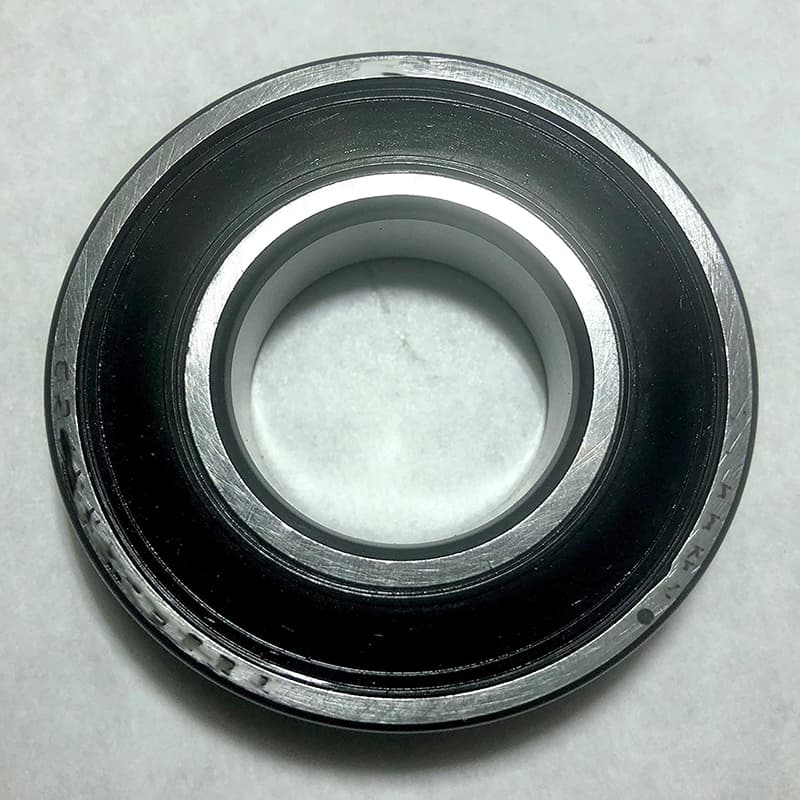
I have a story about this. An Indian customer sent back 500 bearings. They were 6202-2RS bearings with standard NBR rubber seals. He used them in a pump that handled methyl ethyl ketone (MEK). The seals swelled up. They popped out of the grooves. The solvent washed away the grease. The bearings rusted in two weeks.
The customer blamed us. But the problem was the seal material. NBR rubber is good for mineral oils and water. It is not good for solvents or aggressive chemicals. We replaced the bearings with FKM seals. The same customer has now ordered 5,000 more.
Seal Material Comparison
The seal material determines how well the bearing resists chemical attack. Here is my breakdown:
| Seal material | Code suffix | Chemical resistance | Max temp | Best for |
|---|---|---|---|---|
| NBR (nitrile) | 2RS (standard) | Low – resists oil, not solvents | 100°C | Water, mineral oil, air |
| FKM (Viton) | 2RS‑FKM | High – resists most acids, solvents, fuels | 200°C | Aggressive chemicals, high heat |
| PTFE (Teflon) | 2RS‑PTFE | Very high – resists almost everything | 250°C | Extreme chemicals, high purity |
| Metal shield | ZZ | None – stops big particles only | 300°C | Dusty dry environments only |
For compact chemical pumps, I recommend FKM as the minimum. For strong solvents or high-temperature acids, use PTFE. But PTFE seals are stiffer. They have more torque. The pump motor needs to handle that.
Single Lip vs Double Lip
Most 2RS bearings have a single lip seal. That is fine for most chemicals. But for volatile chemicals like acetone or toluene, the vapor pressure is high. The vapor can push past a single lip. In that case, use a double lip seal. The second lip creates a labyrinth. It traps the vapor and stops it from entering.
Double lip seals are not common on standard bearings. But at FYTZ, we can customize them. We have done this for a pesticide pump manufacturer in Brazil.
Seal Groove Design
One more thing. The seal groove on the bearing outer ring matters. Some factories cut shallow grooves. The seal can pop out under pressure or thermal expansion. I have seen this happen. The pump pressure cycles from 0 to 10 bar. The seal moves in and out. Eventually, it comes out completely.
Ask your supplier: “What is your seal retention groove depth?” A good groove is at least 0.5 mm deep for a 6200 series bearing. We use 0.6 mm at FYTZ. The seal stays in place even with pressure pulsation.
Here is a quick guide for you:
| Chemical type | Recommended seal | Reason |
|---|---|---|
| Water-based coolants | NBR (economy) or FKM | Low cost, water resistant |
| Mild acids (pH 3–6) | FKM | Resists acid vapors |
| Strong acids | PTFE or FKM with double lip | No swelling, high barrier |
| Solvents (ketones, esters) | PTFE | NBR and FKM will swell |
| Alkaline solutions | FKM | Better than NBR for high pH |
| Chlorine or bleach | PTFE | FKM degrades with wet chlorine |
At FYTZ, we offer deep groove ball bearings with all these seal options. Just tell me your fluid and temperature. I will recommend the right seal material. We ship to Russia and Indonesia regularly with FKM-sealed bearings for chemical pumps.
Which Internal Clearance (C3 or C4) Works Best for Chemical Pumps with Wide Temperature Swings?
leading paragraph:
Your pump runs hot. Then you rinse it with cold water. The bearing gets tighter. Then it seizes. You thought C3 was enough.
snippet paragraph:
For chemical pumps with temperature swings from 20°C to 90°C or higher, use C4 clearance. C3 is safe for steady high temperatures. C4 handles sudden thermal shocks and prevents seizure during cold starts after hot operation.
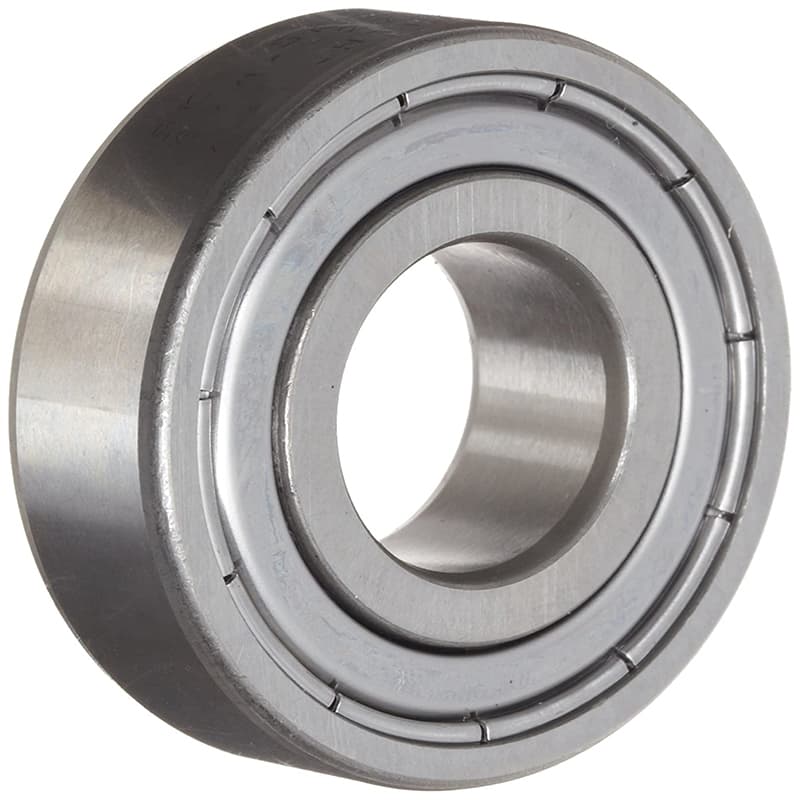
Let me tell you about a problem we solved for a Turkish customer. He makes compact chemical pumps for textile dyeing. The pump runs at 85°C for hours. Then the operator flushes it with cold water at 20°C. The temperature drops in 30 seconds. The inner ring cools and shrinks faster than the outer ring. The clearance disappears. The bearing locks up.
He was using C3 bearings. I explained that C3 is designed for steady high temperature. It is not designed for thermal shock. We switched him to C4. The failures stopped.
How Temperature Swings Change Clearance
Here is the physics. The inner ring is smaller and has less material. It changes temperature faster than the outer ring. When you flush with cold water, the inner ring cools and shrinks immediately. The outer ring is still hot. The gap between them becomes smaller. This is called a “temperature differential.”
For a 6205 bearing (25 mm bore), a temperature difference of 30°C between inner and outer ring removes about 5 µm of clearance. A difference of 60°C removes 10 µm.
Now add the interference fit from the shaft. That removes another 5–10 µm. If you start with C3 clearance (13–20 µm for a 6205), you might end with zero or negative clearance during the cold shock. The bearing will have high friction or lock up.
C4 clearance (20–28 µm) gives you a safety margin. Even after the inner ring shrinks, you still have 5–10 µm left. The bearing can spin freely.
A Simple Rule for Chemical Pumps
I use this rule with all my chemical pump customers:
- Steady temperature below 70°C: Use CN or C3. C3 is safer.
- Steady temperature 70–100°C: Use C3. It is the standard choice.
- Temperature swings over 30°C (e.g., 60°C to 90°C back and forth): Use C3 with caution. Measure your housing fit.
- Temperature swings over 50°C (e.g., 25°C to 85°C with cold flush): Use C4. Do not risk C3.
- Maximum temperature above 100°C: Use C4. Also consider heat-stabilized rings (S0 grade).
One Warning About C4
C4 bearings are noisier at room temperature. The extra clearance allows the balls to move more. You will hear a rattle when the pump starts cold. But this noise goes away once the pump warms up. If your application is noise-sensitive, try to keep the temperature swing small. Or use a C3 bearing with a lighter shaft fit.
I had a customer in Bangladesh who hated the cold start noise. He switched back to C3. Then his pumps failed from thermal shock. He had to choose between noise and reliability. He chose reliability. His customers accepted the startup rattle because the pumps lasted much longer.
How to Measure Your Temperature Swing
Do not guess. Put a thermocouple on the pump housing near the bearing. Record the temperature during a full cycle: startup, steady running, and flush. Calculate the difference between the highest steady temperature and the lowest flush temperature.
If that difference is more than 40°C, go to C4. If it is less, C3 is usually fine.
Here is a summary table:
| Max steady temp | Min flush temp | Temp swing | Recommended clearance |
|---|---|---|---|
| 70°C | 20°C | 50°C | C4 |
| 80°C | 40°C | 40°C | C3 (borderline) or C4 |
| 80°C | 20°C | 60°C | C4 |
| 90°C | 70°C | 20°C | C3 |
| 100°C | 30°C | 70°C | C4 + S0 heat stabilization |
At FYTZ, we supply deep groove ball bearings with CN, C3, C4, and even C2 for special low-noise pumps. Tell me your temperature cycle. I will recommend the clearance. We have done this for customers in South Africa and Egypt who run chemical pumps in desert conditions with big day-night temperature swings.
Conclusion
For chemical pump bearings, pick 440C stainless steel, FKM or PTFE seals, C4 clearance, and PFPE grease. Test your temperature swing first.