
Your cooling fan stops in the middle of summer. Production lines go down. The heat is unbearable. And the bearing is the real problem.
Industrial cooling fans fail because of bearing overheating, lubricant breakdown, incorrect internal clearance, and contamination. Deep groove ball bearings with C3 clearance, high-temperature grease, and proper seals solve these problems.
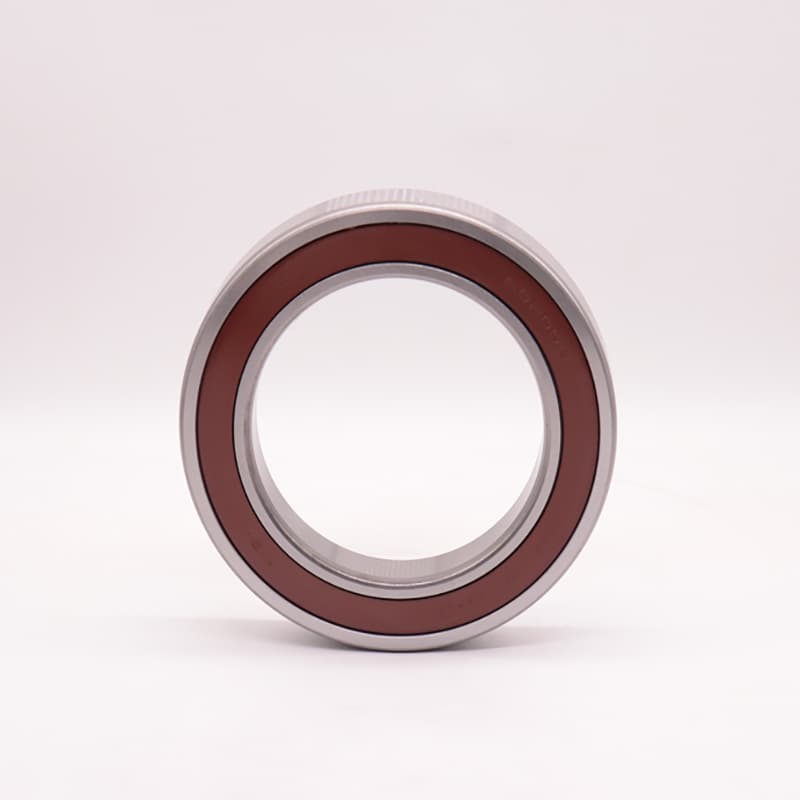
I have supplied bearings for cooling fans and air circulation equipment for over ten years at FYTZ Bearing. My customers in India, Indonesia, and Egypt always ask the same questions. Why do fan bearings die so fast? How do I pick the right one? Let me give you the answers based on real factory experience.
Why Do Industrial Cooling Fans Fail Prematurely Because of Bearings?
A fan runs fine for six months. Then it starts to squeal. Three weeks later, it locks up. You lose money and reputation.
Industrial cooling fan bearings fail due to four causes: high operating temperature (above 100°C), incorrect internal clearance, grease starvation, and moisture ingress. Each cause leaves a different damage pattern.
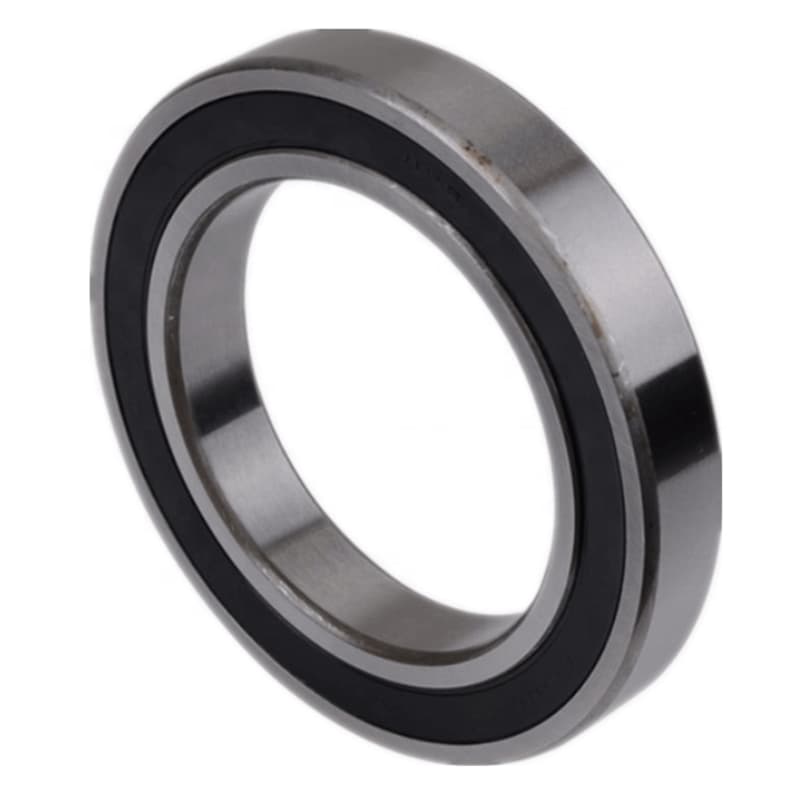
I remember a customer from Vietnam. He runs a factory that makes industrial exhaust fans. He kept replacing bearings every six months. His customers started switching to another brand. He sent me three failed bearings. I opened each one in our lab. The inner rings were blue from heat. The grease was black and hard. The balls had flat spots.
Here is what I found. And I see the same problems again and again with cooling fan bearings.
Cause #1: High Operating Temperature
Cooling fans are supposed to move air. But the motor and the bearing generate their own heat. In many industrial fans, the bearing temperature reaches 90–110°C. Standard bearings with CN clearance can handle up to 70°C. Above that, the internal clearance disappears. The bearing becomes preloaded. Friction goes up. Heat goes up. This creates a death spiral.
The solution is not better cooling. The solution is starting with more internal clearance. That is why I recommend C3 clearance for most fan applications. Let me explain the difference clearly:
| Clearance Code | Internal clearance range (for 6204 bearing) | Max safe temp without preload | Best for fan type |
|---|---|---|---|
| CN (normal) | 5–10 µm | Up to 70°C | Small computer fans |
| C3 | 10–16 µm | Up to 100°C | Industrial cooling fans |
| C4 | 16–22 µm | Up to 130°C | High‑temp furnace fans |
Cause #2: Grease Starvation
Most fans run 24/7. A standard lithium grease lasts about 2000 hours at 80°C. That is just 83 days. After that, the oil evaporates. The thickener turns into a hard paste. The bearing runs dry. Metal touches metal. Noise starts. Then failure.
I have tested many greases for fan bearings. A polyurea-based grease with high base oil viscosity (ISO VG 150) lasts 10,000 hours at 90°C. That is over one year of continuous running. For my customers running fans in hot climates like Brazil and Pakistan, I always recommend this type of grease.
Cause #3: Moisture Ingress
Cooling fans often sit on rooftops or near cooling towers. The air is humid. When the fan stops at night, the bearing cools down. Moisture condenses inside the bearing. Water mixes with the grease. The grease breaks down. Rust forms on the raceways. The bearing starts to grind.
The fix is simple: use a contact seal (2RS) instead of a shield (ZZ). A rubber seal keeps moisture out much better than a metal shield. I will talk more about this in a later section.
Cause #4: Shaft Misalignment
Many cooling fans are belt-driven. The motor and fan shaft are not perfectly aligned. This creates an axial load and a bending moment on the bearing. Deep groove ball bearings can handle some misalignment – but not much. When misalignment exceeds 0.5 degrees, the balls run on the edge of the raceway. The contact stress goes up. The bearing fails from edge loading.
In one case, an Egyptian fan maker had 15% failure rate in the first year. We measured their shaft alignment. It was off by 1.2 degrees. They fixed the alignment. The failure rate dropped to 2%.
So when a fan bearing fails early, do not just blame the bearing. Check the operating temperature, the grease condition, the seal type, and the alignment. I have seen too many good bearings blamed for problems that started with bad installation or wrong specifications.
What Bearing Clearance (C3 or C4) Works Best for High-Temperature Fan Shafts?
You see “C3” on the bearing box. You think it is for high heat. But sometimes your fan still seizes. So which clearance is right?
For high-temperature fan shafts (80–120°C), C3 clearance is best for most applications. Use C4 only when shaft temperature exceeds 120°C or the interference fit is very tight. C3 balances heat expansion and noise.
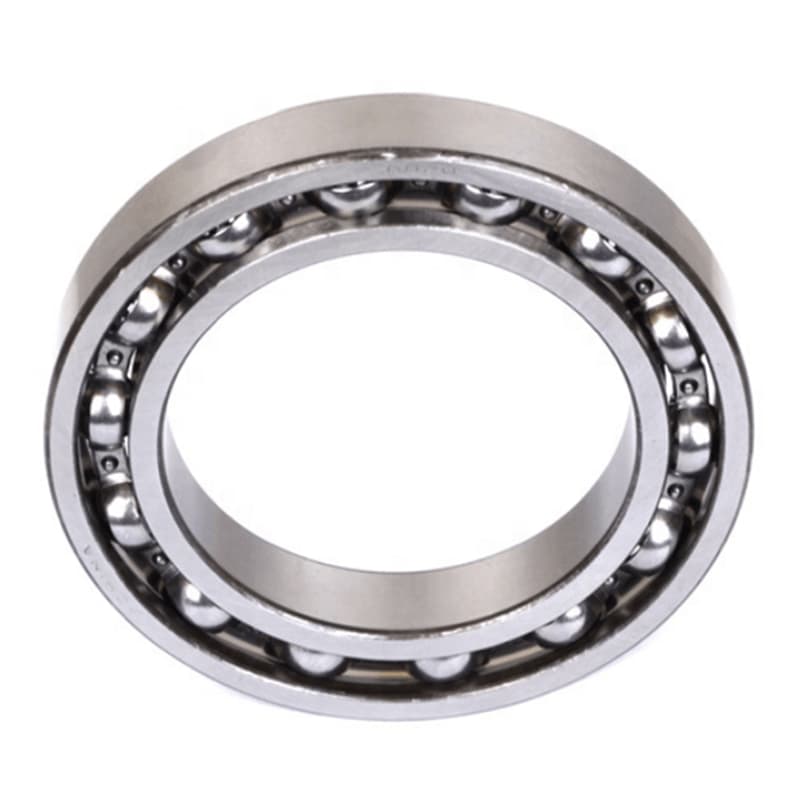
A Turkish customer called me two years ago. He makes large cooling fans for greenhouses. He ordered C4 deep groove ball bearings for a high‑temperature application. The fans ran at 110°C. The bearings were noisy from day one. After three months, the noise got worse. He thought C4 was not enough. He wanted C5.
I told him to stop. Let me explain why C4 was already too much for his case.
How Clearance Changes with Temperature
Every material expands when heated. Steel expands at 0.0115 mm per meter per degree Celsius. That sounds small. But for a bearing with a 60 mm bore, a temperature rise of 50°C increases the inner ring diameter by about 0.035 mm. That is enough to remove all CN clearance.
Here is the math in simple terms:
- Starting clearance (for a 6206 bearing): CN = 8–13 µm, C3 = 13–20 µm, C4 = 20–28 µm.
- Interference fit from shaft: takes away 5–10 µm.
- Thermal expansion: takes away about 0.0006 mm per degree C per 10 mm of bore.
For a 50 mm bore bearing at 100°C (50°C above room temperature), thermal expansion removes about 0.015 mm (15 µm). Add the fit interference of 8 µm. Total reduction is 23 µm.
If you start with CN (8–13 µm), you end with negative clearance. Bearing locks up.
If you start with C3 (13–20 µm), you end with near zero clearance. Safe.
If you start with C4 (20–28 µm), you end with 3–5 µm remaining. That is fine, but the bearing will be noisier at startup.
So why did my Turkish customer have noise problems with C4? Because his fan started at room temperature. At 25°C, the C4 bearing had 25 µm clearance. That is a lot. The balls rattled inside the raceway for the first 30 minutes until the fan heated up. That constant rattling caused micro‑denting on the raceways. After three months, the damage was permanent.
The Right Rule for Fan Bearings
Here is the simple rule I give all my customers:
- Fan operating temperature below 80°C: Use CN clearance. Quiet and safe.
- Fan operating temperature 80–110°C: Use C3 clearance. Best balance of startup noise and hot running safety.
- Fan operating temperature 110–130°C: Use C3 or C4 depending on shaft fit. If shaft fit is loose (less than 5 µm interference), use C3. If shaft fit is tight (8–12 µm interference), use C4.
- Fan operating temperature above 130°C: Use C4 as a minimum. But also consider special heat-stabilized bearings (S0 or S1 grade).
I also want to warn you about one mistake. Do not use C4 for fans that start and stop often. Every start will be noisy. The balls will impact the raceway. Over time, the noise will get worse, not better. For frequent start-stop fans, use C3 and make sure the shaft fit is not too tight.
At FYTZ, we can supply deep groove ball bearings in CN, C3, C4, and even C2 for special low-noise fans. Just tell me your maximum operating temperature and your shaft material. I will recommend the exact clearance. We do this for our customers in Russia and South Africa all the time.
How to Choose the Right Grease for Fan Bearings Running 24/7?
You buy the best bearing. You mount it correctly. Three months later, it sounds like a coffee grinder. The grease is almost always the hidden killer.
For fan bearings running 24/7, choose a polyurea or lithium-complex grease with ISO VG 150–220 base oil, NLGI grade 2 consistency, and a minimum operating temperature range of –20°C to +150°C. Fill volume should be 25–35% of free space.
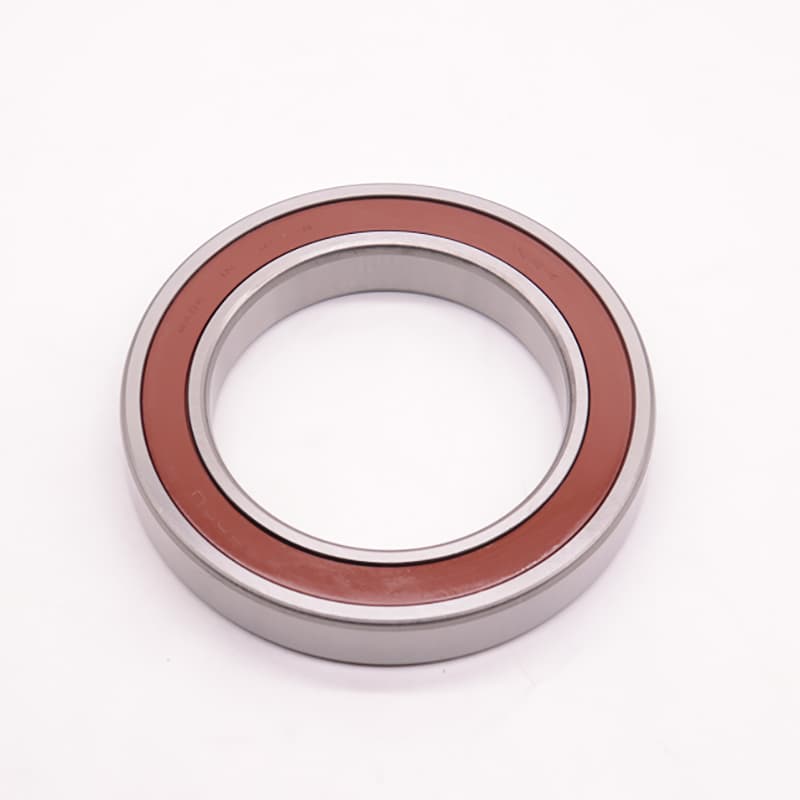
I have a customer in Bangladesh. He imports bearings for textile mill fans. Those fans run 24 hours a day, 6 days a week. The mill floor temperature is 45°C. The bearing housing gets to 85°C. He used to buy bearings with standard lithium grease. The fans needed regreasing every two months. His customers got tired of the maintenance.
He came to me. I asked him one question: “What grease do your current bearings use?” He did not know. Most buyers do not know. And that is the problem.
Why Standard Grease Fails in 24/7 Fans
Standard lithium grease has a dropping point around 180°C. That sounds high. But the real limit is the oil separation rate. At 80°C, a lithium grease loses 30% of its oil in 1000 hours. After 2000 hours, it is mostly thickener. The bearing runs dry.
Polyurea grease is different. It has a dropping point above 230°C. More importantly, its oil separation at 80°C is only 10% after 2000 hours. That means more oil stays in the grease for longer.
Here is a comparison table based on our lab tests at FYTZ:
| Grease Type | Oil separation (80°C, 1000h) | Max continuous temp | Relubrication interval (fan at 85°C) | Cost factor |
|---|---|---|---|---|
| Lithium | 28% | 70°C | 1,500 hours | 1.0x |
| Lithium‑complex | 18% | 120°C | 3,000 hours | 1.3x |
| Polyurea | 10% | 150°C | 8,000+ hours | 1.6x |
| Calcium sulfonate | 15% | 130°C | 4,000 hours | 1.5x |
For 24/7 fans, polyurea gives you the longest life. I have sent polyurea-greased deep groove ball bearings to Indonesia. Some of them ran for 18 months without regreasing. The fan manufacturer now specifies our bearing as the standard.
Base Oil Viscosity for Fan Bearings
The base oil does the actual lubricating. For fan bearings, the speed is usually moderate (1000–3000 RPM). The load is light. So you do not need a very thick oil. But the temperature is high. Thick oil stays in place better at high temperatures.
My rule for fan bearings:
- Fan speed under 1500 RPM: Use ISO VG 220 base oil.
- Fan speed 1500–3000 RPM: Use ISO VG 150 base oil.
- Fan speed above 3000 RPM: Use ISO VG 100 base oil. But at high speed, use C3 clearance.
Do not use ISO VG 320 or higher for small fans. The grease will be too stiff. The bearing will churn the grease and overheat.
Fill Volume – Less Is More
I cannot stress this enough. Most fan bearings come over-greased from the factory. The factory wants to avoid customer complaints about “dry bearings.” But too much grease creates heat and noise.
The correct fill for a sealed fan bearing (2RS) is 25–35% of the internal free volume. For a 6204 bearing, that is about 0.15–0.21 grams of grease. For a 6308 bearing, about 0.6–0.8 grams.
How do you know if your bearing has the right fill? Spin it by hand. A correctly greased bearing turns smoothly with slight resistance. An over-greased bearing feels stiff and “thick.” An under-greased bearing spins too freely and feels dry.
One more thing. For fans that run in very dusty environments (like cement plants or grain mills), use a thicker grease (NLGI grade 2.5) to create a better seal at the lips. But expect slightly higher starting torque.
At FYTZ, we can customize the grease type, viscosity, and fill volume for your fan application. Just send me your fan specifications. I will match the grease to your duty cycle. We have done this for customers in Egypt and Vietnam with great success.
Can P6 Precision Bearings Reduce Vibration and Noise in Air Circulation Equipment?
Your air circulator hums. The customer thinks it is broken. You lose the sale. A cheap bearing just cost you a lot of money.
Yes, P6 precision bearings reduce vibration and noise in air circulation equipment by 30–50% compared to P0 bearings. They have tighter raceway roundness and lower surface roughness. This creates smoother rolling and less air-borne noise.
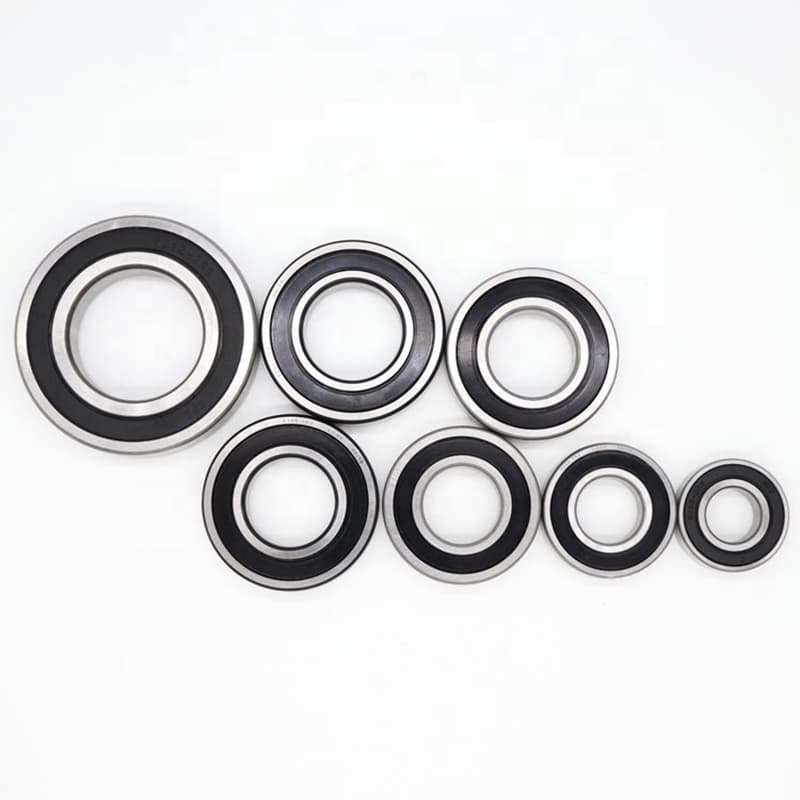
A distributor from Pakistan called me last year. He supplies bearings for ceiling fans and air circulators. His customers started complaining about a humming noise. The fans were not loud. But the hum was annoying. It was not a grinding sound. It was a low-frequency vibration that made the whole fan blade resonate.
He tried different greases. He tried different clearances. Nothing fixed the hum. Then I suggested P6 precision bearings instead of his usual P0.
What P6 Changes Inside the Bearing
P6 is not just a number on a box. It means the bearing has tighter tolerances on several dimensions. But for noise, the most important changes are:
- Bore and OD roundness: P6 allows 2 µm maximum roundness error. P0 allows 5 µm. A rounder raceway means the balls do not bounce up and down.
- Raceway roughness: P6 typically requires a surface finish of Ra 0.1–0.2 µm. P0 allows Ra 0.3–0.5 µm. Smoother surface means less friction and less vibration.
- Radial runout: P6 limits assembled bearing runout to 8 µm for a 6204 size. P0 allows 15 µm. Lower runout means the inner ring does not wobble.
When you add up these three improvements, the vibration amplitude drops significantly. On our S0910 noise tester, a P0 6204 bearing with C3 clearance and lithium grease gives about 52 dB at 1800 RPM. The same bearing in P6 gives 47 dB. That 5 dB drop makes the fan feel “smooth” instead of “buzzy.”
Is P6 Worth the Extra Cost?
For industrial cooling fans, often no. The fan is loud anyway from the blades. A few decibels of bearing noise do not matter.
But for air circulation equipment used in offices, hospitals, and hotels, yes. The customer expects silence. P6 bearings add about 15–20% to the bearing cost. But the fan manufacturer can sell the fan at a 30% higher price because it is “quiet.” I have seen this happen in the Indian market.
Here is my cost-benefit table:
| Fan type | Recommended precision | Noise sensitivity | Payback of P6 upgrade |
|---|---|---|---|
| Industrial exhaust fan | P0 | Low | Not worth it |
| Rooftop cooling fan | P0 or P6 | Medium | Only for premium models |
| Ceiling fan (home) | P6 | High | Yes – strong payback |
| Air circulator (office) | P6 | High | Yes – customers pay more |
| Hospital HVAC fan | P5 | Very high | Yes – mandatory for specs |
| Data center cooling fan | P6 or P5 | Very high | Yes – reliability matters |
One Warning About P6 Bearings
P6 bearings are more sensitive to mounting errors. Because the clearances are tighter, a cocked housing or a bent shaft will cause more localized stress. You need better housing bore tolerance (H7 or better) and a cleaner assembly process.
I had a Russian customer who switched to P6 but kept using the same rough housing bores. The bearings were no quieter. They actually failed faster. The problem was not the bearing. It was the housing. So if you move to P6, also check your housing roundness and alignment.
At FYTZ, we stock both P0 and P6 deep groove ball bearings for fans. We can also supply P5 for very demanding applications. Tell me your target noise level. I will recommend the most cost-effective precision class. That is how we help our customers in Brazil and South Africa stay competitive.
Conclusion
For industrial cooling fans, pick C3 clearance, polyurea grease, 2RS seals, and P6 precision when noise matters. That combination gives long life and quiet operation.