
You run a machine at high speed. The bearing gets hot. Then it starts to vibrate. What is wrong?
The cage design controls how balls move inside the bearing. A bad cage lets balls collide and skid. A good cage keeps balls evenly spaced and stable. At high speed, cage design is the difference between smooth running and early failure.
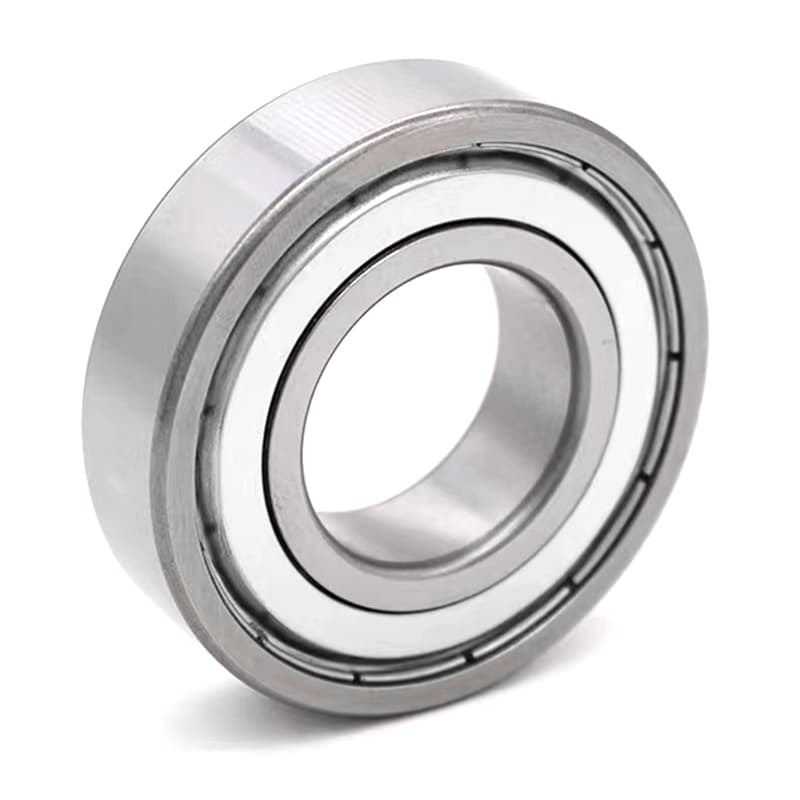
I run a bearing factory in China. For years, I have seen customers blame the bearing material when things go wrong. But many times, the real problem is the cage. You cannot see it from the outside. So people forget about it.
But at high speed, the cage becomes the most important part. Let me show you why.
What Happens Inside a Bearing When Speed Goes Up?
You run a bearing at 10,000 RPM. The inner ring spins fast. The balls roll around. But something unexpected happens inside. What is it? (https://www.skf.com/binaries/pub12/Images/0901d1968078cccc-TPI_13_EN_tcm_12-222608.pdf)
At high speed, centrifugal force pushes balls outward. The balls do not stay in their ideal rolling path. They try to climb up the raceway walls. This creates skidding and heat. The cage must guide the balls and stop them from hitting each other. Without a good cage, the bearing destroys itself from the inside. (https://www.nsk.com/content/dam/nsk/common/technology/pdf/en/BearingDamage.pdf)
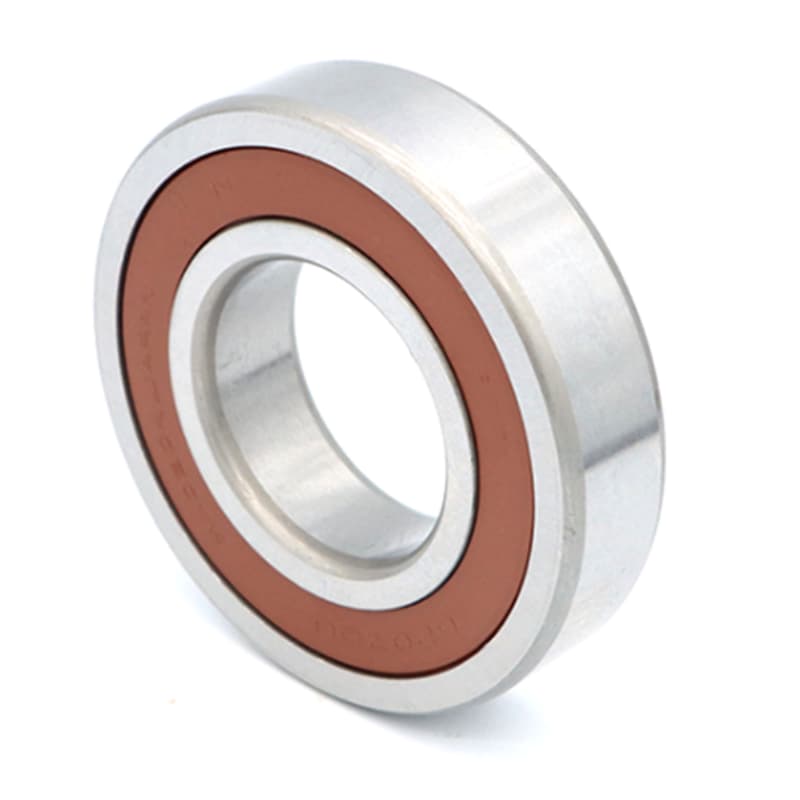
Breaking down the high-speed problem into simple parts
Let me explain what really happens inside your bearing. Most people think bearings just spin smoothly. But at high speed, many forces fight against each other.
Centrifugal force changes everything. When the inner ring spins, it throws the balls outward. The balls push hard against the outer ring raceway. This is normal. But at high speed, the force gets very strong. The balls try to move faster than the cage. They want to run ahead. The cage has to hold them back.
Skidding starts from speed differences. The inner ring moves fastest. The outer ring is still. The balls are in between. At low speed, everything rolls nicely. At high speed, the balls start sliding instead of rolling. This sliding creates friction. Friction creates heat. Heat makes the grease thin. Thin grease causes more sliding. This is a bad cycle (https://www.skf.com/binaries/pub12/Images/0901d1968078cccc-TPI_13_EN_tcm_12-222608.pdf).
Ball-to-ball contact is a real danger. Without a good cage, the balls would bunch together. They would hit each other. Metal hits metal. This creates wear particles. Those particles act like sand inside the bearing. The damage spreads fast (https://www.nsk.com/content/dam/nsk/common/technology/pdf/en/BearingDamage.pdf).
Heat is the final killer. Every bad thing I just described makes heat. High heat does three bad things. First, it breaks down the grease. Second, it expands the steel. This changes internal clearances. Third, it softens some cage materials. Nylon cages get soft at high heat. Then they lose their strength.
Here is a table that shows what changes as speed goes up:
| Speed Range | Ball Behavior | Cage Stress Level | Main Risk |
|---|---|---|---|
| Low (under 2,000 RPM) | Balls roll smoothly | Very low | No real risk |
| Medium (2,000 to 5,000 RPM) | Some centrifugal push | Low to medium | Minor skidding starts |
| High (5,000 to 10,000 RPM) | Balls push outward hard | Medium to high | Skidding + heat buildup |
| Very high (over 10,000 RPM) | Balls try to climb raceway | Very high | Cage fatigue + ball collision |
(https://www.skf.com/binaries/pub12/Images/0901d1968078cccc-TPI_13_EN_tcm_12-222608.pdf)
I remember a customer from Turkey. He makes high-speed spindles for woodworking machines. His spindles run at 18,000 RPM. He bought cheap bearings with pressed steel cages. The bearings lasted only three months. Then they got noisy and hot (https://www.nsk.com/content/dam/nsk/common/technology/pdf/en/BearingDamage.pdf).
He called me for help. I asked him to send me a failed bearing. When I opened it, the steel cage was cracked. The balls had deep scratches. The grease was black from heat.
We switched him to bearings with machined brass cages. The brass cage is stronger. It handles centrifugal force better. It also runs cooler because brass conducts heat away. His bearing life went from three months to over two years. That is a huge difference.
So here is my first point. Speed changes everything inside a bearing. And the cage is the part that handles these changes. Pick the wrong cage, and your bearing will fail fast.
Cage Materials: How Nylon, Steel, and Brass Change Performance?
You see three bearings that look the same. But one has a nylon cage. One has steel. One has brass. Which one runs best at high speed?
Nylon cages are light and good for very high speed. Steel cages are strong but heavy. Brass cages are the best balance for most high-speed applications. Nylon works well up to 120°C. Brass handles higher heat. Steel is for low speed and heavy loads.
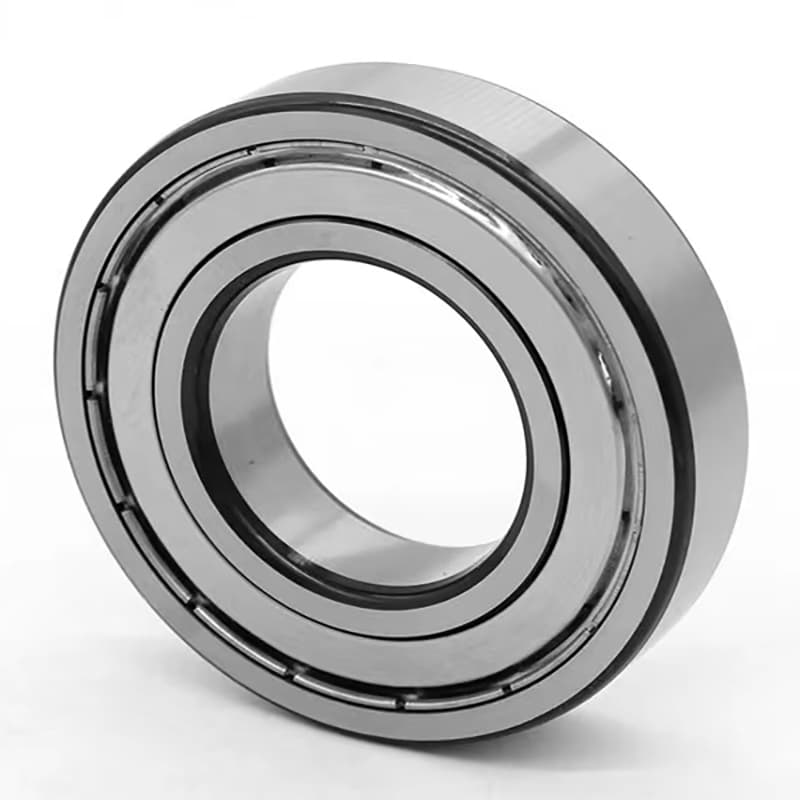
How each material behaves when speed goes up?
Let me walk you through the three main cage materials. Each one has a different job. None of them is best for every situation. You need to match the material to your speed and load (https://www.skf.com/us/products/rolling-bearings/principles/cage-design).
Nylon cages (also called polyamide or PA66). These are very light. Light weight means less centrifugal force. The cage does not push outward as hard. This is good for speeds over 10,000 RPM. Nylon also has some flexibility. It can absorb small shocks without breaking. But nylon has limits. It gets soft above 120°C. It does not like very cold temperatures either. And some chemicals and water can attack it. Nylon cages are common in electric motors and high-speed fans (https://www.nsk.com/common/technology/pdf/en/BearingCage.pdf).
Steel cages (pressed or machined). These are strong and cheap. Pressed steel cages are made from thin steel sheets. They work fine for normal speeds under 5,000 RPM. But at higher speeds, the steel weight becomes a problem. Heavy cage means high centrifugal force. The cage pushes outward. It rubs against the raceway. This creates heat and wear. Steel also has no flexibility. When the balls push hard, the steel does not bend. It transfers all the force directly. This can cause noise. Machined steel cages are better than pressed ones. But they are still heavy.
Brass cages (machined). Brass is heavier than nylon but lighter than steel. It has good strength at high temperatures. Brass can handle up to 200°C without losing strength. It also conducts heat well. This means the cage pulls heat away from the balls. That keeps the bearing cooler. Brass has some natural lubricity. It slides against the balls more smoothly than steel does. The big downside is cost. Brass cages are much more expensive than nylon or pressed steel.
Let me show you a clear comparison:
| Cage Material | Weight | Max Temperature | Speed Capability | Cost | Best Application |
|---|---|---|---|---|---|
| Nylon (PA66) | Very light | 120°C | Very high (over 15,000 RPM) | Low | Electric motors, fans, high speed |
| Pressed steel | Medium | 200°C | Medium (under 6,000 RPM) | Very low | General industrial, low speed |
| Machined steel | Heavy | 200°C | Medium-high (up to 10,000 RPM) | Medium | Heavy loads, moderate speed |
| Machined brass | Medium-heavy | 200°C+ | High (up to 15,000 RPM) | High | High speed + high load + high heat |
(https://www.skf.com/us/products/rolling-bearings/principles/cage-design)
I have a story from Russia. A customer makes gearboxes for heavy trucks. His bearings run at only 4,000 RPM. But the loads are very high. He tried nylon cages. The nylon cracked under the heavy load. Nylon is light but not strong enough for high forces (https://www.nsk.com/common/technology/pdf/en/BearingCage.pdf).
Then he tried steel cages. The steel worked fine. But the bearings made noise. His customers complained. We switched him to brass cages. The brass handled the load. It also reduced noise because brass has better damping properties. His problem was solved.
Here is another example from Egypt. A customer makes high-speed centrifuges. The speed is 20,000 RPM. The temperature stays under 80°C. He needed the lightest possible cage. Nylon was the clear choice. Steel would be too heavy. Brass would also be too heavy. The nylon cage works perfectly in his application.
So here is my advice. For very high speed and low load, pick nylon. For high speed and high load or high heat, pick brass. For low speed and heavy load, pick steel. And if you are not sure, tell me your exact speed and temperature. I can help you pick the right one.
Ball Centering and Pocket Clearance: The Hidden Cause of Vibration?
Your bearing runs smooth at low speed. But at high speed, it vibrates like crazy. You check everything. Nothing seems wrong. What is the real problem?
Pocket clearance is the gap between the ball and the cage pocket. Too much clearance lets balls move around. This creates vibration at high speed. Too little clearance causes friction and heat. The right clearance keeps balls centered. A centered ball runs smooth. A loose ball shakes the whole machine.
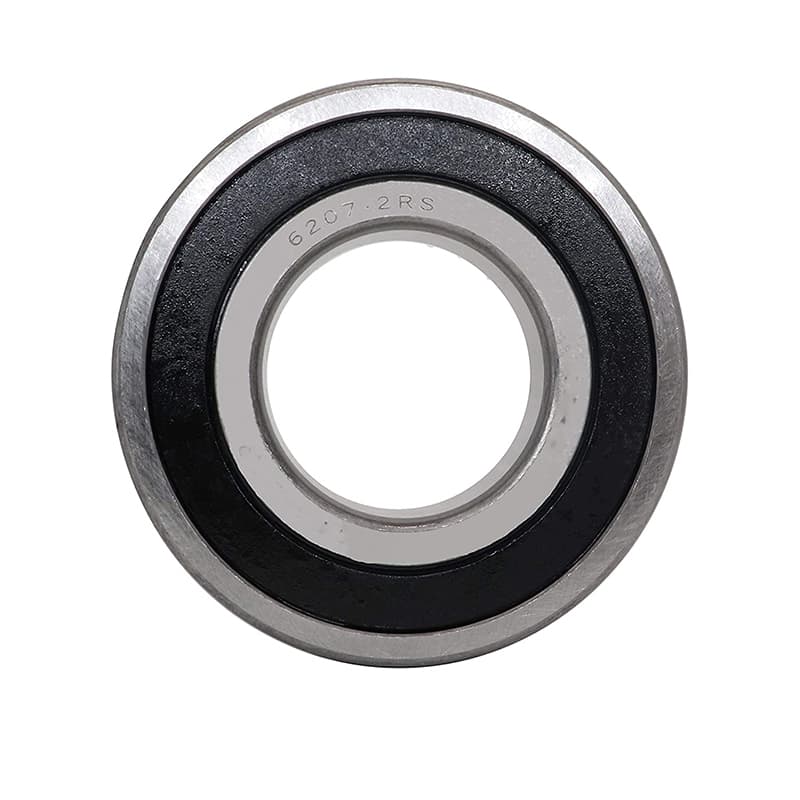
Why a few microns of gap change everything?
Let me explain this in simple terms. Every bearing cage has pockets. Each pocket holds one ball. The pocket is slightly bigger than the ball. That extra space is the pocket clearance.
At low speed, this clearance does not matter much. The ball stays in the middle of the pocket. The forces are small. The oil film holds everything in place.
But at high speed, things change. The ball gets thrown outward by centrifugal force. It hits the side of the pocket. Then it bounces back. Then it hits the other side. This bouncing happens thousands of times per second. You feel this as vibration. You hear this as noise (https://www.skf.com/binaries/pub12/Images/0901d1968078cccc-TPI_13_EN_tcm_12-222608.pdf).
Too much clearance causes ball dancing. When the pocket is too big, the ball has room to move. It never stays still. It bounces between the pocket walls. The cage also moves around. This creates impact forces. These impacts wear down the cage material. They also make the bearing hot. In bad cases, the cage breaks (https://www.nsk.com/common/technology/pdf/en/BearingCage.pdf).
Too little clearance causes ball jamming. When the pocket is too tight, the ball cannot move freely. The cage pinches the ball. This creates friction. Friction makes heat. Heat expands the ball and the cage. The expansion makes the jamming worse. Soon the bearing locks up.
The right clearance is a careful balance. Good bearing makers control pocket clearance to within a few microns. They also control the pocket shape. A well-designed pocket is not perfectly round. It has special curves that guide the ball to the center. This is called pocket geometry optimization.
Let me show you what different clearances do:
| Pocket Clearance | Ball Movement | Vibration Level | Heat Generation | Risk |
|---|---|---|---|---|
| Too small (under 0.05 mm) | Ball cannot move freely | Low at first, then high | Very high | Jamming and seizure |
| Correct (0.08 to 0.15 mm) | Ball stays centered | Low | Low | No risk |
| Too large (over 0.20 mm) | Ball bounces around | High | Medium | Noise and cage wear |
| Very large (over 0.30 mm) | Ball hits pocket hard | Very high | High | Cage breakage |
(https://www.skf.com/binaries/pub12/Images/0901d1968078cccc-TPI_13_EN_tcm_12-222608.pdf)
I learned this lesson from a customer in India. He makes high-speed textile spindles. The spindles run at 25,000 RPM. He bought bearings from a cheap supplier. The bearings vibrated badly. He thought the issue was the balls or the raceways.
He sent me samples. I cut open the bearings and measured the pocket clearance. It was 0.25 mm. That is too big for high speed. At 25,000 RPM, the balls were dancing inside the pockets. That was the vibration source (https://www.nsk.com/common/technology/pdf/en/BearingCage.pdf).
We sent him bearings with correct pocket clearance of 0.10 mm. The vibration stopped. He still buys from us today.
Another story from Brazil. A customer made high-speed compressors. He used bearings with very tight pocket clearance. He thought tight was better. At normal speed, the bearings worked fine. But at full speed, they got hot and locked up.
The tight clearance did not leave room for thermal expansion. When the compressor warmed up, the steel expanded. The pockets got even tighter. The balls jammed. We switched him to bearings with standard clearance. The problem went away.
So here is my point. Pocket clearance is not a simple number. It depends on your speed, temperature, and load. For high speed, you want enough clearance for free movement. But not so much that the balls bounce. Good bearing suppliers measure and control this. Cheap ones do not.
Cage Guidance Types: Race-Guided vs. Ball-Guided vs. Ring-Guided?
You look at two bearings. Both have brass cages. But one runs smooth. One runs rough. The difference is not the material. It is how the cage stays in place. What does that mean? (https://www.skf.com/us/products/rolling-bearings/principles/cage-design)
Cage guidance controls where the cage sits inside the bearing. Race-guided cages slide on the outer ring raceway. Ball-guided cages are centered by the balls themselves. Ring-guided cages slide on the inner ring shoulder. For high speed, ball-guided cages work best because they create less friction. (https://www.nsk.com/common/technology/pdf/en/BearingCage.pdf)
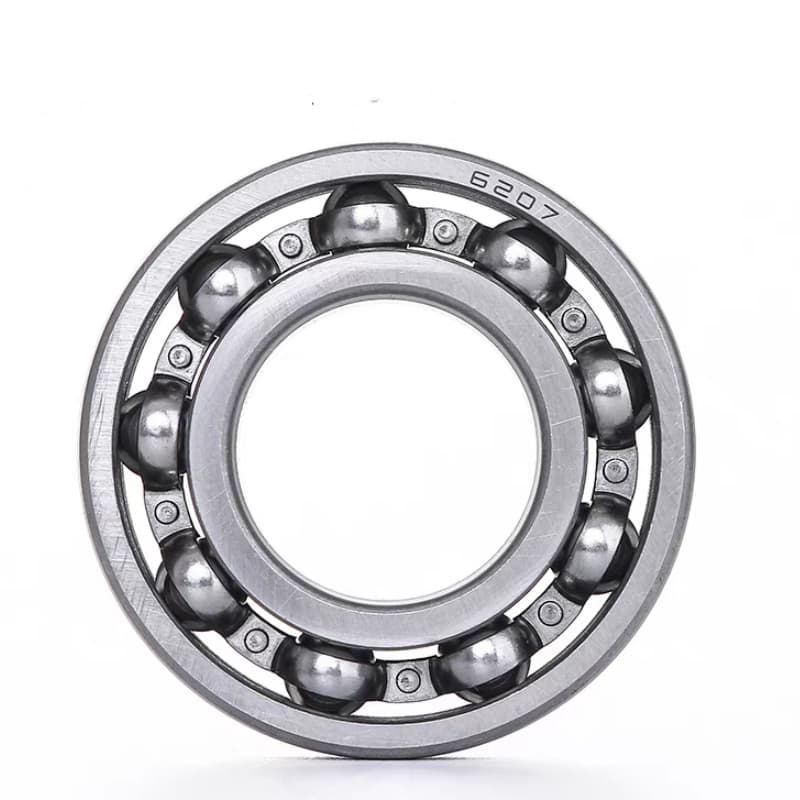
How guidance type changes stability and heat?
Let me explain guidance in simple words. The cage needs to stay in the right position. It cannot float around inside the bearing. Something must guide it. That something can be the outer ring, the inner ring, or the balls themselves (https://www.skf.com/us/products/rolling-bearings/principles/cage-design).
Race-guided cages are the most common type. The outside diameter of the cage touches the outer ring raceway. The raceway guides the cage. This works well at low and medium speeds. But at high speed, the sliding friction creates heat. The outer ring raceway is also where the balls run. If the cage slides on the same surface, it can disturb the lubricant film. Race-guided cages are good for general use. But not the best for very high speed (https://www.nsk.com/common/technology/pdf/en/BearingCage.pdf).
Ball-guided cages are different. The cage does not touch the raceways. Instead, the cage pockets guide on the balls themselves. The balls keep the cage centered. There is no sliding contact with the rings. This means much less friction. Less friction means less heat. Less heat means higher speed possible. The downside is that ball-guided cages need very precise pocket design. They are more expensive to make.
Ring-guided cages slide on the inner ring shoulder or outer ring shoulder. This is less common for deep groove ball bearings. It is more common for larger bearings. Ring guidance can work well. But the sliding surfaces can wear over time.
Here is a comparison table:
| Guidance Type | Sliding Surface | Friction Level | Speed Capability | Cost |
|---|---|---|---|---|
| Race-guided | Cage OD on outer raceway | Medium | Medium (up to 8,000 RPM) | Low |
| Ball-guided | Cage pocket on balls | Very low | Very high (over 15,000 RPM) | High |
| Ring-guided (inner) | Cage ID on inner ring | Medium | Medium-high | Medium |
| Ring-guided (outer) | Cage OD on outer ring shoulder | Medium | Medium | Medium |
(https://www.skf.com/us/products/rolling-bearings/principles/cage-design)
I have a good story from Vietnam. A customer makes high-speed dental drill bearings. These bearings run at 40,000 RPM. That is extremely fast. He used race-guided cages at first. The friction was too high. The bearings got hot in minutes.
He asked me for a solution. I recommended ball-guided cages with nylon material. The ball-guided design eliminated the sliding friction on the raceway. The nylon was light. The combination worked perfectly. His dental drills now run cool and smooth (https://www.skf.com/us/products/rolling-bearings/principles/cage-design).
Another example from Pakistan. A customer makes high-speed fan bearings for computer servers. The fans run at 12,000 RPM for years. He used race-guided steel cages. The bearings made a humming noise. The noise was from the cage sliding on the outer raceway (https://www.nsk.com/common/technology/pdf/en/BearingCage.pdf).
We switched him to ball-guided nylon cages. The noise dropped by 80%. His customers liked the quiet servers. He pays a little more for the ball-guided design. But his product is better because of it.
So here is my final advice on guidance. For speeds under 6,000 RPM, race-guided is fine. For speeds over 10,000 RPM, switch to ball-guided. The extra cost is worth it. You get less heat, less noise, and longer life.
And if you run a very unusual application, talk to me. I have helped customers with speeds from 500 RPM to 50,000 RPM. I know what works and what does not. The right cage design is out there. You just need to ask for it.
Conclusion
Cage design controls high speed stability. Match material, clearance, and guidance type to your speed for long bearing life.