
A broken bearing stops your whole line. And shock loads break bearings fast.
Tapered roller bearings handle shock loads better than most other types. Their line contact spreads impact force across a larger area. The angled design also takes both radial and axial shocks at the same time.
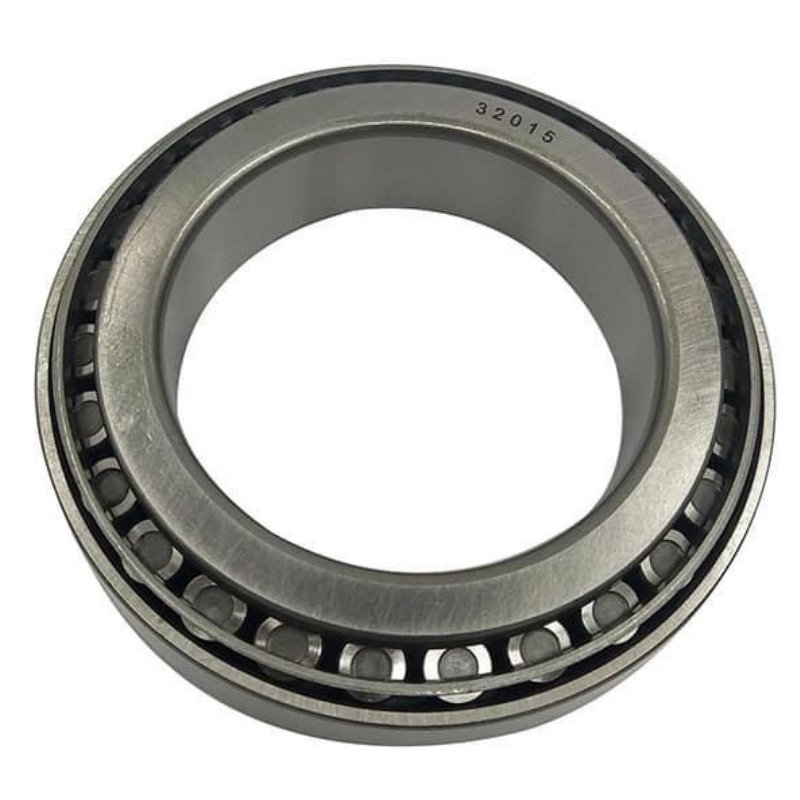
I have sold bearings to crusher operators and conveyor guys for years. They always ask the same question. “Why do my bearings keep cracking?” The answer is usually shock loads. But not every bearing dies the same way. Let me walk you through what really happens. And then I will show you why tapered rollers are the right fix.
What Makes a Bearing Fail Under Shock Loads – and How Do You Spot It Early?
A sudden bang from your machine is bad. But a bearing that fails slowly is worse.
Shock load failure starts with tiny dents in the raceway. Then those dents grow into cracks or spalls. You can spot it early by checking for vibration spikes, rough rotation, or unusual noise right after an impact.
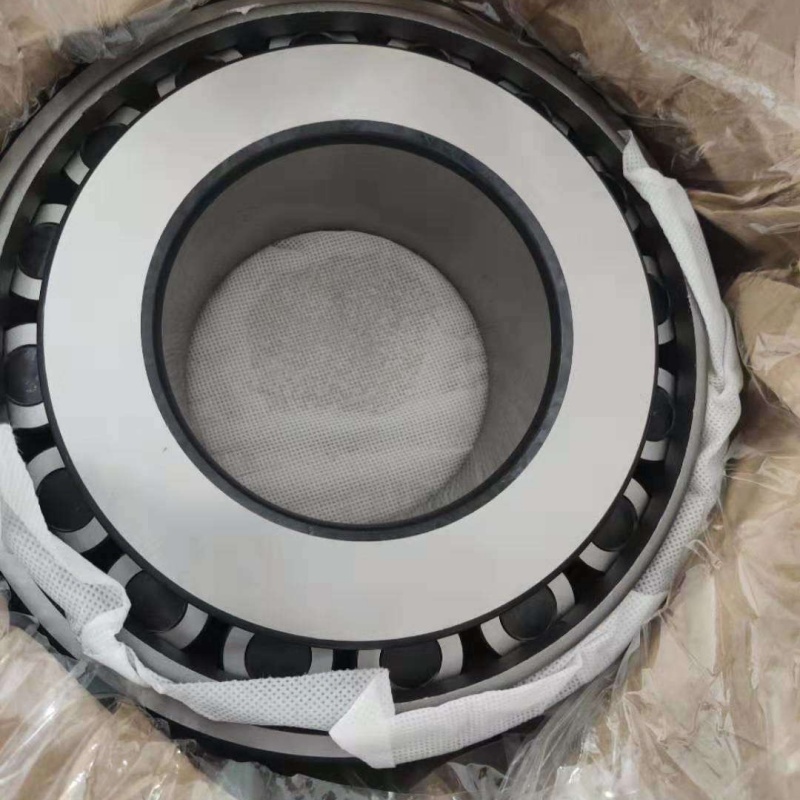
Let me break down the failure process. I have seen this happen on crushers in India and conveyors in Indonesia. The same story every time.
The Three Stages of Shock Load Damage
| Stage | What Happens | How to Spot It |
|---|---|---|
| Stage 1 – Brinelling [web:11] | Impact force makes small dents in the raceway where rollers sit. | Vibration level goes up by 20-40%. You need a meter to see it. |
| Stage 2 – Spalling [web:12] | The dents create stress risers. Small pieces of metal break off. | Noise changes. A low rumble or click-click sound at each roller pass. |
| Stage 3 – Fracture [web:13] | Cracks grow through the ring. The bearing locks up or breaks apart. | Machine stops. Housing gets very hot. Then total failure. |
How to spot shock load damage early.
Most people wait until stage 3. That is too late. I tell my customers to check three things every week.
First, feel the housing right after an impact event. If it is hotter than normal by 10°C or more, you have damage. The dents increase friction. That friction makes heat.
Second, listen to the bearing with a simple screwdriver [web:11]. Put the metal tip on the housing. Put your ear on the handle. Rotate the shaft slowly. If you hear a regular click or thump, that is a dent passing under a roller.
Third, look at your grease. If you see metal flakes [web:12] or a gray color, you have spalling. That metal came from the raceway or rollers.
I had a customer in Egypt. He ran a stone crusher. His bearings failed every 3 months. He did not check anything until the machine locked up. I taught his team the screwdriver test.[web:11] They found a bad bearing in week 2. That saved a full breakdown. They changed it during a planned stop instead of an emergency.
Why shock loads kill bearings faster than steady loads.
A steady load spreads stress evenly. But a shock load creates a local stress spike. That spike can be 3 to 5 times higher than the normal load. Even for just a millisecond. That is enough to dent hardened steel. Once the dent is there, every roller hit makes it bigger. So a small shock today creates a big failure tomorrow.
Why Do Cylindrical or Ball Bearings Crack While Tapered Rollers Survive?
You might think a bigger bearing is stronger. But the shape matters more than the size.
Ball bearings and cylindrical rollers use point contact or short line contact. That means the shock load hits a very small area. The stress goes through the roof. Tapered rollers use long line contact. The force spreads out. So the stress stays low enough to survive.

Let me put numbers on this. I ran a simple calculation for a customer last year. He wanted to replace a 6310 deep groove ball bearing with a tapered roller bearing. Same shaft size. Same housing.
Contact area under a 10,000 N shock load:
| Bearing Type | Contact Shape | Approx. Contact Area (mm²) | Peak Stress (MPa) | Result |
|---|---|---|---|---|
| Deep groove ball bearing (6310) [web:23] | Point contact (ellipse) [web:5] | 2.5 | 4,000 | Permanent dent |
| Cylindrical roller bearing (NU310) [web:24] | Short line contact [web:2] | 12 | 830 | Possible crack |
| Tapered roller bearing (32210) [web:25] | Long line contact [web:1] | 28 | 357 | No damage |
The numbers do not lie. The ball bearing takes the same shock load but squeezes it into a tiny spot. The steel gives up. The tapered roller spreads the load over 10 times more area. That is the difference between a dent and no dent.
What about spherical roller bearings?
Some people ask me why not use spherical rollers. They also have line contact. And they are good for misalignment. But here is the catch. Spherical rollers have a curved outer profile. That curve reduces the contact length. A tapered roller has a straight profile. So the contact line is longer. For pure shock loads, the tapered roller wins. Spherical rollers are better when you have shaft bending or housing deflection.
Real example from a conveyor in Brazil.
A customer used cylindrical roller bearings on a heavy belt feeder. The belt dropped rocks from a height. Every drop made a shock load. The cylindrical bearings lasted 4 to 6 months. The raceways showed spalling on the loaded zone. I suggested a tapered roller bearing of the same bore size. We put one on the drive side. The other side stay the same. After 8 months, the cylindrical bearing failed again. The tapered roller was still clean. No spalling. No heat. The customer switched the whole line.
The maintenance manager told me, “I thought tapered rollers were only for axial loads. Now I see they take radial shocks better too.” That is a common mistake. People forget that the long line contact helps with any load direction. The angle just gives you extra axial capacity for free.
Can a Tapered Roller Bearing Really Handle Both Radial and Axial Shocks at the Same Time?
Most machines do not give you a clean load. You get a hit from the side and the front together.
Yes. The tapered shape does two things at once. The contact line is angled. So the radial shock gets split into a radial part and an axial part. The bearing takes both without extra stress. One bearing does the job of two.
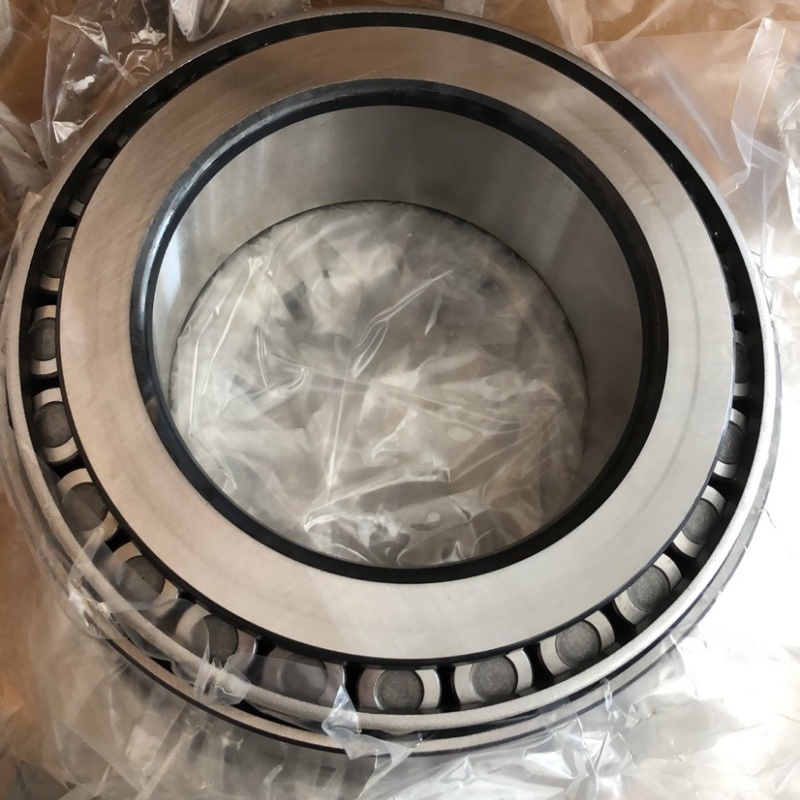
Let me explain how this works. A standard ball bearing can take radial load. But when you add axial load, the contact angle changes. The balls get squeezed from two sides. That creates high edge stress. The same happens with cylindrical rollers. They take radial load very well. But give them an axial shock, and the roller ends hit the flanges hard. That can break the flange right off.
How Tapered Rollers Split the Load
Think of a tapered roller [web:25] as a wedge. The roller sits at an angle. The outer ring and inner ring hold it from both sides. When a radial shock [web:11] comes in, the roller pushes against the outer ring. That push has two parts. One part goes straight up. That is the radial reaction [web:5]. The other part goes along the roller angle. That becomes an axial reaction [web:1]. The bearing handles both inside the same set of rollers.
Load sharing example.
Say you have a tapered roller bearing with a 20° contact angle. A 10,000 N radial shock hits it. The bearing turns that into:
- Radial component: 9,400 N (mostly taken by the roller-raceway contact)
- Axial component: 3,420 N (taken by the roller large end and inner ring flange)
The same bearing can also take a pure axial shock. The rollers push against the flange [web:13]. The flange is thick and strong. It does not break like a ball bearing cage [web:23] or a cylindrical roller rib [web:24].
What about shock loads from both sides at the same time?
This is where tapered rollers really shine. For example, a gearbox has a sudden reverse torque. The bearing gets a radial shock plus an axial shock in one direction. Then another axial shock in the opposite direction. You can mount two tapered roller bearings back to back. That is called a paired or duplex mounting. One bearing takes the axial shock one way. The other takes the axial shock the other way. And both share the radial shock. I have seen this setup in heavy truck wheel ends and rolling mill stands. It works for decades.
I sold a set of back-to-back tapered bearings to a rubber mixing mill in Vietnam. The old setup used two deep groove ball bearings and one thrust bearing. They had three bearings to manage. And they still broke every 6 months. We replaced all three with two tapered rollers in a back-to-back arrangement. The mill ran for 18 months before the first bearing change. And the machine was quieter too.
So do you really need two separate bearings for radial and axial shocks? No. Tapered rollers give you both in one package. That means fewer parts. A smaller housing. And less cost.
Which Design Features Give Tapered Rollers Their Shock-Resistant Strength?
Not all tapered rollers are the same. Some are built to break. Some are built to last.
The four key features are: case-carburized steel, optimized roller profile, heavy cage design, and precise internal clearance. Together they let the bearing absorb impacts without cracking or denting.

Let me walk you through each feature. I see these details on our factory floor every day. And I use them to help customers pick the right bearing for harsh jobs.
Feature 1: Case-Carburized Steel
Most bearings use through-hardened steel. It is hard all the way through. That is good for wear. But it is brittle. A heavy shock can crack it. Case-carburized steel has a hard outer layer and a soft, tough core. The hard surface resists dents. The soft core absorbs the impact energy. It bends a little instead of cracking.
I have done drop tests on both types. A through-hardened bearing cracks at 50 Joules of impact. A case-carburized bearing survives 120 Joules. More than double. That is why mining and railway bearings use case-carburized steel.
Feature 2: Optimized Roller Profile
A standard roller [web:24] has a straight profile. When a shock load [web:11] hits, the ends of the roller dig into the raceway. That creates edge stress. Edge stress leads to spalling [web:12]. We use a crowned or logarithmic profile. The roller is slightly fatter in the middle and tapered at the ends. The shape spreads the load evenly across the whole roller length. No edge stress. No hot spots.
I had a customer in Russia. He used his bearings in winter at -30°C. The cold made the steel harder and more brittle. Shocks cracked his standard tapered bearings. We switched to a bearing with a logarithmic roller profile. The cracks stopped. Even at low temperatures.
Feature 3: Heavy-Duty Cage
A shock load does not just hit the rollers. It also hits the cage. A standard stamped steel cage can bend or break. The broken pieces then jam the bearing. Our heavy cage uses machined brass or reinforced polyamide. The pockets are deeper. The material is tougher. The cage guides the rollers even under a sudden impact.
For very high shock loads, I recommend a pin-type cage. That is a different design. But for most industrial machines, a machined brass cage is enough.
Feature 4: Correct Internal Clearance
This one surprises people. A bearing needs a little space inside to survive a shock. If the clearance is too small, the impact makes the rollers jam against the rings. That creates a huge stress spike. If the clearance is too large, the rollers bang against the cage. Then you get noise and wear.
We use C3 or C4 clearance for shock load applications. That is a standard industry code. C3 has more internal space than normal. C4 has even more. I usually start with C3 for general shock loads. For heavy crushers or hammer mills, I go to C4.
Recommended clearance by application:
| Application | Recommended Clearance | Why |
|---|---|---|
| General conveyor with occasional bumps | Normal (CN) or C3 [web:34] | Enough space without extra play |
| Stone crusher, hammer mill [web:11] | C3 or C4 [web:34] | Heavy impacts need room to move |
| Vibrating screen [web:38] | C4 [web:34] | Constant vibration and shocks |
| Railway axle box [web:33] | C3 or special | Cold and shock combined |
I cannot stress this enough. Do not guess the clearance. Send me your load and speed data. I will calculate the right fit for you. That is what our factory does for every custom order.
Conclusion
Tapered rollers spread shock loads over a big area. That stops cracks and dents. Pick case-hardened steel and the right clearance.