
Heat kills bearings. Under continuous load, your spherical roller bearings can fail fast if you ignore the temperature rise.
To reduce heat build-up in spherical roller bearings under continuous load, you need to focus on four areas: lubrication selection, internal clearance, cooling design, and root cause diagnosis. Each method lowers friction and removes heat.
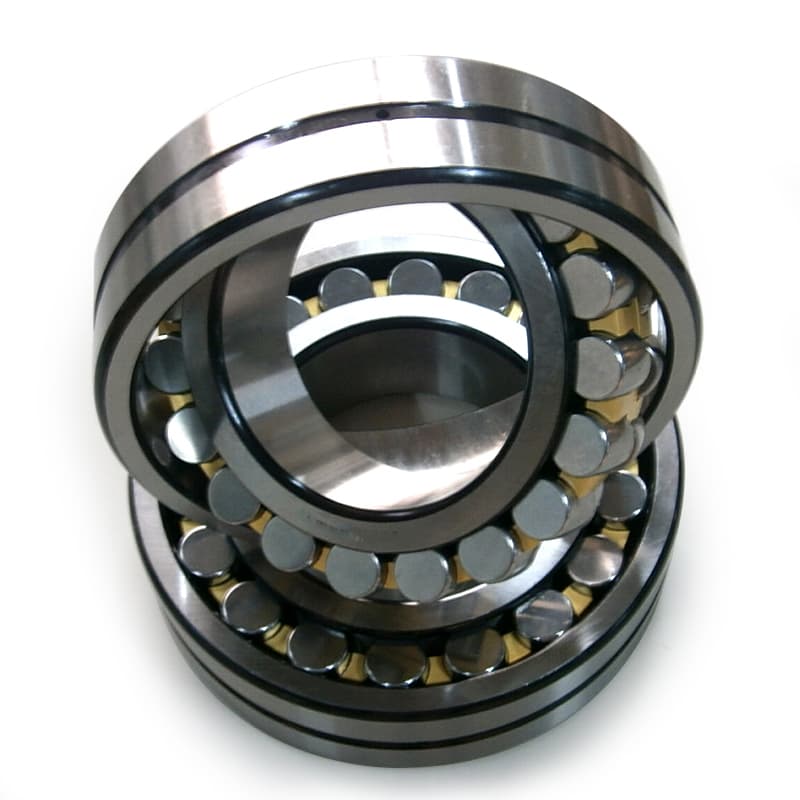
I’ve seen too many maintenance managers panic when their machines shut down because of a hot bearing. So let me walk you through the real causes first. Then I’ll show you exactly what works.
Understanding the Root Causes of Heat Generation in Spherical Roller Bearings?
You can’t fix a problem until you know why it happens. Heat in spherical roller bearings doesn’t come from nowhere. tflbearing
Heat builds up mainly from three things: high friction under heavy load, poor lubrication breakdown, and internal metal-to-metal contact caused by misalignment or wrong clearance. debearings
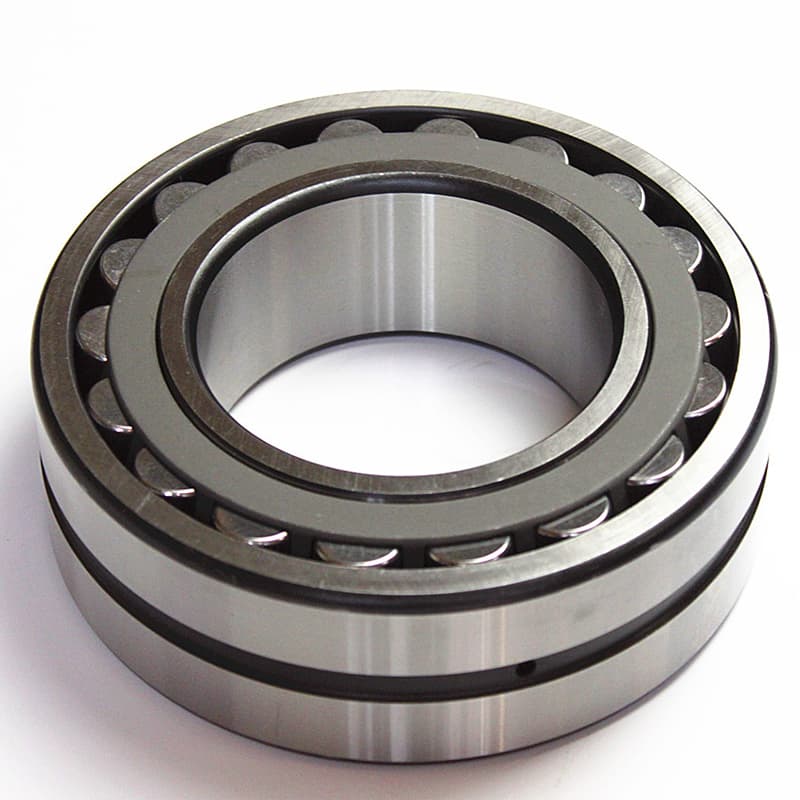
Let me break down where the heat really comes from. Many people think load alone creates heat. But that’s not entirely true.
Heat in a spherical roller bearing comes from energy loss. And energy turns into heat when something stops the rolling motion. The main culprits are:
- Rolling resistance – Even under perfect conditions, the rollers and races have some resistance. But when the load gets high, this resistance goes up fast.
- Sliding friction – Spherical rollers can slide a little. Under continuous heavy load, that sliding creates real heat.
- Lubricant shear – Oil or grease has internal friction too. If the viscosity is too high, the bearing fights itself.
- Misalignment – Your housing or shaft might not be perfect. A small tilt forces rollers to work unevenly. That creates hot spots.
I remember a customer from Brazil. He runs a sugar mill. His spherical roller bearings kept overheating every harvest season. We checked the bearings and found heavy wear on one side of the raceway. The cause? A worn housing that let the shaft tilt by just 0.5 degrees. That tiny misalignment raised the bearing temperature by 25°C.
Here is a quick table to help you identify the root cause by the symptoms you see:
| Symptom | Likely Root Cause | Quick Check Method |
|---|---|---|
| Even temperature rise across the whole bearing | Too much grease or wrong viscosity | Check grease fill amount and datasheet |
| Hot spot on one side of the housing | [Misalignment or bent shaft](https://www.facebook.com/ismail.saad.18/posts/effect-of-misalignment-in-a-centrifugal-pumpmisalignment-in-a-centrifugal-pump-b/2 … [TRUNCATED, (original length: 145 chars)]EFFECT-OF-MISALIGNMENT-IN-A-CENTRIFUGAL-PUMP) | Measure runout with a dial indicator |
| Rapid heat spike after start-up | Not enough lubricant or wrong internal clearance | [Listen for screeching noise, then check oil level](https://www.skf.com/binaries/pub12/Images/0901d196802b0348-13459-EN-Rolling-bearings-and-seals-in-electric-motors-and-generators … [TRUNCATED, (original length: 146 chars)]ROLLING-BEARINGS-AND-SEALS-IN-ELECTRIC-MOTORS-AND-GENERATORS) |
| Steady high temperature under constant load | Too much preload or heavy friction from seals | Release preload step by step and see if temp drops |
So before you change anything, measure the temperature pattern. Use a thermal gun or a simple contact probe. Write down the numbers for at least one hour of running. That data will tell you if the problem is friction, lubrication, or alignment.
Selecting the Right Lubrication Method and Viscosity for High-Load Conditions?
Most overheating problems start with the wrong oil or grease. I see this every week when I talk to bearing users .
Choose a lubricant with base viscosity of ISO VG 150 to 460 for continuous heavy loads. Use oil circulation for high speed, and high‑quality grease for moderate speed. Never overfill .
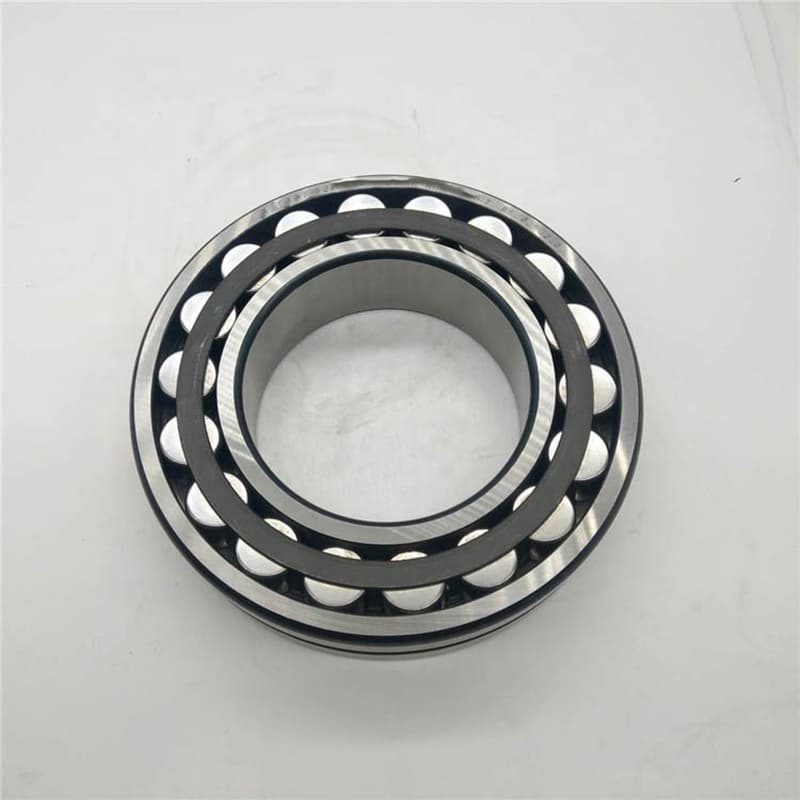
Let me get real with you. I’ve supplied bearings to factories in Turkey and Russia for years. The number one mistake I see is people using grease that’s too thick. They think thick grease handles heavy load better. But that’s wrong.
Here’s what actually happens. Thick grease has high shear resistance. The rollers have to push through it. That pushing creates heat. Under continuous load, the heat builds up until the grease breaks down. Then you lose all protection.
So how do you pick the right lubricant? You need to match three things: load, speed, and operating temperature.
For heavy continuous load:
- Use oil with ISO VG 220 to 460. Synthetic oil is even better because it stays stable at high heat.
- Oil circulation or oil bath works best. The oil carries heat away from the bearing.
- If you must use grease, pick a high-performance lithium complex or polyurea grease. The NLGI grade should be 2 or 3.
For speed considerations:
- High speed (over 3,000 rpm) – forced oil circulation is your only safe choice.
- Medium speed (1,000 to 3,000 rpm) – grease works fine if you relube regularly.
- Low speed (under 1,000 rpm) – heavy grease or oil bath both work.
A personal story – Last year, a distributor from Indonesia called me. His customer’s conveyor rollers kept failing. They used a standard NLGI 2 grease. I asked about their shaft speed. It was only 200 rpm. But the ambient temperature was 40°C in the factory. The grease got too soft and leaked out. Then the bearing ran dry. We switched to an NLGI 3 grease with a higher dropping point. The heat problem disappeared.
Let me give you a simple rule. Calculate the bearing’s speed factor (n*dm – that’s rpm times average diameter). If it’s below 200,000, grease is fine. If it’s higher, use oil. And always check the base oil viscosity at the actual operating temperature. A viscosity of at least 100 cSt at 40°C is a safe starting point for heavy loads.
Also, never overfill a grease-lubricated bearing. For spherical roller bearings, fill only 30% to 50% of the free space. More grease means more churning. More churning means more heat.
Optimizing Bearing Clearance and Preload to Minimize Frictional Heat?
Too tight or too loose – both can cook your bearing. I’ve seen wrong clearance destroy brand new bearings in a week.
Use C3 or C4 internal clearance for spherical roller bearings under continuous heavy load. Normal clearance (CN) is too tight once the bearing warms up. Never apply preload unless the application specifically requires it.
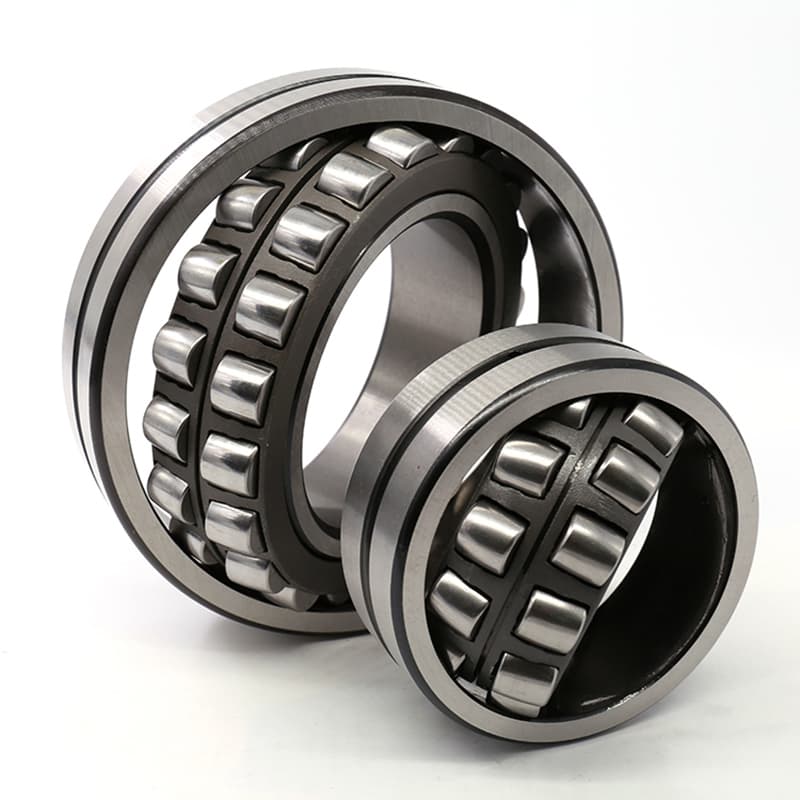
This is where many engineers get confused. They think tighter clearance gives better precision. And that’s true for light loads at constant temperature. But for continuous heavy load, tight clearance is a disaster.
Let me explain with simple physics. When a bearing runs under heavy load, three things get hotter: the rolling elements, the inner ring, and the outer ring. The inner ring is usually hotter than the outer ring because it’s closer to the shaft heat. So the inner ring expands more. That expansion reduces the internal clearance .
If you start with CN (normal) clearance, the bearing might have 20 to 40 microns of internal space when cold. But after one hour of heavy load, the inner ring expands. The clearance can drop to near zero. Then the rollers get squeezed. Friction jumps up. Temperature spikes. And soon you have a seized bearing.
So what clearance should you choose?
- C3 clearance – Adds about 50% more internal space than CN. This is my standard recommendation for most continuous heavy load applications.
- C4 clearance – Adds even more space. Use this for very high temperatures (over 100°C on the outer ring), or when the shaft is much hotter than the housing.
- C5 clearance – Only for extreme cases like steel mill rolls or very large bearings.
I had a customer from Pakistan. He runs a textile mill. His spherical roller bearings on the drying cylinders kept overheating. We checked the clearance. They were using CN. The cylinder surface temperature was 120°C. No wonder the bearings failed. We replaced them with C4 clearance bearings. The heat problem went away immediately.
What about preload?
Preload means you force the bearing to have negative clearance. This is only for applications where you need zero play, like machine tool spindles. For almost all industrial bearings under continuous load, you do NOT want preload. Preload raises friction by 30% to 100%. It’s a fast track to overheating.
The only acceptable preload is from the spring type in very slow oscillating applications. Never use fixed preload on a spherical roller bearing that runs continuously.
One more tip – check your fit tolerances. A tight fit on the inner ring can reduce clearance by 10 to 20 microns. A tight fit on the outer ring can do the same. Interference fits on shafts and housings reduce bearing internal clearance because the inner ring expands and the outer ring contracts. So if you use C3 clearance but also press the inner ring on with an interference fit, you might end up with CN clearance in reality . I always recommend measuring the actual installed clearance. You can do this with feeler gauges or by pushing a lead wire through the bearing.
Enhancing Heat Dissipation Through Cooling Strategies and Housing Design?
Even a perfect bearing gets hot under continuous load. You need a way to pull that heat out. Passive cooling is not always enough.
Use oil circulation cooling, finned housings, or forced air flow to remove heat. For extreme loads, add a water-cooled housing. Proper heat sinks on the housing can drop temperature by 10 to 15°C.
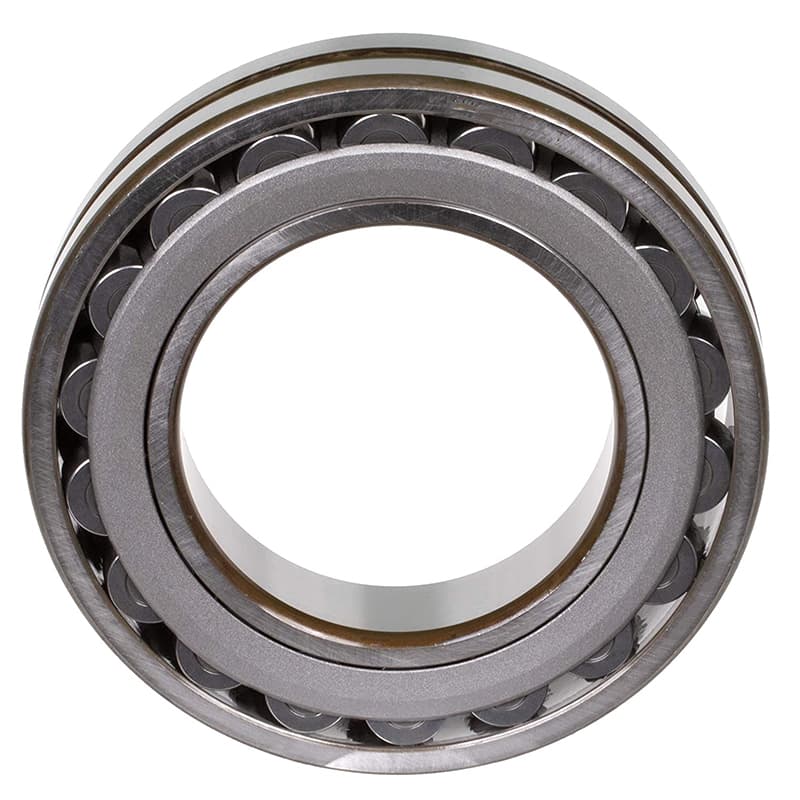
Let me share something I learned from supplying bearings to a cement plant in Egypt. Their bucket elevator used spherical roller bearings at the head pulley. The bearings ran at 85°C all day long. The grease broke down in two weeks. They tried different lubricants, different clearances, but nothing helped.
Then we looked at the housing. It was a simple cast iron housing with no cooling features. The housing just sat there soaking up heat. So we added a simple modification – we drilled the housing and installed copper tubes. Then we ran cooling water through the tubes . The bearing temperature dropped from 85°C to 58°C. That’s a 27°C reduction.
So here are the cooling strategies that work:
1. Oil circulation cooling (most effective)
- Pump oil from a reservoir through the bearing.
- The oil picks up heat and carries it to a cooler or radiator.
- You can drop bearing temperature by 20 to 40°C.
2. Water-cooled housings
- Many bearing housings have built-in water jackets.
- You need a clean water supply and a cooling tower.
- Works best for continuous high-load applications like extruders or rolling mills.
3. Finned housings and forced air
- If you cannot use liquid cooling, choose a housing with cooling fins.
- Mount a fan to blow air across the fins.
- This can remove 5 to 10 watts of heat per square centimeter of fin area.
4. Heat pipe or passive cooling
- For remote or explosive environments, heat pipes can move heat without power.
- Attach heat pipes to the housing and connect them to a large finned radiator.
A real example – A Russian bearing distributor told me about a mining conveyor. The bearing housings were in a hot, dusty tunnel. No water available. No space for a fan. They tried everything. Finally, they switched to an oversized spherical roller bearing with a C4 clearance. Then they painted the housings matte black to improve radiant cooling. They also added aluminum heat sinks glued to the housing with thermal paste. The temperature dropped by 12°C. Not huge, but enough to keep the bearing alive.
Housing design tips from my factory experience:
| Housing Feature | Effect on Heat | Best for |
|---|---|---|
| Smooth, thick walls | Traps heat inside[web:1575] | Low load, short cycles |
| Ribbed or finned outside | Increases surface area, lowers temp 5–15°C[web:1577] | Medium load, continuous run |
| Copper cooling coils embedded | Very effective, lowers temp 20–40°C | High load, high ambient temp |
| Separate bearing cartridge with oil passages | [Allows oil circulation cooling](https://www.sfu.ca/~mbahrami/pdf/pdf/2012/Thermal%20assessment%20of%20naturally%20cooled%20electronic%20enclosures%20with%20fins … [TRUNCATED, (original length: 132 chars)]UNTITLED) | Heavy industry, 24/7 operation |
One thing many people forget: the shaft itself is a heat path. If your shaft gets hot from another source (like a hot roll or a motor), that heat travels into your bearing. Insulate the shaft if possible. Or use a heat barrier between the hot zone and the bearing.
Finally, measure your housing temperature at the outer ring. That’s the most stable point. If it goes above 100°C for a grease‑lubricated bearing, stop and fix it. For oil‑lubricated bearings, 120°C is the red line. Beyond that, the oil oxidizes fast .
Conclusion
Fix the root cause first. Then pick the right lube, the right clearance, and add active cooling. Your bearings will run cool and last longer.