
A pump breakdown stops your whole plant. And choosing the wrong bearing makes it worse.
Pick a spherical roller bearing based on load, speed, misalignment, and lubrication. For heavy-duty pumps, use C3 or C4 clearance and a brass cage.
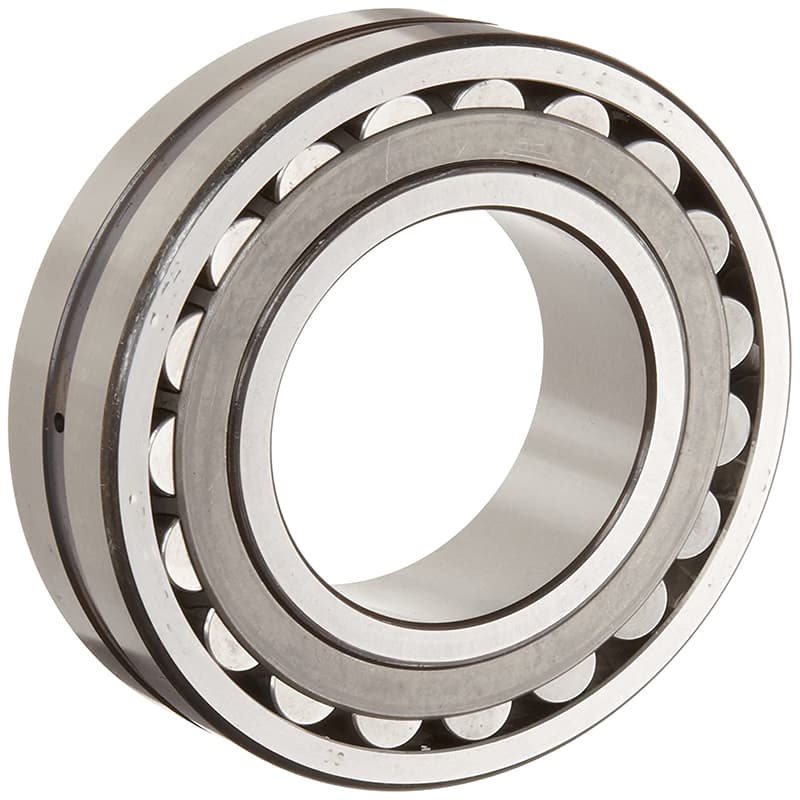
I get calls from pump repair shops often. They ask me: “Which bearing should I buy?” So let me share what I tell them. I have supplied bearings to water treatment plants, oil refineries, and irrigation projects. Here is my simple guide.
What Makes Heavy-Duty Pumps Different from Standard Pumps?
You might think a pump is just a pump. But heavy-duty pumps work harder. They push thick fluids or run all day.
Heavy-duty pumps have higher pressure, larger flow rates, and longer running hours. Their bearings see more radial load and more heat.
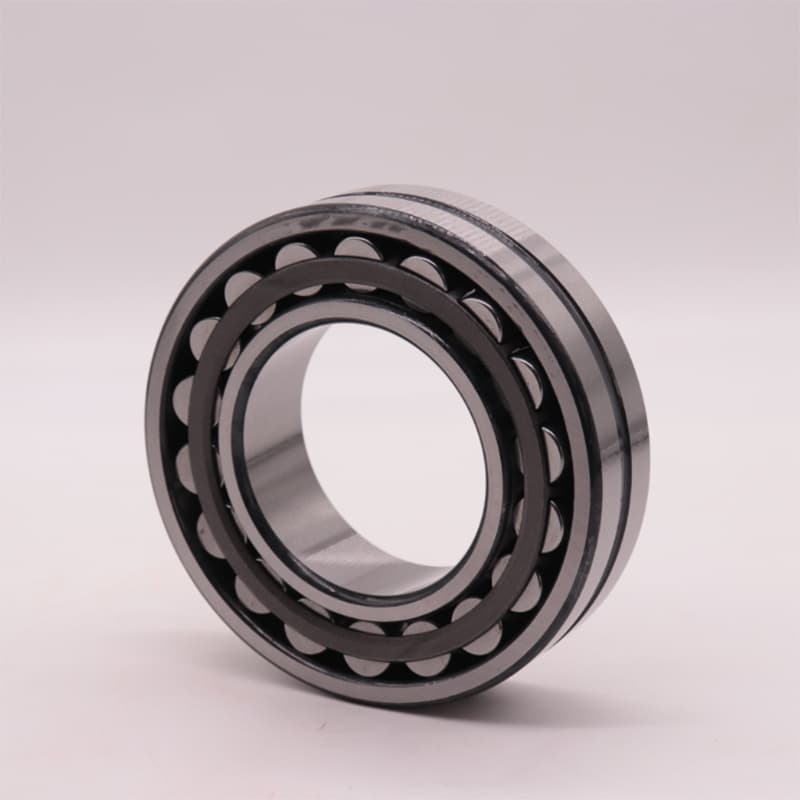
Let me break down the three big differences.
I will compare standard pumps and heavy-duty pumps side by side. Then you will know why bearing choice is different.
Difference 1 – Fluid viscosity and pressure
Standard pumps move clean water. The pressure is low (under 10 bar). Heavy-duty pumps move oil, slurry, or chemicals. Pressure can hit 50 bar or more. That pressure pushes back on the shaft. So the bearing sees a higher radial load. Spherical roller bearings sustain radial loads, axial loads in both directions, and combined loads, which makes them suitable for heavy-load pump duty[web:1476]. A standard ball bearing cannot take that load for long. A spherical roller bearing can. In slurry pumps, spherical roller bearings are used for the heavier loading common in these applications[web:1479][web:1480].
Difference 2 – Running duty cycle
Standard pumps run a few hours a day. Heavy-duty pumps run 24/7 in refineries or power plants. That means the bearing gets hot and stays hot. The grease degrades faster. The metal expands. So you need a bearing with more internal clearance (C4) and better grease. C3 and C4 clearance are used when heat and continuous duty reduce operating clearance during service[web:1488][web:1491].
Difference 3 – Shaft size and weight
Heavy-duty pumps have larger impellers. The impeller can weigh 200 kg or more. The shaft is thicker. That extra weight bends the shaft a little. Spherical roller bearings handle very high radial loads and tolerate shaft misalignment much better than cylindrical roller bearings[web:1476][web:1492]. A spherical roller bearing lets the shaft tilt slightly without damage. A cylindrical roller bearing does not allow that. In pump applications, spherical roller bearings are chosen for high load capacity and for handling load direction changes[web:1492].
Here is a simple table:
| Feature | Standard pump | Heavy-duty pump |
|---|---|---|
| Pressure | <10 bar | >30 bar |
| Run time | Intermittent | Continuous (24/7) |
| Impeller weight | <50 kg | >150 kg |
| Shaft misalignment risk | Low | Medium to high |
| Best bearing type | Deep groove ball | Spherical roller |
From my own experience, a customer in Brazil had a water pump. He used deep groove ball bearings. They worked fine. Then he got a job for a crude oil pump. He tried the same bearings. They failed in two weeks. He switched to our spherical roller bearings (22320 C3). The next set ran for two years.
So the lesson is simple. Do not treat heavy-duty pumps like standard pumps. The bearing needs change.
What Are Key Load and Speed Requirements for Pump Bearings?
You need to match the bearing to the pump’s load and speed. A mismatch gives you early failure.
Pump bearings need high radial load capacity and moderate speed capability (up to 3000 RPM). Use spherical roller bearings with C3 clearance for normal duty, and C4 for high temperature.
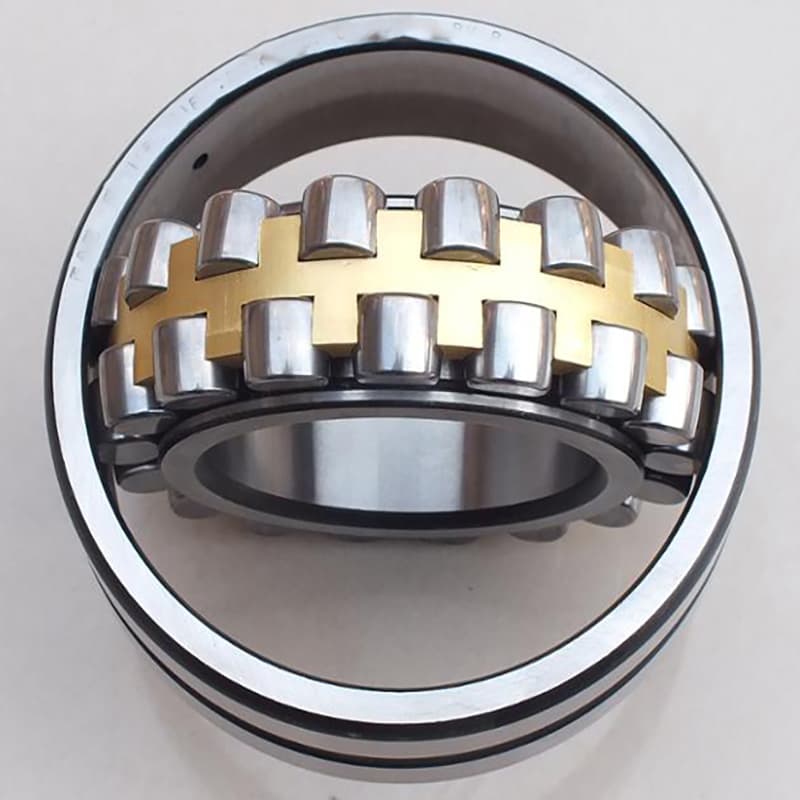
Let me split this into load and speed. Then I will give you a selection method.
I will answer three questions. Each one helps you pick the right bearing.
First question: How much radial load does your pump make?
The radial load comes from the impeller weight and the fluid pressure. You can calculate it. But most buyers do not have that number. So I use a rule of thumb. For a pump with 100 kW motor, the radial load on the bearing is about 5 to 8 kN. A 22215 spherical roller bearing can take 150 kN dynamic load. So it is strong enough.
But here is the catch. You also have unbalanced pressure from the fluid. That adds more load. So always pick a bearing with at least 20% extra capacity. Do not run it at 100% of its rating.
Second question: What is your pump speed?
Heavy-duty pumps run at 1450 RPM (4-pole motor) or 2900 RPM (2-pole motor). Spherical roller bearings can handle up to 4000 RPM with grease lubrication. But the speed limit depends on the cage. A steel cage can go faster than a brass cage. A nylon cage is even faster but not for high heat.
Here is a speed guide:
| Pump speed | Recommended cage |
|---|---|
| Up to 1500 RPM | Brass or steel (both fine) |
| 1500 to 2500 RPM | Steel or nylon |
| 2500 to 3500 RPM | Nylon (PA66) |
| Over 3500 RPM | Consider oil lubrication + nylon |
Third question: Do I need C3 or C4 clearance?
This depends on the pump’s operating temperature. A cold water pump runs at 30°C. Use C3. A hot oil pump runs at 80°C. Use C4. A steam pump runs at 120°C. Use C4 with special grease.
I learned this from a customer in Turkey. He had a hot water circulation pump. The water was 90°C. He used C3 bearings. The inner ring expanded and the bearing seized. We sent him C4 bearings. They worked perfectly.
Here is a selection table:
| Pump fluid temperature | Recommended clearance | Grease type |
|---|---|---|
| Cold water (20-40°C) | C3 | Standard lithium |
| Warm water (40-70°C) | C3 | High temp lithium |
| Hot oil (70-100°C) | C4 | Lithium complex |
| Steam (100-150°C) | C4 | Polyurea or PTFE |
So my advice is this. Always ask for the pump’s operating temperature. Then add 20°C for safety. That gives you the clearance class.
How to Handle Misalignment Between Pump and Drive Motor?
Misalignment is the number one killer of pump bearings. Even a small angle destroys the bearing.
Use spherical roller bearings on both the pump and the motor. Their self-aligning feature handles up to 1.5 degrees of misalignment. That is enough for most pump installations.
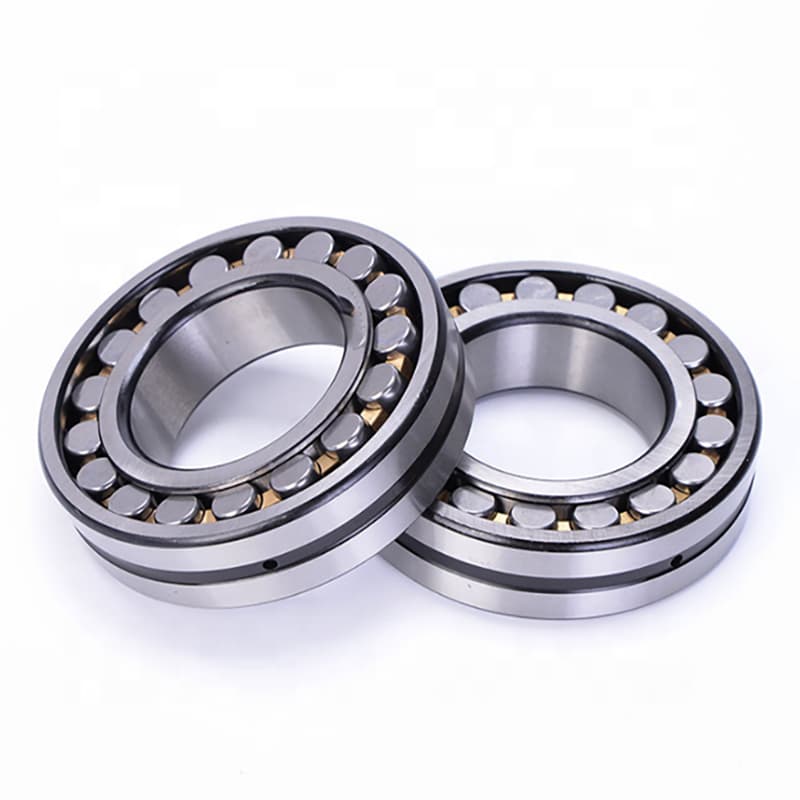
Let me explain three types of misalignment and how the bearing helps.
I will keep this simple. You do not need a laser alignment tool to understand this.
Type 1 – Angular misalignment
This happens when the pump shaft and motor shaft are not parallel. They meet at an angle. A standard bearing will create edge pressure on the rollers. That edge pressure causes heat and spalling. A spherical roller bearing has a spherical outer ring raceway. The inner ring tilts inside. So the rollers stay fully in contact. No edge pressure.
Type 2 – Parallel offset (or radial misalignment)
Here the shafts are parallel but not in a straight line. They are offset by a few millimeters. This is common when you bolt the pump and motor on different base plates. The spherical roller bearing can take a small offset. But not too much. For large offset, you need a flexible coupling. The bearing alone cannot fix it.
Type 3 – Combined misalignment
Most real-world cases have both angle and offset. A spherical roller bearing works well for combined misalignment up to 1.5 degrees.
I remember a customer in Egypt. He had a centrifugal pump for irrigation. The motor and pump were not aligned. He kept breaking bearings every month. He called me. I told him: “Buy a dial gauge and align the shafts. And use spherical roller bearings on both ends.” He did both. The next bearings lasted 18 months.
Here is a simple guide:
| Misalignment amount | Effect on standard bearing | Effect on spherical roller |
|---|---|---|
| 0.1° | Small stress | No problem |
| 0.5° | Edge loading, short life | Works fine |
| 1.0° | High heat, failure soon | Acceptable |
| 2.0° | Rapid failure | Still works but reduce speed |
One more tip. Even with spherical roller bearings, you should align the pump and motor. Do not rely only on the bearing. The bearing is a safety net, not a solution for bad installation. I always tell my customers: “Good alignment + good bearing = long life.”
How to Choose the Right Lubrication and Sealing for Pump Applications?
Pump bearings run in wet or dirty conditions. Water and dust kill the bearing fast. So you need the right seal and grease.
Use rubber contact seals (2RS) for pumps with water splashes. For high speed pumps, use metal shields (ZZ). Use high-viscosity grease with water-resistant additives.
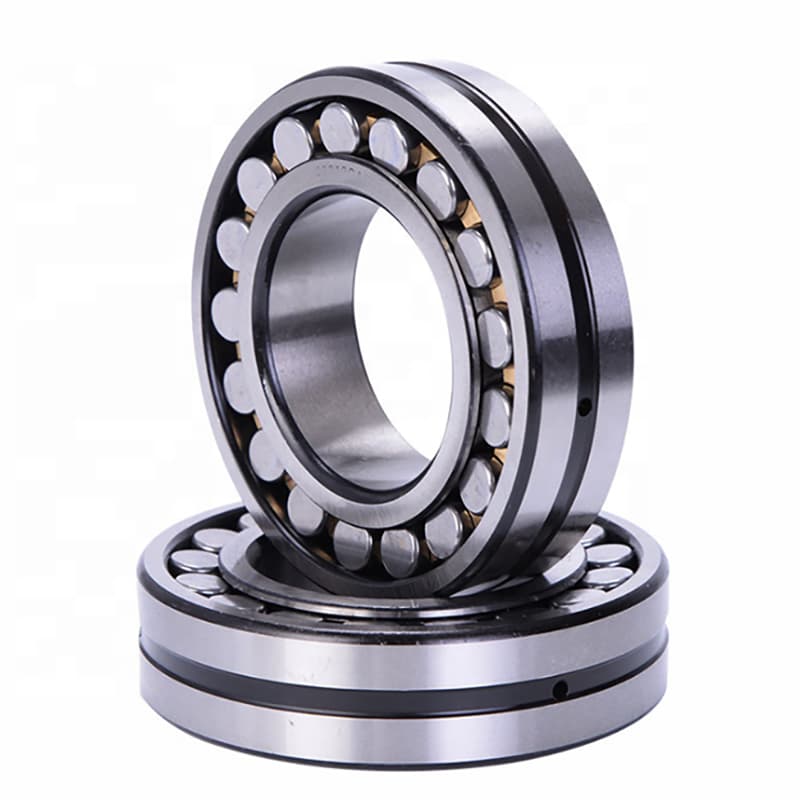
Let me give you three rules for lubrication and two rules for sealing.
I learned these rules from customers in Indonesia and Russia. One worked in a wet paper mill. The other worked in a cold water plant.
Rule 1 for lubrication – Choose the right grease base oil viscosity
Pump bearings run at medium speed (1500 to 3000 RPM). They need an oil viscosity of ISO VG 150 to 220. That is thick enough to form a film under the load. Do not use thin grease like ISO VG 68. It will squeeze out and leave no protection.
Rule 2 – Use water-resistant grease
Water splashes are common around pumps. Standard lithium grease washes away. Use a lithium complex or aluminum complex grease. These have better water resistance. They do not break down when wet.
Rule 3 – Do not overgrease
I see many maintenance people pump too much grease. Then the bearing overheats. The extra grease churns and creates friction. For a pump bearing, add 10 to 15 grams of grease for a 222 series bearing. That is about two pumps from a manual grease gun.
Now for the sealing rules.
Rule 1 for sealing – Pick 2RS for wet pumps
If your pump works in a wet area (like a water treatment plant), use a bearing with two rubber seals (2RS). The rubber seals keep water out. But they add drag. That drag is small. For a 30 kW pump, the drag is less than 0.1% of power. So do not worry.
Rule 2 – Pick ZZ for high speed or high heat
If your pump runs above 2500 RPM, rubber seals can wear out. The rubber lip heats up and melts. Use metal shields (ZZ) instead. They do not touch the inner ring. So there is no friction. But they let fine dust and water in. So only use ZZ in clean, dry pump rooms.
Here is a summary table:
| Pump environment | Seal type | Grease type | Relubrication interval |
|---|---|---|---|
| Clean, dry room | ZZ (shield) | Lithium EP | 2000 hours |
| Wet, outdoor | 2RS (rubber) | Lithium complex / water resistant | 1000 hours |
| Hot (>80°C) | ZZ or open | Polyurea | 500 hours |
| Dirty (dust) | 2RS | High viscosity EP | 800 hours |
From our factory records, we made a special bearing for a water pump in Vietnam. The pump was near the sea. Salt water splashed on it. We used 2RS seals and a special anti-corrosion grease. The pump ran 24/7 for 16 months. The customer was happy.
So my final advice is this. Match your seal to the environment. Match your grease to the temperature and water. Then your pump bearing will last.
Conclusion
Choose spherical roller bearings for heavy-duty pumps by matching load, speed, misalignment, and lubrication. Pick C3/C4 clearance and the right seal.
