
Your warehouse conveyor stops moving. A roller bearing seized. Now boxes pile up. Forklifts cannot pass. Your whole operation grinds to a halt.
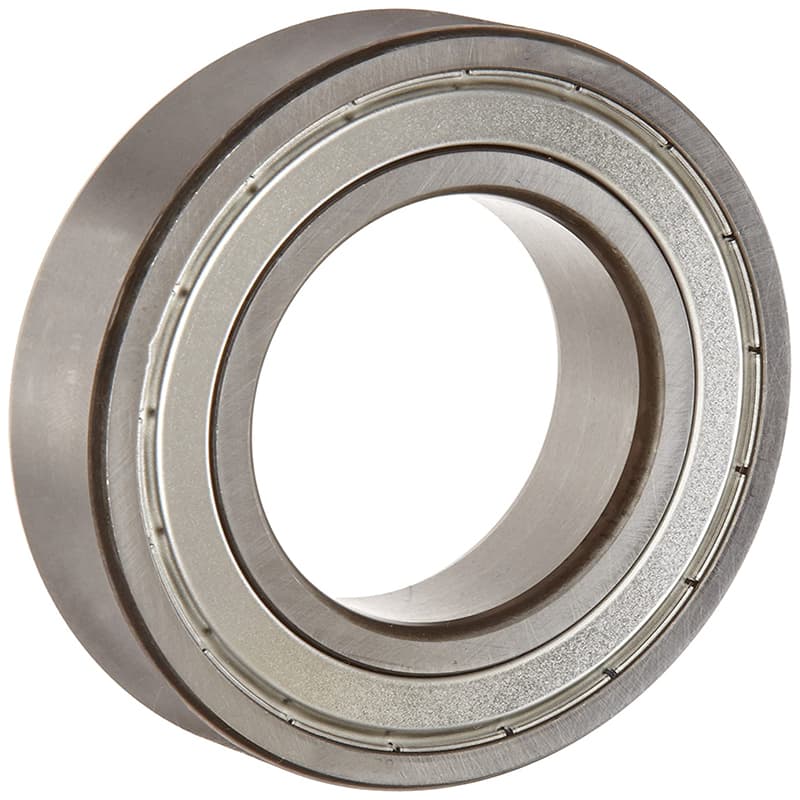
Deep groove ball bearings are the most common bearing type for material handling equipment like conveyor rollers, pulleys, casters, and lift tables. They need high load capacity, shock resistance, and protection from dust and moisture. For long life in tough environments, choose sealed bearings with C3 clearance and the right grease.
I am Leo from FYTZ Bearing. I sell bearings to warehouses, factories, and distribution centers around the world. One of my biggest customer groups is material handling equipment manufacturers. They make rollers, conveyors, and lift tables. I have helped many of them pick the right bearings. Let me share what I have learned.
Why Does Material Handling Equipment Demand Reliable Deep Groove Ball Bearings?
You run a distribution center. Your conveyors move thousands of boxes every day. A bearing fails. The line stops. Workers stand around. Orders get delayed. Reliability is not a nice word. It is the difference between profit and loss. A single bearing failure can trigger costly unplanned downtime across conveyor systems.
Material handling equipment demands reliable bearings because it runs for long hours, carries heavy loads, and faces shocks from boxes dropping onto rollers. A single bearing failure can stop a whole line. Also, replacing a bearing on a conveyor or lift table often requires taking apart the whole system, which costs time and labor. Material‑handling bearings must be robust and correctly specified to avoid cascading downtime and high repair costs.
Let me explain the three reasons reliability matters so much.
Continuous operation. Many warehouses run two shifts or even 24/7. A bearing on a main conveyor might run 16 hours per day, 300 days per year. That is 4,800 hours per year. If a bearing has an L10 life of 20,000 hours, it will last about 4 years. But that is the average. Some bearings fail earlier. For a critical conveyor, you want bearings that all last at least 3 to 5 years. One early failure causes a costly stop. Conveyor rollers are typically selected for 20,000–30,000 hours L10 life, and critical 24/7 applications often require much higher life targets [web:514][web:513].
Heavy loads and shocks. Material handling bearings carry heavy boxes, pallets, and even steel drums. A roller conveyor might have 500 kg of load on a single roller. That is a lot for a small bearing. Also, when a heavy box drops onto a roller from a height, there is a shock load. That shock can be two or three times the normal load. The bearing must take that without denting the races. So I recommend bearings with a high static load rating (Co) and a safety factor of at least 2. Static safety‑factor checks based on basic static load rating (Co) are standard practice when shock loads are present [web:518][web:521].
Difficult replacement. Changing a bearing on a conveyor is not easy. You need to stop the line. Remove the roller. Press out the old bearings. Press in the new ones. Put the roller back. For a lift table or a caster, you might need to raise the whole machine. So the labor cost of replacement is high. That is why you want bearings that last a long time. Paying a little more for a better bearing upfront is almost always cheaper than paying for extra replacements. Bearing replacement on conveyors often takes 2–4 hours of downtime per event, and emergency labor plus lost production can easily exceed planned‑maintenance costs [web:524][web:511].
A story from a customer in Indonesia. He runs a large warehouse for a shoe company. His conveyors used cheap bearings from a local trader. He was replacing bearings every 6 months. Each replacement took 4 hours of labor and stopped the line. He lost about $2,000 per stop. I sold him FYTZ bearings with sealed covers and high load rating. Now his bearings last 2.5 years. He saves about $6,000 per year in downtime and labor. Case studies across industries show that upgrading to sealed, high‑load bearings can cut replacement frequency by 60–80% and generate tens of thousands in annual savings
What Are the Common Applications: Conveyor Rollers, Pulleys, Casters, and Lift Tables?
Material handling equipment comes in many shapes. But bearings are everywhere. I will walk you through the four most common applications.
The four most common applications for deep groove ball bearings in material handling are: conveyor rollers (gravity and powered), pulleys for belt drives, swivel casters on carts and trolleys, and lift tables for vertical movement. Each application has different speed, load, and environment requirements.

Let me describe each application and its bearing needs.
Conveyor rollers. These are the most common. A roller has a steel tube. Inside each end, there is a bearing. The roller turns on a fixed shaft. The load is radial (downward). Speed is low to medium – maybe 50 to 300 RPM. The environment can be dusty. For gravity conveyors (rollers that spin freely as boxes slide over them), the bearings need low starting torque. For powered conveyors (belt‑driven or motorized rollers), the bearings need to handle continuous running.
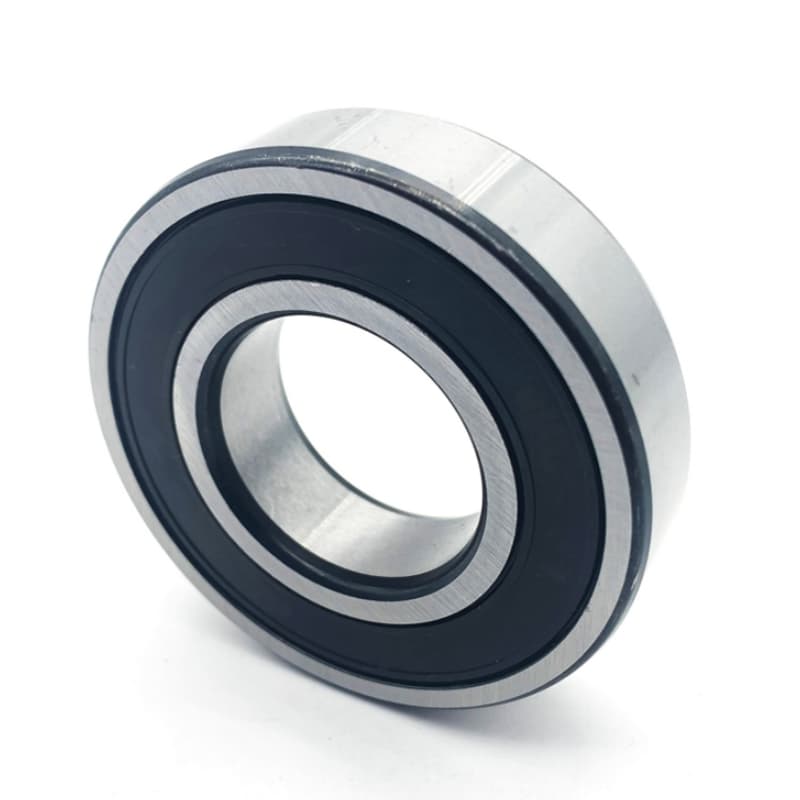
For conveyor rollers, I recommend deep groove ball bearings with rubber seals (2RS) to keep dust out. Sealed deep groove ball bearings with 2RS‑type rubber seals are widely recommended for conveyor‑roller applications in dusty environments Use C3 clearance because the bearing may get warm from friction. The grease should be a standard lithium complex with ISO VG 150 base oil. ISO VG 150 oils are commonly used in bearing lubrication for moderate‑to‑heavy‑load applications, providing good protection without excessive viscosity
Pulleys. A pulley is a wheel with a groove for a belt or rope. It turns on a shaft. The bearing is inside the pulley hub. The load is a combination of radial load from belt tension and some axial load if the belt is not perfectly aligned. Speed can be higher than rollers – up to 1,000 RPM or more. Pulleys are often in dirty areas with dust and grease.
For pulleys, I recommend bearings with a higher speed rating. Use a polyamide cage for lighter weight and lower friction at speed. Polyamide‑cage bearings are commonly used for high‑speed and light‑weight rotating parts like pulleys [web:555][web:558]. The seals should be ZZ (metal shields) if the environment is dry, or 2RS if it is wet. ZZ‑type bearings are preferred where speed and dry conditions matter, while 2RS offers better protection in contaminated or wet environments [web:551][web:557]. The internal clearance should be C3. Grease with ISO VG 100 base oil works well for moderate speed. ISO VG 100 oils are recommended for moderate‑speed, general‑purpose bearing applications, including many pulley and drive systems
Swivel casters. Casters are the wheels on carts, trolleys, and platform trucks. Each caster has a wheel and a swivel head. The wheel has one or two bearings. The swivel head has a bearing too. The loads are moderate, but there are shocks from rolling over bumps. Speed is very low (walking speed). The big challenge is contamination – dust, water, and debris from the floor.
For casters, I recommend bearings with thick grease (NLGI 2 or 3) and good seals. Double-lip rubber seals (2RS) are best. Use standard CN clearance. The steel does not need to be high precision – P0 is fine. But the bearing must resist rust. So I often recommend a rust-preventive coating or even stainless steel for casters used in wet areas like food processing plants.
Lift tables. These are scissor lifts or vertical platforms. They use bearings at the pivot points. The loads are high and often include off-center forces. The movement is slow but frequent. The bearing sees oscillation, not full rotation. That is a special condition called oscillating motion. It can cause false brinelling (wear from small movements).
For lift tables, I recommend bearings with a tight internal clearance (CN or even C2) to reduce play. Use a grease with anti-wear additives. Also, use steel cages for strength, not plastic. The bearing should be a larger size than you think, because lift tables often have shock loads when the platform stops.
Here is a summary table for these four applications:
| Application | Speed range | Main challenge | Recommended bearing features |
|---|---|---|---|
| Conveyor roller (gravity) | 50-200 RPM | Starting torque | 2RS seals, CN clearance, low-viscosity grease |
| Conveyor roller (powered) | 100-300 RPM | Continuous running | 2RS seals, C3 clearance, lithium complex grease |
| Pulley | 300-1,000 RPM | Belt tension, misalignment | ZZ or 2RS, C3 clearance, polyamide cage |
| Swivel caster | 10-50 RPM (intermittent) | Contamination, shock | 2RS seals, thick grease, rust protection |
| Lift table pivot | <10 RPM (oscillation) | False brinelling, high load | CN clearance, anti-wear grease, steel cage |
What Are the Key Performance Requirements: High Load Capacity, Shock Resistance, and Contamination Protection?
You pick a bearing for a roller. It looks fine. But after a few months, it fails. Why? Because the bearing did not have the right performance features for material handling. Bearings in material‑handling applications often fail early when load, contamination, and shock are not all accounted for in selection [web:574][web:577].
The three key performance requirements for material handling bearings are: high load capacity to carry heavy boxes, shock resistance to survive impacts and bumps, and contamination protection to keep dust and water out. A bearing missing any of these will fail much earlier than expected. High‑load, high‑shock, and heavily contaminated environments are explicitly recognized as key drivers for bulk‑material‑handling bearing design
Let me explain each requirement with practical advice.
High load capacity. This is the most obvious. A conveyor roller might see 200 kg of load. That load goes through the roller shell into the bearing. The bearing must have a high dynamic load rating (C). For a typical 6204 bearing, C is about 12.8 kN (that is about 1,300 kg of static load). But dynamic load is smaller. For a 200 kg load, the L10 life might be very long. However, the load is not pure radial. The roller may tilt, causing edge loading. So I always add a safety factor of 1.5 to 2. That means a 200 kg application should use a bearing rated for 300 to 400 kg of dynamic load. That might mean going up one size (6204 → 6205).
How to check? Look at the bearing catalog. Find the dynamic load rating C. Then use the formula: L10 life = (C / P)^3 x 1,000,000 revolutions. For a conveyor running at 100 RPM for 16 hours a day, that is 96,000 revolutions per day. So a bearing with C/P = 10 gives L10 = 1,000,000,000 revolutions, which is 10,000 days. That is overkill. But in real life, contamination and misalignment reduce life. So do not go too small.
Shock resistance. Material handling is not gentle. Boxes drop. Forklifts bump into conveyors. Pallet jacks hit the stops. All these create shock loads. A shock load can be 2 to 3 times the normal load. That shock can dent the bearing races. The dents cause noise and vibration. Over time, the dents grow and the bearing fails.
To resist shock, choose a bearing with a high static load rating (Co). Co is the load that causes a permanent dent of 0.0001 times the ball diameter. For a 6204, Co is about 6.7 kN. For a shock load of 600 kg (5.9 kN), that is close to Co. So I would go up to a 6205, which has Co of about 8.5 kN. Also, use a bearing with a steel cage. Steel is stronger than plastic for shock loads. And use a grease with EP (extreme pressure) additives. EP additives form a chemical layer that protects the metal during shock.
Contamination protection. In a warehouse, there is dust from cardboard, dirt from floors, and sometimes water from cleaning. Conveyor rollers are low to the ground. They pick up dirt. That dirt gets into the bearing. Once inside, it acts like sandpaper. The races wear down.
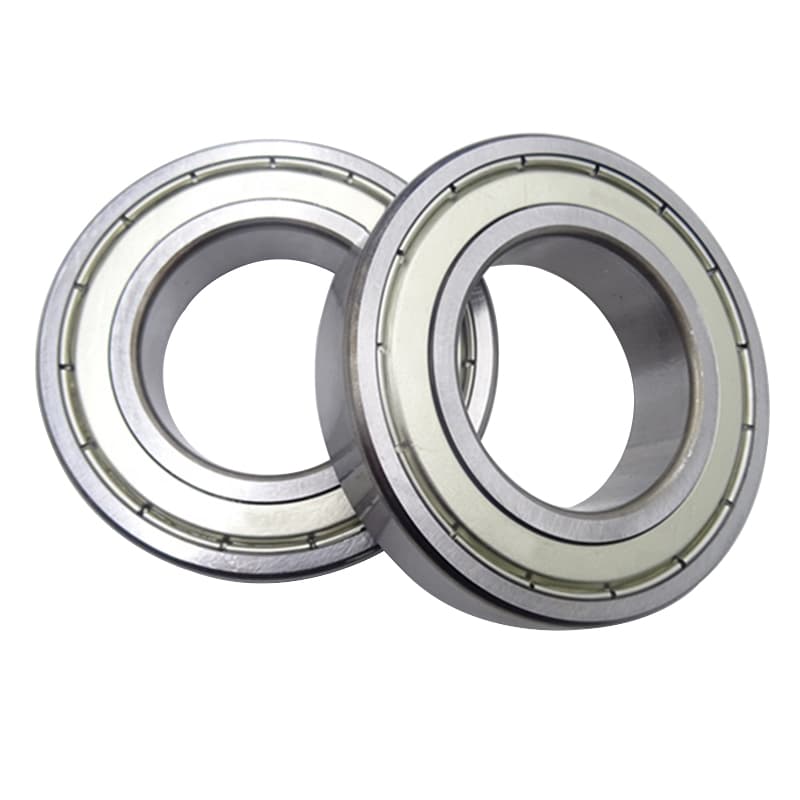
The first line of defense is the seal. For material handling, I recommend contact seals (2RS) for most applications. The rubber lip touches the inner ring. It keeps dirt out effectively. But contact seals add some friction. For very low torque applications like gravity conveyors, you might use a non-contact shield (ZZ) with a small gap. But then you need to keep the environment clean.
The second line of defense is the grease. Use a grease that resists water washout. Lithium complex and polyurea greases are good. Also, the grease should have rust inhibitors. If water gets past the seal, the inhibitor protects the steel.
Here is a table matching performance requirements to bearing features:
| Performance requirement | How to measure | Recommended bearing feature |
|---|---|---|
| High load capacity | Dynamic load rating C | Choose a bearing with C at least 1.5x actual dynamic load |
| Shock resistance | Static load rating Co | Choose Co at least 2x expected max shock load; use steel cage |
| Contamination protection | Ingress protection | 2RS rubber seals (double lip) for dusty/wet; thick grease with rust inhibitors |
| Low torque (for gravity rollers) | Starting torque measurement | ZZ shields instead of seals; low-viscosity grease; 15-20% fill |
How Do You Select Bearings for Different Roller Types – Gravity, Belt-Driven, and Motorized Rollers?
Not all rollers are the same. A gravity roller just spins freely. A belt-driven roller has a belt pulling it. A motorized roller has a built-in motor. Each type needs a different bearing.
For gravity rollers, choose bearings with low starting torque – use ZZ shields and light grease. For belt-driven rollers, choose bearings with good sealing (2RS) and medium viscosity grease. For motorized rollers, choose high-speed bearings with C3 clearance and high-temperature grease. Do not use the same bearing for all three types.
Let me break down each roller type.
Gravity rollers. These rollers have no drive. Boxes slide over them. The roller spins because the box moves. The bearing must have very low starting torque. Otherwise, the box will not move. Or the roller will drag and wear the box bottom.
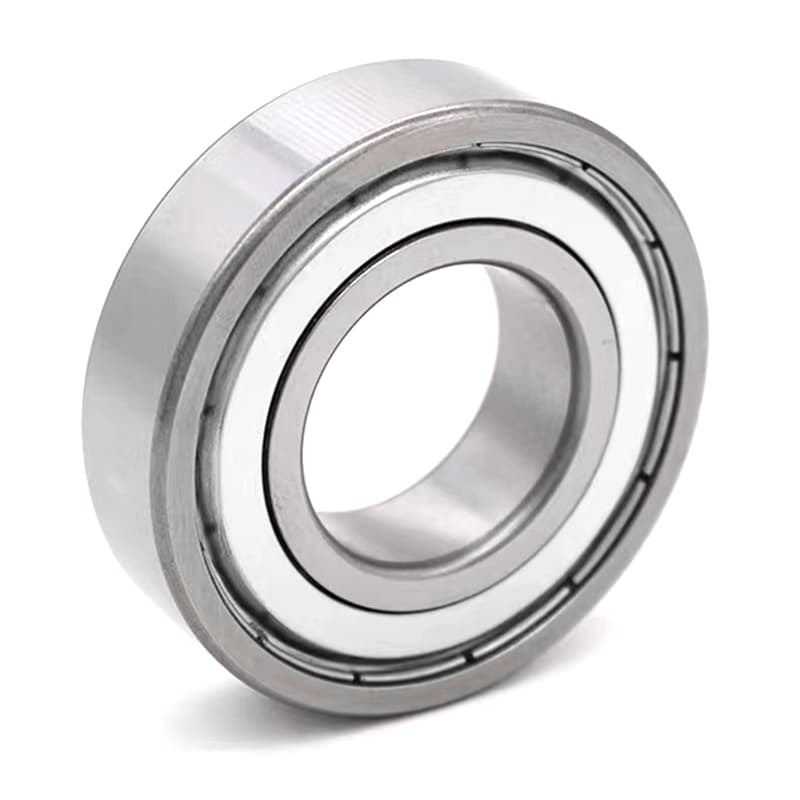
For gravity rollers, use bearings with non-contact shields (ZZ). ZZ shields have a small gap. They do not rub. That gives low torque. Do not use rubber seals (2RS) – they add too much drag. Also, use a low-viscosity grease (ISO VG 68 to 100) and fill only 15% of the free space. Some manufacturers even use a thin oil instead of grease, but oil can leak out. So I stick with light grease.
The internal clearance can be CN (normal). Speed is low, so heat is not a problem. The precision class can be P0. Gravity rollers do not need high precision. But the bearing must be balanced. An unbalanced bearing will cause the roller to vibrate. That vibration makes noise and can shake the conveyor frame.
Belt-driven rollers. A belt wraps around the roller. The belt pulls the roller. The bearing sees a radial load from the belt tension. The speed is moderate – 200 to 600 RPM. The bearing runs continuously when the belt moves.
For belt-driven rollers, use bearings with rubber seals (2RS). The seals keep dust from the belt and the floor out of the bearing. Use a medium-viscosity grease (ISO VG 150). The fill should be 25% to 30%. Use C3 internal clearance because the bearing may get warm from continuous running. Also, the cage should be steel or reinforced polyamide. Steel is stronger, but polyamide is quieter.
The precision should be P0 or P5. P0 is fine for most belt conveyors. Use P5 if the conveyor needs very smooth movement (like for fragile products). I have a customer in Egypt who makes glass bottle conveyors. He uses P5 bearings to reduce vibration. The bottles do not tip over.
Motorized rollers (motorized pulleys). These have a motor and gearbox inside the roller. The bearing is at both ends. The motor spins the roller. The bearing sees high speed (up to 1,000 RPM or more) and high temperature from the motor. The environment is sealed inside the roller.
For motorized rollers, you need bearings that can handle higher speed and temperature. Use C3 or C4 clearance. The extra clearance allows for thermal expansion from motor heat. Use high-temperature grease (synthetic, dropping point above 180°C). The seal should be a low-friction contact seal (2RS1) to keep lubricant in but not create too much drag. The cage should be polyamide for light weight and low noise.
Also, the bearing must be very round and smooth. Use P5 precision. The noise class should be V2 or better. A noisy bearing inside a motorized roller will vibrate the whole roller. That makes the conveyor noisy and can shake the products.
| Here is a selection table for roller types: | Roller type | Speed (RPM) | Main need | Seal type | Grease viscosity | Clearance | Precision |
|---|---|---|---|---|---|---|---|
| Gravity | 0-100 | Low torque | ZZ | ISO VG 68-100 (low) | CN | P0 | |
| Belt-driven | 200-600 | Dust protection | 2RS | ISO VG 150 (medium) | C3 | P0 or P5 | |
| Motorized | 500-1,200 | Heat and speed | 2RS1 (low‑friction) | ISO VG 100 (synthetic) | C3 or C4 | P5 |
A real story from a customer in Turkey. He makes conveyor rollers for a large e-commerce warehouse. He was using the same bearing for all roller types – a standard 6204ZZ with medium grease. The gravity rollers had high drag. Boxes would not slide. The belt-driven rollers worked fine. The motorized rollers overheated. I helped him choose different bearings for each type. He now buys three different bearing SKUs from me. His conveyor performance improved. And his warranty claims dropped by 70%.
Conclusion
Match your bearing to your roller type. Use low torque for gravity, sealed for belt-driven, and high-speed for motorized. That keeps your material handling running.
