
You found a cheap bearing supplier online. The first order went well. The second order was late. The third order had bad quality. Now you are looking for a new supplier again.
A reliable deep groove ball bearing supplier for long-term cooperation offers consistent quality across batches, clear communication, on-time delivery, and technical support. They solve your problems, not create new ones. They treat you as a partner, not just an order number.
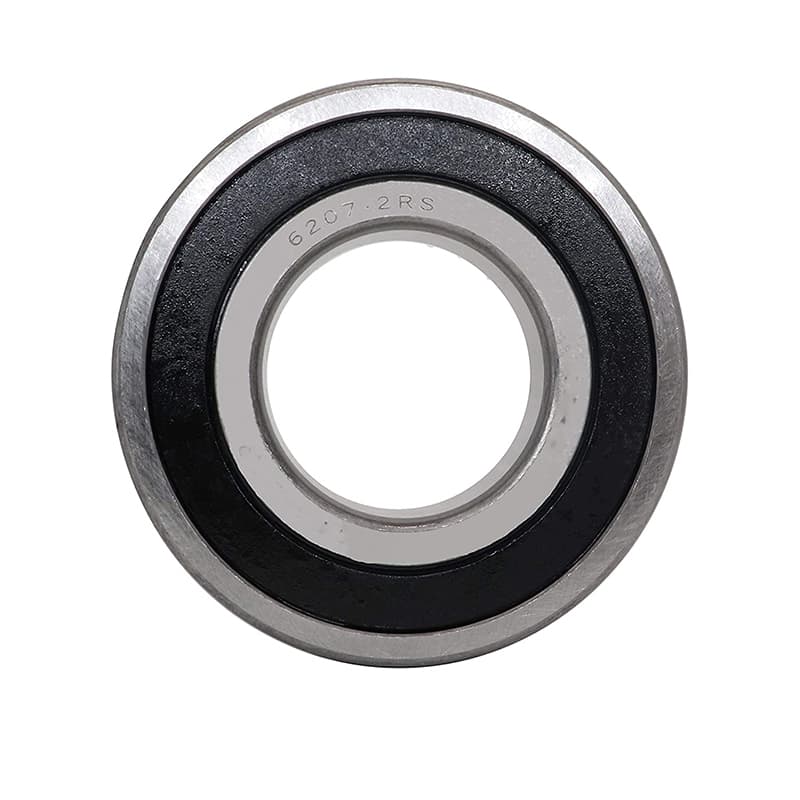
I am Leo from FYTZ Bearing. I have been selling bearings to distributors and manufacturers for over 15 years. I have seen good suppliers and bad ones. I have also learned what my customers like Rajesh in India really need from a long-term partner. Let me share the four things that make a supplier reliable. This comes from my own experience and from the feedback of my customers.
Does Your Supplier Offer Consistent Product Quality and Traceability Across Batches?
You order bearings today. The quality is good. You order the same bearings next month. The quality is different. The dimensions are off. The noise is louder. This happens when the supplier does not control their production.
A reliable supplier provides consistent quality from batch to batch. They can trace every bearing back to the production date, the steel heat number, and the inspector. They give you inspection reports for each shipment. If something goes wrong, they can find the root cause and fix it.
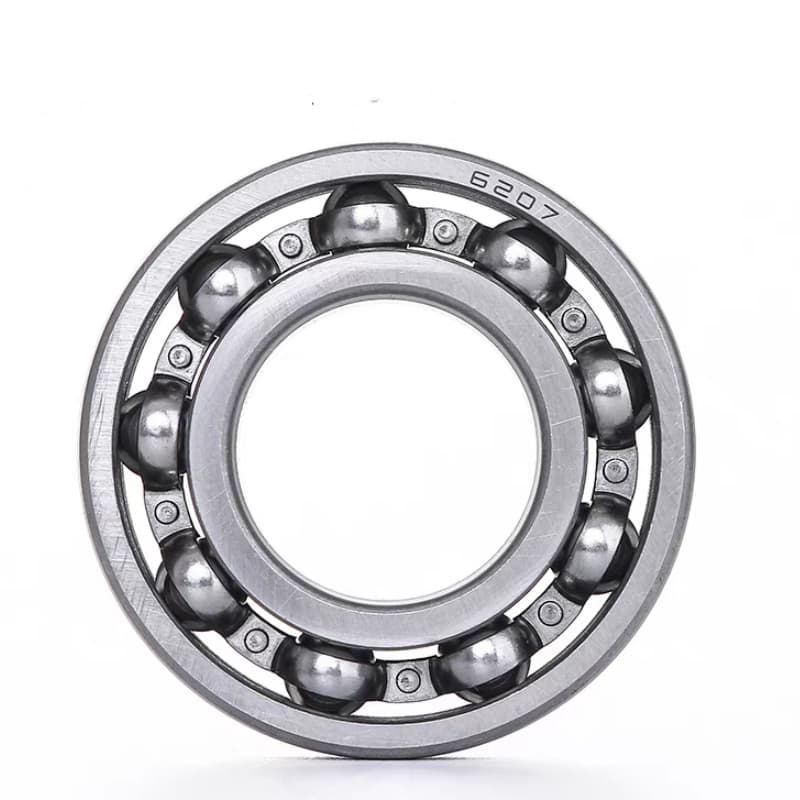
Let me explain why consistency and traceability are so important for long-term cooperation.
Consistency saves you from customer complaints. Imagine you are a distributor. You sell bearings to a factory that makes conveyor rollers. The factory trusts your bearings. Then one batch comes with poor quality. The rollers get noisy. Your customer returns the whole batch. You lose money and trust. A reliable supplier sends the same quality every time. At FYTZ, we use statistical process control (SPC) on our production lines. We measure every critical dimension. If a machine starts to drift, we stop and adjust. That way, bearing from January and bearing from July are the same.
Traceability means accountability. When a bearing fails, you need to know why. Was it a bad steel batch? Was it a grinding issue? A reliable supplier can tell you the heat number of the steel. They can tell you which machine made the bearing and who inspected it. This is not just paperwork. It is a tool for improvement. Steel heat number tracking and bearing root‑cause failure analysis both depend on this kind of traceability. I had a customer in Brazil who had a failure on a specific bearing series. I looked up the batch number. I found that the steel from one heat had slightly lower hardness. We changed the steel supplier. The problem never came back. Without traceability, I could not have fixed the root cause.
Inspection reports build trust. A good supplier sends inspection reports with every shipment. The report shows the actual measurements of the bearing: bore diameter, outer diameter, width, radial runout, and noise level. You or your customer can check these numbers. If the report says the bore is 20.002 mm and you measure 20.008 mm, that is a problem. A reliable supplier uses calibrated instruments. They stand behind their numbers. I send inspection reports to every customer. Some customers never look at them. But the report is my promise that I checked the quality.
Third-party certification is a bonus. Look for suppliers with ISO 9001 certification. That shows they have a quality management system. At FYTZ, we are ISO 9001 certified. We also have our own lab with hardness testers, roundness testers, and noise testers. You can ask for a video of the testing. I have done that many times for customers in Turkey and Russia.
Here is a checklist to evaluate a supplier’s consistency and traceability:
| Feature | What to ask the supplier | Why it matters |
|---|---|---|
| Batch records | Can you provide a batch number for every bearing? | Allows you to trace failures back to production |
| Inspection reports | Do you send dimensional and noise reports with each shipment? | Verifies quality without lab testing |
| Steel traceability | Can you tell me the heat number of the steel used? | Links bearing performance to raw material |
| Process control | Do you use SPC on your grinding lines? | Prevents drift between batches |
| Certification | Do you have ISO 9001 or similar? | Shows formal quality systems |
Does Your Supplier Communicate Transparently and Respond Quickly to Your Questions?
You send an email to your supplier. They reply after five days. You ask for a shipping update. They say “check later.” You have a quality issue. They blame the courier. This is not a partner. This is a problem.
A reliable supplier answers your questions within 24 hours. They give you honest updates about production and shipping. They tell you when there is a delay before you ask. They admit mistakes and work with you to fix them. Transparent communication builds trust over years.
Let me break down what good communication looks like in practice.
Response time matters. In international trade, time zones are a challenge. I am in China. My customers are in India, Turkey, Brazil, and other countries. I make sure to reply to every email within 24 hours, often within 12 hours. If I am traveling or sick, I have my sales team respond. A slow response tells you that the supplier does not care or does not have their act together. Fast and predictable response time is a key supplier‑relationship benchmark. For a long‑term relationship, I promise my customers a same‑day reply. You should expect that from any good supplier.
Honest updates, even bad news. Delays happen. A machine breaks. A shipping container gets held up. Bad suppliers hide this. Then the delay gets worse. A good supplier tells you as soon as they know. Transparent and timely crisis communication builds trust and reduces the business impact of disruptions. I once had a production delay on a large order for a customer in Pakistan. I told him two weeks before the original shipping date. He was able to adjust his inventory plan. He was not happy about the delay, but he appreciated my honesty. He still buys from me today. That is the value of transparency in supplier relationships.
Proactive communication about your order. Do not wait for the customer to ask. Send updates at key milestones: steel received, production started, grinding done, assembly done, inspection complete, packing done, shipped. I have a simple tracking sheet that I share with my customers. They can see where their bearings are at any time. This reduces their anxiety and saves them from sending follow-up emails.
Problem-solving, not blame-shifting. When something goes wrong, a bad supplier points fingers. They blame the shipping company, the weather, or the customer. A good supplier says: “We have a problem. Let me see how to fix it.” I remember an order to Egypt. The bearings arrived with some rust on the outer rings. I checked the shipping documents. The container had a hole and water got in. I could have blamed the freight forwarder. But instead, I sent replacement bearings by air freight at my cost. The customer paid only for the original order. He was impressed. He doubled his next order. That is how you build long-term cooperation.
Here is a communication checklist for evaluating a supplier:
| Communication aspect | What a reliable supplier does | What to avoid |
|---|---|---|
| Email response time | Within 24 hours | Takes 3+ days to reply |
| Order updates | Proactive updates at milestones | Only answers when asked |
| Bad news | Tells you immediately | Hides it until you discover |
| Problem handling | Offers a solution fast | Blames others or ignores |
| Technical questions | Answers clearly with data | Gives vague or wrong answers |
Does Your Supplier Deliver on Time, Every Time?
You have a production schedule. Your customer expects parts next week. The bearings are late. You pay for air freight. Or your line stops. On-time delivery is not a bonus. It is a basic requirement.
A reliable supplier has a track record of on-time delivery above 95%. They give you real lead times, not optimistic guesses. They have backup plans for delays. They use reliable freight forwarders. And if they are late, they offer solutions like partial shipments or air freight at their cost for their mistake.
Let me show you how to check a supplier’s delivery reliability.
Ask for their on-time delivery rate. A good supplier tracks this number. At FYTZ, our on-time delivery rate for the last three years is 97.5%. That means only 2.5% of orders were late. For late orders, we paid for expedited shipping or offered discounts on the next order. You can ask a potential supplier: “What was your on-time delivery rate last year?” If they do not know, that is a red flag. If they give a number, ask for proof or ask for references.
Realistic lead times vs. fake promises. Some suppliers say “20 days” to get your order. Then they take 40 days. They hope you will not cancel. A reliable supplier gives you a realistic lead time. For standard deep groove ball bearings in common sizes (like 6202, 6204, 6305), my lead time is 30 to 45 days from order to shipment. For customized bearings, it is 50 to 70 days. I do not promise 20 days because I know I cannot deliver. A customer in Indonesia once asked me for 15 days. I said no. He went to another supplier who promised 15 days. Then that supplier delivered in 50 days. The customer came back to me. Now he trusts my realistic lead times.
Backup plans for problems. What happens if your supplier’s machine breaks? What if their raw material supplier is late? A reliable supplier has more than one grinding line. They keep safety stock of common steel sizes. They have relationships with multiple freight forwarders. At FYTZ, we have three production lines for our most popular bearings. If one line goes down, we shift production. We also keep 2‑3 weeks of finished goods inventory for our top 20 bearing models. This buffer helps us meet lead times even when things go wrong. Planning for breakdowns and keeping redundancy in production and inventory reduces the impact of machine failures on delivery performance [web:468][web:470].
Shipping and logistics matter. A bearing is heavy and small. Shipping costs are a big part of the total price. A reliable supplier helps you choose the right shipping method: sea freight for large orders, air freight for urgent small orders, or rail freight for some countries. They also handle the export paperwork correctly. Wrong paperwork can hold a container at customs for weeks. I have seen this happen. Freight forwarders that manage export documentation and customs clearance are essential for smooth shipments. So I have a dedicated shipping team. They check every document twice.
Here is a delivery reliability checklist:
| Factor | What to check | Good sign | Bad sign |
|---|---|---|---|
| On-time delivery rate | Ask for last year’s rate | >95% | <90% or unknown |
| Lead time quote | Compare with industry average | Realistic within 10-15% of others | Much shorter than average (often unrealistic) |
| Inventory policy | Do they hold safety stock? | Yes, for popular items | No, make-to-order only |
| Freight partner | Who do they use? | Known forwarders like DHL, Kuehne+Nagel | Unknown local agents |
| Backup plan | What if production delays? | Have alternative lines or stock | No plan |
Does Your Supplier Offer Technical Expertise and After-Sales Problem-Solving?
You installed the bearings. They are running hot. Or they make noise. You call your supplier. They say “our bearings are good, check your installation.” That is not help. A real partner helps you solve the problem.
A reliable supplier has engineering knowledge. They can help you select the right bearing, clearance, grease, and seal. When there is a failure, they help you analyze the cause. They do not run away. They work with you to prevent the same problem next time. This technical support saves you money and time.
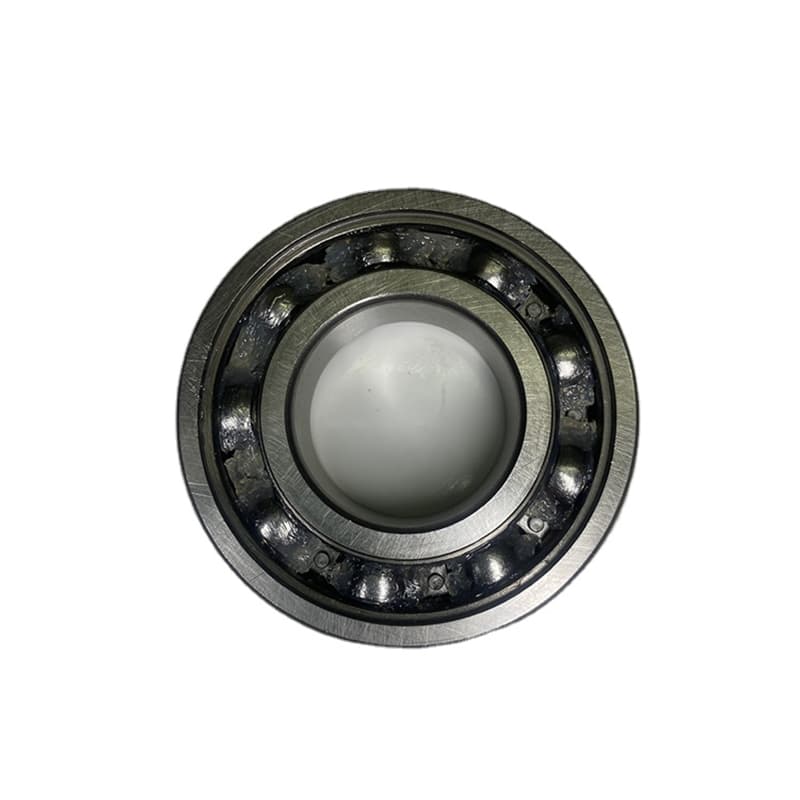
Let me explain what technical support looks like in the bearing business.
Pre-sales engineering help. Before you buy, a good supplier asks questions. What is your load? What is your speed? What is the temperature? What is the environment? They use this information to recommend the best bearing. I have had customers in Vietnam call me with their machine drawings. I looked at the loads and recommended a larger bearing than they planned. The cost was 20% higher, but the life doubled. That is technical help. A bad supplier will just sell you whatever you ask for, even if it is wrong.
Failure analysis after a problem. When a bearing fails, do not just replace it. Find out why it failed. A good supplier can look at the failed bearing. They can see the wear pattern. For example, if the bearing has rust, the problem is moisture. If it has flat spots on the balls, the problem is false brinelling from vibration. If it has a blue color on the races, the problem is overheating. I ask my customers to send me photos or even ship the failed bearing back. I analyze it and tell them what went wrong. This service is free. It helps my customers learn.
Training and documentation. A reliable supplier gives you more than bearings. They give you installation guides, lubrication charts, and troubleshooting checklists. I have created a simple one‑page guide for installing deep groove ball bearings. I send it to all my new customers. Some distributors in India use this guide to train their own customers. That adds value to my relationship with them.
After‑sales follow‑up. Do not disappear after the shipment. A good supplier checks in. They ask: “Did the bearings arrive safely? Have you installed them? How is the performance?” I send a follow‑up email to every customer one week after delivery and again after three months. This shows I care. It also gives me early warning of problems. One time, a customer in South Africa had a bearing that was noisy. I caught it early because I followed up. We replaced it before it failed and caused downtime. Post‑sale follow‑up is a key lever for customer retention and problem prevention.
Warranty and claims handling. No manufacturer is perfect. Sometimes a bad bearing slips through. A reliable supplier has a clear warranty policy. At FYTZ, we offer a 12-month warranty from the ship date. If a bearing fails due to manufacturing defect, we replace it for free. We also cover the shipping for the replacement. We ask for photos and the batch number. We do not ask for 100 photos and a long argument. We trust our customers. That builds loyalty.
Here is a technical support checklist:
| Support type | What a reliable supplier offers | What to avoid |
|---|---|---|
| Selection help | Asks about your operating conditions | Just sells what you ask |
| Failure analysis | Looks at photos or samples, gives root cause | Says “not our problem” |
| Training | Provides guides, videos, or calls | Gives nothing |
| Follow-up | Contacts you after delivery | No contact after invoice |
| Warranty | Clear terms, quick replacement | Long arguments, hidden conditions |
Conclusion
Look for consistent quality, clear communication, on-time delivery, and real technical support. That is what makes a bearing supplier a long-term partner.