
You have a machine that shakes and breaks bearings every few months. Tapered bearings handle both radial and axial loads because of their angled raceways and conical rollers. The angle creates a wedge that transfers forces between the roller and the raceways. This design lets one bearing carry loads from two directions at the same time.
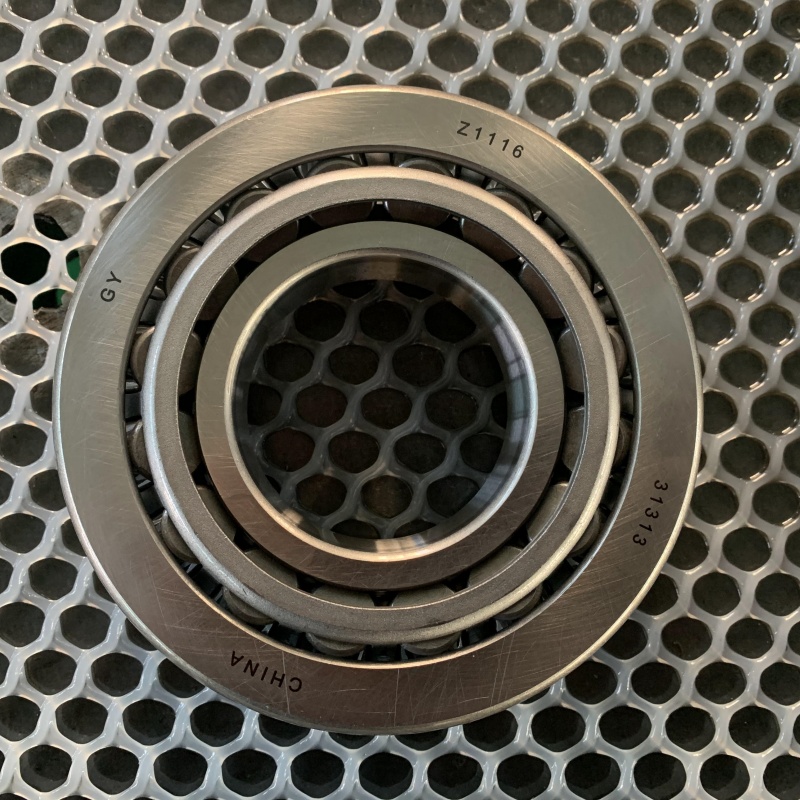
I have sold bearings for ten years. I see many buyers pick the wrong type. They end up with cracked races and angry customers. Let me show you how tapered bearings really work. Once you understand the geometry, you will never mix up bearing types again. ## The Simple Geometry That Makes Combined Loads Possible? A straight line cannot push sideways. But a wedge can. The secret is the tapered shape. Each roller looks like a slice of a cone. The inner and outer raceways are also tapered. When you push down on the bearing, the roller tries to climb the raceway. That climbing action creates a sideways force. The bearing balances that force without breaking.
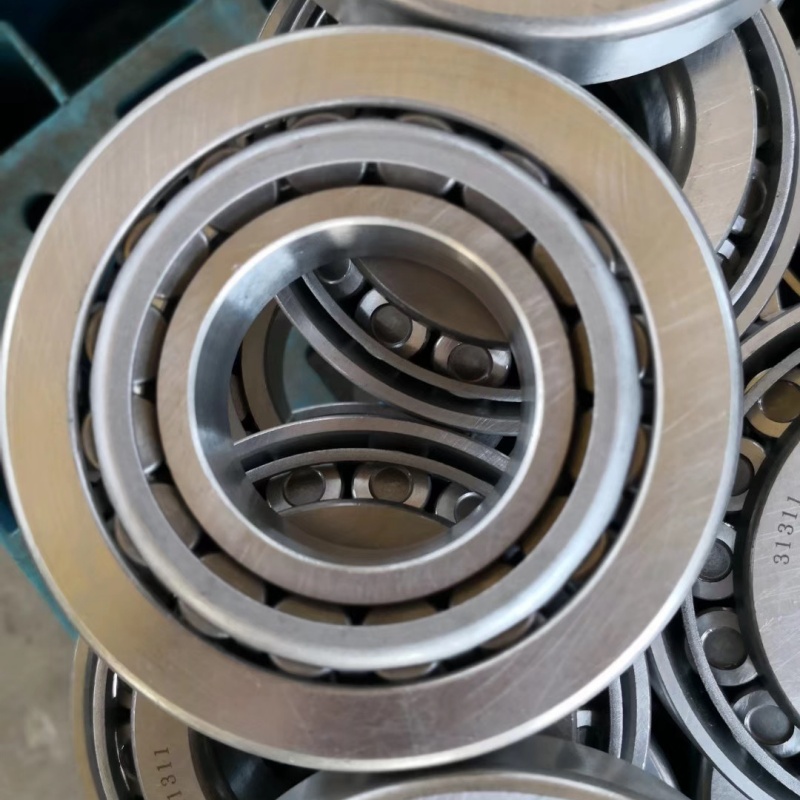
### Breaking Down the Geometry into Three Key Features I want you to picture a simple cone. Now cut that cone into thin slices. Each slice is a tapered roller. This shape does something special. It changes the direction of the load. Let me explain each piece. #### 1. The Cone Angle[^2] (Also Called the Half Angle) Every tapered bearing has an angle. This angle is usually between 10 and 30 degrees. A smaller angle means more axial capacity. A bigger angle means more radial capacity. Here is a simple table to show you the difference: | Bearing Series | Contact Angle | Best For | Example Load Type | |—————-|—————|———-|——————-| | 302 series | ~15 degrees | More radial load | Conveyor rollers | | 303 series | ~20 degrees | Balanced load | Gearbox shafts | | 313 series | ~25 degrees | More axial load | Wheel hubs | | 322 series | ~18 degrees | General purpose | Agricultural tools | I once had a customer from Pakistan. He ordered 313 series bearings for a tractor axle. That axle has heavy thrust from turning. The larger angle gave him extra axial strength. The bearings lasted twice as long. #### 2. The Roller to Raceway Line Contact[^3] Ball bearings touch the raceway at a single point. That is called point contact. Tapered rollers touch along a line. That is line contact. A line spreads the load over a bigger area. So the bearing can take heavier loads without denting the steel. Think of it like this: a knife edge cuts into butter. A flat blade spreads the pressure. Tapered rollers are the flat blade. #### 3. The Rib Guiding the Roller End[^4] Look at the inner ring of a tapered bearing. You will see a small shoulder. That is the rib. The large end of the roller touches this rib. The rib keeps the roller from sliding out. It also helps guide the roller so it stays aligned. Without the rib, the roller would skew and jam. The rib is a small part, but it is very important. We grind our ribs to a smooth finish. A rough rib creates heat and noise. So the simple geometry is cones, angles, and line contact. Put them together, and you get a bearing that pushes back against both down and sideways forces. That is why tapered bearings work so well in truck wheels and gearboxes. — [^1]: Understanding tapered roller geometry is crucial for optimizing load distribution in bearings, enhancing performance and longevity. [^2]: The cone angle significantly influences the axial and radial load capacities, making it essential for selecting the right bearing. [^3]: Line contact allows for better load distribution, reducing wear and increasing the lifespan of bearings. [^4]: The rib is vital for maintaining alignment and preventing jamming, ensuring smooth operation and reducing noise. ## What Happens Inside a Tapered Bearing Under Radial and Axial Forces? If you could see inside, you would watch a careful dance of forces. When a radial load[^1] pushes down, the rollers wedge between the cup and cone. This wedging pushes the inner ring sideways. Then an axial load[^2] pushes from the side. The rollers shift slightly to balance both forces. The bearing finds a stable position where all forces cancel out. That is why it does not explode under mixed loads[^3].
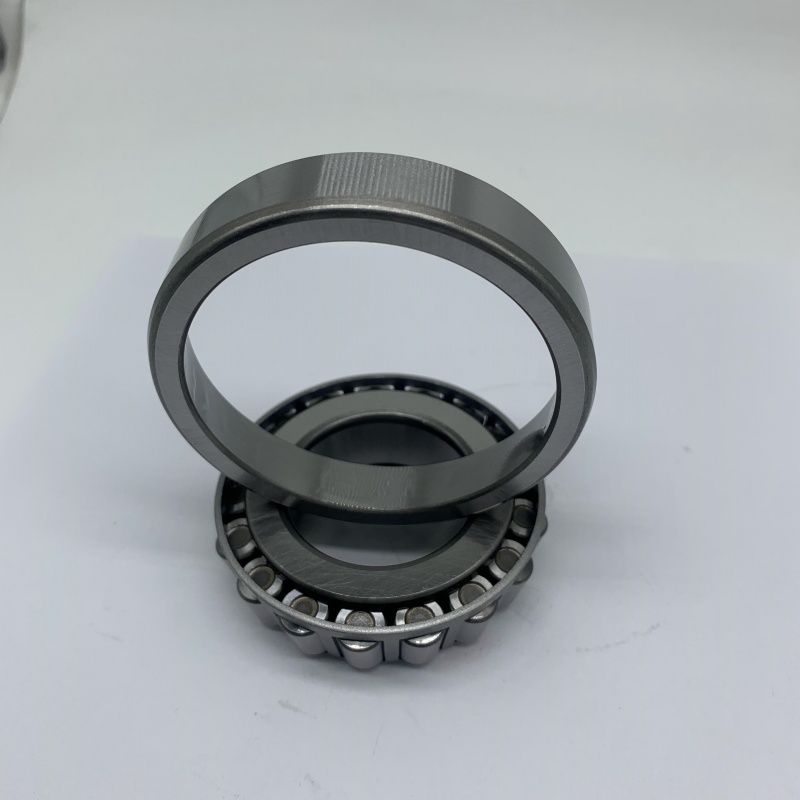
### A Step-by-Step Look at the Force Dance I learned this by cutting open bearings on my workshop bench. I wanted to see what really moves. You cannot see it with a closed bearing. So I took a grinder and cut a few scrap bearings in half. Then I put them in a press. Here is what I saw. #### Step 1: Radial Load Comes Down You put a weight on the shaft. The shaft pushes down on the inner ring. The inner ring tries to go down. But the roller is in the way. The roller\’s large end touches the rib. The roller\’s surface touches the cup. So the roller cannot just drop. Instead, it rotates and also moves slightly up the cup raceway. That movement creates a separating force. The inner ring gets pushed to the side. #### Step 2: Axial Load Comes From the Side Now you push the shaft from the left. The inner ring moves left. The rollers now touch the cup at a different point. They also push harder against the rib on the left side. But the right side rollers see less force. The bearing is not symmetric anymore. So some rollers carry more load than others. #### Step 3: The Bearing Finds Balance Here is the clever part. The rollers act like small wedges. As the load changes, the rollers roll to a new position. The forces get redistributed. The bearing keeps running as long as the total force does not exceed the bearing\’s rating. This self-balancing act is why tapered bearings[^4] can handle misalignment and changing loads. I remember a customer in Brazil. He had a rock crusher. The load changed every second. Big rocks hit the rotor. Then small rocks. The forces were never steady. He tried cylindrical bearings. Those failed because they cannot take axial shocks. Then he tried deep groove ball bearings. Those cracked. Finally, he used our FYTZ tapered bearings. The crusher ran for two seasons without a failure. The self-balancing feature[^5] saved him. #### A Quick Comparison of What Happens to Different Bearing Types Under Mixed Loads | Bearing Type | Radial Load | Axial Load | Mixed Load Behavior | |————–|————-|————|———————-| | Deep groove ball | Good | Fair | Extra heat, shorter life | | Cylindrical roller | Excellent | Poor | Fails quickly | | Spherical roller | Excellent | Good | Works but expensive | | Tapered roller | Good | Excellent | Smooth and stable | So inside a tapered bearing, the rollers are always moving and adjusting. They never lock up or slide. That is why your machine runs quiet and cool. — [^1]: Understanding radial load is crucial for optimizing bearing performance and longevity in various applications. [^2]: Learn how axial loads influence bearing design and functionality, which is essential for effective machinery operation. [^3]: Gain insights into how different bearing types handle mixed loads, which is vital for selecting the right bearing for your application. [^4]: Explore the benefits of tapered bearings, including their ability to handle mixed loads and misalignment, ensuring smoother operation. [^5]: Discover how the self-balancing feature enhances the durability and reliability of tapered bearings under varying loads. ## Why Contact Angle Matters for Load Distribution? Pick the wrong contact angle, and your bearing will cry for help. The contact angle controls how much axial load the bearing can take. A larger angle (near 30 degrees) gives more axial capacity but reduces radial capacity. A smaller angle (near 10 degrees) does the opposite. You must match the angle to your machine\’s main load direction.
[^1] comparison illustration](https://sdycbearing.com/wp-content/uploads/2025/12/Tapered-Roller-Bearings-47.jpg)
### How to Choose the Right Contact Angle for Your Job I talk to importers every week. They send me a drawing or a worn bearing. I measure the angle. Then I tell them what series they need. It is that simple. But many buyers do not know why the angle matters. Let me fix that. #### The Trigonometry Behind It You do not need to be an engineer. Just think of a ladder. If you lean a ladder against a wall at a steep angle, it can take more weight pushing down from the top. But if you push sideways, the ladder slips. A shallow ladder takes sideways pushes better but cannot hold as much vertical weight. A bearing works the same way. The roller is the ladder. The raceway is the wall. Here is a table showing real angle values and what they mean for your machine: | Contact Angle | Axial Load Capacity | Radial Load Capacity | Typical Application | |—————|———————|———————-|———————-| | 10-12 degrees | Low | High | High-speed fans | | 13-16 degrees | Medium | High | Electric motors | | 17-20 degrees | Balanced | Balanced | Gearboxes, pumps | | 21-24 degrees | High | Medium | Truck wheels | | 25-30 degrees | Very high | Low | Worm gears, thrust applications | #### The Pairing Rule Here is something many people miss. A single tapered bearing can only take axial load in one direction. If your shaft pushes both left and right, you need two bearings mounted back to back. We call that a DB or DF arrangement. Back to back gives a wide spread. Face to face gives a narrower spread but better alignment. I had a customer from Turkey. He wanted bearings for a conveyor shaft. The shaft had a gear that pushed one way. So he only needed one bearing to handle the thrust. He used a single tapered bearing and a cylindrical roller on the other end. That saved him money. But for a truck wheel, the wheel pushes both ways during cornering. So you need a pair. #### What Happens If You Pick the Wrong Angle? Let me give you a real example. A buyer from South Africa ordered 302 series bearings for a wheel hub. The 302 series has a 15-degree angle. That is good for radial loads but not great for heavy axial loads. His trucks carry heavy loads on rough roads. The axial forces were too high. The bearings failed after three months. He switched to 313 series with a 25-degree angle. The new bearings lasted two years. The part number changed. The price went up a little. But the downtime cost went down a lot. So always check the contact angle. If you are not sure, send me a photo of the old bearing. I will read the number and tell you the angle. — [^1]: Understanding contact angle is crucial for optimizing bearing performance and ensuring longevity in machinery. ## Tapered vs. Other Bearing Types: Who Handles Mixed Loads Better? Not all bearings are born equal under mixed loads[^1]. Tapered bearings[^2] beat deep groove ball and cylindrical roller bearings when both radial and axial loads are high. They lose to spherical roller bearings in very heavy, misaligned conditions. But for 80% of industrial gearboxes, wheel ends, and conveyors, tapered bearings offer the best balance of cost and performance.
[^3] side by side](https://sdycbearing.com/wp-content/uploads/2025/12/Tapered-Roller-Bearings-46.jpg)
### A Head-to-Head Battle I keep sample bearings on my desk. I show them to every visiting customer. I let them hold each type. Then I explain the strengths and weaknesses. Here is my honest take. #### Tapered Roller Bearings (The Hybrid Fighter) Pros: Excellent at mixed loads. Good life. Easy to adjust clearance. Many sizes available. Cons: Need proper mounting. Two bearings required for two-way thrust. Not great for very high speeds. I use tapered bearings in my own projects for gearboxes and truck wheels. They are my first choice unless a special condition says otherwise. #### Deep Groove Ball Bearings (The All-Rounder) Pros: Cheap. Low friction. High speed. Easy to find. Cons: Low load capacity for their size. Ball bearings get hot under heavy axial loads. The point contact dents the raceway. When a customer asks for a cheap solution, I warn them. Ball bearings work for light duty. But for industrial loads, they die fast. #### Cylindrical Roller Bearings (The Radial Specialist) Pros: Very high radial load. Stiff. Compact. Cons: Almost no axial capacity. Cannot handle thrust at all. Needs a separate thrust bearing. I sell these for paper machines and rolling mills. Those machines have pure radial loads. But never use them where the shaft pushes sideways. They will fail in days. #### Spherical Roller Bearings (The Heavy Lifter) Pros: Huge load capacity. Self-aligning. Takes both radial and axial loads well. Cons: Expensive. Large size. Higher friction. If you have a big, dirty, misaligned machine like a conveyor in a mine, use spherical. But for normal gearboxes, they are overkill. #### A Quick Decision Table | Condition | Best Bearing Type | Second Choice | |———–|——————-|—————-| | High speed, low load | Deep groove ball | Tapered | | Heavy radial only | Cylindrical roller | Tapered | | Mixed load, normal speed | Tapered roller | Spherical | | Mixed load, big misalignment | Spherical roller | Tapered (with special fit) | | Thrust only (pure axial) | Thrust ball or tapered | – | | Truck wheel hub | Tapered roller (pair) | – | I once sold bearings to a cement plant in Egypt. They had a bucket elevator. The shaft saw heavy radial load from the chain and heavy axial load from the buckets. They tried cylindrical bearings with a separate thrust bearing. That setup was complicated and kept breaking. I suggested a pair of tapered bearings back to back. Now the elevator runs for 18 months without a bearing change. The customer saved money on parts and labor. So which bearing wins? For most industrial jobs, tapered bearings are the smart choice. They give you mixed load handling without breaking your budget. — [^1]: Understand how various bearing types perform under mixed loads to select the right one for your needs. [^2]: Explore the benefits of tapered bearings, especially for industrial applications, to understand their cost-effectiveness and performance. [^3]: Get a comprehensive overview of bearing types to enhance your knowledge and application in engineering. ## Conclusion Tapered bearings handle mixed loads through angled geometry, line contact, and self-balancing roller action. Match the contact angle to your load direction for best results.
